
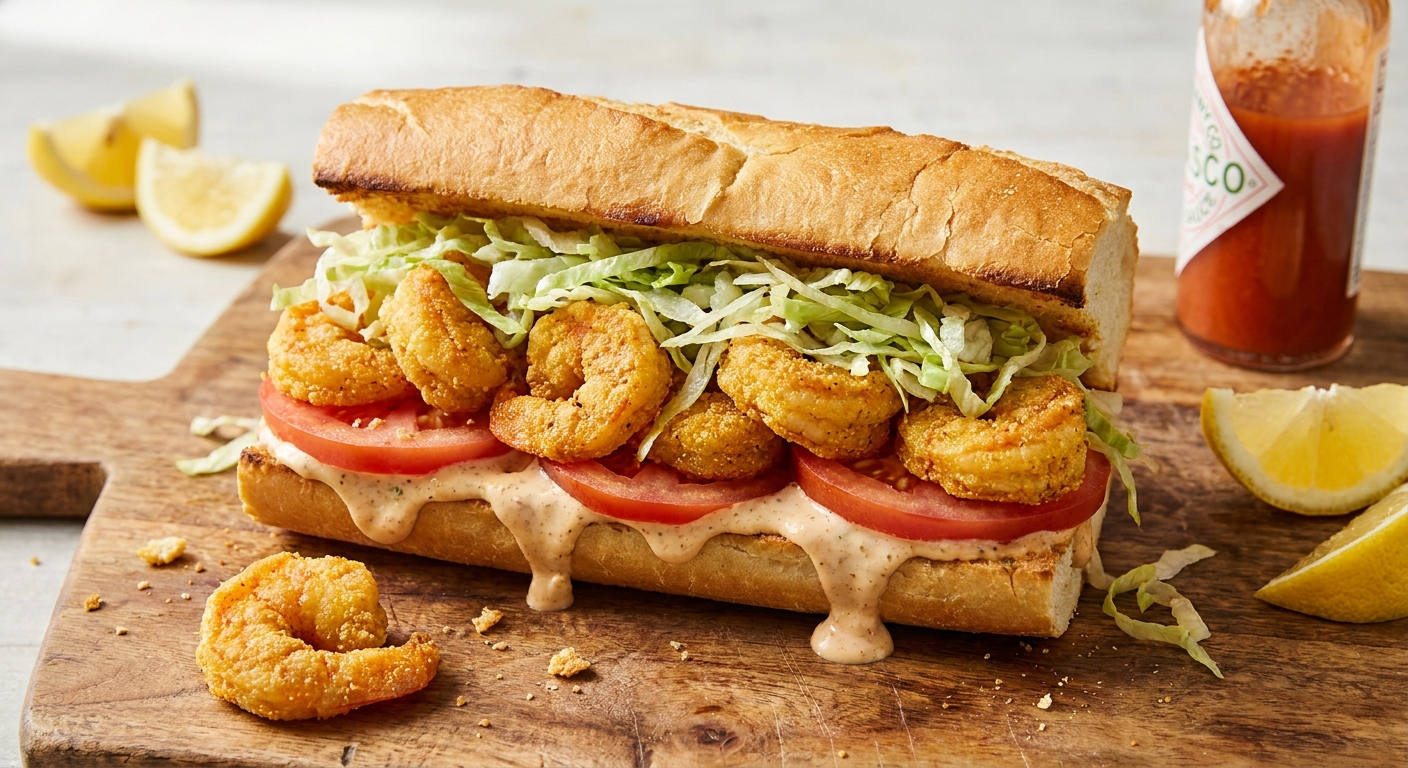
I used to manage a bakery, which means I have strong feelings about sandwiches on good bread. A shrimp po’ boy is not the place for a soft sub roll that collapses the second it meets sauce. You want New Orleans–style po’ boy bread with a thin, crackly crust, toasted just enough to act like a raincoat, plus hot, crisp shrimp that stay crisp even after you dress the loaf.
This recipe is my weeknight-friendly approach to a New Orleans shrimp po’ boy, the kind you pick up wrapped in paper and eat with your elbows on the table. We are going for a flour and cornmeal fry with a light, craggy crust, shredded lettuce and tomato for crunch and freshness, and a tangy, remoulade-style sauce with just enough bite.

If you’ve ever made fried shrimp that went limp by the time you sat down, you are not alone. The fix is simple: keep your oil in the right temperature window, fry in small batches, and build the sandwich in an order that protects the bread. Those details are baked into the recipe card.
One more promise: this is a sandwich. No boiling pot, no coconut crust, no sticky glaze. Just a crisp, dressed po’ boy that tastes like you know what you are doing, even if you are cooking in socks and juggling a busy night.
Why this recipe works
- Cornmeal in the dredge adds crunch. A blend of flour and cornmeal creates a crisp, nubbly coating that reads classic and stays crunchy.
- A quick buttermilk style dip helps the coating stick. A lightly seasoned wet layer clings to shrimp and gives the dry mix something to grab.
- Frying at the right temperature prevents greasiness. Keeping the oil in the 350 to 365 F range fries the shrimp fast, so they stay juicy and the coating stays light.
- Toasting the bread is not optional. A brief toast dries the cut surface so sauce does not immediately soak in.
- Smart sandwich assembly protects the crust. Sauce on toasted bread, then lettuce as a barrier, then shrimp, then tomato keeps everything crisp and balanced.
Ingredient notes
Shrimp
Look for large shrimp, peeled and deveined. Tail-on is fine for frying, but for sandwiches I prefer tails off so you can actually bite the po’ boy without shrimp trying to escape.
Cornmeal
Use fine or medium cornmeal. Coarse cornmeal can feel overly gritty on shrimp. If you only have coarse, pulse it briefly in a blender.
Creole seasoning
Any Creole seasoning blend works. If yours is salt-heavy, reduce added salt elsewhere. Taste and adjust the sauce first, then season the dredge accordingly.
French bread
Choose a loaf that is light inside with a thin, crackly crust, closer to New Orleans–style po’ boy bread than a dense baguette. If your loaf is extra crusty, split and toast gently so it does not shred your mouth.
Lettuce and tomato
Shredded iceberg is classic for that cold crunch. Romaine works too. Tomatoes should be ripe but not watery. Pat slices dry with a paper towel to protect the bread.
Tangy sauce
This is a quick remoulade-style mayo sauce. The key is acid plus a little heat. Lemon juice, pickles, capers, hot sauce, horseradish, and Creole mustard are all welcome depending on what you keep around.
Equipment you will need
- Heavy pot or Dutch oven for safer, steadier deep frying
- Deep-fry or instant-read thermometer to monitor oil temperature
- Wire rack set over a sheet pan for draining, which keeps the coating crisp
- Tongs or spider strainer for easy shrimp retrieval
- Three shallow bowls or pie plates for dredging
- Sheet pan for holding dredged shrimp before frying
Pro tips
- Dry the shrimp well before dredging. Moisture is the enemy of crisp coating. Pat shrimp dry with paper towels so the wet dip and dredge behave predictably.
- Use a rack, not paper towels, for draining. Paper towels trap steam underneath, which softens the crust. A rack lets air circulate.
- Do a “test shrimp” for oil temperature. When the oil is ready, a shrimp should sizzle actively right away, not lazily bubble. If it browns too fast, lower heat and wait a minute before continuing.
- Fry in small batches. Overcrowding drops the oil temperature and makes the coating absorb oil.
- Toast the cut sides only. You want the outside crust to stay tender enough to bite, but the interior to be lightly crisp and dry.
- Dress the loaf in layers. Sauce on toast, lettuce as a barrier, then shrimp, then tomato. If you like pickles, tuck them near the lettuce rather than directly on the bread.
- Salt while hot. A small pinch of salt on the shrimp right after frying makes everything taste sharper.
Substitutes that work
- No buttermilk? Use milk with a squeeze of lemon juice or a splash of vinegar, then let it sit 5 minutes before using.
- No Creole mustard? Use Dijon plus a tiny pinch of cayenne or hot sauce.
- No cornmeal? Use all-purpose flour plus a few tablespoons of cornstarch for crispness. The texture will be slightly different but still crunchy.
- No French bread loaf? Use sturdy hoagie rolls and toast them well. Soft hamburger buns will go soggy quickly.
- Gluten-free option Use a gluten-free all-purpose flour blend for the dredge and a gluten-free roll that toasts well.
Variations
- Extra spicy Add more hot sauce to the sauce and a pinch of cayenne to the dredge. Serve with sliced pickled jalapeños.
- Pickle-forward Chop dill pickles very fine and stir into the sauce, then add a few pickle slices in the sandwich for crunch.
- Oyster po’ boy method Use the same dredge and sauce, but swap shrimp for shucked oysters that are well drained and patted dry.
- Lighter pan-fry Shallow-fry the shrimp in about 1/2 inch oil, flipping once. It will be slightly less craggy but still tasty.
- Kid-friendly Skip the heat in the sauce, use simple mayo plus lemon and a pinch of paprika, and serve tomatoes on the side.
Serving ideas
- Classic sides Serve with kettle chips, fries, or a simple vinegar slaw.
- Something green A crunchy cucumber salad or a quick lemony arugula salad balances the richness.
- Make it a platter Put shrimp on a rack, bread on a sheet pan, and all toppings in bowls so everyone can build their own without the bread getting soggy.
- Party move Make mini po’ boys on slider rolls, but toast them well and sauce lightly.
Storage and reheating
Best practice
Po’ boys are best assembled and eaten right away. If you know you will have leftovers, store components separately.
Store
- Fried shrimp: Cool completely, then refrigerate in an airtight container lined with paper towels for up to 2 days.
- Sauce: Refrigerate in a sealed container for up to 5 days.
- Veg: Keep lettuce and tomato separate and dry.
Reheat
Re-crisp shrimp in a 400 F oven or air fryer until hot and crunchy, about 5 to 8 minutes depending on size. Avoid the microwave, which makes the coating soft.
Common mistakes
- Oil too cool leads to greasy shrimp and a heavy crust. Use a thermometer and let oil recover between batches.
- Overcrowding the pot drops the temperature fast. Fry in batches so the shrimp have space to sizzle.
- Skipping the rack traps steam and ruins crispness. Drain on a wire rack every time.
- Assembling too early is the fastest way to sog out your bread. Toast, fry, and assemble right before eating.
- Watery tomatoes soak the loaf. Use firm tomatoes and pat slices dry.
- Under-seasoning the dredge makes fried shrimp taste flat. Season every layer lightly, including the sauce.
FAQ
What makes a po’ boy “dressed”?
In New Orleans, “dressed” typically means lettuce, tomato, pickles, and mayo. Many shops add a tangy remoulade-style sauce instead of plain mayo, or in addition to it.
What oil temperature should I fry shrimp at?
Aim for 350 to 365 F. The temperature will dip when shrimp go in, so start near 365 F and adjust the heat to keep it in that range.
Can I use frozen shrimp?
Yes. Thaw completely and pat very dry. Extra moisture is the biggest reason frozen shrimp lose their coating.
How do I keep the bread from getting soggy?
Toast the cut sides, then spread sauce on the toasted surface, then add lettuce before the hot shrimp. That lettuce acts like a little barrier. Also, assemble right before eating.
Can I air fry the shrimp?
You can, but it will be a different result. If you air fry, spritz the coated shrimp well with oil and cook in a single layer. Expect less of that deep-fried crunch, but still a tasty sandwich.
The recipe
Shrimp Po’ Boy
A classic, dressed shrimp po’ boy with cornmeal-fried shrimp, toasted French bread, shredded lettuce, tomato, and a tangy remoulade-style sauce designed to keep everything crisp.
- Prep
- 25 minutes
- Cook
- 15 minutes
- Total
- 40 minutes
- Yield
- 4 sandwiches
Ingredients
- For the tangy sauce
- 1/2 cup mayonnaise
- 1 1/2 tablespoons Creole mustard (or Dijon)
- 1 tablespoon lemon juice
- 1 tablespoon dill pickle relish (or finely chopped pickles)
- 1 teaspoon hot sauce, plus more to taste
- 1 small garlic clove, finely grated (or 1/4 teaspoon garlic powder)
- 1/2 teaspoon smoked paprika (optional)
- 1/4 teaspoon kosher salt, plus more to taste
- 1/4 teaspoon black pepper
- For the shrimp
- 1 1/2 pounds large shrimp (about 21 to 25 count), peeled and deveined, tails off
- 1 teaspoon kosher salt
- 1/2 teaspoon black pepper
- 1/2 teaspoon Creole seasoning (optional, adjust for saltiness)
- 1 cup buttermilk
- 1 tablespoon hot sauce
- 3/4 cup all-purpose flour
- 3/4 cup fine or medium cornmeal
- 1 teaspoon baking powder
- 1 teaspoon paprika
- 1/2 teaspoon garlic powder
- 1/2 teaspoon onion powder
- Vegetable, canola, or peanut oil, for frying (about 2 quarts, depending on pot size)
- For assembling
- 4 French bread loaves or large French rolls (6 to 8 inches each), split lengthwise
- 2 cups shredded iceberg lettuce
- 2 medium tomatoes, sliced and patted dry
- Dill pickle slices (optional)
- Lemon wedges, for serving (optional)
Instructions
- Make the sauce. In a small bowl, stir together mayonnaise, Creole mustard, lemon juice, pickle relish, hot sauce, grated garlic, smoked paprika (if using), salt, and pepper. Taste and adjust with more lemon or hot sauce if you like it punchier. Refrigerate while you prep the shrimp.
- Set up a draining rack. Place a wire rack over a sheet pan. This is where the fried shrimp will land so they stay crisp.
- Pat the shrimp dry and season. Pat shrimp very dry with paper towels. In a bowl, toss with salt, pepper, and Creole seasoning (if using).
- Mix the wet dip. In a shallow bowl, whisk buttermilk and hot sauce.
- Mix the dredge. In a second shallow bowl, whisk flour, cornmeal, baking powder, paprika, garlic powder, onion powder, and a pinch of salt (go light if your Creole seasoning is salty).
- Dredge the shrimp. Working a handful at a time, dip shrimp in the buttermilk mixture, let excess drip off, then press into the flour-cornmeal dredge until well coated. Place on a sheet pan. Let the coated shrimp sit 5 minutes while the oil heats so the coating hydrates and clings.
- Heat the oil. In a heavy pot or Dutch oven, add enough oil to reach 2 to 3 inches deep. Heat to 365 F, adjusting heat as needed to maintain 350 to 365 F during frying.
- Fry in batches. Carefully add a small batch of shrimp, without crowding. Fry until deeply golden and crisp and the shrimp are opaque and curled, 2 to 3 minutes total, flipping or stirring once halfway through. Use a spider strainer or tongs to transfer shrimp to the wire rack. Sprinkle with a tiny pinch of salt while hot. Let oil return to 365 F before the next batch.
- Toast the bread. While the last batch fries, toast the split French bread cut-side up in a 400 F oven for 3 to 5 minutes, just until the interior is lightly crisp and warm. Alternatively, toast cut-side down in a dry skillet until lightly golden.
- Dress and assemble to keep it crisp. Spread a generous layer of sauce on the toasted cut sides of each loaf. Add a layer of shredded lettuce on the bottom half. Pile on hot fried shrimp, then add tomato slices and pickles (if using). Add a little extra sauce on top if you want it messier, then close the sandwich.
- Serve immediately. Serve with lemon wedges for squeezing, if you like. Eat right away while the shrimp are at peak crunch.
Notes
Oil safety: Never fill your pot more than halfway with oil, and fry gently to avoid splashes. Keep kids and pets clear of the stove while frying.
Make-ahead: The sauce can be made up to 5 days ahead. For the crispest shrimp, fry right before serving.
Keeping batches warm: Hold fried shrimp on a rack in a 200 F oven while you finish frying, but do not cover them.