
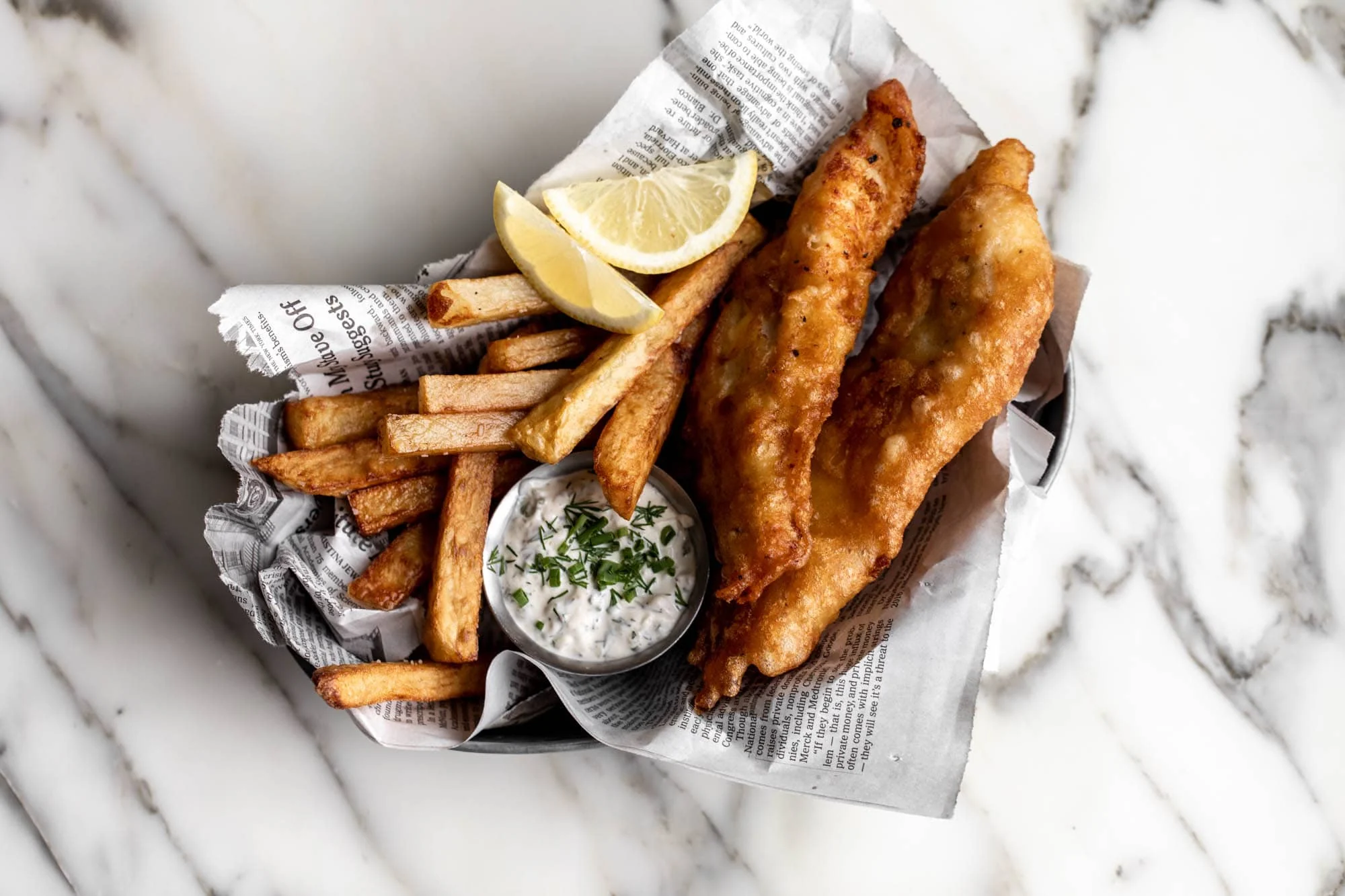
Fish and chips was one of those “special” dinners in my house growing up. When the paper bundle hit the table, everyone magically appeared in the kitchen doorway like it was a dinner bell. Years later, working bistro lines and then managing a bakery, I learned that the secret is not a mysterious batter mix. It is sequencing and a few unglamorous details like oil temperature and salting at the right moment.
This recipe is my home-kitchen version: crisp beer-battered white fish fillets, plus chips you can deep fry for the full experience or roast in the oven when you want less splatter. Either way, the goal is the same. Hot fish, hot chips, and that shattery crunch that holds up long enough for a second helping.
On the beer-batter front, here is what to expect: you are aiming for a thick but pourable batter that clings to the fish in a smooth coat, not a thin wash that slides off. Cold beer helps, and so does giving the batter a short rest. You will get a lighter, crisper crust without having to baby it.

You will also see a timing plan below. It is the calm, boring part that makes the whole meal feel easy. I wrote it the way I cook it: chips first, batter resting while the potatoes cook, then fish at the very end so it stays audibly crisp.
The timing plan (so everything lands hot)
If you take nothing else from this page, take this: the fish cooks fast, the potatoes take longer. Start the chips, then let the batter rest while the potatoes do their thing.
- T minus 60 minutes: Cut potatoes for chips. Soak in cold water. Even 20 to 30 minutes helps remove some surface starch for better browning and crisping.
- T minus 35 minutes: Drain and dry potatoes very well. Start oven chips, or start the first fry if deep frying chips. Mix batter and let it rest.
- T minus 15 minutes: Heat oil for fish to 350°F to 375°F. Prep fish (pat dry, season, light flour dusting).
- T minus 10 minutes: Finish chips until they are deep golden with crisp edges. Hold them hot in a 200°F oven while you fry fish.
- T minus 6 minutes: Fry fish in batches. Timing depends on thickness, so follow the cues: the coating is deeply golden and crisp, and the fish is opaque and flakes easily. Drain, then salt immediately. Serve right away with malt vinegar or lemon.
Oven chips or fried chips
Oven chips are lower drama and still very satisfying if you cut them thick, use enough oil, and give them space on the pan. They turn out crisp-edged and fluffy inside. I stick with soaking plus a thorough dry here because it fits real life. It is less fussy than parboiling, and it still gets you great texture when the oven is hot.
Fried chips are the classic. If you want that pub-style interior with a sturdy crust, go for a two-stage fry: a lower-temperature blanch fry at about 300°F to 325°F, then a hotter crisping fry at about 375°F. The recipe card below walks you through both options so you can choose on the day you are cooking.
Malt vinegar or lemon
I grew up team lemon, then I fell hard for malt vinegar as an adult. You do not have to pick a side. Put both on the table. If you want to maximize crispness, add your acid at the very end so the crust stays snappy. I like to hit the fish with a tiny splash of vinegar and save the bigger squeeze of lemon for the chips.
Why this recipe works
- Batter rest equals better crunch. A short rest lets the flour fully hydrate, which makes the batter coat more evenly and fry up crisper.
- Pat-dry fish plus a light flour dusting. Moisture is the enemy of adhesion. Dry fish and a thin flour layer help the batter grip so it does not slide off in the oil.
- Right oil temperature, maintained. Oil that is too cool leads to greasy, pale batter. Oil that is too hot can brown the crust before the fish is cooked through. A thermometer removes the guesswork.
- Drain, then salt immediately. Draining prevents sogginess, and salting while hot helps seasoning stick without soaking the crust later.
- Chips first, fish last. Fish is at its peak in the first minutes after frying. By cooking chips ahead and holding them warm, you serve the fish at its crispiest.
Ingredient notes
Best fish for beer batter
Choose a mild, flaky white fish that is not too thin. Cod, haddock, pollock, and halibut all work. If your fillets are very thin, shorten the fry time and watch the color closely.
Beer choice
A light lager or pale ale is friendly and reliable. Super hoppy beers can taste bitter once fried. If your beer is warm, chill it briefly. Colder batter helps the coating puff and crisp.
Flour and starch
All-purpose flour works. A small portion of cornstarch in the batter boosts crunch, especially in home frying where oil temperature can fluctuate.
Potatoes
Russets (or other starchy potatoes) make fluffy chips. Waxy potatoes work, but they lean more creamy and less airy inside. No matter what you use, dry them very well before cooking.
Oil
Use a neutral oil with a high smoke point like canola, peanut, vegetable, or sunflower oil. Avoid extra virgin olive oil for deep frying.
Malt vinegar, lemon, and salt
Malt vinegar is classic and punches through fried richness. Lemon is brighter and cleaner. For salting, I like fine sea salt or kosher salt right after draining.
Equipment you will need
- Deep, heavy pot or Dutch oven (for frying)
- Clip-on or instant-read thermometer (highly recommended for oil temperature)
- Wire rack set over a sheet pan (best draining setup)
- Sheet pan and parchment (for oven chips or holding fried chips warm)
- Slotted spoon or spider strainer (safer than tongs in hot oil)
- Mixing bowl and whisk (batter)
- Clean kitchen towel or paper towels (drying potatoes and fish)
Pro tips
- Dry, dry, dry. After soaking potatoes, dry them until they squeak against the towel. For fish, pat until no surface moisture remains.
- Rest the batter where you can see it. I set it on the counter and use that time to heat oil and prep the draining rack. Twenty minutes is a sweet spot.
- Keep the batter cold. If your kitchen is warm, park the resting batter in the fridge. Cold batter hitting hot oil helps the coating puff.
- Do not overcrowd the pot. Too many pieces drop the oil temperature fast, which equals greasy batter. Fry in batches and let oil recover between rounds.
- Drain on a rack, not on paper towels. Paper traps steam underneath and softens the crust. A rack lets air circulate.
- Salt as soon as the food is drained. Hot, freshly fried surfaces grab seasoning. Waiting even a few minutes makes salt bounce off.
- Hold chips warm, not fish. Chips can hang in a 200°F oven while you fry fish. Fish should go straight from rack to plate.
Substitutes that work
- No beer: Use very cold club soda or sparkling water for a similar lightness. Add a small squeeze of lemon to brighten.
- Gluten-free: Swap all-purpose flour for a 1:1 gluten-free flour blend, and keep the cornstarch. The batter may be slightly more delicate, so handle gently.
- No deep frying: Do oven chips and pan-fry the fish in a shallow layer of oil. You will not get the same puffed crust, but you can still get a crisp coating if the oil is hot and you do not move the fish too soon.
- No malt vinegar: Lemon wedges, distilled white vinegar, or even a quick pickle brine splash works in a pinch.
Variations
- Extra-crunch batter: Increase cornstarch slightly and keep the batter colder by resting it in the fridge.
- Spiced batter: Add smoked paprika, garlic powder, or a pinch of cayenne for gentle heat.
- Herb salt finish: Toss chips with salt plus finely chopped parsley right after draining.
- Classic British shop vibe: Serve with mushy peas and a generous hit of malt vinegar at the table.
Serving ideas
- Dips: Tartar sauce, lemony mayo, or ketchup with a dash of vinegar.
- Something green: Simple dressed greens, a cucumber salad, or quick slaw.
- Pickles: Dill pickles, pickled onions, or pickled jalapeños if you like a punchy contrast.
- How I plate it: Chips down first, fish on top, salt, then lemon wedges and malt vinegar on the side so everyone can finish their own.
Storage and reheating
Best way to store leftovers
Fish and chips is a “best today” meal, but leftovers can still be good if you re-crisp them properly. Cool completely, then store fish and chips in separate airtight containers in the fridge for up to 2 days.
Reheating (to bring back crispness)
- Oven or air fryer: Reheat on a rack at 425°F until hot and crisp. Chips usually take 8 to 12 minutes; fish often takes 6 to 10 minutes depending on thickness.
- Avoid the microwave: It steams the coating and turns it soft.
Common mistakes
- Skipping the drying step. Wet potatoes steam instead of crisp. Wet fish makes batter slip.
- Frying at the wrong temperature. Too cool tastes greasy. Too hot browns before the fish is cooked. Use a thermometer and let the oil recover between batches.
- Overmixing the batter. Whisk just until combined. A few small lumps are fine. Overmixing can make the coating tougher.
- Not resting the batter. Even a short rest improves texture and consistency.
- Draining on paper towels. It traps steam and softens the crust. Use a rack.
- Salting too late. Season right after draining while everything is hot.
- Trying to keep fried fish warm in the oven. It will lose crunch. Fry fish last and serve immediately.
FAQ
What oil temperature should I use for beer-battered fish?
A good target is 350°F to 375°F. In most home pots, 365°F is a comfortable middle ground that browns nicely without scorching. The key is keeping it steady by frying in batches.
How long should beer batter rest?
About 15 to 30 minutes. This rest improves the way the batter coats and crisps. If you rest longer than that, cover and refrigerate.
Why is my batter falling off the fish?
Usually it is surface moisture or not enough “grip.” Pat the fish dry, season it, then dust lightly with flour before dipping in batter. Also make sure the oil is hot enough so the coating sets quickly.
Can I make the batter ahead?
You can mix the dry ingredients ahead. For the best fizz and lightness, add the beer shortly before frying and give it a brief rest.
Do I have to soak the potatoes?
No, but it helps. A soak removes some surface starch so chips brown more evenly and feel less sticky. If you are short on time, rinse well and dry thoroughly.
What is the most important finishing step?
Drain on a rack and salt immediately. Then serve with malt vinegar or lemon at the table.
The recipe
Beer-Battered Fish and Chips
Crispy beer-battered white fish fillets with fluffy chips, plus a simple timing plan so everything hits the table hot. Choose oven chips or classic fried chips, then finish with malt vinegar or lemon and a generous pinch of salt.
- Prep
- 30 mins
- Cook
- 30 mins
- Total
- 1 hr
- Yield
- 4 servings
Ingredients
- For the chips (choose oven or fried):
- 2 lb russet potatoes, peeled (optional) and cut into thick chips
- Cold water, for soaking
- 2 to 3 tbsp neutral oil (for oven chips) or 6 to 8 cups neutral oil (for deep frying), as needed
- Fine sea salt or kosher salt, to taste
- For the fish:
- 1 1/2 lb white fish fillets (cod, haddock, pollock, or halibut), cut into 4 portions
- 1 tsp kosher salt, plus more to taste
- 1/2 tsp black pepper
- 1/2 cup all-purpose flour, for dusting
- Neutral oil, for frying (if not already frying chips), as needed
- For the beer batter:
- 1 cup all-purpose flour
- 1/4 cup cornstarch
- 1 1/2 tsp baking powder
- 1/2 tsp kosher salt
- 1 cup cold beer (light lager or pale ale), plus more as needed
- To finish and serve:
- Malt vinegar, for serving
- Lemon wedges, for serving
Instructions
- Soak the potatoes. Place the cut potatoes in a bowl and cover with cold water. Soak 20 to 60 minutes while you prep everything else. Drain, then dry very thoroughly with a clean towel.
- Make the batter, then rest it. In a medium bowl, whisk together the 1 cup flour, cornstarch, baking powder, and 1/2 tsp salt. Whisk in 1 cup cold beer until you have a thick but pourable batter. If it seems too thick to coat, add a splash more beer. Let the batter rest 15 to 30 minutes (refrigerate if your kitchen is warm).
- Choose your chips method:
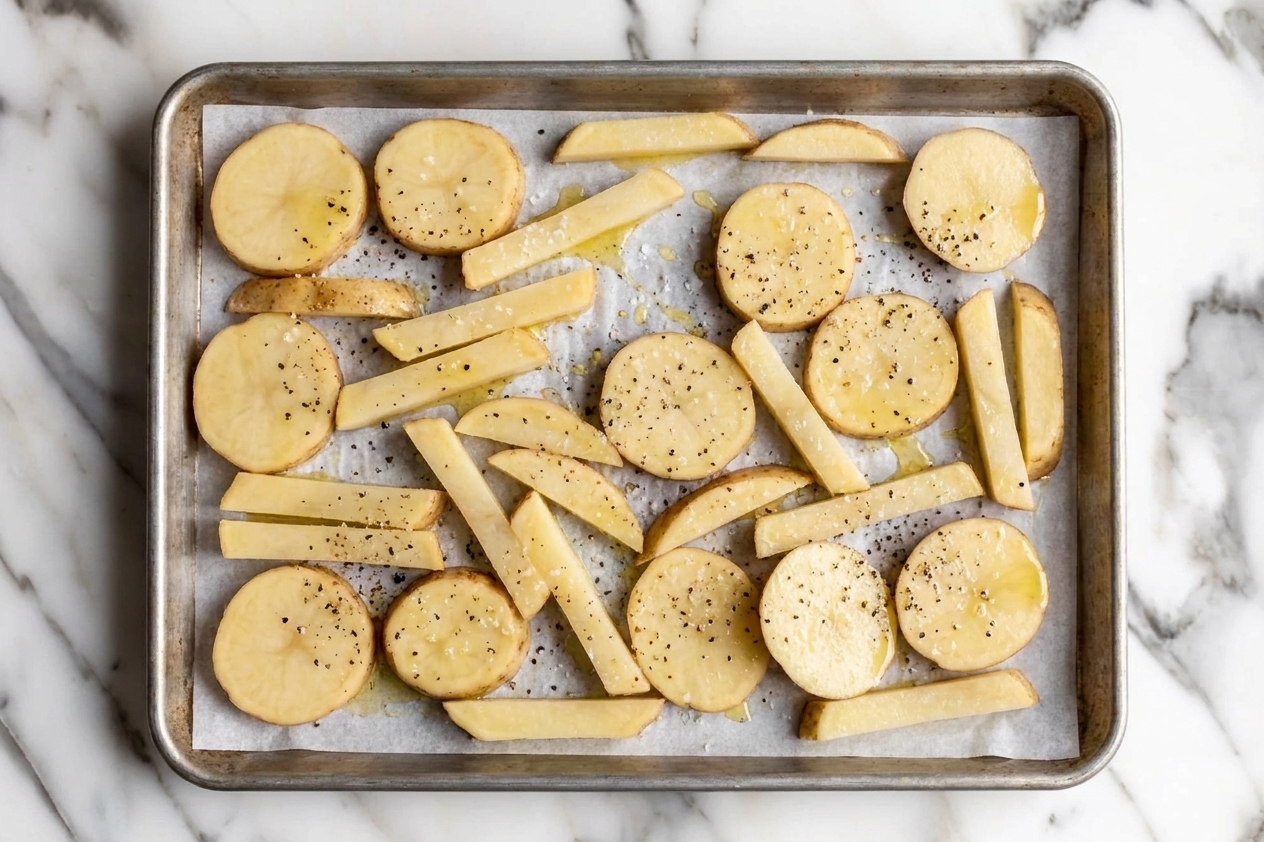
- Oven chips: Heat oven to 450°F. Toss dried potatoes with 2 to 3 tbsp neutral oil and a pinch of salt. Spread in a single layer on a sheet pan. Roast 20 minutes, flip, then roast 15 to 25 minutes more until deeply golden and crisp at the edges. Keep warm in a 200°F oven while you fry fish.
- Fried chips (two-stage): Heat oil in a deep, heavy pot to 325°F. Fry potatoes in batches 4 to 6 minutes until tender and pale, not browned. Drain on a wire rack. Raise oil to 375°F and fry again in batches 2 to 4 minutes until golden and crisp. Drain on rack and salt immediately. Hold warm in a 200°F oven while you fry fish.
- Heat oil for the fish. Heat neutral oil in a deep pot to 365°F (aim for 350°F to 375°F). Set a wire rack over a sheet pan for draining.
- Prep the fish for batter. Pat fish very dry. Season with 1 tsp salt and the pepper. Lightly dust each piece with the 1/2 cup flour, shaking off excess.
- Batter and fry. Dip a floured fish piece into the rested batter, let excess drip back into the bowl, then carefully lower into the hot oil. Fry in batches, turning once if needed, 3 to 6 minutes total depending on thickness, until deeply golden and crisp and the fish is opaque and flakes easily. Let oil return to temperature between batches.
- Drain and salt. Transfer fried fish to the wire rack. Salt immediately while hot.
- Serve hot. Plate chips and fish right away. Serve with malt vinegar and lemon wedges on the side so everyone can finish to taste.
Notes
- Oil safety: Never fill your pot more than halfway with oil. Lower food in carefully to prevent splashing, and monitor temperature throughout.
- Batching matters: Overcrowding drops oil temperature quickly and leads to greasy batter. Fry fewer pieces at a time and keep them moving only after the coating sets.
- Best draining setup: A wire rack keeps the crust crisp. If you must use paper towels, move the fish to a rack after 30 seconds so it does not steam.
- Holding chips: Chips can wait in a 200°F oven for 15 to 25 minutes. Fish is best served immediately.