
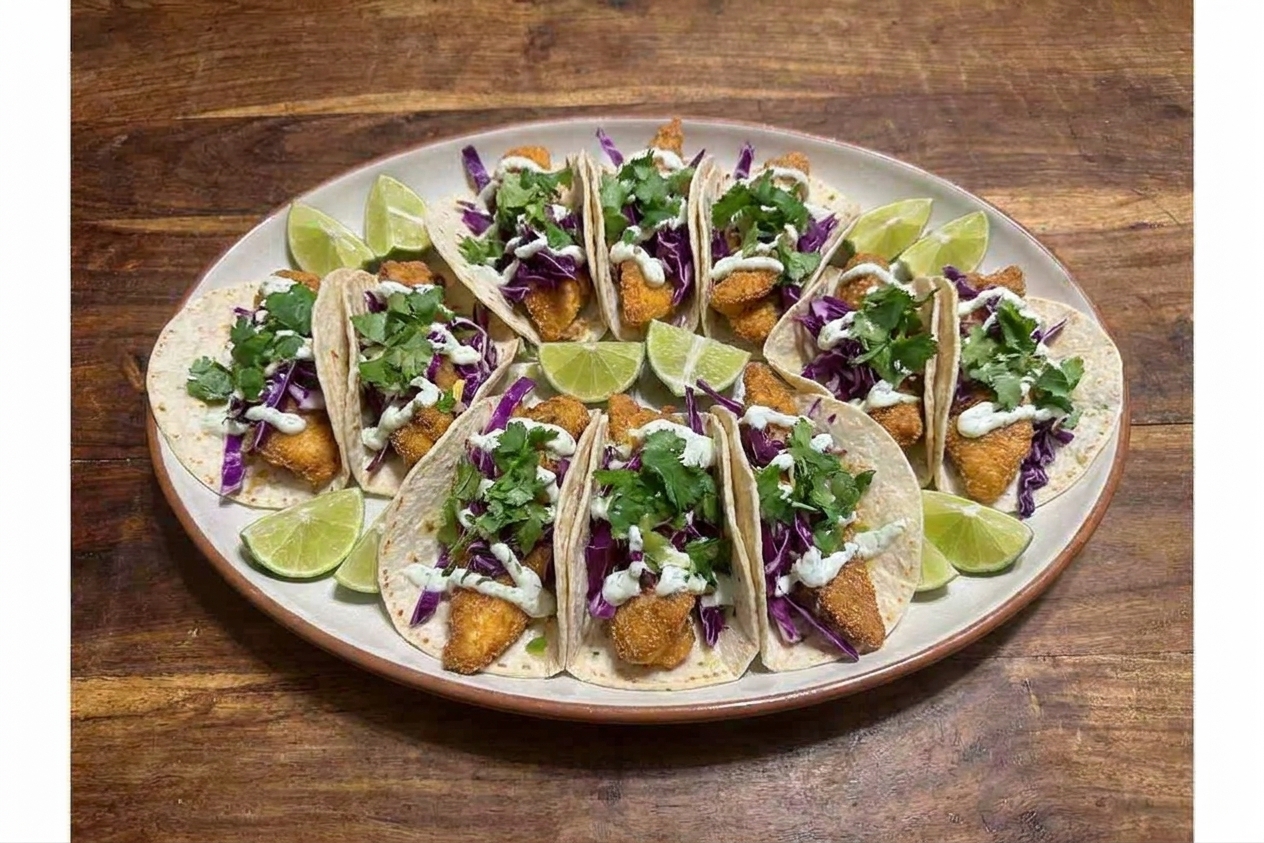
The first time I tried a proper Baja fish taco, it was the contrast that got me. Shatteringly crisp fish, cool crunchy cabbage, a tangy lime crema that tastes like someone squeezed a lime right over the whole taco, and a warm tortilla holding it together like a soft little life raft.
This is my home kitchen version, written for real people cooking in real kitchens. I fry the fish in strips, not chunks, because strips cook fast and evenly and they tuck into tortillas without turning into a slippery mess.

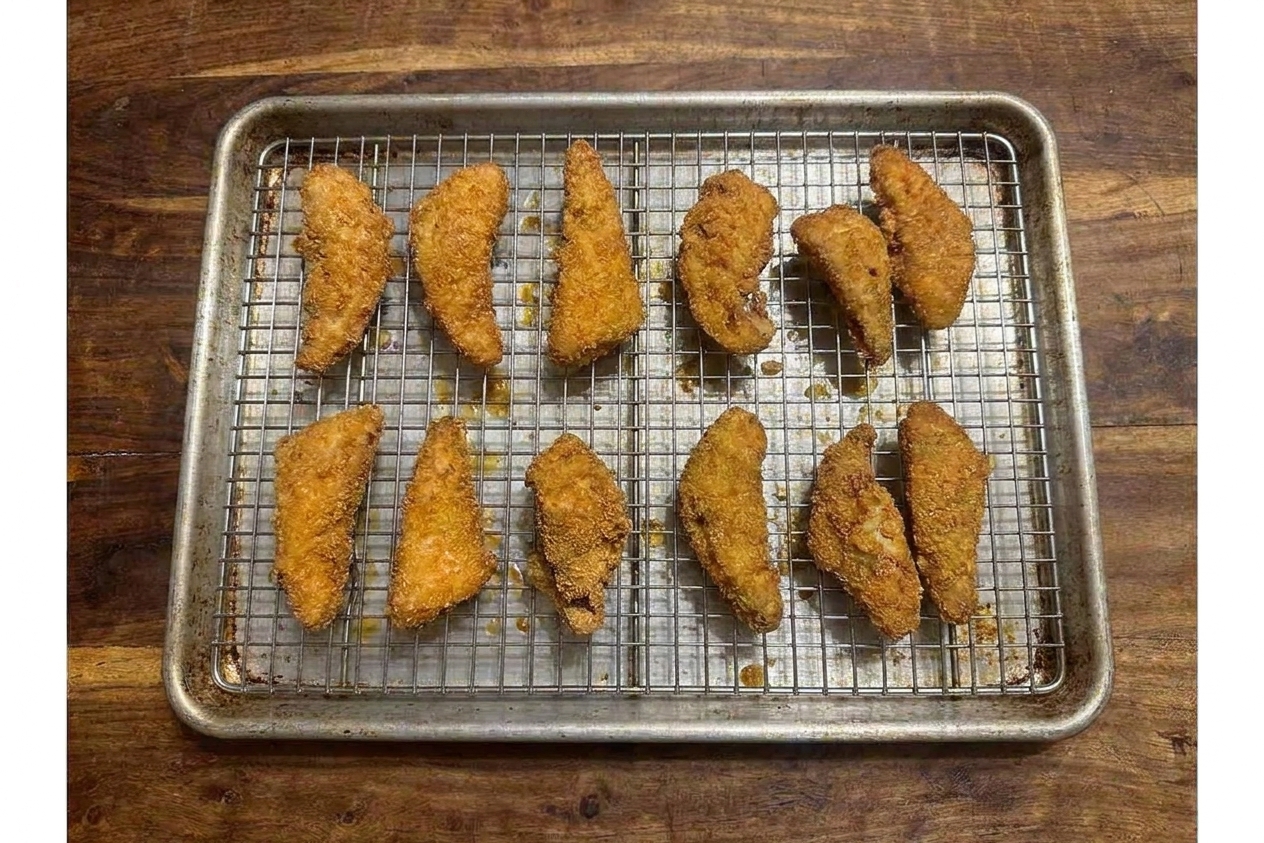
You will also get the details that actually make or break fried fish: keep the oil at 350 to 365 F so the coating stays crisp instead of greasy, mix a batter that looks like thin pancake batter (it should coat a spoon, then drip off in slow ribbons), and drain the fish on a wire rack set over a sheet pan so steam does not steal your crunch while you fry the next batch.
If you are torn between a beer batter and a simple flour batter, you are in good company. Beer can give you a slightly lighter, bubblier coat, especially when it is cold and you mix it just until smooth. Sparkling water or plain ice water is a great option when you want the crunch without opening a bottle. I included both options, so you can cook what matches your pantry and your mood.
Why this recipe works
- Fish cut into strips cooks fast and stays juicy. Thin, even pieces mean the coating crisps before the fish dries out.
- Proper oil temperature prevents greasy tacos. Hot oil sets the batter quickly so it does not soak up oil. You will hold the oil around 350 to 365 F for the best crunch.
- A batter with the right thickness clings instead of sliding off. You are aiming for a texture like thin pancake batter that coats the back of a spoon and slowly drips off in ribbons.
- Draining on a rack keeps the coating crisp. Paper towels trap steam under the fish. A wire rack lets air circulate so the crust stays snappy.
- Cool cabbage plus lime crema balances the fry. The tacos taste bright and fresh, not heavy.
Ingredient notes
Best fish for Baja tacos
Look for a mild white fish that flakes nicely: cod, haddock, pollock, halibut (a little pricier), or even tilapia in a pinch. Fresh or thawed-from-frozen both work, but thawed fish must be patted very dry so the batter sticks.
Tortillas
Corn tortillas are classic and have that toasty flavor that plays well with fried fish. Flour tortillas are softer and easier for little hands. Either is great, but do warm them so they do not crack.
Cabbage
Green cabbage is crunchy and holds up. Red cabbage adds color. I often do a mix if I have it. Slice it thin so it does not fight you when you take a bite.
Lime crema
Sour cream makes a thick, clingy sauce. Mexican crema is slightly looser and extra lovely if you can find it. A little lime juice, zest, and salt makes it taco-ready.
Beer batter vs flour batter
Beer brings carbonation and flavor, which helps a lighter crust. If you do not want beer, use very cold sparkling water or ice water. Cold liquid helps the batter puff and crisp.
Equipment you will need
- Heavy pot or Dutch oven for safer, steadier frying
- Deep-fry or instant-read thermometer to keep oil at 350 to 365 F
- Wire rack set over a sheet pan for draining
- Tongs or a spider strainer for lifting fish out of oil
- Mixing bowls for batter and dredge
- Paper towels for blotting fish dry and quick counter cleanup
Pro tips
- Dry fish is happy fish. Pat the strips dry, then salt them. Moisture is the enemy of batter adhesion.
- Keep your batter cold. Mix it right before frying and use cold beer or cold sparkling water. If your kitchen runs warm, park the bowl over an ice pack.
- Watch the batter ribbon. Dip a spoon in the batter. It should coat the spoon and drip off slowly in ribbons. If it pours like water, add a tablespoon or two more flour. If it sits like paste, whisk in a splash of cold liquid.
- Do not crowd the pot. Fry in batches. Crowding drops the oil temperature and makes the coating oily and soft.
- Drain on a rack, then season. Move fish to a wire rack, sprinkle with a pinch of salt while hot, and keep frying. If you must use paper towels, place fish on towels briefly, then move to a rack.
- Keep finished fish warm in the oven. A 200 F oven with the rack set over a sheet pan keeps pieces crisp while you finish the rest.
Substitutes that work
- No beer: Use cold sparkling water, club soda, or ice water. The colder and fizzier, the better.
- No sour cream: Use Greek yogurt for a tangier, thicker crema. Thin with a teaspoon or two of water if needed.
- Gluten-free: Use a gluten-free all-purpose flour blend for the batter and dredge, plus corn tortillas. (Texture varies by brand, so lean on the batter thickness cue rather than exact liquid amounts.)
- No cabbage: Thin-sliced romaine, shredded Brussels sprouts, or a quick slaw mix works.
- Heat level: Add hot sauce to the crema, or tuck in sliced jalapeños or a pinch of cayenne in the batter.
Variations
- Extra crispy panko finish: After battering, lightly press the fish into panko crumbs, then fry. It is not traditional, but it is wildly crunchy.
- Spiced batter: Add chili powder, cumin, or smoked paprika to the flour for a warmer flavor.
- Slaw-style topping: Toss cabbage with a pinch of salt and a squeeze of lime, then let it sit 10 minutes to soften slightly.
- Avocado add-on: Add sliced avocado or a quick guacamole for a richer taco.
Serving ideas
- Serve with lime wedges, extra crema, and hot sauce at the table.
- Add a side of black beans or refried beans for a fuller meal.
- Keep it snacky with chips and salsa or quick pickled onions.
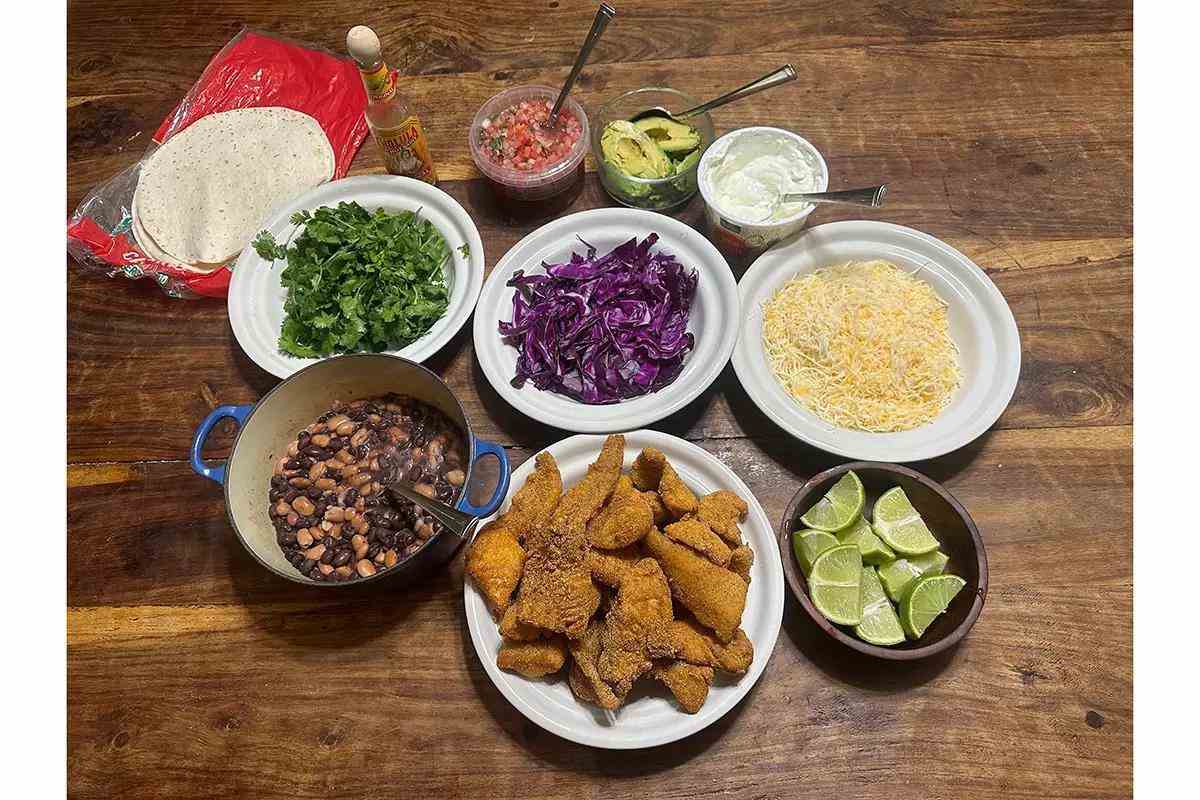
- For a party, set up a taco board with tortillas wrapped in a towel, a big bowl of cabbage, crema, and a tray of fish coming out in batches.
Storage and reheating
Best way to store
Fish tacos are at their peak right after frying, but leftovers can still be tasty if you store them smartly. Store fish, cabbage, tortillas, and crema separately in airtight containers.
How to reheat fried fish strips
- Oven: Reheat on a wire rack set over a sheet pan at 425 F until hot and re-crisped, about 6 to 10 minutes depending on thickness.
- Air fryer: 375 to 400 F for 3 to 6 minutes, shaking once.
- Avoid the microwave: It softens the coating fast.
How long it keeps
Refrigerate for up to 2 days. Crema is usually fine for 3 to 4 days, depending on your dairy’s date.
Common mistakes
- Oil is not hot enough. If the oil is under 340 F, the batter absorbs oil before it sets. Use a thermometer and let oil recover between batches.
- Fish is wet. Excess moisture makes batter slide off and can cause sputtering. Pat dry thoroughly.
- Batter is too thin or too thick. Too thin will drip off. Too thick turns bready and can hide the fish. Use the ribbon test and adjust.
- Crowding the pot. Too many pieces at once drops the temperature and leads to pale, oily coating.
- Draining on paper towels only. Trapped steam softens the crust. Use a wire rack whenever possible.
- Building tacos too early. Assemble right before eating so tortillas do not get soggy.
FAQ
What oil temperature should I use for Baja fish tacos?
Aim for 350 to 365 F. Start frying around 360 F, then adjust heat to keep it in that range. The temperature will dip when fish goes in, which is normal.
How do I know the batter thickness is right?
Dip a spoon into the batter. It should coat the spoon and drip off in slow ribbons, like thin pancake batter. If it runs off like water, whisk in a little more flour. If it clumps and barely moves, whisk in a splash of cold beer or water.
How do I drain fried fish so it stays crispy?
Use a wire rack set over a sheet pan. Air circulation is what keeps the crust crisp. Season with salt while it is hot on the rack.
Can I bake the fish instead of frying?
You can, but it will not taste like Baja-style fried fish tacos. If you want a lighter option, try a breaded oven bake on a hot sheet pan, or use an air fryer.
Can I make anything ahead?
Yes. Make the lime crema and shred the cabbage up to a day ahead. Cut and dry the fish shortly before frying for best texture.
The recipe
Baja Fish Tacos
Crispy Baja-style fish strips fried in a light batter and tucked into warm tortillas with crunchy cabbage and tangy lime crema.
- Prep
- 20 minutes
- Cook
- 15 minutes
- Total
- 35 minutes
- Yield
- 4 servings
Ingredients
- For the lime crema
- 1/2 cup sour cream or Mexican crema
- 1 lime, zested and juiced (about 2 tablespoons juice)
- 1 tablespoon mayonnaise (optional, for extra richness)
- 1/4 teaspoon kosher salt, plus more to taste
- For the cabbage
- 3 cups thinly sliced green cabbage (or a mix of green and red)
- 1 tablespoon lime juice (from the lime above is fine)
- Pinch of salt
- For the fish
- 1 1/2 pounds mild white fish (cod, haddock, pollock, halibut, or tilapia), cut into strips about 1-inch thick and 4 to 5 inches long
- 1 teaspoon kosher salt
- 1/2 teaspoon garlic powder
- 1/2 teaspoon ground cumin (optional)
- For dredging
- 1/2 cup all-purpose flour
- 2 tablespoons cornstarch
- 1/2 teaspoon kosher salt
- For the batter (choose one)
- Beer batter: 1 cup all-purpose flour
- Beer batter: 2 tablespoons cornstarch
- Beer batter: 1 teaspoon baking powder
- Beer batter: 3/4 teaspoon kosher salt
- Beer batter: 3/4 cup cold beer (lager works well), plus more as needed
- Flour batter: 1 cup all-purpose flour
- Flour batter: 2 tablespoons cornstarch
- Flour batter: 1 teaspoon baking powder
- Flour batter: 3/4 teaspoon kosher salt
- Flour batter: 3/4 cup very cold sparkling water or ice water, plus more as needed
- For frying
- Neutral oil with a high smoke point (canola, vegetable, peanut), enough for 1 1/2 to 2 inches depth in your pot (about 6 to 8 cups depending on pot size)
- For serving
- 8 to 12 corn or flour tortillas
- Lime wedges
- Hot sauce (optional)
- Fresh cilantro (optional)
Instructions
- Make the lime crema. In a small bowl, stir together the sour cream (or crema), lime zest, lime juice, mayonnaise (if using), and salt. Taste and adjust with more salt or lime. Refrigerate while you cook.
- Toss the cabbage. In a medium bowl, toss cabbage with 1 tablespoon lime juice and a pinch of salt. Set aside. This lightly softens it without losing crunch.
- Prep and season the fish. Pat fish strips very dry with paper towels. Season with the salt, garlic powder, and cumin (if using). Set aside while you heat the oil.
- Set up your draining station. Place a wire rack over a sheet pan. This is where the fish will drain so it stays crisp.
- Heat the oil to 360 F. Pour oil into a heavy pot or Dutch oven to a depth of 1 1/2 to 2 inches. Heat over medium-high to 360 F. Adjust heat as needed to keep oil between 350 and 365 F while frying.
- Mix the dredge. In a shallow bowl, whisk together 1/2 cup flour, 2 tablespoons cornstarch, and 1/2 teaspoon salt.
- Mix the batter. In a separate bowl, whisk together the batter dry ingredients (flour, cornstarch, baking powder, salt). Whisk in 3/4 cup cold beer (or cold sparkling water) until smooth. The batter should be the texture of thin pancake batter: it should coat the back of a spoon and drip off slowly in ribbons. If too thick, whisk in a splash more cold liquid. If too thin, whisk in 1 to 2 tablespoons flour.
- Dredge, batter, and fry in batches. Working with a few strips at a time, lightly coat fish in the dredge and shake off excess. Dip into batter, let excess drip for a second, then carefully lower into the hot oil. Fry 2 to 4 strips at a time to avoid crowding.
- Fry until crisp and cooked through. Fry, turning once or twice, until deeply golden and crisp, about 2 to 4 minutes total depending on thickness. The fish should feel firm and flake easily when nudged.
- Drain properly and season. Lift fish out with tongs or a spider and place on the wire rack. Immediately sprinkle with a pinch of salt. Let the oil return to 350 to 365 F before frying the next batch.
- Warm the tortillas. Warm tortillas in a dry skillet, directly over a gas flame, or wrapped in a towel in the microwave. Keep them covered so they stay soft.
- Assemble the tacos right before eating. Add cabbage to each tortilla, top with 1 to 2 fish strips, drizzle with lime crema, and finish with cilantro, hot sauce, and lime wedges as you like.
Notes
Keeping fish hot and crispy: If you are frying in batches, keep finished fish on a wire rack over a sheet pan in a 200 F oven.
Batter texture cue: The exact amount of liquid can vary by flour brand and humidity. Trust the ribbon test more than the measuring cup.
Safety note: Fry with a thermometer, do not fill the pot more than halfway with oil, and keep kids and pets clear of the stove while frying.