
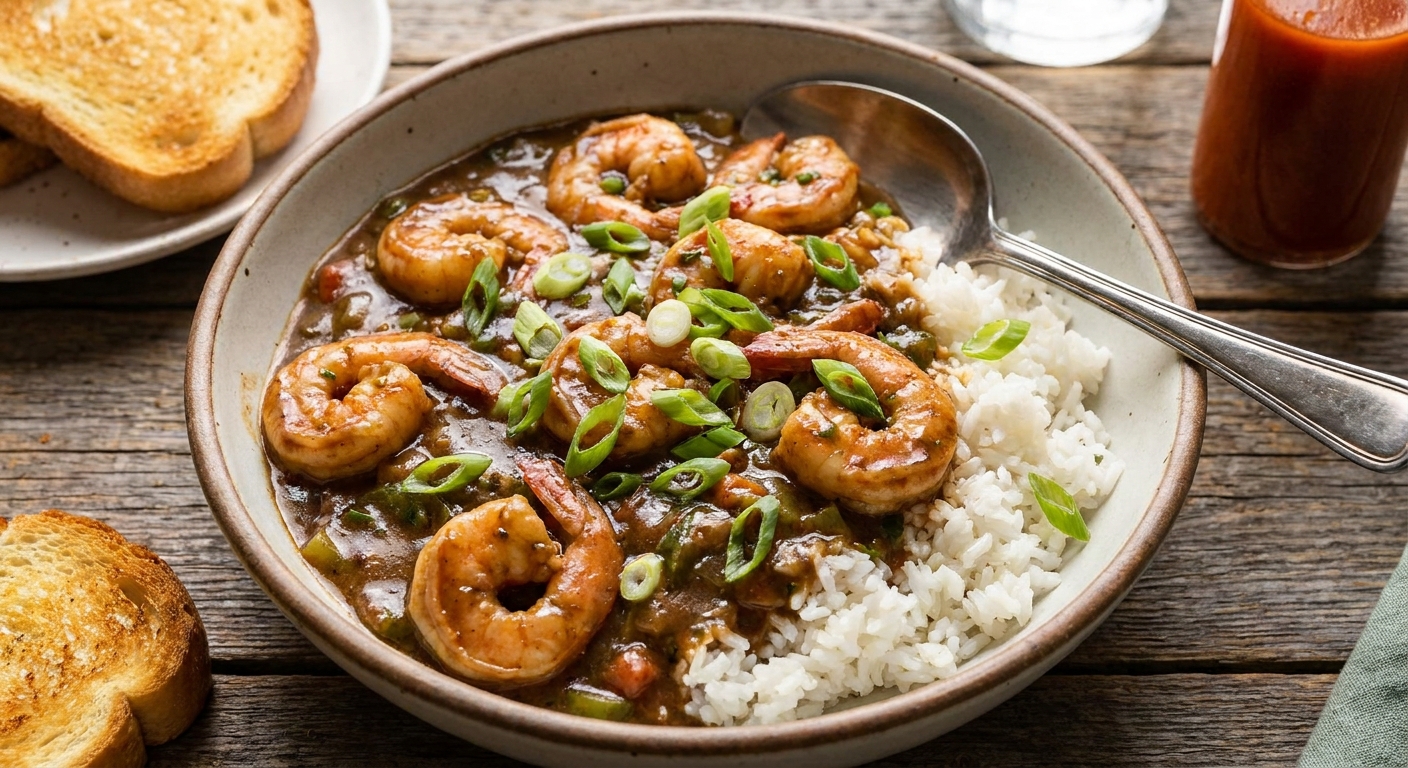
Étouffée is one of my favorite “looks fancy, cooks simple” meals. It is not a soup. It is not a one-pot rice dish. It is a thick, savory gravy that you ladle generously over rice, and when it is done right, it tastes like it has been simmering all day even if you made it on a weeknight.

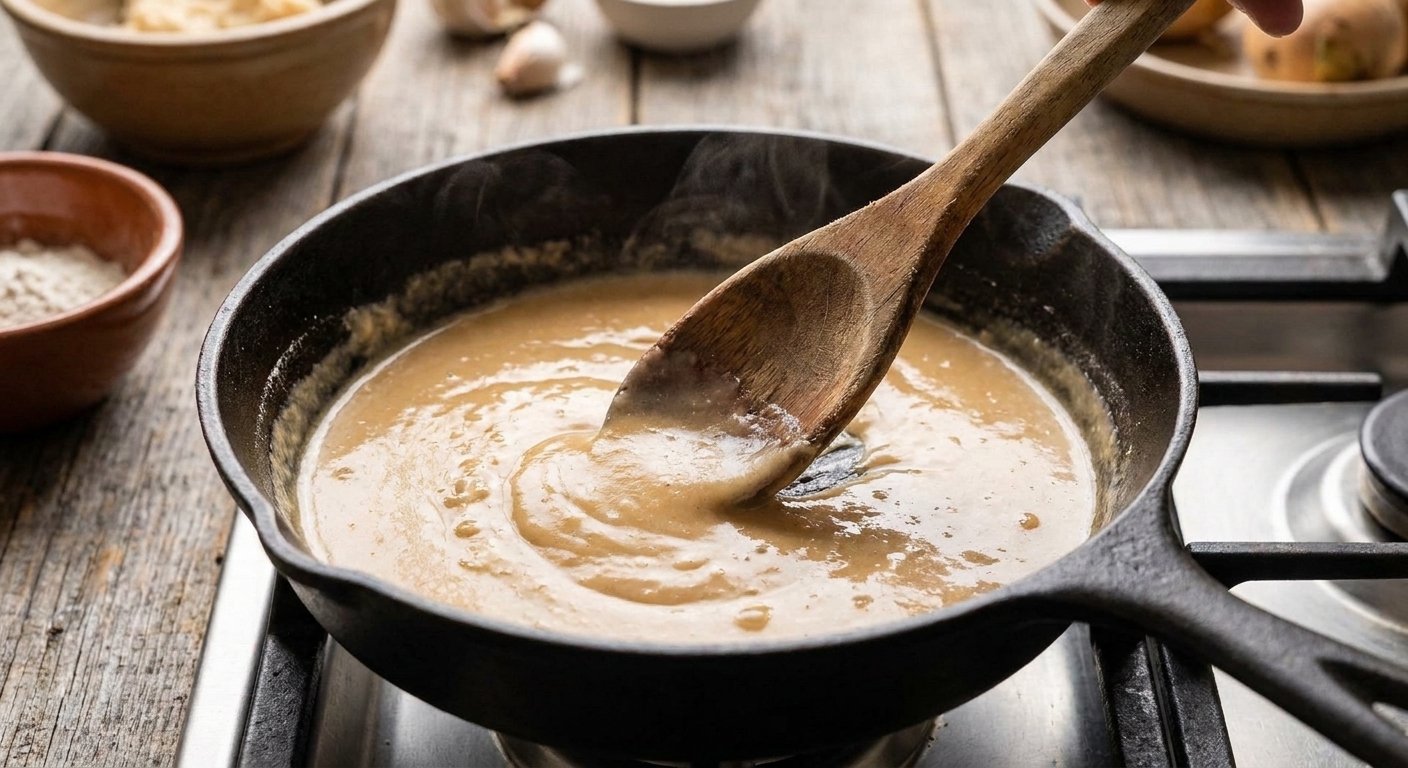
The backbone here is a blond to medium roux, which gives you a nutty, toasty base without the deep darkness you would chase for gumbo. Some people like to push the roux darker, especially in Cajun-leaning versions, but for this quick, shrimp-forward weeknight style, I stop at blond or medium. From there, we build the flavor with the holy trinity, let it thicken into a gravy, and only then add shrimp. That shrimp timing is the difference between plump and juicy versus rubbery and sad.
What to expect
In the pot, you are looking for three milestones.
- Roux color: Think peanut butter for medium, or pale sand for blond. Either works, and both make a silky sauce.
- Gravy thickness: Not watery and not paste thick. You want it to coat the back of a spoon and slowly slide off in a smooth sheet.
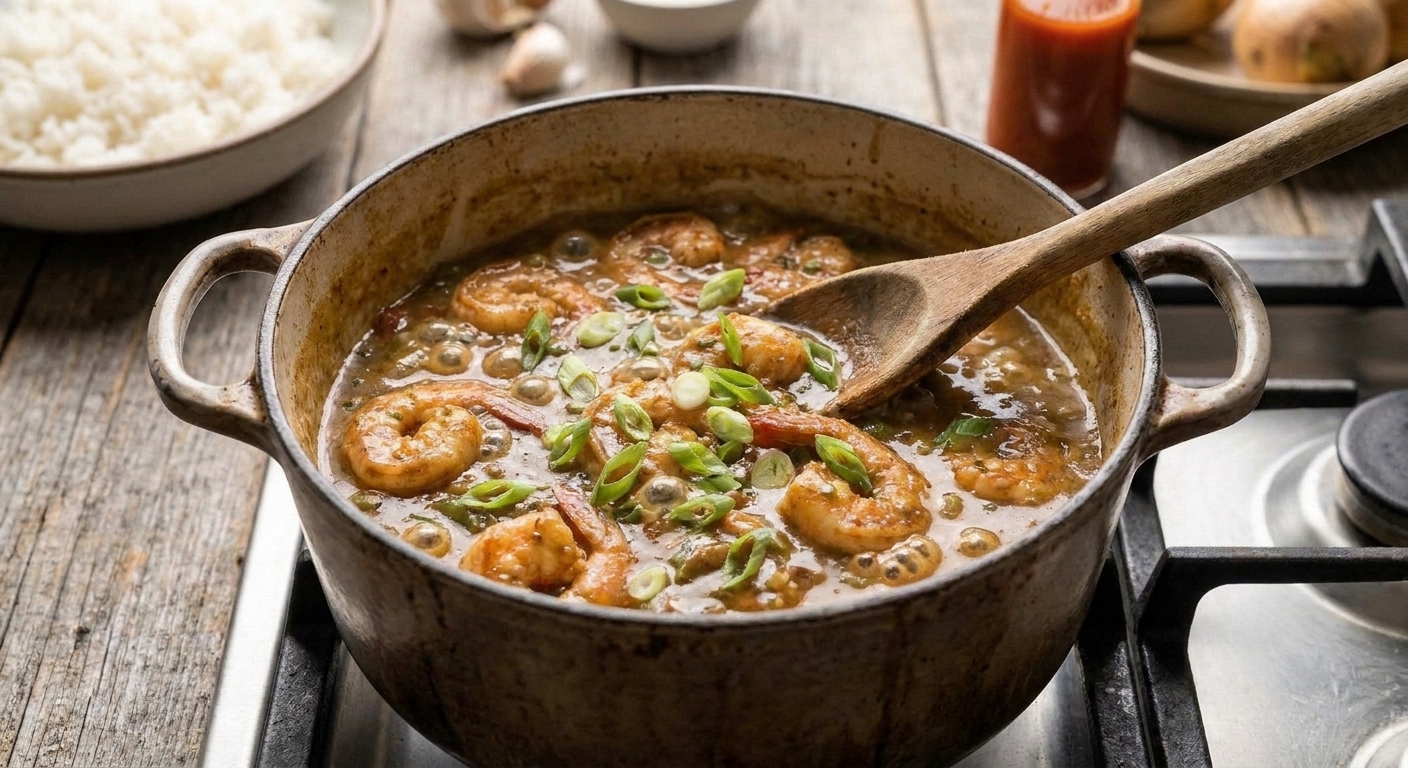
- Shrimp timing: Shrimp goes in at the end and cooks just until it turns opaque and curls into a gentle C shape.
This one is weeknight-friendly, about 55 minutes start to finish including prep, and the heat level is up to you. Most Cajun or Creole seasoning blends land at a medium warmth, but you can keep it mild by starting light and adding more at the table.
Why this recipe works
- A blond or medium roux builds body fast. You get a thick, velvety gravy and a warm, nutty flavor without needing a long simmer.
- The holy trinity goes in after the roux. Adding onion, celery, and bell pepper once the roux is ready cools it down, stops the roux from over-browning, and starts layering sweetness and aroma right away.
- Gravy thickness is adjustable. You control the final texture by simmering to reduce and by adding broth in small splashes if it gets too tight.
- Shrimp cook gently in the finished sauce. Adding them at the end protects their texture and keeps the seafood flavor bright instead of overcooked.
Ingredient notes
Shrimp
Use large shrimp if you can. Peel and devein them, and pat dry so they do not water down the gravy. If you have shells, save them for a quick stock another day, but this recipe works beautifully with store-bought broth.
Roux (flour and fat)
A classic roux is equal parts flour and fat by volume. For étouffée, aim for blond to medium: pale golden to peanut butter. Darker is not wrong, but it shifts you toward gumbo territory and can mute the sweet shrimp flavor.
The holy trinity
Onion, celery, and green bell pepper are the foundation. Dice them evenly so they soften at the same pace and melt into the gravy.
Stock or broth
Seafood stock is wonderful, but chicken broth is a very common, very practical choice and still tastes great. Use low-sodium if possible so you can control the salt.
Seasonings
Cajun or Creole seasoning is convenient, but brands vary wildly in salt and heat. Taste as you go. A small pinch of cayenne can wake everything up if you want more heat.
Finishers
Butter at the end makes the sauce taste rounder and silkier. A squeeze of lemon brightens the whole pot. Green onions and parsley add that fresh top note that makes the dish feel balanced.
Equipment you will need
- Heavy-bottomed pot or Dutch oven: helps the roux cook evenly without scorching.
- Wooden spoon or flat-edged spatula: for constant stirring while the roux colors.
- Chef’s knife and cutting board: for the trinity and herbs.
- Measuring cups and spoons: especially helpful for consistent roux ratios.
- Rice pot or rice cooker: étouffée wants separate, fluffy rice.
Pro tips
- Pick your roux color on purpose. Blond cooks faster and tastes lighter. Medium tastes toastier. Stop when it looks like the shade you want, because it can go from perfect to too dark quickly.
- Stir the roux constantly. If you see dark specks forming, the flour is scorching. Lower the heat immediately and keep stirring.
- Add broth gradually. Pouring all the liquid in at once can make lumps harder to whisk out. Add in stages, stirring until smooth each time.
- Simmer uncovered for thickness. If the gravy looks thin, give it time. A steady simmer reduces and concentrates.
- Add shrimp when the gravy is where you want it. Shrimp release a little liquid as they cook. If you add them too early, you risk thinning the sauce and overcooking them while you chase thickness.
- Watch the shrimp, not the clock. They are done when opaque and just curled. If they are tightly coiled into O shapes, they have gone too far.
Substitutes that work
- No green bell pepper: use yellow or red bell pepper for a sweeter flavor, or add an extra celery stalk and call it a day.
- No Cajun or Creole seasoning: season with paprika, garlic powder, onion powder, black pepper, a pinch of thyme, and cayenne to taste.
- No seafood stock: chicken broth works well. Vegetable broth is fine in a pinch, but you may want an extra knob of butter and a little more seasoning for depth.
- Gluten-free: use a gluten-free all-purpose flour blend for the roux. Stir diligently and keep the heat moderate, as some blends brown faster.
- No fresh herbs: dried parsley is not the same, but it is better than skipping all green freshness. Use a smaller amount and finish with extra green onion if you have it.
Variations
- Extra-creamy étouffée: finish with a small splash of heavy cream after the shrimp are cooked, then warm gently. Do not boil hard.
- Spicier étouffée: add a minced jalapeño with the trinity, or increase cayenne slowly until it is where you like it.
- Smoky version: add a small amount of smoked paprika, but keep it subtle so it does not cover the shrimp.
- Seafood blend: swap in some crawfish tails if you can find them, or add a handful of lump crab at the very end off heat so it stays delicate.
Serving ideas
- Classic: ladle over hot white rice and top with green onions and parsley.
- Side ideas: a simple green salad with a tangy vinaigrette, roasted okra, or buttery corn on the cob.
- For the table: hot sauce, lemon wedges, and extra chopped herbs so everyone can finish their bowl their way.
Storage and reheating
Refrigerate
Store étouffée and rice separately in airtight containers for up to 3 days. Keeping them apart helps the rice stay fluffy and the sauce stay saucy.
Reheat
Warm the étouffée gently on the stovetop over medium-low heat, stirring often. Add a splash of broth or water if it thickened too much in the fridge. Heat just until steaming.
Freezing
You can freeze the sauce, but shrimp can turn a little firmer after thawing. If you are planning ahead, freeze the gravy before adding shrimp, then thaw, reheat, and add fresh shrimp at the end.
Common mistakes
- Taking the roux too dark. A very dark roux tastes great, but it pulls you away from étouffée’s lighter, shrimp-forward vibe. Stop at blond or medium for this style.
- Walking away from the roux. Roux demands attention. Even a minute of distraction can scorch flour on the bottom of the pot.
- Adding shrimp too early. If you add shrimp while you are still thickening the gravy, you will likely overcook them. Get the sauce right first.
- Boiling hard after adding shrimp. A hard boil toughens shrimp quickly. Keep it at a gentle simmer or even just a low bubble.
- Over-salting from seasoning blends. Cajun and Creole seasonings can be salty. Add in increments and taste before you add more.
FAQ
What is the difference between shrimp étouffée and shrimp gumbo?
Étouffée is a thick gravy served over rice. Gumbo is a soupier stew, often built with a darker roux and sometimes thickened with okra or filé, and usually served with rice on the side.
Should I use a blond or medium roux?
Either is delicious. Blond is lighter and a little sweeter. Medium is nuttier and slightly deeper. For first-timers, medium is easy to recognize because it looks like peanut butter.
How thick should the gravy be?
Thick enough to coat a spoon and cling to rice. If you drag a spoon through the pot, you should briefly see a trail before the sauce slowly fills in.
How do I keep shrimp from getting rubbery?
Add them at the very end and cook just until opaque. Turn off the heat a touch early, because residual heat will finish the job.
Can I make it ahead?
Yes. Make the gravy up to a day ahead, then reheat gently and add the shrimp right before serving for the best texture.
The recipe
Shrimp Étouffée
A classic Louisiana shrimp étouffée made with a blond or medium roux, the holy trinity, and a thick, silky gravy. Shrimp are added at the end so they stay tender, then everything is spooned over fluffy rice.
- Prep
- 20 minutes
- Cook
- 35 minutes
- Total
- 55 minutes
- Yield
- 4 servings
Ingredients
- 1 1/2 lb large shrimp, peeled and deveined
- Fine salt and black pepper, to taste
- 4 tbsp neutral oil (or unsalted butter)
- 4 tbsp all-purpose flour
- 1 medium yellow onion, finely diced
- 1 green bell pepper, finely diced
- 2 celery stalks, finely diced
- 3 to 4 garlic cloves, minced
- 2 tbsp tomato paste (optional, for color and depth)
- 2 tsp Cajun or Creole seasoning (start lower if yours is salty)
- 1/2 tsp dried thyme
- 1 bay leaf
- 2 1/2 cups seafood stock or low-sodium chicken broth, plus more as needed
- 2 tbsp unsalted butter, for finishing
- 1 to 2 tsp fresh lemon juice, to taste
- 2 to 3 green onions, thinly sliced
- 2 tbsp chopped fresh parsley
- Cooked white rice, for serving
Instructions
- Season and prep the shrimp. Pat the shrimp dry and season lightly with salt and pepper. Refrigerate while you start the sauce.
- Make a blond or medium roux. In a heavy-bottomed pot or Dutch oven, heat the oil over medium heat. Sprinkle in the flour and stir constantly until smooth. Keep stirring as it bubbles and turns from pale to golden. Stop at blond (pale golden) or medium (peanut butter color), 6 to 12 minutes depending on your heat and pot. If it starts to darken too quickly, lower the heat.
- Cook the holy trinity. Add the onion, bell pepper, and celery to the roux. Stir well, scraping the bottom, and cook until the vegetables soften, 6 to 8 minutes. Add the garlic and cook 30 to 60 seconds more.
- Build the base. Stir in the tomato paste (if using) and cook for 1 minute. Add Cajun or Creole seasoning, thyme, and the bay leaf.
- Add broth gradually, then simmer. Pour in the stock or broth in a slow stream, stirring constantly to keep the gravy smooth. Bring to a gentle simmer, then reduce heat to maintain low, steady bubbling. Simmer uncovered until thickened to a spoon-coating gravy, 10 to 15 minutes. If it gets too thick, add a splash of broth and stir smooth.
- Add shrimp at the end. Once the gravy is the thickness you want, stir in the shrimp. Cook gently until the shrimp turn opaque and just curl, about 2 to 4 minutes depending on size. Avoid a hard boil.
- Finish and serve. Turn off the heat. Stir in the butter until melted and glossy, then add lemon juice to taste. Remove the bay leaf. Taste and adjust salt, pepper, and seasoning. Serve hot over cooked rice and top with green onions and parsley.
Notes
- Roux color: For étouffée, blond to medium is ideal. Darker roux tastes more roasted and can steer the flavor closer to gumbo.
- Gravy thickness cue: If you draw a line through the sauce with your spoon and it slowly fills back in, you are in the right zone.
- Shrimp timing: If you are nervous about overcooking, pull the pot off heat right after adding shrimp and stir. Residual heat will finish them gently.
- Make ahead: Make the gravy (without shrimp) up to 1 day ahead. Reheat to a gentle simmer, then add shrimp right before serving.