
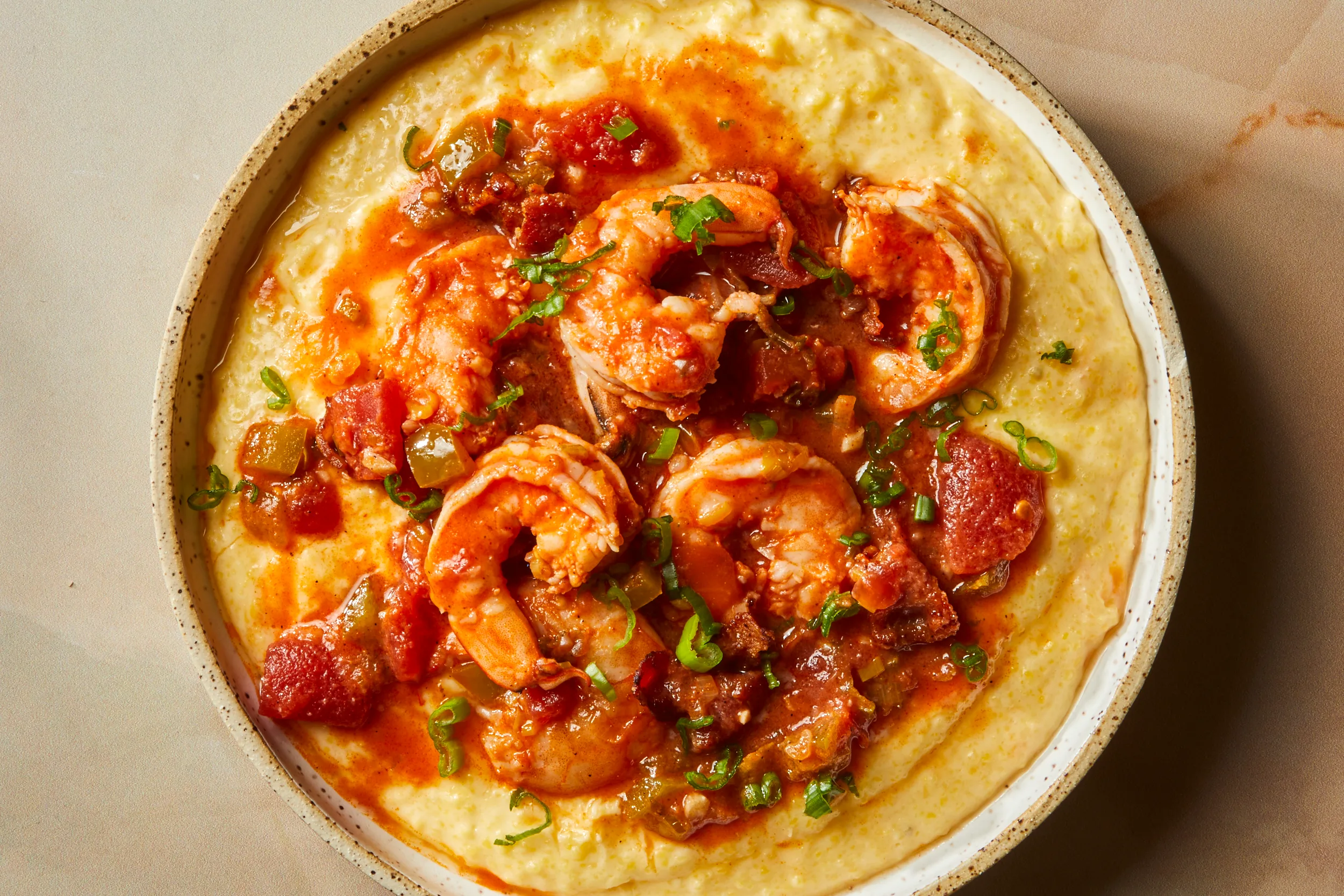
Shrimp and grits is one of those dishes that feels restaurant-worthy, but the actual cooking is weeknight-friendly once you know two things: the right grit-to-liquid ratio and exactly when to add the shrimp so they stay tender.
In my early bistro days, shrimp and grits taught me a lesson I still repeat to friends when they are nervous about seafood: shrimp do not need “a few more minutes,” they need confidence. They go from sweet and bouncy to rubbery fast, especially if they sit in a hot pan while you fuss with sauce. So in this version, the grits do the slow, steady work, the gravy gets built in the same skillet, and the shrimp get a quick in-and-out sauté right at the end.

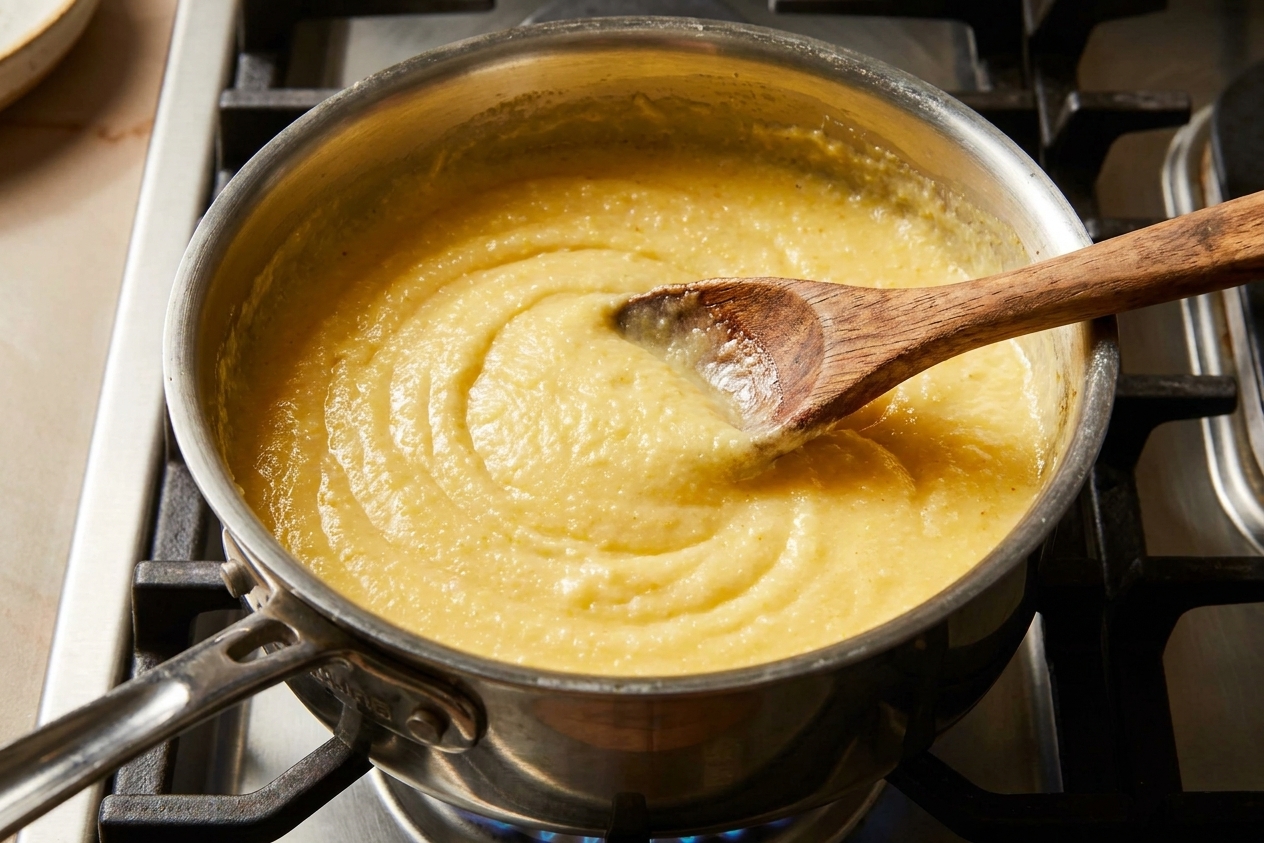
You can make this with stone-ground grits for a more pronounced corn flavor, or quick grits when life is busy. Either way, the goal is the same: grits that are creamy and spoonable, shrimp that are just-cooked, and a sauce that is thick enough to lightly coat the back of a spoon, not watery like soup and not stiff like paste.
If you have ever ended up with gritty grits, overcooked shrimp, or a pan sauce that disappears into the bowl, I wrote this recipe with those exact problems in mind. The fix is simple: keep the grits creamy with a dependable ratio, and give the sauce a little body with a quick flour-and-butter base plus a short simmer so it clings to the shrimp and sits on top of the grits instead of vanishing on contact.
What to expect
- Creamy grits texture: soft and lush, spreadable on the plate, not runny.
- Tender shrimp: cooked for just a few minutes total, then returned only long enough to warm through.
- Savory gravy: glossy and spoon-coating, with enough body to sit on top of the grits instead of soaking in like broth.
- A calm finish: grits first, gravy next, shrimp last, so nothing overcooks while you plate.
Why this recipe works
- Clear grit-to-liquid ratio: Using a reliable ratio keeps grits creamy without guessing. Quick grits and stone-ground grits absorb differently, so the recipe tells you what to look for in the pot.
- Shrimp are cooked last: The shrimp only hit heat when the grits are basically ready, so they stay juicy and sweet instead of tight and rubbery.
- Pan gravy is built for cling: A quick flour-and-butter base in the skillet, plus reduced stock, creates a sauce that coats the spoon. That thickness is what makes the dish feel like a composed plate, not a bowl of soup.
- Finish with dairy off heat: Butter and cheese go in after the grits are tender, which keeps the texture smooth and the flavor round instead of greasy.
Ingredient notes
Grits
Stone-ground grits typically have the most pronounced corn flavor, but they take longer and need more stirring. Quick grits are a perfectly valid weeknight option and still give you that creamy base.
Ratio guidance: A good starting point is 1 part grits to 4 parts liquid for thick, creamy grits that plate well. Stone-ground often needs a little extra liquid as it cooks, so keep hot water or stock nearby to loosen as needed.
Liquid
Water makes clean-tasting grits. Stock makes savory grits. Milk adds richness but can scorch if your heat is too high. My favorite compromise at home is mostly stock or water with a splash of milk or cream at the end.
Shrimp
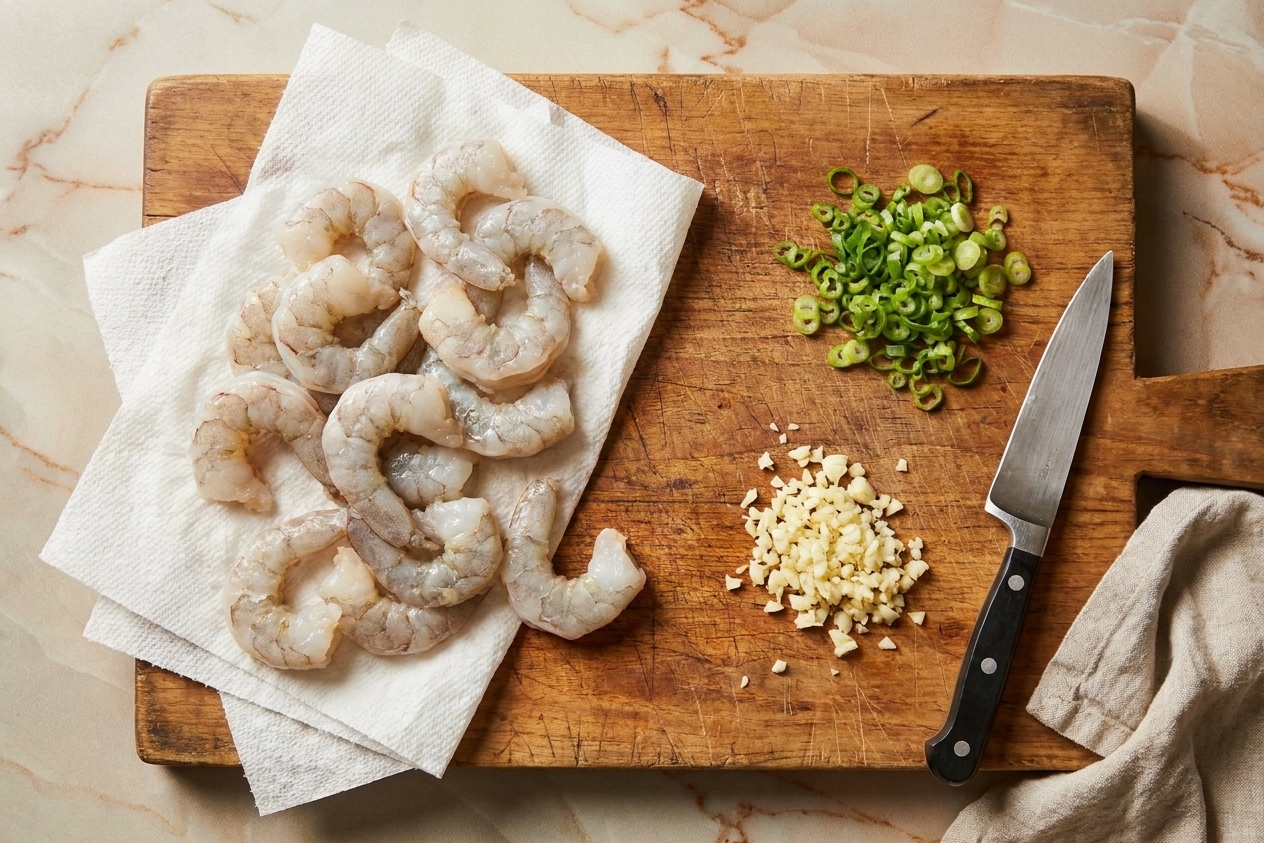
Look for large shrimp (like 16/20 or 21/25 count) for the best bite. Peel and devein them, then pat very dry so they sear instead of steaming.
Aromatics and seasonings
Garlic, scallions, and a little smoked paprika give you depth without turning this into a soup. Cayenne is optional, but I love the gentle heat.
For the gravy
Butter plus flour (or a small cornstarch slurry) gives you body. You are aiming for a sauce that briefly holds a line if you drag a spoon through it, then relaxes back into a glossy layer.
Equipment you will need
- Medium saucepan for grits
- Whisk to prevent lumps when grits go in
- Large skillet (cast iron or stainless steel is great for browning)
- Tongs or a spatula for turning shrimp quickly
- Microplane or fine grater if using Parmesan
Pro tips
- Whisk grits in slowly: Sprinkle them into simmering liquid while whisking. Dumping them in all at once is how you get stubborn lumps.
- Keep the grits at a gentle bubble: Boiling hard can make them spit and scorch. Low and steady gives you a silkier pot.
- Salt the grits early, adjust late: Season the cooking liquid, then taste again after adding cheese or butter.
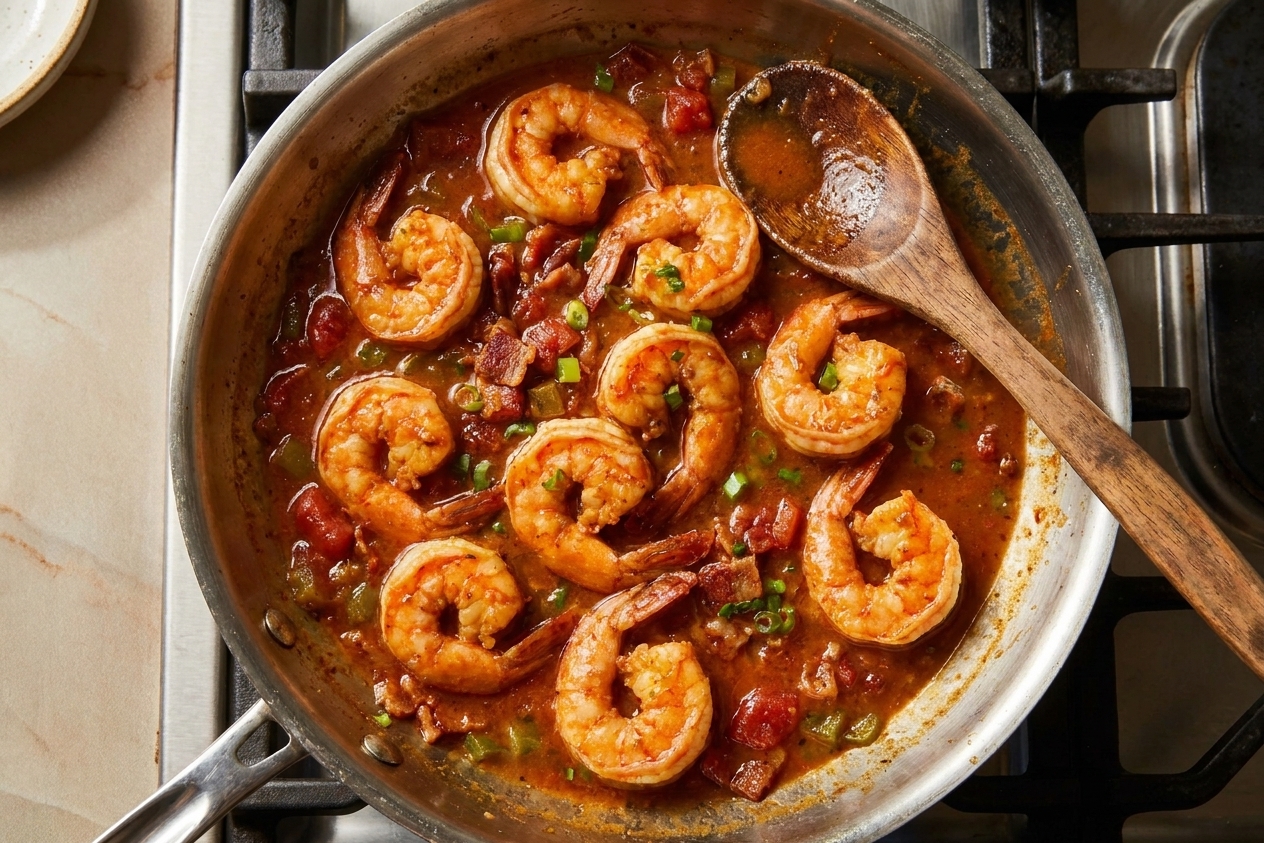
- Cook shrimp by look and feel: They are done when they are pink, opaque, and just curled into a loose C shape. A tight O shape usually means overcooked.
- Sauce thickness cue: Dip a spoon into the gravy and swipe your finger across the back. If the line stays clean for a second before slowly filling in, you are in the sweet spot for plating.
- Plate like a restaurant: Spoon grits onto plates first, make a little well, then top with shrimp and gravy. This keeps the grits creamy and distinct instead of turning everything into a bowl of broth.
Substitutes that work
- Quick grits for stone-ground: Use quick grits and follow the package time, but keep the 1:4 grit-to-liquid starting ratio and stop when thick and creamy.
- No stock: Water works. Boost flavor with extra butter, a pinch more salt, and a little black pepper.
- No flour for thickening: Use a cornstarch slurry (cornstarch mixed with cold water) added to simmering sauce until glossy and spoon-coating.
- No Parmesan: Sharp cheddar, smoked gouda, or even cream cheese can make grits extra luscious. Use what you like and season carefully since cheeses vary in salt.
- No bacon: Use butter or a little neutral oil for the sauté, then build flavor with smoked paprika and scallions.
Variations
- Cajun-style: Add a pinch of Cajun seasoning and finish with a squeeze of lemon.
- Cheesy breakfast-for-dinner: Make the grits extra cheesy and top with a fried egg in addition to the shrimp.
- Garlicky lemon shrimp: Add lemon zest to the gravy and finish with lemon juice right before serving.
- Greens on the side: Sautéed collards or spinach make the plate feel complete and cut the richness.
Serving ideas
- Classic plate: A generous swoosh of grits, shrimp piled in the center, gravy spooned over, scallions on top.
- Crunchy topper: A few toasted breadcrumbs or crushed crackers add texture without changing the dish.
- Fresh contrast: Serve with a simple tomato salad or cucumber salad to brighten the rich grits.
- For a crowd: Keep grits warm on very low heat with a splash of hot water or stock stirred in right before serving, then cook shrimp in batches so they stay perfectly tender.
Storage and reheating
Storing
Store grits and shrimp separately if you can. Grits thicken dramatically in the fridge, and shrimp can overcook when reheated.
Reheating grits
Warm gently in a saucepan with a splash of water, stock, or milk, stirring often until creamy again. Think “loose mashed potatoes” texture for plating.
Reheating shrimp and gravy
Reheat the gravy first until just simmering, then add shrimp for 30 to 60 seconds to warm through. Avoid boiling hard, which can toughen them.
Common mistakes
- Runny grits: If your grits look like soup, keep cooking uncovered and stir. They will thicken as starch hydrates. If they are already tender but too loose, add a little cheese and let them sit 2 minutes.
- Stiff, gluey grits: Usually from not enough liquid or cooking too hot. Fix it by whisking in hot water or stock a little at a time until creamy.
- Grit lumps: Happen when grits are poured in too fast. Whisk aggressively and smash lumps against the side of the pot. Next time, sprinkle slowly.
- Rubbery shrimp: Overcooked or held too long in a hot pan. Pull them as soon as they turn opaque, then add back at the end only to warm.
- Sauce disappears into the bowl: It is too thin. Simmer longer to reduce, or thicken slightly so it coats a spoon. Shrimp and grits should be saucy, but plated.
FAQ
What is the best grit-to-liquid ratio for creamy grits?
For thick, creamy grits that plate well, start with 1 part grits to 4 parts liquid. Stone-ground grits often need a bit more liquid as they cook, so add hot water or stock as needed until the texture is creamy and spoonable.
How long should I cook shrimp so they stay tender?
In a hot skillet, shrimp usually need 1 to 2 minutes per side depending on size. The key cue is doneness: pink and opaque with a loose C shape. Take them out promptly and add them back only briefly at the end.
How thick should the sauce be for shrimp and grits?
It should be spoon-coating, like a light gravy. When you dip a spoon in and swipe a finger across the back, the line should hold for a moment before slowly filling in. That thickness helps it sit on top of the grits instead of turning the dish into soup.
Can I use frozen shrimp?
Yes. Thaw completely, drain well, and pat very dry. Excess water will cool the pan and make shrimp steam, which affects both sear and texture.
Can I make this ahead?
You can make the grits ahead and reheat with extra liquid until creamy again. Cook the shrimp right before serving for the best texture.
The recipe
Shrimp and Grits
Creamy, buttery grits topped with quick sautéed shrimp and a savory spoon-coating gravy. A true plated shrimp-and-grits dinner with clear ratios, timing, and doneness cues.
- Prep
- 15 minutes
- Cook
- 30 minutes
- Total
- 45 minutes
- Yield
- 4 servings
Ingredients
- 1 cup grits (stone-ground or quick)
- 4 cups water, seafood stock, or chicken stock, plus more as needed
- 1 tsp kosher salt, plus more to taste
- 2 tbsp unsalted butter, divided
- 1/2 cup milk or half-and-half
- 1/2 cup grated Parmesan or sharp cheddar (optional but recommended)
- 1 lb large shrimp, peeled and deveined
- 1 tbsp neutral oil (or bacon drippings)
- 3 cloves garlic, minced
- 2 scallions, sliced (white and green parts separated)
- 1/2 tsp smoked paprika
- 1/8 tsp cayenne pepper (optional)
- 2 tbsp all-purpose flour
- 1 1/2 cups stock (seafood, chicken, or vegetable)
- 1 tsp Worcestershire sauce
- 1 tbsp lemon juice (optional)
- Freshly ground black pepper, to taste
Instructions
- Start the grits liquid. In a medium saucepan, bring 4 cups water or stock to a gentle simmer. Whisk in 1 tsp kosher salt.
- Whisk in the grits. While whisking steadily, slowly sprinkle in the grits. Keep whisking for 30 to 60 seconds to prevent lumps, then reduce heat to low.
- Cook until creamy. Cook at a low simmer, stirring often, until the grits are tender and thick enough to mound on a spoon. Quick grits may take about 5 to 10 minutes. Stone-ground grits may take 25 to 40 minutes. If the pot gets too thick before the grits are tender, whisk in a splash of hot water or stock, a little at a time.
- Finish the grits. Stir in 1 tbsp butter, the milk or half-and-half, and the cheese if using. Taste and adjust salt and pepper. Cover and keep warm on the lowest heat while you cook the shrimp and gravy, stirring once or twice so the bottom does not scorch.
- Season and dry the shrimp. Pat shrimp very dry with paper towels. Season with a pinch of salt, black pepper, and smoked paprika.
- Sear the shrimp quickly. Heat a large skillet over medium-high heat. Add oil and 1 tbsp butter. When the butter foams, add shrimp in a single layer. Cook 1 to 2 minutes per side, just until pink and opaque. Transfer shrimp to a plate immediately.
- Sauté aromatics. Lower heat to medium. Add garlic and the white parts of the scallions to the skillet. Cook 30 seconds, stirring, until fragrant.
- Build the gravy base. Sprinkle flour into the skillet and stir constantly for 1 minute to cook off the raw flour taste.
- Add liquid and thicken. Slowly whisk in 1 1/2 cups stock. Simmer 2 to 4 minutes, whisking and scraping up browned bits, until the sauce thickens enough to coat the back of a spoon. Stir in Worcestershire sauce and cayenne if using. Taste and adjust seasoning.
- Warm shrimp in the sauce. Return shrimp (and any juices) to the skillet. Toss for 30 to 60 seconds, just until warmed through. Turn off heat and stir in lemon juice if using.
- Plate like a dinner. Spoon grits onto plates, creating a shallow well. Top with shrimp and spoon gravy over. Finish with the green parts of the scallions and a few cracks of black pepper. Serve immediately.
Notes
Grits texture: For plated shrimp and grits, you want grits that are creamy and thick, not pourable like soup. They should slowly relax on the plate when spooned out.
Sauce thickness cue: If you can draw a line across the back of a sauced spoon and it holds for a beat before filling in, it is ready.
Shrimp timing: Shrimp cook fast. Pull them from the skillet as soon as they turn opaque, then add back only briefly at the end.