
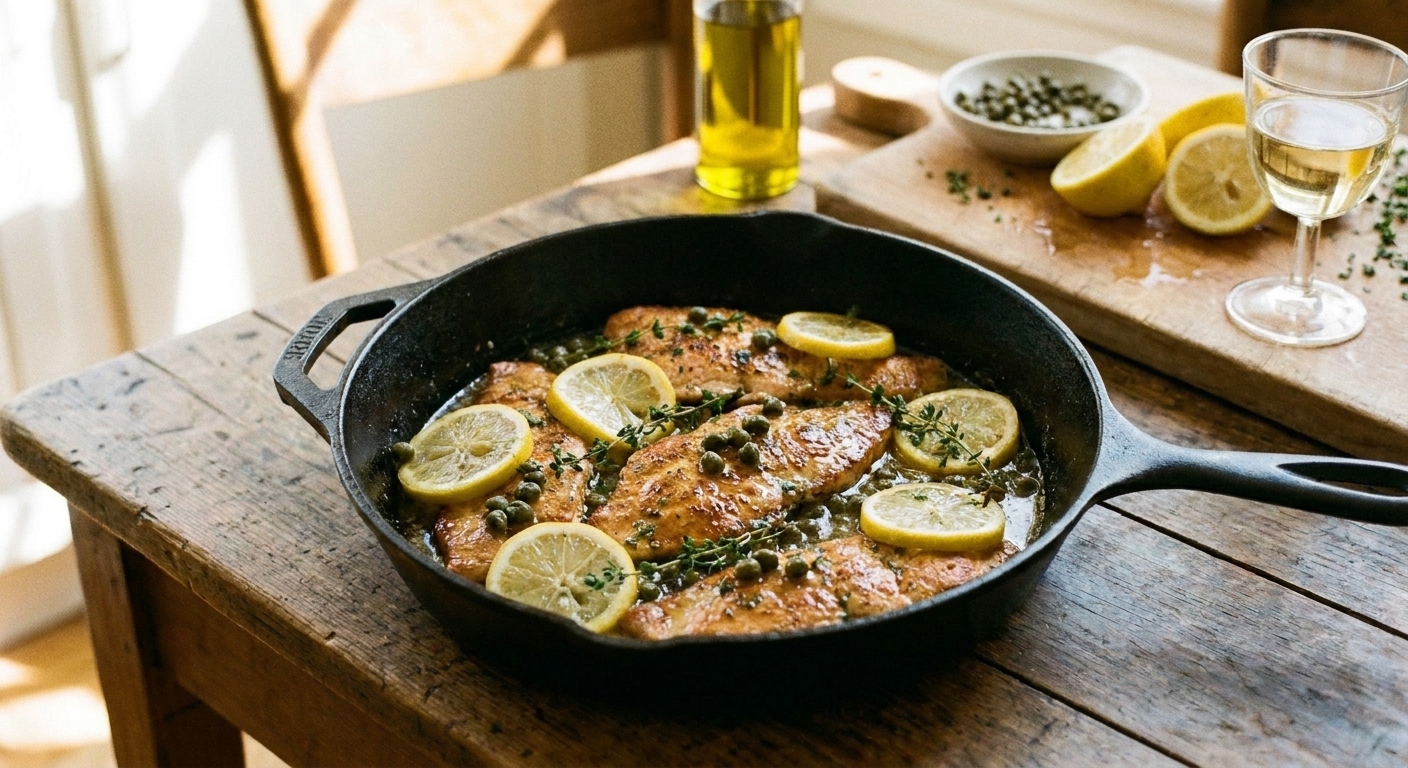
Piccata is one of those dishes that feels fancy in the way it hits your senses first. You smell lemon the second it hits the hot pan. You hear capers sizzle. Then butter turns the whole thing glossy and velvety, like it knows exactly what it is doing.
Classic chicken or veal piccata often uses thin cutlets: quick dredge, quick sear, quick pan sauce. That thinness is the secret that makes the dish feel effortless. With salmon, it matters even more. A thick fillet can overcook while you wait for the sauce to reduce. Evenly sliced pieces cook fast, stay tender, and help you get those crisp, golden edges from a light dusting of flour. If you are wondering what “thin” means here, aim for portions about 1/2 inch thick.

In this PlateDo version, you flour the salmon lightly, sear it in a hot pan, then build the sauce in the same skillet with white wine, lemon juice, and capers. The sauce reduces quickly, and the salmon goes back in just long enough to warm through. The goal is a center that is just cooked, still juicy, and flakes in big, tender pieces.
What to expect
- Texture: lightly crisp on the outside, buttery and moist inside
- Flavor: bright lemon, briny capers, mellow butter, a little depth from wine
- Timing: fast cooking, minimal simmering so the fish does not dry out
If you are usually nervous about cooking fish, this one is a confidence builder. The pieces are thin, the cook time is short, and doneness is easy to read. Look for the salmon to turn mostly opaque with a slightly darker, moist center before you finish it in the sauce.
Why this recipe works
- Thin cutlets cook quickly and evenly. Less time over heat means less chance of drying out. Aim for about 1/2 inch thickness, or up to 3/4 inch if that is what you have.
- A light flour dredge protects the salmon. It creates a delicate crust and also helps the sauce cling instead of sliding right off.
- Hot pan, short sear. You get browning without roasting the fish in the skillet.
- Quick reduction before butter. Reducing the wine and lemon concentrates flavor. Adding butter after the reduction keeps the sauce silky instead of greasy or broken.
- Finish the salmon gently. The salmon returns to the pan at the end just to warm through, which helps keep the center tender.
Ingredient notes
Salmon: You want skinless portions for this. If your salmon has skin, slide a thin spatula between skin and flesh to remove it, or ask the seafood counter to do it. Cut into cutlets about 1/2 inch thick if possible.
Flour: All-purpose flour is classic. Keep it light. You are not building a thick coating, just giving the fish a dry surface and a little crust.
Capers: Brined capers bring the signature piccata flavor. Drain them. If you are caper-curious, start with less and add more at the end.
White wine: Use a dry white wine you would drink, like pinot grigio or sauvignon blanc. If you do not cook with wine, see substitutes below.
Lemon: Fresh lemon juice is non-negotiable here. Bottled juice tastes flat once reduced. Zest is optional, but a small pinch makes the sauce smell even more like itself.
Butter: Add it at the end, off the fiercest heat, for a sauce that turns glossy instead of separating.
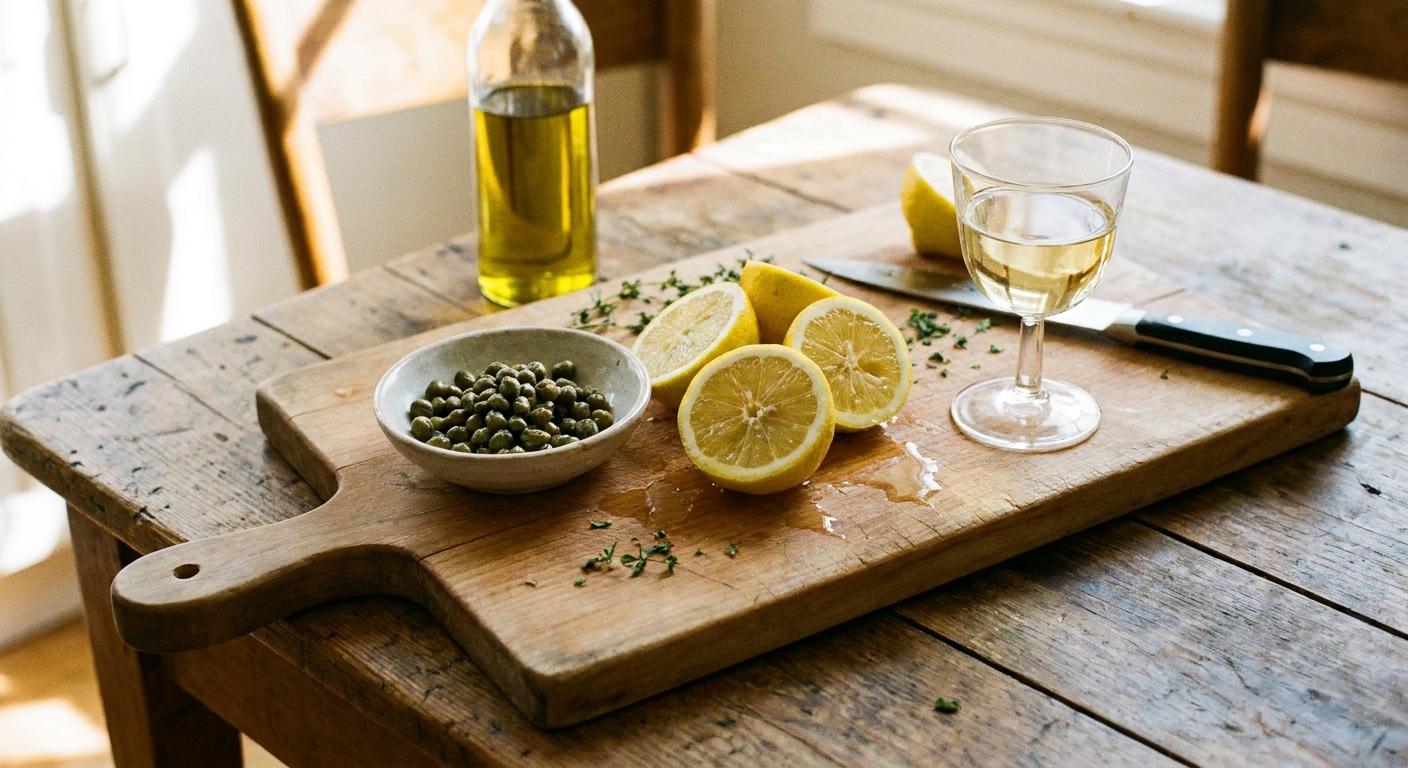
Equipment you will need
- Large skillet: stainless steel or cast iron works great for browning. Nonstick is fine if that is what you have, just expect slightly less fond for the sauce.
- Fish spatula: helpful for thin cutlets so they do not tear when flipping.
- Instant-read thermometer: optional but very reassuring for doneness.
- Shallow bowl or plate: for the flour dredge.
Pro tips
Dial in the thickness
If your salmon pieces are thick, you have two good options: slice them horizontally into thinner cutlets, or ask your store to cut salmon scaloppine style. The sweet spot is about 1/2 inch. Up to 3/4 inch still works, but you will want to lower the heat slightly and be extra careful not to overcook.
Pan heat cue you can trust
Heat the pan over medium-high until the oil shimmers and moves easily. When you set the salmon down, you should hear a steady sizzle right away. If it is silent, the pan is not hot enough and the fish can stick. If it is aggressively smoking, turn the heat down and give it 30 seconds.
When the center is just cooked
The best visual cue for salmon cutlets is the opacity line. Watch the side of the cutlet as it cooks. When the salmon has turned mostly opaque with a thin, slightly darker center still visible, you are very close. Pull it when the center flakes with gentle pressure and looks moist, not chalky.
Temperature cue: target about 120 to 125°F for tender salmon, or up to 130°F if you prefer it more done. It will continue to rise a bit as it rests.
Reduce first, butter last
Let the wine and lemon simmer briefly to concentrate flavor, then whisk in cold butter in pieces. That order keeps the sauce smooth and glossy.
Substitutes that work
- No wine: Use seafood stock, chicken stock, or even water plus an extra squeeze of lemon. Stock gives more body than water.
- No capers: Finely chopped green olives can mimic the briny pop. Start small and taste as you go.
- Gluten-free: Use a gluten-free all-purpose flour blend or rice flour for dredging. Rice flour browns nicely and stays crisp.
- Dairy-free: Use a vegan butter alternative. Add it off heat and whisk gently, just as you would with dairy butter.
Variations
- Garlic piccata: Add 1 small minced garlic clove to the pan after the wine goes in, cooking just 15 to 30 seconds before reducing.
- Herby finish: Stir in chopped parsley at the end for freshness.
- Extra lemon: Add a pinch of lemon zest to the sauce right before serving for a bigger citrus aroma.
- Creamy twist: Not traditional, but you can add a small splash of cream at the end for a richer sauce. Keep the reduction gentle so it does not split.
Serving ideas
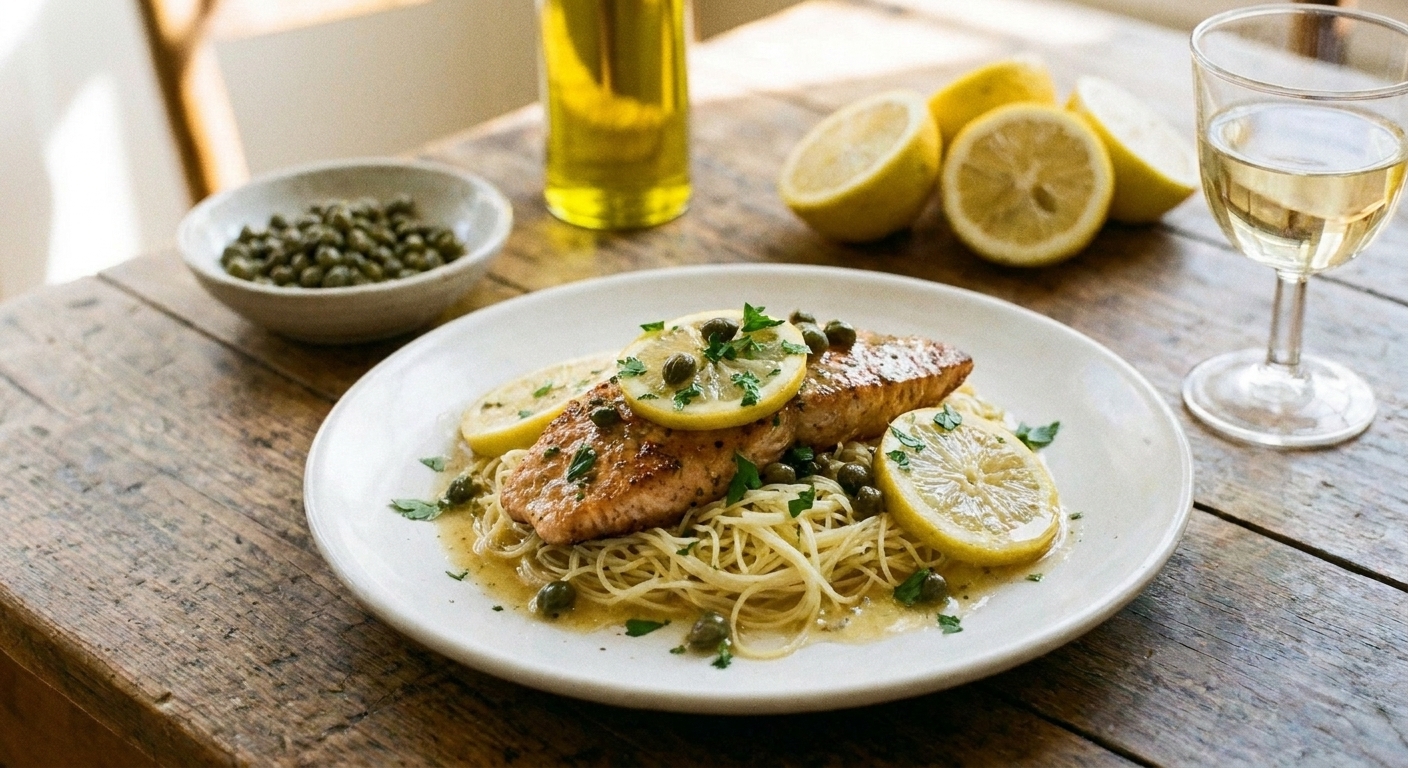
Salmon piccata begs for something that can catch the sauce. In my house, anything that soaks up lemon butter is basically considered a love language.
- Angel hair pasta or spaghetti with a little olive oil
- Mashed potatoes or roasted baby potatoes
- Rice or cauliflower rice
- Crusty bread and a simple green salad
- Vegetables: sautéed asparagus, blistered green beans, or roasted broccoli
Storage and reheating
Refrigerate: Store salmon and sauce together in an airtight container for up to 2 days.
Reheat gently: Warm in a skillet over low heat with a splash of water or stock to loosen the sauce. Stop as soon as the salmon is warmed through. Microwaving works in a pinch, but use low power and short bursts so the fish does not turn dry.
Freezing: I do not love freezing piccata because butter sauces can separate and salmon can lose tenderness, but it is safe to freeze for up to 1 month if needed. Thaw overnight in the fridge and reheat very gently.
Common mistakes
- Using thick salmon and cooking it like a cutlet: Thick pieces need longer time, which can dry the fish while the sauce reduces. Slice thinner when you can.
- Over-dredging: Too much flour makes the sauce pasty. Light coat, tap off excess.
- Heat too low: The salmon can stick and turn pale. You want a confident sizzle when it hits the pan.
- Boiling after adding butter: Butter sauces can break if boiled hard. Reduce first, then add butter and keep it gentle.
- Cooking the salmon twice: Sear it, remove it, build sauce, then return briefly. Do not leave it simmering in the sauce for minutes.
FAQ
Can I use frozen salmon?
Yes, but thaw it fully and pat it very dry before dredging. Extra moisture keeps the flour from browning and can make the salmon steam instead of sear.
Do I have to cut the salmon into thin cutlets?
You do not have to, but it makes this dish feel like piccata. If you keep thicker portions, lower the heat a bit and expect a longer cook time. You may also want to reduce the sauce separately while the salmon rests, so you do not overcook the fish.
How do I know when salmon is done without a thermometer?
Look for that opacity change from the outside in. When the center is just barely translucent and the fish flakes easily with gentle pressure, it is ready. If it looks chalky and flakes into tiny dry bits, it has gone a little too far.
Will the capers make it salty?
They add saltiness, yes. That is part of the charm. Drain them, taste your sauce before adding extra salt, and remember the sauce concentrates as it reduces.
The recipe
Salmon Piccata
Thin salmon cutlets, lightly floured and pan-seared, finished in a quick lemon, caper, white wine, and butter sauce. Crisp edges, tender center, and a bistro-bright flavor you can pull off on a Tuesday.
- Prep
- 10 minutes
- Cook
- 12 minutes
- Total
- 22 minutes
- Yield
- 4 servings
Ingredients
- 1 1/2 pounds skinless salmon, cut into thin cutlets about 1/2 inch thick
- 1/2 teaspoon kosher salt, plus more to taste
- 1/4 teaspoon black pepper
- 1/2 cup all-purpose flour, for dredging
- 2 tablespoons olive oil
- 1/3 cup dry white wine
- 1/3 cup fresh lemon juice (about 2 lemons)
- 2 tablespoons capers, drained
- 4 tablespoons unsalted butter, cold and cut into pieces
- 1 tablespoon chopped fresh parsley (optional, for finishing)
- Lemon slices or wedges, for serving (optional)
Instructions
- Prep the salmon. Pat the salmon cutlets very dry with paper towels. Season both sides with salt and pepper.
- Dredge lightly. Place flour in a shallow bowl or plate. Dredge each cutlet lightly in flour, then tap off the excess. Set on a plate.
- Heat the pan. Heat a large skillet over medium-high heat. Add olive oil and swirl. The oil should shimmer and move easily in the pan.
- Sear the salmon. Add salmon cutlets in a single layer, working in batches if needed to avoid crowding. Sear until golden on the first side, 2 to 3 minutes. Flip carefully and cook 1 to 2 minutes more, just until the center is nearly cooked. Look for the salmon to turn mostly opaque with a slightly darker, moist center. (If using a thermometer, aim for about 120 to 125°F.) Transfer salmon to a plate.
- Build the sauce. Carefully pour off any excess oil if needed, leaving a thin film in the pan and any browned bits. Add white wine, lemon juice, and capers. Bring to a simmer and cook 2 to 3 minutes, scraping up browned bits, until slightly reduced.
- Finish with butter. Reduce heat to low. Add cold butter pieces and swirl or whisk until melted and the sauce turns glossy. Taste and adjust salt if needed.
- Warm the salmon briefly. Return salmon and any juices to the skillet. Spoon sauce over the top and warm 30 to 60 seconds, just until the center is cooked through but still tender and moist.
- Serve. Sprinkle with parsley if using and serve with lemon wedges. Spoon extra sauce and capers over each portion.
Notes
- Thickness note: This recipe is designed for salmon cutlets about 1/2 inch thick. If yours are closer to 3/4 inch, sear a touch longer and keep the heat at medium-high but not ripping hot. If they are 1 inch or thicker, consider slicing thinner for best results.
- Doneness cue: Pull the salmon when the center flakes with gentle pressure and looks moist. Overcooked salmon will look chalky and break into dry, tight flakes.
- Do not boil after butter: Once the butter is in, keep the heat low so the sauce stays silky.