
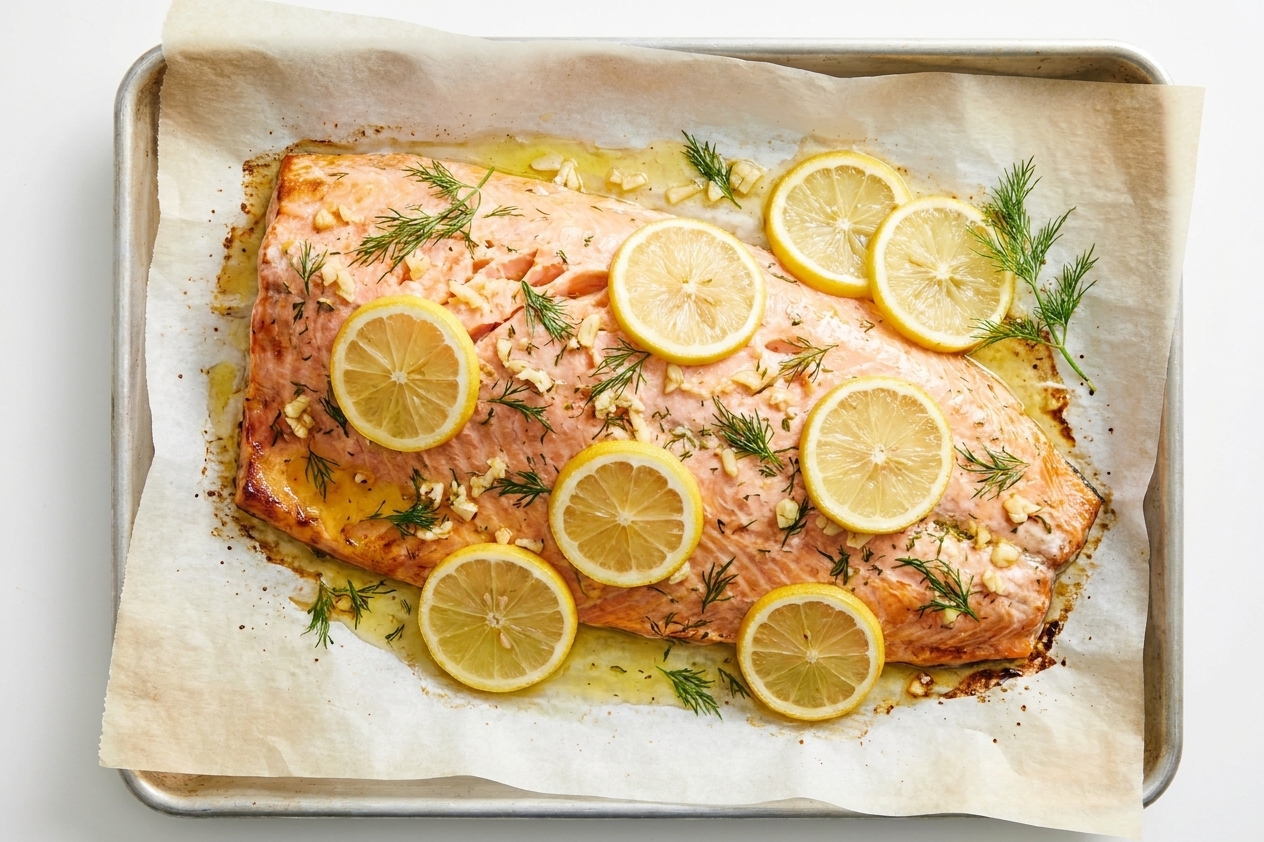
When I managed a bakery, I learned a not-so-glamorous truth: the best “special” meals are the ones you can pull off on a regular Tuesday. This oven-baked lemon salmon is exactly that kind of dinner. It looks like you tried harder than you did, it tastes bright and fresh, and it does not ask you to babysit a skillet.

The method here is simple: a whole fillet, or individual portions, goes into a hot oven with olive oil, garlic, and lemon. That’s essentially it. The real magic is knowing when to pull it so the center does not overcook. Salmon can carry over a bit after it leaves the oven, and thinner tail pieces can go from perfect to dry fast, so I lean on thickness-based timing and a couple of doneness cues you can spot even on a busy night.
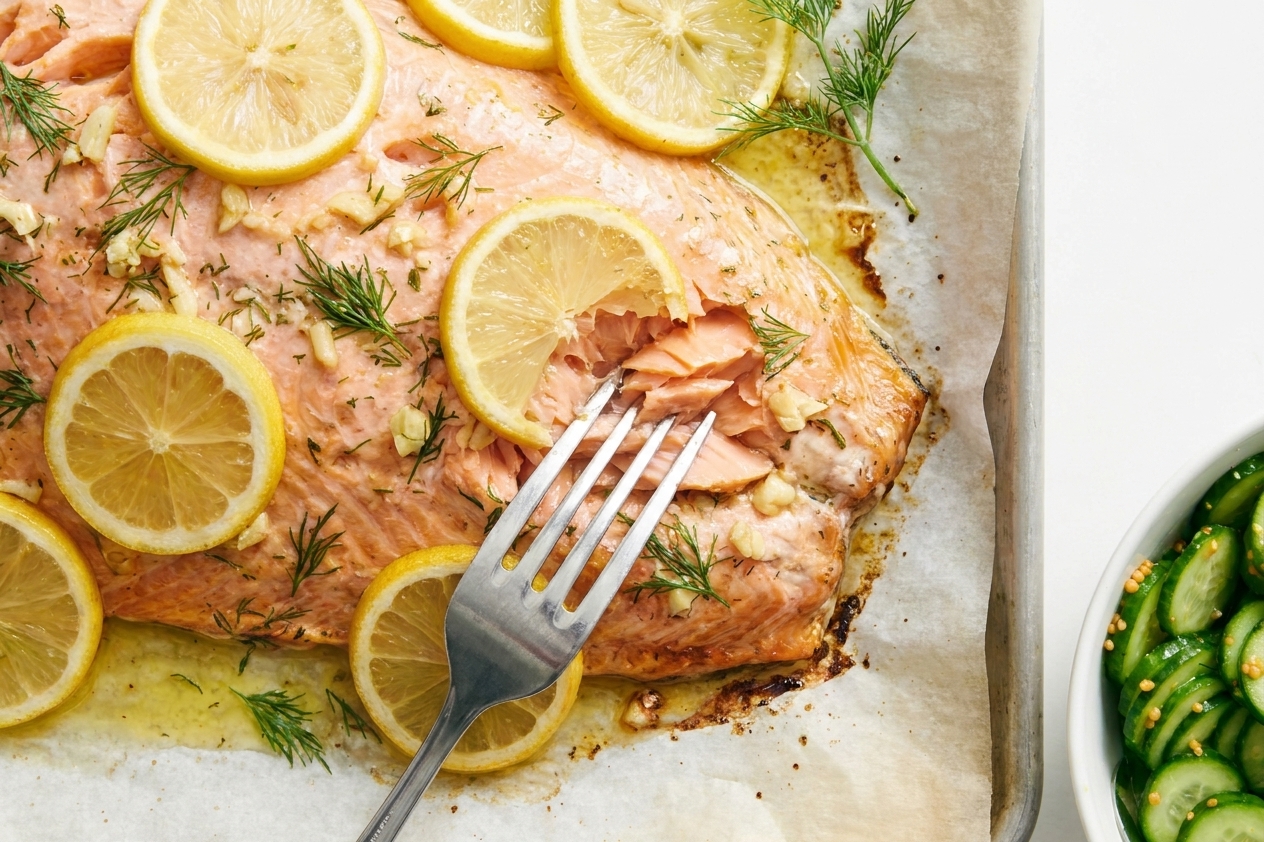
Here is what I watch for: the salmon turns opaque around the edges first, the thickest part begins to flake when you press it gently with a fork, and the center still looks just a touch glossy if you want it juicy. If you use an instant-read thermometer, it takes the guesswork out completely.
If you are cooking skin-on salmon, the skin can help protect the flesh and give you a little more forgiveness. If you are cooking skinless, no worries. A quick rest and the right oven temperature keep it flaky, not chalky.
Why this recipe works
- High heat, short time: Roasting at 425°F cooks salmon quickly so the outside finishes before the center dries out.
- Thickness-based timing: Salmon fillets vary a lot. Timing by thickness is more reliable than “minutes per pound.”
- Oil plus lemon: Olive oil protects the surface, while lemon brightens the flavor. We add lemon in a way that seasons without turning the fish tough.
- Carryover cooking accounted for: Pulling the salmon just shy of your final doneness and letting it rest prevents a dry center.
- Skin-on friendly: Keeping the skin on provides insulation and makes the fillet easier to move intact.
Ingredient notes
Salmon fillet
You can use Atlantic or sockeye. Atlantic salmon is fattier and more forgiving. Sockeye is leaner and benefits from careful timing and a little extra olive oil. If your fillet has a thinner tail end, tuck it under itself to create more even thickness.
Lemon
Use both zest and juice if you can. Zest gives lemon flavor without adding extra acid. If you love lemon slices on top, keep them thin so they don’t steam the surface.
Garlic
Fresh minced garlic tastes best here. If your garlic tends to burn in a hot oven, mix it into the oil and spread it in a thin layer so it roasts gently.
Olive oil
Extra virgin is great. This is not the time for a tiny drizzle. A proper coating helps prevent dry, pale patches on the salmon’s surface.
Salt and pepper
Salt early, pepper whenever. If you have time, salting the fish 10 to 20 minutes before baking seasons it more evenly.
Equipment you will need
- Rimmed baking sheet
- Parchment paper or foil (parchment is my favorite for easy cleanup)
- Microplane or fine grater (for lemon zest)
- Instant-read thermometer (optional but the most foolproof)
- Small bowl and spoon (for mixing oil, garlic, lemon)
Pro tips
- Dry the surface first: Pat the salmon dry with paper towels. Less surface moisture equals better roasting and less albumin (the white stuff) seeping out.
- Use the thickest part as your guide: The center of the thickest section decides doneness. The thinner parts will always cook faster.
- Pull early for juiciness: For moist, tender salmon, pull it when the center hits 120°F to 125°F, then rest 5 minutes. For firmer, more fully cooked salmon, aim for 130°F to 135°F.
- Timing by thickness (at 425°F): About 8 to 10 minutes for 1 inch thick, 12 to 14 minutes for 1.5 inches, and 15 to 18 minutes for 2 inches. Start checking early because ovens vary.
- Skin-on vs. skinless: Skin-on can tolerate an extra minute or two. Skinless benefits from parchment and a generous oil coating to prevent sticking and drying.
- Rest before slicing: Letting the salmon rest helps the juices settle back into the flesh instead of running onto the pan.
Substitutes that work
- No fresh garlic: Use 1/2 teaspoon garlic powder, mixed into the oil.
- No lemon: Use lime zest and juice for a different but equally bright flavor.
- No olive oil: Avocado oil works well at high heat. Melted butter is delicious too, but watch it closely if your oven runs hot.
- Fresh herbs: Add chopped parsley, dill, or chives after baking rather than before, so they stay vibrant.
Variations
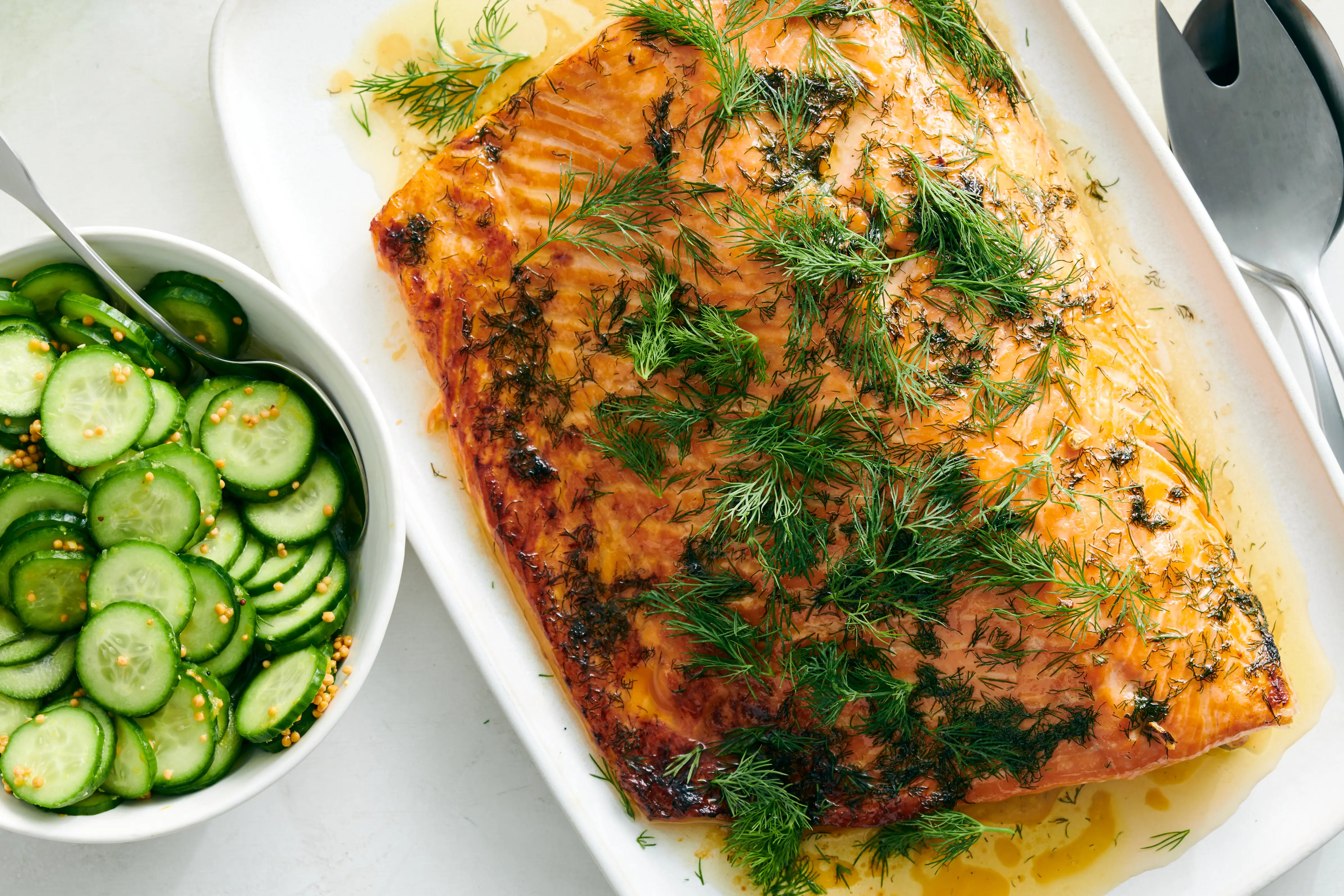
- Lemon-Dill Salmon: Finish with fresh dill and an extra pinch of flaky salt.
- Honey-Lemon Salmon: Whisk 1 to 2 teaspoons honey into the oil and lemon mixture for a gentle glaze.
- Spicy Lemon Salmon: Add a pinch of red pepper flakes or a small spoonful of chili crisp after baking.
- Garlic-Lemon Butter: Swap half the oil for melted butter and spoon it over the salmon right after it comes out.
Serving ideas
- Fast and cozy: Serve with microwaved rice and a bagged salad dressed with extra lemon and olive oil.
- Sheet pan dinner: Roast asparagus, broccolini, or green beans alongside the salmon. Add them to the pan first if they are thick and need a head start.
- Salmon bowls: Flake leftovers over rice with cucumber, avocado, and a drizzle of yogurt-lemon sauce.
- Simple pasta: Toss hot pasta with olive oil, lemon zest, a splash of pasta water, and flaked salmon.
Storage and reheating
Refrigerate
Cool leftovers, then store in an airtight container in the fridge for up to 3 days.
Reheat gently
My favorite way is low and slow: cover and warm in a 275°F oven just until heated through, about 8 to 12 minutes depending on thickness. You can also microwave at 50 percent power in short bursts.
Eat it cold
Cold salmon is underrated. Flake it onto salads, stir it into a grain bowl, or tuck it into a sandwich with mayo and extra lemon.
Common mistakes
- Overcooking “just to be safe”: Salmon goes from juicy to dry quickly. If you are unsure, use a thermometer and pull it early. Resting finishes the job.
- Not accounting for thickness: A thin tail piece might be done while the center is still cooking. Fold the tail under to even it out.
- Skipping the pat-dry: Wet salmon steams instead of roasting, which can lead to a dull surface and more albumin.
- Adding too much lemon juice too early: A lot of acid sitting on raw fish can slightly “cook” the surface and make it firm. A little is great. Save extra for squeezing at the end.
- Forgetting to rest: Even 5 minutes makes a difference in texture and juiciness.
FAQ
What oven temperature is best for baked salmon?
For this lemon-garlic style, I like 425°F. It is hot enough to roast quickly without drying the fish as long as you pull it on time.
How long do I bake salmon, exactly?
Go by thickness at the thickest point. At 425°F, plan on 8 to 10 minutes for 1 inch, 12 to 14 minutes for 1.5 inches, and 15 to 18 minutes for 2 inches. Start checking early.
Should I bake salmon skin-side down or up?
If it is skin-on, bake it skin-side down. The skin acts like a protective layer and helps keep the flesh moist.
How do I know when salmon is done without a thermometer?
Look for flesh that turns opaque and flakes easily when pressed with a fork at the thickest part. It should still look a touch glossy in the center if you want it juicy.
Why is white stuff coming out of my salmon?
That is albumin, a protein that coagulates as salmon cooks. A little is normal. You will see more if the fish is cooked at higher heat for longer, or if it went into the oven very cold. Patting dry and avoiding overcooking helps.
The recipe
Oven-Baked Lemon Salmon
A bright, garlicky baked salmon fillet roasted at high heat with olive oil and lemon for a juicy center and lightly golden edges. Includes timing by thickness plus skin-on and skinless guidance.
- Prep
- 10 minutes
- Cook
- 10 to 18 minutes
- Total
- 20 to 30 minutes
- Yield
- 4 servings
Ingredients
- 1 salmon fillet (about 1 1/2 to 2 pounds), skin-on or skinless
- 2 tablespoons olive oil
- 2 cloves garlic, finely minced
- 1 lemon, zested and juiced (plus extra wedges for serving)
- 3/4 teaspoon kosher salt (or to taste)
- 1/4 teaspoon black pepper
- Optional: thin lemon slices for the top
- Optional: 1 tablespoon chopped parsley or dill, for finishing
Instructions
- Heat the oven. Arrange a rack in the middle of the oven and heat to 425°F. Line a rimmed baking sheet with parchment paper or foil.
- Prep the salmon. Pat the salmon dry with paper towels. If the tail end is much thinner than the center, fold it under itself to create a more even thickness.
- Make the lemon-garlic oil. In a small bowl, stir together the olive oil, minced garlic, lemon zest, and 1 tablespoon of the lemon juice.
- Season. Place the salmon on the prepared baking sheet (skin-side down if using skin-on). Brush or spoon the lemon-garlic oil over the top and sides. Sprinkle evenly with salt and pepper. If using lemon slices, lay a few thin slices on top.
- Bake. Roast until the salmon flakes easily at the thickest part and the center is cooked to your liking. Use thickness as your guide:
- About 8 to 10 minutes for 1-inch thick
- About 12 to 14 minutes for 1 1/2-inch thick
- About 15 to 18 minutes for 2-inch thick
- Rest. Let the salmon rest on the pan for 5 minutes. It will finish cooking gently from carryover heat.
- Finish and serve. Squeeze a little more lemon juice over the top, sprinkle with herbs if using, and serve with extra lemon wedges.
Notes
Skin-on vs. skinless: Skin-on salmon is a little more forgiving and easier to move in one piece. Skinless salmon is great too, just be sure to use parchment and a generous coating of oil.
How to avoid a dry center: Start checking early, use thickness-based timing, and pull the salmon when it is slightly under your final doneness. The 5-minute rest matters.
About lemon juice: This recipe uses a modest amount before baking. If you love extra tang, add more lemon juice at the end so the fish stays tender.