
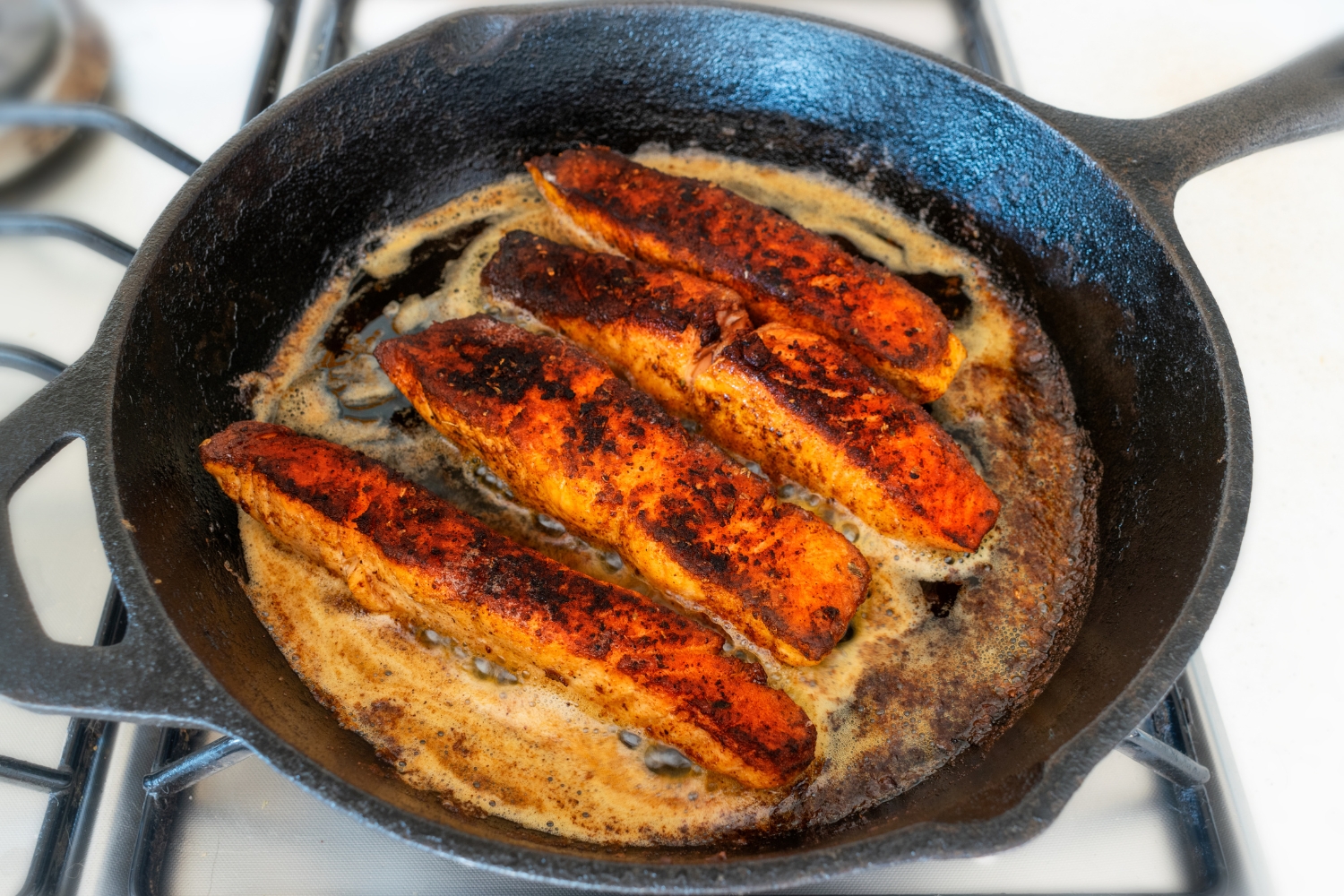
Blackened salmon looks dramatic, smells like a steakhouse for about five minutes, and tastes like you planned ahead. The truth is, you can pull it off on a normal Tuesday with a cast-iron skillet, a smart spice layer, and one simple promise to yourself: you will not walk away from the stove.
Blackening is all about controlled intensity. You want the pan hot enough to sear and bloom the spices, but not so hot that paprika turns bitter before the salmon is even warm in the middle. Butter helps, but it is also what makes blackened salmon smoky. The trick is timing: get the fish in, let the crust set quickly, then lower the heat and baste so the center gently catches up.

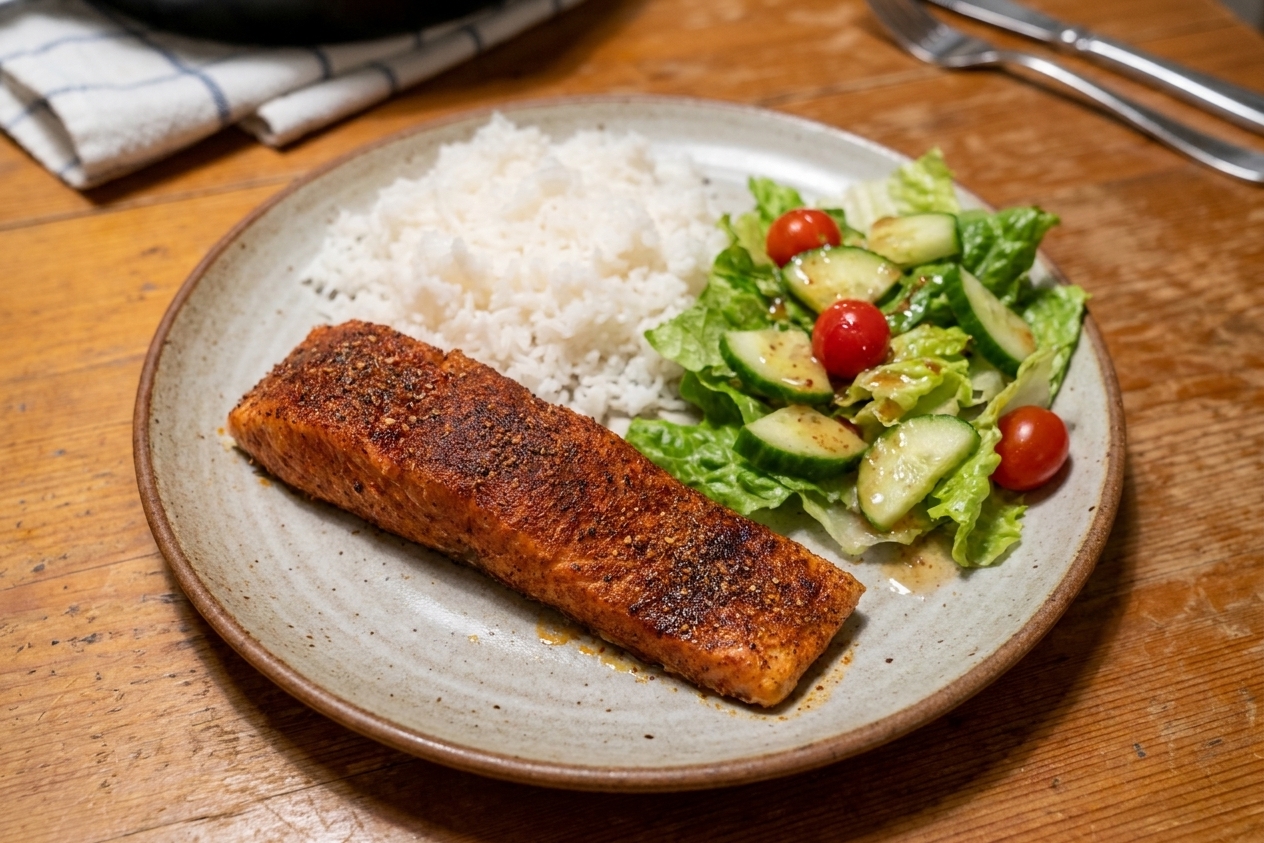
I like to serve blackened salmon with something cooling and bright. Think lemony rice, a crunchy salad, or yogurt sauce. It is a high-contrast dinner: spicy crust, buttery edges, and that clean, rich salmon flavor underneath.
What it should taste like
Done right, the crust is deeply savory with a gentle heat and a whisper of sweetness from paprika. The butter smells nutty, the surface is dark and crisp, and the inside flakes in big, silky pieces. If you have ever had blackened fish that tasted burnt and dusty, that is usually scorched spices plus a pan that stayed at maximum heat the whole time. We are going to avoid that.
How to keep it from burning
Here are the three moves that make blackened salmon reliable at home:
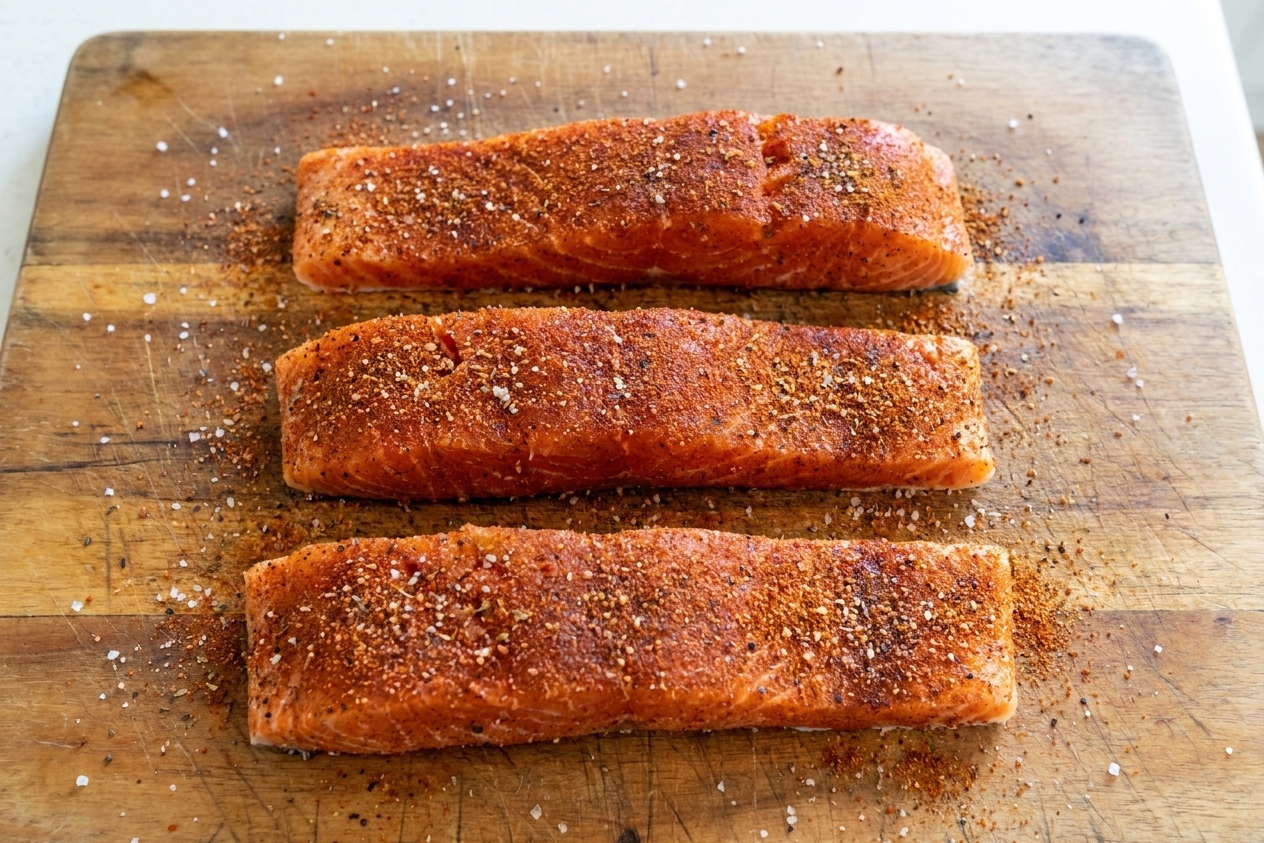
- Use a thin, even spice coat. You want coverage, not a thick paste. Too much rub acts like insulation, then burns before the fish cooks through.
- Start hot, then back off. High heat for the first minute or two sets the crust. Then you reduce to medium or medium-low so the spices stay fragrant instead of bitter.
- Add butter after the sear starts. Butter introduced at the right moment foams and carries flavor. Added too early, it can smoke aggressively and push the spices over the edge.
Why this recipe works
- High-heat searing sets the crust fast. The spice layer toasts and adheres before the salmon has time to release much moisture.
- Heat management prevents bitter spices. Dropping the heat after the crust forms keeps paprika and garlic powder from scorching.
- Butter basting finishes the center gently. Foaming butter transfers heat evenly and keeps the surface glossy and flavorful.
- Resting locks in juiciness. A short rest lets the salmon finish carrying over without drying out.
Ingredient notes
Salmon
Center-cut fillets about 1 to 1 1/4 inches thick are ideal. Thicker pieces give you the best contrast between crust and juicy middle. Skin-on or skinless both work, but skin-on is a little more forgiving because the skin acts like insulation.
Blackening spice blend
This is a Cajun-style mix built around paprika, garlic powder, onion powder, thyme or oregano, and cayenne. If you are using a store-bought blend, taste a pinch first. Some are very salty. If yours is salt-forward, reduce the added salt in the recipe.
Butter
Butter is classic for blackening. It helps the spices toast and gives that signature nutty aroma. If you are sensitive to smoke, you can use a high-heat oil for the initial sear and add butter later for basting.
Oil
A small amount of high-heat oil keeps the butter from burning too quickly and helps create a consistent sear. Avocado oil, canola, grapeseed, or light olive oil are all good options.
Brown sugar (optional)
A tiny pinch helps with browning, but it also increases the risk of scorching if your pan runs hot. If your stove is powerful or your skillet holds heat aggressively, skip it.
Equipment you will need
- Cast-iron skillet (best) or heavy stainless steel skillet, 10 to 12 inches
- Fish spatula or a thin, flexible metal spatula
- Instant-read thermometer for stress-free doneness
- Small bowl for mixing the spice blend
- Paper towels for drying the salmon
Pro tips
- Dry the salmon well. Moisture is the enemy of crust. Pat until the surface feels dry, then season.
- Vent early. If you have a hood, turn it on before the pan heats. If not, crack a window. Blackening is supposed to be a little smoky.
- Press gently, once. After the salmon hits the pan, use a spatula to press for 5 seconds so the surface makes full contact. Then leave it alone.
- Watch the butter. If butter goes from foaming to darkening too quickly, lower the heat immediately. You want toasted spices, not burnt milk solids.
- Pull by temperature, not fear. For most fillets, 125 to 130°F in the thickest part gives you a juicy, barely translucent center that flakes. If you prefer fully opaque, aim for 135 to 140°F.
Substitutes that work
- Store-bought blackening seasoning: Use 2 to 3 teaspoons per fillet (about 6 ounces), depending on saltiness and heat level.
- No butter: Use oil only, then finish with a squeeze of lemon and a drizzle of olive oil off heat. You lose some classic flavor, but it is still delicious.
- Less spicy: Reduce cayenne to a pinch or skip it and add more paprika and black pepper.
- No paprika: You can use smoked paprika for deeper flavor, but it can read stronger and slightly bitter if scorched. Keep the heat moderate after the initial sear.
Variations
Blackened salmon bites
Cut salmon into 1 1/2-inch chunks, season, then sear quickly in a hot skillet for about 1 to 2 minutes per side. Great for bowls and tacos.
Blackened salmon with honey-lime butter
Off heat, swirl 1 teaspoon honey and a squeeze of lime into the pan butter and spoon it over the fish. Sweet, tangy, and very kid-friendly if you keep cayenne low.
Blackened salmon tacos
Flake the cooked salmon into warm tortillas with shredded cabbage and a quick yogurt sauce. The cooling sauce is the perfect balance.
Serving ideas
- Cooling sauce: Greek yogurt with lemon juice, salt, and chopped cilantro or parsley.
- Starchy side: Rice, mashed potatoes, or cheesy grits to soak up the spiced butter.
- Fresh crunch: Cucumber salad, simple slaw, or a green salad with citrus vinaigrette.
- Vegetables: Roasted broccoli, sautéed green beans, or blistered cherry tomatoes.
Storage and reheating
Refrigerate
Cool leftover salmon, then store in an airtight container in the refrigerator for up to 3 days.
Reheat
For the juiciest texture, reheat gently. Warm in a covered skillet over low heat with a splash of water, or microwave at 50 percent power in short bursts. The crust will soften a bit, but the flavor holds.
Eat it cold
My favorite leftover move is flaking cold blackened salmon over a salad with avocado and a squeeze of lemon. The spices mellow and taste even better the next day.
Common mistakes
- Pan too hot for too long: If the crust smells acrid or tastes bitter, reduce the heat after the first sear and add butter later.
- Wet fish: If the seasoning looks patchy or slides, the salmon was not dried enough. Pat dry and season right before cooking.
- Too much spice rub: A thick layer burns before the center cooks. Aim for a thin, even coat.
- Flipping too soon: If the crust tears, it has not set yet. Give it another 30 to 60 seconds and try again.
- Overcooking: Salmon goes from juicy to dry fast. Use a thermometer or pull when it flakes easily but still looks moist in the center.
FAQ
Is blackened salmon supposed to be burnt?
No. It is supposed to be very dark, but not bitter. The spices should taste toasted and fragrant. If it tastes burnt, your heat was too high for too long or the spice layer was too thick.
Why does blackened salmon smoke so much?
A very hot pan plus butter and spices will smoke. Turn on the vent early. To reduce smoke, start with oil only, sear, then add butter once the crust has begun to set and you have lowered the heat slightly.
Do I need cast iron?
Cast iron makes it easier because it holds heat steadily. A heavy stainless steel pan also works. I do not recommend nonstick for true blackening because you typically need higher heat than most nonstick coatings like.
What internal temperature should salmon be?
For a juicy center, aim for 125 to 130°F in the thickest part, then rest a few minutes. If you prefer fully opaque salmon, aim for 135 to 140°F.
Can I do this with frozen salmon?
Yes, but thaw completely and pat very dry. Extra surface moisture makes the seasoning slip and prevents a good crust.
The recipe
Blackened Salmon
A cast-iron seared blackened salmon with a Cajun spice crust, butter-basted edges, and a juicy center. High heat starts the crust, then gentler heat finishes the fish without burning the spices.
- Prep
- 10 minutes
- Cook
- 8 minutes
- Total
- 18 minutes
- Yield
- 4 servings
Ingredients
- 4 salmon fillets (about 6 ounces each, 1 to 1 1/4 inches thick), skin-on or skinless
- 1 1/2 teaspoons kosher salt
- 2 teaspoons paprika (regular or smoked)
- 1 teaspoon garlic powder
- 1 teaspoon onion powder
- 1/2 teaspoon dried thyme
- 1/2 teaspoon dried oregano
- 1/2 teaspoon freshly ground black pepper
- 1/4 to 1/2 teaspoon cayenne pepper (to taste)
- 1 teaspoon light brown sugar (optional)
- 1 tablespoon high-heat oil (avocado, canola, or grapeseed)
- 2 tablespoons unsalted butter
- 1 lemon, cut into wedges (for serving)
Instructions
- Dry and season the salmon. Pat the salmon fillets very dry with paper towels. In a small bowl, mix the salt, paprika, garlic powder, onion powder, thyme, oregano, black pepper, cayenne, and brown sugar (if using). Sprinkle the seasoning evenly over the flesh side of each fillet and gently press to help it adhere.
- Preheat the skillet. Place a cast-iron skillet over medium-high heat for 3 to 5 minutes, until it is very hot. Turn on your vent fan or open a window.
- Add oil, then sear. Add the oil and swirl to coat. Place the salmon in the pan seasoned-side down (if skin-on, the skin will be facing up). Press gently with a spatula for about 5 seconds to ensure good contact. Let sear without moving for 2 to 3 minutes, until the crust looks set and darkened around the edges.
- Lower heat and add butter. Reduce heat to medium. Add the butter to the skillet and let it melt and foam. If the butter smokes aggressively or darkens immediately, lower the heat to medium-low.
- Flip and baste. Flip the salmon carefully. Cook 2 to 4 minutes more, basting by spooning the foaming butter over the top several times, until the thickest part reaches 125 to 130°F for a juicy center, or 135 to 140°F for fully opaque.
- Rest and serve. Transfer salmon to a plate and rest for 3 minutes. Serve with lemon wedges and spoon any spiced butter from the pan over the top.
Notes
Spice level: Start with 1/4 teaspoon cayenne for mild-medium heat. Use 1/2 teaspoon for a more classic kick.
About burning: If your crust is getting too dark before the salmon is close to done, lower the heat and keep basting. If needed, you can loosely tent the pan with foil for the last minute to help the center finish gently.
Skin-on tip: For extra-crisp skin, you can start skin-side down for 2 minutes first, then flip to seasoned-side down to blacken. It changes the look slightly but tastes great.