
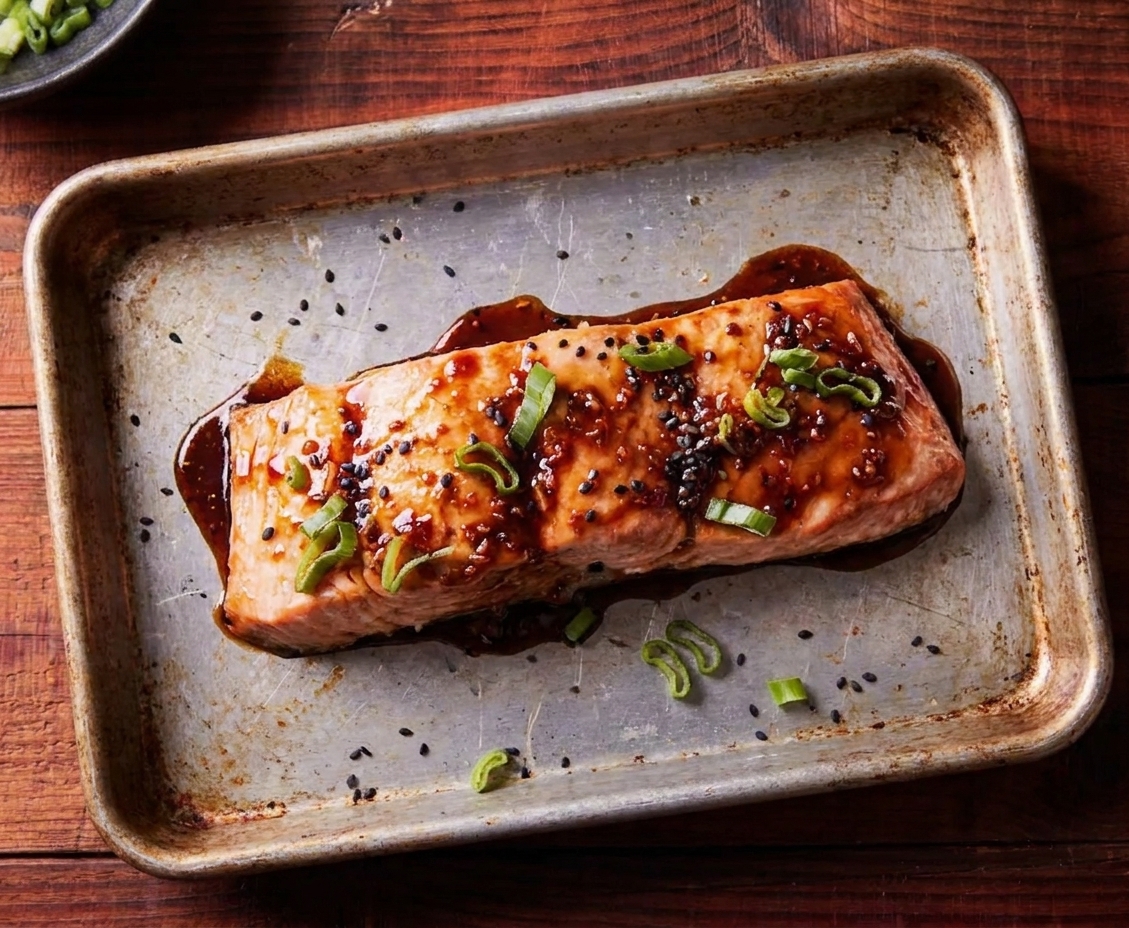
In my old bakery-manager life, I learned that the difference between “pretty good” and “wow” is often just one small technique. With teriyaki salmon, that technique is when you introduce sugar to high heat. Teriyaki glaze wants to burn fast, so we let the salmon get most of the way there first, then paint on the glossy glaze for a quick lacquer.

This recipe is for a teriyaki fillet, not a salmon patty and not a honey-garlic style sauce. Real-deal teriyaki is a reduction: salty-sweet soy and mirin (or a mirin substitute), gently simmered until it turns shiny and syrupy, then brushed on at the end so it clings like a coat of varnish.
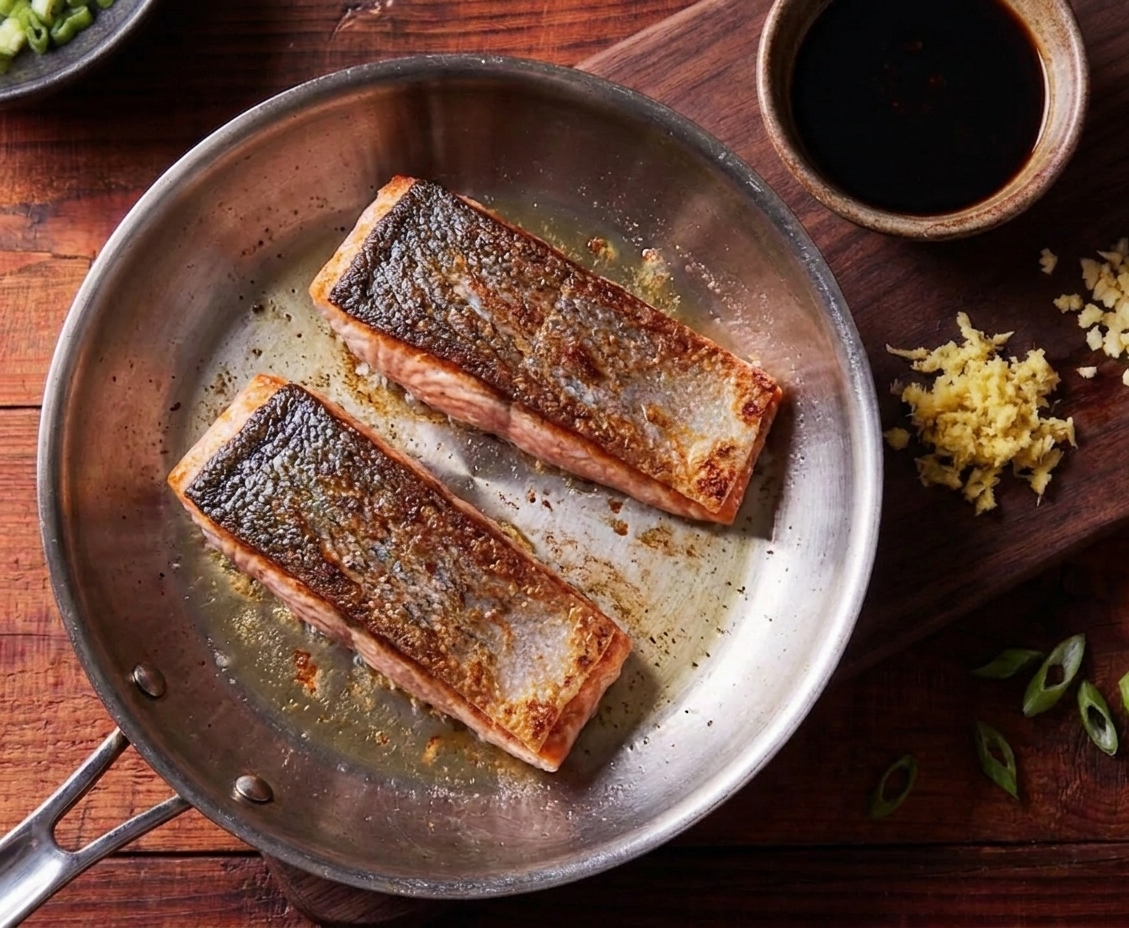
Sear or broil: Stovetop sear gives you crisp edges and great control. You sear the salmon, lower the heat, then glaze right at the end. Broil is hands-off and fast. You broil the salmon until it is almost done, then glaze and broil briefly to set the shine.
Why this recipe works
- We reduce the teriyaki first. A quick simmer concentrates soy and mirin into a syrupy glaze that actually clings to the fish instead of pooling on the plate.
- The salmon cooks before the glaze goes on. Most of the cooking happens without sugar in the pan or under the broiler, which prevents bitter, burnt spots.
- Short glazing window equals better shine. Brushing the glaze on during the final minutes gives you that lacquered look and caramelized aroma without drying out the salmon.
- Doneness is based on cues, not guesses. Watching the opaque line creep up the side of the fillet is more reliable than a timer.
Ingredient notes
Salmon fillets: Center-cut fillets cook most evenly. Skin-on is great for stovetop searing because the skin protects the flesh and can get crisp. Skinless works fine too, especially for broiling.
Soy sauce: Use regular soy sauce for the classic salty backbone. If you use low-sodium, you may want to reduce the added water (if using) and taste as you go.
Mirin: True mirin is lightly sweet and gives teriyaki its signature gloss and aroma. If your mirin is labeled “aji-mirin” (mirin-style seasoning), it is usually sweeter. It still works, just watch the reduction so it does not get too thick.
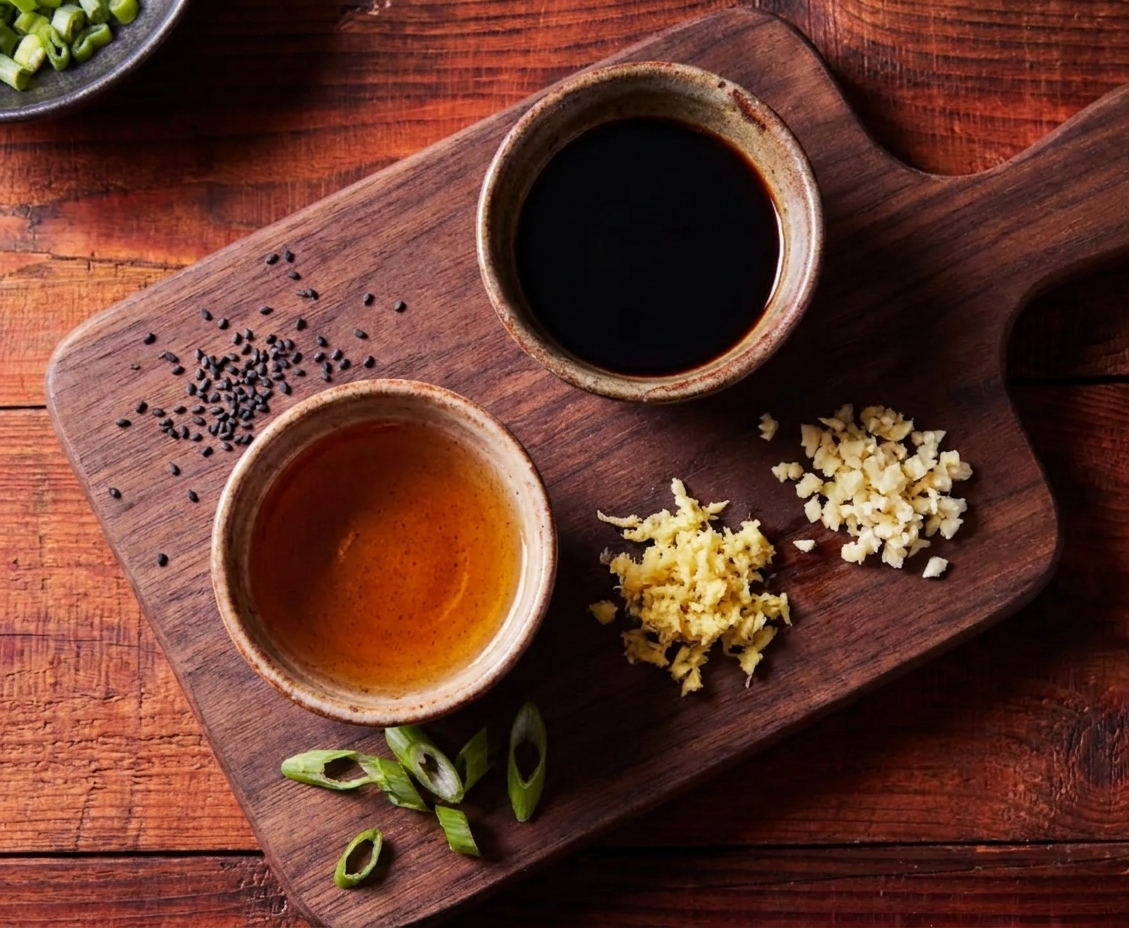
Sugar: Even with mirin, a small amount of sugar helps the glaze turn shiny and syrupy. Brown sugar adds deeper caramel notes, while white sugar keeps it cleaner.
Fresh ginger and garlic: Fresh is worth it here. Grate ginger finely so it infuses quickly. Mince or grate garlic so it does not burn in big chunks during the simmer.
Neutral oil: For searing, use something with a higher smoke point like avocado, canola, or grapeseed oil.
Equipment you will need
- Small saucepan for reducing the teriyaki glaze
- Whisk or spoon for stirring
- 12-inch skillet (stainless steel or cast iron) for the sear method
- Sheet pan and foil for the broil method
- Fish spatula (helpful, not required)
- Instant-read thermometer (optional but great for confidence)
Pro tips
- Dry the salmon well. Patting the surface dry helps it sear instead of steam, and it helps the glaze cling.
- Reduce the glaze gently. A steady simmer is enough. A rolling boil can reduce too fast and push it into burnt-sugar territory.
- Glaze late. Think: last 1 to 3 minutes of cooking, then another brush right before serving.
- Use two brushes, or one clean spoon. One for raw fish contact, one for finished glazing, to keep things food-safe.
- Let it rest briefly. Two minutes on the plate helps juices redistribute and keeps the center moist.
Substitutes that work
- No mirin: Use rice vinegar plus sugar (a good starting point is 1 tablespoon rice vinegar plus 1 to 2 teaspoons sugar per tablespoon of mirin). Taste and adjust before reducing.
- No fresh ginger: Use a smaller amount of ground ginger. Add it to the glaze while simmering so it blooms.
- No fresh garlic: A pinch of garlic powder works in the glaze. Keep it subtle.
- Gluten-free: Swap soy sauce for tamari. Reduce as usual.
Variations
- Spicy teriyaki salmon: Add a small spoonful of chili garlic paste or a pinch of red pepper flakes to the glaze while it simmers.
- Citrus-teriyaki: Add a little orange zest off-heat for a brighter finish. Keep the core glaze the same so it still reads as teriyaki.
- Scallion finish: Brush with glaze, then shower with sliced scallions right before serving for crunch and freshness.
Serving ideas
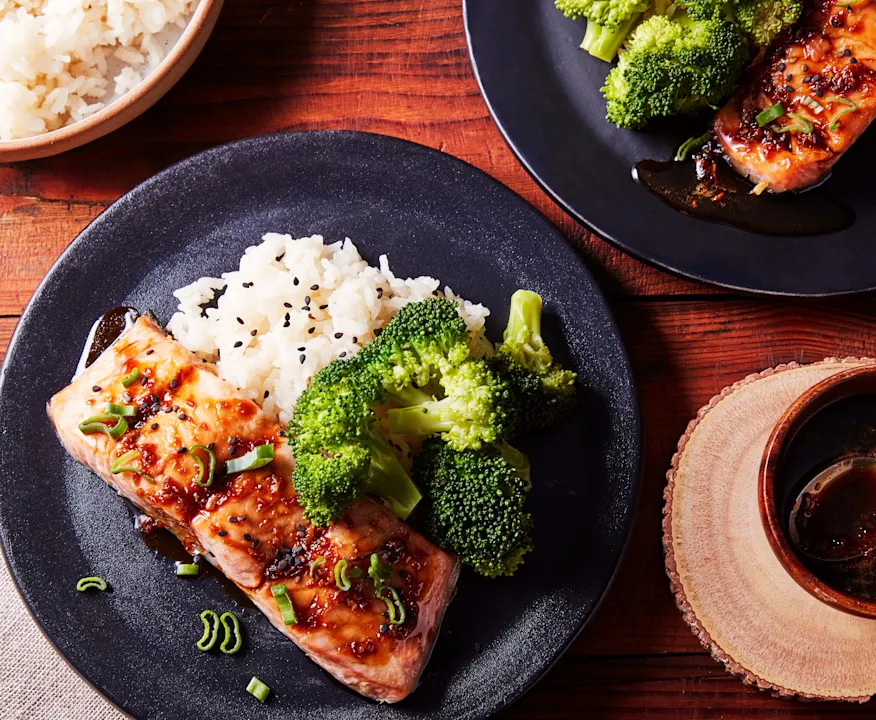
- Steamed rice (white rice, brown rice, or sushi rice) to catch extra glaze
- Quick cucumber salad with rice vinegar and a pinch of salt
- Roasted broccoli or broccolini with sesame seeds
- Stir-fried green beans or snap peas for crunch
- Simple miso soup to round out the meal
Storage and reheating
Refrigerate: Store leftover salmon in an airtight container for up to 2 days. Keep any extra glaze separate if you can.
Reheat gently: My favorite method is a covered skillet on low with a splash of water, just until warmed through. You can also microwave at 50 percent power in short bursts to avoid drying it out.
Cold leftovers: Flake cold teriyaki salmon over rice with cucumbers and a little extra soy or leftover glaze for an easy lunch.
Common mistakes
- Adding the glaze too early: This is the big one. Sugar plus high heat equals burnt, bitter glaze. Cook the salmon most of the way first.
- Reducing the glaze too far: If it turns thick like candy, it will seize and taste overly sweet. Keep it syrupy. If it goes too far, thin with a splash of water.
- Overcooking the salmon: If the center looks chalky and flakes fall apart with no sheen, it has gone past moist. Pull earlier and let carryover heat finish.
- Skipping the dry pat: Surface moisture makes searing harder and dilutes the glaze on contact.
FAQ
Is teriyaki sauce the same as a thickened stir-fry sauce?
No. Teriyaki is traditionally a reduction of soy sauce, mirin, and sugar (often with aromatics). It thickens by simmering, not by a flour or cornstarch slurry.
Should I marinate the salmon in the teriyaki?
You can, but you do not need to for great flavor. Because the glaze is reduced and concentrated, brushing it on at the end delivers plenty of impact. If you do marinate, keep it short and reserve some untouched sauce for glazing.
Skin on or skin off?
Either works. Skin-on is excellent for stovetop searing and helps protect the salmon from overcooking. For broiling, skinless is a little easier to serve, but skin-on is still fine.
How do I keep the glaze from burning under the broiler?
Glaze only in the final minute or two, and keep the pan positioned so the salmon is not inches from the heating element. You want quick caramelization, not a hard char.
Can I use this glaze on other fish?
Yes. It is lovely on trout, cod, or halibut. Just adjust cook time for thickness and use the same late-glaze strategy.
The recipe
Teriyaki Salmon
Salmon fillets cooked until just tender, then brushed with a glossy soy, mirin, ginger, and garlic teriyaki glaze that caramelizes quickly without burning.
- Prep
- 10 minutes
- Cook
- 12 minutes
- Total
- 22 minutes
- Yield
- 4 servings
Ingredients
- 4 salmon fillets (about 6 ounces each), skin-on or skinless
- 1 tablespoon neutral oil (avocado, canola, or grapeseed)
- 2 tablespoons soy sauce
- 2 tablespoons mirin
- 1 tablespoon packed brown sugar (or 2 teaspoons white sugar)
- 1 teaspoon fresh ginger, finely grated
- 2 cloves garlic, finely grated or minced
- 1 to 2 tablespoons water, as needed (to adjust glaze consistency)
- Optional for serving: toasted sesame seeds
- Optional for serving: sliced scallions
Instructions
- Make the teriyaki glaze: In a small saucepan over medium heat, combine the soy sauce, mirin, brown sugar, grated ginger, and garlic. Bring to a gentle simmer and cook, stirring often, until glossy and slightly syrupy, 3 to 6 minutes. If it reduces too far, stir in 1 tablespoon water to loosen. Remove from heat.
- Prep the salmon: Pat the salmon very dry with paper towels. If using skin-on salmon, check for any lingering pin bones and remove if needed.
- Choose your cooking method:
- Stovetop sear: Heat a large skillet over medium-high heat. Add the oil. Place salmon in the skillet (skin-side down if using skin-on). Sear until the bottom is deeply golden and releases easily, 4 to 6 minutes. Flip and cook 2 to 4 minutes more, until the salmon is mostly opaque with a slightly more translucent center at the thickest point.
- Broil: Set an oven rack about 6 inches from the broiler and preheat the broiler. Line a sheet pan with foil and lightly oil it. Place salmon on the pan and broil 6 to 10 minutes, depending on thickness, until the salmon is mostly opaque with a slightly translucent center.
- Glaze late so it does not burn: Brush a thin layer of glaze over the salmon during the final 1 to 2 minutes of cooking. For the stovetop method, reduce heat to medium-low while glazing. For the broiler method, brush on glaze and broil 30 to 90 seconds to set the shine, watching closely.
- Finish and serve: Remove salmon from heat and rest 2 minutes. Brush with a little more glaze. Top with sesame seeds and sliced scallions if you like, and serve right away.
Notes
Doneness note: Salmon is at its juiciest when it flakes with gentle pressure but still looks moist. If you use an instant-read thermometer, pull around 120 to 125°F for medium and let carryover heat finish.
Glaze texture: The glaze should be syrupy, not thick like candy. If it tightens up as it cools, whisk in a splash of warm water.
Food safety: If you brush glaze on raw salmon, reserve some glaze in a separate bowl for finishing, or use a clean brush for the final coat.