
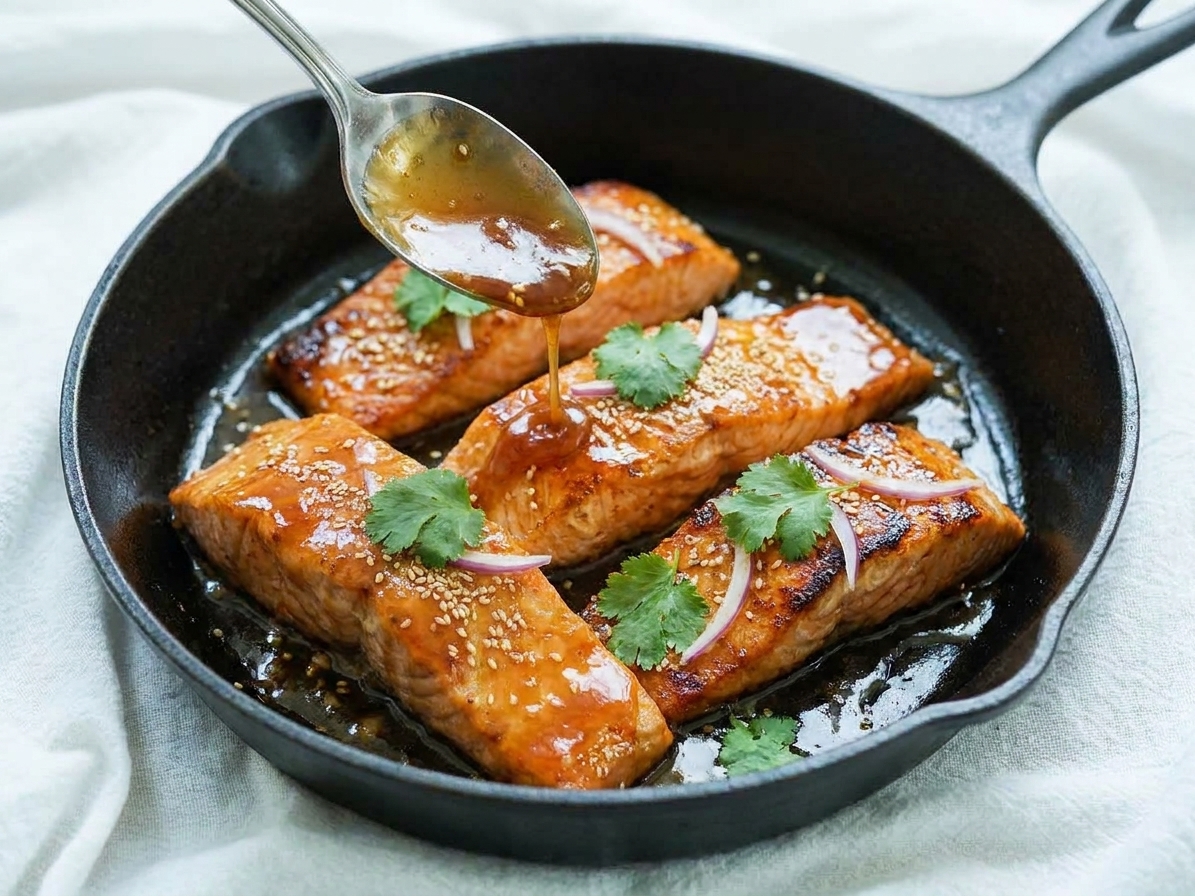
Any time I want dinner to feel a little special without turning my kitchen into a disaster zone, I reach for salmon and a quick pan glaze. This one hits all the notes I crave: salty, sweet, garlicky, and just tangy enough to keep the honey from tasting flat (that little pop comes from rice vinegar or a squeeze of lemon).
The key is the order. We sear the salmon first so it gets that deeply browned exterior with crisp edges. Skin-on fillets get especially crisp if you start skin-side down, but skinless works too as long as you pat the fish dry and let it sit undisturbed long enough to build a crust. Then the sauce goes into the same pan, where it picks up all those savory browned bits and reduces into a shiny glaze you can actually see thicken as it bubbles.

If you have ever had salmon turn dry and chalky, I want to reassure you: you do not need to cook it into submission. Pull it when it flakes with gentle pressure but the very center still looks a touch moist. If you like a number to aim for, I usually take it off the heat around 120 to 125 F for juicy salmon, then let carryover heat finish it while you spoon on the glaze.
One more thing I always keep in mind with honey glazes: they can go from glossy to scorched fast. That is why the garlic goes in briefly, then the sauce simmers at medium, not raging high heat. You want shiny, sticky, and fast, not bitter.
This is a glazed fillet dinner, not a patty or cake, so the goal is clean, intact pieces of fish and a sauce that clings. Think shiny, sticky, and fast.
Why this recipe works
- Searing first locks in texture: Starting with dry salmon in a hot pan builds a crisp surface so the glaze goes on top instead of turning the fish soggy.
- The glaze reduces into a true lacquer: Honey plus a salty element and a splash of acid thickens quickly when simmered, giving you a sauce that coats the back of a spoon and the salmon.
- Carryover cooking keeps it moist: Salmon continues cooking after you take it off the heat. Pulling it slightly early avoids that dry, overcooked center.
- One pan, built-in flavor: The sauce deglazes the browned bits left from searing, which adds depth without extra ingredients.
Ingredient notes
Salmon fillets: Center-cut fillets cook evenly. Skin-on is great for crisping and acts like a little protective layer, but skinless works too. If your pieces vary in thickness, start the thickest ones first.
Honey: Provides the sticky body of the glaze. Because honey can scorch, you want a gentle simmer once it is in the pan, not aggressive high heat.
Garlic: Fresh minced garlic gives the best punch. Add it to the pan briefly so it turns fragrant and sweet, not bitter.
Salty element: Soy sauce is the most common choice for honey garlic glaze. If you are sensitive to salt, use low-sodium soy sauce and reduce carefully.
Acid: Rice vinegar or lemon juice brightens the glaze and keeps it from tasting one-note. A small amount makes a big difference.
Equipment you will need
- 12-inch skillet: Nonstick makes sticking less likely, but stainless steel works beautifully if you preheat well and use enough oil.
- Fish spatula: Helpful for flipping without tearing.
- Small bowl and whisk or fork: For mixing the sauce ingredients quickly.
- Instant-read thermometer (optional): The easiest way to nail doneness.
Pro tips
- Pat the salmon dry: Moisture is the enemy of browning. A quick blot with paper towels helps you get that golden crust.
- Do not move it too soon: If the salmon is sticking, it usually means it is not ready. Give it another 30 to 60 seconds and it will release more easily.
- Watch the sauce at the end: Honey goes from syrupy to thick fast. When bubbles look tighter and slower, you are seconds away from a perfect glaze.
- Pull early, then finish in the sauce: For moist salmon, aim to take it off the heat when it is just shy of done. If using a thermometer, many cooks like salmon around 120 to 125 F for a juicy finish, or higher if you prefer it more done.
- Spoon, do not drown: Glaze the top right before serving so the surface stays crisp.
Substitutes that work
- Salmon: This glaze works with arctic char, trout, or even shrimp. Adjust cook time to the protein.
- Soy sauce: Use tamari for gluten-free, or coconut aminos for a slightly sweeter, lower-sodium option.
- Honey: Maple syrup works for a different but equally delicious sticky glaze. It reduces a touch differently, so simmer gently and stop when glossy.
- Vinegar: Lemon juice, lime juice, or apple cider vinegar all work. Start small and taste.
- Garlic: In a pinch, garlic powder can stand in. Add it to the sauce mixture and give it a minute to bloom as it simmers.
Variations
- Spicy honey garlic salmon: Add red pepper flakes or a spoonful of chili garlic sauce to the glaze.
- Ginger honey garlic: Add freshly grated ginger for extra warmth and aroma.
- Sesame finish: Sprinkle toasted sesame seeds and sliced scallions right before serving for crunch and freshness.
- Orange-honey twist: Swap some of the acid for orange juice and add a little zest for a citrusy glaze.
Serving ideas
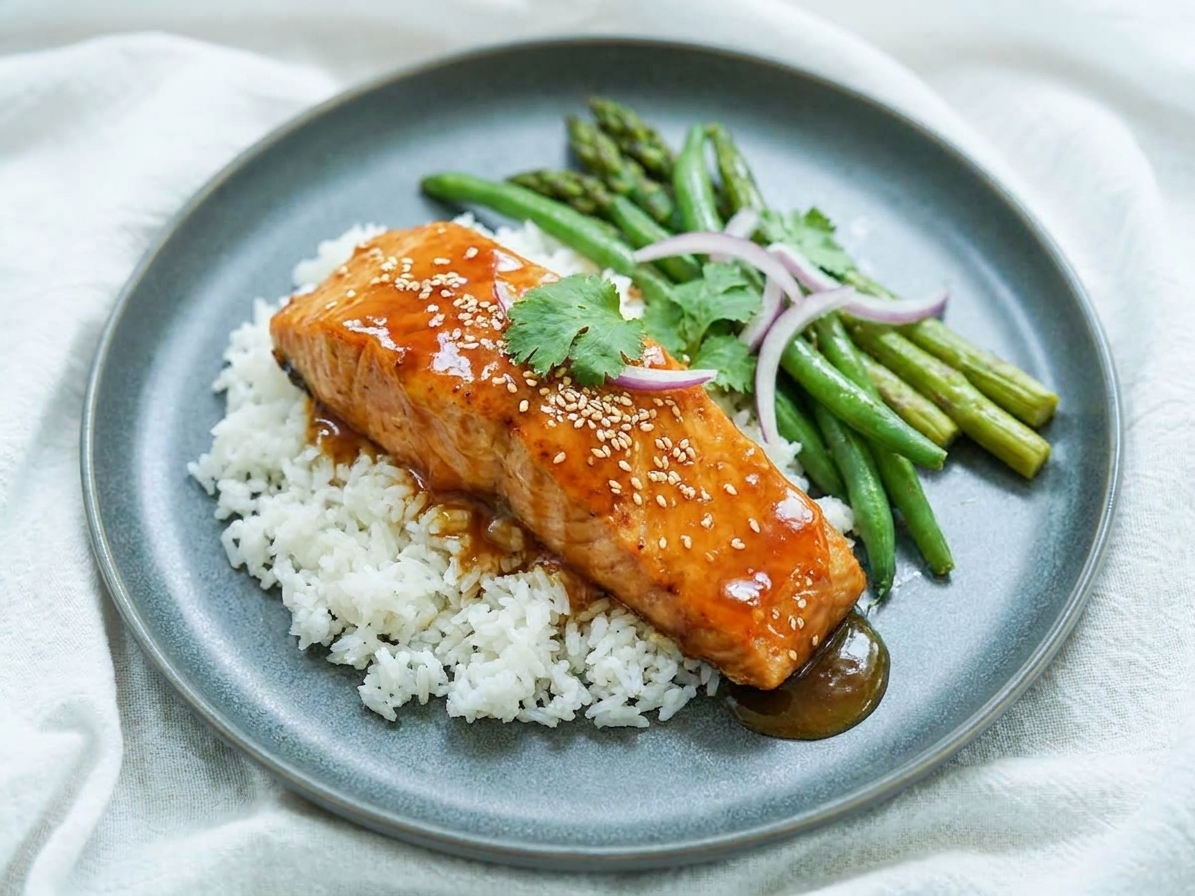
- Steamed rice or coconut rice: Perfect for catching extra glaze.
- Roasted broccoli or green beans: The bitter-green edge balances the sweet sauce.
- Cucumber salad: Something cold and crisp keeps the plate feeling light.
- Noodles: Toss cooked rice noodles or soba with a splash of the glaze and a little sesame oil.
Storage and reheating
Refrigerate: Store leftover salmon in an airtight container for up to 2 days. Keep any extra glaze with it if you can, since it helps protect the fish from drying out.
Reheat gently: My favorite method is a covered skillet on low with a splash of water, just until warmed through. You can also microwave at 50 percent power in short bursts to avoid that strong fishy smell and rubbery texture.
Cold leftover idea: Flake chilled salmon over rice or greens and drizzle with any leftover glaze thinned with a little lemon juice or warm water.
Common mistakes
- Starting with wet salmon: It steams instead of browns, and you miss the crisp exterior.
- Heat too high for the glaze: Honey can burn quickly. Once the sauce ingredients go in, reduce to a steady simmer.
- Overcooking the fish: Salmon goes from silky to dry fast. Pull it when it is just shy of done in the center.
- Reducing the sauce too far: If it turns thick like candy in the pan, it may seize as it cools. Stop when it is glossy and coats a spoon, not when it is stiff.
FAQ
Should I cook salmon skin-side down first?
Yes, if your fillets have skin. Start skin-side down to help render and crisp it, and it also gives you a little insulation so the flesh stays moist.
How do I know when the salmon is done without a thermometer?
Gently press the thickest part with your finger or a spoon. It should feel slightly springy and the flesh should flake with gentle pressure. For juicy salmon, aim for a center that still looks a touch moist, not bone dry and fully opaque.
Can I make the honey garlic sauce ahead?
You can mix the sauce ingredients ahead, but I recommend reducing it right before serving. The glaze texture is best fresh, and it thickens quickly once it hits heat.
Why did my sauce get grainy or hard?
It likely reduced too far. Add a tablespoon or two of warm water, return it to low heat, and whisk to loosen. Next time, pull it off the heat as soon as it turns glossy and syrupy.
Can I bake this instead of pan-searing?
You can, but you will miss the crisp sear and the sauce will not pick up the browned bits from the pan. If baking, reduce the sauce separately in a small saucepan, then brush it on at the end.
The recipe
Honey Garlic Salmon
Crisp-seared salmon fillets finished in a sticky honey garlic glaze made right in the same skillet for a fast, glossy, weeknight dinner.
- Prep
- 10 minutes
- Cook
- 12 minutes
- Total
- 22 minutes
- Yield
- 4 servings
Ingredients
- 4 salmon fillets (about 6 oz each), skin-on or skinless
- 1 tsp kosher salt, plus more to taste
- 1/2 tsp black pepper
- 1 to 2 tbsp neutral oil (avocado, canola, or grapeseed)
- 3 tbsp honey
- 3 tbsp low-sodium soy sauce (or tamari)
- 1 tbsp rice vinegar (or fresh lemon juice)
- 4 cloves garlic, finely minced
- 1 tsp toasted sesame oil (optional)
- 1 tbsp water, as needed to loosen glaze
- Sliced scallions and toasted sesame seeds, for serving (optional)
Instructions
- Prep the salmon: Pat salmon very dry with paper towels. Season both sides with salt and pepper.
- Mix the sauce: In a small bowl, stir together honey, soy sauce, and rice vinegar. Set aside.
- Sear the salmon: Heat a large skillet over medium-high heat. Add oil. When the oil shimmers, place salmon in the pan (skin-side down if using skin-on). Cook without moving until deeply golden and crisp, 4 to 5 minutes.
- Flip: Carefully flip the salmon and cook 1 to 3 minutes, depending on thickness, until the salmon is just shy of done in the center. Transfer to a plate.
- Make the honey garlic glaze: Reduce heat to medium. Add the garlic to the skillet and cook until fragrant, about 20 to 30 seconds. Pour in the honey mixture and simmer, stirring and scraping up browned bits, until glossy and slightly thickened, 1 to 2 minutes. If it gets too thick, whisk in 1 tablespoon water.
- Finish the salmon: Return salmon to the skillet (or spoon sauce over the salmon on the plate). Spoon glaze over the top. Cook 30 to 60 seconds more if needed to warm through and finish cooking gently.
- Serve: Turn off heat. Stir in sesame oil if using. Top with scallions and sesame seeds if you like, and serve right away.
Notes
- Doneness tip: Salmon stays juicier if you pull it when it flakes with gentle pressure but the center still looks a touch moist. Carryover heat finishes the job. If using a thermometer, many cooks like 120 to 125 F for a juicy finish, or higher if you prefer it more done.
- Pan choice: If using stainless steel, preheat well and do not rush the flip. The fish releases when the crust is formed.
- Glaze control: Honey thickens rapidly at the end. Keep the heat at a steady simmer and stop reducing as soon as it turns shiny and coats a spoon.