
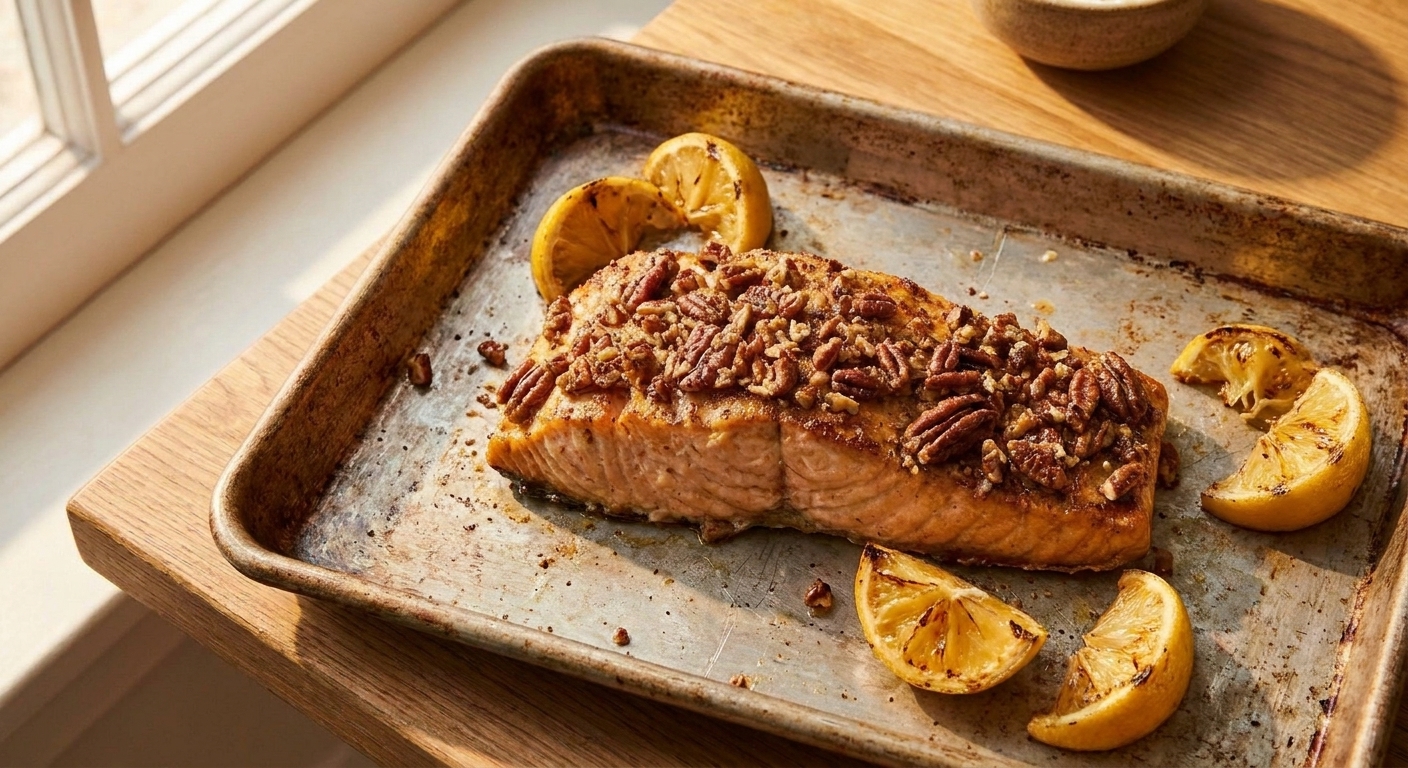
When I managed a bakery, I learned pretty quickly that nuts have two modes: perfectly toasted or heartbreakingly burnt, and they switch without warning. The same thing can happen with pecan-crusted salmon if you treat it like a regular baked fillet. The trick is to cook the fish gently, then give the pecans just enough heat to turn fragrant and golden.
This recipe gives you that restaurant-style crunchy top without deep frying, and without the crust sliding right off when you serve. We are using a thin layer of binder, pressing the pecans on firmly, and cooking crust-side up so the nuts toast instead of soaking.

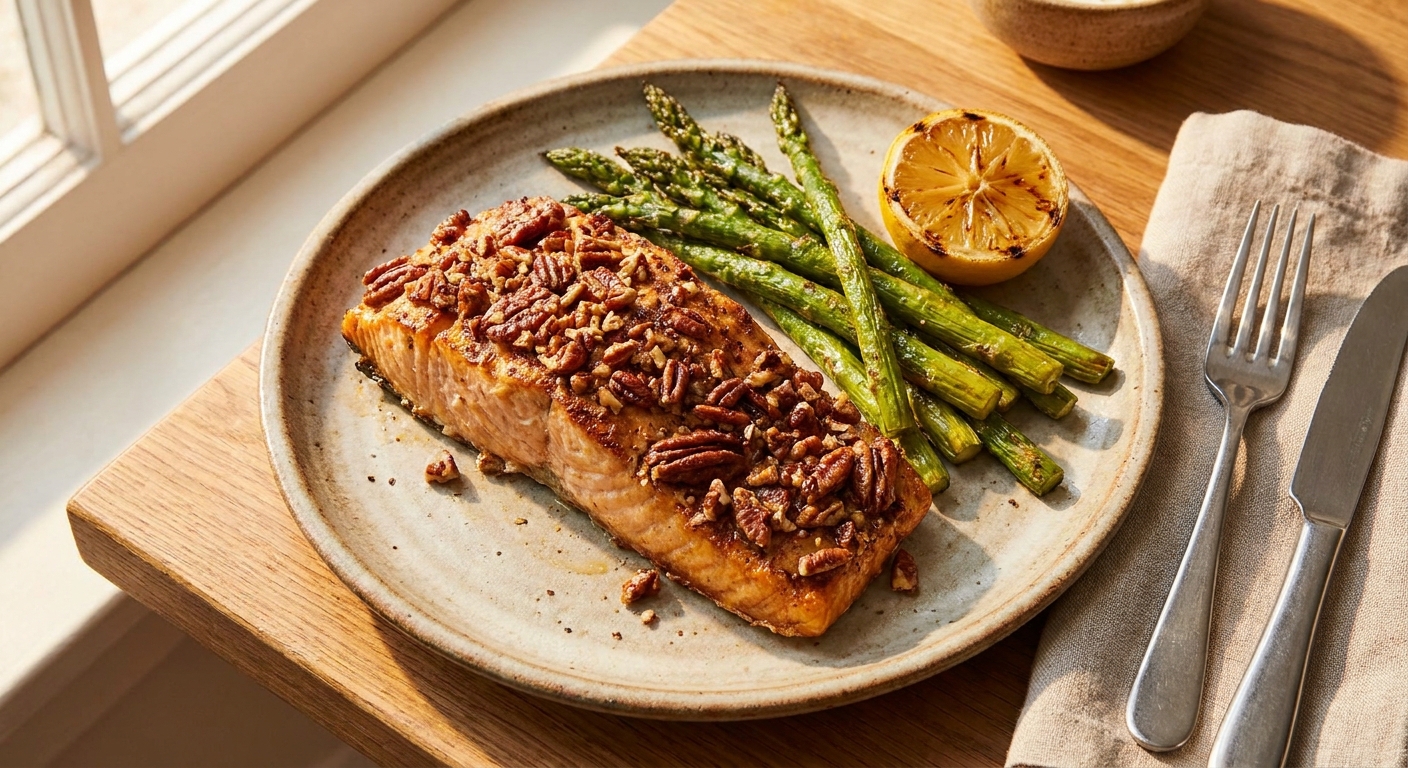
Expect a sweet, buttery crunch from the pecans, a savory salmon base, and a finish that feels special even if you are wearing sweatpants and unloading the dishwasher. I love this with something bright and simple on the side, like a lemony green salad or quick roasted asparagus.
How to make the pecan crust stick
Most nut crust problems come down to one of three things: wet salmon, too much binder, or not pressing the topping in. Here is the reliable approach:
- Pat the salmon dry with paper towels. If the surface is wet, the binder slides and the crust follows.
- Use a thin, even coat of binder like Dijon mustard, mayonnaise, or a mix of both. You want tacky, not drippy.
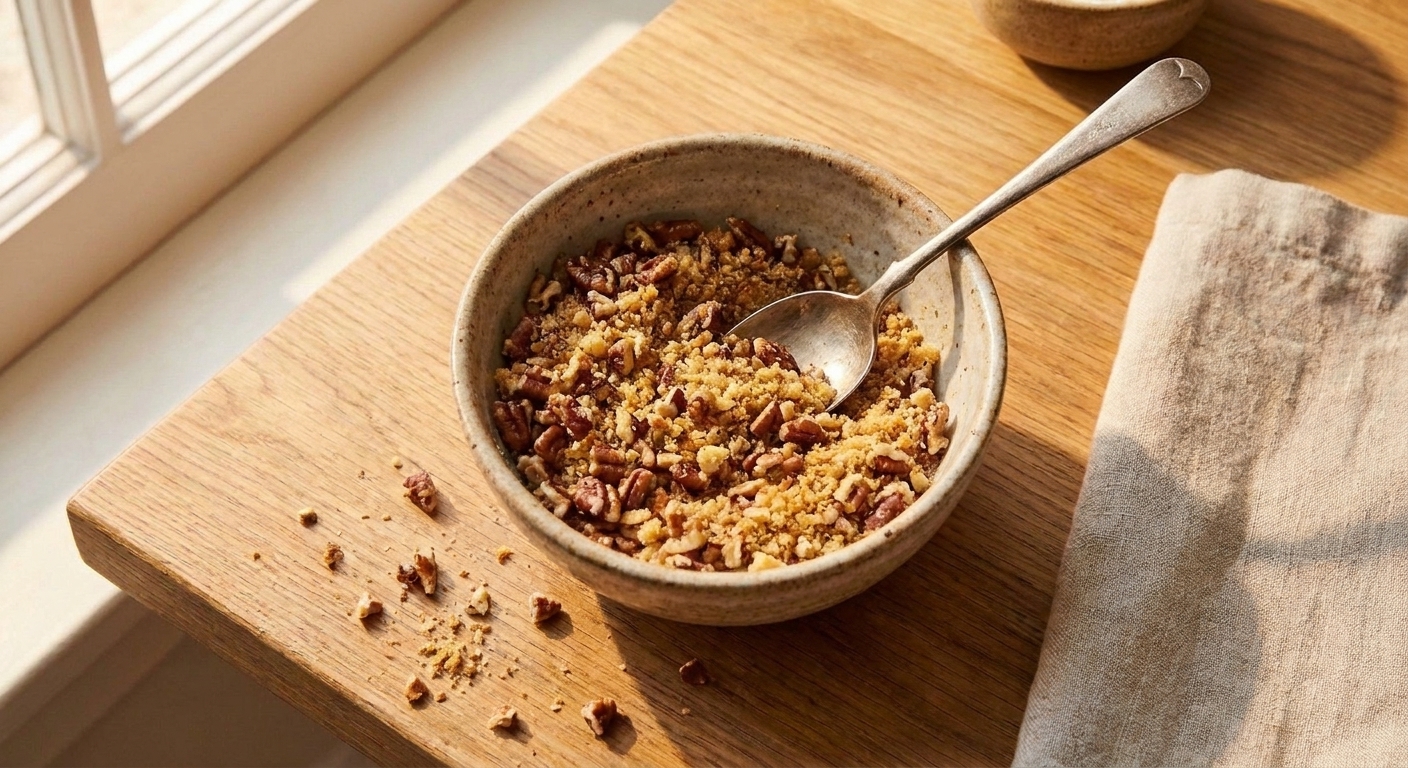
- Chop pecans small, think coarse breadcrumbs. Big pieces are heavier and fall off more easily.
- Press firmly with your palm or the back of a spoon so the pecans make real contact with the binder.
If you are searing, I recommend a quick sear on the plain side first, then flip and finish gently so the crust sets without scorching.
How to keep pecans from burning
Pecans are high in natural oils, which is why they taste so good toasted and why they can burn fast. A few safeguards make this stress-free:
- Lower oven temperature: 375°F is a sweet spot. Hotter ovens brown nuts before the salmon is done.
- Crust-side up for baking: This lets the pecans toast in dry heat rather than frying in a puddle of juices.
- Add fat to the crust: A little melted butter helps even browning and protects the nuts from drying out too quickly.
- Foil if needed: If the salmon is not done but the crust is getting too dark, tent loosely with foil for the last few minutes.
Why this recipe works
- Moist fish, crisp topping: The salmon cooks through at a moderate temperature while the pecans toast gradually, so you get crunch without dryness.
- A true “sticky” layer: Dijon and/or mayo acts like edible glue, helping the crust stay put when you slice and serve.
- Smart crust texture: Finely chopped pecans combined with a little breadcrumb creates an even layer that browns consistently.
- Clear doneness cue: You are aiming for salmon that flakes easily at the thickest point and looks opaque with a slightly translucent, juicy center.
Ingredient notes
Salmon
Center-cut fillets cook the most evenly. If your pieces vary in thickness, plan to pull the thinner ones first. Skin-on is fine. Just bake skin-side down and serve without the skin, or crisp the skin separately if you love it.
Pecans
Use raw, unsalted pecans and chop them fairly small. Pre-chopped “pecan pieces” work, but give them a quick chop anyway so the crust lays flat and adheres better.
Binder options
Dijon mustard brings tang and helps cut the richness. Mayonnaise browns beautifully and gives extra insurance against dryness. You can use either, but a 50-50 mix is my favorite.
Breadcrumbs
Not strictly required, but a couple tablespoons of panko helps the crust brown evenly and makes it less likely to crumble.
Lemon
A squeeze at the end wakes everything up. If you have zest, a little in the crust is lovely.
Equipment you will need
- Rimmed sheet pan and parchment paper (for baking)
- Small bowl (for crust mixture)
- Chef’s knife (for chopping pecans)
- Instant-read thermometer (optional, but very helpful)
- Fish spatula (optional for clean lifting)
Pro tips
- Bring salmon closer to room temp: 10 to 15 minutes on the counter helps it cook evenly.
- Season the fish itself: Salt and pepper directly on the salmon before the binder. A crust cannot fix under-seasoned fish.
- Press, then chill if you have time: Even 10 minutes in the fridge helps the topping set.
- Doneness cue: At the thickest part, salmon should flake with gentle pressure and look mostly opaque, with a slightly darker, juicy center. If using a thermometer, aim for 125°F to 130°F for medium and 135°F to 140°F for more well-done.
- For extra color without burning: If the salmon is done but the crust is pale, a very brief broil can help. Stay there and watch it closely, nuts brown fast under a broiler.
Substitutes that work
- Swap the nuts: Walnuts or almonds work well. Walnuts brown quickly like pecans, so keep the same temperature strategy.
- No Dijon: Whole grain mustard is great. In a pinch, use a thin smear of honey mustard and reduce any added sweetener elsewhere.
- No mayo: Use Dijon alone, or use Greek yogurt mixed with a little olive oil for richness.
- Gluten-free: Use gluten-free panko or skip crumbs entirely and chop pecans a little finer.
- Dairy-free: Replace butter with olive oil or a neutral oil in the crust.
Variations
Maple-Dijon pecan salmon
Add 1 teaspoon maple syrup to the binder. It is subtle and plays beautifully with pecans. Just watch browning closely because sugars darken faster.
Herby pecan crust
Stir in 1 to 2 tablespoons chopped parsley, dill, or chives to the pecan mixture.
Spicy-sweet
Add a pinch of cayenne or smoked paprika to the crust and finish with lemon.
Pan-seared and finished in the oven
Sear the plain side first, flip carefully, then finish in a 375°F oven so the crust sets without scorching in the skillet.
Serving ideas
If you want the easiest “this looks like I tried” plate, pair this salmon with one fresh side and one cozy side.
- Simple side suggestion: Roast asparagus at 425°F with olive oil, salt, and pepper for 10 to 12 minutes, then squeeze lemon over everything.
- Other easy pairings: Garlicky sautéed green beans, a crisp arugula salad with citrus, rice pilaf, roasted sweet potatoes, or couscous with herbs.
- Sauce idea (optional): A dollop of plain Greek yogurt mixed with lemon zest, salt, and a little Dijon is bright and creamy without being heavy.
Storage and reheating
- Refrigerate: Store leftover salmon in an airtight container for up to 2 days. The crust will soften a bit, but it is still delicious.
- Reheat gently: Warm in a 300°F oven until just heated through, about 8 to 12 minutes depending on thickness. If the crust needs re-crisping, finish with 1 to 2 minutes of broil, watching closely.
- Microwave note: It works, but the pecans lose crunch. If you do microwave, use lower power and short bursts to avoid drying out the fish.
- Cold leftover idea: Flake chilled salmon over a salad with apples or oranges and a simple vinaigrette.
Common mistakes
- Not drying the salmon: Moisture is the enemy of adhesion. Pat it dry before seasoning and adding binder.
- Using large pecan pieces: Big chunks fall off and burn on the edges. Chop smaller for an even crust.
- Oven too hot: High heat browns nuts before the salmon is cooked. Stick to moderate heat and use foil if needed.
- Overbaking: Salmon goes from juicy to dry quickly. Use the flake test and watch for the center turning opaque.
- Skipping seasoning: Pecans add richness, but the fish still needs salt and pepper under the crust.
FAQ
Can I use frozen salmon?
Yes. Thaw completely in the refrigerator, then pat very dry before seasoning. Extra surface moisture makes the crust slide.
Should I remove the skin?
It is optional. Skin-on is easier to lift off the pan and helps protect the flesh from overcooking. You can slide the skin off after baking if you do not want to eat it.
How do I know when it is done without a thermometer?
Press gently at the thickest part with a fork. The fish should flake in large, moist pieces and look mostly opaque, with a slightly translucent center if you like it juicy.
Can I prep the crust ahead?
Absolutely. Mix the chopped pecans and dry ingredients up to a day ahead and store airtight. Add melted butter right before topping the salmon for the best texture.
What if my pecans start getting too dark?
Loosely tent foil over the salmon and finish cooking. If needed, lower the oven temperature a bit and extend the cook time.
The recipe
Pecan-Crusted Salmon
Salmon fillets topped with a buttery, crunchy pecan crust and baked until the center is moist and flaky. Includes the key tricks for getting the crust to adhere and keeping the nuts from burning.
- Prep
- 15 minutes
- Cook
- 12 to 15 minutes
- Total
- 30 minutes
- Yield
- 4 servings
Ingredients
- 4 salmon fillets (about 6 oz each), skin-on or skinless
- 1/2 tsp kosher salt, plus more to taste
- 1/4 tsp black pepper
- 1 tbsp Dijon mustard
- 1 tbsp mayonnaise
- 3/4 cup raw pecans, finely chopped
- 2 tbsp panko breadcrumbs
- 2 tbsp unsalted butter, melted
- 1 tsp lemon zest (optional)
- 1 lemon, cut into wedges (for serving)
- 1 tbsp chopped parsley (optional, for serving)
Instructions
- Heat the oven and prep the pan. Heat oven to 375°F. Line a rimmed sheet pan with parchment paper (or lightly oil the pan).
- Dry and season the salmon. Pat salmon fillets very dry with paper towels. Place on the sheet pan, skin-side down if using skin-on. Season the top with salt and pepper.
- Make the pecan crust mixture. In a small bowl, stir together chopped pecans, panko, melted butter, and lemon zest (if using) until the mixture looks evenly moistened and crumbly.
- Add the binder so the crust sticks. In a separate small bowl, mix Dijon mustard and mayonnaise. Spread a thin, even layer over the top of each fillet.
- Press on the crust. Spoon the pecan mixture over each fillet, then press firmly with your palm or the back of a spoon so the crust adheres in an even layer.
- Bake. Bake until the salmon flakes easily at the thickest part and looks mostly opaque, 12 to 15 minutes depending on thickness. For a juicy result, target 125°F to 130°F in the thickest part if using an instant-read thermometer.
- Prevent over-browning if needed. If the crust is browning too quickly before the salmon is done, loosely tent the pan with foil and continue baking until the fish is ready.
- Rest and finish. Rest 2 minutes. Serve with lemon wedges and parsley if using.
Notes
Pan-sear option: Sear salmon in an oven-safe skillet over medium heat, plain side down, for 2 to 3 minutes. Flip carefully so crust stays on top, then transfer to a 375°F oven to finish until flaky and 125°F to 130°F.
Broiler caution: If you choose to broil to deepen color, broil briefly and watch closely. Pecans can burn fast.