
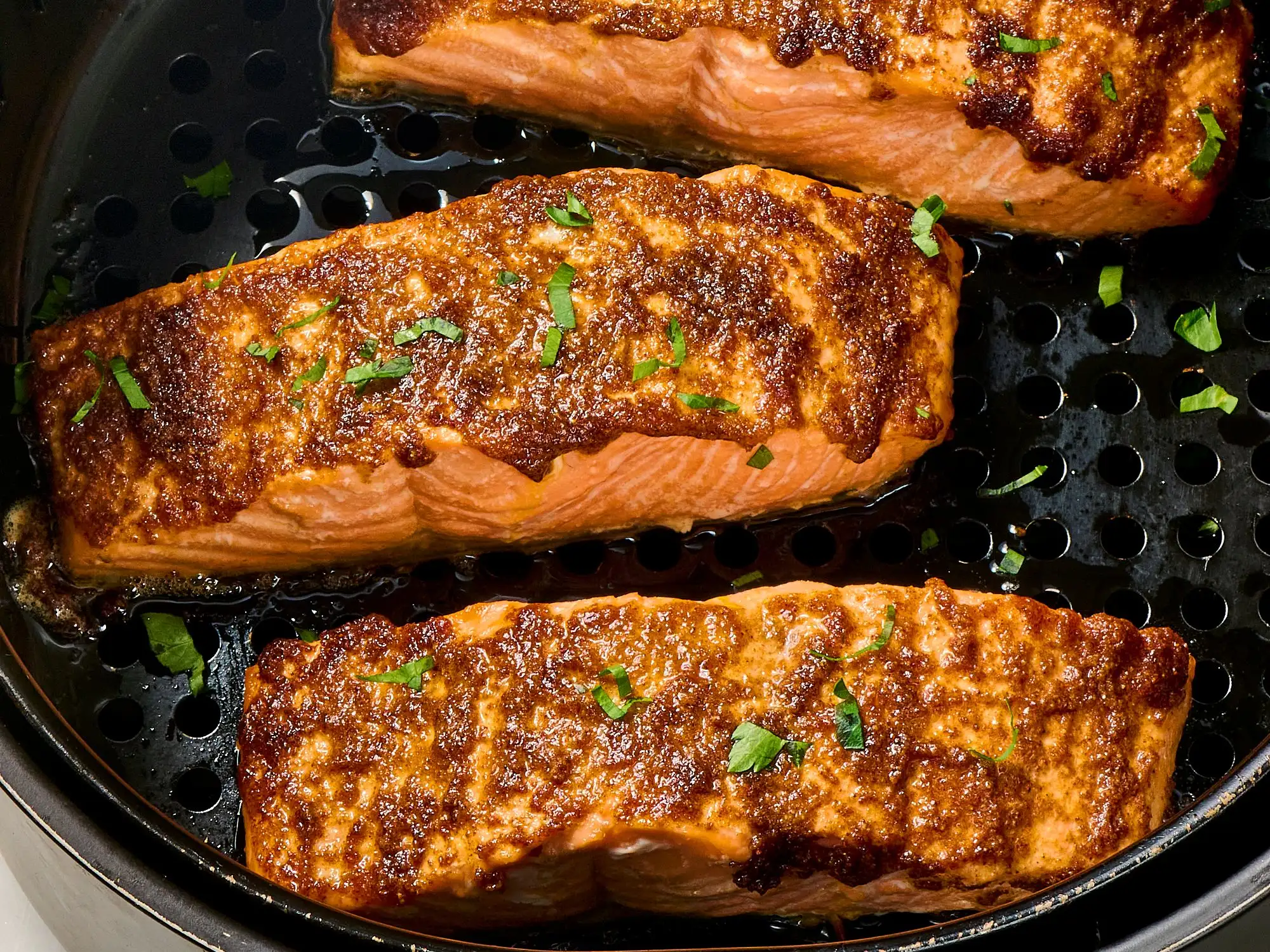
When I managed a bakery, I learned the hard way that “fast” and “good” can absolutely coexist, as long as you respect heat and timing. That is exactly why I love air fryer salmon. You get focused, circulating heat that browns the outside quickly while the inside stays tender, and you do not have to heat up the whole kitchen the way an oven does.
The key is thinking in thickness, not in minutes. A thin tail piece and a thick center cut are basically two different foods in an air fryer basket. Once you match your cook time to the thickest part of the fillet, the method becomes wonderfully repeatable, even though results can still vary a bit by air fryer model, basket crowding, and whether your salmon starts fridge-cold or closer to room temp.

Below, I will walk you through the small choices that make a big difference, like using just enough oil to give the fish a thin sheen, starting skin-side down when you have it, and checking doneness with the cue I trust plus an instant-read thermometer when I want zero guesswork.
What to expect
- Crisp edges: A light coating of oil plus a dry surface equals better browning.
- Juicy center: Cook until the thickest part turns opaque and flakes with gentle pressure, with the very center still slightly glossy.
- A clear doneness option: If you want the most reliable result, use an instant-read thermometer. Many people like salmon at 125°F to 130°F for a juicy medium, or 135°F to 140°F for more well done. (USDA guidance for fish is 145°F.)
- Easy cleanup: This method stays in the basket so hot air can circulate properly. Just avoid blocking airflow with a solid sheet of foil.
Why this recipe works
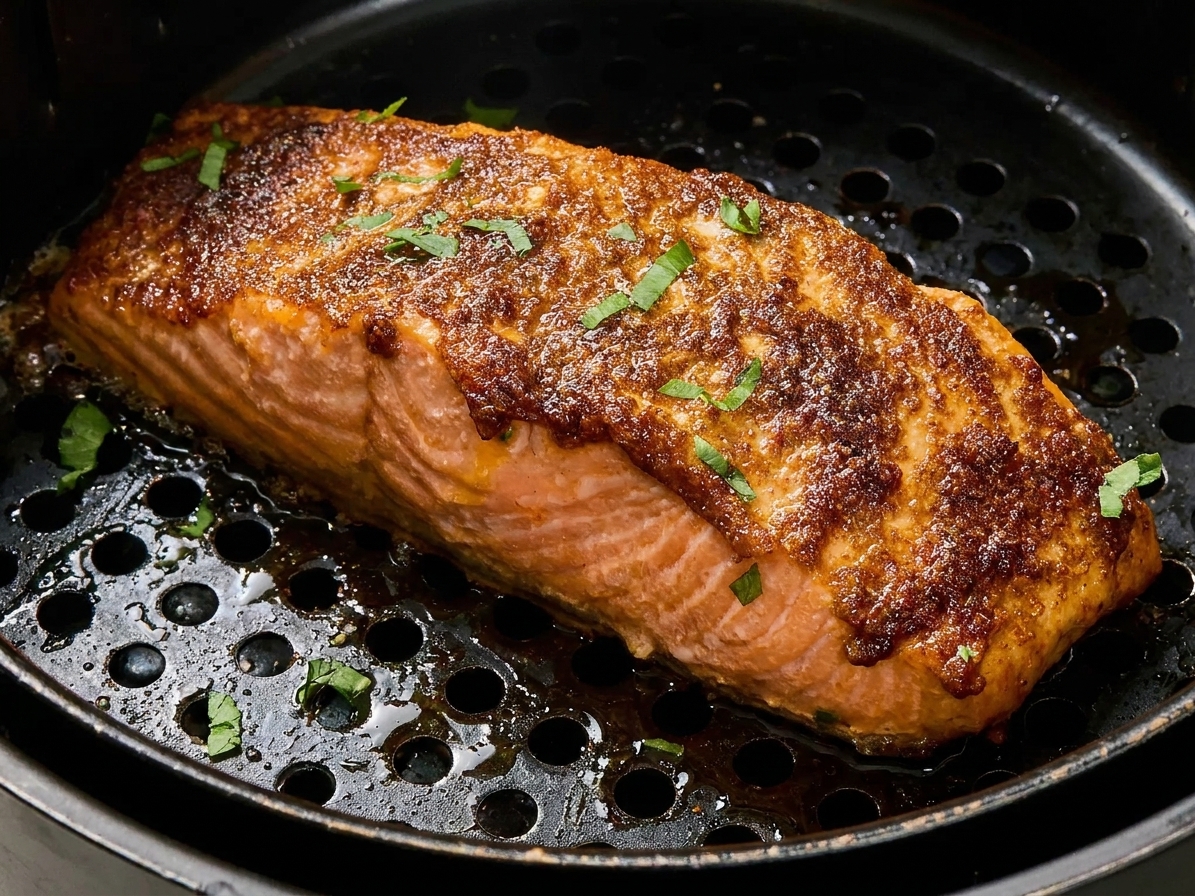
- High convection heat browns fast: The basket design lets hot air hit the sides of the fillet, so you get better exterior texture than you would with salmon sitting on a flat pan.
- Oil is used strategically: A light coating helps seasoning stick and encourages browning, but too much oil can drip and smoke. The goal is a thin, even sheen.
- Skin-side down is built-in insurance: If your salmon has skin, it acts like a natural barrier between the delicate flesh and the basket, reducing sticking and helping the fillet hold its shape.
- Timing is thickness-based: Salmon is easy to overcook by a minute or two. Measuring thickness at the thickest point makes the cook time predictable.
Ingredient notes
- Salmon fillets: Any variety works (Atlantic, sockeye, coho, king). Aim for similar thickness so the pieces finish at the same time. If one is much thinner, pull it early.
- Oil: Use olive oil, avocado oil, or another high-heat, neutral oil. You only need enough to lightly coat the surface.
- Kosher salt: Salt ahead by 10 minutes if you can. It seasons deeper and helps the surface dry a bit for better browning.
- Seasoning: Simple is perfect here. Garlic powder, paprika, black pepper, and a little brown sugar can create a quick rub. If you want a glaze, add it at the end so it does not burn.
- Lemon: Brightens everything. I like adding lemon after cooking to keep the top surface crisp.
Equipment you will need
- Air fryer with a basket: This recipe is written for a basket-style air fryer so air can circulate around the fish.
- Instant-read thermometer (helpful): The easiest way to nail “juicy center” without cutting into the fillet.
- Tongs or a fish spatula: For lifting the salmon out cleanly without tearing.
- Paper towels: Patting salmon dry is a small step that makes a big difference in texture.
Pro tips
- Pat dry first: Moisture is the enemy of browning. Dry salmon equals better color and a less steamy texture.
- Preheat if your model runs cool: Some air fryers heat aggressively; others benefit from a 2 to 3 minute preheat. Consistency matters more than the rule.
- Start skin-side down (if skin-on): It protects the flesh and reduces sticking. If skinless, you can still cook as written, just oil the basket lightly.
- Timing by thickness: Measure at the thickest point. A quick guide at 400°F: 3/4-inch thick, about 7 to 9 minutes; 1-inch thick, about 9 to 11 minutes; 1 1/2-inch thick, about 12 to 14 minutes.
- Juicy-center cue: Look at the side of the fillet. When the thickest part is mostly opaque and flakes with gentle pressure, but the center still looks a touch glossy, pull it. If using a thermometer, I like 125°F to 130°F for medium and 135°F to 140°F for more well done.
- Rest briefly: Let the salmon rest 2 to 3 minutes after cooking. The carryover heat finishes the center without drying the outside.
Substitutes that work
- Swap the oil: Olive oil, avocado oil, grapeseed oil, and canola oil all work. Avoid butter at high heat in the air fryer because it can burn.
- Swap the seasonings: Use a store-bought blackening blend, Cajun seasoning, or lemon pepper. If your blend is salty, reduce added salt.
- No skin: Lightly oil the basket and the salmon. Handle gently when removing.
- Frozen salmon: It can work, but results vary by thickness and added ice glaze. For best texture, thaw overnight in the fridge, then pat dry very well before seasoning.
Variations
- Lemon garlic: Season with garlic powder and black pepper, then finish with lemon zest and a squeeze of lemon.
- Honey mustard: Cook the salmon with a dry seasoning first. Brush with honey mustard in the last 1 to 2 minutes so it sets but does not burn.
- Spicy maple: Mix maple syrup with a pinch of cayenne. Brush on after cooking and let the residual heat warm it through.
- Everything bagel: Coat lightly with oil, sprinkle with everything seasoning, and finish with lemon.
Serving ideas
- Rice bowl: Flake the salmon over rice with cucumber, avocado, and a quick soy sauce and sesame drizzle.
- Salad upgrade: Serve warm salmon over greens with citrus, shaved fennel, and a simple vinaigrette.
- Taco night: Break into chunks and tuck into warm tortillas with cabbage slaw and lime.
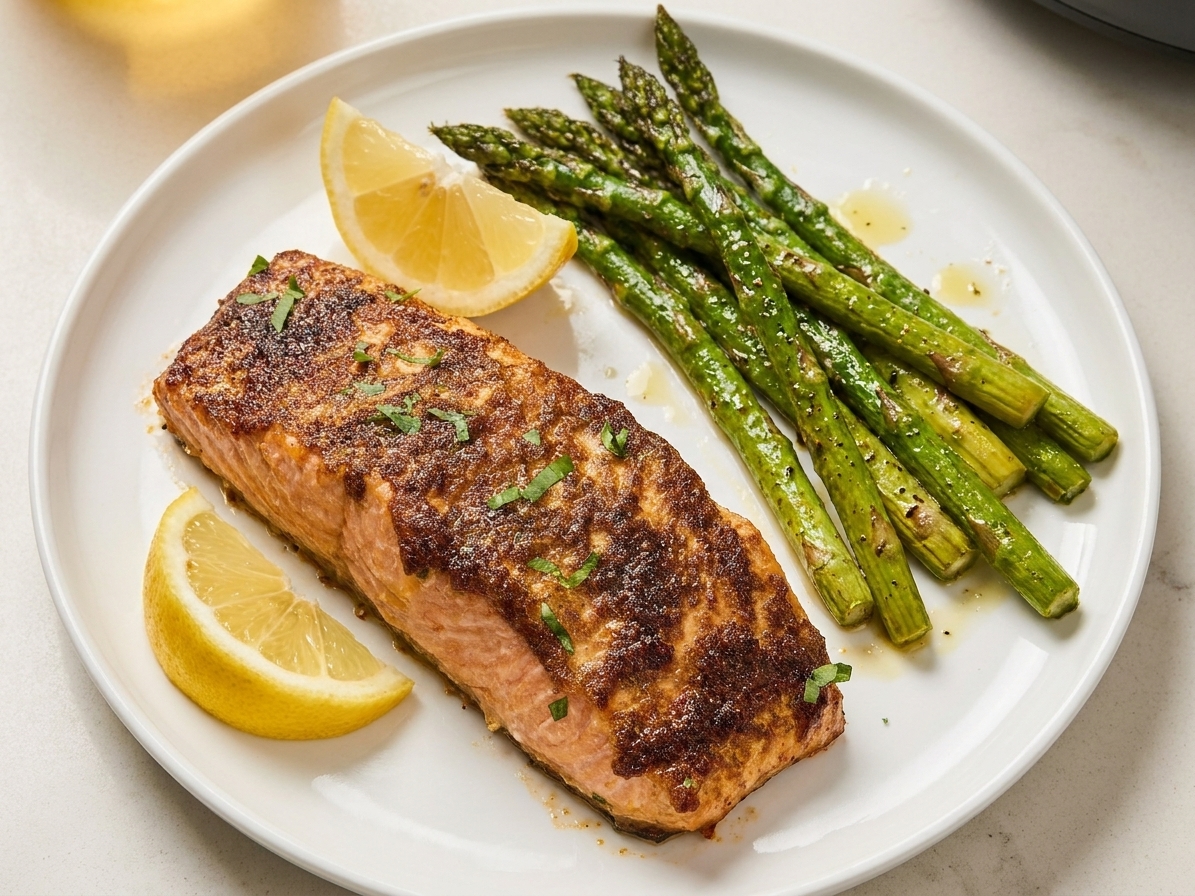
- Easy sides: Steamed green beans, roasted broccoli, or a quick sautéed spinach all keep the “fast dinner” promise.
Storage and reheating
- Refrigerate: Store cooked salmon in an airtight container for up to 3 days.
- Reheat gently: Air fry at 325°F for 3 to 5 minutes, just until warmed through. This lower temperature helps prevent the white albumin from squeezing out and the fish from drying.
- Eat it cold on purpose: Leftover salmon is great flaked into salads or mixed into rice with a little mayo and lemon.
Common mistakes
- Cooking by time alone: A one-inch fillet and a thin tail piece will not finish together. Always check the thickest part.
- Skipping the dry-off step: Wet fish steams. Patting dry helps seasoning stick and improves browning.
- Overcrowding the basket: Leave a little space so hot air can circulate. If needed, cook in batches.
- Too much sugar too soon: Sweet glazes can scorch at 400°F. Add them at the end or after cooking.
- Overcooking “just to be safe”: Salmon goes from juicy to dry quickly. Use the opaque-and-glossy cue or a thermometer for confidence.
FAQ
Do I need to flip salmon in the air fryer?
Usually, no. If you start skin-side down, the skin protects the flesh and the top browns nicely from the circulating heat. If your fillet is skinless and very thick, you can flip carefully halfway through, but I still prefer leaving it alone and adjusting time as needed.
Should I use foil or parchment in the basket?
I generally skip it because it blocks airflow, which is the whole point of the basket. If sticking is a concern, lightly oil the basket and start skin-side down when possible. If you do use parchment, use a perforated air fryer liner and keep it smaller than the basket so air can circulate.
What temperature is best for air fryer salmon?
400°F is my go-to for crisp edges and quick cooking. If your air fryer tends to run hot or you are using a sugary rub, 375°F is a little gentler and still works well.
How do I know when salmon is done without a thermometer?
Press the thickest part gently. It should flake with light pressure and look opaque on the outside, with the very center still slightly glossy. Rest it a couple of minutes and that center will finish without drying out.
Why is white stuff coming out of my salmon?
That is albumin, a natural protein. You will see more of it when salmon is cooked at higher heat or cooked longer. It is harmless, but if you want less, pull the salmon a bit earlier and let carryover heat finish it.
The recipe
Air Fryer Salmon
Crisp-edged, juicy air fryer salmon cooked right in the basket with thickness-based timing, skin-side-down guidance, and an easy doneness cue for a tender center.
- Prep
- 5 minutes
- Cook
- 8 to 14 minutes
- Total
- 15 to 20 minutes
- Yield
- 2 servings
Ingredients
- 2 salmon fillets (about 6 ounces each), preferably similar thickness, skin-on or skinless
- 1 to 2 teaspoons olive oil or avocado oil (just enough to lightly coat)
- 1/2 teaspoon kosher salt (plus more to taste)
- 1/4 teaspoon black pepper
- 1/2 teaspoon garlic powder (optional)
- 1/2 teaspoon paprika (optional)
- Lemon wedges, for serving
Instructions
- Pat the salmon dry. Use paper towels to dry the top and sides well. This helps browning and helps the seasoning stick.
- Season. Rub the salmon all over with the oil, then season with salt, pepper, and any optional spices. If you have 10 minutes, let the seasoned salmon sit at room temperature while the air fryer preheats.
- Preheat the air fryer (optional but helpful). Preheat to 400°F for 2 to 3 minutes if your model benefits from preheating. If your air fryer does not preheat, you can still cook at 400°F.
- Place salmon in the basket. Arrange the fillets in a single layer in the air fryer basket with space between them. If using skin-on salmon, place it skin-side down.
- Air fry. Cook at 400°F until the salmon is mostly opaque at the thickest part and flakes with gentle pressure, but the center still looks slightly glossy. Use thickness as your guide:
- About 3/4-inch thick: 7 to 9 minutes
- About 1-inch thick: 9 to 11 minutes
- About 1 1/2-inch thick: 12 to 14 minutes
- Rest, then serve. Let the salmon rest for 2 to 3 minutes, then serve with lemon wedges. The center will finish gently from carryover heat.
Notes
Basket-only note: This method is designed for the air fryer basket so hot air can circulate around the fillets. Avoid placing the salmon on a solid sheet of foil that blocks airflow.
Skinless salmon: Lightly oil the basket and remove the salmon with a thin spatula or tongs to keep the surface intact.
Glazes: If using honey, maple, or sugary sauces, brush them on during the last 1 to 2 minutes of cooking or after the salmon is done to prevent scorching.