
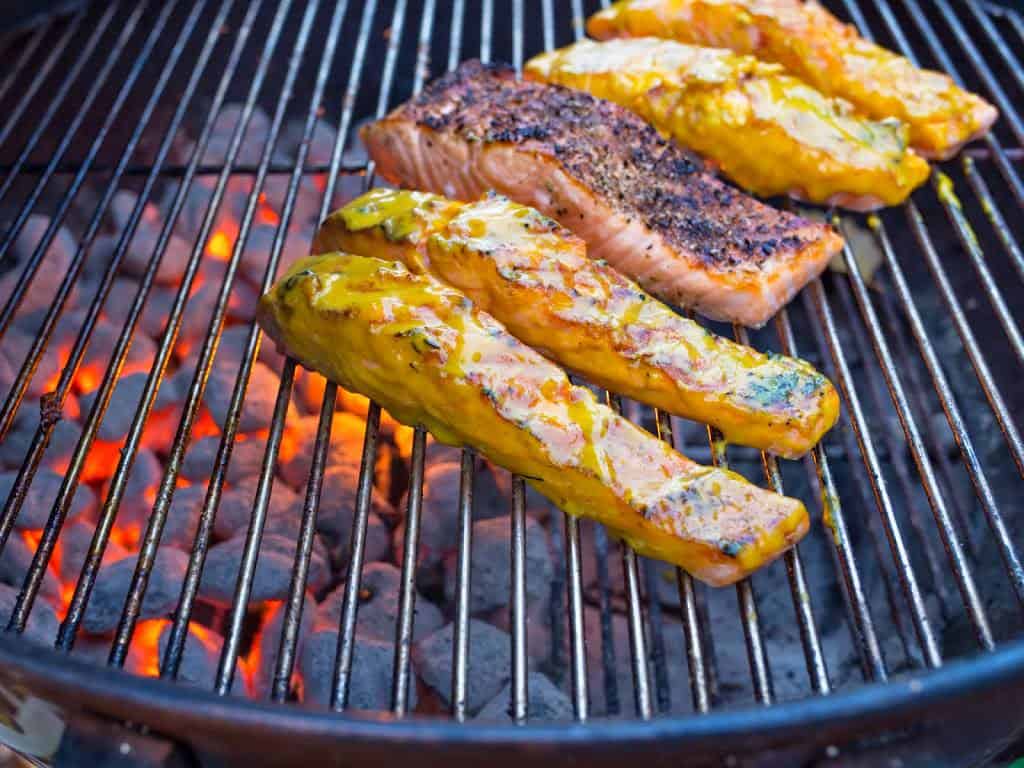
When I managed a bakery, I learned the hard way that heat management is everything. Ovens, griddles, sugar, chocolate, fish. The ingredient changes, but the rule does not: if the surface is not properly prepped, food will cling like it has something to prove.
Grilled salmon is one of those dishes that feels a little high-stakes because the fillets are tender and they cook fast. But once you understand why salmon sticks and when it tends to release, it becomes a weeknight-friendly dinner you can make on autopilot.

In this recipe, I will walk you through two reliable setups, direct heat for a quicker cook and more char, and indirect heat for thicker fillets or extra insurance against flare-ups. You will also get my stick-proof routine for both skin-on and skinless salmon, plus doneness cues you can trust even if you do not want to fuss with a thermometer.
One more promise before we get to it: if your salmon looks like it is glued to the grates at first, that is usually not a disaster. It often just means it is not ready to flip yet. And if you are working with a very delicate piece, a sugary glaze, or a grill that is not quite hot enough, you may need a little extra patience. The grill is still doing its job.
Why this recipe works
- Hot, clean grates create a quick sear, which is what helps salmon release instead of tearing when you flip.
- Oil goes on the fish and the grates (lightly), which reduces sticking without creating a greasy flare-up situation.
- Skin-side first acts like a natural barrier, protecting the flesh from overcooking and giving you a built-in crisp layer.
- Direct vs indirect heat is built into the method, so you can adapt to thin tail pieces or thick center-cut fillets without guessing.
- Clear doneness cues (temperature and visual) keep the center juicy instead of dry and chalky.
Ingredient notes
Salmon fillets
Choose fillets that are similar thickness so they finish at the same time. If you can, go for center-cut pieces that are about 1 to 1 1/2 inches thick. Thinner pieces still work, they just need a little more indirect heat time and less aggressive direct heat.
Skin-on vs skinless
Skin-on is the easiest on the grill because the skin insulates the flesh and helps with flipping. Skinless can be grilled too, but you will want a very clean grate, adequate oil, and a gentler hand.
High-heat oil
Use an oil with a higher smoke point, like avocado, canola, grapeseed, or refined olive oil. Extra-virgin olive oil can work in a pinch, but it is more likely to smoke and taste harsh over high heat.
Seasoning
Salt and pepper are enough, especially if you finish with lemon. If you like a sweet glaze (maple, honey, teriyaki), brush it on during the last 1 to 2 minutes so it does not burn.
Equipment you will need
- Grill (gas or charcoal), with a lid
- Grill brush or crumpled foil and tongs for cleaning grates
- Long tongs
- Wide fish spatula (optional but extremely helpful)
- Instant-read thermometer (optional, best for confidence)
- Paper towels for drying the fish
- Small bowl for oil
Pro tips
Start with dry fish
Pat the salmon very dry before oiling. Surface moisture is the enemy of browning and makes sticking more likely.
Oil the grates the safe way
Dip a folded paper towel in oil, then grab it with tongs and wipe the hot grates. You want a thin sheen, not drips. Never pour oil straight onto flames or coals.
Direct vs indirect heat, how to choose
- Direct heat is best for thinner fillets and when you want more grill marks.
- Indirect heat is best for thicker fillets or if your grill runs hot and flares easily.
When to flip
Flip when the fish releases easily. If it resists, give it another 30 to 60 seconds and try again. The proteins usually unstick once that first side is properly seared, but delicate pieces or sugary glazes may need extra care.
Doneness cue for the center
The most reliable cue is temperature: pull salmon at 120 to 125°F in the thickest part for medium to medium-well and let carryover heat finish it. If you prefer it more done, go to 130 to 135°F. Visually, look for the center to turn from translucent to mostly opaque, and for the flesh to flake with gentle pressure while still looking juicy.
Flare-ups are not failure
If you get a flare, move the salmon to the cool side and close the lid for 30 to 60 seconds. Most flare-ups are from dripping fat or excess oil and they calm down quickly once the food is out of the direct flame.
Substitutes that work
- Salmon alternatives: This method works with arctic char and steelhead trout with similar timing. Very lean fish like cod will need gentler heat and more oil to prevent sticking.
- No thermometer: Use the visual cue, mostly opaque center with a slightly deeper colored line in the very middle, and the fish flakes easily when pressed.
- No skin: Grill flesh-side down first over medium direct heat, then move to indirect heat to finish. Use a fish spatula and do not force the flip.
- No lemons: Finish with a splash of vinegar (rice vinegar or champagne vinegar) or serve with a quick yogurt sauce for brightness.
Variations
Lemon herb grilled salmon
Add chopped dill or parsley after grilling, plus plenty of lemon zest.
Garlic chili salmon
Mix oil with minced garlic and a pinch of red pepper flakes. Brush lightly on the flesh side before grilling.
Maple soy glazed salmon
Whisk maple syrup with soy sauce and a little grated ginger. Brush on during the final 1 to 2 minutes of cooking only.
Cedar plank style without the plank
If you love the gentle, protected cooking of a plank but do not have one, cook the salmon entirely on the indirect side with the lid closed. You will still get smoke flavor, with less sticking risk.
Serving ideas
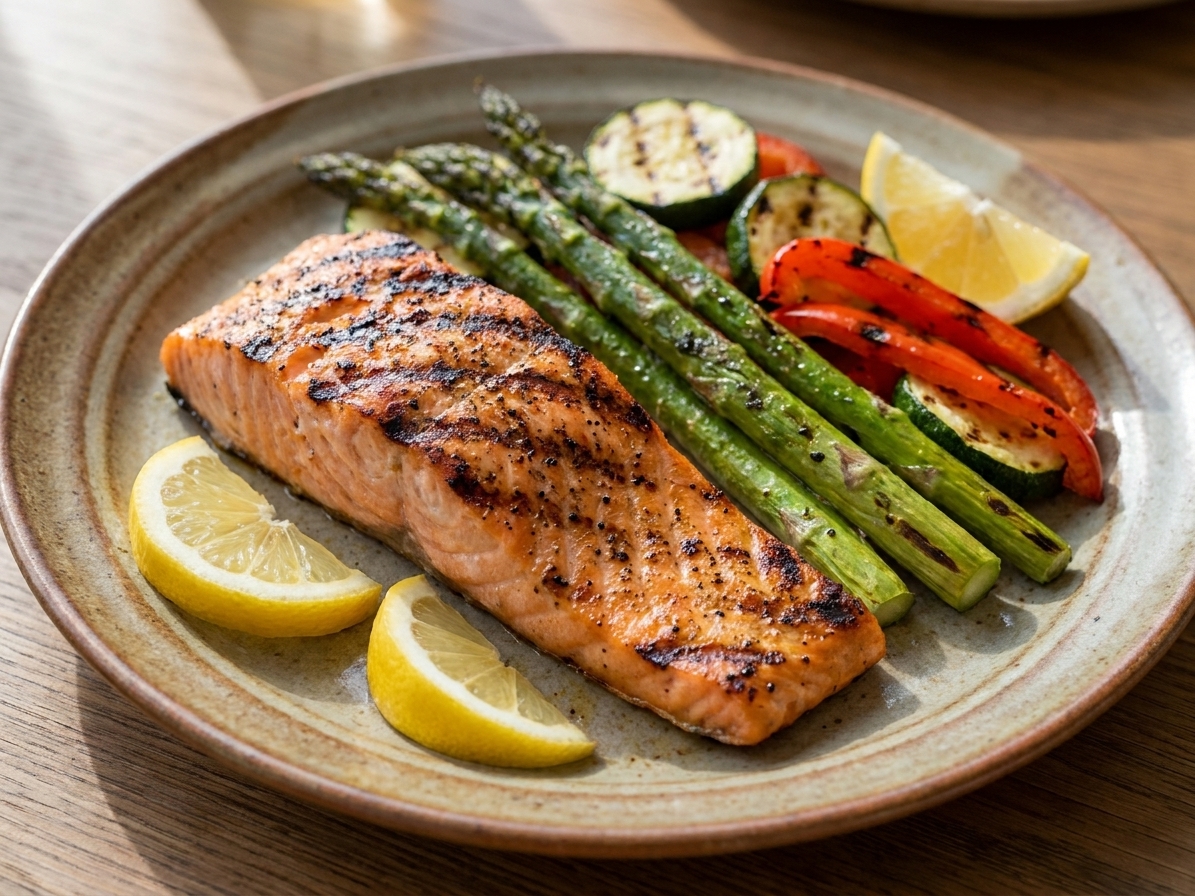
- With grilled asparagus or zucchini and a lemony vinaigrette
- Over rice with sliced cucumbers and a drizzle of soy sauce and sesame oil
- Flaked into tacos with cabbage slaw and crema
- On a big salad with roasted corn, cherry tomatoes, and avocado
- Alongside potatoes in any form, especially smashed or roasted
Storage and reheating
Refrigerator
Store leftover salmon in an airtight container for up to 3 days.
Best way to reheat
I prefer gentle reheating to protect the texture. Warm in a covered skillet over low heat with a splash of water, or rewarm on the grill over indirect heat for just a few minutes until heated through.
Cold leftovers are your friend
Grilled salmon is fantastic cold. Flake it into a salad, fold into scrambled eggs, or mix with a little mayo and mustard for a quick sandwich filling.
Common mistakes
- Grilling on dirty grates: Old residue acts like glue. Preheat the grill, then brush well.
- Not preheating long enough: Salmon sticks to lukewarm grates. Give the grill time to fully heat, then oil.
- Too much oil dripping into the fire: Oil lightly and wipe off excess to avoid flare-ups.
- Flipping too early: If it tears, it was not ready. Wait for easy release.
- Cooking only over direct heat: Thick fillets can burn outside before the center is done. Use a two-zone setup and finish on indirect heat.
- Overcooking: Salmon goes from silky to dry fast. Pull at 120 to 125°F and rest.
FAQ
Should I grill salmon skin-side down or flesh-side down first?
If it is skin-on, start skin-side down. It protects the flesh, helps prevent sticking, and gives you crisp skin. If it is skinless, start on the side you want the best grill marks on, usually the presentation side.
Do I need to flip salmon on the grill?
Not always. For thinner fillets, a single flip can help with even cooking. For thicker fillets, I often sear skin-side down on direct heat, then move to indirect heat and cook with the lid closed without flipping again.
What if my salmon sticks when I try to flip it?
Stop pulling. Let it cook another 30 to 60 seconds, then try sliding a thin spatula under the edges. Salmon typically releases when it has formed a proper sear.
How do I keep salmon from falling apart?
Use a wide spatula, flip only when it releases, and avoid moving it around. Also, choose thicker, center-cut fillets when possible. Very thin tail pieces are more delicate and cook faster.
What internal temperature should grilled salmon be?
For juicy salmon, aim to pull it at 120 to 125°F in the thickest part, then rest a few minutes. If you prefer it more well done, go to 130 to 135°F.
The recipe
Grilled Salmon
Smoky, juicy grilled salmon with crisp skin and a clean release every time, using a simple two-zone grill setup and clear doneness cues.
- Prep
- 10 minutes
- Cook
- 8 to 12 minutes
- Total
- 20 minutes
- Yield
- 4 servings
Ingredients
- 4 salmon fillets (about 6 ounces each), skin-on preferred (about 1 to 1 1/2 inches thick)
- 1 to 2 tablespoons high-heat oil (avocado, canola, grapeseed, or refined olive oil), divided
- 1 1/4 teaspoons kosher salt (about 3/4 teaspoon per pound of salmon)
- 1/2 teaspoon black pepper
- 1 lemon, cut into wedges (plus extra zest optional)
- Optional: 1 teaspoon garlic powder or 1 small garlic clove, finely grated
- Optional: chopped fresh dill or parsley, for serving
Instructions
- Preheat the grill for two-zone cooking. Heat a gas grill to medium-high (about 425 to 475°F) with one side left on lower heat for an indirect zone. For charcoal, pile coals on one side to create a hot zone and a cooler zone. Close the lid and preheat 10 minutes.
- Clean and oil the grates. Brush the grates thoroughly. Pour a little oil on a folded paper towel, grab it with tongs, and wipe the hot grates to leave a thin sheen. Do not let oil drip into the flames or coals.
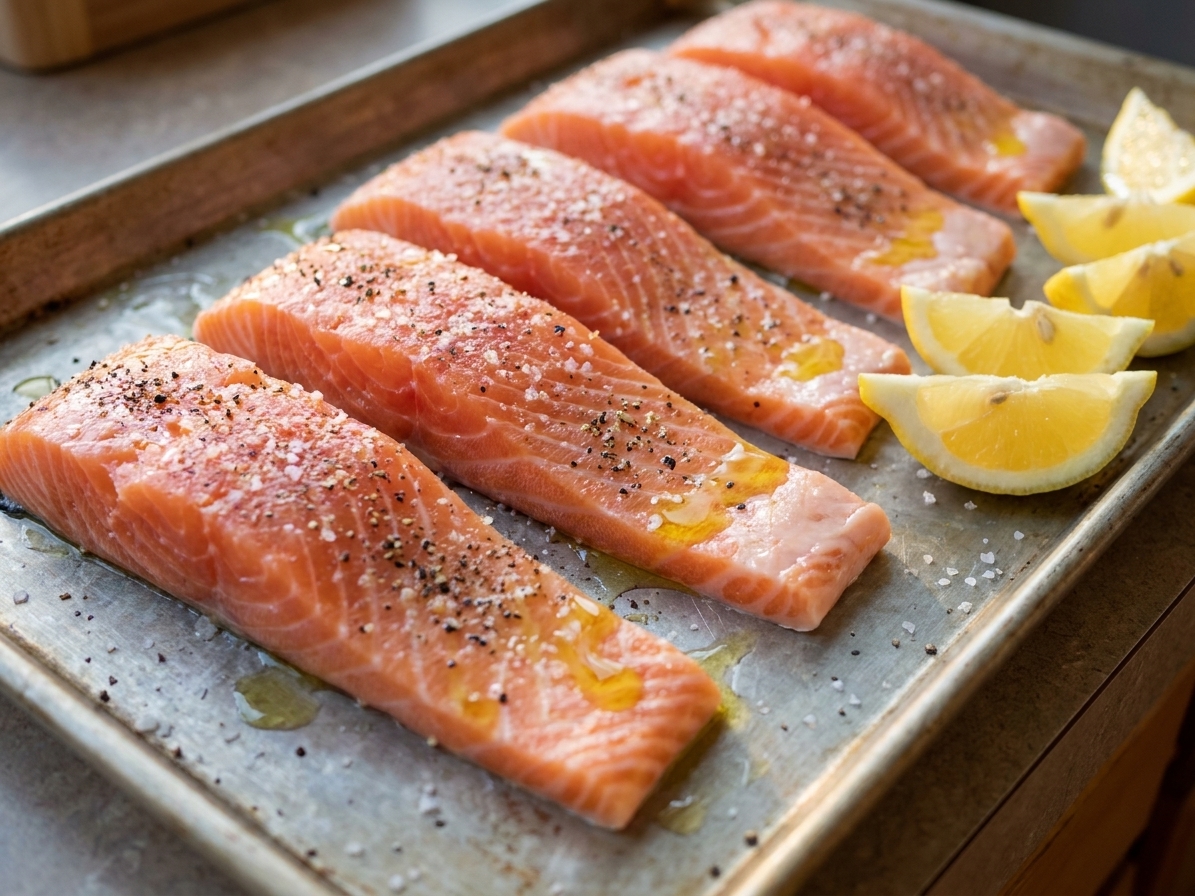
- Prep the salmon. Pat the fillets very dry with paper towels. Rub the salmon lightly all over with 1 to 1 1/2 tablespoons oil, then season with salt and pepper (and optional garlic).
- Grill skin-side down first. Place salmon on the hot, direct-heat side skin-side down (or presentation-side down if skinless). Close the lid. Cook 4 to 6 minutes, until the salmon looks more opaque up the sides and the skin is crisping.
- Flip only when it releases. Test with a thin spatula. If it sticks, wait 30 to 60 seconds and try again. When it releases easily, flip the salmon.
- Finish over indirect heat. Move the fillets to the cooler, indirect side, close the lid, and cook 2 to 5 minutes more depending on thickness, until the center reaches 120 to 125°F for juicy medium (or 130 to 135°F for more done). If you do not have a thermometer, look for the center to turn mostly opaque and flake with gentle pressure while still glossy.
- Rest and serve. Transfer salmon to a platter and rest 2 to 3 minutes. Serve with lemon wedges and optional herbs. If flare-ups happen at any point, move the salmon to indirect heat and close the lid until the flames calm down.
Notes
- Skinless salmon: Make sure the grates are very clean and well-oiled. Use a wide spatula and be extra patient about release before flipping.
- Thickness changes timing: Thin fillets may be done in 6 to 8 minutes total. Thick center-cut fillets may take closer to 12 minutes. Trust the doneness cues more than the clock.
- Sweet glazes: If using maple, honey, or teriyaki, brush on in the final 1 to 2 minutes only to prevent burning.