
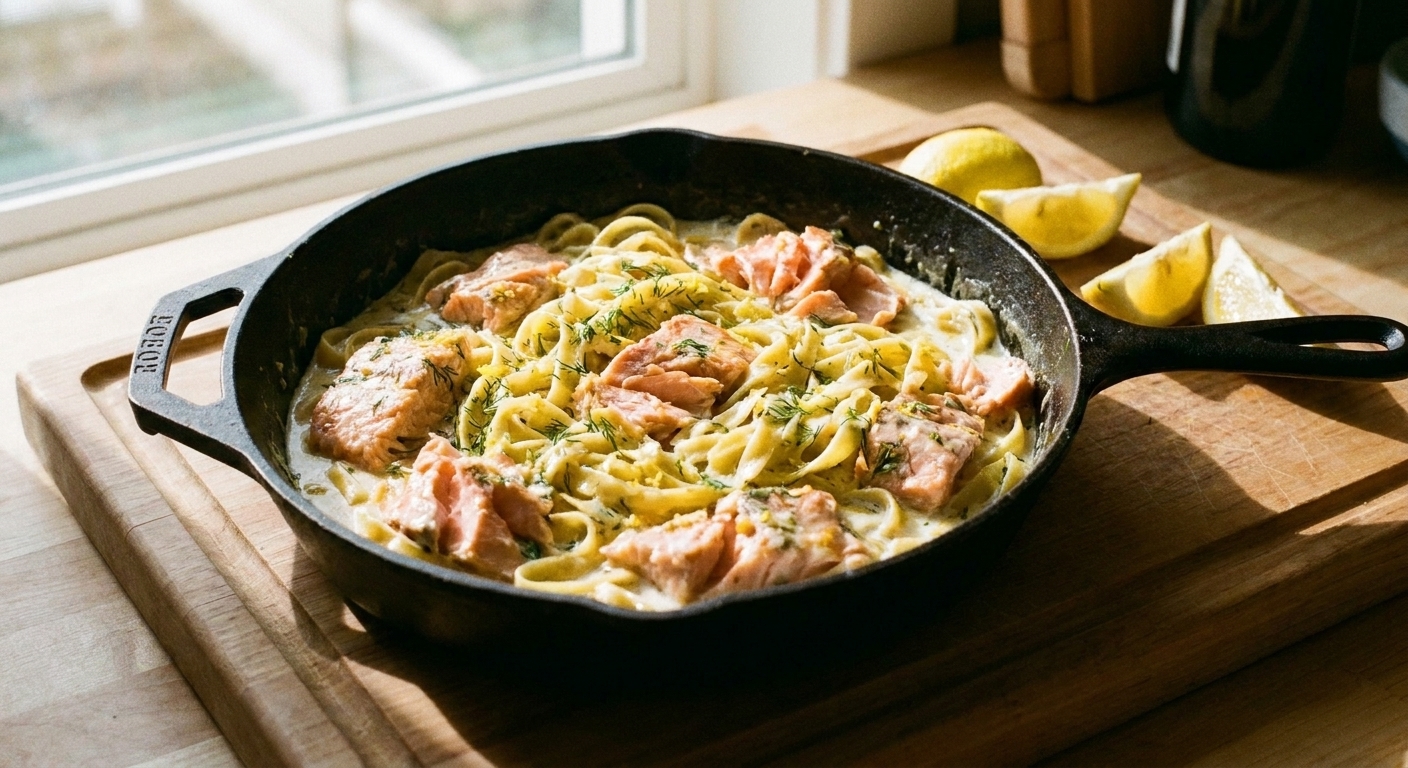
Whenever I want a dinner that feels like I tried harder than I actually did, I reach for creamy salmon pasta. It is the kind of meal that makes the kitchen smell like a tiny bistro, but the whole thing comes together with a pot for the pasta and a skillet for the sauce.
The trick is treating the salmon gently. Instead of chopping it up and simmering it to death, I sear it, flake it into big pieces, and fold it back in at the very end. My cue is simple: when the sauce is glossy and clings to the noodles and the pan is off the heat, that is salmon time. To make that residual-heat promise true, I pull the fish when the center is just barely opaque and still looks a touch silky. It finishes as it sits in the hot pasta, without drying out.

On the pasta side, I always aim for just shy of al dente. You finish cooking the noodles in the sauce with a splash of starchy pasta water, which does two things: it thickens the cream sauce into a silky coating and it helps everything cling instead of pooling at the bottom of the bowl. Long noodles like linguine or fettuccine are my favorite here, because they pick up that glossy sauce so well.
As for what makes it creamy, it is not just cream. I lean on a quick, savory base with shallot and garlic, then let Parmesan and pasta water pull the sauce together into something that feels restaurant-y without being fussy.
And then there is the lemon finish. You do not need much, just enough to cut the richness and make the salmon taste brighter. It is the difference between “nice creamy pasta” and “wow, what is in this?”
Why this recipe works
- Salmon stays tender because it is added off the heat. The sauce and pasta are hot enough to gently warm the flakes through without tightening them up.
- Starchy pasta water controls sauce thickness. A few splashes help the cream emulsify with the fat in the pan, turning it glossy and clingy instead of thin.
- Pasta finishes in the sauce. Cooking the last minute or two in the skillet seasons the noodles from the inside and gives you that cohesive, restaurant-style texture.
- Lemon at the end keeps it bright. Adding citrus after cooking preserves its fresh flavor and balances the richness of cream and salmon.
Ingredient notes
Salmon: Fresh salmon fillets are ideal, but thawed frozen fillets work well too. Pat dry so it sears instead of steaming. Aim for skinless, or remove the skin after searing if you prefer.
Pasta: Long noodles like fettuccine, linguine, or spaghetti are great for creamy sauces. Short shapes like penne work too, but you may want a touch more pasta water to help it coat evenly.
Cream: Heavy cream gives the most stable, silky sauce. Half-and-half can work, but it is more likely to thin out and break if boiled hard, so keep the heat gentle.
Garlic and shallot: This combo builds a sweet, savory base fast. If you only have onion, use a small amount and cook it a little longer until soft.
Parmesan: Freshly grated melts smoothly. Pre-shredded can clump because of anti-caking agents.
Lemon: Use both zest and juice if you can. Zest brings aroma without extra acidity.
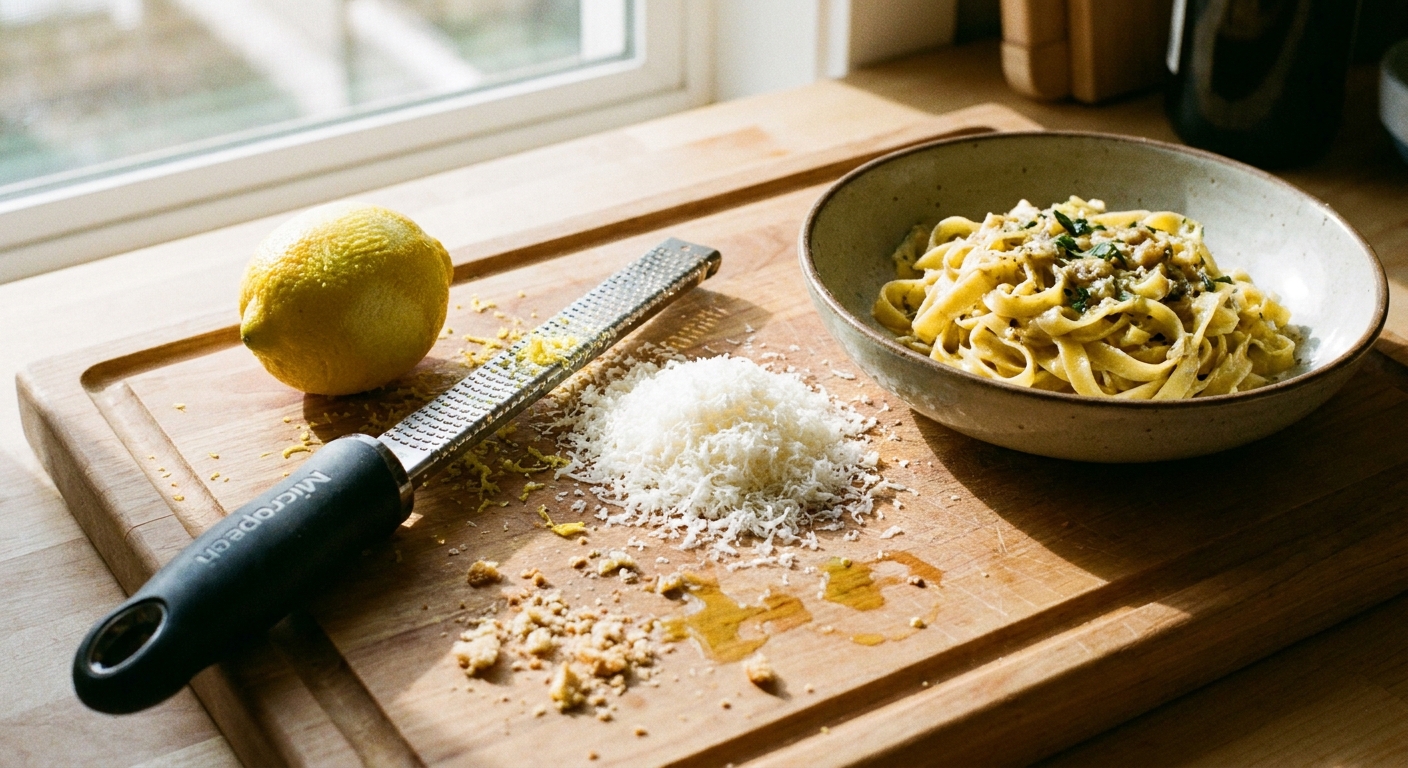
Equipment you will need
- Large pot for boiling pasta
- Large skillet or saute pan (12-inch works well)
- Tongs (best for long noodles) or a spider strainer
- Microplane or fine grater for lemon zest and Parmesan
- Instant-read thermometer (optional but helpful for salmon doneness)
Pro tips
- Pull the salmon early. Cook it until just barely done, then rest it. It will finish gently when folded into the hot pasta.
- Use a “nappe” cue for the sauce. The sauce is ready when it coats the back of a spoon and you can draw a line through it with your finger. It will thicken a bit more as it cools.
- Reserve more pasta water than you think you need. I like to save at least 1 cup. You can always add, but you cannot take it out.
- Keep the heat moderate once cream is in the pan. A lively simmer is fine. A hard boil can cause the sauce to separate.
- Off-heat salmon cue: Fold the salmon in when the pasta is coated and the sauce looks glossy, then remove the skillet from the burner. If the salmon flakes start turning chalky around the edges, the pan is too hot.
Substitutes that work
- No shallot: Use 1/4 to 1/3 cup finely minced onion, cooked until very soft.
- No heavy cream: Use half-and-half and reduce heat. If the sauce seems thin, simmer gently a little longer and lean on Parmesan and pasta water to thicken.
- No Parmesan: Pecorino Romano works, but it is saltier. Start with less and taste.
- No lemon: A splash of white wine vinegar at the end can add brightness, but use sparingly.
- No fresh salmon: Hot-smoked salmon can be flaked in at the end, but skip salting the fish up front and go easy with Parmesan until you taste since smoked salmon brings plenty of salt.
Variations
- Creamy salmon spinach pasta: Stir in a few handfuls of baby spinach right after the pasta goes into the sauce. It wilts in about 1 minute.
- Tomato-leaning: Add 2 tablespoons tomato paste to the aromatics and cook it for 1 minute before adding cream for a rosy sauce.
- Herby: Finish with chopped dill, chives, or parsley. Dill plus lemon is especially good with salmon.
- Spicy: Add a pinch of red pepper flakes when the garlic hits the pan.
Serving ideas
- A simple green salad with a sharp vinaigrette
- Roasted asparagus or broccolini
- Garlic bread or warm crusty bread for swiping the sauce
- A few capers sprinkled on top for a briny pop
Storage and reheating
Refrigerate: Store leftovers in an airtight container for up to 2 days. Cream sauces are best sooner rather than later.
Reheat gently: Warm in a skillet over low heat with a splash of water, milk, or broth, stirring just until the sauce loosens and the pasta is hot. Avoid microwaving on high, which can overcook the salmon and cause the sauce to separate.
Freezing: I do not recommend freezing this one. Cream sauces can turn grainy after thawing, and salmon can become dry.
Common mistakes
- Overcooking the salmon: If you simmer salmon in the sauce, it tends to turn firm and dry. Add it at the end, off heat, and let residual warmth do the work.
- Not salting pasta water: Season the pasta water well so the noodles taste good on their own. It makes the whole dish more flavorful without extra sauce.
- Skipping pasta water: Cream alone can taste heavy and sit on the noodles. Pasta water helps emulsify and cling.
- Boiling the cream hard: Keep it at a gentle simmer to avoid splitting and to maintain a smooth texture.
- Adding lemon too early: Lemon is brightest at the end. If cooked too long, it can taste dull or slightly bitter, especially if zest sits in high heat too long.
FAQ
What makes the sauce creamy without being heavy?
A combination of heavy cream, Parmesan, and starchy pasta water. The pasta water is the secret that turns it silky and cohesive, not just “cream poured on noodles.”
When exactly do I add the salmon so it stays in big tender pieces?
After the pasta is fully coated and the sauce has thickened to a glossy cling, take the skillet off the heat. Then gently fold in large flakes of salmon. Let it sit 1 to 2 minutes to warm through.
How do I know the sauce is the right thickness?
It should lightly coat the noodles and leave only a small trail on the bottom of the skillet when you drag tongs through. If it feels too thick, add pasta water 1 tablespoon at a time. If it feels thin, simmer 1 to 2 minutes longer before adding the salmon.
Can I use leftover cooked salmon?
Yes. Warm the sauce and pasta first, then fold the cooked salmon in off heat just to warm it. Leftover salmon is already cooked, so treat it gently.
Do I need wine?
No. This works great without it. If you like, a small splash of white wine before the cream adds brightness, but lemon at the end gives you a similar lift.
The recipe
Creamy Salmon Pasta
Silky lemon cream sauce, pasta finished in the pan, and salmon folded in off the heat so it stays in big, tender flakes.
- Prep
- 10 minutes
- Cook
- 20 minutes
- Total
- 30 minutes
- Yield
- 4 servings
Ingredients
- 12 oz (340 g) linguine or fettuccine
- 1 1/4 tsp kosher salt, plus more for pasta water
- 1 lb (450 g) salmon fillet, skinless or skin-on
- 2 tbsp olive oil
- 2 tbsp unsalted butter
- 1 small shallot, finely minced (about 1/3 cup)
- 3 cloves garlic, minced
- 1/2 tsp black pepper
- 1/2 cup (120 ml) low-sodium chicken broth or seafood stock
- 1 cup (240 ml) heavy cream
- 3/4 cup (about 60 g) freshly grated Parmesan, plus more to serve
- 1 tsp lemon zest (from about 1 lemon), plus more to taste
- 2 tbsp lemon juice (from about 1 lemon), plus more to taste
- 2 tbsp chopped parsley or dill (optional)
- Red pepper flakes (optional)
Instructions
- Boil pasta water. Bring a large pot of water to a boil and salt it generously. Add the pasta and cook until 1 to 2 minutes shy of al dente. Reserve 1 cup pasta water, then drain.
- Sear the salmon. While the pasta cooks, pat the salmon dry and season with 1 tsp kosher salt and 1/2 tsp black pepper. Heat 2 tbsp olive oil in a large skillet over medium-high heat. Add salmon (skin-side down if it has skin) and sear until browned, 3 to 5 minutes. Flip and cook 1 to 3 minutes more, just until the salmon is barely cooked through in the thickest part (about 125 to 130°F for medium). Transfer to a plate to rest.
- Build the pan sauce base. Reduce heat to medium. Add 2 tbsp butter to the same skillet. Once melted, add the minced shallot and cook until soft, 2 minutes. Add garlic (and a pinch of red pepper flakes if using) and cook 30 seconds, just until fragrant.
- Simmer the sauce. Pour in 1/2 cup broth and scrape up any browned bits. Simmer 1 minute. Add 1 cup heavy cream and bring to a gentle simmer. Stir in 3/4 cup Parmesan until melted and smooth.
- Finish the pasta in the sauce. Add the drained pasta to the skillet and toss well. Add reserved pasta water a splash at a time, tossing, until the sauce looks glossy and coats the noodles. Simmer gently 1 to 2 minutes to finish cooking the pasta.
- Flake salmon, then add off heat. Break the rested salmon into large flakes. Turn off the heat and remove the skillet from the burner. Fold the salmon into the pasta gently. Pull-off-heat cue: if the sauce is clinging to the pasta and the pan is no longer actively bubbling, it is the right moment to add the fish so it warms through without drying out.
- Lemon finish. Sprinkle in 1 tsp lemon zest and squeeze in 2 tbsp lemon juice. Toss once more. Taste and adjust salt, pepper, and lemon. Top with herbs and extra Parmesan and serve right away.
Notes
Sauce thickness: If your sauce is too thick, loosen it with 1 to 2 tablespoons pasta water at a time. If it is too thin, keep tossing over a gentle simmer for 1 to 2 minutes before you add the salmon.
Salmon texture tip: Slightly undercook the salmon in the skillet. Residual heat from the pasta and sauce will finish it.
Make it extra lemony: Add additional zest at the table for a bigger citrus aroma without making the sauce too tart.