
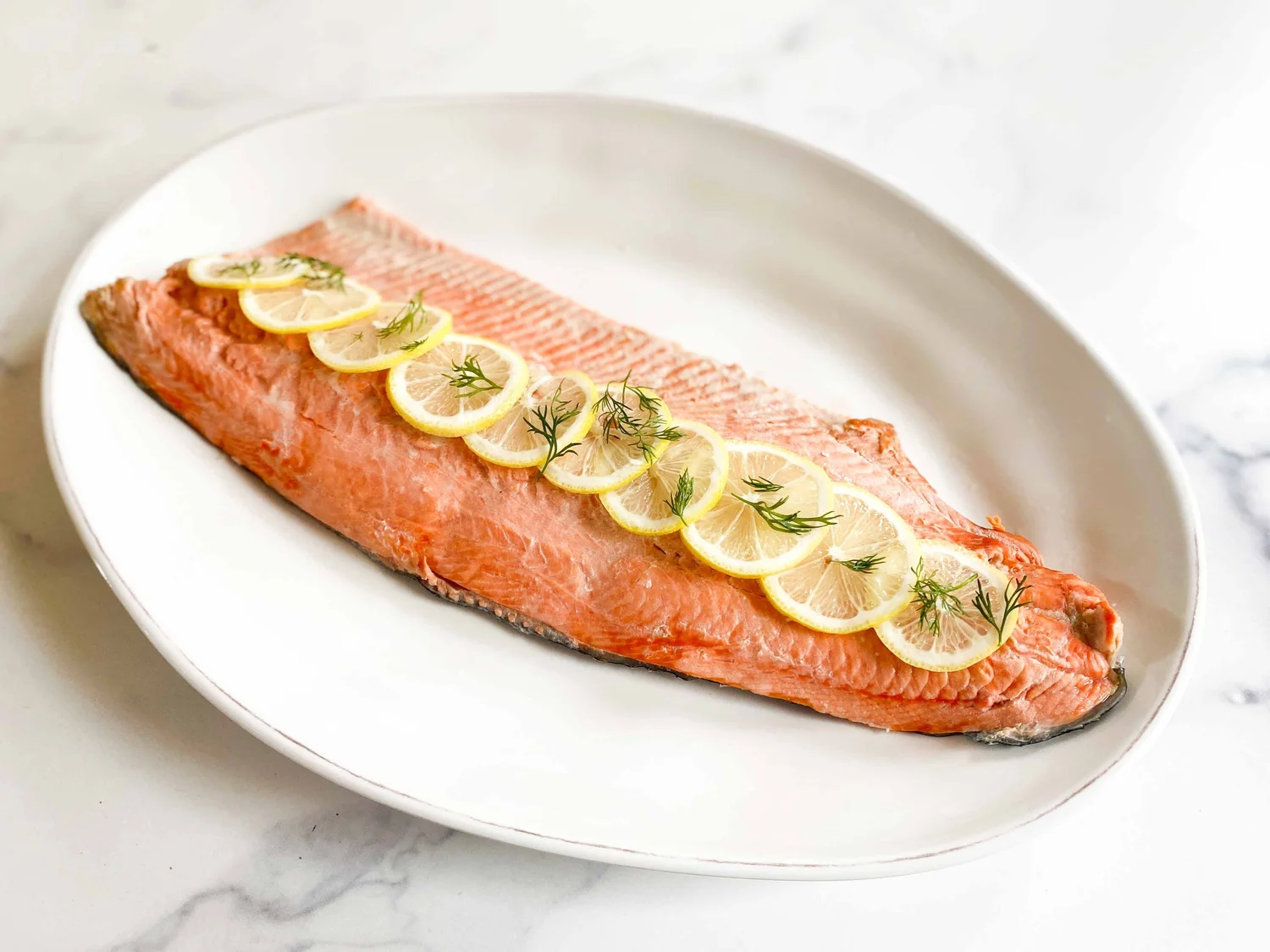
Poaching salmon is one of those quietly life-changing kitchen skills. No splattering oil, no smoky pan, and no white albumin drama from high heat. Just a shallow pan, a softly steaming liquid, and salmon that stays buttery and calm, even on a busy weeknight.
I learned to love gentle poaching back when I was managing a bakery and still trying to feed myself real dinners after a long shift. My brain was done, my feet were done, but I still wanted something that felt nourishing. Poached salmon became my answer because it is almost impossible to make it tough if you keep the temperature under control.

Here is the core idea: you are not boiling the fish. You are bathing it in a hot liquid that is just below a simmer. Think tiny bubbles around the edges, a little steam, and a surface that barely trembles. That low, steady heat cooks the salmon evenly so the center stays moist instead of turning chalky.
What gentle poaching looks like
If you have ever overcooked salmon, the culprit is usually aggressive heat. For poached salmon, you want the liquid in the 160 to 180°F range. If you do not have a thermometer, use the visual cues:
- Right temperature: steam is rising, you see a few tiny bubbles clinging to the pan, and maybe an occasional bubble breaking the surface.
- Too hot: rolling simmer, lots of bubbling, the fish wiggling around. Turn it down immediately.
Also, keep the salmon in a shallow layer of liquid. You are aiming for the liquid to come about halfway up the sides of the fillets. This gives you gentle cooking without needing a huge pot of water.
How to time poached salmon by thickness
Timing is less about ounces and more about the thickest part of the fillet. A helpful rule is 8 to 10 minutes per inch of thickness at a gentle poach. Many grocery store fillets are about 3/4 to 1 inch thick in the center, which usually lands in the 6 to 10 minute window.
If your fillet is thin on one end and thick on the other, orient the thick ends toward the hotter center of the pan, and do not be afraid to pull a thinner piece a minute earlier.
The flake test for a moist center
The most reliable doneness check is the flake test. Use a fork or the tip of a small knife at the thickest part:
- Moist and just cooked: it flakes with gentle pressure and the center is slightly darker and translucent, but not raw looking.
- Fully opaque and firmer: it flakes easily and looks pale pink all the way through. Still good, just a touch less silky.
If you like a tender center, pull it when it is just beginning to flake. It will carry over a bit as it rests.
A simple aromatics option
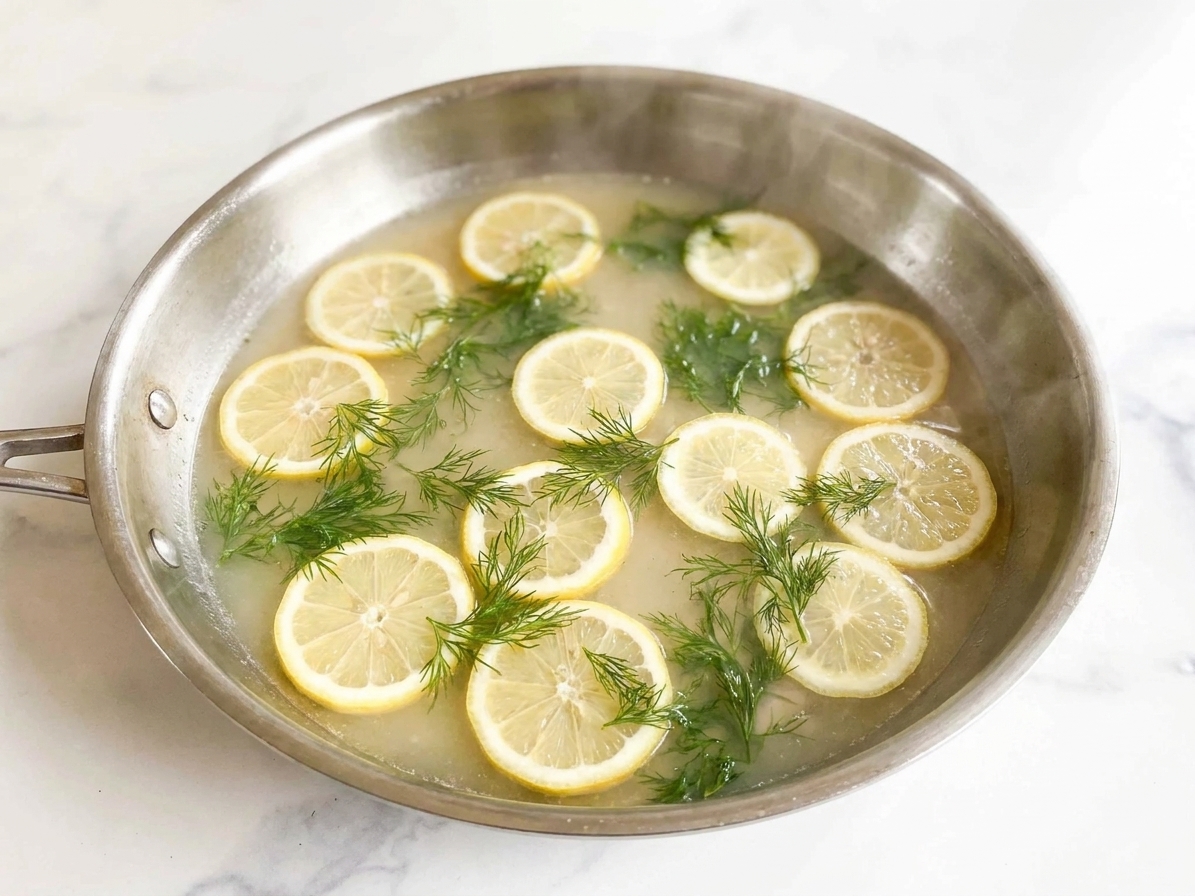
You can poach salmon in plain salted water and it will work. But when I have five extra minutes, I turn that water into a light broth. Pick a few aromatics, not all of them, so the flavor stays clean:
- Lemon slices or strips of peel
- Thinly sliced shallot or a few onion wedges
- A couple smashed garlic cloves
- Fresh dill, parsley, or chives
- A few black peppercorns
- A splash of white wine or a spoon of Dijon mustard
Bring the liquid just up to steaming, let the aromatics hang out for a minute or two, then slide the salmon in.
How to lift poached salmon out in one piece
Poached salmon is delicate, especially when it is perfectly moist. My favorite ways to transfer it without breaking:
- Fish spatula: the long slots drain liquid quickly and support the fillet.
- Two-spatula method: slide one under, then use a second to steady the top as you lift.
- Wide slotted spoon: great for smaller fillets.
Before you lift, take a second to turn off the heat and let the liquid calm down. Less movement in the pan means less chance of the salmon tearing.
Why this recipe works
- Shallow poaching cooks gently and evenly. The fillets sit in hot liquid without being battered by a boil, which helps keep the texture tender.
- Temperature stays below a boil. Keeping the liquid in the just-steaming zone reduces albumin squeeze-out and prevents dry, chalky salmon.
- Timing by thickness is more reliable than timing by weight. Salmon fillets vary wildly in shape, so thickness gives you a truer doneness target.
- The flake test is a built-in safety net. You can check the thickest spot and pull the fish at the exact moment it turns opaque and flaky.
Ingredient notes
Salmon
Center-cut fillets are the easiest to poach evenly because they have a consistent thickness. Skin-on or skinless both work. If the skin is on, you can poach skin-side down and remove it after cooking if you prefer.
Poaching liquid
A mix of water and something flavorful is the sweet spot. I like water plus a little broth, or water plus a splash of white wine. Keep it light so the salmon still tastes like salmon.
Salt
Salt the poaching liquid so it tastes pleasantly seasoned, similar to a light soup. This gently seasons the fish from the outside in.
Aromatics
Lemon, herbs, garlic, and shallot add fragrance without requiring a sauce. Use what you have and keep it simple.
Equipment you will need
- Wide shallow skillet with a lid (a straight-sided sauté pan is ideal)
- Instant-read thermometer (helpful, not required)
- Fish spatula or a wide slotted spatula
- Small knife or fork for the flake test
Pro tips
- Do a quick preheat of the liquid. Start the aromatics in the hot liquid for 1 to 2 minutes so the salmon picks up more flavor.
- Keep the liquid halfway up the fish. Too little liquid cooks unevenly. Too much makes it harder to control temperature quickly.
- Watch the edges, not the clock. When you see tiny bubbles hugging the pan and steam rising steadily, you are in the right zone.
- Turn off the heat early if you are unsure. Salmon finishes gently in hot liquid even off the burner.
- Let it rest for 2 minutes. A short rest firms the fillet slightly so it transfers cleanly.
Substitutes that work
- Steelhead trout: Treat it exactly like salmon. Same method, similar timing.
- Arctic char: Slightly thinner fillets often cook faster, so start checking early.
- No wine: Use all water or water plus a spoonful of lemon juice.
- No fresh herbs: Add a small pinch of dried dill, or skip herbs and lean on lemon and pepper.
- No lid: Cover the pan tightly with foil to hold gentle heat.
Variations
Lemony herb poached salmon
Add lemon slices, dill, and a few peppercorns to the liquid. Finish with more lemon and a drizzle of olive oil.
Miso-ginger poached salmon
Whisk a spoonful of white miso into the warm liquid with a few slices of ginger. Keep the heat low so the miso stays smooth and mellow.
Coconut-lime poached salmon
Use half water and half unsweetened coconut milk, plus lime peel strips. Finish with lime juice and chopped cilantro.
Serving ideas
- Flake over rice with cucumbers and a quick soy-sesame drizzle
- Serve warm with roasted potatoes and a simple green salad
- Chill and use in a salmon salad with celery, lemon, and yogurt or mayo
- Layer onto toast with cream cheese, capers, and thin red onion
- Tuck into tacos with cabbage slaw and a squeeze of lime
Storage and reheating
Refrigerator
Cool the salmon, then store in an airtight container in the fridge for up to 3 days.
Best way to reheat
Poached salmon is at its best gently rewarmed. Place it in a covered skillet with a splash of water or broth over low heat until just warm. You can also enjoy it cold in salads and sandwiches, which keeps it extra moist.
Freezing
You can freeze poached salmon, but the texture becomes a bit softer after thawing. If you do, wrap tightly and freeze up to 2 months, then thaw overnight in the fridge.
Common mistakes
- Letting the liquid boil. Boiling is the fast track to dry, broken fillets. Keep it just below a simmer.
- Using a deep pot with lots of water. More water takes longer to heat and cool, so temperature control is harder. A shallow skillet gives you control.
- Overcooking because you are waiting for it to look “done.” Salmon goes from silky to firm quickly. Start testing early at the thickest part.
- Moving the fish too much. Poached fish is fragile. Slide it in, then leave it alone until you test for doneness.
- Trying to lift with a small turner. Use a fish spatula or two-spatula support so the fillet stays in one piece.
FAQ
Do I have to cover the pan?
Covering helps the heat stay gentle and even, especially if the liquid only comes halfway up the salmon. If your fillets are thicker, a lid makes a big difference.
How much liquid should I use?
Aim for the poaching liquid to come about halfway up the sides of the fillets. In most 10 to 12 inch skillets, that is roughly 1 to 1 1/2 inches of liquid.
Can I poach frozen salmon?
It is possible, but you will get the best texture if you thaw first. Frozen fillets tend to shed more moisture and can cook unevenly on the edges while the center catches up.
How do I know it is safe to eat without drying it out?
The salmon is ready when it flakes easily at the thickest part and turns opaque. If you use a thermometer, many cooks pull salmon around 120 to 125°F for a moist center, or closer to 130 to 135°F for a firmer, fully opaque fillet.
Why is there white stuff on my salmon?
That white protein is albumin. A little is normal, but lots of it usually means the heat was too high. Keep the liquid below a simmer for the cleanest look and most tender texture.
The recipe
Poached Salmon
Tender, gently poached salmon fillets cooked in a shallow savory liquid below a boil. Timed by thickness and finished with a simple flake test for a moist, buttery center.
- Prep
- 10 minutes
- Cook
- 10 minutes
- Total
- 20 minutes
- Yield
- 4 servings
Ingredients
- 4 salmon fillets (about 5 to 6 ounces each, ideally similar thickness)
- 1 1/2 cups water
- 1/2 cup low-sodium chicken broth or vegetable broth (or use more water)
- 1 teaspoon kosher salt, plus more to taste
- 4 thin lemon slices
- 1 small shallot, thinly sliced (optional)
- 2 garlic cloves, smashed (optional)
- 4 to 6 sprigs fresh dill or parsley (optional)
- 6 black peppercorns or a few grinds black pepper (optional)
- 1 tablespoon olive oil (optional, for serving)
- Lemon wedges, for serving (optional)
Instructions
- Set up the poaching pan. Place a wide, shallow skillet over medium heat. Add the water, broth, salt, and any aromatics you are using (lemon slices, shallot, garlic, herbs, peppercorns). Heat until steaming and you see tiny bubbles around the edges, then reduce the heat to medium-low.
- Add the salmon. Slide the salmon fillets into the liquid in a single layer. The liquid should come about halfway up the sides of the fish. If needed, add a splash more water. Keep the liquid below a simmer. You want gentle steam and only occasional small bubbles.
- Cover and cook gently. Cover the skillet with a lid and cook until the salmon is nearly done. Start checking at 6 minutes for thinner fillets. For 1-inch-thick fillets, expect about 8 to 10 minutes total.
- Check doneness with the flake test. Turn off the heat. Use a fork or the tip of a small knife to press into the thickest part. The salmon is ready when it flakes with gentle pressure and the center is moist. If it still resists and looks very translucent, cover again and let it sit in the hot liquid for 1 to 2 minutes, then recheck.
- Lift out carefully. Use a fish spatula (or two spatulas for support) to lift each fillet out in one piece. Let excess liquid drain back into the pan.
- Serve. Serve warm with a drizzle of olive oil and lemon wedges if you like.
Notes
Temperature target: If you have an instant-read thermometer, aim to keep the poaching liquid around 160 to 180°F, never boiling.
Timing tip: Cook by thickness, not weight. A helpful guide is about 8 to 10 minutes per inch of thickness at a gentle poach.
Make it ahead: Poached salmon is excellent chilled. Cool, refrigerate, then flake into salads, grain bowls, or sandwiches.