
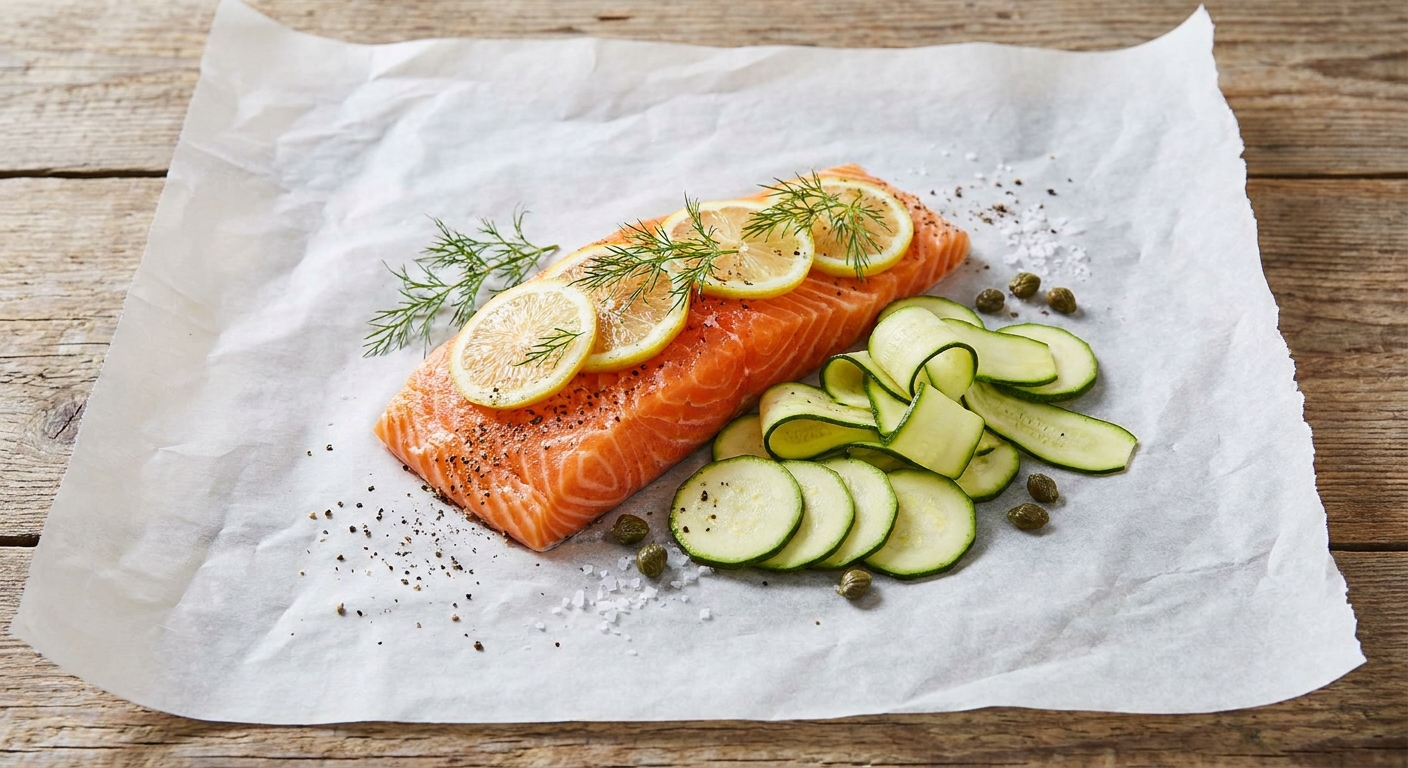
If you have ever overcooked salmon by “just two minutes,” you are going to love parchment packets. This is one of those techniques that looks a little fancy, but it cooks like a safety net. The parchment traps steam, the salmon stays juicy, and dinner comes out smelling like lemon and herbs instead of stress.
I started leaning on salmon in parchment back when I was juggling bakery manager hours and trying to feed myself something that was not a day-old croissant. It felt like a small miracle: one pan, no splatter, and the fish basically cooks itself while I cleaned up the cutting board.

Think of this recipe as a choose-your-own-adventure that still lands you at the same happy ending. Use the vegetables you have, swap the herbs, change the citrus. The one thing that matters is the seal. A well-crimped packet is what gives you that gentle, steamy, restaurant-feeling salmon at home.
The basic idea
You build a small bed of vegetables, set the salmon on top, add lemon, herbs, and a little fat, then fold the parchment into a tight packet. In the oven, moisture from the fish and vegetables turns into steam that circulates inside the packet, cooking everything evenly and keeping aromas locked in.
When you open the packet at the table, it puffs with steam and smells like you worked harder than you did. That moment never gets old.
How to fold a parchment packet that will not leak
There are a few folding styles, but the half-moon “crimp” is the most reliable for home cooks. The goal is a tight border with small, overlapping folds that hold steam.
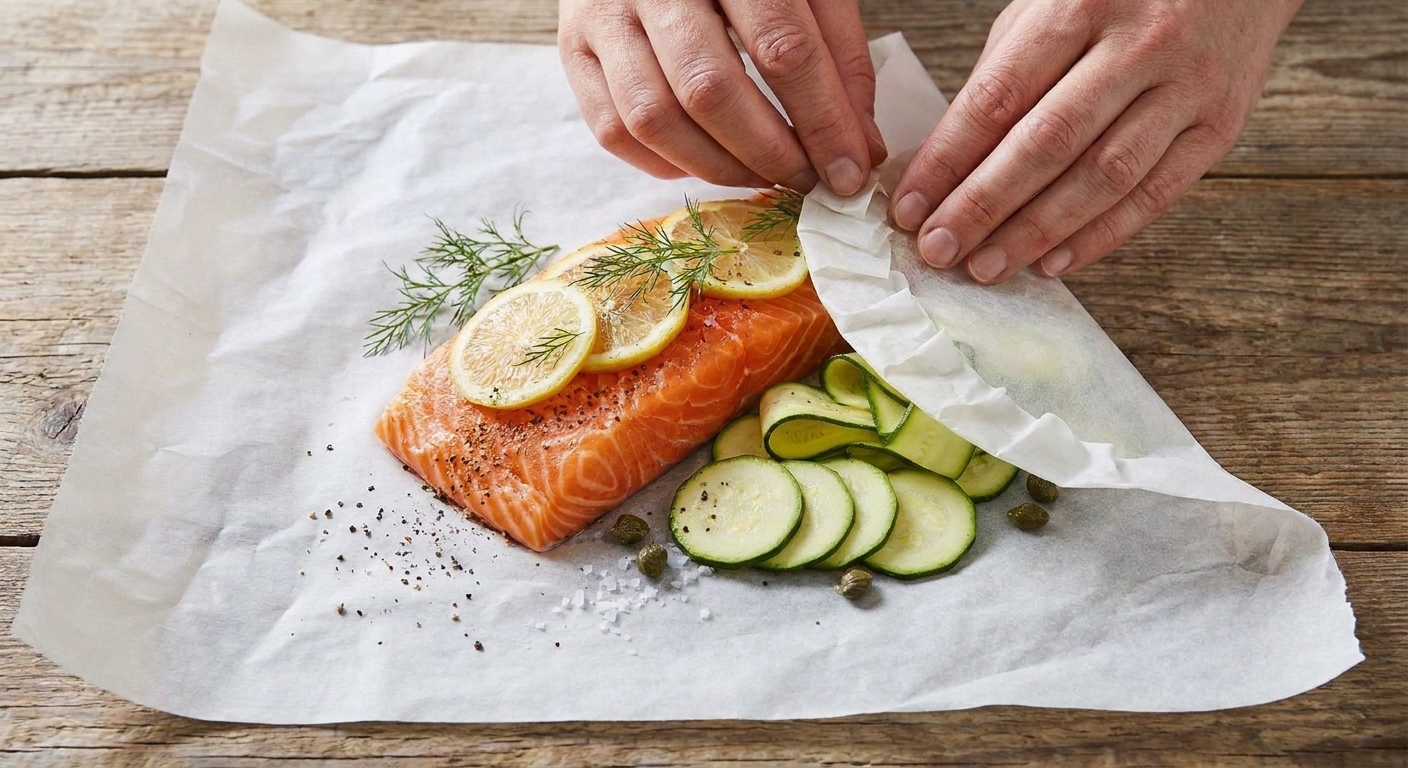
Here is the method I teach friends:
- Start with a large sheet. For one portion, use a heart shape or a wide oval cut from parchment, about 15 to 18 inches across. More paper makes sealing easier.
- Build on one side. Place vegetables slightly off-center, then salmon on top, then lemon, herbs, oil or butter, and a pinch of salt.
- Fold over to meet the edges. Press the parchment together around the food so you can see the shape of the mound and where the seam will land.
- Crimp like you are making tiny pleats. Starting at one end, make a small fold, then fold again overlapping the first, continuing around the curve. The folds should overlap like shingles.
- Twist the final tail. When you reach the end, give the last bit a firm twist and tuck it underneath. If you have any doubts, add one extra fold right there.
If your packet looks a little rustic, that is perfect. A tight seal beats a pretty seal every single time.
Oven time by thickness
The cooking time for salmon in parchment depends more on thickness than on weight. I like baking at 400°F because it is hot enough to build steam quickly, but gentle enough that the salmon stays tender.
- 1 inch thick: about 10 to 12 minutes
- 1 1/2 inches thick: about 12 to 15 minutes
- 2 inches thick: about 15 to 18 minutes
Vegetable choice matters too. Quick-cooking vegetables like zucchini, asparagus, thin green beans, cherry tomatoes, and shaved fennel work best. If you want potatoes or carrots, slice them very thin or par-cook them first.
Doneness cue when you open the packet
My favorite part about this method is how easy it is to check without guessing. Carefully open the packet, let the steam escape, and look for this:
- The salmon should be opaque on the outside and flake easily when you press with a fork at the thickest point.
- The center can be slightly translucent if you like it medium. It will keep cooking for a minute from residual heat.
- If you use a thermometer, aim for about 120°F to 125°F for moist, tender salmon, or 130°F to 135°F for a firmer, more well-done texture.
If it needs more time, re-seal the parchment as best you can and return it to the oven for 2 to 3 minutes. Parchment is forgiving, even on a weeknight.
Why this recipe works
- Steamy, gentle heat: The sealed packet turns the oven into a mini steam chamber, which keeps salmon moist and tender.
- Flavor stays trapped: Lemon, herbs, and aromatics perfume the fish because nothing escapes.
- Even cooking: The salmon cooks from all sides, not just from the pan beneath it.
- Built-in doneness check: You can open the packet and look for flaking and opacity without drying out the whole fillet.
- Minimal cleanup: Everything cooks in parchment, so your sheet pan stays nearly spotless.
Ingredient notes
Salmon
Use center-cut fillets if you can. They are more even in thickness, which means more even cooking. Skin-on or skinless both work. If using skin-on, place the salmon skin-side down on the vegetables so the flesh steams gently.
Vegetables
Slice vegetables thin so they finish in the same time as the fish. My go-to mix is zucchini or asparagus plus cherry tomatoes. A few quick ideas:
- Thinly sliced zucchini or summer squash
- Asparagus cut into 2-inch pieces
- Shaved fennel
- Baby spinach or arugula (add a handful under the salmon)
- Cherry tomatoes (they burst and make a light sauce)
Lemon and herbs
Lemon slices plus a little zest give you bright flavor without needing a heavy sauce. Dill is classic, but parsley, chives, basil, and tarragon are all great depending on what you have.
Fat
A drizzle of olive oil is enough. A small pat of butter is also lovely and makes the juices in the packet taste like an instant sauce.
Salt
Salt the salmon directly. If you only salt the vegetables, the fish can taste oddly flat even with lemon and herbs.
Equipment you will need
- Rimmed sheet pan
- Parchment paper
- Chef’s knife and cutting board
- Instant-read thermometer (optional but helpful)
Pro tips
- Cut bigger parchment than you think you need. Extra paper makes a tight seal easy, especially if you are new to crimping.
- Keep the food in the center. Leave a 1 1/2 to 2-inch border all around so you have room to fold.
- Do not drown the packet. A little oil or butter is great. Too much liquid can cause leaks and soggy vegetables.
- Slice vegetables with intention. If your salmon is thick, your vegetables should be thin, and vice versa.
- Open away from your face. The steam is real. Use the tip of a knife or scissors to vent first.
- Let it rest 1 to 2 minutes. The fish finishes gently and the juices settle.
Substitutes that work
- Fish: Arctic char, cod, halibut, or trout work well. Adjust baking time by thickness and use the same doneness cues.
- Citrus: Swap lemon for lime (great with cilantro) or orange (great with fennel and thyme).
- Herbs: Dill, parsley, basil, chives, or tarragon are all good. If using rosemary, use a small amount since it is strong.
- Olive oil: Use avocado oil, melted butter, or a little sesame oil for an Asian-leaning flavor.
- Parchment: If you do not have parchment, foil works, but the flavor is slightly different and the texture can be less delicate. If using foil, lightly oil it and seal very tightly.
Variations
Mediterranean
Cherry tomatoes, sliced olives, thin red onion, oregano, and lemon. Finish with crumbled feta after baking.
Garlic ginger
Snap peas or bok choy, scallions, a few thin ginger slices, and a drizzle of soy sauce plus a touch of honey. Finish with sesame seeds.
Creamy herb
Add a tablespoon or two of crème fraîche or a spoonful of herbed cream cheese on top of the salmon before sealing. It melts into the packet juices.
Spicy citrus
Add thin orange slices plus a pinch of red pepper flakes or sliced Fresno chile. Cilantro works beautifully here.
Serving ideas
- Spoon the packet juices over cooked rice, couscous, or quinoa.
- Serve with crusty bread to soak up the lemony drippings.
- Add a simple side salad with a sharp vinaigrette for contrast.
- Turn leftovers into a next-day grain bowl with extra herbs and a squeeze of lemon.
Storage and reheating
Refrigerate: Store cooked salmon and vegetables in an airtight container for up to 2 days. The vegetables will soften as they sit, which is normal for steamed preparations.
Reheat gently: Warm in a low oven (about 275°F to 300°F) until just heated through, or microwave at 50 percent power in short bursts. Salmon dries out when blasted with high heat.
Eat cold: This salmon is surprisingly good chilled, flaked over salad with the vegetables and a little extra lemon.
Common mistakes
- Leaky seal: If steam escapes, the salmon can bake dry instead of gently steaming. Make smaller, tighter, overlapping crimps.
- Vegetables too thick: Big chunks will stay crunchy while the salmon overcooks. Slice thin or pre-cook dense vegetables.
- Overcrowding the packet: A tall mound makes folding tricky and can lead to tearing. Keep it tidy and centered.
- Too much liquid: It sounds helpful, but excess liquid can wash away seasoning and cause leaks. A little oil and the vegetables’ own moisture are enough.
- Waiting too long to check: Salmon can go from perfect to dry quickly. Use thickness-based timing, then open and check.
FAQ
Can I prep salmon in parchment ahead of time?
Yes. Assemble the packets up to 8 hours ahead and refrigerate them on a sheet pan. When baking from cold, add about 1 to 3 minutes to the cooking time, then check doneness by flaking.
Do I need to flip the salmon?
No flipping. The steam circulates inside the packet, so the salmon cooks evenly without turning.
Should I use skin-on salmon?
Either is fine. Skin-on can be easier to handle and stays juicy. Just know the skin will be soft, not crispy, because it is steamed.
How do I know the packet is sealed well enough?
If the crimps overlap tightly and you do not see gaps, you are good. A well-sealed packet usually puffs slightly in the oven as steam builds.
Can I cook two portions in one big packet?
You can, but it is harder to seal and takes longer to cook evenly. I prefer one fillet per packet for the most reliable results.
The recipe
Salmon in Parchment
Tender salmon fillets steamed with quick-cooking vegetables, lemon, and herbs in a sealed parchment packet for an easy, no-mess dinner.
- Prep
- 15 minutes
- Cook
- 12 minutes
- Total
- 27 minutes
- Yield
- 2 servings
Ingredients
- 2 salmon fillets (about 6 oz each, about 1 to 1 1/2 inches thick)
- 1 small zucchini, thinly sliced
- 1 cup cherry tomatoes
- 2 tsp olive oil
- 1/2 tsp kosher salt, plus more to taste
- 1/4 tsp black pepper
- 1 lemon (half thinly sliced, half cut into wedges)
- 2 tbsp chopped fresh dill (or parsley)
- 2 small pats butter (optional)
- 2 large sheets parchment paper (about 15 to 18 inches long each)
Instructions
- Heat the oven. Arrange a rack in the middle of the oven and preheat to 400°F. Set a rimmed sheet pan nearby.
- Build the base. Lay 1 sheet of parchment on the counter. On one half of the parchment, pile half the zucchini and half the cherry tomatoes, keeping the mound centered with a 2-inch border around the edge.
- Add the salmon and season. Place 1 salmon fillet on top of the vegetables. Drizzle with 1 tsp olive oil. Season with 1/4 tsp kosher salt and a pinch of black pepper.
- Finish the packet filling. Top with a few lemon slices and 1 tbsp dill. Add 1 small pat of butter if using.
- Fold and seal. Fold the empty half of parchment over the salmon to meet the edges. Starting at one end, make small overlapping folds (crimps) all the way around to seal. Twist the last bit tightly to close. Repeat with the second parchment sheet and remaining ingredients.
- Bake. Place the packets on the sheet pan. Bake until the salmon is opaque on the outside and flakes easily at the thickest point, about 10 to 12 minutes for 1-inch-thick fillets, or 12 to 15 minutes for 1 1/2-inch-thick fillets.
- Check doneness carefully. Transfer a packet to a plate. Use a knife or scissors to cut a small slit in the top and let the steam escape, then open fully. The salmon should flake easily with a fork. If you use an instant-read thermometer, aim for 120°F to 125°F for tender salmon or 130°F to 135°F for firmer salmon.
- Serve. Squeeze a lemon wedge over the salmon and vegetables. Spoon any juices from the parchment over the fish before eating.
Notes
Vegetable swaps: Use quick-cooking vegetables cut thin, like asparagus pieces, shaved fennel, snap peas, or baby spinach.
If the salmon needs more time: Re-fold the parchment as best you can and return to the oven for 2 to 3 minutes, then check again.
One packet per portion: It seals more reliably and cooks more evenly than combining multiple fillets in one large packet.