
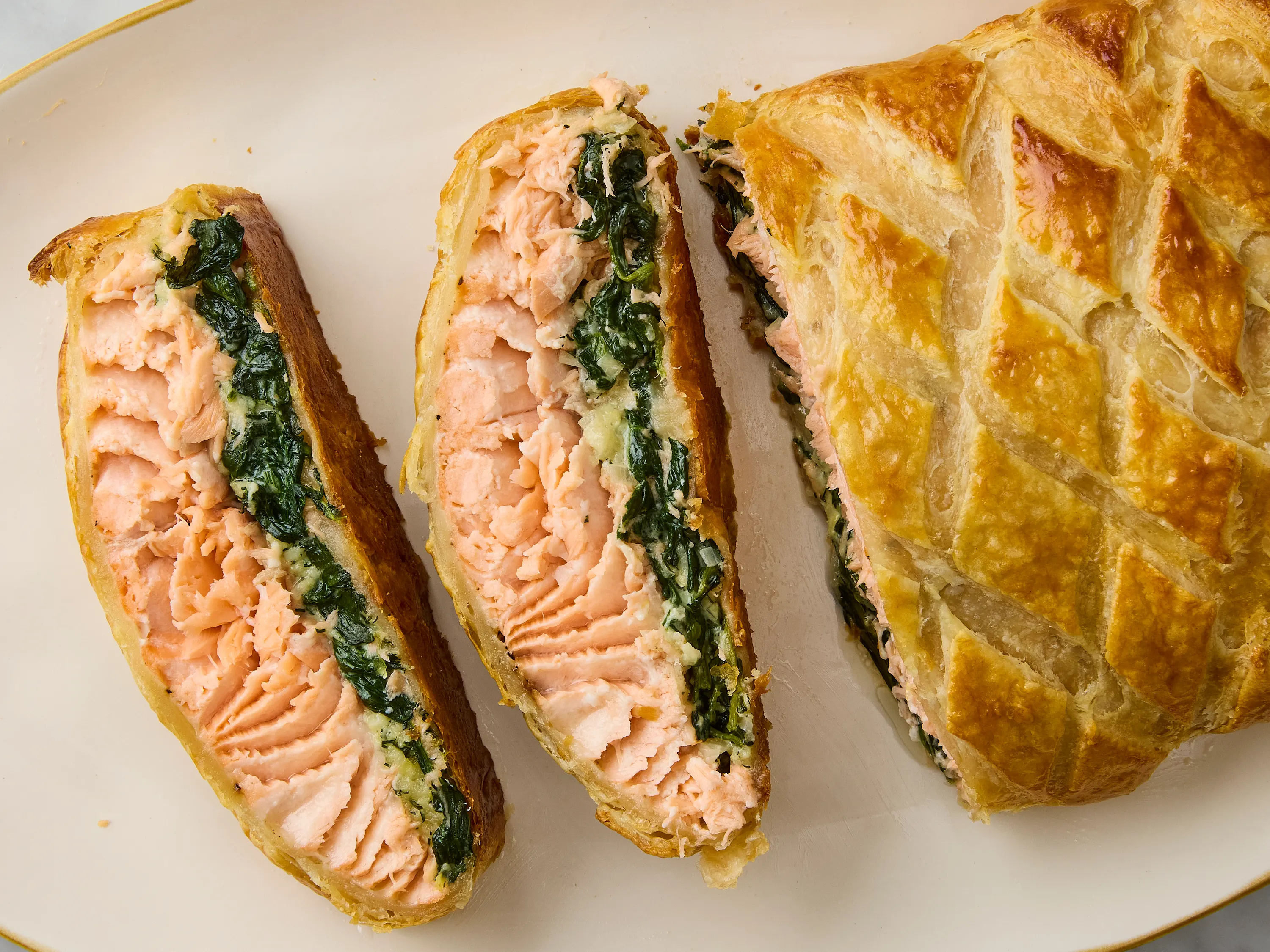
I have a soft spot for recipes that look like you worked much harder than you did. Salmon Wellington is exactly that kind of dish. You get a dramatic, golden puff pastry parcel that crackles when you cut into it, and inside is tender salmon with a thin layer of mustard and spinach that tastes like it belongs at a fancy bistro.
But here’s the part I care about as a home cook: keeping the pastry crisp. Salmon releases moisture as it cooks, spinach can hold water, and puff pastry hates steam. The recipe below tackles those issues head-on with a quick spinach squeeze, a brief chill (just enough time for the pastry to firm back up), and a hot oven on a preheated pan so the bottom actually browns.

If you are new to puff pastry, please know this: you do not need perfect knife skills or fancy folding. What you need is cold pastry, dry filling, and a well-sealed seam. I also like making this as one larger wellington with a center-cut piece of salmon, then slicing it at the table, but you can absolutely do individual portions if that feels easier for serving.
After baking, give it a brief rest before slicing so the juices settle, but do not trap it under foil. Resting uncovered for about 10 minutes gives you cleaner slices without steaming the crust into softness. Between that, a little egg wash, and a few steam vents on top, this is the kind of impressive dinner that still behaves like a weeknight recipe.
Why this recipe works
- Moisture control keeps the crust crisp. The spinach is cooked and squeezed dry, and the salmon is patted dry so steam does not get trapped inside the pastry.
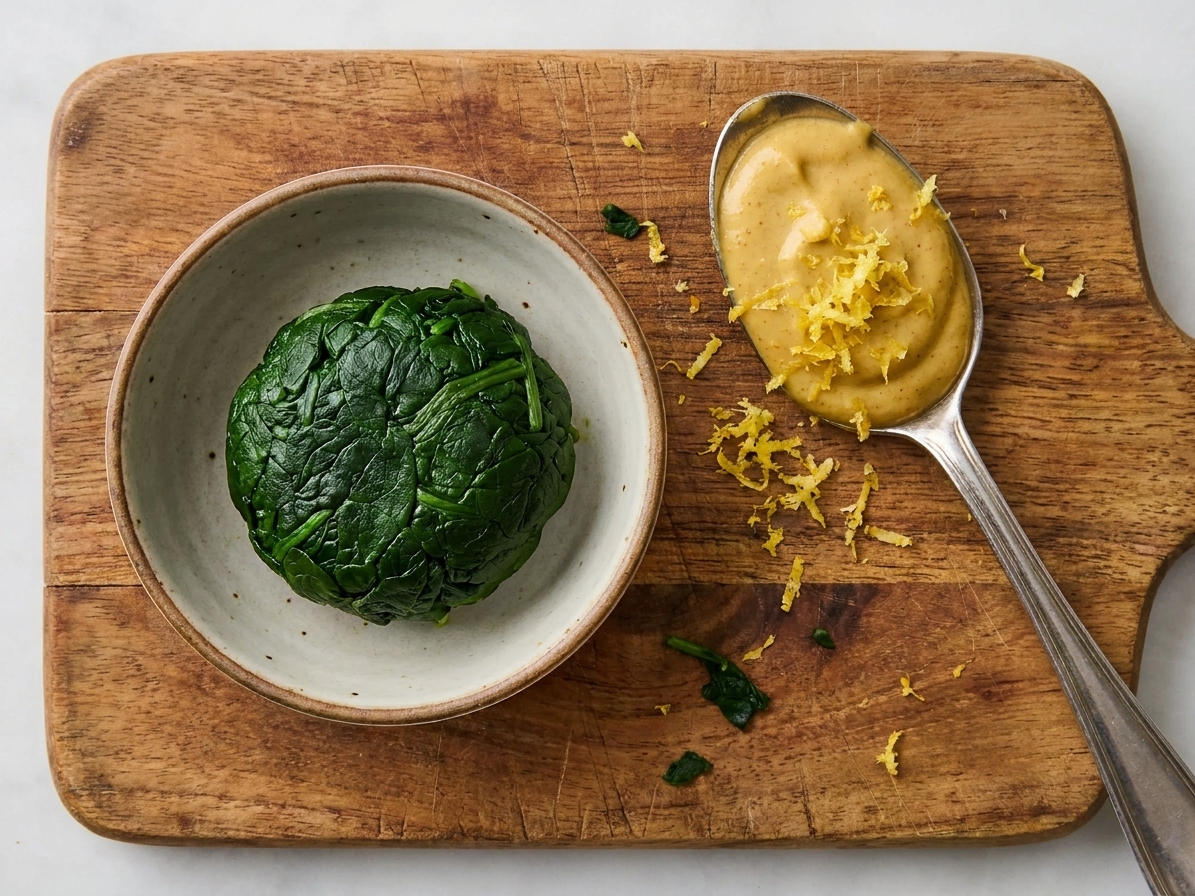
- Dijon acts like a flavor shield. A thin mustard layer adds tang and helps create a barrier between fish and pastry without making the filling heavy.
- Cold pastry, hot oven. Starting with well-chilled puff pastry and baking on a preheated sheet pan encourages fast lift and browning.
- Seam sealing prevents leaks. A tight wrap plus an egg wash glue keeps butter from escaping and helps the wellington hold its shape.
- A short rest means cleaner slices. Resting briefly and uncovered lets juices redistribute so you can cut neat portions without steaming the crust.
Ingredient notes
- Salmon fillet: Choose a center-cut piece that is an even thickness so it cooks evenly. Skinless is easiest for wrapping. If you only have skin-on, you can remove the skin with a sharp knife or ask the fish counter to do it.
- Puff pastry: Store-bought all-butter puff pastry bakes up especially crisp and flavorful. Thaw in the refrigerator until pliable but still cold.
- Spinach: Fresh spinach gives the best texture. Frozen works too, but it must be fully thawed and squeezed very dry.
- Dijon mustard: Keep it thin. You want a swipe, not a layer, so it flavors without making the pastry soggy.
- Egg wash: Egg plus a splash of water makes the pastry glossy and helps seal edges.
- Lemon zest and herbs (optional but lovely): A little zest and dill or parsley brightens the richness of salmon and pastry.
Equipment you will need
- Rimmed baking sheet
- Parchment paper
- Skillet
- Fine-mesh strainer or clean kitchen towel (for squeezing spinach dry)
- Pastry brush
- Sharp knife (for trimming pastry and slicing)
- Instant-read thermometer (optional but very helpful)
Pro tips
- Dry the spinach like you mean it. After wilting, press it in a strainer, then wrap in a towel and twist. Any leftover water will turn into steam inside the pastry.
- Pat the salmon dry and season right before wrapping. Salt draws moisture. Seasoning at the last minute reduces liquid pooling under the fish.
- Chill the assembled wellington for 10 to 15 minutes. Cold pastry holds its layers, and the seam sets so it is less likely to open in the oven.
- Vent the top. A few small slits let steam escape and protect the crispness.
- Use a preheated pan for a crisper bottom. Let the sheet pan heat in the oven, then slide the parchment with the wellington onto it.
- Rest before slicing. Give it about 10 minutes, uncovered. You will get cleaner portions and less juice spilling into the crust, without steaming the pastry.
Substitutes that work
- Spinach: Swap in finely chopped kale or Swiss chard. Cook until tender, then squeeze dry just like spinach.
- Dijon mustard: Whole grain mustard works. For a milder option, use a thin layer of mayonnaise mixed with lemon zest.
- Herbs: Dill, chives, parsley, or tarragon all play well with salmon.
- Puff pastry: If you only have pastry sheets that are smaller, you can wrap as individual portions instead of one large wellington. Keep everything cold and work quickly.
Variations
- Individual Salmon Wellingtons: Cut the salmon into 4 portions and wrap each one. They bake a little faster and are easier to serve for guests.
- Spinach and cream cheese layer: Stir 2 to 3 tablespoons softened cream cheese into the squeezed spinach for a richer, more classic filling. Keep the layer thin to avoid sogginess.
- Smoky version: Add a pinch of smoked paprika to the spinach, or tuck in a thin layer of roasted red pepper that has been patted very dry.
- Herb crust finish: After slicing, sprinkle flaky salt and chopped herbs over the top for a fresh contrast to the buttery pastry.
Serving ideas
- Something crisp and green: A simple arugula salad with lemon and olive oil balances the richness.
- Roasted vegetables: Asparagus, green beans, or broccolini are natural partners.
- Potatoes: Roasted baby potatoes or mashed potatoes make it feel like a celebration dinner.
- Sauce (optional): A quick lemony yogurt sauce or a light dill sauce is plenty. The wellington is already flavorful.
Storage and reheating
- Refrigerate: Store leftovers tightly covered for up to 2 days. The pastry will soften, but the flavor is still great.
- Reheat for best crispness: Warm on a baking sheet in a 350°F oven until heated through and re-crisped, about 10 to 15 minutes. Avoid the microwave if you want the pastry to stay flaky.
- Freezing: Fully baked wellington can be frozen, but puff pastry texture is never quite the same after thawing. If you do freeze, wrap well and reheat from frozen at 350°F until hot in the center.
Common mistakes
- Soggy bottom: Usually from wet spinach or a not-hot-enough oven. Squeeze the spinach dry and bake on a preheated pan.
- Pastry tearing while wrapping: The pastry is too warm. Chill it for a few minutes, then try again.
- Salmon overcooked: The pastry can trick you into leaving it in too long. Use a thermometer if you can. Pull it when the salmon is just barely cooked and still juicy, then rest.
- Leaking butter or filling: The seam was not sealed well, or the wellington was placed seam-side up. Brush edges with egg wash, press firmly, and bake seam-side down.
- Messy slices: Cutting too soon. Let it rest 10 minutes, uncovered, then use a sharp knife with gentle sawing motions.
FAQ
Do I need to cook the salmon first?
No. The salmon goes in raw and cooks inside the pastry as it bakes.
How do I keep puff pastry from getting soggy?
Start with dry components (pat the salmon dry, squeeze the spinach very dry), vent the top, and bake hot on a preheated sheet pan. Rest briefly and uncovered before slicing so steam does not get trapped in the crust.
Can I assemble Salmon Wellington ahead of time?
Yes. You can assemble it a few hours ahead, keep it covered in the refrigerator, then egg wash and bake when you are ready. Keep in mind that the longer it sits, the more the filling can moisten the pastry, so do not push it too far in advance.
What internal temperature should salmon be?
Many cooks aim for 125°F to 130°F in the thickest part for moist, gently flaky salmon, with carryover cooking during the rest. If you prefer it more firm, go a bit higher.
Can I use frozen salmon?
Yes, but thaw completely and pat very dry. Extra surface moisture is the enemy of crisp pastry.
The recipe
Salmon Wellington
A crisp, golden puff pastry wrap with a thin Dijon and spinach layer around tender salmon, baked until flaky and rested for clean slices.
- Prep
- 25 minutes
- Cook
- 30 minutes
- Total
- 55 minutes
- Yield
- 4 servings
Ingredients
- 1 (1.25 to 1.5 pound) center-cut salmon fillet, skin removed
- 1 teaspoon kosher salt, plus more to taste
- 1/2 teaspoon black pepper
- 1 tablespoon olive oil
- 5 ounces fresh baby spinach
- 1 garlic clove, finely grated (optional)
- 2 teaspoons lemon zest (optional)
- 2 tablespoons Dijon mustard
- 1 sheet puff pastry (about 14 ounces), thawed in the refrigerator until pliable but cold
- 1 large egg
- 1 tablespoon water
- 1 tablespoon chopped fresh dill or parsley (optional)
- All-purpose flour, for dusting
Instructions
- Heat the oven and pan. Place a rimmed baking sheet in the oven and preheat to 425°F. Line a piece of parchment paper on the counter (you will build the wellington on this, then slide it onto the hot pan).
- Dry and season the salmon. Pat the salmon very dry with paper towels. Season all over with salt and pepper. Keep it in the refrigerator while you prep the spinach.
- Cook the spinach, then squeeze it dry. Heat the olive oil in a skillet over medium heat. Add spinach (and garlic, if using) and cook, stirring, until fully wilted, 1 to 2 minutes. Transfer to a fine-mesh strainer and press firmly to remove water. For best results, wrap the spinach in a clean kitchen towel and twist to squeeze out as much liquid as possible. You want it quite dry. Stir in lemon zest and chopped herbs if using. Cool to room temperature.
- Prepare the puff pastry. Lightly flour the counter and roll the puff pastry into a rectangle large enough to fully wrap the salmon with about 1 inch of overlap. If the pastry gets sticky or soft, slide it onto a tray and chill for 5 minutes.
- Build the filling layers. Lay the rolled pastry on the parchment. Spread Dijon mustard in a thin, even layer where the salmon will sit, leaving a 1-inch border around the edges. Spread the squeezed-dry spinach in a thin layer over the mustard.
- Wrap and seal. Place the salmon on top of the spinach. Fold the pastry up and over the salmon, pressing out air pockets. Brush the overlapping edges with a little egg wash to help seal, then press firmly. Fold the ends up like you are wrapping a package. Turn the wellington seam-side down on the parchment.
- Chill briefly for clean baking. Refrigerate the assembled wellington for 10 to 15 minutes so the pastry firms up and the seam sets.
- Egg wash and vent. Whisk egg and water. Brush the top and sides with egg wash. Cut 3 to 5 small slits in the top to vent steam.
- Bake. Carefully remove the hot baking sheet from the oven. Slide the parchment with the wellington onto the hot sheet. Bake until the pastry is deeply golden and crisp and the salmon flakes in the center, 25 to 35 minutes. If using a thermometer, aim for about 125°F to 130°F in the thickest part for moist salmon (it will rise a bit as it rests).
- Rest, then slice. Rest uncovered for 10 minutes before cutting. Slice with a sharp knife using gentle sawing motions, and serve right away.
Notes
Moisture control note: The most important step for crisp pastry is squeezing the spinach very dry and patting the salmon dry. If your wellington ever turns out a bit soft underneath, it is almost always moisture, not your baking skills.
Make ahead: You can assemble the wellington a few hours ahead and refrigerate. Brush with egg wash and vent right before baking for the best puff.