
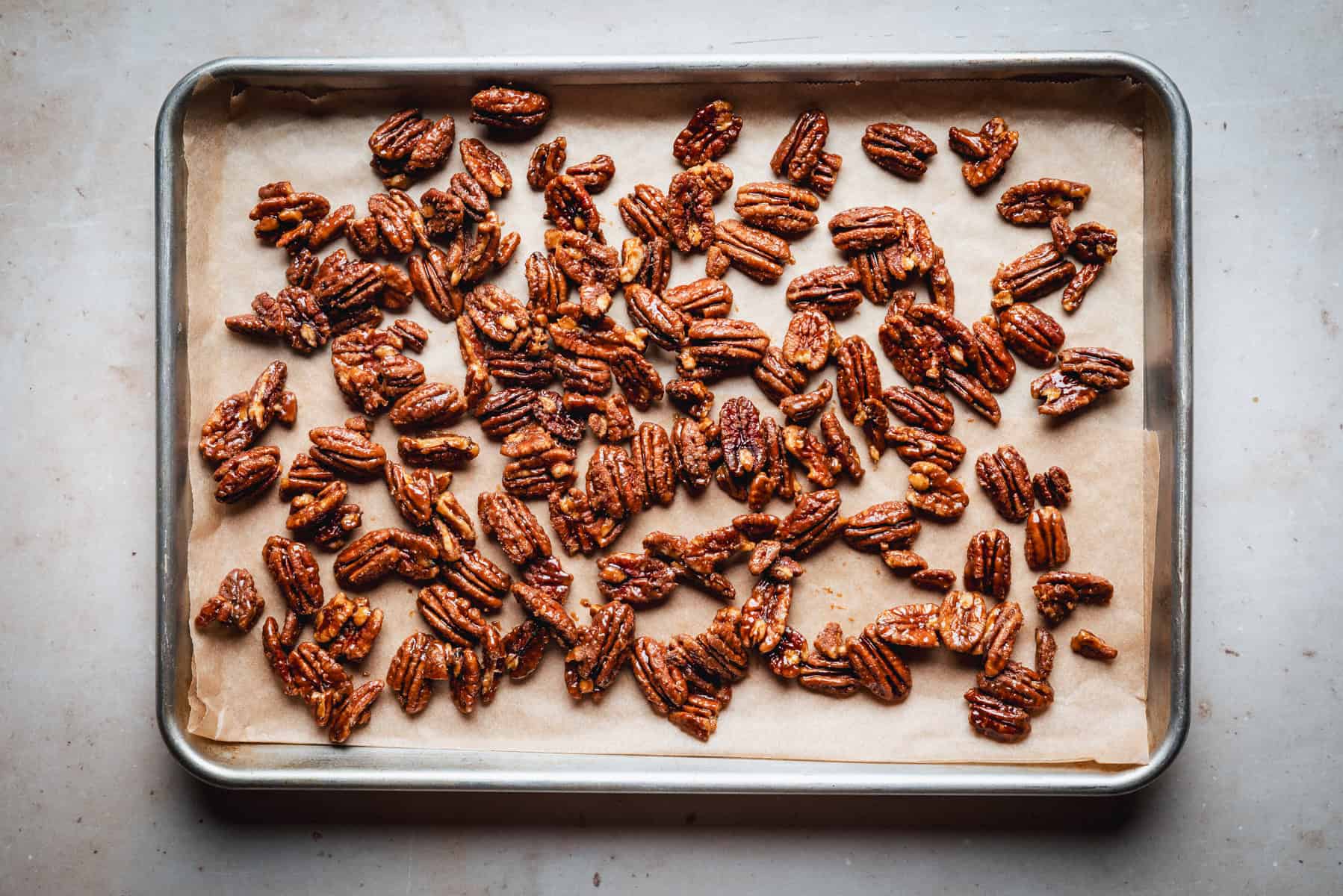
Praline pecans are one of those kitchen little luxuries that feel like you bought them from a fancy shop, even when you made them in an old saucepan you have owned since college. They are nutty, toasted, glossy with caramel, and they bring instant magic to everything from a Tuesday salad to a holiday cheese board.
There are two classic paths to praline pecans at home. The stovetop method gives you that true praline crunch with a glassy coating. The oven method is a little more forgiving and spreads the sweetness more evenly. I use both depending on my mood and how much patience I have for babysitting sugar.

What makes them praline
In practical home-cooking terms, praline pecans are pecans coated in a cooked sugar mixture that sets into a crisp shell. The flavor usually includes butter and vanilla, and often a warm spice like cinnamon. Some versions lean more candy-like with a hard, shiny caramel coating. Others are more sandy and crystallized, still delicious, just a different texture.
If you are aiming for the classic glossy crunch, the key is cooking the sugar syrup to the right stage, then moving fast once you add the nuts. If you are aiming for a more rustic, sugary coating, you can intentionally let the sugar crystallize a bit as you stir. Both are welcome in my kitchen.
Ingredients you actually need
You do not need a candy thermometer to make excellent praline pecans, but you do need a little attention and a prepared pan.
- Pecans: Halves are prettiest, but pieces work too and coat more evenly for snacking.
- Sugar: I prefer granulated sugar here for a clean caramel flavor.
- Butter: Adds richness and helps the coating taste like praline, not just sugar.
- Water: Just enough to dissolve the sugar so it cooks evenly.
- Salt: Makes the caramel taste like itself. Even a small pinch matters.
- Vanilla: Add off heat so it stays fragrant.
- Optional warm spice: Cinnamon is classic. A pinch of cayenne is quietly amazing.
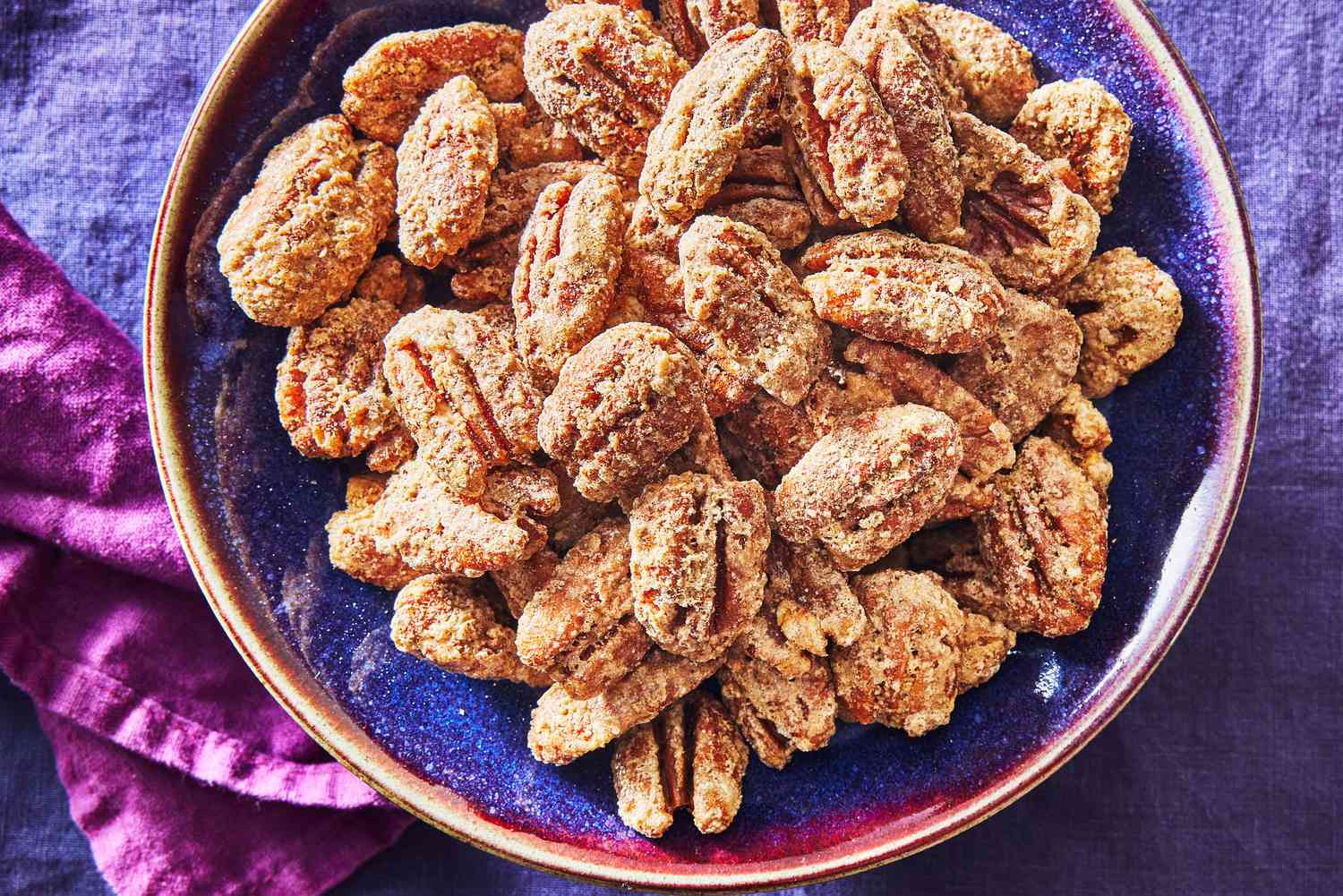
Stovetop praline pecans
This method is my go-to when I want that crisp snap and a shiny finish. Read through once before you start, then cook with confidence.
Quick safety note: Hot caramel is no joke. When you add butter or vanilla, the pot will bubble up and can splatter. Keep your face back, use a long spoon, and consider long sleeves.
Step-by-step
- Prep your landing zone. Line a large baking sheet with parchment paper or a silicone mat. Lightly grease it if you are nervous about sticking. Set two forks nearby for quick separating.
- Toast the pecans (optional, but worth it). Toasting deepens flavor and helps the coating set faster. Spread on a sheet pan and toast at 350°F for 6 to 8 minutes, just until fragrant. Cool 2 minutes. This is a quick toast, not the low-and-slow bake used for the oven method.
- Dissolve the sugar. In a heavy-bottom saucepan, combine sugar and water. Heat over medium, stirring only until the sugar dissolves. Once it is clear, stop stirring.
- Cook to amber. Let the syrup bubble until it turns a light to medium amber color, 5 to 10 minutes depending on your pan and heat. Do not stir. If it colors unevenly, gently swirl the pan.
- Add butter and salt carefully. Remove from heat and whisk in butter and salt (and cinnamon, if using). It will bubble up. That is normal.
- Add pecans, then vanilla. Return to low heat, stir in pecans until coated, then take off heat and stir in vanilla.
- Spread fast. Immediately pour onto the prepared pan. Use two forks to separate clusters while warm.
- Cool completely. They will crisp as they cool, usually 20 to 30 minutes.
Little reassurance: If your first few pecans look like one big sticky comet, you are not failing. You just need to separate them sooner, while the coating is still pliable.
Oven praline pecans
If you want a method that feels more like roasting nuts than making candy, this is for you. The coating is usually a bit more textured and clings nicely. If you use egg white, you get that light, crisp shell that people love on “candied” pecans.
Two easy options
- Butter-sugar oven batch: A simple, pantry-staple version with a lightly crisp, even coating.
- Egg white oven batch: A drier, crunchier shell that bakes up beautifully for big batches and gifting.
If you want a glossy, candy-like shell, stick with the stovetop method. The oven is more about even coating and low-stress crunch.
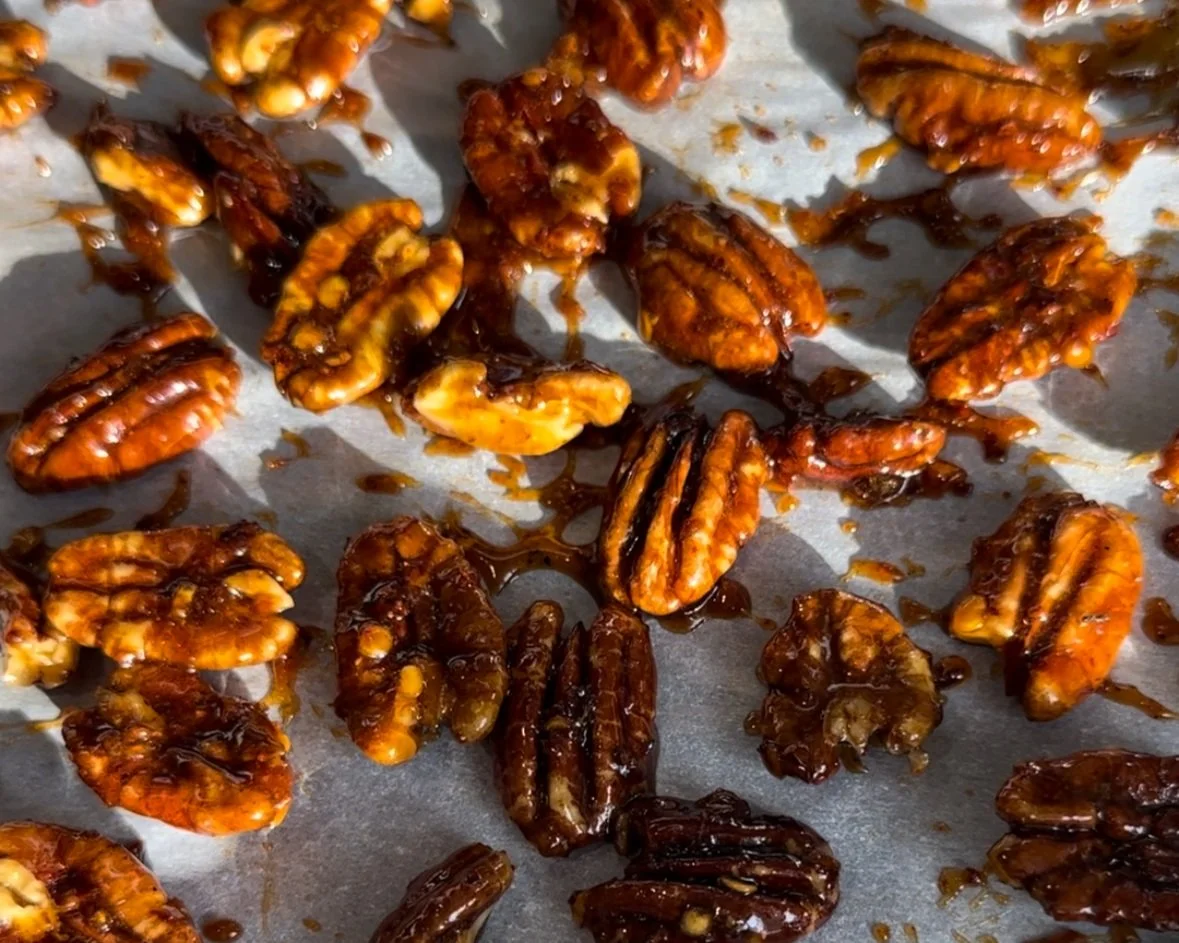
How to keep them from turning grainy
Sugar gets grainy when it crystallizes. Sometimes that is the style you want, but if you are aiming for glossy praline, here is how to stack the deck in your favor.
- Stop stirring once the sugar dissolves. Stirring can splash sugar crystals onto the sides of the pot, which can seed crystallization.
- Use a clean pot and utensils. Old sugar residue encourages crystals.
- Swirl, do not stir. If the caramel colors unevenly, gently swirl the pan instead of stirring.
- Add vanilla off heat. Extract can sputter and boil up if it hits very hot caramel over direct heat.
If it still crystallizes: You can often salvage it, but do it carefully. Remove the pot from heat, add 1 to 2 tablespoons of water a splash at a time (it may sputter), then return to low heat and let the crystals dissolve again. Proceed gently once the syrup is smooth.
Common problems and easy fixes
They are sticky, not crisp
- Likely cause: The sugar did not cook long enough, or humidity is high.
- Fix: Spread the nuts on a baking sheet and bake at 300°F for 8 to 12 minutes, then cool completely. This drives off moisture and helps the coating set.
The caramel tasted burnt
- Likely cause: The sugar went too dark before you added butter and nuts.
- Fix: Next time, pull the caramel at light amber. Remember it continues cooking from residual heat.
Everything clumped into one mega-cluster
- Likely cause: You waited too long to spread and separate.
- Fix: While still warm, use two forks to pull pieces apart. Heat-safe gloves can help if you are cautious around sticky caramel. If it is already hard, tap gently with the back of a spoon to break into shards. Still delicious.
They stick to the pan
- Likely cause: Not enough lining or cooling too long on bare metal.
- Fix: Always use parchment or a silicone mat. If they are already stuck, warm the underside of the pan briefly over a burner to loosen the sugar.
Flavor twists I actually use
Once you have a base method you trust, it is fun to play. Here are variations that feel special without sending you on a scavenger hunt.
- Maple praline: Swap a portion of the sugar for maple sugar, or add 1 to 2 tablespoons maple syrup near the end (watch for extra bubbling).
- Brown butter: Brown the butter first, then proceed. It adds a toasty, almost cookie-like depth.
- Warm spice: Cinnamon plus a pinch of nutmeg. Or cinnamon plus a tiny pinch of cayenne for a sweet-heat finish.
- Citrus: Add a little orange zest off heat with the vanilla.
- Rosemary: Toss finished praline pecans with finely chopped fresh rosemary and flaky salt. This is stunning on a cheese board.
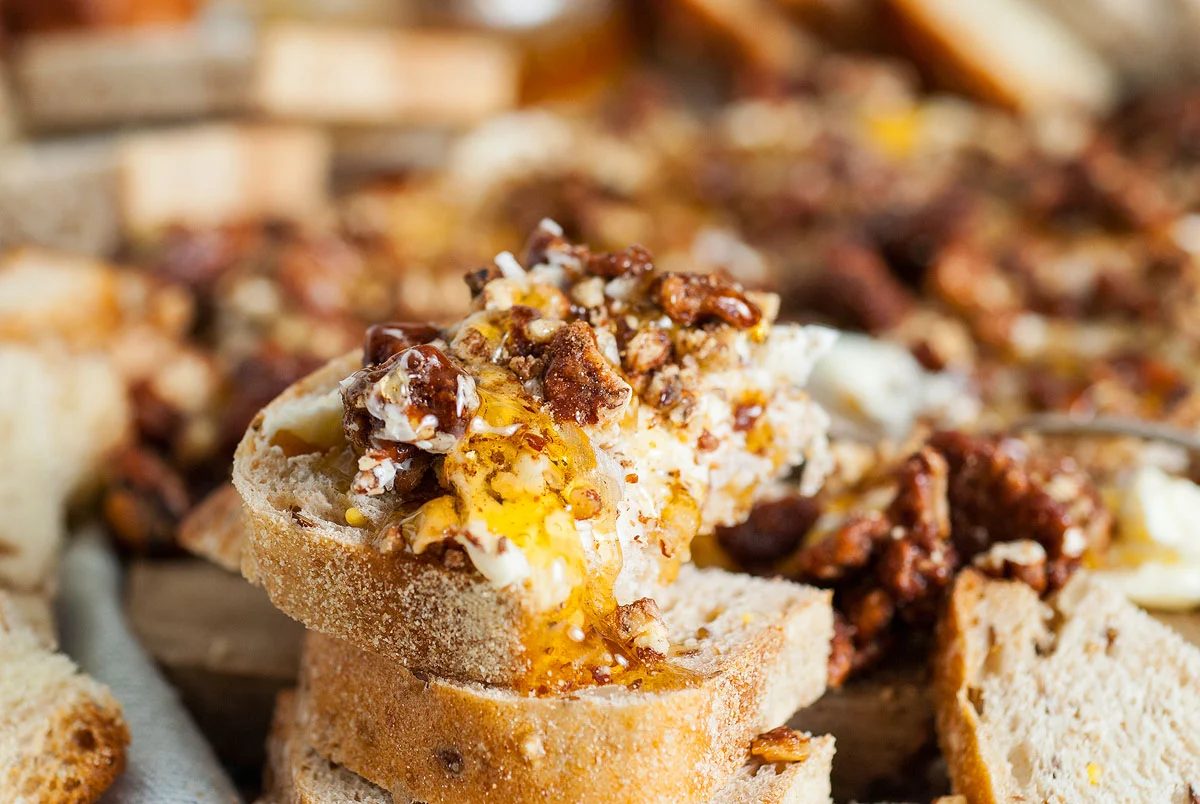
How to use praline pecans
Yes, they are a snack. But they are also an instant upgrade ingredient.
- Salads: Try them on mixed greens with sliced apples or pears, goat cheese, and a sharp vinaigrette.
- Breakfast: Sprinkle over oatmeal, yogurt, or waffles.
- Desserts: Chop and fold into cookie dough, scatter over ice cream, or use as a topping for sweet potatoes.
- Holiday sides: Add crunch to roasted Brussels sprouts or squash, especially with a little balsamic.
- Gifts: Pack in small jars or tins with parchment. They travel well once fully cooled.
Storage and make-ahead
Praline pecans keep best when they stay dry and cool.
- Room temperature: Store in an airtight container for 1 to 2 weeks. If your kitchen runs warm or humid, aim for the shorter end.
- Freezer: Freeze in a zip-top bag or airtight container for up to 2 months. Thaw at room temperature. If they seem a little tacky after thawing, a quick 5 to 8 minutes in a 300°F oven brings back the crunch.
My best tip: Let them cool completely before you seal the container. Trapping a little steam is the fastest route to sticky nuts.
Praline pecans recipe
Quick Praline Pecans
Yield: About 3 cups
Time: 10 minutes prep, 10 minutes cook, 25 minutes cool
Ingredients
- 3 cups pecan halves
- 1 cup granulated sugar
- 1/4 cup water
- 3 tablespoons unsalted butter
- 1/2 teaspoon fine salt
- 1 teaspoon vanilla extract
- Optional: 1/2 teaspoon cinnamon
Instructions
- Line a rimmed baking sheet with parchment paper or a silicone mat. Set aside.
- If desired, toast pecans at 350°F for 6 to 8 minutes. Cool 2 minutes.
- In a heavy-bottom saucepan, combine sugar and water over medium heat. Stir until sugar dissolves, then stop stirring.
- Cook until the syrup turns light amber. Do not stir. Swirl the pan gently if needed.
- Remove from heat. Carefully whisk in butter and salt (and cinnamon, if using). Expect bubbling.
- Return to low heat and stir in pecans until coated. Remove from heat and stir in vanilla.
- Immediately spread pecans on the prepared baking sheet. Separate with two forks while warm.
- Cool completely before storing.
Notes
- If the pecans turn sticky after storage, crisp them in a 300°F oven for 8 to 12 minutes, then cool.
- For a deeper caramel flavor, cook the syrup slightly darker, but pull it before it smells sharp or looks mahogany.
Oven praline pecans recipe
Easy Oven Praline Pecans
Yield: About 3 cups
Time: 5 minutes prep, 30 minutes bake, 20 minutes cool
Ingredients (butter-sugar version)
- 3 cups pecan halves
- 3 tablespoons unsalted butter, melted
- 1/2 cup granulated sugar
- 1/2 teaspoon fine salt
- 1 teaspoon vanilla extract
- 1/2 teaspoon cinnamon (optional)
Ingredients (egg white version)
- 3 cups pecan halves
- 1 egg white
- 1 tablespoon water
- 1/2 cup granulated sugar
- 1/2 teaspoon fine salt
- 1/2 teaspoon cinnamon (optional)
- Optional: pinch cayenne
Instructions
- Heat oven to 325°F. Line a rimmed baking sheet with parchment paper or a silicone mat.
- Butter-sugar version: Toss pecans with melted butter, sugar, salt, cinnamon (if using), and vanilla until evenly coated. The sugar will look granular going in. That is correct.
- Egg white version: Whisk egg white and water until foamy. Toss with pecans until coated, then sprinkle over sugar, salt, and spices and toss again. (Skip vanilla here, or add 1/2 teaspoon after baking if you want, since vanilla can soften the shell.)
- Spread pecans in a single layer.
- Bake 25 to 35 minutes, stirring every 10 minutes, until the coating looks dry and the nuts smell toasted.
- Cool on the pan, separating any clingy clusters with two forks while they are still warm.
- Cool completely before sealing in a container.
Notes
- If they taste a little bland, it is almost always a salt problem. Add a pinch of flaky salt at the end.
- If they turn tacky the next day, re-crisp at 300°F for 8 to 12 minutes, then cool.
FAQ
Are praline pecans the same as candied pecans?
They are close cousins. Candied pecans usually means sugar-coated pecans, often baked, sometimes with egg white for a crisp shell. Praline pecans tend to have more of a butter-forward caramel coating like praline candy. In real life, people use the names interchangeably, so focus on the method and texture you want.
Do I need a candy thermometer?
No. Color and aroma are great cues. You are looking for a light amber caramel that smells warm and toasty, not sharp or burnt. If you love precision, a thermometer can help, but it is not required for a successful batch.
Can I use other nuts?
Yes. Walnuts and almonds work well. Cashews are delicious but burn faster, so keep the heat gentle and watch closely.
Can I make them less sweet?
You can reduce the sugar a bit, but the coating depends on sugar to set. My favorite way to balance sweetness is to add a little more salt, or pair them with something tangy like goat cheese or plain yogurt.
Any swaps?
Vegan butter works well in both methods. If you avoid alcohol, use alcohol-free vanilla or skip it and lean on cinnamon and a little extra salt for flavor.