
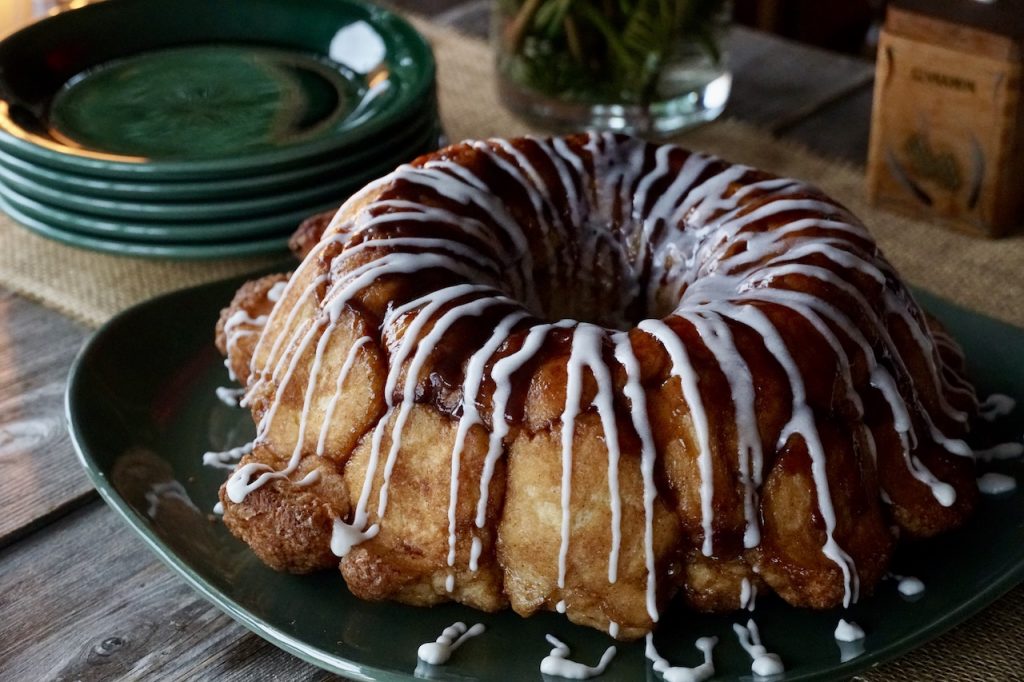
Monkey bread is the kind of baking project that feels like a party trick, but it is really just smart assembly. You make a simple, buttery yeasted dough, pinch it into little pieces, and tumble those pieces in cinnamon sugar. As the pan bakes, the butter and sugar slide down into the gaps, turning into a glossy, toffee-ish syrup that coats every nook.
What I love most is that it is forgiving. The dough balls do not need to be identical, and the pan does a lot of the work for you. Your job is to watch for the rise cues, bake it until the center is actually cooked, and then give it a brief cooling pause so it releases cleanly when you invert.

If you have ever had monkey bread that was perfect on the outside but a little doughy in the middle, this recipe is designed to prevent that. The dough gets a full first rise for flavor and structure, then the assembled pan gets a second rise until the pieces look slightly puffy and connected, not tight and dense. For the bake, you start at 350 F to set the shape, then drop to 325 F to let the center catch up without turning the outside into a hard shell. For the most reliable doneness check, probe the thickest part of the ring, not just a top bubble. You want no wet dough on the skewer, or about 190 to 200 F in the dough if you use a thermometer.
What to expect
You are aiming for three textures at once: a lightly crisp, caramelized outer crust; a soft, fluffy interior; and a sticky cinnamon-sugar glaze that clings to each piece. The cues matter more than the clock here, especially with yeast. On the first rise, the dough should roughly double and feel airy, and a fingertip press should leave an indent that slowly springs back while staying faintly visible.
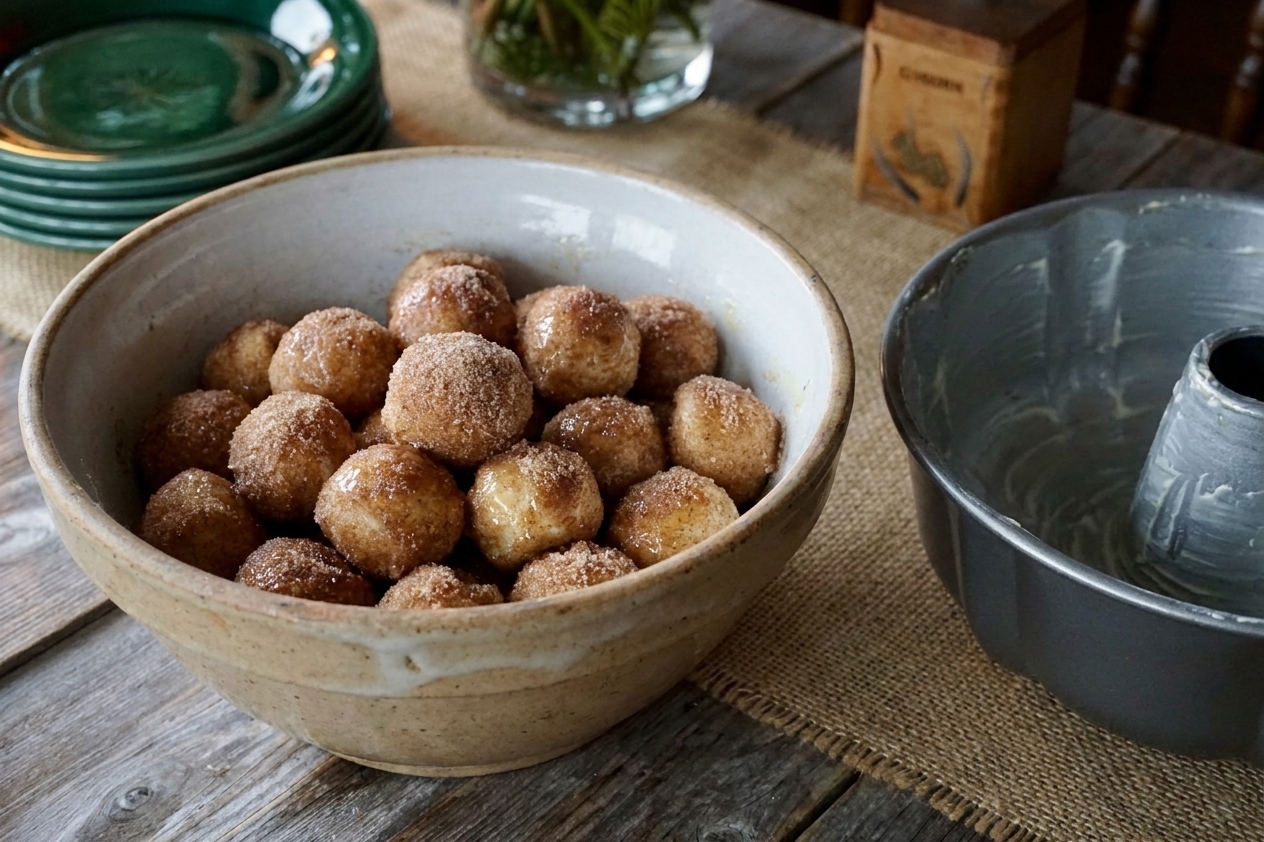
Plan to serve it warm, not piping hot. After baking, let it rest just until the furious bubbling calms down and the syrup looks a little thicker around the edges. Then invert while it is still warm so the sugar does not set up like glue. If sticking makes you nervous, take an extra minute at the start to grease every ridge of the Bundt pan, especially the center tube, because sticky sugar is relentless.
Why this recipe works
- Yeasted dough for real pull-apart texture: A soft enriched dough bakes up tender and stretchy, so the pieces separate cleanly without crumbling.
- Two rises with clear visual cues: The first rise builds structure. The second rise in the pan helps the center bake through because the dough is already aerated before it hits the oven.
- Measured cinnamon sugar coating: Enough sugar to create that gooey, caramel-like glaze, without turning into a scorched, hard shell.
- Bake strategy that protects gooey edges: Starting at 350 F sets the shape, then finishing at 325 F allows the center to cook through while the outer layer stays sticky and soft.
- Cool-then-invert timing: A brief rest thickens the syrup and helps the bread release in one gorgeous ring.
Ingredient notes
Yeast
This recipe uses active dry yeast. If you only have instant yeast, you can use the same amount and mix it right in with the dry ingredients. Your rise may be a little faster, so follow the visual cues instead of the clock.
Milk temperature
Warm milk helps yeast wake up. You want it warm to the touch, not hot. If you have a thermometer, aim for about 105 to 110 F.
Butter
There is butter in the dough and more butter for coating. Use unsalted if you can so the sweetness stays clean and cinnamon-forward. If you only have salted butter, it still works.
Sugar amount
The cinnamon-sugar mixture is intentionally generous so every piece gets coated and there is enough to melt down into that signature gooey glaze. If you reduce it too much, the bread can bake up dry and more bready than sticky.
Bundt pan greasing
Grease the pan thoroughly, especially the center tube and all the ridges. Sticky sugar is wonderful on the bread and not wonderful welded to your pan.
Equipment you will need
- 10 to 12 cup Bundt pan
- Stand mixer with dough hook or a large bowl for hand-kneading
- Small saucepan or microwave-safe bowl for warming milk and melting butter
- Mixing bowls for cinnamon sugar and butter coating
- Instant-read thermometer (helpful for doneness, optional)
- Wire rack
- Large plate or serving platter for inverting
Pro tips
- Use rise cues, not strict timing: On the first rise, the dough should roughly double and feel airy. A gentle finger press should leave an indent that slowly springs back.
- Keep dough pieces bite-size: Smaller balls bake through more reliably. Think 1 inch, like large marbles.
- Coat in this order: Butter first, then cinnamon sugar. The butter is the glue and also the start of your glaze.
- Pack the pan, but do not smash: Drop the balls in, layer by layer. Lightly jiggle the pan to settle gaps, but do not compress the dough.
- Protect the top if it browns early: If the exposed surface is getting too dark before the center is done, tent loosely with foil for the last 10 to 15 minutes.
- Invert with confidence: After the short cool, place the platter over the pan and flip in one decisive motion. Then lift the pan straight up.
Substitutes that work
- Milk: Use plant-based milk (like oat or soy) in the same amount. Choose unsweetened if possible.
- Butter: A good vegan butter can work for both dough and coating. Expect a slightly softer set to the glaze.
- Flour: All-purpose flour is best here. Bread flour can be used, but the bread may be slightly chewier.
- Cinnamon: Swap in pumpkin pie spice or apple pie spice for a warmer, more complex flavor.
Variations
- Apple-cinnamon monkey bread: Add finely diced peeled apple (very small dice) between layers. Keep the amount modest so it does not flood the pan with moisture.
- Pecan sticky monkey bread: Sprinkle chopped pecans in the pan before adding dough balls and between layers.
- Orange-sugar: Add finely grated orange zest to the cinnamon sugar for a brighter, bakery-style aroma.
- Vanilla glaze finish: Drizzle a simple powdered sugar and milk glaze over the inverted bread once it is warm, not hot, so it clings instead of disappearing.
Serving ideas
- Serve warm with coffee or hot cocoa for an easy brunch centerpiece.
- Pair with fresh fruit to balance the richness.
- For dessert, add a scoop of vanilla ice cream next to a warm wedge.
- If serving a crowd, set out a small bowl of extra cinnamon sugar for dusting and a little warm caramel sauce for drizzling.
Storage and reheating
Room temperature
Store tightly covered at room temperature for up to 2 days. Monkey bread is best the day it is baked, but it reheats well.
Reheating
Warm individual portions in the microwave in short bursts until soft and gooey again. For a larger amount, cover with foil and warm in a low oven until heated through.
Freezing
You can freeze baked monkey bread, well wrapped, for up to 2 months. Thaw at room temperature, then rewarm gently. The texture will be a bit less fluffy but still very good.
Common mistakes
- Milk too hot: Hot milk can weaken yeast. If your yeast does not foam in the warm milk, start over with cooler milk and fresh yeast.
- Under-proofed dough: Dense dough balls stay dense in the center. Wait for that doubled, airy feel on the first rise.
- Skipping the second rise: The assembled rise helps the center bake through. If you bake straight from a cold, tight assembly, the outside can over-brown before the middle is cooked.
- Not greasing the pan thoroughly: Sticky sugar loves to cling. Grease every ridge and the center tube.
- Inverting too soon: Right out of the oven, the syrup is very thin and can slide off. Give it the short rest, then flip.
FAQ
How do I know monkey bread is done in the center?
The top should look deeply golden and set, and a skewer inserted into the thickest part should come out without wet dough. If you have an instant-read thermometer, the dough in the center should register around 190 to 200 F.
Can I use store-bought dough or biscuits?
You can, but this recipe is written for homemade yeasted dough, which gives the best pull-apart texture and flavor. If you use refrigerated biscuit dough, the bake time and rise cues will change.
Why is my monkey bread dry?
Most often it is from too little butter coating, too little cinnamon sugar, or overbaking. Also make sure your dough balls are not too large, since big pieces take longer to cook and tempt you to bake longer overall.
Why did it stick to the pan?
Either the pan was not greased thoroughly or it cooled too long in the pan. Invert after the short cooling window while it is still warm.
Can I make it ahead?
For the best results, bake the day you plan to serve. You can assemble the pan and refrigerate overnight for a slow second rise, then bring it toward room temperature until slightly puffy before baking.
The recipe
Monkey Bread
Soft, buttery, pull-apart monkey bread made from yeasted dough balls coated in cinnamon sugar, stacked in a Bundt pan, baked until gooey on the outside and fully cooked in the center, then cooled briefly and inverted to serve warm.
- Prep
- Cook
- Total
- Yield
Ingredients
- 1 cup whole milk, warmed to 105 to 110 F
- 2 1/4 teaspoons active dry yeast (1 packet)
- 1/4 cup granulated sugar (for the dough)
- 4 tablespoons unsalted butter, melted and slightly cooled (for the dough)
- 1 large egg
- 1 teaspoon fine salt
- 3 1/2 cups all-purpose flour, plus more as needed
- 3/4 cup unsalted butter, melted (for coating)
- 1 cup granulated sugar (for cinnamon sugar coating)
- 1 cup packed light brown sugar (for cinnamon sugar coating)
- 2 tablespoons ground cinnamon
- 1/4 teaspoon fine salt (for cinnamon sugar coating)
Instructions
- Activate the yeast: In the bowl of a stand mixer (or a large mixing bowl), combine the warm milk, yeast, and 1 teaspoon of the granulated sugar. Stir and let stand until foamy, about 5 to 10 minutes. If it does not foam, your yeast may be inactive or the milk was too hot or too cool.
- Mix the dough: Add the remaining granulated sugar, melted butter, egg, and salt. Mix to combine. Add the flour and mix until a shaggy dough forms.
- Knead: Knead with a dough hook on medium-low speed until smooth and slightly tacky, about 6 to 8 minutes, or knead by hand on a lightly floured surface about 8 to 10 minutes. The dough should feel soft and elastic, not stiff. Add a sprinkle of flour only if it is very sticky and unmanageable.
- First rise: Shape dough into a ball and place in a lightly greased bowl. Cover and let rise in a warm spot until roughly doubled in size, about 60 to 90 minutes. Cue: when you gently press a finger into the dough, the indentation should slowly spring back but remain faintly visible.
- Prepare the coatings and pan: Generously grease a 10 to 12 cup Bundt pan, making sure to cover the center tube and all ridges. Pour the melted butter for coating into one bowl. In another bowl, whisk together the granulated sugar, brown sugar, cinnamon, and salt.
- Portion the dough: Turn the risen dough out onto a clean surface. Gently press to deflate. Pinch off pieces and roll into 1-inch balls.
- Coat and layer: Dip each dough ball in melted butter, letting excess drip off, then roll in cinnamon sugar. Layer coated balls evenly in the Bundt pan, scattering any remaining cinnamon sugar between layers. Drizzle any remaining melted butter over the top.
- Second rise: Cover the pan and let rise until the pieces look slightly puffy and the top layer has expanded, about 30 to 45 minutes. Cue: the dough balls should look fuller and no longer tight or dense, but they do not need to double again.
- Bake: Heat oven to 350 F. Bake for 15 minutes, then reduce oven temperature to 325 F without opening the door more than necessary. Continue baking until deeply golden and the center is cooked through, about 20 to 30 minutes more. Cue: a skewer inserted into the thickest part should come out without wet dough. If using an instant-read thermometer, aim for about 190 to 200 F in the center dough.
- Cool briefly: Let the monkey bread cool in the pan for 10 to 15 minutes. This helps the syrup thicken so it clings instead of running off.
- Invert and serve: Place a large plate or serving platter over the Bundt pan. Holding both firmly, flip in one confident motion, then lift the pan straight up. Serve warm for the gooey pull-apart effect.
Notes
Make-ahead option: Assemble the coated dough balls in the Bundt pan, cover tightly, and refrigerate overnight for a slow second rise. The next day, let the pan sit at room temperature until the dough looks slightly puffy, then bake as directed.
Pan release insurance: If you are nervous about sticking, take extra time greasing every ridge. Inverting within the 10 to 15 minute window helps prevent the sugar from setting like glue.
Browning control: If the top is deeply browned but you suspect the center needs more time, tent loosely with foil and continue baking until done.