
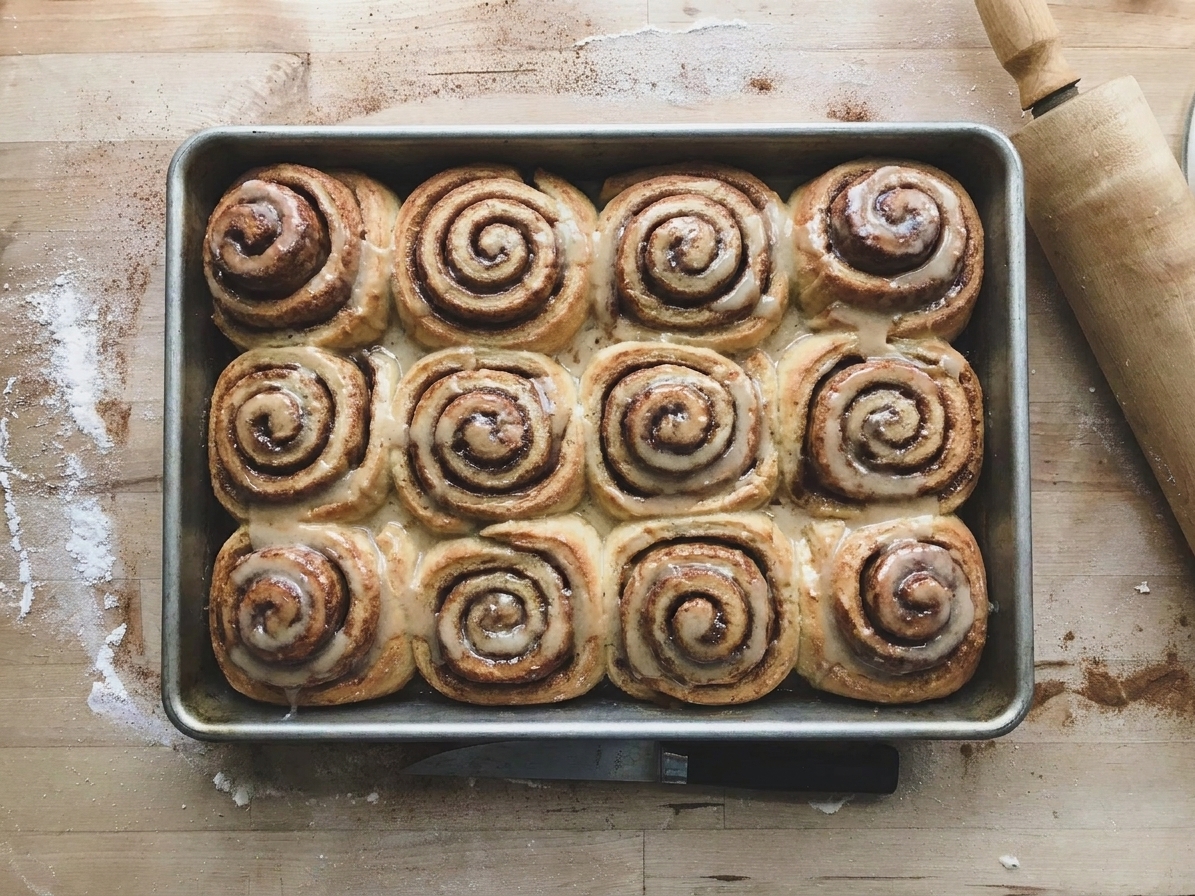
When I managed a bakery, cinnamon roll mornings had a very specific smell. Warm butter, toasted cinnamon, and that almost-caramel note from brown sugar as it hits the heat. It’s the kind of scent that makes people wander in early, “just to look,” and then somehow leave with a box.
At home, I want the same bakery-style coziness with a method that fits real life. This recipe is a classic enriched yeast dough, meaning it bakes up tender and a little rich from milk, egg, and butter. You’ll do two rises, one after kneading and one after shaping, and both are guided by what the dough looks and feels like, not just a timer.

The filling leans into brown sugar for that deeper, molasses-y sweetness, and I give you two glaze options: a tangy cream cheese glaze that tastes like a bakery treat, or a simple vanilla glaze that sinks into the swirls like a sweet, familiar finish. Pick your mood.
If yeast baking makes you nervous, this is a friendly place to start. The dough should feel soft and slightly tacky, not stiff, and I’ve included the cues I use every time: what “doubled” really looks like, how tight to roll, and what to watch for in the oven so you pull the pan when the rolls are just turning golden and the centers look set.
Why this recipe works
- Enriched dough for softness: Milk, egg, and butter coat the flour proteins, limiting toughness and creating that fluffy, tear-apart texture you want in a roll.
- Two rises for flavor and structure: The first rise builds flavor and relaxes the dough. The second rise after shaping helps the spirals puff and bake evenly.
- Brown sugar melts into the swirl: Brown sugar dissolves as it bakes, making the filling taste almost caramel-like and keeping the interior moist.
- Clear proofing cues, not guesswork: You are looking for the dough to become airy and pillowy, not just “wait an hour and hope.”
- Glaze timing matters: Glazing warm rolls lets the topping melt into the cracks, giving you a soft, gooey finish without drowning the rolls.
Ingredient notes
Yeast
This recipe works with active dry yeast or instant yeast. If you use active dry, dissolve it in warm milk first. If you use instant, you can mix it right into the dry ingredients, but warming the milk still helps the dough move along.
Milk temperature
Aim for warm, not hot. If it feels comfortably warm on your wrist, you are in the safe zone. Too hot can slow or kill yeast.
Flour
All-purpose flour keeps the crumb tender. Start with the lower amount and add only as needed. A slightly tacky dough bakes softer than a dry, stiff one.
Butter
Use softened butter for the dough so it blends smoothly. For the filling, very soft butter spreads without tearing the dough.
Brown sugar
Either light or dark brown sugar works. Dark brown sugar gives a deeper, more toffee-like flavor.
Cinnamon
Use a cinnamon you actually like the taste of. This is the main flavor, so a fresh, fragrant jar makes a noticeable difference.
Cream cheese
For a smooth glaze, use full-fat block cream cheese, softened. Tub-style cream cheese can be looser and sometimes grainy in glazes.
Equipment you will need
- Stand mixer with dough hook or a large bowl and your hands for kneading
- Liquid measuring cup for warming milk
- Rolling pin
- 9 x 13-inch baking dish (metal or glass both work)
- Unflavored dental floss or a sharp serrated knife for clean slices
- Instant-read thermometer (optional but helpful for checking doneness)
- Offset spatula or spoon for spreading glaze
Pro tips
- Use the windowpane test: After kneading, stretch a small piece of dough. If it stretches thin without tearing right away, gluten is developed and the dough will rise well.
- Chase “tacky,” not “dry”: If the dough feels a little sticky, that is good. Add flour only a tablespoon at a time to keep it workable.
- Proof in a cozy spot: If your kitchen is cool, place the covered bowl in the (off) oven with the light on. It creates gentle warmth without overheating.
- Roll tight, but do not squeeze: A snug roll makes a pretty spiral. Pressing too hard forces filling out and can seal layers together.
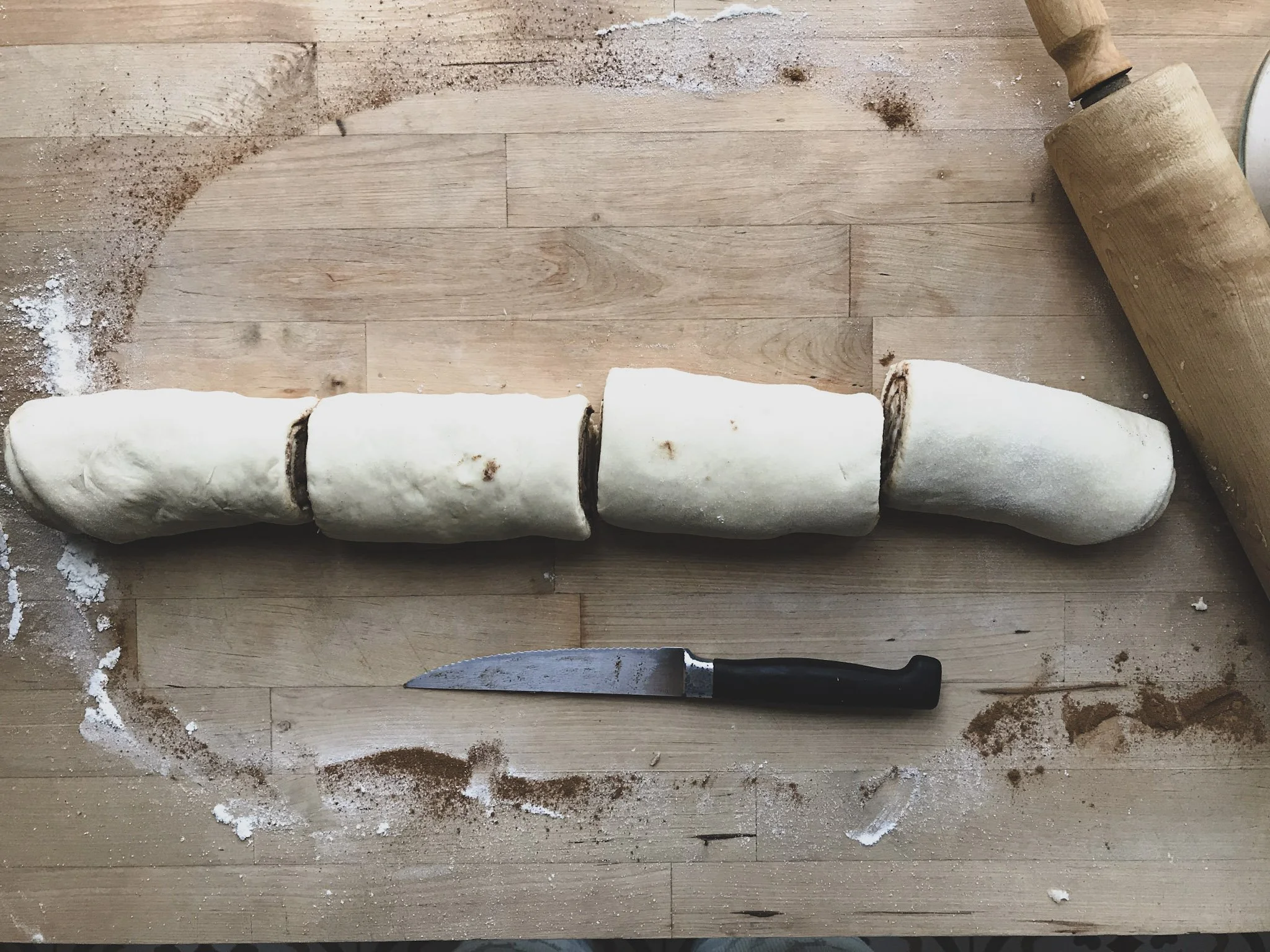
- Slice with floss for neat spirals: Slide floss under the log, cross over the top, and pull. It cuts without compressing the dough.
- Bake until lightly golden: The tops should be pale golden and the centers should feel set when gently pressed. If you have a thermometer, an internal temp around 190 to 200 F indicates a fully baked enriched dough.
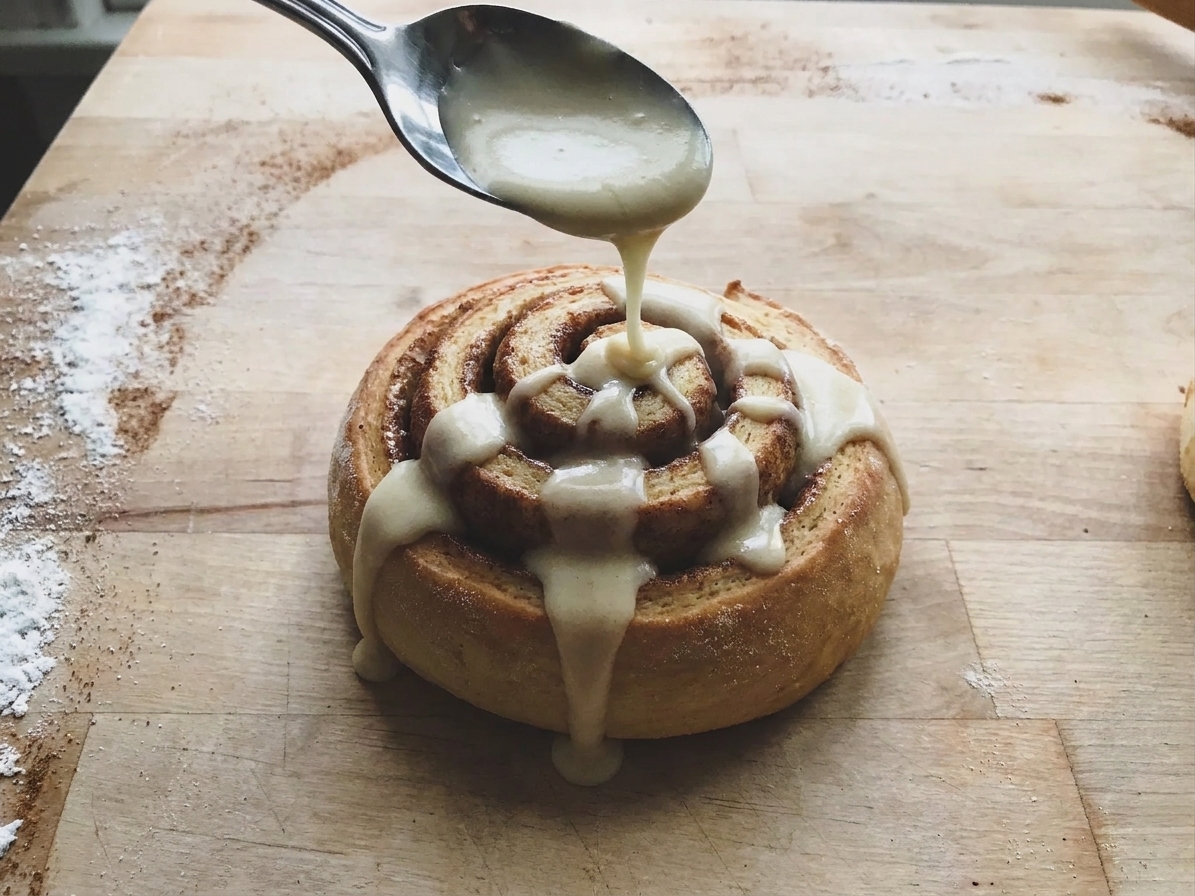
- Glaze while warm: Give the rolls 5 to 10 minutes after baking, then glaze so it melts into the cracks and stays luscious.
Substitutes that work
- Instant yeast for active dry yeast: Use the same amount. With instant yeast, you can skip the separate proofing step, but warming the milk still helps.
- Half-and-half for milk: Richer and very tender. You may need a touch more flour because the dough can feel softer.
- Non-dairy milk: Choose an unsweetened, higher-fat option like oat milk for best texture. The rise may be slightly slower.
- Brown sugar swap: If you only have granulated sugar, it will work, but the filling will taste less caramel-like. Add 1 teaspoon molasses per 1/2 cup sugar if you have it.
- Vanilla glaze instead of cream cheese glaze: Perfect if you want something lighter and quicker.
Variations
- Extra gooey: Pour 1/2 cup warmed heavy cream over the risen rolls right before baking. It makes the bottoms especially soft and rich.
- Orange cinnamon rolls: Add 1 tablespoon orange zest to the filling and swap vanilla in the glaze for orange juice plus a little zest.
- Nutty swirl: Sprinkle 1/2 to 3/4 cup toasted chopped pecans or walnuts over the filling before rolling.
- Maple glaze: Replace some of the milk in the glaze with maple syrup for a cozy, brunchy vibe.
- Spiced: Add a pinch of cardamom or nutmeg to the cinnamon filling for a warmer spice profile.
Serving ideas
- Classic breakfast: Serve warm with coffee and a bowl of fruit to balance the sweetness.
- Brunch spread: Pair with scrambled eggs or a veggie frittata for something savory alongside.
- Dessert: Warm a roll and top with a scoop of vanilla ice cream for a simple, crowd-pleasing treat.
- Holiday morning: Make the night before and bake fresh while everyone is waking up.
Storage and reheating
Room temperature
Store rolls tightly covered at room temperature for up to 2 days. The glaze helps keep them soft, but they are best within the first 24 hours.
Refrigerator
If you used cream cheese glaze, you can refrigerate them, tightly covered, for up to 4 days. Let a roll sit at room temperature for 10 minutes before reheating so it warms evenly.
Freezer
Freeze unglazed rolls for the best texture. Wrap individually, then store in a freezer bag for up to 2 months. Thaw overnight in the fridge or on the counter for a few hours.
Reheating
Microwave individual rolls in 10 to 15 second bursts until just warm. For a larger batch, cover the pan with foil and warm in a 300 F oven until heated through.
Common mistakes
- Milk too hot: If your yeast does not foam when proofing, your liquid might have been too hot. Start over with fresh yeast and warm, not hot, milk.
- Adding too much flour: A dry dough bakes up bready instead of plush. Add flour gradually and stop when the dough is soft and slightly tacky.
- Underproofing the second rise: If rolls look tight and dense after baking, they likely needed more time to puff before going in the oven. Look for rolls that are noticeably swollen and touching.
- Overbaking: Cinnamon rolls continue cooking from residual heat. Pull them when they are lightly golden and the centers are set, not browned and firm.
- Filling leakage: A little is normal. If it is excessive, your butter may have been too melted, or you rolled too loosely. Use very soft butter, not liquid.
FAQ
How do I know my dough has doubled?
It should look visibly larger, feel airy, and leave a slow-filling indentation when you press a floured finger into it. If it springs back immediately, it needs more time.
Can I make cinnamon rolls ahead?
Yes. Shape the rolls, place in the baking dish, cover tightly, and refrigerate overnight. In the morning, let them sit at room temperature until puffy before baking.
Why did my rolls turn out tough?
Usually it is too much flour or overbaking. Measure flour lightly, add gradually, and bake only until the centers are set.
Can I use bread flour?
You can, but bread flour can make the rolls chewier. If you like super soft, classic rolls, stick with all-purpose flour.
Do I have to use cream cheese glaze?
No. A simple vanilla glaze is faster and still delicious. You can also serve them plain and let everyone glaze their own.
The recipe
Classic Cinnamon Rolls
Soft, fluffy yeast cinnamon rolls with a buttery brown sugar cinnamon swirl and your choice of cream cheese or vanilla glaze.
- Prep
- 35 minutes
- Cook
- 25 minutes
- Total
- 2 hours 30 minutes
- Yield
- 12 rolls
Ingredients
- For the dough
- 3/4 cup whole milk, warmed (about 105 to 110 F)
- 2 1/4 teaspoons active dry yeast (1 packet) or instant yeast
- 1/4 cup granulated sugar
- 1 large egg, at room temperature
- 1 large egg yolk, at room temperature
- 1/4 cup unsalted butter, softened
- 1 teaspoon fine salt
- 3 to 3 1/2 cups all-purpose flour, plus more for rolling
- For the cinnamon filling
- 1/2 cup unsalted butter, very soft
- 3/4 cup packed brown sugar (light or dark)
- 1 1/2 tablespoons ground cinnamon
- 1/4 teaspoon fine salt
- Cream cheese glaze (option 1)
- 4 ounces cream cheese, softened
- 3 tablespoons unsalted butter, softened
- 1 cup powdered sugar, sifted if lumpy
- 1/2 teaspoon vanilla extract
- 1 to 2 tablespoons milk or heavy cream, as needed
- Vanilla glaze (option 2)
- 1 1/2 cups powdered sugar, sifted if lumpy
- 2 to 3 tablespoons milk or heavy cream
- 1 teaspoon vanilla extract
- Pinch of salt
Instructions
- Activate the yeast (if using active dry): In the bowl of a stand mixer or a large mixing bowl, combine the warm milk, yeast, and 1 teaspoon of the sugar. Let stand 5 to 10 minutes, until foamy. If using instant yeast, you can skip the foaming step and proceed, but the milk should still be warm.
- Mix the dough: Add the remaining sugar, egg, egg yolk, softened butter, and salt. Mix until combined. Add 3 cups flour and mix until a shaggy dough forms.
- Knead: Knead with a dough hook on medium-low speed for about 6 to 8 minutes, or by hand for 8 to 10 minutes, until the dough is smooth and elastic. If the dough is very sticky and not clearing the sides of the bowl, add more flour 1 tablespoon at a time. The finished dough should be soft and slightly tacky, not dry.
- First rise: Shape the dough into a ball and place in a lightly greased bowl. Cover and let rise in a warm spot until doubled in size, about 60 to 90 minutes. A gentle finger press should leave an indentation that slowly fills back in.
- Prepare the pan: Lightly butter a 9 x 13-inch baking dish (or line with parchment for easier cleanup).
- Make the filling: In a small bowl, mix the brown sugar, cinnamon, and salt.
- Roll out the dough: On a lightly floured surface, roll the dough into a rectangle about 16 x 12 inches, with the long side facing you. If it springs back, let it rest 5 minutes and try again.
- Fill: Spread the very soft butter evenly over the dough, leaving a 1/2-inch border on one long edge. Sprinkle the cinnamon sugar mixture evenly over the butter and gently press it in so it adheres.
- Roll and slice: Starting at the long edge with filling, roll the dough up into a tight log. Pinch the seam to seal. Slice into 12 even rolls using unflavored dental floss or a serrated knife.
- Second rise: Arrange the rolls in the prepared baking dish, evenly spaced. Cover and let rise until puffy and the rolls are touching, about 30 to 60 minutes depending on room temperature.
- Preheat the oven: Heat the oven to 350 F.
- Bake: Bake for 22 to 28 minutes, until the tops are lightly golden and the center rolls look set, not wet. If the tops brown too quickly, tent loosely with foil for the last 5 to 10 minutes. For extra certainty, the center of a middle roll should register about 190 to 200 F.
- Make the glaze while the rolls bake: For cream cheese glaze, beat the cream cheese and butter until smooth, then beat in powdered sugar and vanilla. Add milk a little at a time until it is thick but spoonable. For vanilla glaze, whisk powdered sugar, milk, vanilla, and salt until smooth and pourable.
- Glaze and serve: Let the rolls cool for 5 to 10 minutes, then spread or drizzle on the glaze so it melts into the spirals. Serve warm.
Notes
- Make-ahead overnight: After slicing and arranging the rolls in the pan, cover tightly and refrigerate up to 16 hours. The next morning, let sit at room temperature until puffy (usually 45 to 90 minutes), then bake as directed.
- Flour range: Humidity and measuring style change how much flour you need. Start with 3 cups and add only enough to make the dough workable and elastic.
- Cleaner slices: Chill the filled log for 10 minutes if the dough feels overly soft and the spirals are hard to slice neatly.