
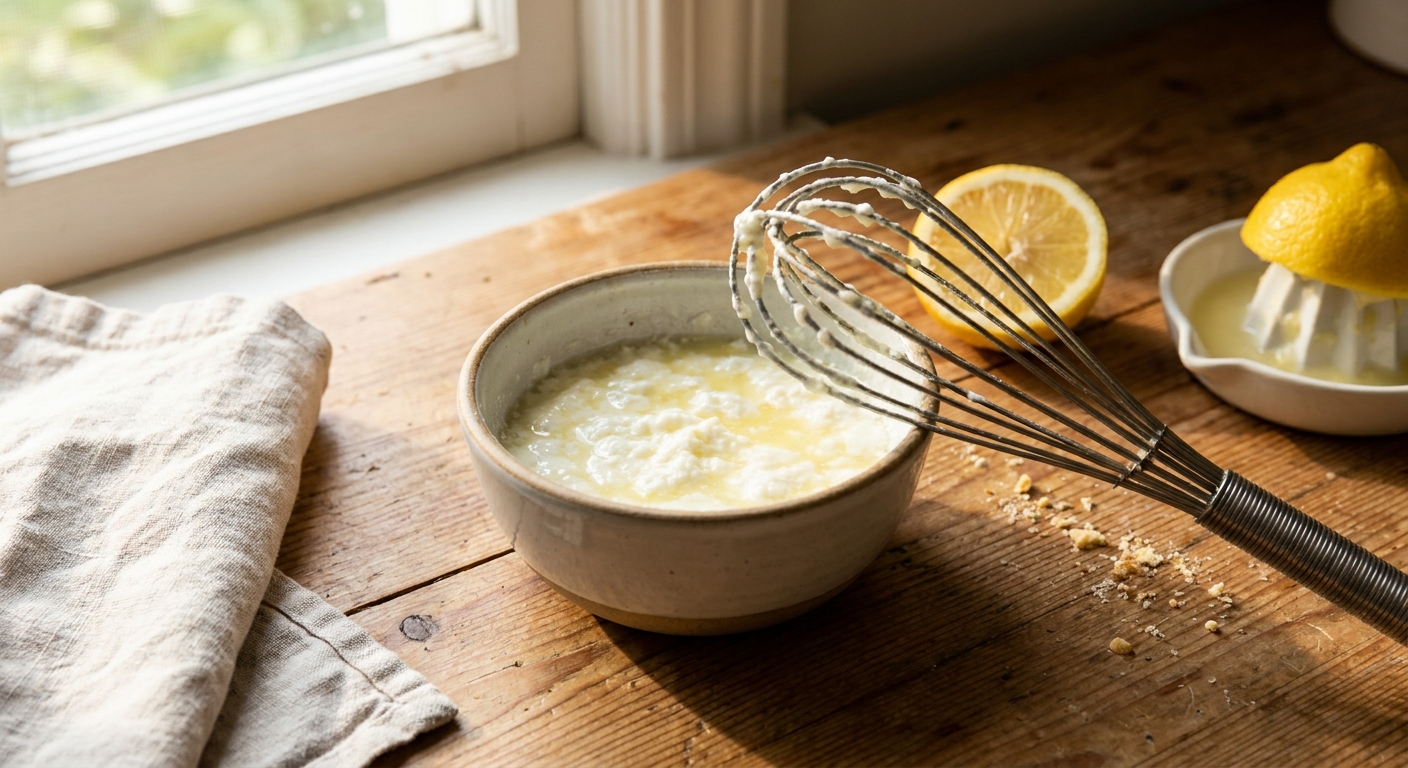
Buttermilk has a way of showing up only when you do not have it: pancakes on Saturday, biscuits on a weeknight, a batch of cupcakes right when your kid remembers it is bake-sale day. The good news is that what most recipes need from buttermilk is acidity (for lift and tenderness) and a little creaminess. You can recreate that in about 5 to 10 minutes, with very little hands-on time.
One quick note on expectations: these swaps nail the tang and the baking chemistry, but they will not taste exactly like cultured buttermilk. Real buttermilk has a more rounded, fermented flavor and a natural thickness.

The best quick substitute (milk + acid)
This is the classic, most reliable swap for baking. It mimics the tang of buttermilk so it can react with baking soda and help your batter rise.
What you need
- 1 cup milk (whole milk is ideal, but any dairy milk works)
- 1 tablespoon lemon juice or 1 tablespoon white vinegar
How to make it
- Pour 1 tablespoon lemon juice or vinegar into a measuring cup.
- Add milk until it reaches 1 cup total.
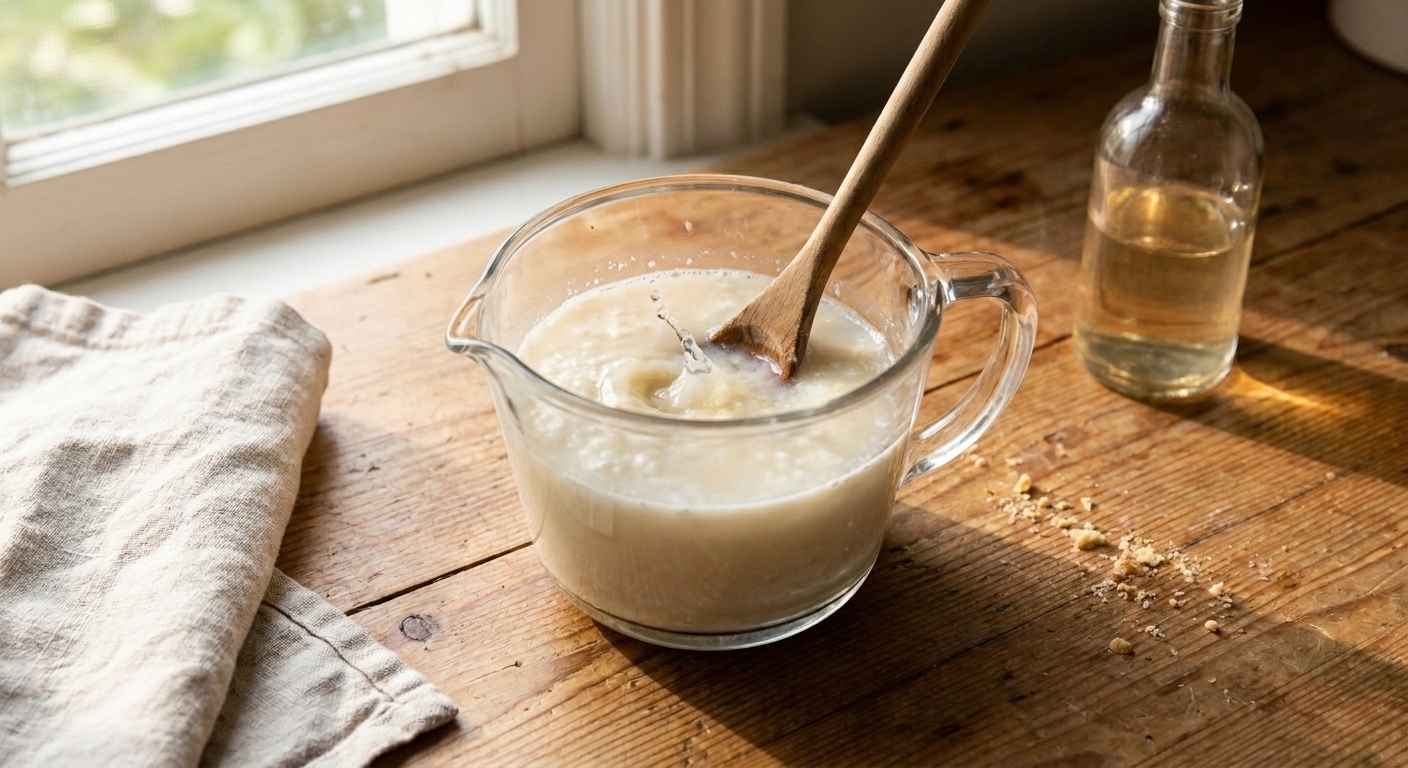
- Stir, then let stand 5 to 10 minutes. It should look slightly thickened or a little curdled.
- Use it as you would buttermilk in the recipe.
Swap ratio: Use 1:1. If the recipe calls for 2 cups buttermilk, make 2 cups substitute.
If it does not look dramatically curdled, do not worry. The acidity is still there, and that is what your baking recipe is really counting on. Some milks curdle less, especially ultra-pasteurized milk and many non-dairy milks.
Best milk to use (and what changes)
You can make a buttermilk substitute with most milks, but the result will vary a bit depending on fat content and protein.
- Whole milk: Closest in richness. My first choice for biscuits, pancakes, and cakes.
- 2% or 1%: Works well. Baked goods may be just a touch less tender than with whole milk.
- Skim milk: Still works for lift and tang, but the finished texture can be slightly drier. If you have it, add 1 tablespoon melted butter per cup to boost richness.
- Heavy cream: Too rich on its own. If this is all you have, dilute it first: 3/4 cup cream + 1/4 cup water, then add your 1 tablespoon acid.
Dairy-free buttermilk substitutes
If you are avoiding dairy, you can still get the tangy acidity that helps baking soda do its job. The texture may be slightly thinner than true buttermilk, but it works beautifully in most recipes.
Non-dairy milk + acid
- 1 cup unsweetened soy milk + 1 tablespoon lemon juice or vinegar
- 1 cup unsweetened oat milk + 1 tablespoon lemon juice or vinegar
- 1 cup unsweetened almond milk + 1 tablespoon lemon juice or vinegar
Tip: Soy milk curdles the most convincingly, so if you are baking something delicate like cake, soy is a great pick.
Coconut milk option (richer)
For extra richness, use canned coconut milk thinned with water.
- 3/4 cup canned coconut milk + 1/4 cup water + 1 tablespoon lemon juice or vinegar
Other easy substitutes (when you have them)
These are great when you want a thicker, more buttermilk-like feel, or you already have the ingredient open.
Yogurt + water (or milk)
- 3/4 cup plain yogurt (regular or Greek)
- 1/4 cup water or milk
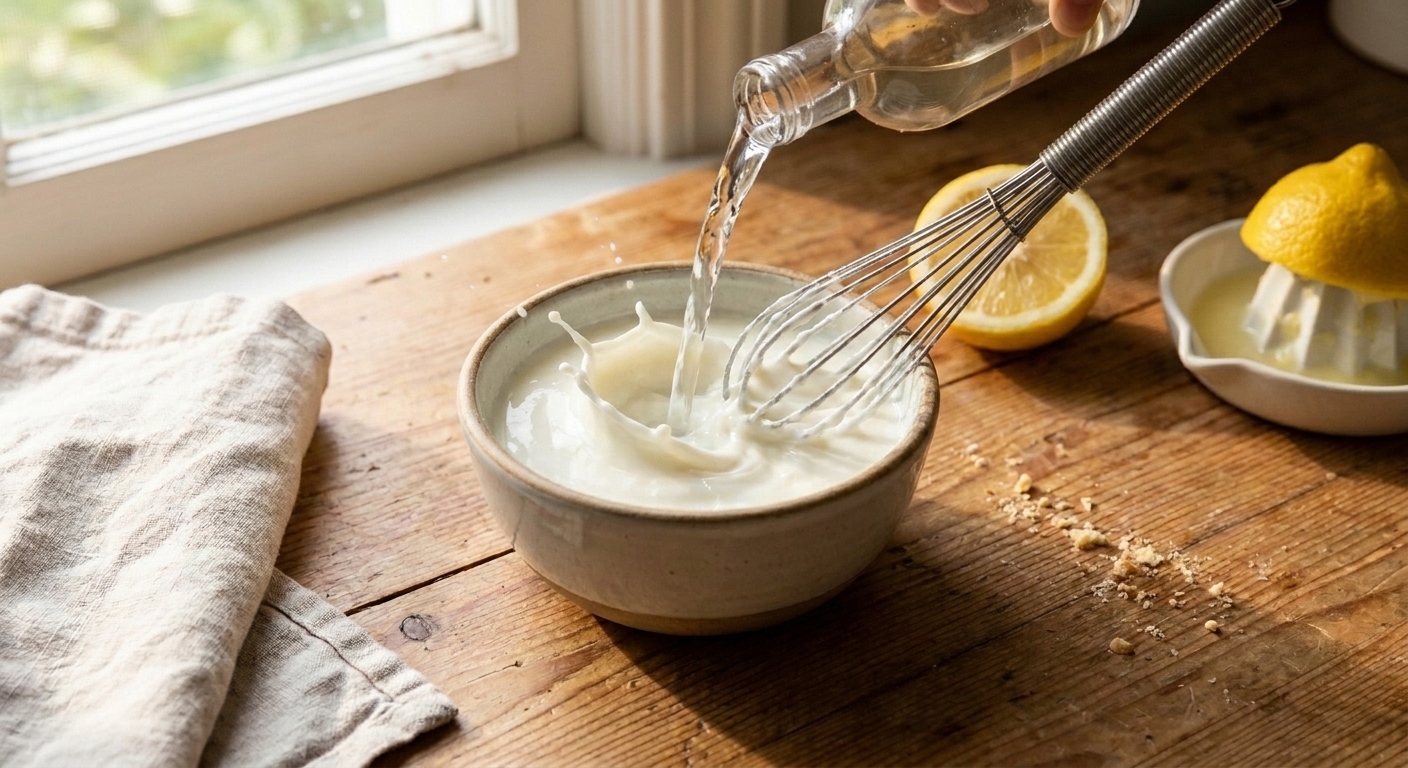
Whisk until smooth. If using Greek yogurt, you may need a splash more liquid to make it pourable. This swap is fantastic in cakes, muffins, and marinades. For savory soaks like fried chicken, I usually thin it a bit more so it coats evenly.
Sour cream + water (or milk)
- 3/4 cup sour cream
- 1/4 cup water or milk
Whisk until it loosens. This one makes particularly tender quick breads and coffee cakes.
Kefir
If you have plain kefir, you can usually use it 1:1 in place of buttermilk with no extra steps. It is tangy and already pourable.
When substitutes work best (and when they do not)
Most recipes use buttermilk for one of two reasons: tenderness and chemical leavening. Your substitute will cover the acidity piece, but texture can vary depending on which method you choose.
Great uses
- Pancakes and waffles
- Biscuits and scones
- Cakes, cupcakes, and muffins
- Quick breads (banana bread, cornbread)
- Fried chicken soaks and marinades (yogurt works especially well here, just thin as needed)
- Salad dressings and dips (sour cream or yogurt are my go-tos)
Be cautious with
- No-bake recipes where the flavor of real buttermilk is the star. A quick milk-and-acid version can taste a bit sharper.
- Very thick batters that rely on buttermilk’s body. Use the yogurt or sour cream method if you want more thickness.
Why it works
Buttermilk is acidic. That acidity does three helpful things:
- Activates baking soda: creating carbon dioxide bubbles for lift.
- Helps keep baked goods tender: acidity can reduce toughness in batters and doughs.
- Adds tang: that classic buttermilk flavor that makes pancakes taste like a diner in the best way.
Important: If your recipe uses baking soda, you want an acidic substitute (milk + lemon or vinegar, kefir, yogurt, sour cream). If it uses only baking powder (or self-rising flour), you have more flexibility. The swap still works, but the main change may be flavor and a slight shift in texture rather than rise.
Quick reference ratios
Bookmark-worthy basics for replacing 1 cup buttermilk:
- Milk + acid: 1 cup milk + 1 tablespoon lemon juice or vinegar (let sit 5 to 10 minutes)
- Yogurt thinned: 3/4 cup plain yogurt + 1/4 cup water or milk
- Sour cream thinned: 3/4 cup sour cream + 1/4 cup water or milk
- Kefir: 1 cup plain kefir
- Dairy-free: 1 cup unsweetened non-dairy milk + 1 tablespoon lemon juice or vinegar
FAQ
Can I use apple cider vinegar?
Yes. Use 1 tablespoon apple cider vinegar per cup of milk. It can add a faint fruity note, which is usually lovely in pancakes and muffins.
Do I have to wait for it to curdle?
Waiting 5 minutes helps the milk slightly thicken, but the real purpose is letting the acid disperse evenly. In a pinch, you can use it right away after stirring.
Will this substitute taste exactly like real buttermilk?
Not exactly. Real cultured buttermilk has a deeper, more rounded tang. For the closest flavor and body, use kefir or the yogurt or sour cream method.
Can I make a big batch and store it?
You can, but I prefer mixing only what you need. The milk-and-acid version can continue thickening and separating as it sits. If you do make extra, store it covered in the fridge and use it as soon as you can, ideally within 24 hours for best texture. Whisk before using.
What if my recipe calls for buttermilk powder?
Buttermilk powder is a different product with its own instructions, and it is usually paired with water. If your recipe specifically calls for powder, follow the package directions or the recipe notes rather than swapping in a liquid substitute.