
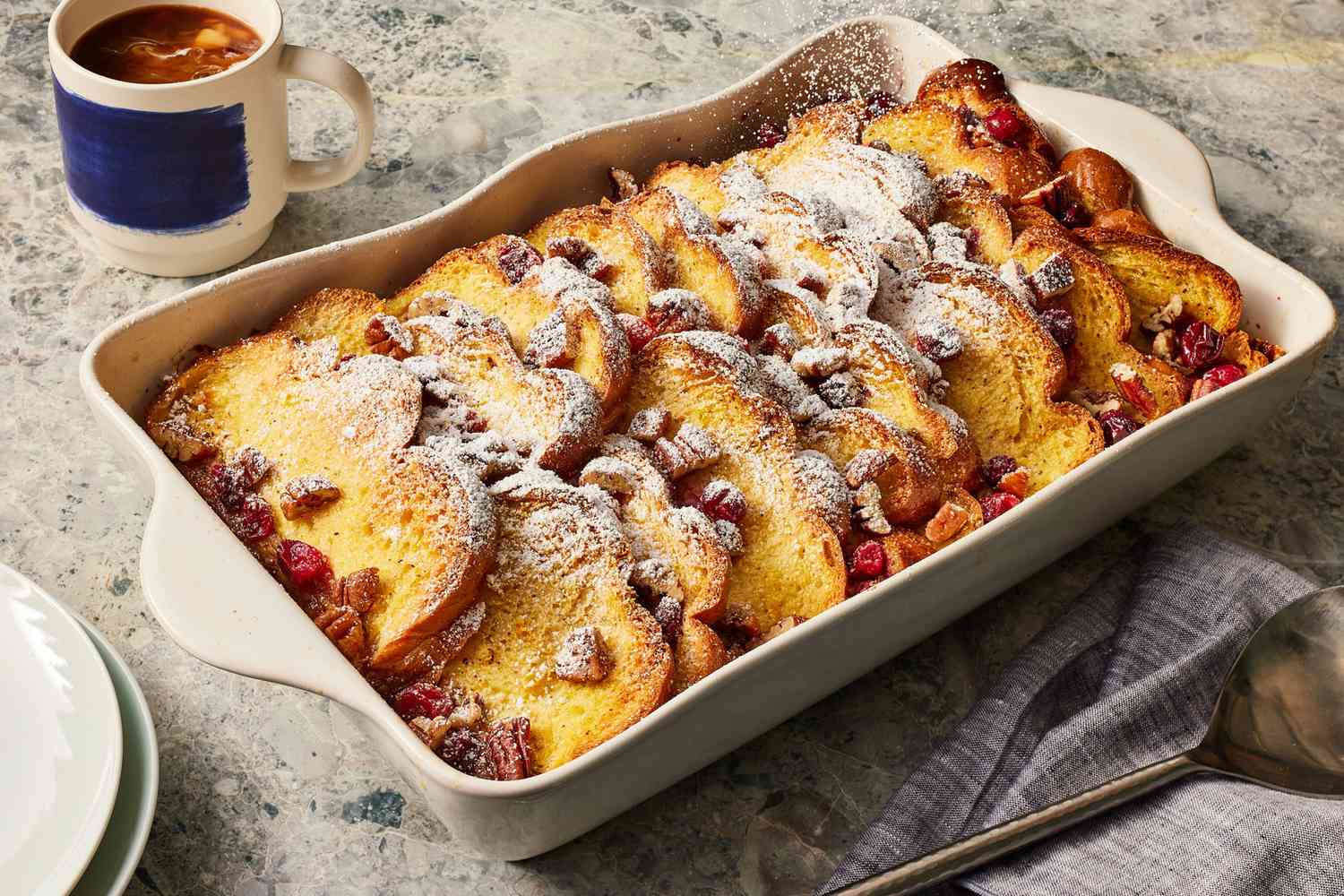
If you have ever made French toast for a group, you already know the problem. The first slices are cold by the time the last ones are done, and you spend the whole morning babysitting a skillet. Baked French toast solves that in the most comforting way possible. You build everything in one pan, let the bread drink up a rich custard, then bake until the top is bronzed and the middle is soft and creamy.
Think of it as French toast’s relaxed, crowd-friendly cousin. It is perfect for holidays, slow Sundays, and those mornings when you want something special but still want to actually sit down with your coffee.

Why it works
- One pan, hands off. No flipping, no batch cooking, no keeping finished slices warm.
- Better texture. The top gets crisp and caramelized while the center stays custardy.
- Make-ahead friendly. Assemble the night before, bake in the morning.
- Easy to scale. A 9x13 pan typically serves about 8 to 12, and leftovers reheat beautifully.
The “why” is simple science. Stale or slightly dried bread has room to absorb custard without collapsing. Baking gives the eggs time to set gently, and the exposed bread on top dries and browns, creating those irresistible toasty edges.
Best bread
If I could give you one rule, it is this: choose bread that is sturdy and a little stale. Soft sandwich bread can work in a pinch, but it tends to bake up more uniform and a bit squishy instead of plush and layered.
My favorites
- Brioche: Rich, tender, and very “bakery case” luxurious.
- Challah: Similar to brioche but often slightly sturdier, with a lovely chew.
- French bread or sourdough: A little more structure and tang, great if you like contrast with sweet toppings.
Quick tip for fresh bread
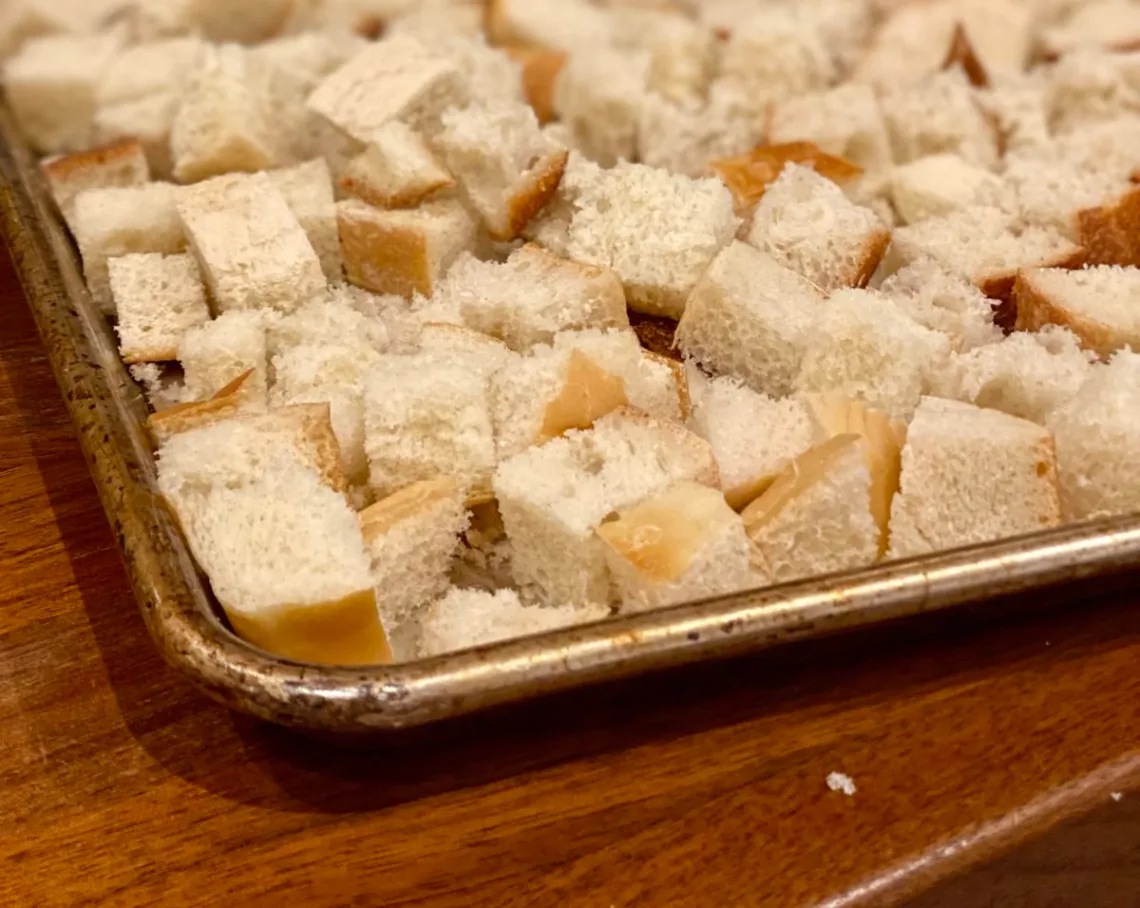
Cube it and spread it on a sheet pan. Bake at 300°F for 10 to 15 minutes, stirring once, until it feels dry on the outside but not toasted dark. This helps it soak up custard evenly instead of turning to mush.
Custard basics
A good baked French toast should be custardy, not wet. Here is what makes the difference:
- Enough eggs: Eggs set in the oven and give structure. Too little egg can bake up loose.
- Dairy balance: Milk keeps it light; cream makes it richer. Using some of each gives a creamy center without feeling heavy.
- Soak time: Give the bread time to absorb. Rushing this step is a common reason for dry pockets.
- Even distribution: Pour custard slowly, press the bread down, and let it settle for a few minutes. You want everything coated.
If you love a crisp top, leave a few peaks of bread above the custard. Those little ridges bake up golden and crunchy, which is exactly the contrast you want against the soft center.
Overnight method
This is my favorite way to do it, especially for holidays or brunch hosting. You do the “work” when you are calm, not when everyone is hungry.
How to do it
- Assemble the casserole, cover, and refrigerate 8 to 12 hours.
- In the morning, uncover while the oven preheats. Let it sit at room temperature 15 to 20 minutes if you have time. This helps it bake more evenly.
- Bake until puffed, golden, and set in the center.
Note: If your bread is very soft or your loaf soaks up custard aggressively, the center can look extra saturated before baking. That is fine. Just plan to bake a little longer and use the doneness cues below, not only the clock. The center should jiggle slightly like set custard, not ripple like liquid.
Easy variations
This recipe is a great blank canvas. You can keep it classic or make it feel brand new with one swap.
Flavor ideas
- Cinnamon roll vibes: Add a pinch of nutmeg and a little extra vanilla, then drizzle with a simple powdered sugar glaze.
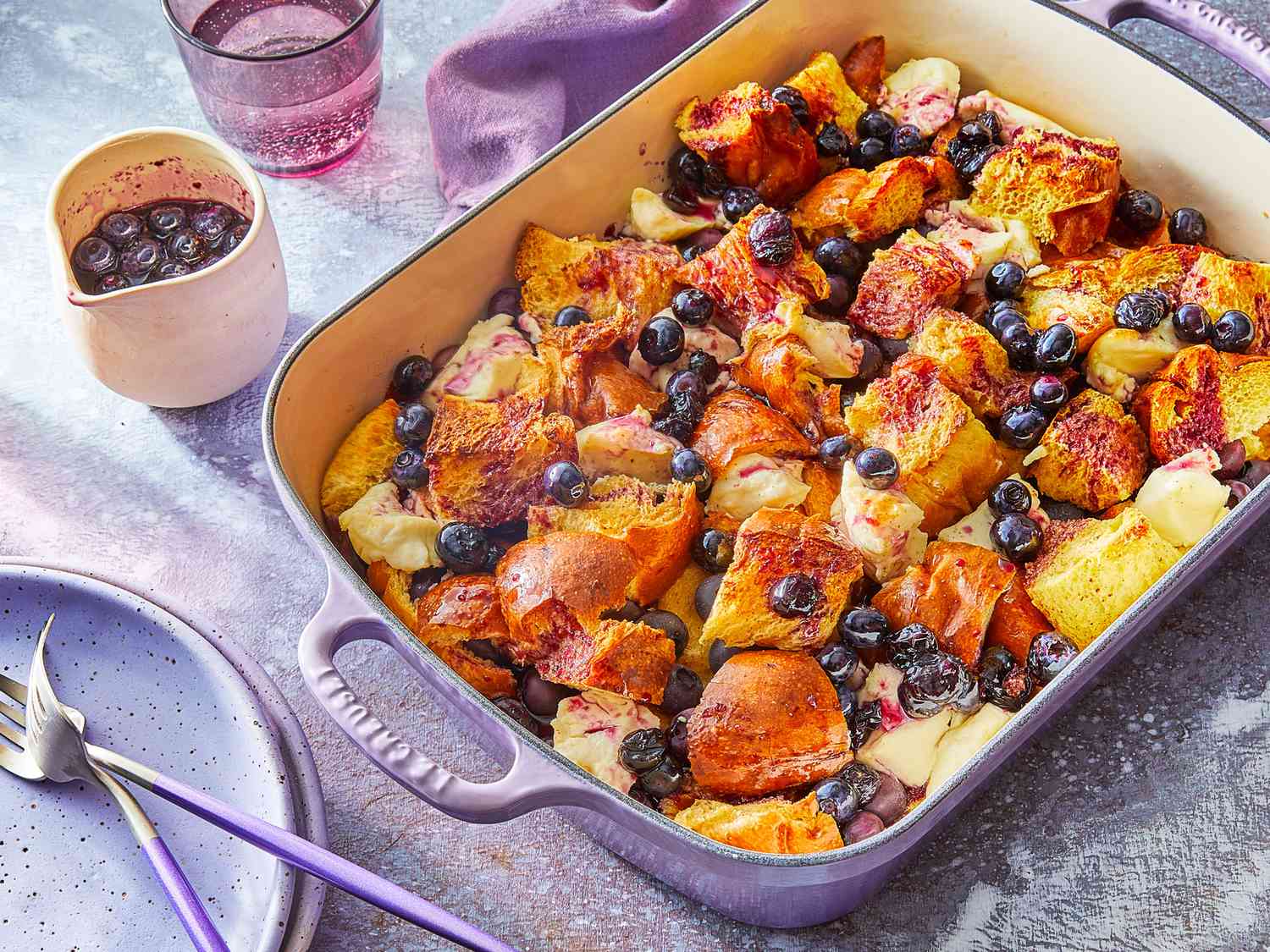
- Citrus and berry: Add orange zest to the custard and scatter blueberries or raspberries over the top before baking.
- Apple pie: Fold in sautéed cinnamon apples (cook them first so they are not crunchy).
- Chocolate chip: Sprinkle mini chocolate chips between layers of bread.
Add-ins to watch
- Fresh fruit: Use a light hand. Too much fruit can add water and soften the casserole.
- Nuts: Add in the last 10 minutes if you are worried about them getting too dark.
Optional topping
If you want a little crunch on top, you can add a quick brown sugar streusel. Mix 1/3 cup brown sugar, 1/3 cup flour, 1/2 teaspoon cinnamon, a pinch of salt, and 3 tablespoons softened butter until crumbly. Sprinkle over just before baking.
What to serve with it
Baked French toast is sweet and rich, so I like to pair it with something salty or fresh for balance.
- Salty sides: Bacon, breakfast sausage, or even a simple ham steak.
- Fresh contrast: Citrus salad, sliced melon, or a bowl of berries.
- Something to sip: Coffee, black tea, or a simple brunch punch if you are celebrating.
Make ahead and store
Can I make it ahead?
Yes. Overnight is ideal, but even a 30 to 45 minute soak at room temperature helps a lot.
How to store leftovers
Cool completely, then cover and refrigerate for 3 to 4 days.
Best way to reheat
- Oven (best texture): Cover with foil and warm at 325°F until heated through, about 15 to 20 minutes. Uncover for the last few minutes to re-crisp the top.
- Microwave (fastest): Heat single portions in 30-second bursts. It will be softer but still tasty.
Can I freeze it?
You can. Cut into portions, wrap well, and freeze up to 2 months (best quality within 1 to 2 months).
Thaw overnight in the fridge, then reheat in the oven for the best texture.
Recipe: Baked French Toast
Yield: 8 to 12 servings
Prep time: 15 minutes (plus soak time)
Bake time: 40 to 55 minutes
Total time: about 1 hour 10 minutes (or overnight)
Ingredients
- 1 loaf (about 14 to 16 oz) brioche or challah, cut into 1-inch cubes (slightly stale is best)
- 6 large eggs
- 2 cups whole milk
- 1/2 cup heavy cream (or use more milk if you prefer)
- 1/2 cup granulated sugar
- 2 tbsp light brown sugar
- 2 tsp vanilla extract
- 1 1/2 tsp ground cinnamon
- 1/2 tsp kosher salt
- 4 tbsp unsalted butter, melted (plus more for the dish)
- Optional for serving: maple syrup, powdered sugar, fresh berries
Instructions
- Prep the pan: Butter a 9x13-inch baking dish.
- Add the bread: Spread bread cubes evenly in the dish. If your bread is very fresh, dry it out briefly (see tip above) so it absorbs custard without collapsing.
- Make the custard: In a large bowl, whisk eggs until uniform. Whisk in milk, cream, sugars, vanilla, cinnamon, and salt. Whisk in melted butter.
- Soak: Pour custard evenly over the bread. Use a spatula to gently press the bread down so everything gets coated. Let stand 30 minutes at room temperature, or cover and refrigerate overnight.
- Bake: Heat oven to 350°F. Bake uncovered for 40 to 55 minutes, until puffed and golden. The center should look set and no longer liquid. For an extra-clear cue, the center should reach about 160°F. If the top is browning too quickly, loosely tent with foil for the last 10 to 15 minutes.
- Rest and serve: Let rest 10 minutes before serving. Dust with powdered sugar and serve with maple syrup and fruit.
Elena’s notes
- For extra crisp edges: Use a metal baking pan instead of ceramic, and bake on the lower-middle rack.
- If you are using glass or ceramic: Expect slightly softer edges and, sometimes, a few extra minutes of bake time. Let the center be your guide.
- For a softer, more custardy center: Pack the bread cubes a bit tighter and lean into the overnight soak.
- To check doneness: Insert a knife near the center. It should come out moist but not coated in raw custard, and the center should spring back lightly when pressed.
FAQ
Why is mine soggy?
The most common reasons are bread that is too fresh, not enough baking time, or too much liquid from add-ins (like lots of juicy fruit). Dry the bread slightly, bake until set (or to about 160°F in the center), and go easy on watery mix-ins.
Can I use non-dairy milk?
Yes. Oat milk and almond milk work well. For richness, use a full-fat option and consider adding a splash of coconut cream or a little extra butter.
Can I cut the sugar?
Absolutely. You can reduce the sugar by 1/4 without hurting texture. If you cut more than that, it will be less sweet but still bakes fine. Just plan on serving with maple syrup or fruit.
What if I do not have heavy cream?
Use all milk. You will get a slightly lighter, less rich result, still delicious. If you have half-and-half, that is a great middle ground.