
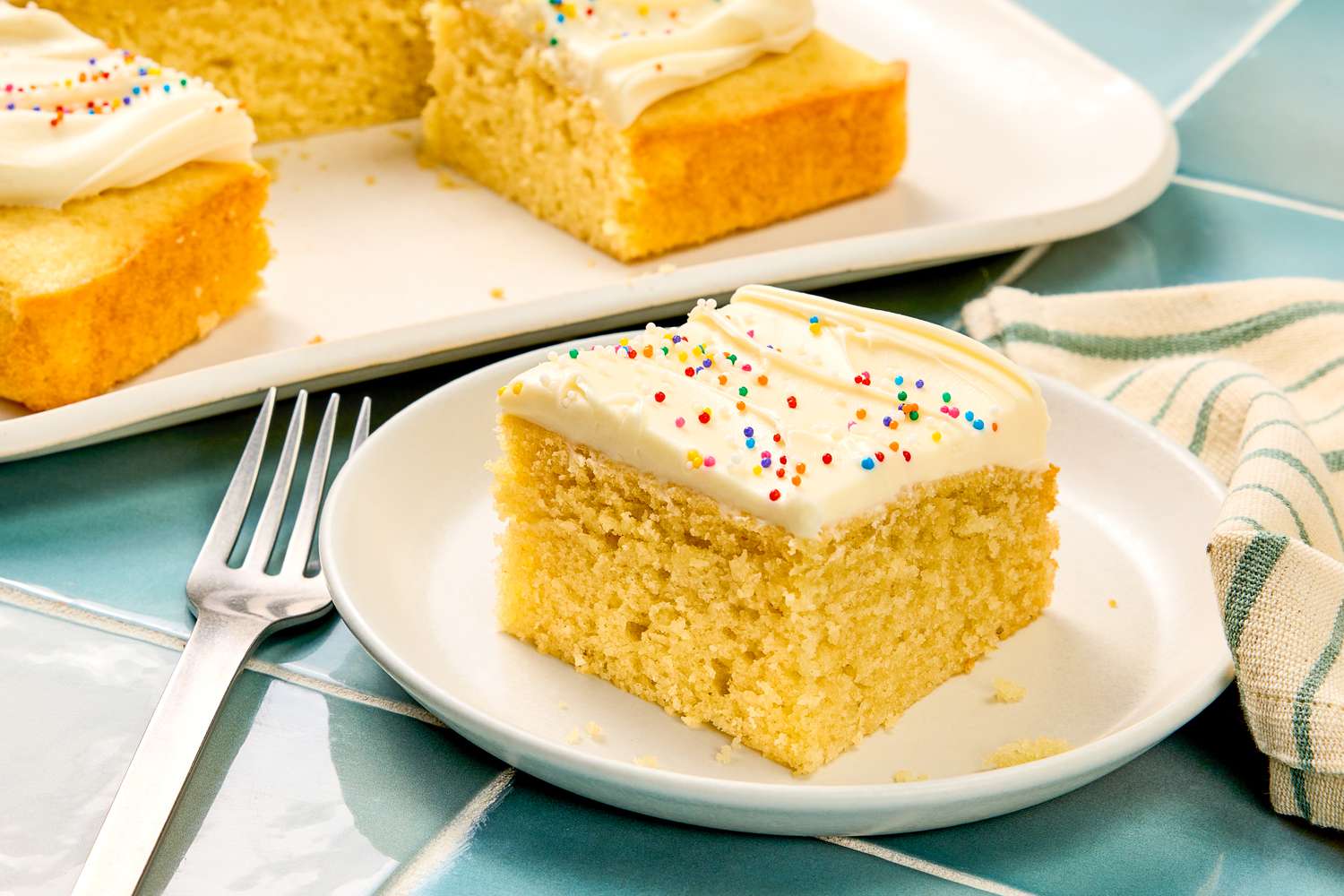
There are few things more comforting than a good vanilla cake. Not “plain” vanilla. Not “it’s fine with enough frosting” vanilla. I mean that sweet, fragrant, buttery cake that tastes like birthdays, Sunday dinners, and the corner piece you snag while you are “just cleaning up.”
This version is the one I reach for when I need a dependable, bakery-style crumb without any fancy ingredients. If you can cream butter and sugar and remember to stop mixing once the flour goes in, you can absolutely make this.

What makes this vanilla cake work
Vanilla cake looks simple, but it is one of those recipes where tiny technique choices show up in the final texture. Here is what we are doing on purpose:
- Creaming for structure: Beating butter and sugar creates air pockets that expand in the oven, giving you lift without dryness.
- Room temperature ingredients: This helps the batter emulsify. A smooth batter bakes up with a tighter, more tender crumb.
- Alternating dry and wet: It prevents overworking the flour and keeps the batter stable.
- Not overmixing after flour: This is the number one secret to a soft slice that stays tender even on day two.
Ingredients
This is a classic butter-based vanilla cake. If you bake even occasionally, you likely have most of this already.
For the cake
- All-purpose flour
- Baking powder
- Fine salt (yes, even in cake)
- Unsalted butter, room temperature
- Granulated sugar
- Eggs, room temperature
- Vanilla extract (or vanilla bean paste for a stronger vanilla-forward flavor)
- Milk, room temperature
- Sour cream or plain Greek yogurt (my quiet trick for moisture and tenderness)
Vanilla note: If vanilla is the headline, use the best extract you have. You do not need the most expensive bottle on earth, but you do want one that smells like actual vanilla, not perfume.
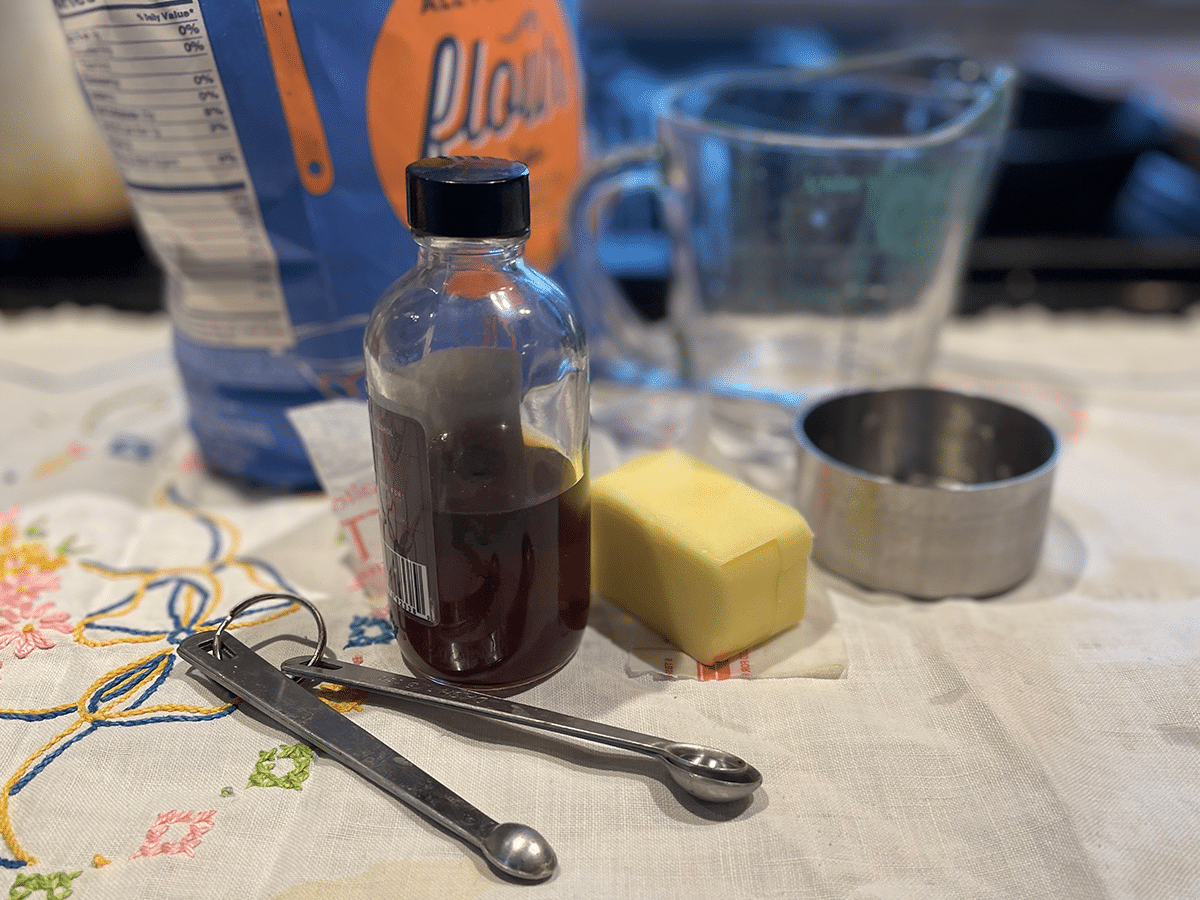
Equipment
- Two 8-inch or 9-inch round cake pans (or one 9x13-inch pan)
- Stand mixer or hand mixer
- Mixing bowls
- Measuring cups and spoons (a kitchen scale is even better)
- Parchment paper
- Cooling rack
- Instant-read thermometer (optional, but extremely helpful)
Step-by-step: How to make homemade vanilla cake
Take a breath. We are going to move in a calm, orderly way. Cakes love calm energy.
1) Prep the pans and preheat
Heat the oven to 350°F. Grease your pans, line the bottoms with parchment, then grease the parchment.
If you are using a 9x13: I like to line the pan with a parchment sling (one sheet long enough to hang over two sides) so you can lift the cake out easily. Still grease the pan first so the parchment stays put.
2) Mix dry ingredients
Whisk flour, baking powder, and salt together. Whisking now saves you from random salty pockets later.
3) Cream butter and sugar
Beat butter and sugar until it looks lighter in color and fluffy, about 3 to 5 minutes. Scrape the bowl at least once.
What you are looking for: The mixture should be noticeably paler and increased in volume, with a soft, almost airy look. If it is still dense and greasy-looking, keep going.
4) Add eggs and vanilla
Add eggs one at a time, beating well and scraping the bowl as needed. Mix in the vanilla. If the batter looks a little curdled, do not panic. Once the flour goes in, it comes back together.
5) Alternate dry and wet
Mix the milk and sour cream (or yogurt) together. On low speed, add the flour mixture in three additions, alternating with the milk mixture in two additions. Start and end with flour. Mix on low and stop as soon as the last streak of flour disappears.
Little bakery manager tip: If you are unsure, stop the mixer when there are still a few floury streaks and finish folding by hand with a spatula. That is your insurance policy against overmixing.
6) Bake
Divide the batter evenly between pans (or pour into your 9x13). Bake until the center springs back lightly and a toothpick comes out with a few moist crumbs.
- 8-inch rounds: about 24 to 30 minutes
- 9-inch rounds: about 22 to 28 minutes
- 9x13: about 30 to 38 minutes
Ovens vary, so start checking a few minutes early. Another great doneness cue is that the edges look set and may pull slightly from the pan. If you like a truly foolproof check, the center should read about 200 to 205°F on an instant-read thermometer.
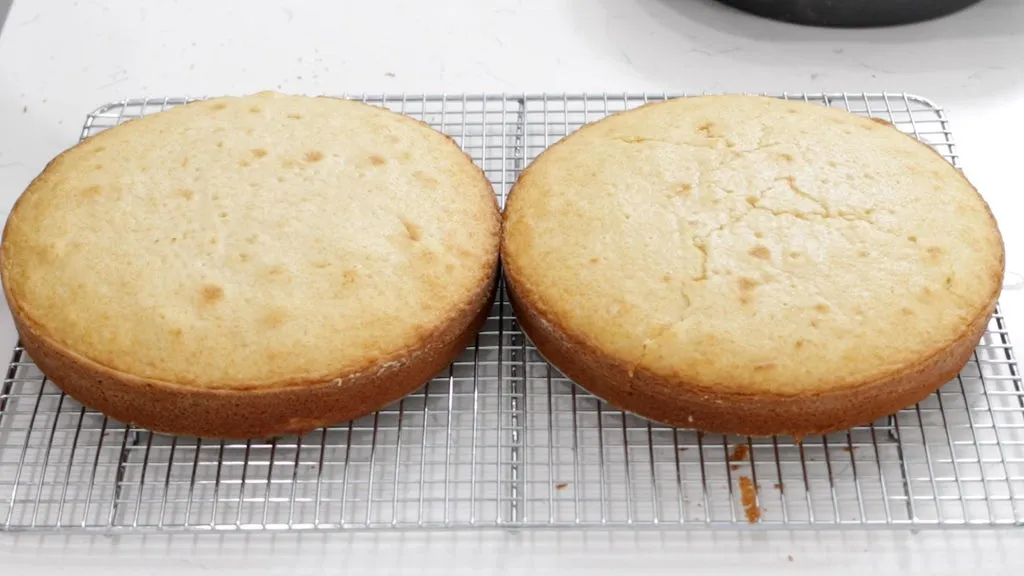
7) Cool properly
Cool in the pans for 10 to 15 minutes, then turn out onto a rack to cool completely before frosting. Frosting a warm cake is how you end up with buttercream that slides off like it is trying to leave the building.
Vanilla frosting options
You have choices, and all of them are good. Pick based on your mood and how sweet you want the final cake.
How much frosting do you need? For a 2-layer 8-inch or 9-inch cake with a normal amount of filling and coverage, plan on about 3 to 4 cups of frosting. If you love thick swoops or piping, aim closer to 4 cups.
Classic vanilla buttercream
Sweet, fluffy, and the most familiar. Great for birthdays and piping.
Whipped vanilla cream cheese frosting
Tangy, not quite as sweet, and incredibly good with berries. If your kitchen runs warm, chill the frosting briefly before spreading.
Simple vanilla glaze
If you want something low effort: powdered sugar, a splash of milk, vanilla, pinch of salt. Pour over a sheet cake and call it done.
Substitutions and variations
- No sour cream: Use plain Greek yogurt. In a pinch, use buttermilk, but the crumb will be slightly different.
- Milk options: Whole milk is best, but 2 percent works. Unsweetened oat milk can work too, though the cake may bake a touch darker.
- Vanilla bean paste: Swap it 1:1 for extract for a stronger vanilla vibe and those pretty specks.
- Citrus twist: Add finely grated lemon or orange zest to the sugar before creaming. Rub it in with your fingers to release the oils.
- Funfetti moment: Fold in sprinkles right at the end, gentle and quick.
Troubleshooting
My cake is dry
- It likely baked a little too long. Pull the cake when a toothpick has moist crumbs, not when it is bone dry. If you use a thermometer, aim for 200 to 205°F in the center.
- Measure flour carefully. If you are using cups, spoon flour into the cup and level it off. Do not scoop directly from the bag.
My cake sank in the middle
- Underbaking is the usual culprit. The center needs time to set.
- Make sure your baking powder is fresh.
- Avoid opening the oven door repeatedly in the first 20 minutes.
My cake is dense
- Butter and sugar may not have been creamed long enough.
- Overmixing after adding flour can tighten the crumb.
- Cold ingredients can keep the batter from emulsifying smoothly.
The cake stuck to the pan
- Use parchment rounds. Grease, parchment, then grease again.
- Let it cool 10 to 15 minutes, then turn out. Sticking is usually about pan prep or an older pan surface, but cooling too long can sometimes make release trickier.
Make-ahead, storage, and freezing
Make-ahead
You can bake the layers up to 2 days ahead. Wrap tightly in plastic wrap once fully cool and keep at room temperature.
Storage
- Unfrosted: Room temperature, well wrapped, 2 to 3 days.
- Frosted with buttercream: Room temperature for a day in a cool kitchen, or refrigerate for up to 4 days. Bring to room temp before serving for the softest texture.
- Frosted with cream cheese frosting: Refrigerate, up to 4 days.
Warm room note: If your kitchen is hot or humid for long stretches, refrigerating frosted cake is the safer, less stressful choice.
Freezing
Freeze unfrosted layers for up to 2 months. Wrap in plastic wrap, then foil. Thaw still wrapped at room temperature so condensation forms on the wrap, not on your cake.
If you ever need a little baking confidence boost, remember this: cakes are forgiving. Even a slightly uneven layer becomes “rustic” the moment you add frosting.
Homemade Vanilla Cake Recipe
Overview
- Yield: 2 (8- or 9-inch) layers or 1 (9x13-inch) cake
- Prep time: 20 minutes
- Bake time: 22 to 38 minutes (depends on pan size)
- Total time: about 1 hour 15 minutes including cooling
Ingredients
- 2 1/2 cups (300 g) all-purpose flour
- 2 1/2 tsp baking powder
- 1/2 tsp fine salt
- 3/4 cup (170 g) unsalted butter, room temperature
- 1 3/4 cups (350 g) granulated sugar
- 4 large eggs, room temperature
- 1 tbsp vanilla extract (or vanilla bean paste)
- 3/4 cup (180 ml) milk, room temperature
- 1/2 cup (120 g) sour cream or plain Greek yogurt, room temperature
Instructions
- Heat oven to 350°F. Grease two 8- or 9-inch round pans (or one 9x13). Line with parchment (rounds for layer cakes, or a parchment sling for 9x13), then grease again.
- Whisk flour, baking powder, and salt in a bowl.
- Beat butter and sugar until pale, fluffy, and increased in volume, 3 to 5 minutes. Scrape the bowl.
- Add eggs one at a time, mixing well and scraping as needed. Mix in vanilla.
- Stir milk and sour cream together.
- On low speed, add flour mixture in 3 additions, alternating with milk mixture in 2 additions, beginning and ending with flour. Mix just until combined.
- Divide batter into pans. Bake until the center springs back and a toothpick comes out with moist crumbs, about 22 to 30 minutes for round layers and 30 to 38 minutes for 9x13. Optional: an instant-read thermometer in the center should read about 200 to 205°F.
- Cool 10 to 15 minutes in pan, then turn out and cool completely before frosting.
Notes
- For the most tender crumb, stop mixing the moment the flour is incorporated.
- Weighing flour is the easiest way to avoid a dry cake.
- For a 2-layer 8-inch or 9-inch cake, plan on about 3 to 4 cups of frosting for filling and coverage.