
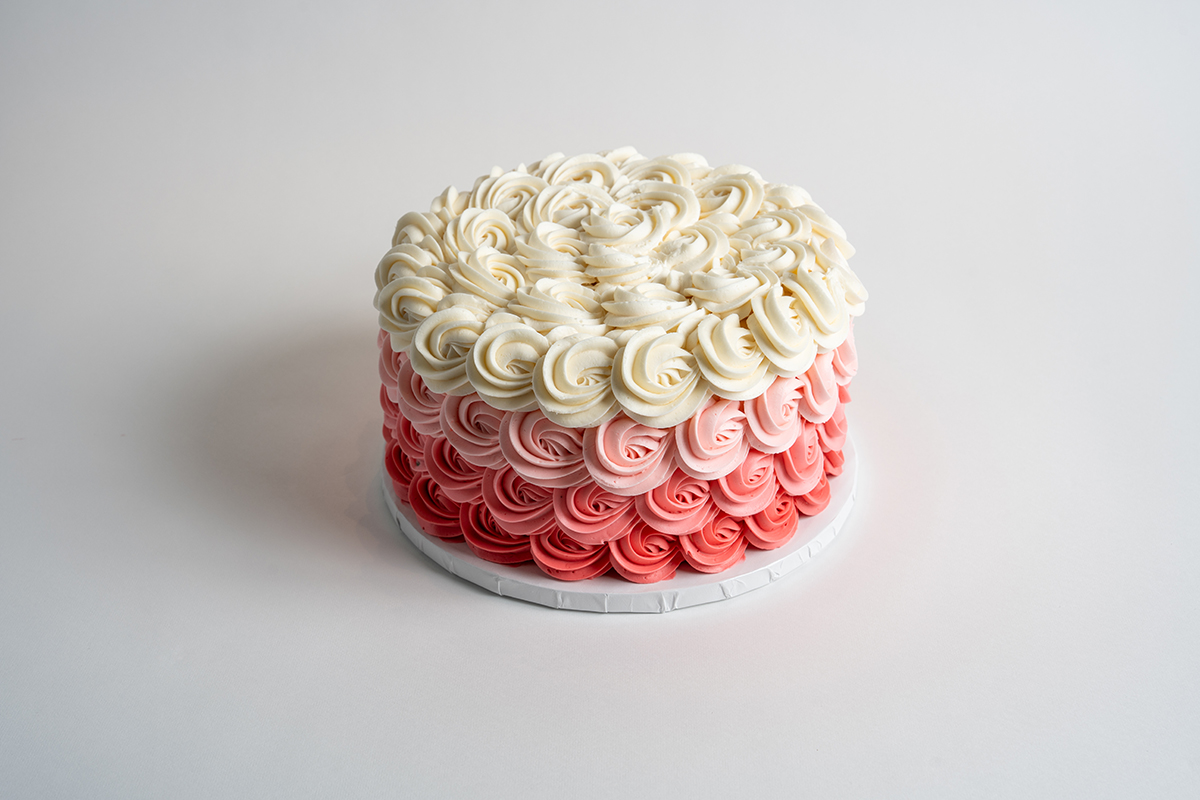
Bakery buttercream has a very specific vibe: it looks like satin, it spreads without tearing your cake, it pipes roses that hold their shape, and it does not feel gritty on the tongue. The good news is you do not need special shortening blends or secret ingredients. You need the right ratio, the right order, and a few small habits that keep the texture smooth.
This is my go-to workhorse frosting from my bakery days, adjusted for home kitchens and modern mixers. It is American buttercream at heart, but mixed and finished like a pro so it comes out airy and polished, not cloying and chalky.

What makes it bakery-smooth
Most buttercream issues come down to three things: temperature, sugar texture, and trapped air. When you control those, the frosting really does come together with very little drama.
- Butter at the right softness: Not cold and stiff, not greasy and shiny. You want it pliable so it creams quickly, which means you are less likely to overmix later.
- Powdered sugar fully hydrated: Powdered sugar does not truly dissolve the way granulated sugar does, but given a little time, it can fully moisten and smooth out so the frosting tastes silky instead of chalky.
- Low-speed finishing: High speed whips in big air bubbles that show up as pockmarks when you smooth the cake. We will use higher speed briefly for fluff, then finish on low to polish.
- Paddle, not whisk: A paddle attachment builds a creamy texture with fewer bubbles than a whisk, which is exactly what you want for smooth cakes and clean piping.
My bakery rule: whip for volume, then stir for smoothness.
Smooth Buttercream Frosting (Bakery Style)
Ingredients
- Unsalted butter: 1 cup (226 g), softened to cool room temperature
- Fine salt: 1/4 tsp (use 1/2 tsp if you like a stronger bakery contrast)
- Pure vanilla extract: 2 tsp (or 1 tsp vanilla plus 1 tsp almond for a classic bakery vibe)
- Powdered sugar: 4 cups (480 g), sifted if lumpy
- Heavy cream or whole milk: 3 to 5 tbsp, as needed
- Optional for extra silkiness: 2 tbsp corn syrup or 1 tbsp honey (adds sheen and helps with smooth edges)
Equipment
- Stand mixer with paddle attachment (or a hand mixer and a sturdy bowl)
- Rubber spatula
- Optional: fine-mesh sieve for sifting sugar
Method
- Cream the butter first. In the bowl of a stand mixer fitted with the paddle, beat the butter on medium speed for 2 to 3 minutes until it lightens in color and looks creamy, not chunky. Scrape the bowl well.
- Add flavor and salt. Beat in the salt and vanilla for 15 seconds.
- Start the sugar slow. With the mixer on low, add powdered sugar 1 cup at a time. Let each addition mix until it looks fully moistened before adding the next. Scrape the bowl halfway through.
- Add cream gradually. Once all sugar is in, drizzle in 3 tablespoons cream or milk on low. Add the corn syrup or honey now if using.
- Whip briefly for fluff. Increase to medium-high and beat for 45 to 60 seconds. The frosting should look lighter and hold soft peaks.
- Finish on low to make it smooth. Drop to the lowest speed and mix for 2 full minutes. This knocks out big air bubbles and gives that bakery-satin texture.
- Adjust consistency. If it is too thick, add cream 1 teaspoon at a time. If it is too soft, add powdered sugar 2 tablespoons at a time. Mix on low between additions.
Yield and timing
- Makes: about 3 1/2 to 4 cups frosting
- Enough for: 12 to 18 cupcakes (depending on swirl size), or a thin coat plus a generous final coat on one 8-inch or 9-inch layer cake
- Time: 10 to 15 minutes
Scaling and cake coverage
- Doubling: This recipe doubles cleanly. If your mixer is small, make two batches so you do not overload the bowl.
- Two-layer 8-inch cake: One batch is usually enough for filling and frosting with a reasonably thick finish.
- Three-layer 8-inch cake: Plan on 1 1/2 to 2 batches, depending on how generously you fill and how much piping you do.
Butter temperature
Softened butter is vague, so here is the version that works consistently: press your finger into the butter and it should leave an indent easily, but the butter should still feel cool, not oily. If the butter is shiny or slumps like it is melting, your frosting can go loose and may look a little greasy.
- If your butter is too cold: Cut it into cubes and let it sit 10 to 15 minutes, then cream again.
- If your butter is too warm: Chill the bowl for 10 minutes, then beat on low until it thickens.
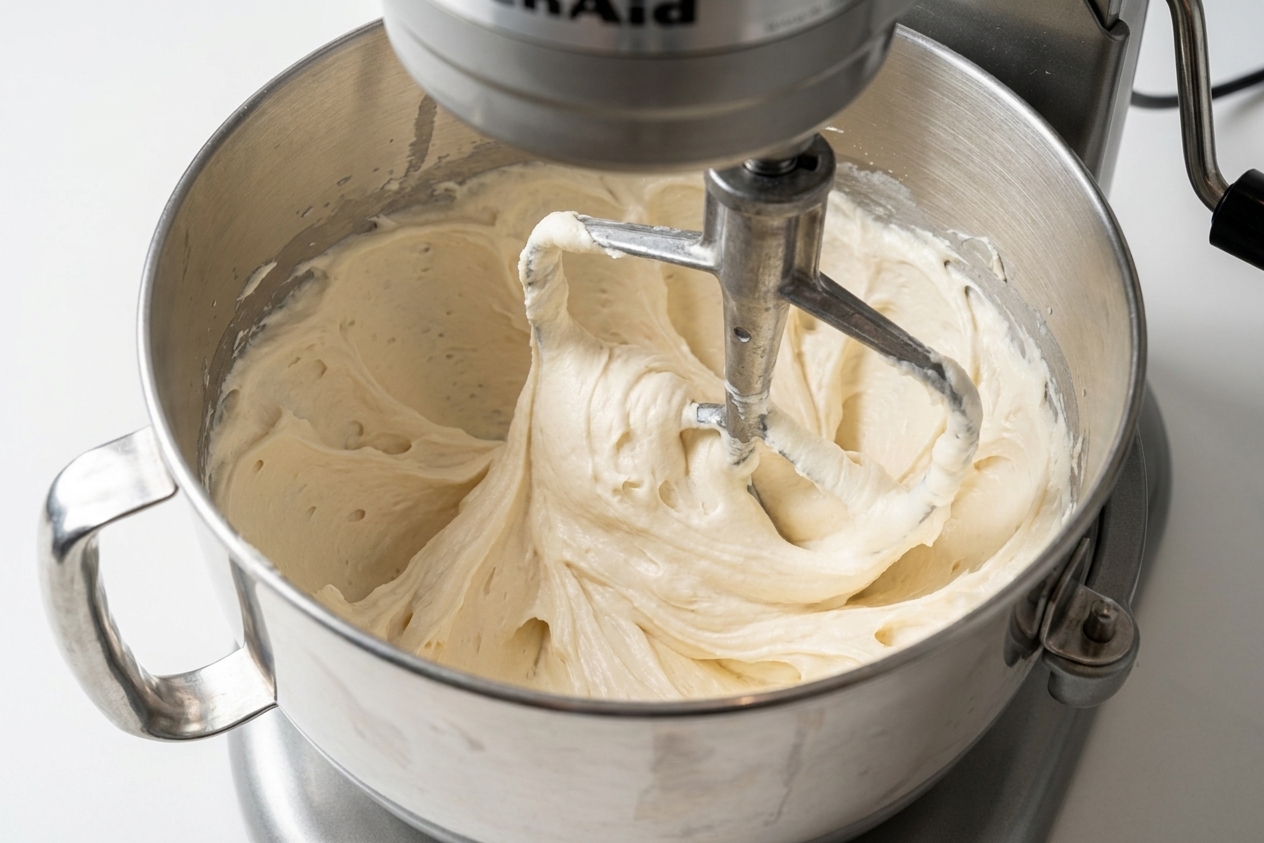
Consistency guide
Bakery-style buttercream is not one exact thickness. It depends on what you are doing with it.
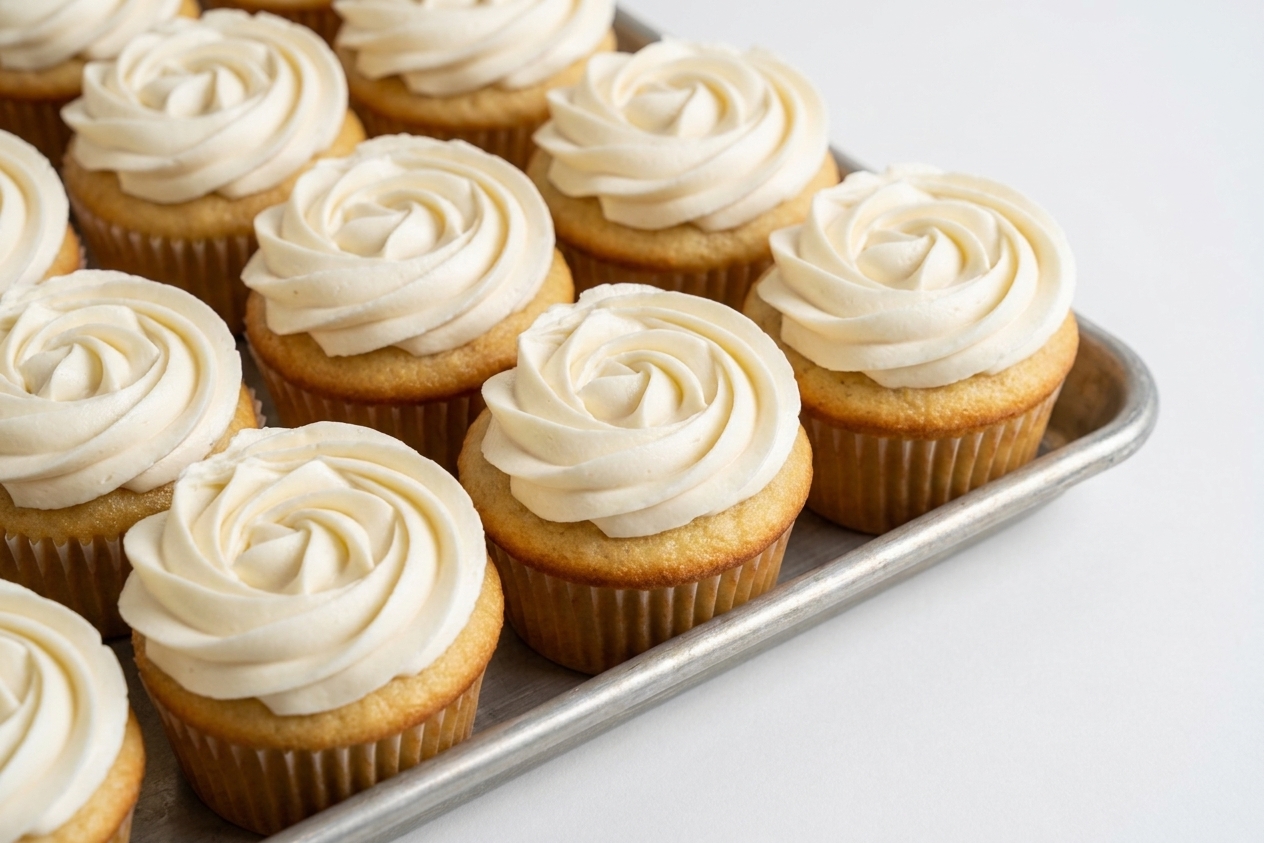
For cupcakes
Keep it slightly thicker so the ridges hold. You want the frosting to form a peak that gently bends over at the tip. If your swirl slumps, your frosting is likely too warm or too thin.
For smooth cakes
Go a touch looser so it spreads without pulling crumbs. A good test: drag a spatula through the bowl. The trough should slowly relax but not fill in immediately.
For sharp edges and a light crust
American buttercream can set slightly on the outside as it sits, which helps you get crisp corners. It works best when the sugar ratio is high enough and your kitchen is fairly dry. In humid weather, expect less crusting and lean more on chilling and smoothing.
- Do a thin crumb coat, then chill 15 to 20 minutes.
- Add a thicker final coat.
- Let the cake sit 10 minutes, then smooth with a bench scraper.
Humidity tip: if the frosting feels tacky and your scraper drags, chill the cake again for 10 minutes and take a couple of lighter smoothing passes.
Make it less sweet
American buttercream is sweet by design, but you can make it taste more balanced without turning it into a different frosting.
- Do not skip the salt. It is the easiest way to make the flavor read like buttercream instead of pure sugar.
- Use a little more vanilla. Vanilla adds roundness that often tastes less sugary.
- Try a tangy addition. Beat in 2 to 4 ounces of full-fat cream cheese (softened) at the end for a gentle tang. This will make the frosting slightly softer, so reduce the cream and chill if needed.
- Whip less, finish longer on low. Over-whipping can make sweetness feel more intense because the frosting melts faster on the tongue.
Troubleshooting
My buttercream is gritty
- Cause: Sugar is clumpy, or it has not had enough time to fully moisten and smooth out.
- Fix: Mix on low for 3 to 5 extra minutes. Yes, minutes. If your sugar is lumpy, sift next time. If the grit is stubborn, add 1 tablespoon cream and mix on low again.
It is full of air bubbles
- Cause: Too much high-speed mixing at the end, or using a whisk attachment.
- Fix: Switch to the paddle and run the mixer on the lowest speed for 2 to 4 minutes, scraping once. For a super-smooth finish, press the frosting against the bowl with a spatula at the end to degas it.
It looks curdled or separated
- Cause: Temperature mismatch, usually butter too cold or the mixture cooled down after adding liquid.
- Fix: Keep mixing on medium for 1 to 2 minutes. If it stays broken, warm the outside of the bowl very gently (a warm towel around the bowl for about 1 minute), then mix again.
It is runny
- Cause: Butter too warm, too much cream, or a hot kitchen.
- Fix: Chill the whole bowl for 10 minutes, then mix on low. If it is still loose, add powdered sugar a little at a time.
It tastes buttery in a bad way
- Cause: Butter was too warm and the frosting turned dense, or it was not aerated enough early on.
- Fix: Chill briefly, then whip on medium-high for 30 to 45 seconds and finish on low again.
Flavor variations
Once you have the base, you can adapt it without losing that bakery finish. Add these at the end, then finish on low for 1 minute to smooth.
- Chocolate: Add 1/2 cup (45 g) unsweetened cocoa powder, sifted, plus an extra 1 to 2 tablespoons cream.
- Strawberry: Add 2 to 3 tablespoons freeze-dried strawberry powder (not syrup). It flavors without thinning.
- Mocha: Dissolve 1 tablespoon instant espresso powder in 1 tablespoon hot water, cool completely, then beat in. Reduce cream slightly.
- Lemon: Add 1 tablespoon lemon zest plus 1 to 2 tablespoons lemon juice. Add juice slowly so it does not loosen too much.
- Cookies-and-cream: Fold in 1/2 cup finely crushed sandwich cookies. Use a larger piping tip if you pipe it.
Storage and make-ahead
This frosting is very make-ahead friendly, which is a gift on busy baking days.
- Room temperature: Up to 1 day if your kitchen is cool (about 70F or cooler) and the frosting is covered well. If your home runs warm or very humid, refrigeration is the safer move.
- Refrigerator: Up to 1 week in an airtight container. Bring to room temperature, then re-whip briefly on medium and finish on low.
- Freezer: Up to 2 months. Thaw overnight in the refrigerator, then bring to room temperature and re-whip.
If your cake has perishable fillings (custard, whipped cream, lots of cream cheese), follow the storage rules for the filling. Plain buttercream on its own is generally stable, but temperature matters, so use your best judgment if your kitchen is warm.
FAQ
Can I make this with a hand mixer?
Yes. Use a deep bowl, start the sugar on the lowest speed you have, and scrape often. The key step is still the same: finish with a few minutes of low-speed mixing to smooth the bubbles out.
Why does bakery frosting taste different than homemade?
Many bakeries use a blend of butter and shortening for stability and a higher melting point, or they use high-ratio shortening, emulsifiers, or meringue-style buttercreams depending on the look they want. This recipe uses all butter for the best flavor, then uses technique to get the same polished texture.
How do I get whiter buttercream?
Butter is naturally yellow, so all-butter frosting will be ivory. For whiter frosting, use clear vanilla extract and beat the butter longer at the beginning to lighten it. Longer whipping also adds air, so do not skip the low-speed finish afterward to smooth out bubbles. You can also add a tiny dot of violet gel food coloring to neutralize yellow, but go extremely small.
Can I use salted butter?
You can. Omit the added salt at first, then taste and add a pinch if needed. Different brands vary a lot in saltiness.
How do I make it super smooth for a crisp, clean cake finish?
Two moves: sift your powdered sugar if it is clumpy, and do the low-speed polish at the end. If you want to go even further, add the optional corn syrup for a slightly silkier finish and a bit more shine. If it is humid, plan on chilling between smoothing passes.