
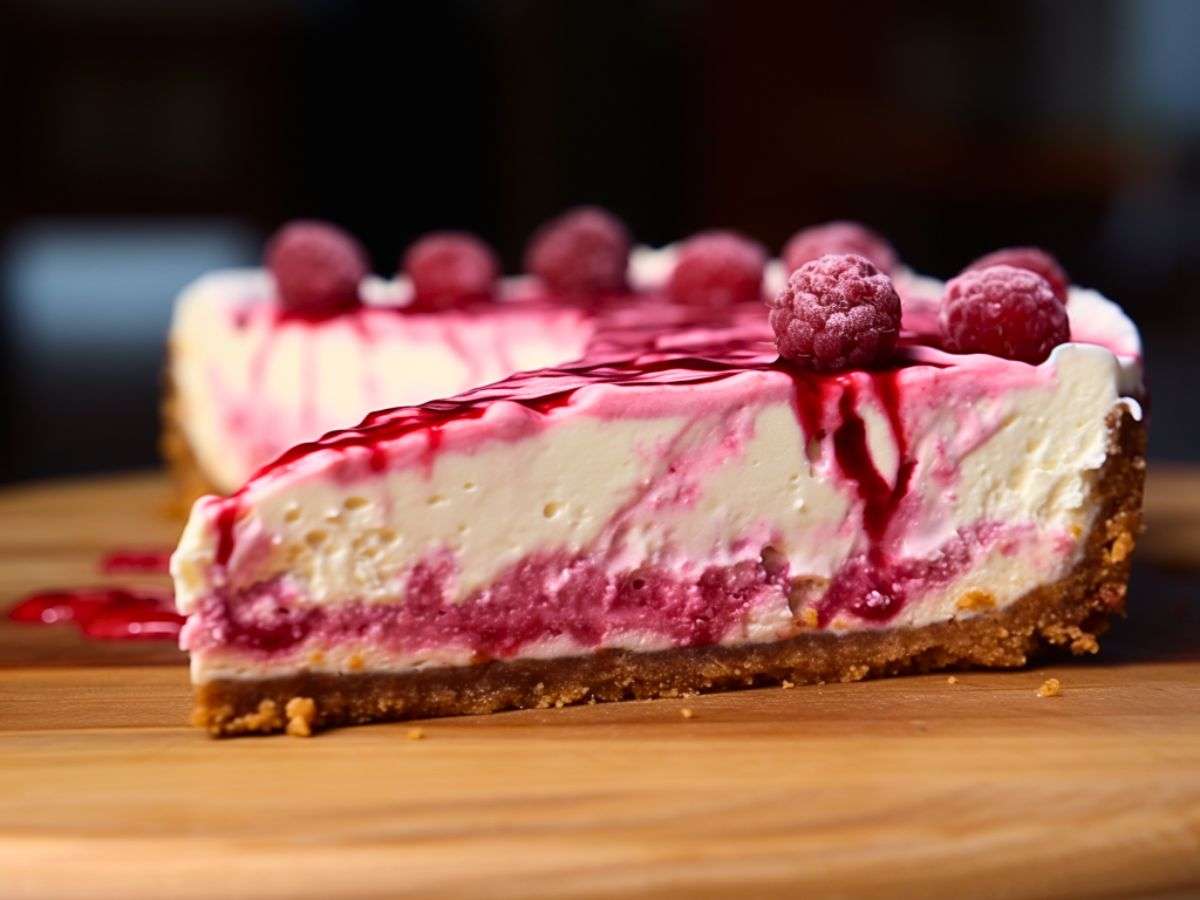
Raspberry cheesecake is the kind of dessert that looks like you planned weeks in advance, even if you made it on a quiet afternoon with a grocery store carton of berries. You get all the comfort of classic cheesecake, plus that bright pop of raspberry that cuts through the richness and makes you want “just one more sliver.”
Below is my home-kitchen approach: simple ingredients, a few professional tricks I learned managing a bakery, and lots of little why-it-works notes so you feel confident from crust to clean slices.

Why this recipe works
Cheesecake is essentially a baked custard made with cream cheese, which means texture is everything. This approach is built to deliver:
- Silky filling with no graininess and no air bubbles.
- Bright raspberry flavor that tastes like fruit, not candy.
- A crust that stays crisp even after chilling overnight.
- A smooth, uncracked top (and if it cracks, a calm backup plan).
The biggest secret is not fancy equipment. It is temperature and patience: room-temperature dairy, gentle mixing, and slow cooling.
You also get two berry “moves,” and you can do both:
- Swirl: Marble a thick raspberry sauce into the batter before baking for dramatic looks and berry flavor in every bite.
- Topping: Spoon a looser sauce or fresh berries on after chilling for a fresher taste and easy sweetness control.
Swirl amount tip: Use about 1/3 to 1/2 cup of sauce for the swirl and save the rest for serving. Too much sauce on top can weigh down the batter and blur your swirl.
Ingredient notes
Cream cheese
Use full-fat blocks, not whipped and not tub-style spread. Blocks have the right moisture level for a dense, creamy set.
Sour cream (or Greek yogurt)
Sour cream gives that classic tang and helps the texture stay soft instead of rubbery. In a pinch, full-fat Greek yogurt works.
Eggs
Eggs set the custard. Add them one at a time and mix gently. Overbeating whips in air, and air expands in the oven and can lead to cracks.
Raspberries
Fresh or frozen both work. Frozen raspberries are often excellent here because they are picked ripe. No need to thaw first for the sauce, just plan to simmer a few minutes longer since frozen berries release extra water.
Graham crackers (or cookies)
Classic graham crust is perfect, but you can swap in digestive biscuits, vanilla wafers, or chocolate sandwich cookies (scrape the filling out first if you want a less-sweet crust).
Equipment you will need
- 9-inch springform pan (preferred for easy release)
- Large roasting pan (for a true water bath)
- Heavy-duty foil (ideally 18-inch extra-wide for fewer leaks)
- Silicone slow-cooker liner or an oven-safe roasting bag (optional extra leak protection)
- Small saucepan (for the raspberry sauce)
- Fine-mesh sieve (optional, for straining seeds)
- Stand mixer with paddle or a hand mixer (mix gently)
- Long, thin knife (for slicing)
Pro tips
- Bring everything to room temperature: Let cream cheese, sour cream, and eggs sit out 1 to 2 hours. Cold cream cheese stays lumpy, so you mix longer, which adds air.
- Mix on low and stop when smooth: This is custard, not cake batter. Use low speed and scrape the bowl often.
- Bake gently: A slightly lower oven temperature and a longer bake help prevent puffing and sinking.
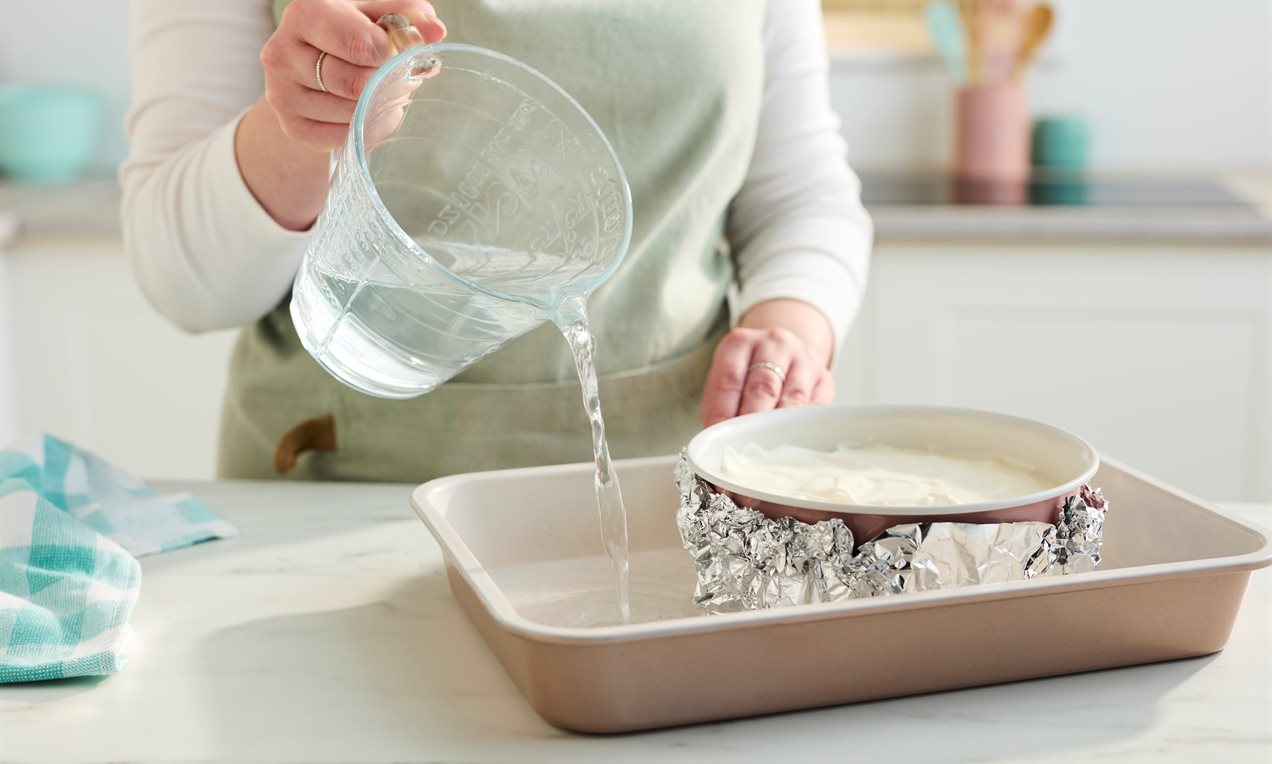
- Use a water bath (or at least steam): Humidity and steadier heat dramatically reduce cracking. A true bath insulates more; the steam shortcut still helps.
- Leak insurance for water baths: Springform pans love to seep. Use 18-inch extra-wide heavy-duty foil so you can wrap without seams at the bottom. For extra protection, set the wrapped pan inside a silicone slow-cooker liner (or an oven-safe roasting bag) before placing it in the water bath.
- Cool slowly: When baking is done, turn the oven off, crack the door, and let it sit for about 1 hour before moving it to the counter.
- Clean slices: Chill overnight, run a thin knife around the edge before releasing the ring, and dip your knife in hot water and wipe between cuts.
Substitutes that work
- Sour cream: Full-fat Greek yogurt works in a pinch.
- Crust: Swap graham crackers for digestive biscuits, vanilla wafers, or chocolate sandwich cookies (scrape out the filling if you want a less-sweet crust).
- Fruit: Try strawberries, blackberries, or a mixed berry blend. Add a little extra lemon juice if the fruit is very sweet.
- No springform pan: Use a deep 9-inch cake pan lined with parchment on the bottom and a parchment sling, but unmolding is trickier.
Variations
- Swirl only: Marble 1/3 to 1/2 cup of sauce into the batter and reserve the rest.
- Topping only: Skip swirling and spoon sauce or berries on after chilling (a good option if you are nervous about swirling).
- Swirl + topping: Do both for maximum berry impact and a bakery-style finish.
- Different berries: Use strawberries, blackberries, or a mixed berry blend; adjust lemon juice if the fruit is very sweet.
Serving ideas
- Spoon reserved raspberry sauce over each slice right before serving.
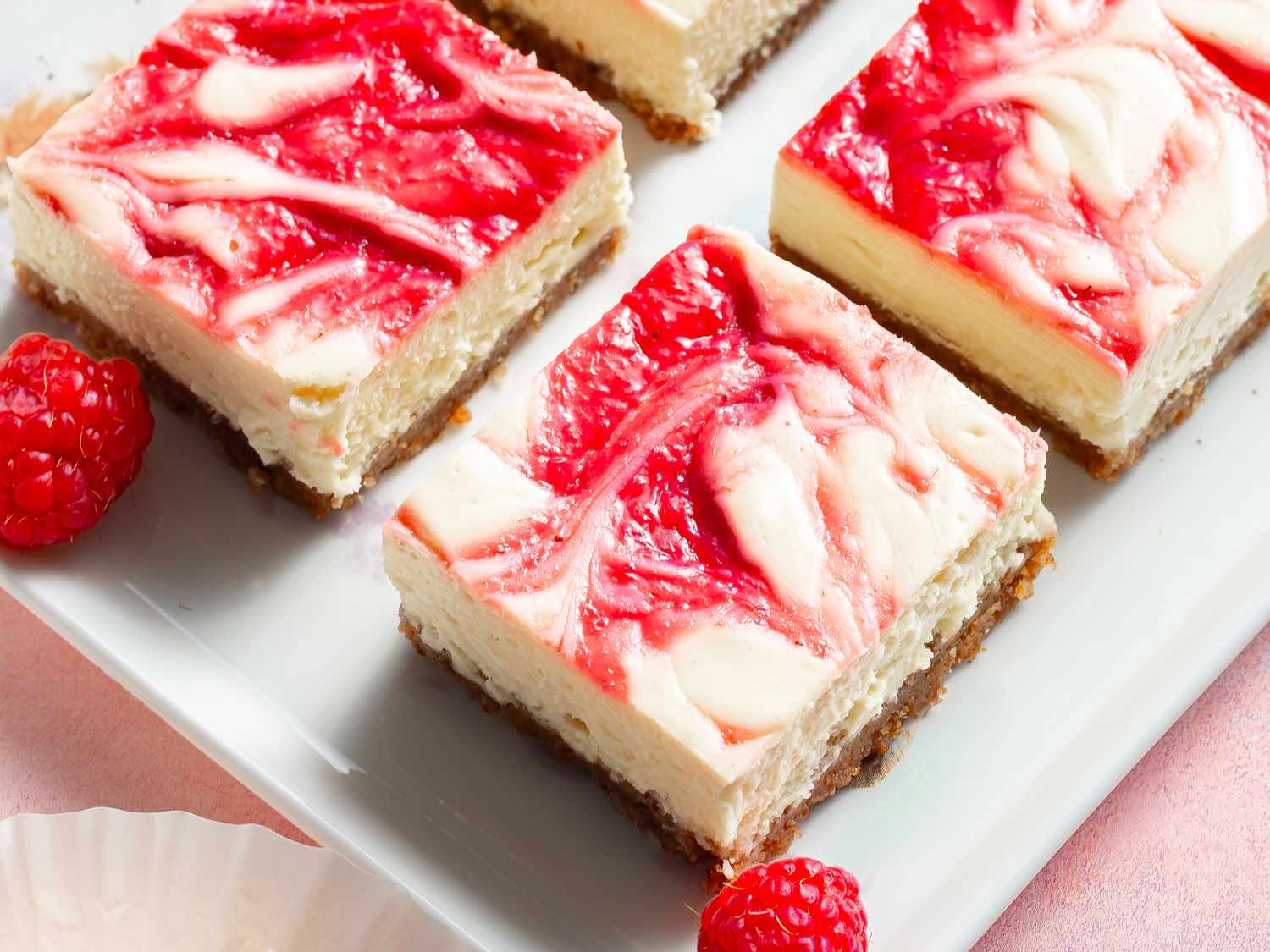
- For a fresh look, cover cracks (if any) with fresh raspberries or a berry topping.
- For a simple “fix” that also tastes great, spread a thin layer of sweetened sour cream over the top.
Storage and reheating
Plan ahead
Cheesecake needs time to chill and set fully. Make it the day before you want to serve it.
Refrigerator
Cover and refrigerate up to 4 to 5 days. For the cleanest top, chill uncovered for the first hour (so condensation does not drip), then cover.
Freezer
Cheesecake freezes beautifully.
- Chill fully overnight first.
- Freeze whole or in slices. Wrap tightly in plastic wrap, then foil.
- Freeze up to 1 to 2 months for best flavor (longer is safe, but the crust can soften).
- Thaw overnight in the refrigerator.
Common mistakes
- Overmixing the batter: Overbeating whips in air, and air expands in the oven and can lead to cracks. Mix on low and stop when smooth.
- Using cold ingredients: Cold cream cheese stays lumpy, which makes you mix longer and adds air. Let dairy and eggs sit out 1 to 2 hours.
- Skipping moisture in the oven: No water bath (or steam) increases the chance of cracking. Use a true water bath or the steam shortcut.
- Cooling too fast: Cracks often happen during fast temperature changes. Cool in the turned-off oven with the door cracked for about 1 hour.
- Too much swirl sauce: More is not better. Using too much on top can weigh down the batter and blur the swirl; stick to about 1/3 to 1/2 cup for swirling.
- Under-reducing the sauce: If the raspberry sauce is watery, simmer longer. If needed, add a tiny cornstarch slurry and cook 30 to 60 seconds until glossy.
FAQ
Can I make raspberry cheesecake without a water bath?
Yes. You are more likely to get a crack, but the flavor will still be fantastic. Use the steam shortcut (a pan of hot water on the rack below) and cool slowly in the turned-off oven.
Do I have to strain the raspberry sauce?
No, but straining removes seeds and makes the swirl look cleaner. If you do not mind seeds, skip it and call it “extra rustic.”
How do I get neat slices?
Chill overnight, use a long thin knife, dip it in hot water, and wipe between cuts. This one habit makes cheesecake look bakery-level.
The recipe
Raspberry Cheesecake
Raspberry Cheesecake with a buttery graham crust, creamy tangy filling, and a vivid raspberry swirl (plus extra sauce for serving if you like). Baked at 325°F (163°C), cooled slowly, then chilled until sliceable.
- Prep
- 30 minutes
- Cook
- 60 to 75 minutes
- Total
- About 8 to 10 hours (includes chilling)
- Yield
- 12 slices
Ingredients
- 2 cups (about 200g) graham cracker crumbs
- 2 tbsp sugar
- 1/2 tsp fine salt
- 6 tbsp (85g) unsalted butter, melted
- 2 cups raspberries (fresh or frozen)
- 1/3 cup sugar (more to taste if berries are very tart)
- 1 tsp lemon juice
- 1 tsp cornstarch mixed with 1 tbsp cold water (optional, for thickening)
- 32 oz (905g) full-fat cream cheese, room temperature
- 1 cup (200g) sugar
- 2 tbsp all-purpose flour (optional but helpful for stability)
- 1/2 tsp fine salt
- 1 tsp vanilla extract
- 3 large eggs, room temperature
- 1 cup (240g) sour cream, room temperature
Instructions
- Prep the pan: Heat oven to 325°F (163°C). Lightly grease a 9-inch springform pan. If using a water bath, wrap the outside of the pan in 2 layers of heavy-duty foil. For fewer leaks, use 18-inch extra-wide foil or add a silicone slow-cooker liner as a second barrier.
- Make the crust: In a bowl, mix crumbs, sugar, and salt. Stir in melted butter until the texture is like wet sand. Press firmly into the bottom and slightly up the sides. Bake 10 minutes, then cool while you make the filling.
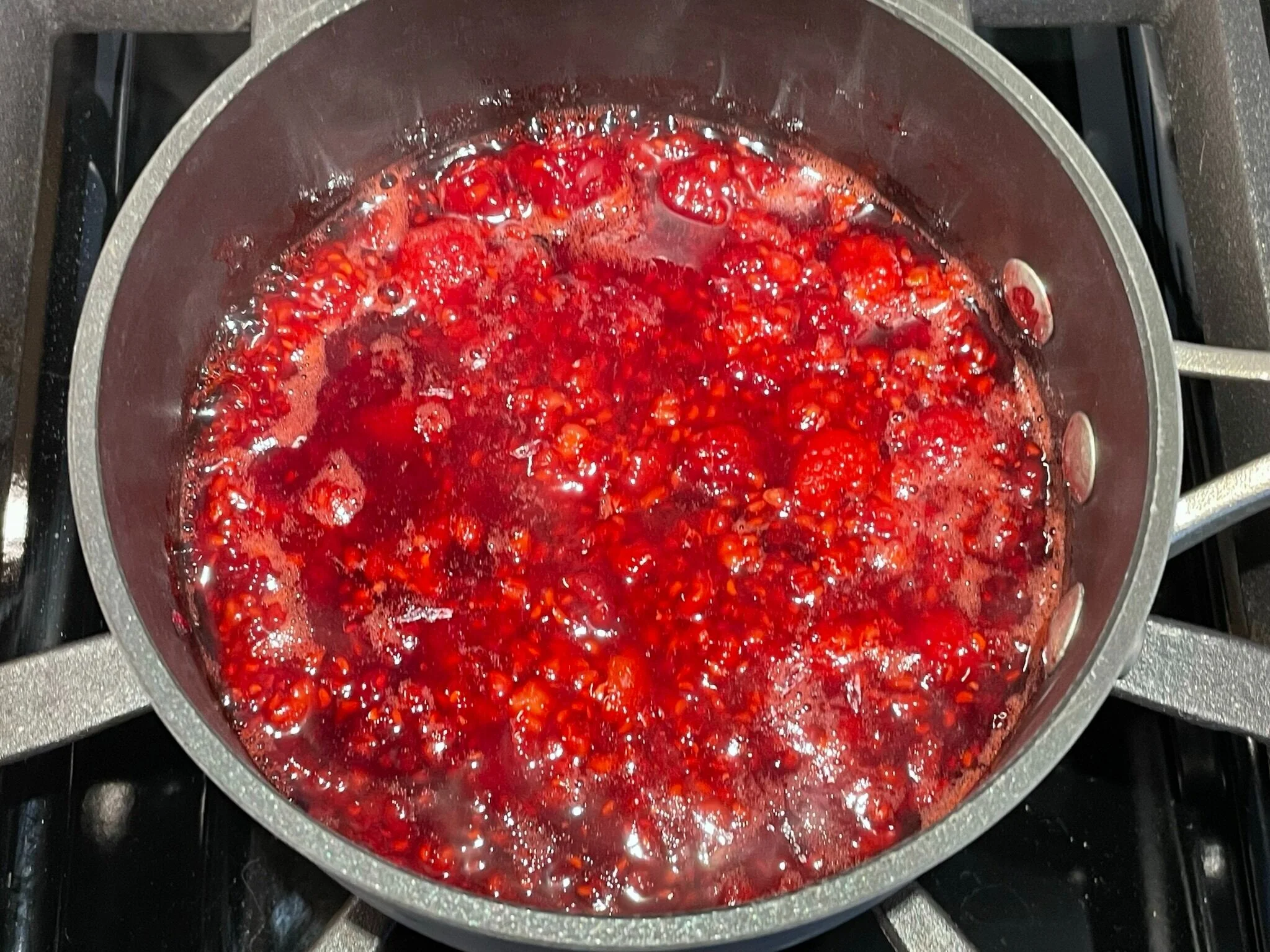
- Cook the raspberry sauce: In a small saucepan over medium heat, cook raspberries, sugar, and lemon juice until the berries break down, 6 to 10 minutes (a few minutes longer if using frozen). Strain through a fine-mesh sieve to remove seeds. If you want it thicker for swirling, return to the pan and simmer 1 to 3 minutes. If still thin, whisk in the cornstarch slurry and cook 30 to 60 seconds until glossy. Cool to warm room temperature.
- Mix the filling: In a large bowl (or stand mixer with paddle), beat cream cheese on low until smooth, scraping often. Add sugar, flour (if using), and salt, mixing just until combined. Mix in vanilla. Add eggs one at a time, mixing on low and stopping as soon as each disappears. Stir in sour cream just until smooth.
- Assemble: Pour filling over the cooled crust. Spoon small dollops of raspberry sauce over the top (about 1/3 to 1/2 cup total). Use a butter knife or skewer to gently swirl, keeping your motion shallow so you do not disturb the crust. Reserve remaining sauce for serving.
- Bake: For a water bath, set the pan in a roasting pan and add hot water halfway up the sides. Bake 60 to 75 minutes, until the edges are set and the center has a gentle wobble. Optional doneness check: the center is typically done around 150°F to 155°F (66°C to 68°C).
- Cool slowly: Turn the oven off, crack the door, and let the cheesecake sit 1 hour. Remove and cool to room temperature, then refrigerate at least 6 hours, ideally overnight.
- Serve: Run a thin knife around the edge before releasing the springform ring. For clean slices, dip your knife in hot water and wipe between cuts. Spoon extra raspberry sauce on each slice if you like.
Notes
- Swirl vs. topping: Swirl a thicker sauce into the batter before baking and/or use a looser sauce or fresh berries on top after chilling.
- Water bath options: A true water bath (springform pan set in a roasting pan with hot water halfway up the sides) reduces cracking. A steam shortcut (a pan of hot water on the rack below) helps if you skip the bath.
- No springform? You can use a deep 9-inch cake pan lined with parchment on the bottom and a parchment sling, but unmolding is trickier.
- Flavor swaps: Try strawberries, blackberries, or a mixed berry blend. Add a little extra lemon juice if the fruit is very sweet.
- Doneness tip: If the center looks like it is puffing and cracking while baking, your oven may run hot. Next time, reduce to 300°F (149°C) and extend the bake.
- Troubleshooting: If the center is jiggly, that can be perfect. It should wobble like set gelatin, not slosh like liquid. If batter is lumpy, it is usually cold cream cheese; press the batter through a fine-mesh sieve to save the texture.
Nutrition
- Calories: 490
- Fat: 33 g
- Carbs: 40 g
- Protein: 8 g
- Fiber: 2 g
- Sugar: 29 g
- Sodium: 360 mg
Nutrition values are approximate and will vary by specific brands and exact slice size.