Former bakery manager turned recipe developer, Elena Martinez shares warm, foolproof recipes with practical tips, flexible swaps, and the why behind each tec...
recipes
How to Fix Broken Buttercream

Elena Martinez
Elena Martinez is a former bakery manager turned full-time food writer and recipe developer. With over a decade of experience translating professional culinary techniques into approachable home cooking, she believes that a great meal doesn't require a culinary degree or expensive ingredients.
Created September 21, 2026
Last updated September 21, 2026
Buttercream has a dramatic streak. One minute it is billowy and glossy, the next it looks like cottage cheese or melted ice cream. Take a breath. In almost every case, broken buttercream is not ruined, it is just out of balance.
Most “frosting disasters” come down to two things: temperature and emulsion. Buttercream is basically a tiny tug-of-war between fat (butter) and water (from milk, extracts, egg whites, and other added liquids). Warm kitchens, especially humid ones, can also make frosting soften and act fussy. When one side gets too warm, too cold, or added too fast, the mixture splits. The good news is you can usually bring it right back with a small, targeted fix.
First, identify the problem
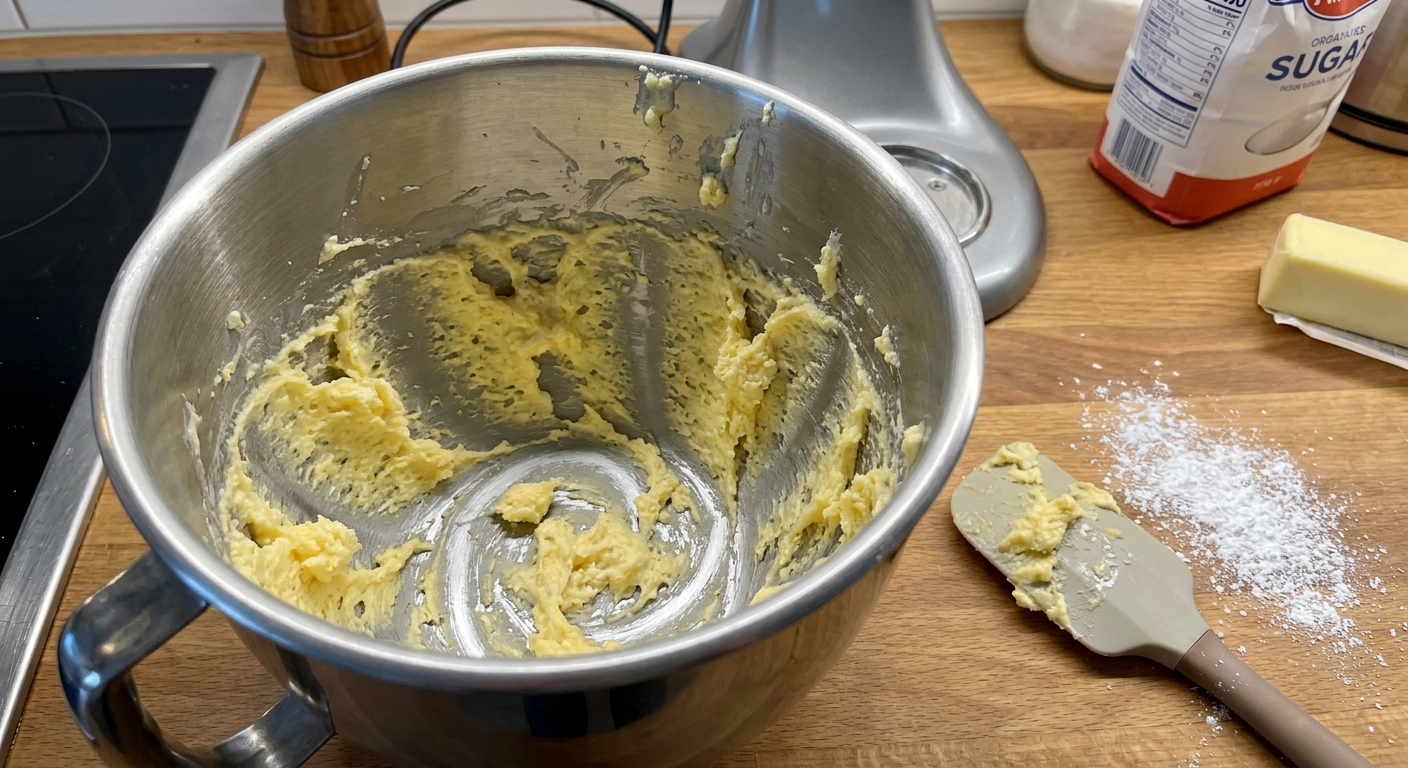
Different problems need different solutions. Here is a quick visual guide so you can diagnose in seconds.
- Curdled or split: looks chunky, lumpy, or like cottage cheese. Often happens when ingredients are different temperatures. (In Swiss and Italian meringue buttercreams, a curdled stage can also be totally normal mid-mix.)
- Soupy or slack: looks shiny and loose, will not hold peaks, may slide off a spatula. Usually too warm or too much liquid.
- Grainy: feels sandy on the tongue. Common with American buttercream when sugar is not fully dissolved or butter is too cold.
- Greasy: looks glossy in a slick way and tastes heavy. Most often from butter that is too warm. Extra mixing in a warm kitchen can make the look and feel worse.
Quick temp targets
If you want a simple bullseye, aim for cool room temperature.
- Butter: pliable but still cool, about 65 to 70°F (18 to 21°C). You should be able to press it, but it should not look shiny or oily.
- Meringue base (Swiss or Italian): the bowl should feel cool, not warm. If it still feels warm to the touch, wait, or chill briefly, before adding butter.
Fastest fix for curdled buttercream
If your buttercream looks curdled, you are incredibly close to success. Most curdling is simply the emulsion temporarily breaking because the fat and water phases are not the same temperature. Also, for Swiss and Italian meringue buttercream, it is common to look curdled halfway through butter additions, then turn silky at the end.
Warm it gently (most common)
Best for: Swiss meringue buttercream, Italian meringue buttercream, French buttercream, and sometimes American buttercream that has seized.
- Keep the mixer running on low to medium.
- Warm the bowl slightly by holding a warm towel around the outside of the bowl for 30 to 60 seconds.
- Or warm just a portion: scoop out about 1/4 cup of buttercream, microwave it for 5 to 8 seconds until barely melted at the edges, then drizzle it back in while mixing. If it turns fully liquid, use a smaller amount or shorter bursts next time.
- Wait. The transformation is often sudden: it can go from curdled to smooth within 60 to 90 seconds.
My bakery-manager rule: warm in tiny increments. Overheating turns a curdle problem into a soup problem.
Chill it briefly (less common, but magic)
Best for: buttercream that looks separated and shiny, like it is beginning to melt, or buttercream made in a hot kitchen.
- Put the whole bowl in the refrigerator for 10 minutes.
- Return it to the mixer and beat on medium until it comes together.
- If it is still loose, repeat another 5 to 10 minutes.
How to fix runny buttercream
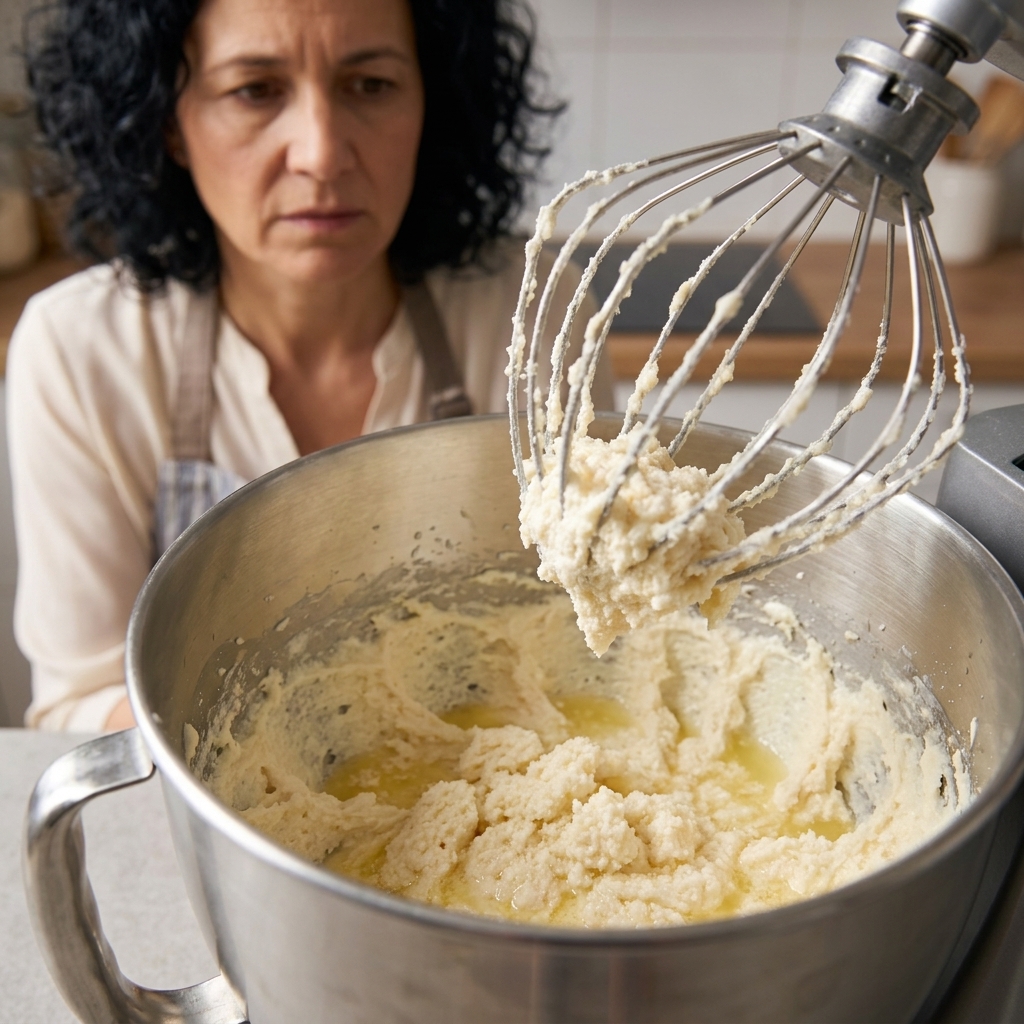
Runny buttercream is usually a temperature issue first, a recipe issue second. Before you add more sugar, stabilize the butter.
Step 1: Cool it down
- Refrigerate the bowl for 10 to 15 minutes, then whip again.
- If the room is very warm, set the bowl over an ice pack or a larger bowl with a little ice water, and whip for 30 to 60 seconds. Do not let water splash in.
Step 2: If it is still loose, adjust by type
- American buttercream: Add sifted powdered sugar 2 to 3 tablespoons at a time, mixing well between additions. A pinch of salt helps keep it from tasting overly sweet.
- Swiss or Italian meringue buttercream: Avoid dumping in powdered sugar. Chill and whip first. If it is fully cool and still loose (not just warm), you can beat in 1 to 2 tablespoons of room-temperature butter at a time if you suspect a measuring ratio issue. If your kitchen is hot, adding more butter will not fix it. You need cooling.
- Cream cheese frosting: Chill first. Mix minimally. If you need a last-resort thickener, add 1 tablespoon sifted powdered sugar at a time. You can also try 1 teaspoon sifted cornstarch at a time, but go slowly since too much can taste starchy.
Heads up: If you added extra liquid (vanilla, milk, fruit puree) and it turned soupy, you may need both chilling and a small amount of dry ingredient to rebalance.
How to fix grainy buttercream
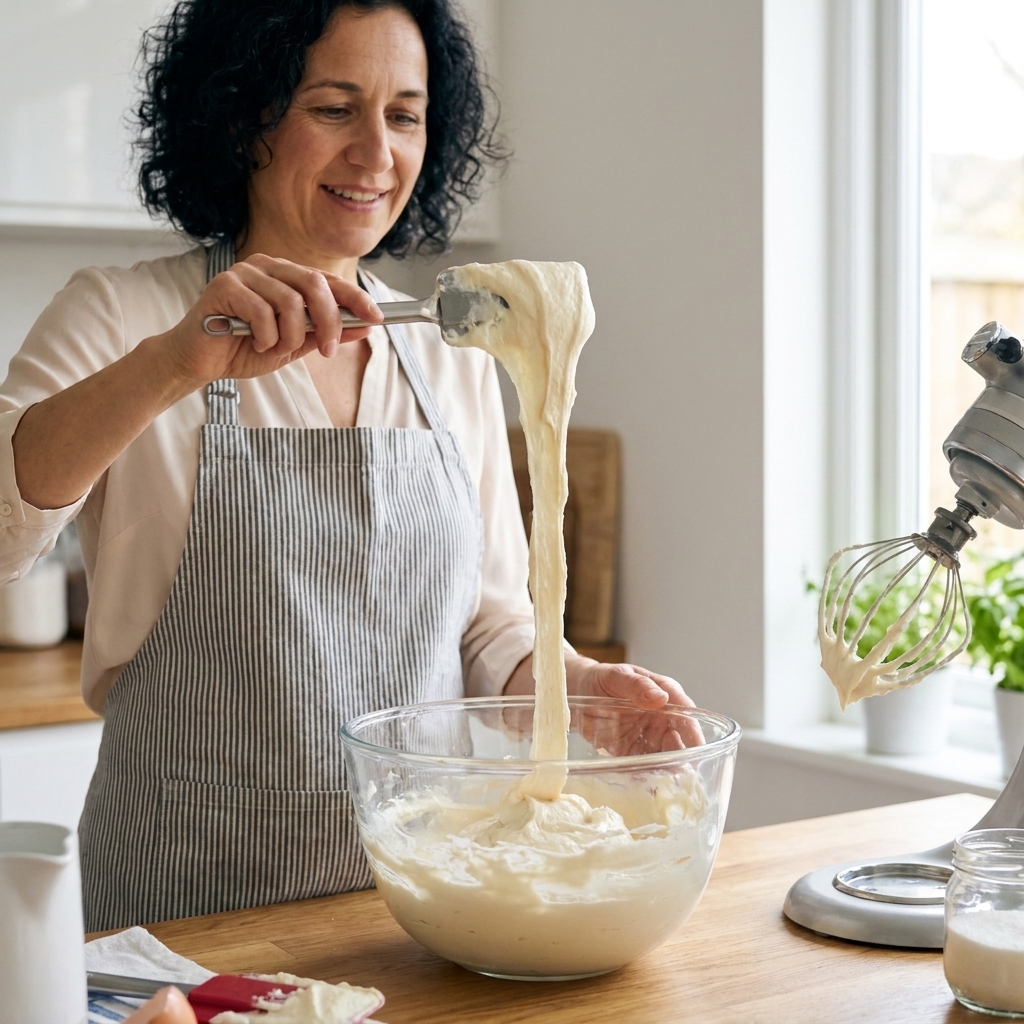
Graininess is usually undissolved sugar or butter that is too cool to blend smoothly.
American buttercream
- Sift powdered sugar before adding. Sugar lumps can mimic graininess.
- Beat longer than you think, but at medium speed so you do not whip in a ton of air.
- Add 1 teaspoon of milk or cream at a time, mixing well. The tiniest bit of moisture helps dissolve sugar.
- If your kitchen is cool, warm the bowl with a warm towel for 20 to 30 seconds, then beat again.
- Let it rest: If it is only slightly gritty, cover the bowl and let it sit for 15 to 30 minutes, then mix briefly. Time often hydrates the sugar without over-mixing.
Meringue-based buttercreams
- If the butter was too cold, you can get little buttery flecks that feel grainy. Warm the bowl gently and keep mixing.
- If you are using chocolate, make sure melted chocolate is cool but fluid. Hot chocolate can melt butter and cause separation, while cold chocolate can set into tiny shards.
How to fix greasy buttercream
Greasy buttercream often happens when the butter got too warm, especially in a warm kitchen. It can also happen with very high-butterfat butter. Extra mixing while warm can make it look slicker, even if the recipe is fine.
- Chill 10 minutes, then whip briefly on medium to re-emulsify.
- If it still looks slick, beat in 1 to 2 tablespoons of sifted powdered sugar (even for Swiss meringue buttercream). This is not traditional, but it can rescue texture when you just need it to behave.
- For American buttercream, try switching to the paddle attachment if you are using a whisk. The whisk can incorporate too much air, which sometimes makes the texture look worse.
Rescue flowchart
If you are standing at the mixer wondering what to do first, use this:
- Looks curdled? Keep mixing. Warm the bowl gently. Mix 60 to 90 seconds. Reassess.
- Looks melted? Chill 10 minutes. Whip. Repeat if needed.
- Tastes gritty? Beat longer. Add tiny splashes of cream. Let it rest 15 to 30 minutes. Warm slightly if the room is cold.
- Looks greasy? Chill briefly, then whip. Add a spoonful of powdered sugar if it needs help.
Why buttercream breaks
I know you came here for triage, not a lecture, but learning the why is the shortcut to never panicking again.
1) Temperature mismatch
Cold butter added to a warmer base (or warm butter added to a cooler base) makes the emulsion unstable. For meringue buttercreams, the meringue and butter should be close to the same temperature, typically cool room temp.
2) Adding butter too fast
Butter needs time to disperse into the mixture. If you add large chunks quickly, the emulsion struggles to form and you get curdling.
3) Too much liquid or strong add-ins
Extracts, citrus juice, fruit purees, and even a heavy hand with food coloring can push the water content too far. This shows up as soupiness or splitting.
4) Hot environment
Buttercream is sensitive. If your kitchen is warm, the butter softens beyond its sweet spot and frosting loses structure.
Buttercream type matters
If you tell me what kind of buttercream you made, I can usually predict what went wrong.
American buttercream
- Most common issues: grainy, too stiff, too sweet, or too soft in warm rooms.
- Best fixes: sift sugar, add tiny amounts of cream, rest 15 to 30 minutes for grit, chill briefly if soft.
Swiss meringue buttercream
- Most common issues: curdling when butter goes in, or soupiness if the meringue was warm.
- Best fixes: keep mixing, warm or chill the bowl depending on texture.
Italian meringue buttercream
- Most common issues: too warm from syrup or environment, then breaks when butter is added.
- Best fixes: cool the meringue fully, then add butter slowly. If it breaks, chill and whip.
Cream cheese frosting
- Most common issues: runny from warmth or overmixing.
- Best fixes: chill, mix minimally, add a small amount of powdered sugar. Use sifted cornstarch only as an optional last resort.
When to stop
Buttercream is forgiving, but there are a few situations where you should reset instead of wrestling it for an hour.
- It is truly melted: if the butter is fully liquid and warm, chill the mixture until it is cool again before whipping. If it never thickens, you may need to start over.
- It is contaminated: even a small amount of water, dish soap residue, or grease in your bowl can prevent a stable emulsion (especially meringue-based). Clean and dry everything, then remake.
- You added a lot of extra liquid: a splash is fixable. A large pour of juice or puree may push it beyond repair unless you rebuild the recipe with more fat and sugar.
My emergency kit tips
- Keep a thermometer nearby. If your meringue base is warm to the touch, it is too warm for butter.
- Change attachments. Paddle for smoothing and less air, whisk for volume. If buttercream looks bubbly, switch to the paddle for 1 to 2 minutes on low.
- Scrape the bowl. Cold butter stuck to the sides can reintroduce lumps and throw off texture.
- Fix in small steps. Buttercream responds fast. Tiny adjustments beat big swings.
FAQ
Can I fix broken buttercream the next day?
Usually, yes. Let it come to cool room temperature, then re-whip. If it is curdled, warm the bowl slightly. If it is loose, chill and whip.
Why does my buttercream look curdled but tastes fine?
That is classic emulsion separation. The ingredients are fine, they are just not fully unified yet. Keep mixing and adjust temperature gently.
Will adding more powdered sugar fix everything?
No, and it can make things worse. If the issue is temperature or an emulsion break, sugar only masks the problem and can throw off sweetness and texture. Chill or warm first, then adjust sweetness only if needed.
Can I use a hair dryer, torch, or direct heat on the bowl?
Professionals absolutely do this, especially with metal bowls: a quick blast from a hair dryer or a brief pass of a kitchen torch can bring a curdled buttercream back fast. For beginners, I recommend the warm towel method first because direct heat can melt a ring of buttercream around the edges and turn your curdle into soup. If you do use a hair dryer, keep it moving, use low heat, and stop the second you see the sides turning glossy.
Pep talk
If your buttercream looks awful right now, you are in very good company. I have watched perfectly competent pastry cooks stare down a curdled mixer bowl like it personally insulted them. Buttercream is fussy, but it is also forgiving. Keep the mixer going, make one small temperature adjustment, and give it a minute. Most of the time, it snaps back into that silky, spreadable cloud like nothing ever happened.