
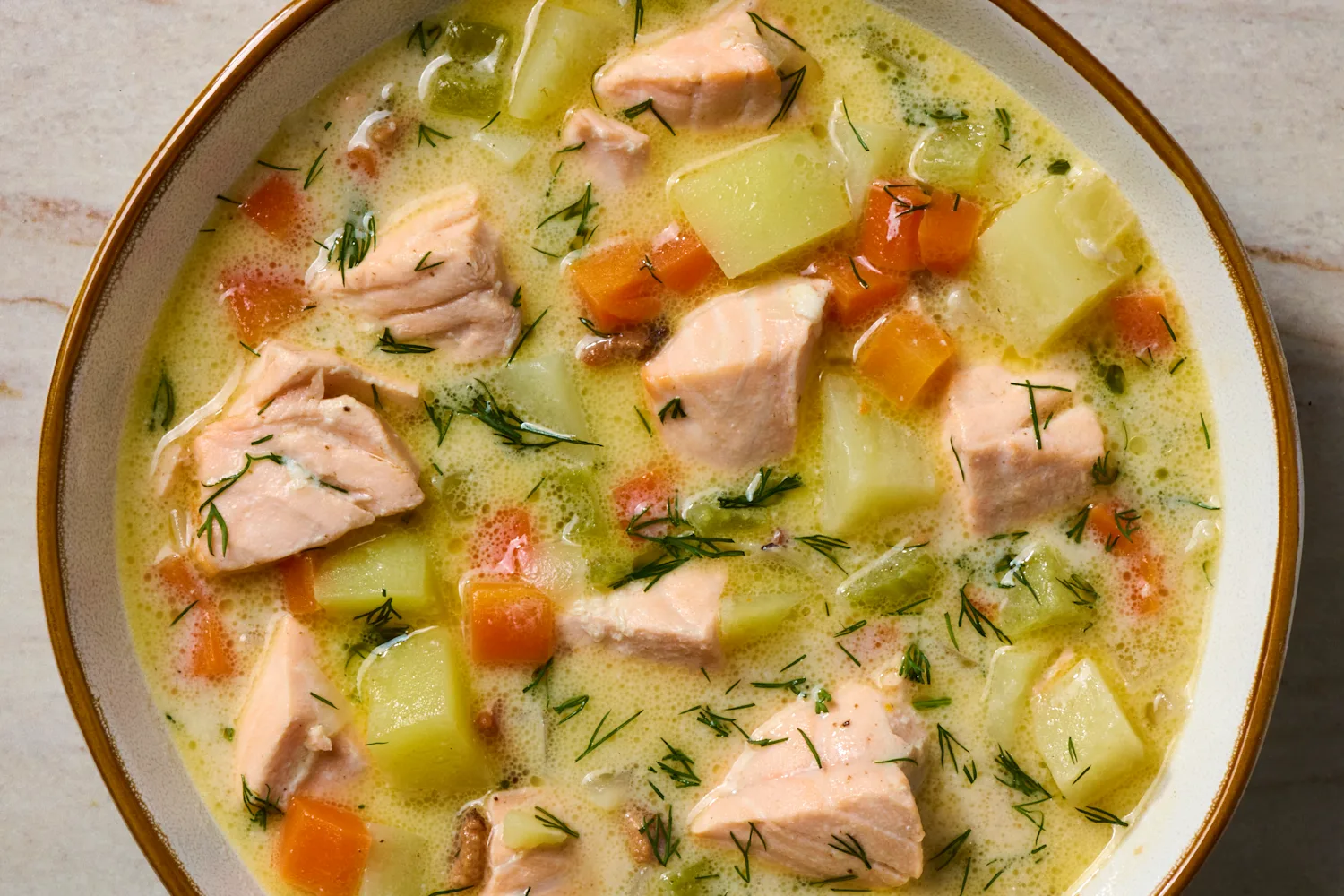
Whenever I’m making chowder, I’m chasing two things at once: a broth that feels luxuriously creamy and a pot of fish that still tastes like fish, not like it simmered for an hour. Salmon is especially quick to overcook, which is why my number one rule for salmon chowder is simple: build the chowder first, then add the salmon near the end and cook it just until it turns opaque.
This recipe gives you a cozy, classic-for-my-kitchen chowder base with potatoes and aromatics, then finishes with milk or cream for that signature richness. It is not a blended soup, and it is definitely not a salmon patty situation. You should end up with spoonable chunks of potato and bite-sized pieces of salmon that stay juicy.

If you like your chowder thicker, we’ll do it the no-drama way: mash a scoop of the cooked potatoes and stir them back in. No flour slurry required. And if you have a random leftover piece of salmon from last night’s dinner, you can absolutely use it here. You just fold it in off the heat so it warms through without turning dry.
What to expect
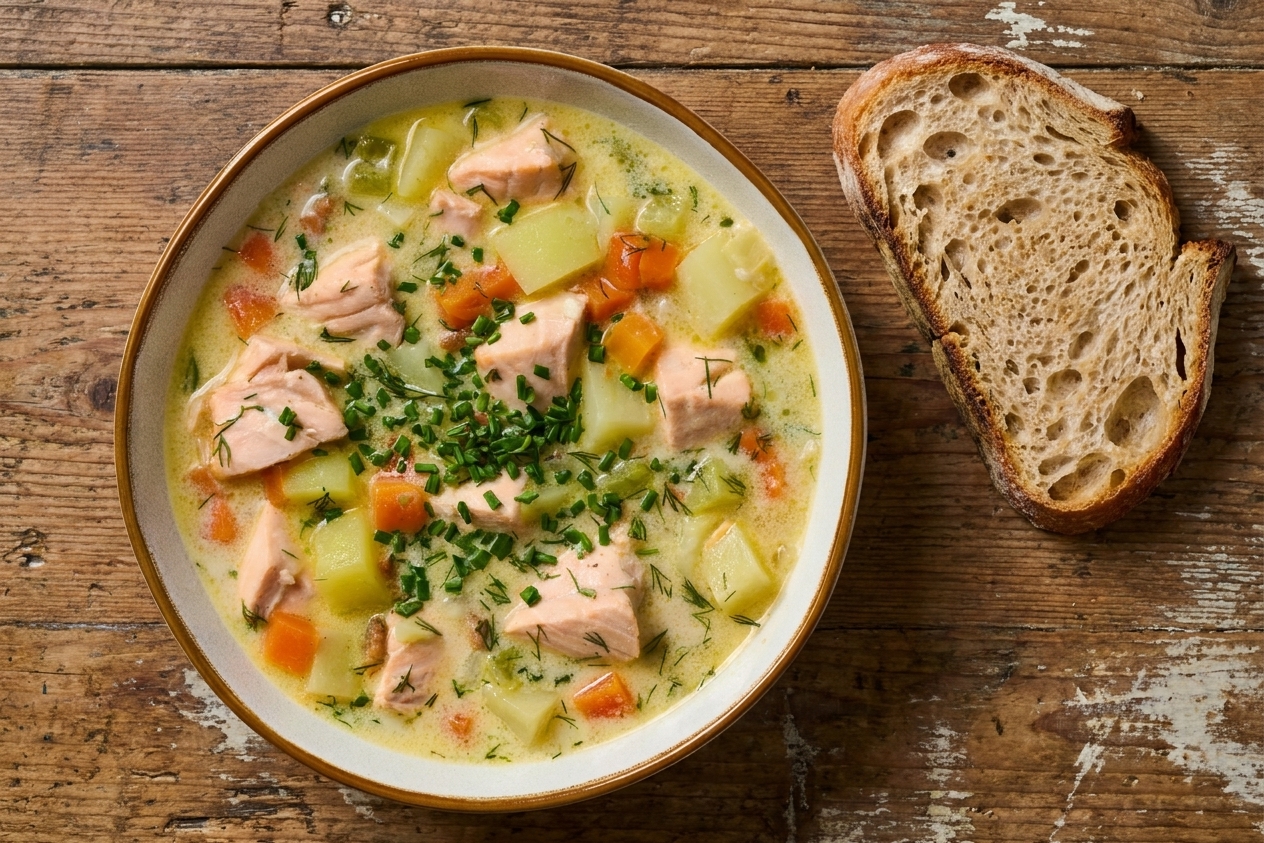
This salmon chowder is creamy and savory, with a gentle sweetness from sautéed onions (or leeks, if that’s your thing) and a soft, starchy backbone from Yukon Gold potatoes. It is thick enough to cling to a spoon, but still brothy enough that you want bread for dunking.
Flavor-wise, think mellow and comforting, then brightened right at the end with fresh herbs and a squeeze of lemon so the whole pot tastes awake, not heavy.
Why this recipe works
- Salmon goes in late. You simmer the potatoes until tender, then slide in the salmon just long enough to turn opaque. This keeps it chunky and moist.
- Potatoes do double duty. They make the chowder hearty and naturally help thicken the base without requiring a heavy flour slurry.
- Gentle heat protects the dairy. Keeping the chowder at a low simmer after adding milk or cream prevents splitting and keeps the texture velvety.
- Layered seasoning beats “more salt.” A little salt early, tasting again after the broth reduces, then a final adjustment at the end yields a chowder that tastes full, not flat.
Ingredient notes
Salmon
Use skinless salmon if possible, or remove the skin before cooking. Any variety works: Atlantic, sockeye, coho, or even steelhead trout. Aim for 1 to 1 1/2-inch cubes so they hold their shape.
Potatoes
Yukon Golds are my favorite here because they turn tender and creamy without disintegrating. Russets work too, but they break down more and will thicken the chowder faster.
Aromatics
Onion and celery are classic. Leeks are wonderful if you want a sweeter, more delicate chowder. If using leeks, rinse thoroughly between the layers.
Broth
Seafood stock is a treat, but chicken broth or vegetable broth works beautifully. If your broth is very salty, go easy on added salt until the end.
Dairy
Whole milk makes a lighter chowder; heavy cream makes it richer and more forgiving. A milk and cream blend gives you the best of both.
Fresh herbs
Dill and chives are especially friendly with salmon. Parsley is a solid, always-available option.
Equipment you will need
- Large Dutch oven or heavy-bottomed pot (4 to 6 quarts)
- Cutting board and sharp knife
- Wooden spoon or heatproof spatula
- Measuring cups and spoons
- Ladle for serving
Pro tips
- For thicker chowder, mash a little potato. Scoop out about 1/2 cup of cooked potatoes and mash them with a fork, then stir back in. This thickens without a floury taste.
- Keep the salmon juicy. Turn the heat to low before adding salmon. Stir gently once, then mostly leave it alone so the cubes do not flake apart.
- Taste for salt after the dairy goes in. Milk and cream mute seasoning. The “right” salt level almost always happens at the end.
- Use a wide pot if you can. More surface area means faster reduction and better control over thickness.
- Finish with acid. A small squeeze of lemon wakes up the whole pot and makes the salmon taste brighter.
Substitutes that work
- Leeks instead of onion: Swap 1 large leek (white and light green parts) for the onion. Cook it slowly so it turns sweet, not browned.
- Corn instead of some potato: Replace 1 cup of diced potato with 1 cup corn kernels for a little sweetness and texture.
- Half-and-half instead of milk and cream: Use the same total amount. Keep the heat gentle.
- Canned salmon: Drain well and fold in at the very end, off the heat, just to warm through. Expect a softer texture.
- Smoked salmon: Use as a garnish or stir in right at the end. It can overpower the chowder if simmered.
Variations
- New England style: Keep it creamy with milk or cream, and add a pinch of thyme with the potatoes.
- Lightened-up weekday version: Use whole milk (or 2 percent) and skip the butter finish. Thicken by mashing potatoes instead of adding flour.
- Spicy salmon chowder: Add a pinch of cayenne or a spoonful of Calabrian chile paste with the aromatics.
- Loaded chowder vibes: Top bowls with crispy bacon pieces and extra chives. Still a salmon chowder, just dressed up.
Serving ideas
- Rustic bread or sourdough for dunking
- Oyster crackers or buttery saltines
- A simple green salad with lemony vinaigrette
- Roasted asparagus or broccolini on the side
Storage and reheating
Refrigerate
Cool, then store in an airtight container in the refrigerator for up to 3 days.
Reheat gently
Warm over low heat, stirring occasionally. Avoid boiling, which can toughen the salmon and can cause dairy to split. If the chowder thickens a lot in the fridge, loosen with a splash of broth or milk.
Freezing
I do not love freezing cream-based chowders because the texture can turn grainy. If you want to freeze it anyway, consider freezing the chowder before adding dairy, then add milk or cream when reheating.
Common mistakes
- Adding salmon too early. If it simmers for the whole potato cook time, it will turn dry and break into flakes.
- Boiling after adding dairy. A gentle simmer keeps the chowder smooth and helps the salmon stay tender.
- Over-thickening with flour. Too much flour can make chowder pasty. Start small, or thicken with mashed potatoes.
- Not tasting at the end. Between potatoes and dairy, seasoning shifts. Final salt and a touch of lemon are what make it taste “finished.”
- Stirring aggressively once the salmon is in. Stirring too much breaks the fish into shreds and clouds the broth.
FAQ
How do I thicken salmon chowder?
The easiest way is to mash some of the cooked potatoes and stir them back into the pot. You can also use a small amount of flour at the beginning for a more classic chowder body, but too much flour can make it taste pasty.
How do I keep salmon from getting dry in chowder?
Add it late and cook it gently. Cut salmon into 1 to 1 1/2-inch chunks, keep the chowder at a bare simmer, and cook just until the centers turn opaque. Residual heat finishes the job.
Can I use leftover cooked salmon?
Yes. Add it off the heat at the end, cover for 2 to 3 minutes to warm through, then serve. Leftover salmon falls apart more easily, so fold it in gently.
What if my chowder tastes bland?
Add salt in small pinches, tasting as you go, then finish with lemon juice and fresh herbs. If it still tastes flat, a small amount of black pepper or a pinch of cayenne can help.
Do I need to remove salmon skin?
For chowder, I recommend removing it so the texture stays consistent. If you buy skin-on salmon, slide a sharp knife between the skin and flesh, or ask the fish counter to remove it.
The recipe
Salmon Chowder
A creamy one-pot salmon chowder with tender potatoes and a savory broth, finished with chunks of salmon added at the end so they stay moist and flaky.
- Prep
- 20 minutes
- Cook
- 30 minutes
- Total
- 50 minutes
- Yield
- 6 servings
Ingredients
- 2 tbsp unsalted butter
- 1 tbsp olive oil
- 1 medium yellow onion, finely chopped (about 1 1/2 cups)
- 2 celery ribs, finely chopped
- 2 medium carrots, peeled and finely chopped
- 3 garlic cloves, minced
- 2 tbsp all-purpose flour
- 1 tsp kosher salt, plus more to taste
- 1/2 tsp freshly ground black pepper, plus more to taste
- 1/2 tsp dried thyme (or 1 tsp fresh thyme leaves)
- 1 1/2 lb Yukon Gold potatoes, cut into 1/2-inch cubes
- 4 cups low-sodium chicken broth or seafood stock
- 1 cup water (optional, as needed for consistency)
- 1 cup whole milk
- 1 cup heavy cream
- 1 1/4 lb salmon fillet, skin removed, cut into 1 to 1 1/2-inch chunks
- 2 tbsp chopped fresh dill or parsley
- 2 tbsp sliced chives (optional)
- 1 to 2 tsp lemon juice, to taste
Instructions
- Sauté the aromatics. In a large Dutch oven over medium heat, melt the butter with the olive oil. Add the onion, celery, and carrots. Cook, stirring occasionally, until softened and a little sweet, 8 to 10 minutes. Add the garlic and cook 30 seconds.
- Build a quick roux. Sprinkle the flour over the vegetables and stir well. Cook, stirring, for 1 minute so the flour loses its raw taste.
- Add potatoes and broth. Stir in the salt, pepper, and thyme. Add the potatoes and pour in the broth. Bring to a simmer, scraping the bottom of the pot, then reduce heat to maintain a gentle simmer.
- Simmer until potatoes are tender. Cook uncovered, stirring occasionally, until the potatoes are tender when pierced with a fork, 12 to 15 minutes. If the pot looks too thick before the potatoes are tender, add a splash of water (up to 1 cup total) and keep simmering.
- Optional: thicken with potatoes. If you want a thicker chowder, scoop out about 1/2 cup of cooked potatoes, mash them with a fork, then stir them back into the pot. Simmer 2 minutes.
- Add dairy. Reduce heat to low. Stir in the milk and cream and return to a very gentle simmer. Do not boil.
- Add the salmon late. Nestle the salmon chunks into the chowder. Cook at a low simmer until the salmon is just opaque and flakes in large pieces, 4 to 6 minutes, depending on thickness. Stir gently once or twice to avoid breaking up the fish.
- Finish and season. Turn off the heat. Stir in the dill and chives (if using). Add lemon juice to taste. Taste the chowder and adjust salt and pepper. Let stand 5 minutes before serving so the broth thickens slightly and the salmon finishes gently in the residual heat.
Notes
Using leftover cooked salmon: Skip Step 7. After Step 8, fold in flaked cooked salmon off the heat. Cover 2 to 3 minutes to warm through, then serve. Stir gently since cooked salmon breaks apart easily.
Gentle heat matters: Once milk and cream are in, keep the chowder at a low simmer. Boiling can split dairy and overcook the salmon.
Stock note: Seafood stock is great here, but low-sodium chicken broth works beautifully too. If your broth is salty, hold back on the salt until the end.