
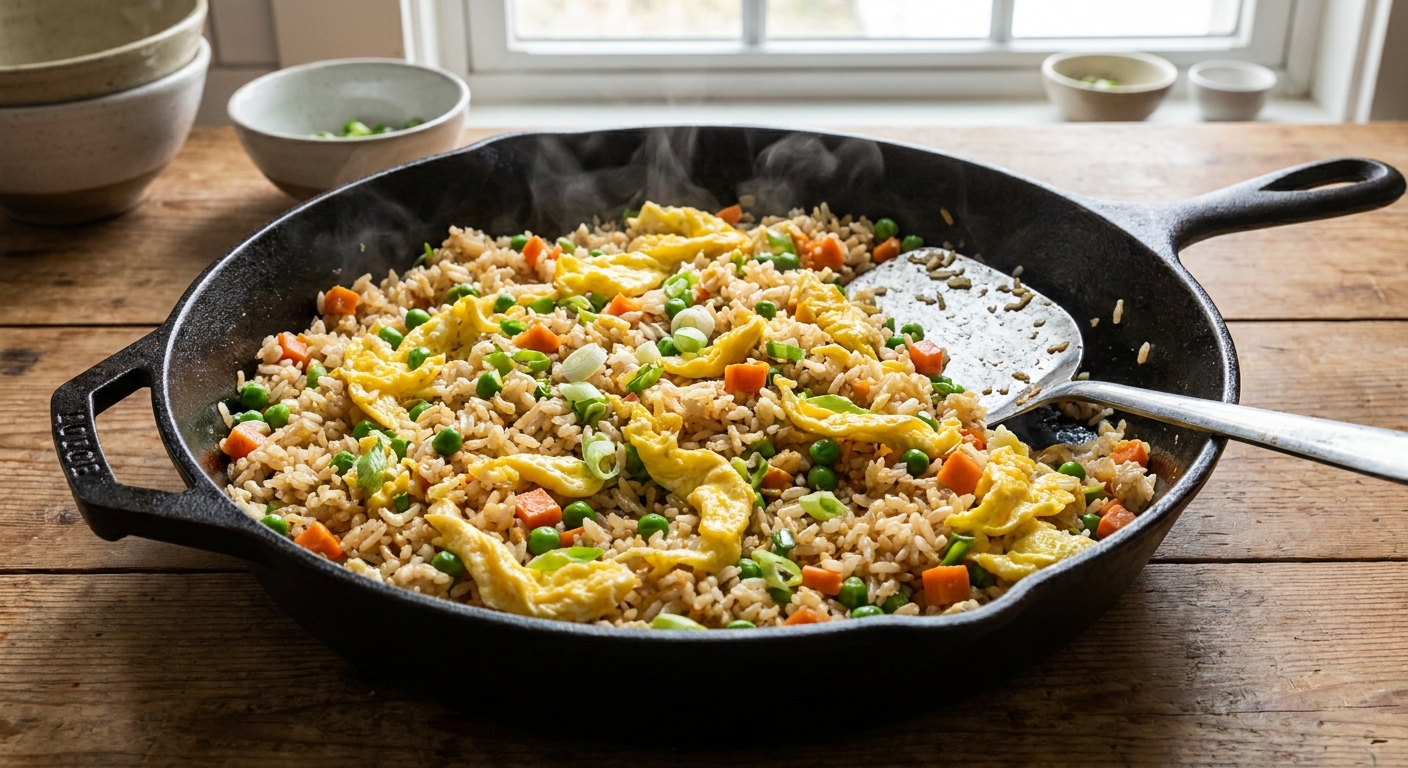
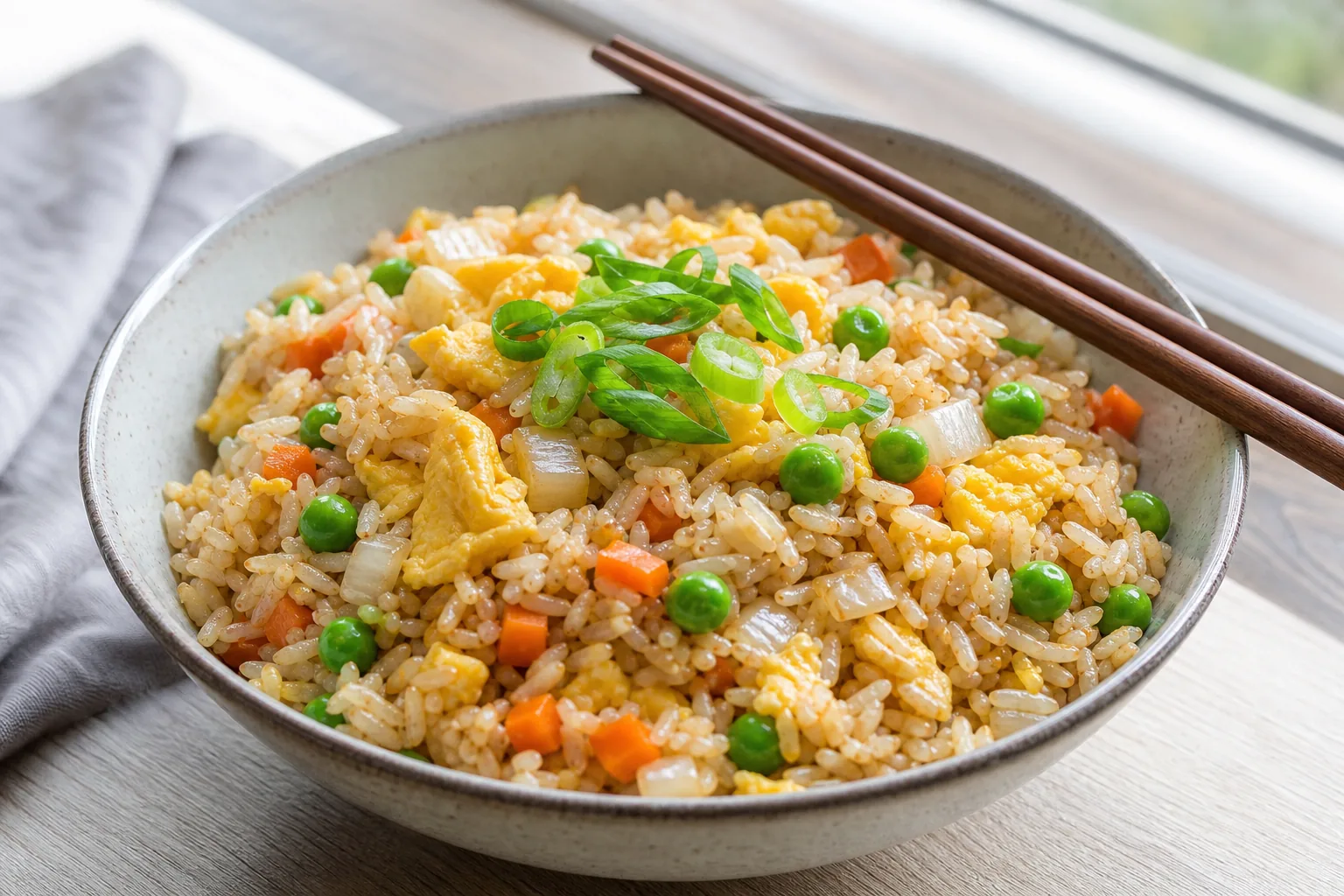
Fried rice is my favorite kind of kitchen magic because it turns “not enough to be a meal” leftovers into something you actually crave. Best part: it is not complicated. What makes takeout fried rice taste so good is largely timing and heat: cold, dry rice plus a hot pan, then a sauce that seasons without turning everything soggy. (Sure, restaurants also have screaming-hot burners and sometimes a little MSG or extra oil in the mix, but you can still get very close at home.)
This is the version I make on busy nights when I want that lightly toasty, glossy, clumpy-in-a-good-way texture. It is built for real life: the random bag of frozen peas, half an onion, a handful of spinach that needs saving, or leftover rotisserie chicken. If you can stir, you can make this.

You will notice I ask you to mix a quick sauce in a bowl and keep it nearby. That tiny step is what keeps the rice from steaming while you fumble with bottles. Once the pan is hot, everything moves fast, and that is exactly what we want.
What to expect
Think: lightly crisp edges on the rice, tender bites of egg, sweet pops of peas, and a savory umami finish that tastes wok-adjacent, even if you are using a regular skillet. This recipe is intentionally flexible, but the core method stays the same so you get consistent results even if you swap the mix-ins.
- Time: Quick enough for weeknights, especially with leftover rice.
- Skill level: Beginner-friendly, as long as you keep the pan hot and keep things moving.
- Flavor: Savory, a little toasty, and balanced, not overly salty.
A few quick tips before you start: Use your widest skillet or a wok so the rice can actually fry (carbon steel or cast iron helps). If you are doubling, cook in batches so you do not crowd the pan. And if you are adding watery vegetables like mushrooms or zucchini, cook them down first so they do not flood the rice.
Why this recipe works
- Cold rice equals better texture. Refrigerated rice is drier, so it fries instead of turning gummy.
- High heat, quick cooking. A hot pan drives off moisture fast and builds that subtle toasted flavor you associate with restaurants.
- Sauce added at the end. Seasoning late helps the rice stay separate and prevents the vegetables from weeping liquid.
- Egg cooked separately. Scrambling the eggs first keeps them tender and distinct instead of disappearing into the rice.
Ingredient notes
Rice: Day-old jasmine rice is my top pick for that classic takeout vibe, but any long-grain rice works. If you only have fresh rice, spread it on a sheet pan and refrigerate it for 30 to 45 minutes to dry it out.
Soy sauce: Use low-sodium if you can. It gives you more control, especially if your add-ins are salty (like ham or shrimp).
Oyster sauce: This is the quiet hero. It adds savory depth and a touch of sweetness. If you skip it, you can still make great fried rice, but it will taste a little flatter.
Sesame oil: A small amount at the end makes the whole pan smell like a good restaurant. Too much can taste heavy, so treat it like perfume, not cooking oil.
Vegetables: Frozen peas and carrots are classic and convenient. Just make sure they are not icy when they hit the pan so you do not cool down your heat.
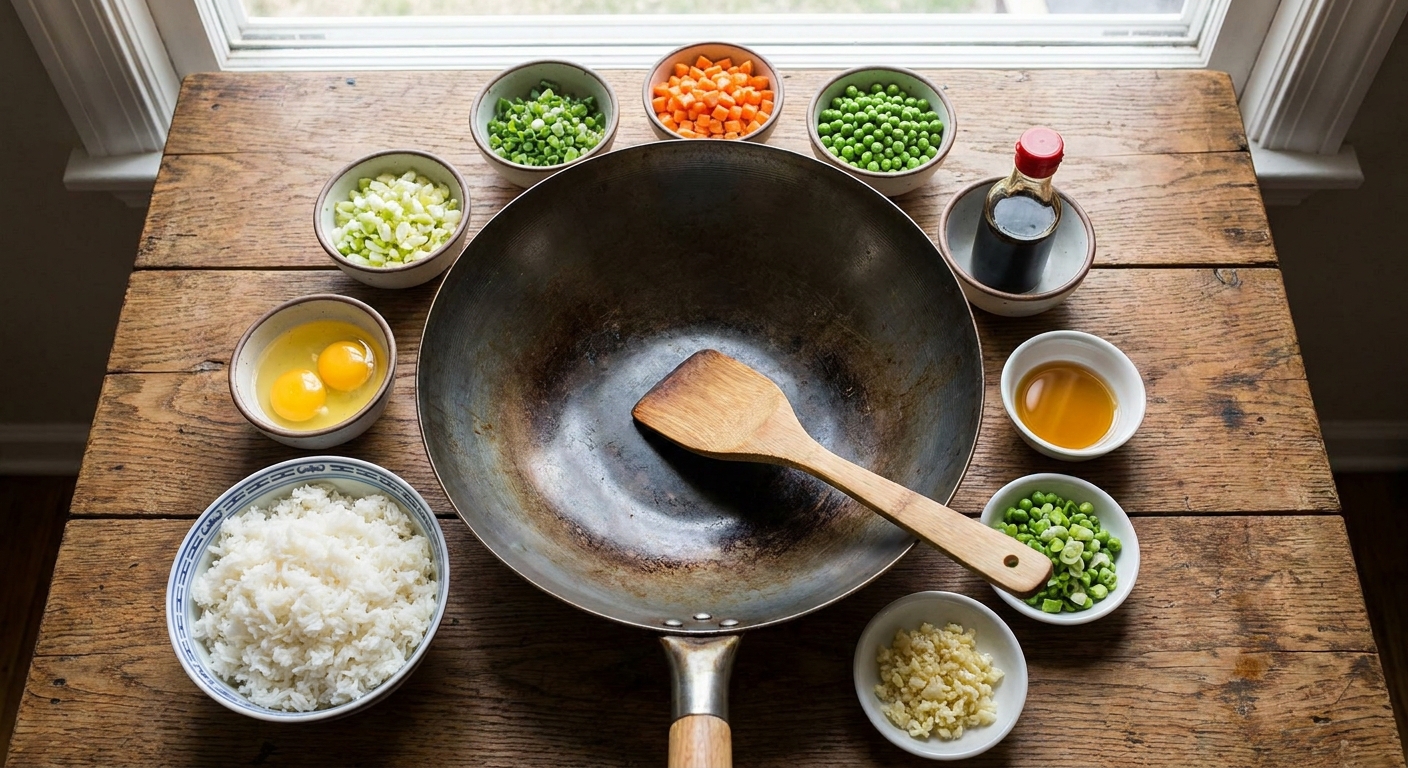
Equipment you will need
- Large skillet or wok: The wider the better so the rice can actually fry instead of steaming.
- Spatula: A thin metal spatula is great for scraping up browned bits, but any sturdy spatula works.
- Small bowl and whisk or fork: For mixing the sauce quickly.
- Sheet pan (optional): Useful for spreading fresh rice to cool and dry fast.
Pro tips
- Break up the rice before it hits the heat. Use damp hands or a fork to separate clumps so the pan does not have to do all the work.
- Preheat the pan like you mean it. Give it a full 2 to 3 minutes on medium-high to high heat. If the pan is lukewarm, you get mush.
- Cook in the right order. Aromatics, then vegetables, then rice, then sauce. Eggs go in and out so they stay fluffy.
- Let the rice sit for a moment. After you spread it in the pan, give it 20 to 30 seconds untouched. That is where browning happens.
- Taste at the end. Salt levels vary a lot between soy sauces, oyster sauce brands, and add-ins. Finish with a small splash of soy if needed.
Substitutes that work
- No oyster sauce? Use hoisin sauce (slightly sweeter) or add 1 to 2 teaspoons of brown sugar plus a splash of extra soy sauce.
- No sesame oil? Finish with a tiny pat of butter for richness, or simply skip it.
- Gluten-free: Use tamari in place of soy sauce and a gluten-free oyster sauce or mushroom stir-fry sauce.
- Protein options: Leftover chicken, diced ham, cooked shrimp, ground pork, tofu, or edamame all work well.
- Vegetable swaps: Corn, diced bell pepper, shredded cabbage, chopped broccoli florets, or spinach. For watery vegetables like mushrooms or zucchini, cook them a bit longer to drive off moisture.
Variations
Chicken fried rice
Add 1 to 2 cups diced cooked chicken. Warm it through right after the vegetables, before the rice goes in.
Shrimp fried rice
Quick-sear shrimp first (1 to 2 minutes per side), remove, then add back at the end so they stay juicy.
Pineapple fried rice
Add 3/4 cup pineapple chunks and a pinch of curry powder. Keep the sauce a little lighter and finish with extra lime.
Kimchi fried rice
Stir in chopped kimchi and a spoonful of its juice near the end. Top with a fried egg if you want it extra cozy.
Serving ideas
- Top with sliced scallions, toasted sesame seeds, and chili crisp.
- Serve with quick cucumber salad or steamed edamame to balance the richness.
- Add a soft or fried egg on top for a diner-style comfort bowl.
- Pair with a simple broth-based soup like miso soup for a full takeout-at-home night.
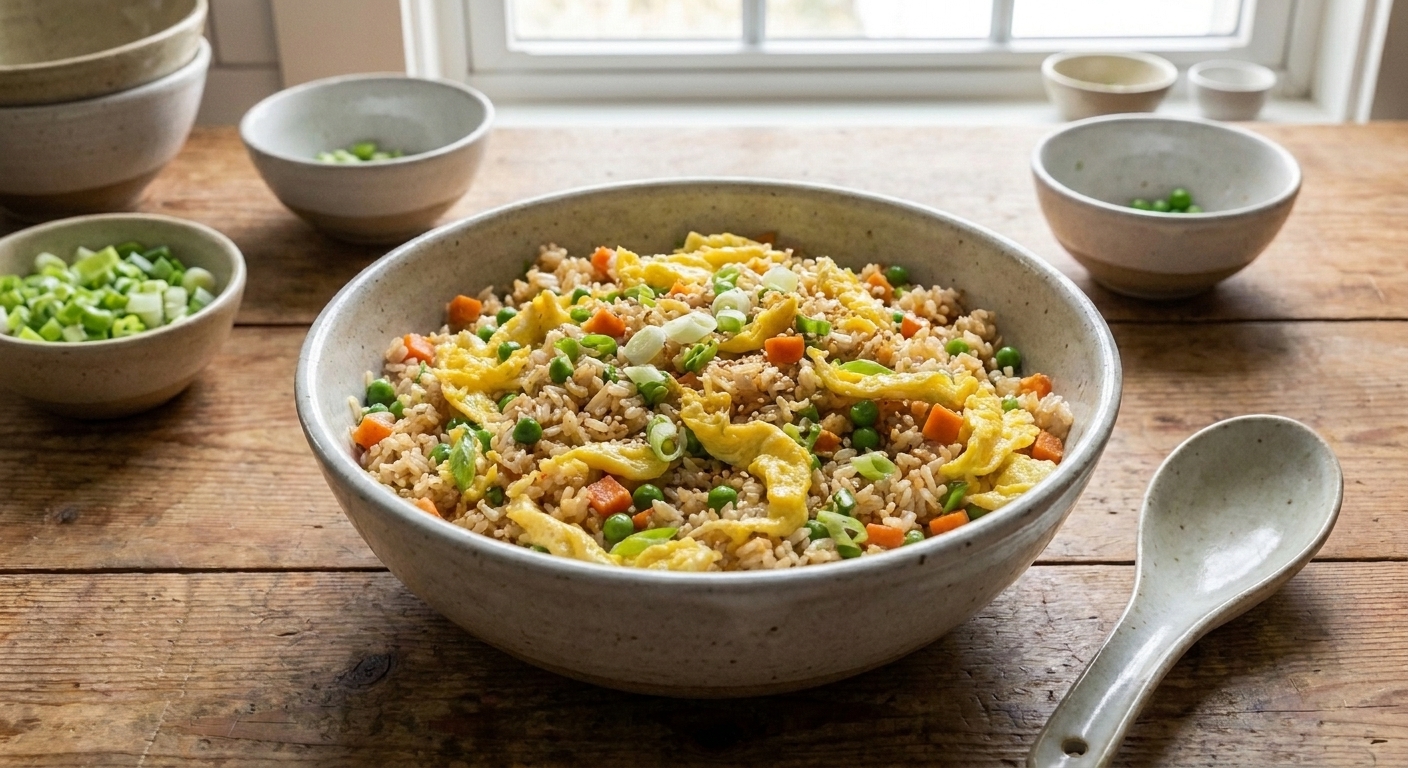
Storage and reheating
Refrigerate: Cool leftovers quickly and store in an airtight container for up to 4 days.
Freeze: Fried rice freezes surprisingly well. Portion into freezer containers and freeze up to 2 months. Thaw overnight in the fridge for best texture.
Reheat: The best method is in a hot skillet with a tiny splash of water, stirring just until warmed through. The microwave works too, but cover it and stir halfway so it heats evenly.
Food safety note: Rice should not sit at room temperature for long periods. If you are packing it for lunch, chill it promptly and keep it cold until you reheat.
Common mistakes
- Using hot, freshly cooked rice. It is too steamy and soft. Cool it first.
- Overcrowding the pan. If your skillet is small, cook in two batches. Crowding leads to steaming.
- Adding sauce too early. Liquid early equals mushy rice and pale flavor.
- Not drying vegetables. If you rinse or thaw veggies, pat them dry. Water is the enemy of browning.
- Stirring nonstop. Give the rice little pauses against the hot surface so it can toast.
FAQ
What kind of rice is best for fried rice?
Long-grain rice like jasmine or basmati is ideal because it stays fluffy and separate. Medium-grain works too, but it clumps more easily. Short-grain tends to be stickier, so it is trickier but still doable if it is very cold and you use high heat.
Can I make fried rice with fresh rice?
Yes. Spread the cooked rice on a sheet pan in a thin layer, then refrigerate 30 to 45 minutes (or freeze 10 to 15 minutes) to dry the surface before frying.
Why does my fried rice turn out soggy?
The usual culprits are warm rice, too much sauce, or a pan that was not hot enough. Also watch watery add-ins like mushrooms. Cook them down first so they do not release liquid into the rice.
How do I get that restaurant “wok” flavor at home?
You are chasing high heat and quick evaporation. Preheat the pan, use enough oil to coat, and avoid crowding. A carbon steel wok on a strong burner helps, but a wide skillet on high heat can still get you close.
Can I make it vegetarian?
Absolutely. Skip the meat and use tofu or edamame for protein. If you use oyster sauce, choose a vegetarian “mushroom oyster sauce” style product.
The recipe
Easy Fried Rice Better Than Takeout
Fast, savory fried rice with crisp-tender veggies, fluffy egg, and a simple sauce that tastes like your favorite takeout, only fresher.
- Prep
- 10 minutes
- Cook
- 10 minutes
- Total
- 20 minutes
- Yield
- 4 servings
Ingredients
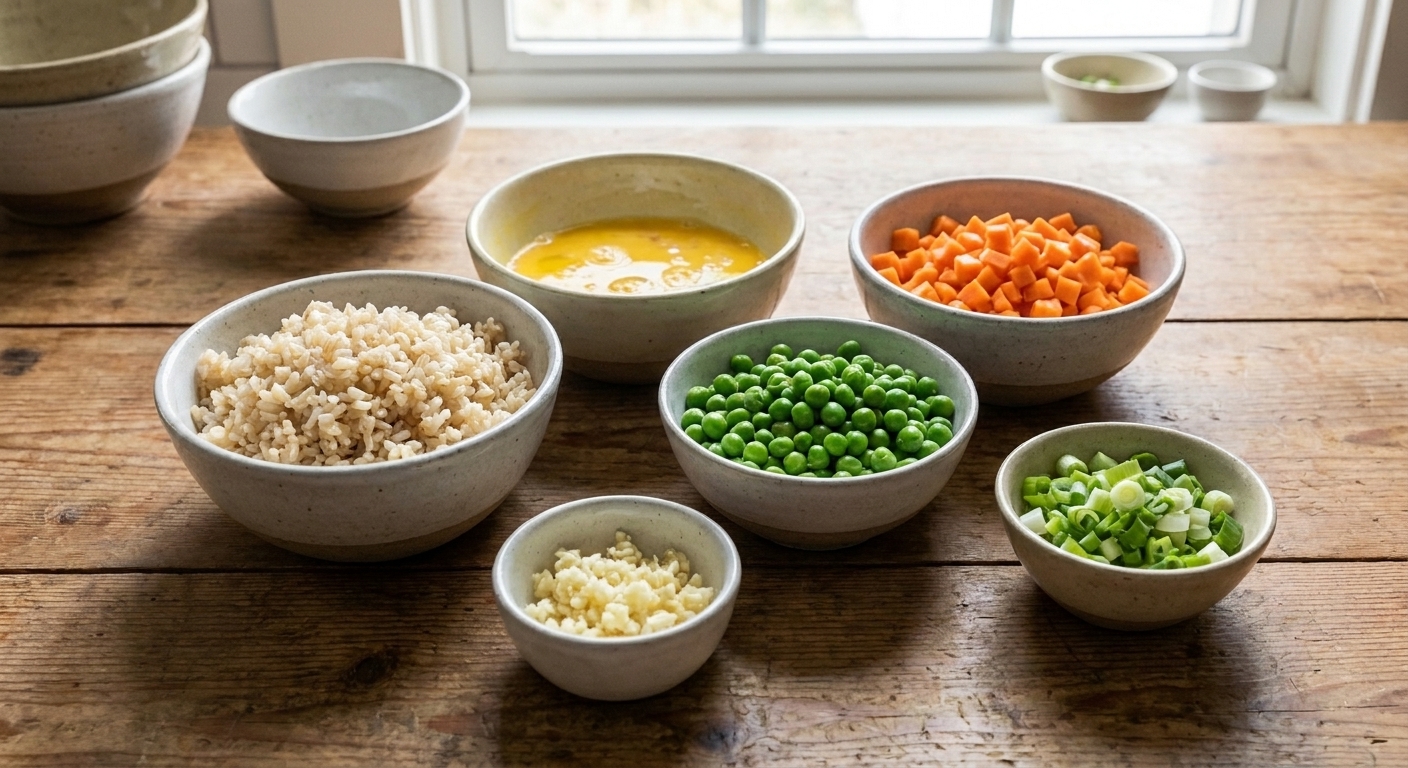
- 3 cups cold cooked jasmine rice (preferably day-old)
- 2 large eggs, lightly beaten
- 2 tbsp neutral oil (avocado, canola, or grapeseed), divided
- 1/2 medium yellow onion, finely diced
- 2 medium carrots, diced small (about 3/4 cup)
- 3/4 cup frozen peas, thawed
- 3 cloves garlic, minced
- 2 tsp grated fresh ginger (optional but great)
- 3 tbsp low-sodium soy sauce (or tamari)
- 1 1/2 tbsp oyster sauce (or vegetarian mushroom sauce)
- 1 tsp toasted sesame oil
- 2 scallions, thinly sliced
- 1/4 tsp white pepper (or black pepper)
- Salt, to taste
- 1 to 2 cups cooked protein (optional: chicken, shrimp, ham, tofu)
Instructions
- Mix the sauce. In a small bowl, stir together the soy sauce and oyster sauce. Set next to the stove.
- Scramble the eggs. Heat a large skillet or wok over medium-high heat. Add 1/2 tablespoon oil. Pour in the eggs and gently scramble until just set, 30 to 60 seconds. Transfer to a plate.
- Cook the aromatics and vegetables. Add the remaining oil to the hot pan. Add onion and carrots and cook, stirring, until the onion softens and the carrots start to turn tender, 2 to 3 minutes. Add garlic and ginger and cook 20 to 30 seconds until fragrant. Stir in peas for 30 seconds to warm.
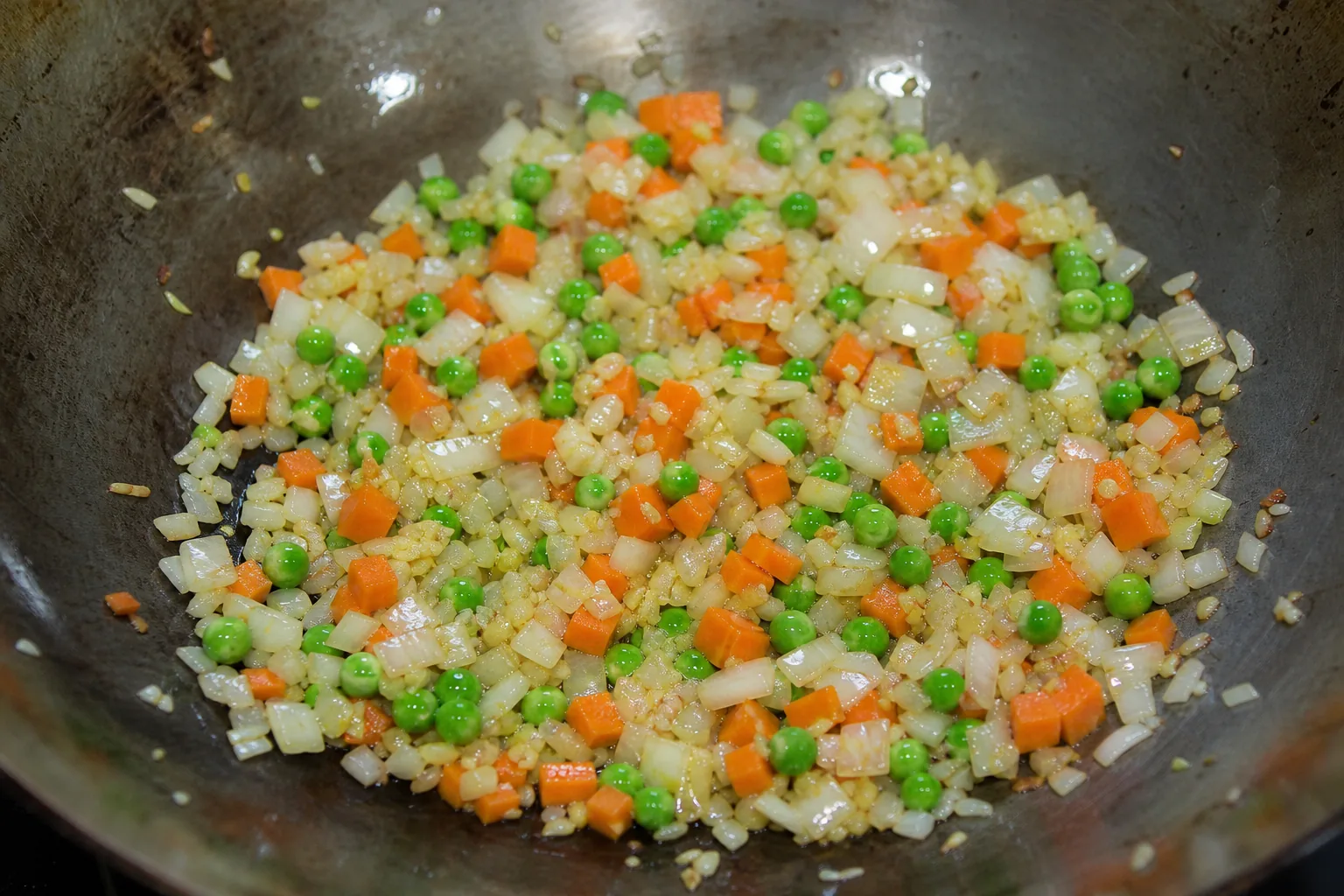
Cook the onion and carrots, then add the garlic, ginger and peas. - Add rice and fry. Add the cold rice. Use your spatula to break up any clumps, then spread the rice into an even layer. Let it sit undisturbed for 20 to 30 seconds, then stir. Repeat once or twice so some grains toast.
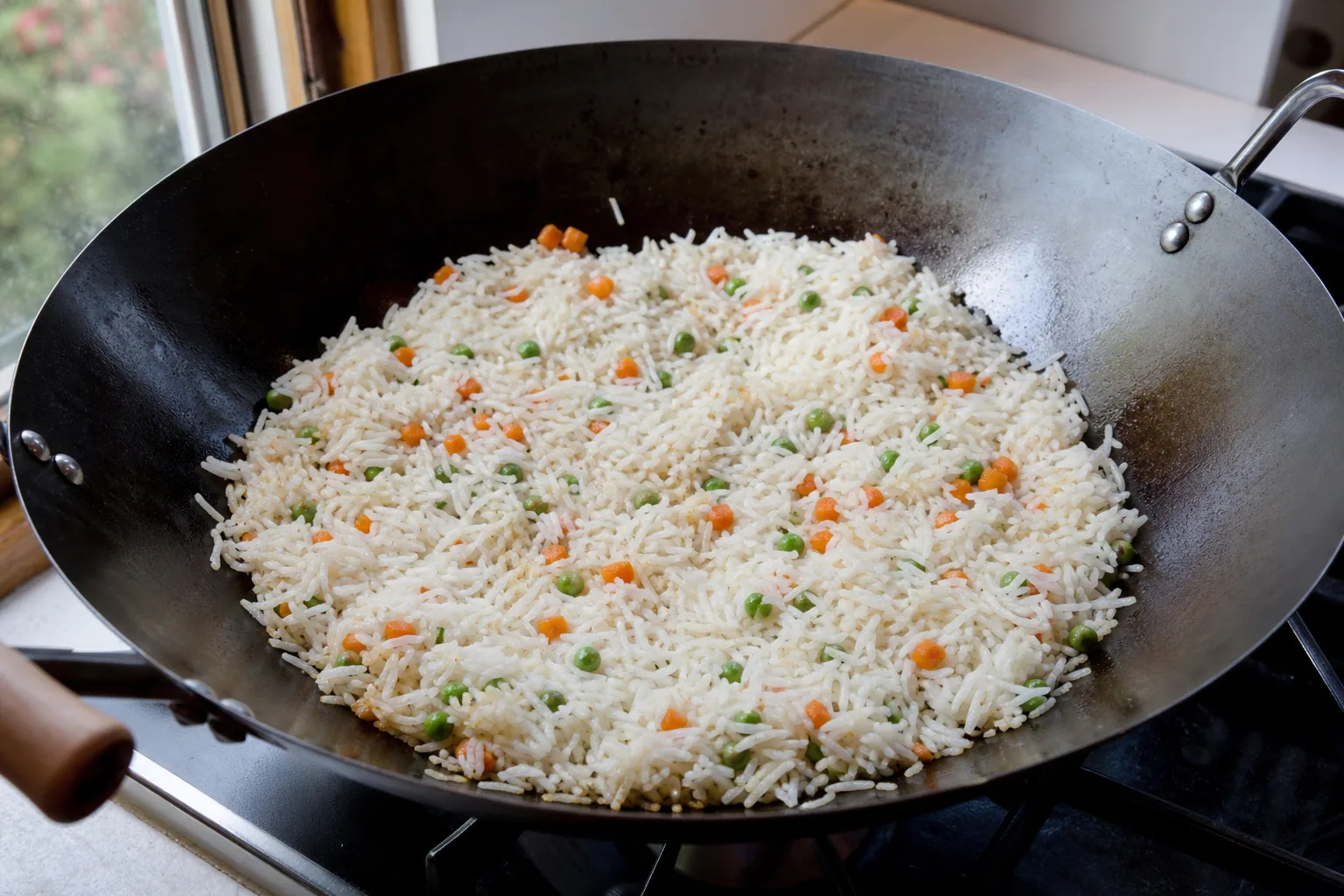
Spread the rice in an even layer and let some grains toast. - Season. Drizzle the sauce around the edge of the pan, then toss well so it coats the rice. Sprinkle in white pepper.
- Add mix-ins and finish. Add the cooked eggs back in (and cooked protein, if using). Toss until everything is hot, about 1 minute. Turn off the heat and stir in sesame oil and most of the scallions.
- Taste and serve. Adjust with a small splash of soy sauce or a pinch of salt if needed. Top with remaining scallions and serve hot.
Notes
Best rice texture: If your rice is clumpy, break it up before it goes in the pan. A quick trick is to wet your hands slightly and rub the clumps apart.
Small pan? Cook in two batches. Crowding the pan is the fastest way to get steamed rice instead of fried rice.
Heat level: If anything starts to scorch, lower the heat slightly and keep stirring. Every stove runs a little different.
Nutrition
Estimated per serving (without optional added protein): 340 calories, 10 g fat, 55 g carbs, 8 g protein, 3 g fiber, 720 mg sodium. Values vary by brand and add-ins.