
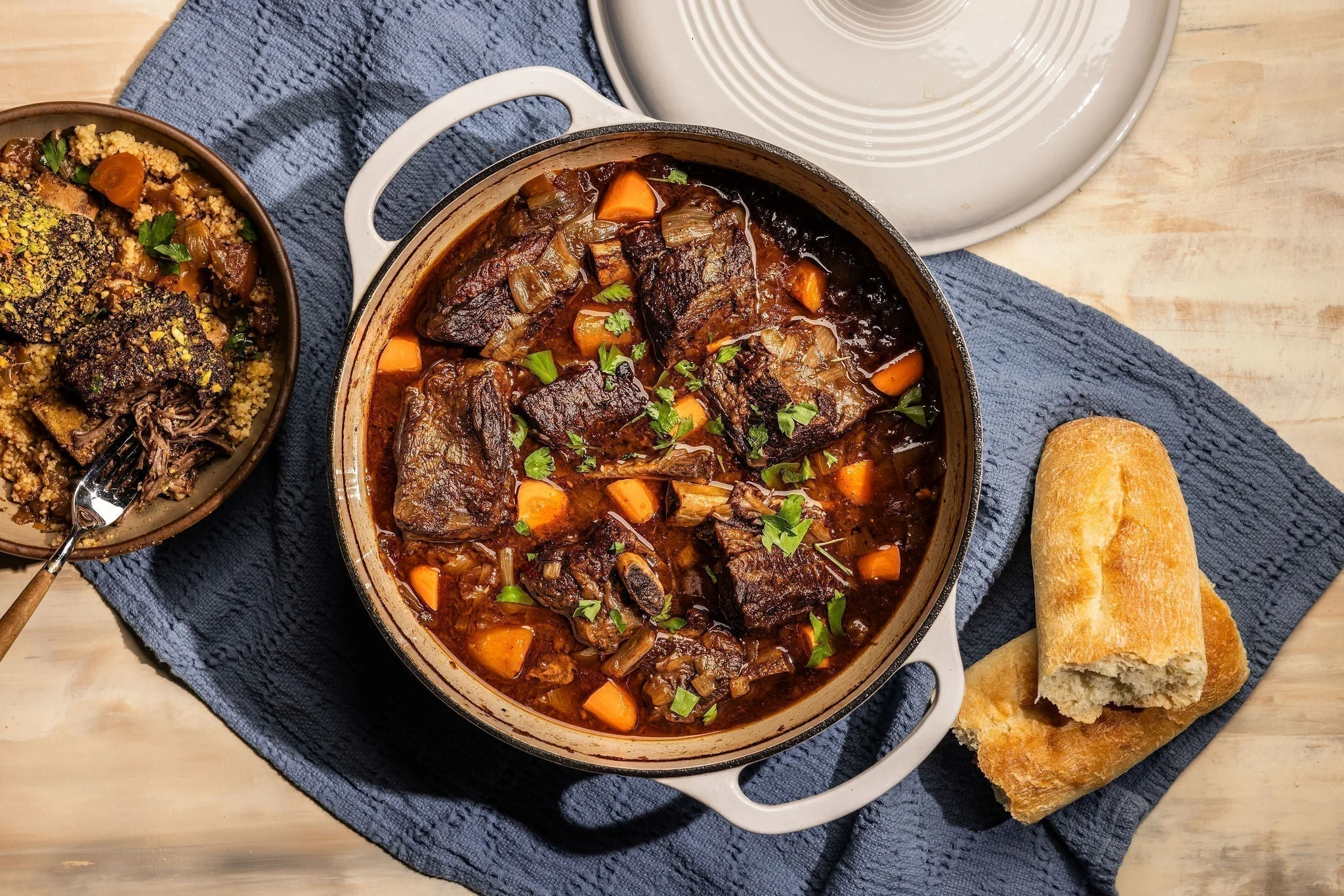
Braised short ribs are one of those dishes that feel like a special occasion, but the truth is they are mostly hands-off cooking time. You sear, you build a flavorful liquid, and then the oven does the patient part for you. The reward is big: beef that practically collapses into the sauce, and a pot of rich, glossy braising liquid that tastes like it has been quietly working all day because it has.

If you have ever had short ribs that were tough, dry, or weirdly greasy, this guide is for you. We are going to focus on the simple technique choices that make them reliably tender: proper browning, the right amount of liquid, a low oven temperature, and enough time for collagen to melt into silky goodness.
Why braising makes ribs tender
Short ribs are loaded with connective tissue. That can be a little intimidating, but it is actually the whole point. When you cook them low and slow in a moist environment, collagen breaks down into gelatin. Gelatin is what gives the meat that spoon-tender texture and gives the sauce body without needing a thickener.
The two keys are temperature and time. High heat makes the muscle fibers tighten and squeeze out moisture. Gentle heat, held long enough, turns that tough connective tissue into a luxurious texture. Think: steady, cozy simmer, not a hard boil.
Buying short ribs
English-cut vs flanken-cut
- English-cut short ribs are cut parallel to the bone into thick chunks. These are the classic choice for braising.
- Flanken-cut short ribs are cut across the bones into thinner strips with several small bone circles. They are fantastic for grilling or quicker cooking, but they can overcook easily in a long braise.
For this recipe, reach for English-cut, bone-in short ribs if you can. The bones help protect the meat from drying and add richness to the sauce.
Bone-in or boneless
Boneless works, but bone-in is more forgiving and typically more flavorful. If you buy boneless, ask for pieces that are thick and well-marbled, not thin strips.
Ingredients for big flavor
This is a flexible braise, so do not feel locked into one exact shopping list. The structure matters more than the specifics.
- Short ribs: about 3 to 4 pounds total for 4 to 6 servings.
- Aromatics: onion plus carrot and celery if you have them.
- Tomato paste: a tablespoon or two adds depth and a little sweetness.
- Liquid: beef stock is the backbone. Red wine is optional but wonderful.
- Herbs: bay leaf, thyme, rosemary, or a mix.
- All-purpose flour (optional): a light dusting helps browning and gives the sauce a subtle body.
On wine: choose something dry that you would drink. It does not have to be expensive. If you would rather skip alcohol, replace the wine with extra stock plus 1 tablespoon balsamic vinegar or 2 teaspoons Worcestershire for complexity.
How to braise short ribs
Plan on about 3 hours total, with only about 30 to 40 minutes of active cooking. If you can braise them a day ahead, even better. The flavor deepens, and de-fatting the sauce is remarkably easy when it is cold.
1) Season generously
Salt the ribs well on all sides. If you have time, do this 1 to 24 hours ahead and refrigerate uncovered. That little dry brine makes the beef taste more like itself.
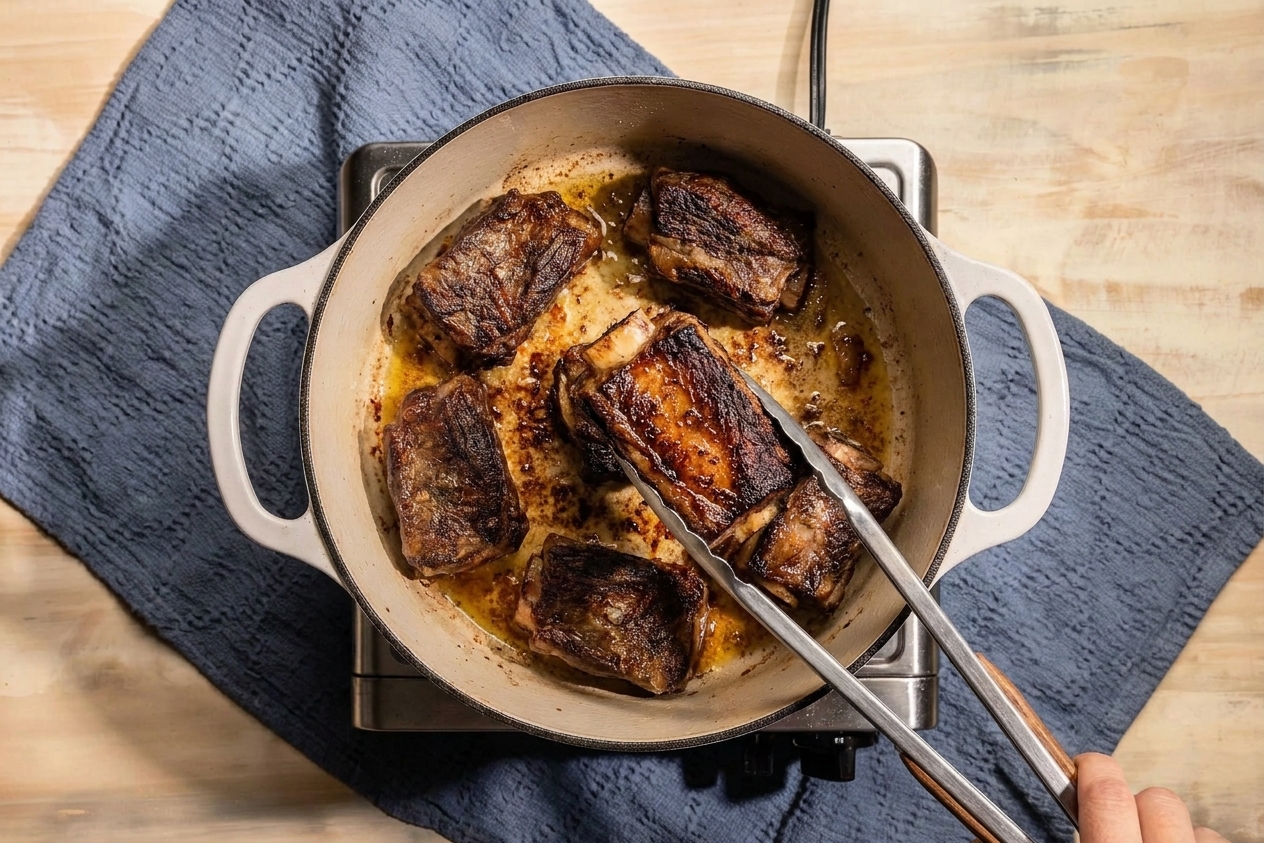
2) Sear for real crust
Heat a Dutch oven over medium-high with a thin layer of oil. Sear the ribs in batches until deeply browned on multiple sides. This is not just color. Browning creates hundreds of flavor compounds that end up in the sauce.
If your pot starts to look burnished and dark on the bottom, that is good. If it looks black and smells acrid, the heat is too high. Pull back, add a splash of stock to loosen it, and keep going.
3) Build the base
Lower the heat to medium. Add onion, carrot, and celery with a pinch of salt. Cook until the onion softens and starts to pick up color. Stir in tomato paste and toast it for 1 minute so it darkens slightly and smells sweet.
4) Deglaze, then set up the braise
Pour in wine if using, scraping the bottom of the pot to dissolve all those browned bits. Let it simmer for 2 to 3 minutes to cook off the harsh alcohol edge. Add stock and herbs, then nestle the ribs back in.
You want the liquid to come about halfway up the ribs, not cover them completely. The exposed top gets gentle roasting, the submerged part braises, and the texture ends up perfect.
Before the pot goes into the oven, aim for a gentle simmer, not a rolling boil. If it is bubbling aggressively, lower the heat.
5) Low oven, plenty of time
Cover and braise at 300°F until the meat is fork-tender, typically 2 1/2 to 3 1/2 hours depending on size. Check at the 2 1/2 hour mark.
Doneness cues: A fork should slide in with little resistance, and the meat should pull away from the bone easily. If you like a number, many cooks aim for roughly 195 to 205°F in the thickest part, but texture is the real test.
If the meat still feels resistant, it needs more time. Short ribs usually turn tough because they are undercooked, and they get tender when they have gone long enough at a gentle braise. (They can also dry out if cooked too hot or boiled hard, so keep the heat low and steady.)
6) Reduce and finish the sauce
Transfer ribs to a plate. Skim fat from the surface of the braising liquid. Simmer the liquid until it looks glossy and lightly coats a spoon. Taste and adjust with salt, a few cracks of black pepper, and a tiny splash of vinegar if it tastes heavy.
For a smoother sauce, strain out the vegetables and herbs. For a more rustic sauce with extra body, keep the vegetables and mash them lightly into the liquid, or blend a small portion and stir it back in.
If your sauce tastes flat, it almost always needs one of two things: more salt or a small hit of acid. Add either in tiny increments and taste as you go.
Recipe card
Tender Braised Short Ribs
Serves: 4 to 6
Active time: 40 minutes
Total time: 3 to 4 hours
Ingredients
- 3 to 4 lb bone-in English-cut beef short ribs
- Kosher salt and black pepper
- 1 to 2 tbsp all-purpose flour (optional)
- 2 tbsp neutral oil (avocado, grapeseed, or vegetable)
- 1 large onion, chopped
- 2 carrots, chopped
- 2 celery stalks, chopped
- 4 cloves garlic, smashed or minced
- 2 tbsp tomato paste
- 1 1/2 cups dry red wine (optional)
- 2 to 3 cups beef stock (enough to reach halfway up the ribs)
- 2 bay leaves
- 4 to 6 sprigs thyme (or 1 tsp dried)
- 1 sprig rosemary (optional)
- 1 to 2 tsp balsamic vinegar or red wine vinegar (optional finishing lift)
Instructions
- Heat oven to 300°F. Pat short ribs dry. Season generously with salt and pepper. Lightly dust with flour if using.
- Heat oil in a Dutch oven over medium-high. Sear ribs in batches until deeply browned on multiple sides, 10 to 15 minutes total. Transfer to a plate.
- Lower heat to medium. Add onion, carrot, and celery with a pinch of salt. Cook 6 to 8 minutes, stirring and scraping up browned bits.
- Add garlic and tomato paste. Cook 1 minute, stirring, until the paste darkens slightly.
- Pour in wine if using and scrape the pot well. Simmer 2 to 3 minutes. Add stock, bay leaves, thyme, and rosemary.
- Return ribs to pot, with liquid reaching about halfway up the ribs. Bring just to a gentle simmer.
- Cover and transfer to oven. Braise 2 1/2 to 3 1/2 hours, until fork-tender and the meat pulls from the bone easily.
- Transfer ribs to a platter. Skim fat from the sauce, then simmer on the stove until slightly reduced and glossy. Strain if desired. Taste, season, and add a few drops of vinegar if needed.
- Serve ribs with sauce spooned over top.
Make-ahead
Cool and refrigerate ribs in the sauce overnight. The next day, lift off the solidified fat, rewarm gently at 300°F covered until hot, then reduce the sauce if desired.
Slow cooker and Instant Pot
Slow cooker
Short ribs do great in the slow cooker, but do not skip the stovetop steps. Sear first, then sauté the aromatics and deglaze in your Dutch oven or skillet. Transfer everything to the slow cooker.
- Cook time: 8 to 9 hours on LOW, or 5 to 6 hours on HIGH.
- Finish: Reduce the sauce on the stovetop for best texture and flavor.
Instant Pot
The Instant Pot is a lifesaver on busy days, but the sauce will taste best if you still take time to brown well.
- Sear ribs on SAUTÉ in batches.
- Sauté aromatics and tomato paste, then deglaze thoroughly.
- Pressure cook on HIGH for 40 to 55 minutes (closer to 40 for smaller pieces, closer to 55 for thicker ones), then natural release for 15 minutes.
- Simmer on SAUTÉ to reduce the sauce.
One note: pressure cooking makes very tender meat, but it will not have quite the same oven-braised texture. Still delicious, just a little different.
How to serve
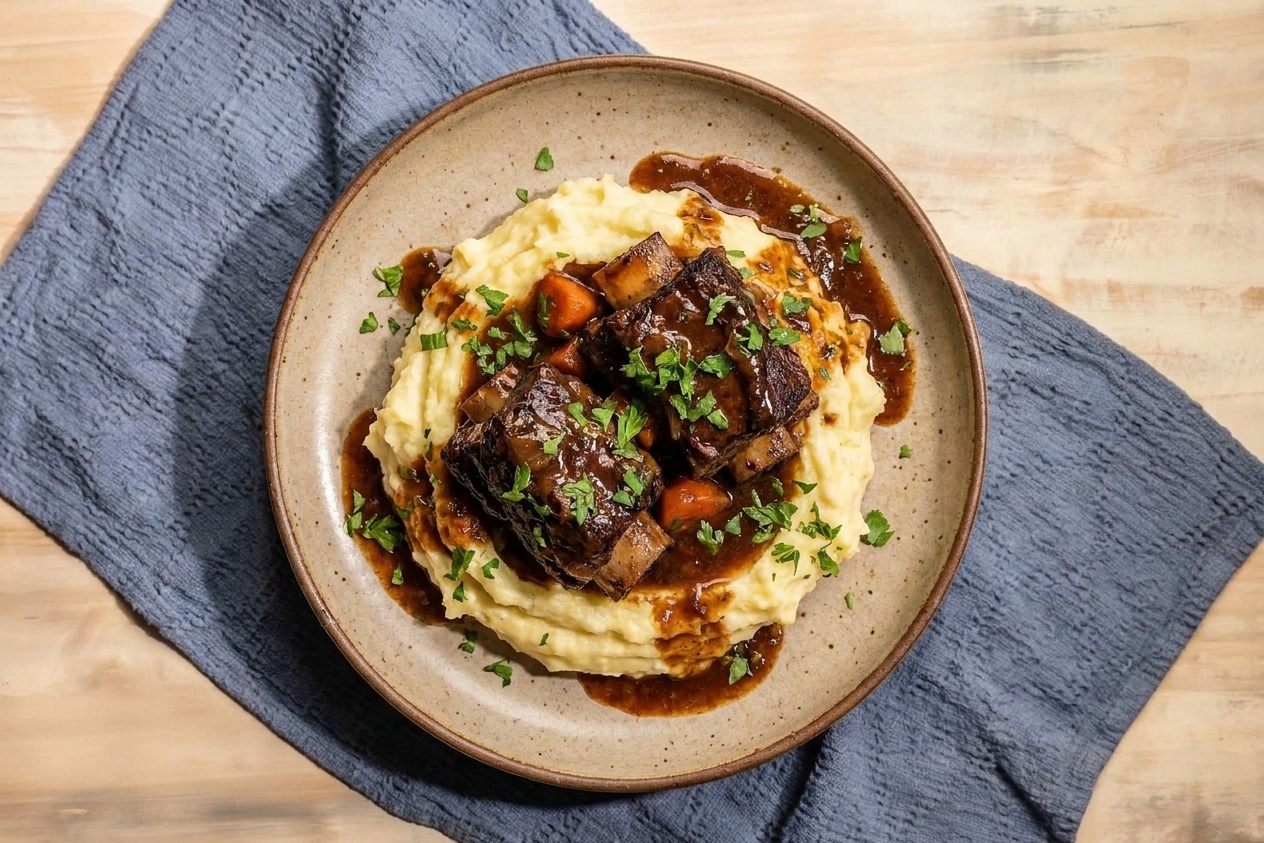
Short ribs love anything that can catch sauce. My favorites:
- Mashed potatoes or mashed cauliflower
- Polenta or creamy grits
- Buttered egg noodles
- Crusty bread for mopping
- Roasted carrots, sautéed greens, or a sharp little salad to balance richness
Troubleshooting
My short ribs are still tough
They usually need more time. Keep braising and check every 20 to 30 minutes. Also make sure the braise is gentle, since an aggressive simmer can tighten the meat and reduce the liquid too quickly.
The sauce is greasy
Skim fat as it rises, and for the easiest fix, chill the pot overnight. The fat solidifies on top and lifts off in one clean sheet.
The sauce tastes thin
Simmer it uncovered on the stove until it reduces and turns glossy. If you want extra body, whisk in a small pat of cold butter at the end to give it a silky finish.
The sauce tastes bitter
Usually this comes from burned fond or scorched garlic. Next time, sear at slightly lower heat and keep an eye on the pot between batches. For now, try balancing with a pinch of sugar and a small splash of vinegar, then salt to taste.
Storage and leftovers
How long they keep
- Refrigerator: 4 days, stored in the sauce.
- Freezer: 2 to 3 months. Freeze ribs with sauce in airtight containers.
Best way to reheat
Reheat covered in a 300°F oven with a splash of stock if needed, until hot throughout. Gentle heat keeps the meat tender. The microwave works in a pinch, but use medium power and short bursts.
Leftover ideas
- Short rib ragù: Shred the meat into the sauce and serve over pasta.
- Tacos: Crisp shredded short rib in a skillet, then pile into tortillas with onion, cilantro, and lime.
- Sandwich: Warm meat and sauce, then tuck into a roll with arugula or pickled onions.
FAQ
What temperature is best for braising short ribs?
300°F is my sweet spot. It is hot enough to keep things moving, but gentle enough for tender results without drying. Keep the braising liquid at a gentle simmer, not a boil.
Do I need wine for braised short ribs?
No. Wine adds complexity, but you can replace it with stock plus a small amount of vinegar or Worcestershire for a similar savory lift.
Should the ribs be fully submerged?
No. Aim for the liquid to come halfway up the ribs. That balance gives you tender braised meat with a little roasty depth on top.
Can I make them the day before?
Yes, and I highly recommend it. The flavor improves overnight, and removing fat is easiest when the sauce is cold.