
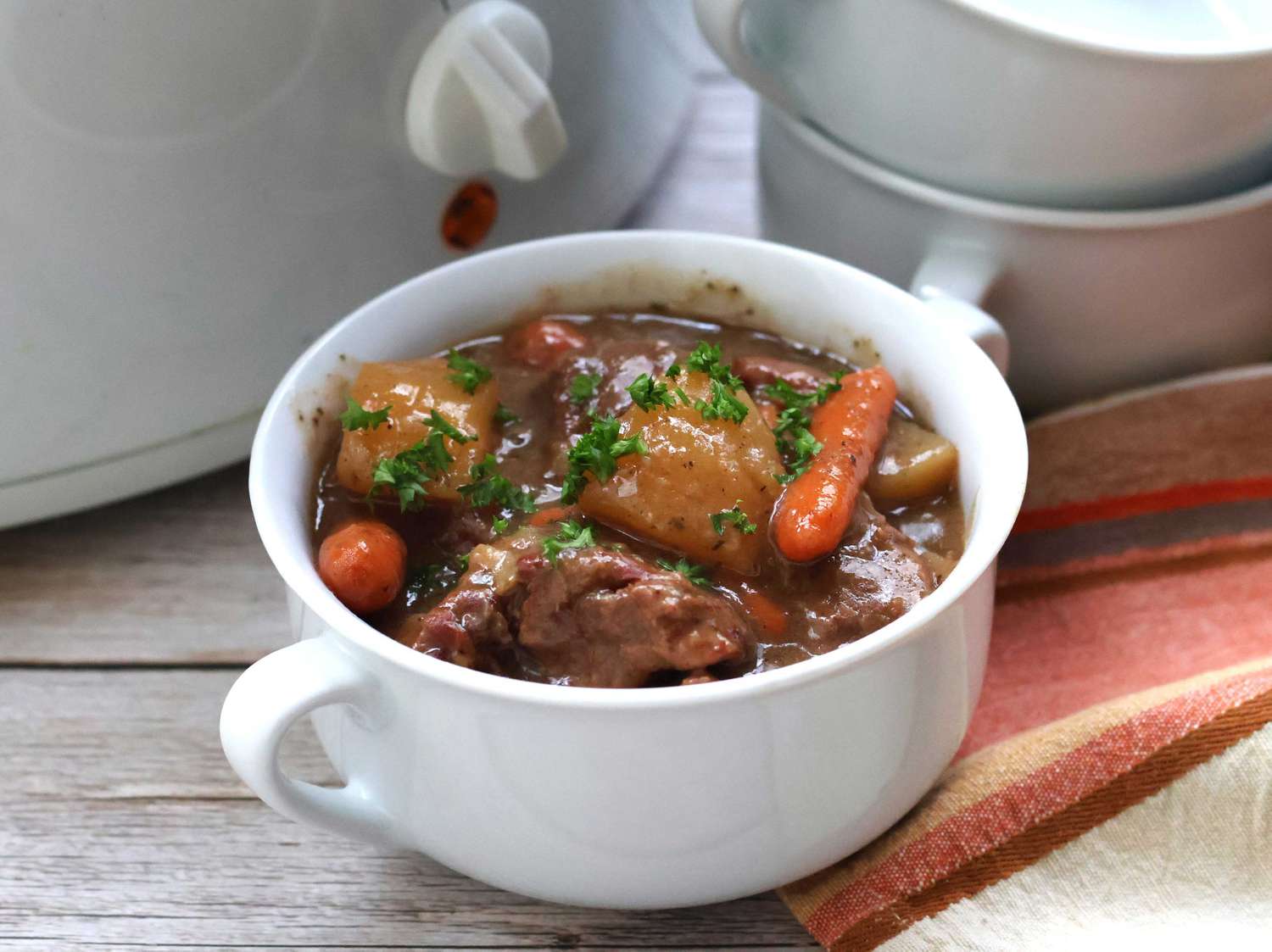
There are some meals that make the whole house feel calmer. Beef stew is one of them. You do a little chopping, give everything a good stir, and then the slow cooker does what it does best: turns humble ingredients into something that tastes like a warm blanket.
This is my go-to comforting crock pot beef stew for real life. The beef gets properly tender, the potatoes usually stay intact (not mushy), and the broth thickens into that cozy, spoon-clinging gravy you want with crusty bread.

Why this recipe works
- Chuck roast loves low and slow. It has enough marbling and connective tissue to turn buttery over several hours.
- Layered flavor without fancy steps. Tomato paste, Worcestershire, and herbs build a deep, classic stew taste.
- Two easy thickening options. Flour at the start for hands-off thickening, or a cornstarch slurry at the end for a glossy finish.
- Vegetables that hold their shape. Adding peas at the end keeps them bright and sweet, not gray and soft.
Ingredient notes
This is a classic list, with a few smart upgrades that keep it tasting like it simmered on the stove all day.
- Best beef choice: Look for chuck roast labeled chuck shoulder roast or chuck pot roast. Avoid “stew meat” if you can. It can be a mix of cuts and may cook unevenly.
- Potatoes: Yukon Gold or red potatoes usually hold up better than russets in the slow cooker.
- Carrots: Cut into chunky pieces so they do not disappear.
- Celery: Optional, but it adds a classic savory backbone.
- Broth: Low sodium if possible.
- Worcestershire: Or soy sauce in a pinch.
- Peas: Stir in at the end to keep them bright and sweet.
- Salt tip: Broth varies a lot. If you are using regular (not low sodium) broth, start with a little less salt and adjust at the end.
Equipment you will need
- Slow cooker (crock pot)
- Large skillet (optional, for browning the beef)
- Cutting board and knife
- Measuring pitcher (for whisking the broth mixture)
- Mixing bowl (for seasoning and coating the beef)
- Spoon for stirring
- Airtight containers (for storing leftovers)
Pro tips
- Cut beef into evenly sized cubes (about 1 1/2 inches). Bigger pieces stay juicy.
- Keep potato and carrot chunks large. Vegetable size matters for preventing mush.
- Brown the beef if you have 10 extra minutes. You are not cooking it through, just building flavor with browning.
- Reality check for busy days: If you skip browning, use an extra tablespoon of tomato paste plus a good pinch of salt. It helps.
- Use tenderness as your finish line. Slow cookers vary, so cook until the beef is fork-tender, even if it takes a bit longer.
- Do not keep lifting the lid. Each peek drops the heat and adds time.
- For cornstarch thickening: The stew needs to be very hot for the cornstarch to thicken. If your slow cooker runs cool, plan on the longer end of the time range.
Substitutes that work
- Out of Worcestershire? Use 1 tablespoon soy sauce plus a tiny splash of vinegar.
- No potatoes? Try sweet potatoes (softer, sweeter) or add butter beans at the end.
- Need to adjust salt? If it ends up too salty, add a splash of water or unsalted broth.
Variations
- More veggies: Add mushrooms, parsnips, or turnips.
- Darker, ale-style stew: Replace 1 cup broth with a dark beer, like a stout.
- More herby: Stir in chopped parsley right before serving for freshness.
- Soup-style leftover twist: Add extra broth and a handful of barley.
Serving ideas
- Crusty bread or garlic toast for dunking
- Simple green salad with a sharp vinaigrette to balance the richness
- Roasted green beans or sautéed kale
- Buttermilk biscuits if you want peak comfort
- Serve leftovers over buttered noodles or mashed potatoes.
- Spoon into ramekins, top with puff pastry, and bake for quick pot pies.
Storage and reheating
Make-ahead
You can chop vegetables and cube beef up to 24 hours ahead. Store separately in the fridge. In the morning, dump, pour, and go.
Refrigerator
Store in an airtight container for up to 4 days. For best food safety, cool leftovers quickly and refrigerate within about 2 hours. The flavor gets even better on day two.
Freezer
Freeze for up to 3 months. Heads up: potatoes can get a little grainy after freezing and thawing, even the waxy ones. For best texture, freeze the stew without potatoes and add freshly cooked potatoes when reheating (or plan on the potatoes being softer).
Reheating
Reheat until steaming hot, either on the stove over medium heat or in the microwave, stirring occasionally. Add a splash of broth if it has thickened up in the fridge.
Common mistakes
- Using a lean cut: If your stew beef is tough, it is often because the cut is too lean. Chuck roast is the safe bet for low and slow cooking.
- Stopping the cook too early: Tough beef usually means it has not cooked long enough. Keep going until it is truly fork-tender.
- Cutting vegetables too small: Small pieces can turn to mush. Keep carrots and potatoes in large chunks.
- Cooking too long after it is tender: Beef can go from tender to stringy if it stays on heat too long after it is fully tender, especially on HIGH. If it is done early, switch to WARM and serve within a couple hours.
- Expecting thick broth without a thickener: Slow cookers trap moisture, so less evaporation happens. Use flour at the start or a cornstarch slurry at the end.
- Lifting the lid repeatedly: Each peek drops the heat and adds time.
FAQ
Can I put raw beef straight into the crock pot?
Yes. Browning adds extra flavor, but it is not required for food safety. Use chuck roast, season well, and let it cook until the beef is truly tender.
Why is my beef stew watery?
Slow cookers trap moisture, so less evaporation happens. Thicken at the end with a cornstarch slurry, or coat the beef with flour at the start.
When should I add potatoes to slow cooker stew?
Add them at the beginning for an all-day cook. Use Yukon Gold or red potatoes, and keep chunks large so they hold together.
Can I overcook beef stew in a crock pot?
You can. Beef can go from tender to stringy if it stays on heat too long after it is fully tender, especially on HIGH. If it is done early, switch to WARM and serve within a couple hours.
How should I reheat beef stew?
Reheat until steaming hot, either on the stove over medium heat or in the microwave, stirring occasionally. Add a splash of broth if it has thickened up in the fridge.
The recipe
Comforting Crock Pot Beef Stew
Fork-tender chuck roast, hearty vegetables, and a savory broth that thickens into cozy, gravy-like stew. Includes two thickening options: flour at the start or a cornstarch slurry at the end.
- Prep
- 20 minutes
- Cook
- 8 to 9 hours
- Total
- 8 hours 20 minutes
- Yield
- Serves 6 to 8
Ingredients
- 2 1/2 to 3 lb beef chuck roast, cut into 1 1/2-inch cubes
- 1 1/2 tsp kosher salt, plus more to taste (use a little less if using regular salted broth)
- 1 tsp black pepper
- 3 tbsp all-purpose flour (optional, see notes)
- 2 tbsp neutral oil (optional, for browning)
- 1 large yellow onion, diced
- 3 cloves garlic, minced
- 3 carrots, peeled and cut into 1 1/2-inch chunks
- 2 celery ribs, sliced (optional)
- 1 1/2 lb Yukon Gold potatoes, cut into 1 1/2-inch chunks
- 4 cups beef broth
- 2 tbsp tomato paste
- 1 tbsp Worcestershire sauce
- 1 1/2 tsp dried thyme
- 1 bay leaf
- 1 cup frozen peas
- Optional slurry (for 4 cups broth): 3 tbsp cornstarch + 3 tbsp cold water (use up to 4 tbsp cornstarch total for a thicker gravy)
Instructions
- Season the beef: In a bowl, toss beef with salt and pepper. If using flour, sprinkle it over the beef and toss until lightly coated.
- Optional browning: Heat oil in a large skillet over medium-high heat. Brown beef in batches (do not crowd) until deeply browned on 2 to 3 sides, 6 to 8 minutes total per batch. Transfer to the slow cooker.
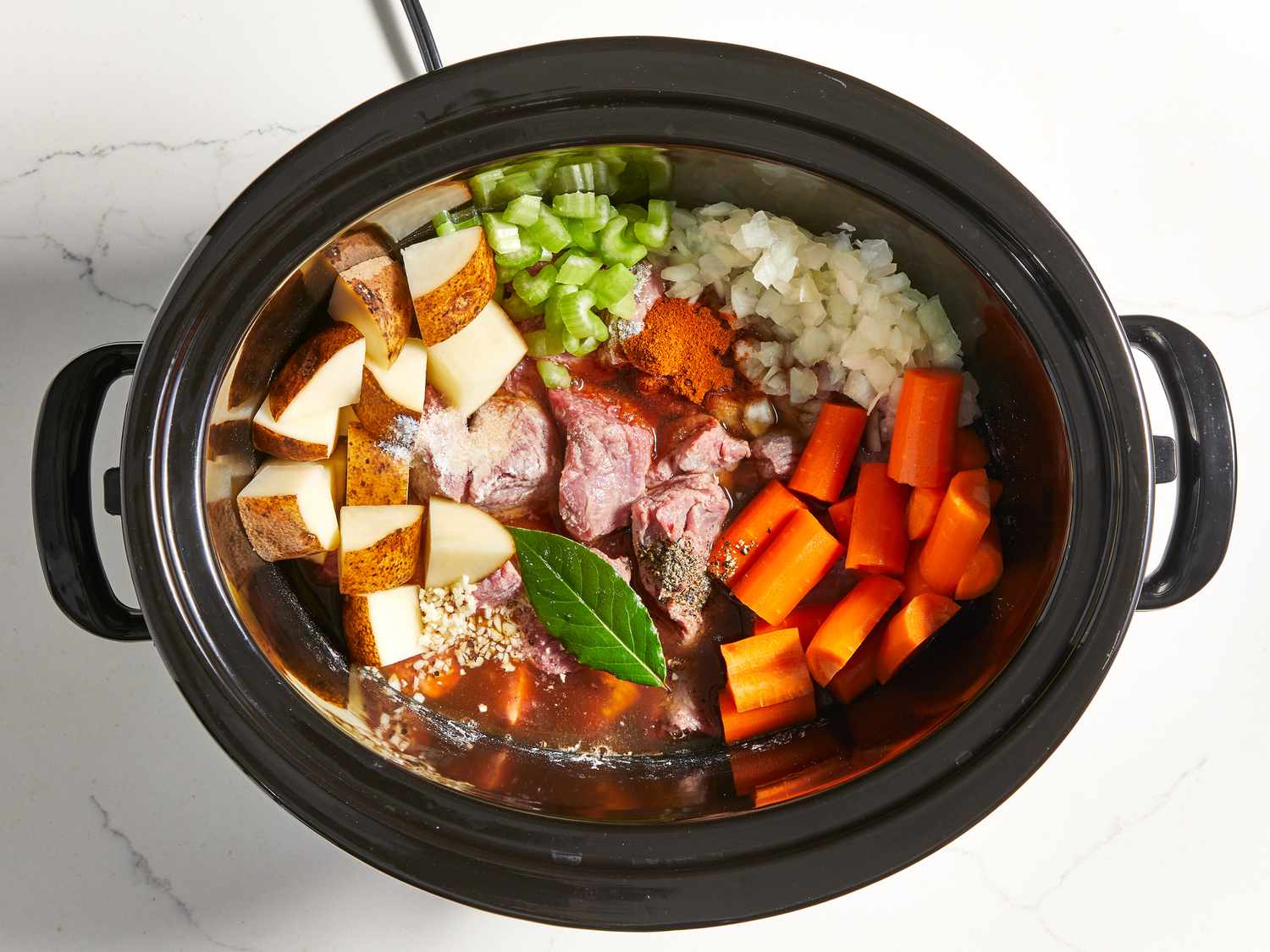
- Load the slow cooker: Add onion, garlic, carrots, celery (if using), and potatoes to the slow cooker. Add the beef on top.
- Mix the broth: Whisk beef broth, tomato paste, Worcestershire, thyme, and bay leaf in a measuring pitcher. Pour over the contents of the slow cooker.
- Cook: Cover and cook on LOW 8 to 9 hours (preferred) or HIGH 4 to 5 hours, until beef is fork-tender. If it is not tender yet, keep cooking and check again in 30 to 60 minutes.
- Add peas: Stir in peas. Cover and cook 10 minutes.
- Thicken if needed: If you did not use flour (or you want it thicker), stir in the cornstarch slurry. Cover and cook on HIGH 10 to 20 minutes, stirring once, until thickened. If you want it thicker still, add more slurry a little at a time and give it a few minutes to activate.
- Taste and serve: Remove bay leaf. Taste and adjust salt and pepper. Serve hot with bread for dunking.
Notes
- Servings: Serves 6 to 8.
- Skipping browning: Totally fine. Consider adding an extra 1 tablespoon tomato paste for a deeper base.
- Vegetable size matters: Keep potato and carrot chunks large so they hold their shape.
- Too salty? Add a splash of water or unsalted broth, and brighten with a small squeeze of lemon right before serving.
- Freezer tip: Potatoes can change texture after freezing. For best results, freeze without potatoes and add fresh when reheating.
Thickening options: Flour coating can look a little cloudy at first. Give it a good stir near the end and it settles into a classic stew texture. For a stew with 4 cups broth, start with 3 tablespoons cornstarch mixed with 3 tablespoons cold water until smooth. If you want it even more gravy-like, you can go up to 4 tablespoons cornstarch total (mixed with cold water first). Add it gradually, stir, then give it time to activate.
Nutrition
- Calories: 560
- Fat: 24 g
- Carbs: 40 g
- Protein: 46 g
- Fiber: 5 g
- Sugar: 6 g
- Sodium: 980 mg
Nutrition values are approximate and will vary by exact ingredients and serving size.