
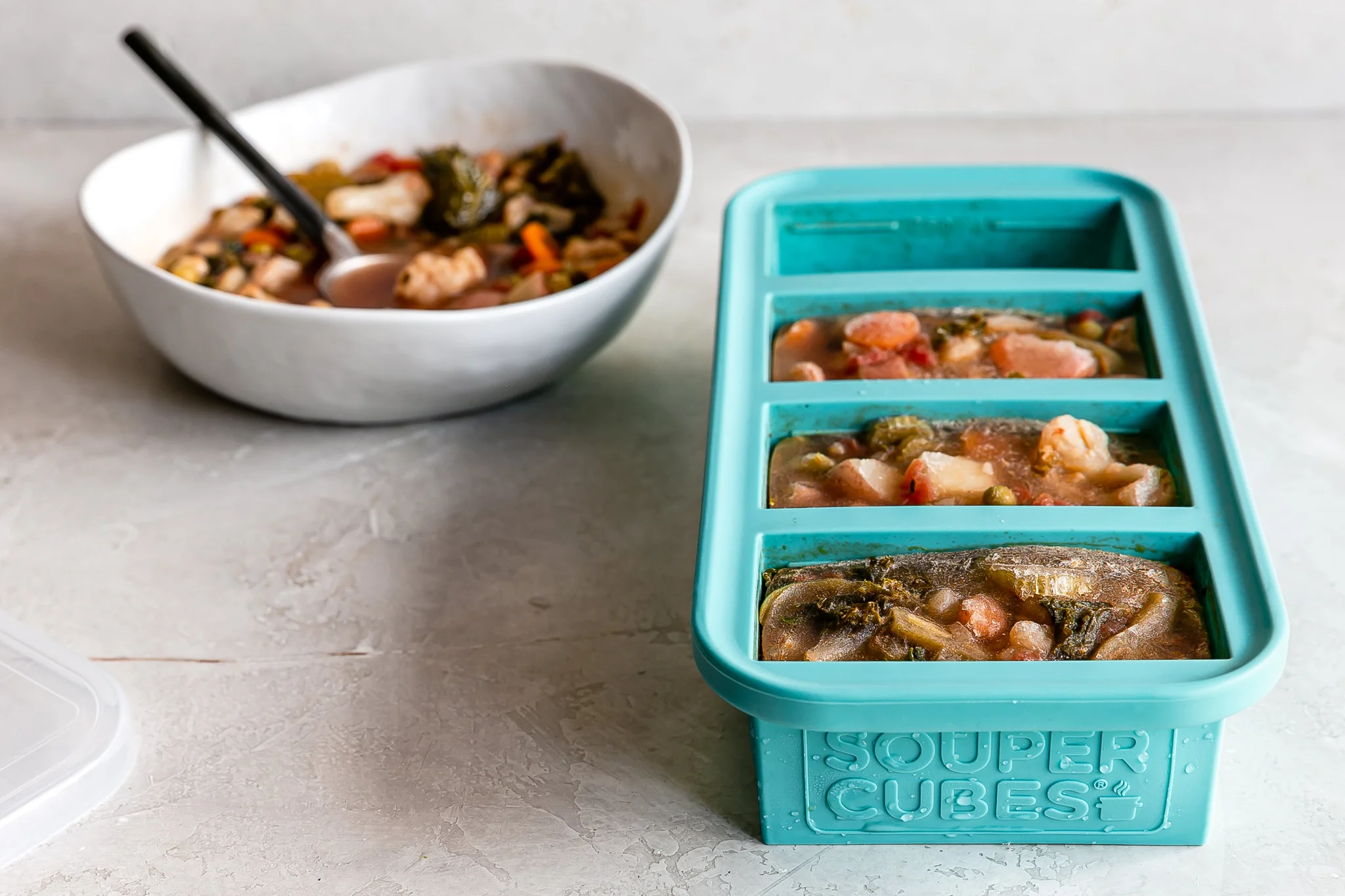
I learned this the hard way back when I was managing a bakery and living on whatever I could reheat between shifts. Some things froze like a dream. Other things came back… sad. The difference is rarely the recipe. It is the details: how fast you cool it, what you store it in, how you thaw it, and how gently you bring it back to temperature.
This guide walks you through those details for soups, stews, and casseroles, plus quick troubleshooting for the most common freezer problems: separation, watery texture, dryness, and the mysterious “why is this now concrete” over-thickening.

The basics for freezing anything
Cool it fast, safely, and gently
Big temperature swings create bigger ice crystals, and bigger ice crystals are the enemy of good texture, especially for creamy soups and casseroles. Cooling and freezing efficiently helps keep crystals smaller and results smoother.
Also, putting a hot pot straight into the freezer can raise the freezer’s temperature and slow down the freezing of everything around it. Better texture (and a happier freezer) starts with quick cooling first.
- Use shallow containers: Food cools faster when it is not in a deep pot. Spread soup or stew into a wide container, or portion into smaller ones.
- Ice bath shortcut: Set your pot in a larger bowl or sink filled with ice water. Stir every few minutes to pull heat out quickly.
- Two-hour rule (with the hot-day caveat): As a general food safety guideline, get cooked food into the fridge within 2 hours, and within 1 hour if the room temp is above 90°F. Chill fully, then freeze for best texture.
Portion size matters
Smaller portions freeze faster and thaw more evenly, which helps texture. For soups and stews, think 2-cup to 1-quart portions for easy weeknight reheating.
Choose the right container
What you freeze in matters as much as what you freeze.
- For soups and stews: Rigid, straight-sided freezer containers with tight lids are easiest to stack and least likely to leak. Wide-mouth glass is fine if it is freezer-safe and you leave room for expansion.
- For casseroles: Either freeze the whole dish in a freezer-safe baking dish, or portion into smaller pans for faster thawing. Foil pans are lightweight and convenient, but they can dent easily. A reusable metal or ceramic dish wrapped well also works.
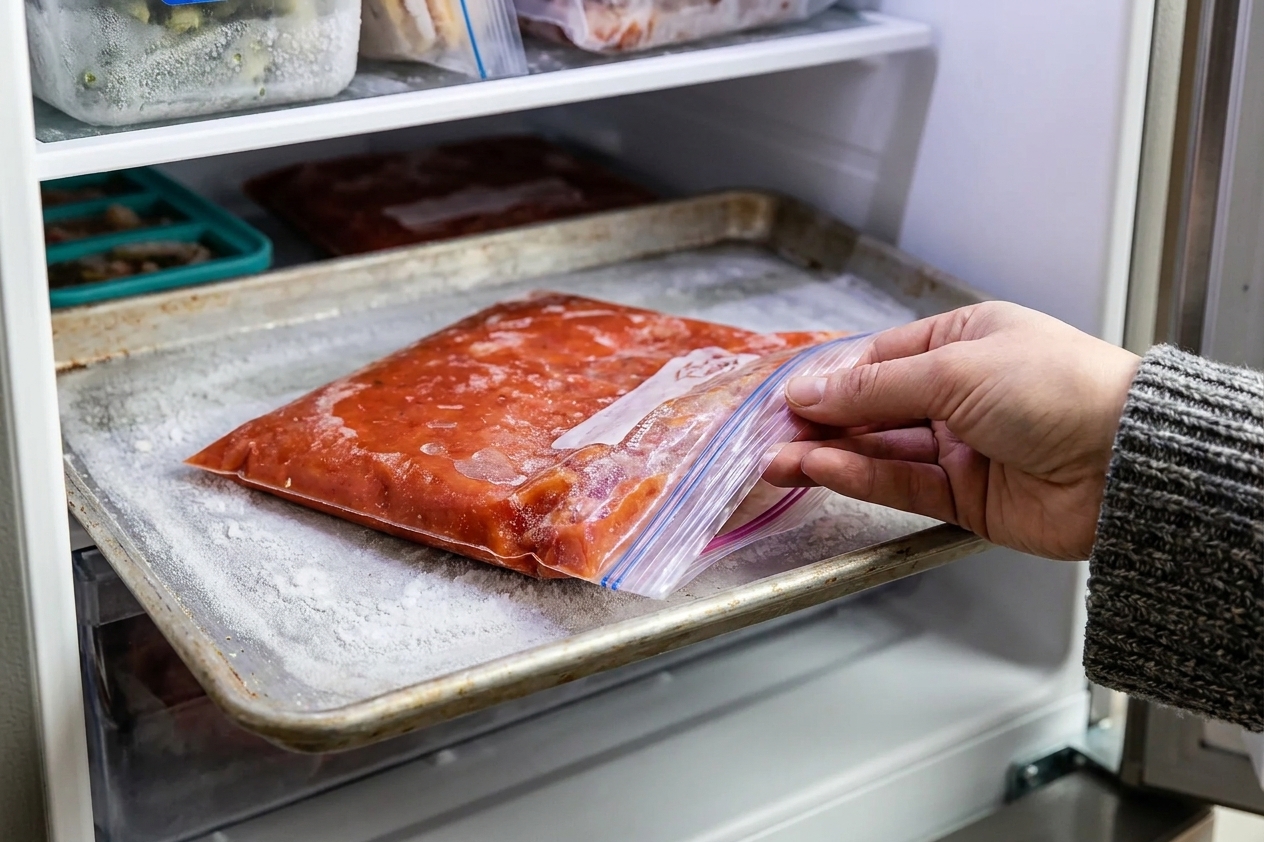
- For space-saving: Freezer bags are fantastic for soups and stews. Freeze them flat on a sheet pan, then file them upright like books once solid.
Leave headspace
Liquids expand as they freeze. Leave about 1 inch of headspace in containers, and squeeze extra air out of freezer bags before sealing.
Prevent freezer burn (especially in bags)
- Use thick freezer bags, not thin sandwich bags.
- Remove as much air as possible. If you do not have a vacuum sealer, try the water-displacement method: lower the filled bag into a bowl of water, letting the water pressure push air up and out, then seal.
- For longer storage, double-bagging adds protection.
Label like you mean it
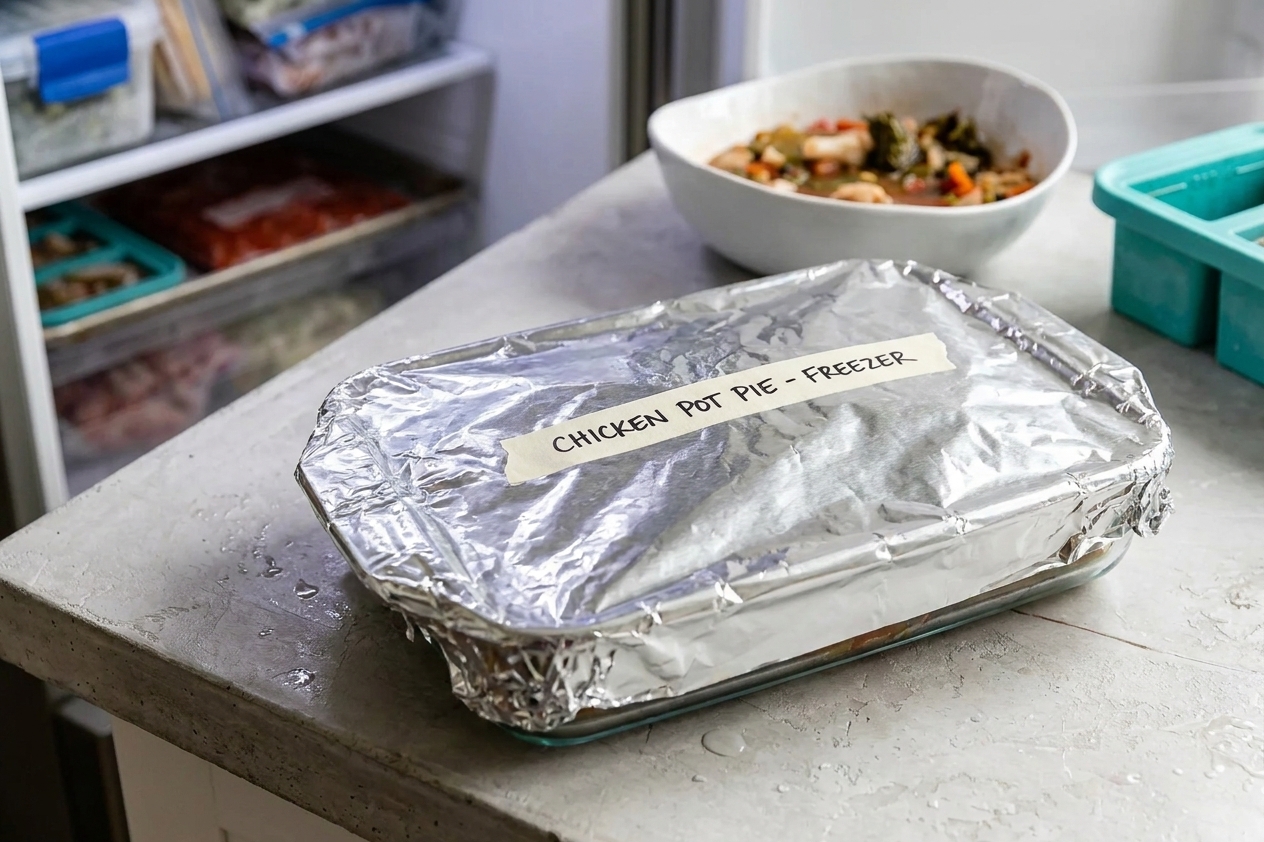
Write the dish name and the date. If it needs a little something on reheat, note that too (for example: “add broth when reheating” or “bake covered 25 min”). Your future self will feel so cared for.
Freezer life: how long it keeps
Frozen food stays safe longer than it stays delicious. For safety, the USDA notes that foods kept frozen at 0°F remain safe indefinitely. For quality, though, flavor and texture do decline over time, so the goal here is “still tastes like you” and not “technically edible.”
- Brothy soups and bean soups: best within 2 to 3 months
- Meaty stews and chili: best within 3 to 4 months
- Cream soups and dairy-heavy stews: best within 1 to 2 months (texture can shift faster)
- Casseroles: best within 2 to 3 months
Tip: The colder and more stable your freezer temperature is (0°F or below, not constantly opened), the better your results.
Freeze soup without watery texture
Watery soup after thawing usually comes from ingredient choices plus ice crystals breaking things down. You can prevent a lot of it.
Freeze soups slightly under-finished
- Pasta, rice, and noodles: Cook them separately and add when reheating. They turn mushy and drink up broth in the freezer.
- Potatoes: Waxy potatoes hold better than starchy ones, but any potato can go grainy. If you can, add potatoes fresh after thawing, or use potatoes in larger chunks and reheat gently.
- Leafy greens: Spinach and kale are fine, but add delicate herbs and tender greens at the end of reheating for a fresher bite.
For creamy soups, protect the emulsion
Dairy can split, especially if it was boiled hard before freezing or reheated too aggressively afterward.
- Best practice: Freeze the soup base, then add cream, milk, sour cream, or cheese during reheating.
- If the soup already contains dairy: Cool quickly, chill fully, then freeze. Reheat low and slow, stirring often.
Freeze stew and chili for texture
Stews and chilis are some of the most freezer-friendly meals, because their flavors deepen and their thicker body hides minor texture changes. Still, a few tweaks make them taste freshly made.
Thickeners: choose wisely
- Flour-based thickening: Can get slightly grainy after freezing, but is usually fine in hearty stews.
- Cornstarch: Can thin out after freezing and reheating. If your stew loses body, re-thicken at the end with a fresh cornstarch slurry.
- Beans: Beans hold up well, but they can crack a bit. Reheat gently to keep them intact.
Meat texture tip
Slow-cooked meats freeze well, but repeated heat cycles can dry them out. If you are freezing a batch, cool and freeze soon after cooking (once it is fully chilled), and avoid boiling hard when reheating. A gentle simmer is your best friend.
Freeze casseroles so they stay moist
Casseroles are basically designed for make-ahead life, but the freezer can steal moisture and leave you with dry edges. The solution is a little strategy in how you build, wrap, and bake.
Build for freezing
- Undercook pasta and rice slightly: They will finish cooking during reheating.
- Keep sauces a touch looser: Sauces tighten as they cool and again as they reheat. A little extra moisture prevents a stiff, dry bake.
- Hold crunchy toppings: Add breadcrumbs, fried onions, crushed crackers, and many cheese toppings after thawing or midway through baking so they do not go soggy.
Wrap like you are shipping it
Freezer burn is dehydration. Casseroles get it easily because of their big surface area.
- Cool completely.
- Press a layer of parchment or plastic wrap directly against the surface (this reduces ice crystals on top).
- Cover tightly with a lid or foil, then add a second layer of foil for extra protection.
Thawing: pick your method
Best: thaw overnight in the fridge
This gives the most even texture and the safest temperature control. For soups and stews, it also means faster reheating with less chance of scorching.
Fast: cold-water thaw for sealed bags
If your soup or stew is in a leakproof freezer bag, submerge it in cold water. Change the water every 30 minutes. Once thawed, reheat right away.
From frozen: totally doable
Soups and stews can go straight from frozen to pot. Use low heat at first, break up the frozen block as it softens, then bring to a simmer.
Casseroles can bake from frozen too, but plan for extra time and cover well so the top does not over-brown before the center is hot.
Reheat soups and stews
Stovetop (best texture)
- Pour thawed soup or stew into a pot, or add the frozen block to a pot with a small splash of water or broth to prevent scorching.
- Warm over low to medium heat, stirring often as it loosens.
- Once steaming, bring to a gentle simmer until hot throughout.
- Safety note: If you want a number, 165°F is a reliable target for leftovers. Otherwise, aim for piping hot and steaming throughout.
- Finish smart: Add cream, lemon, fresh herbs, and quick-cooking items (cooked pasta, leftover rice) at the end.
Microwave (best for single portions)
- Use a microwave-safe bowl and cover loosely to prevent splatters.
- Heat in 1 to 2 minute bursts, stirring between rounds for even heating.
- If it is thick (chili, chowder), add a splash of broth or water before reheating and again if needed.
Slow cooker (best for hands-off days)
Thaw in the fridge first if you can, then reheat on LOW until hot. For food safety, avoid starting from rock-solid frozen in a slow cooker because it can sit too long in the temperature danger zone before heating through.
Reheat casseroles
Oven method (most reliable)
- Thawed casserole: Cover with foil and bake at 350°F until heated through. Remove foil near the end to brown the top.
- Frozen casserole: Bake covered at 350°F until the center is hot, then uncover to brown. Expect it to take roughly 1.5 times as long as a thawed bake, sometimes longer depending on depth.
- Doneness check: The middle should be steaming hot, not just warm. If you have a thermometer, aim for 165°F in the center for casseroles with meat, poultry, or leftovers.
Prevent dry edges
- Keep it covered for most of the bake.
- If the casserole looks dry, drizzle 2 to 4 tablespoons broth, milk, or sauce around the edges before covering again.
- Let it rest 10 minutes after baking. The sauce will thicken slightly and settle back into the dish.
Air fryer (best for small portions)
For a single portion, an air fryer can give you a crisp top quickly. Use a small oven-safe dish, cover loosely with foil for the first part, then uncover to crisp. Watch closely, because edges brown fast.
Fix common freezer problems
My soup separated or looks grainy
- Cause: Dairy or emulsified fats split from temperature swings or aggressive reheating.
- Fix: Reheat gently and whisk well. For creamy soups, try blending a cup of the hot soup and stirring it back in. If it is still broken, add a small splash of cream or a knob of butter at the end and whisk again.
- Next time: Freeze the base and add dairy after thawing, or avoid boiling during reheating.
It turned watery after thawing
- Cause: Ice crystals ruptured vegetables, starches, or emulsions.
- Fix: Simmer uncovered to reduce and concentrate. Add a quick thickener if needed (a cornstarch slurry, mashed beans, or a few spoonfuls of instant potato flakes for stews).
- Next time: Keep pasta and rice out of the freezer batch, and cool quickly before freezing.
My stew or chili is way too thick
- Cause: Starches tighten as they cool, and evaporation during reheating can concentrate even more.
- Fix: Add broth or water in small splashes, stirring and warming until it loosens. Taste and adjust salt at the end, because added liquid dilutes seasoning.
- Next time: Freeze slightly looser than you like it on day one.
My casserole is dry
- Cause: Too much uncovered baking time, freezer burn, or a sauce that was too tight before freezing.
- Fix: Add moisture back: warm broth, extra marinara, a splash of milk, or even a little sour cream stirred into the portion. Cover and bake a bit longer so it can rehydrate.
- Next time: Wrap more tightly, hold crunchy toppings, and bake covered longer before browning.
The top is browned but the center is still cold
- Cause: Oven heat hitting the surface first, especially with frozen casseroles.
- Fix: Cover with foil and lower the oven temperature slightly (try 325°F) to give the center time to catch up.
- Next time: Thaw overnight, or bake covered for the majority of the time.
Freezer tweaks by dish
Creamy soups (broccoli cheddar, chowders)
- Freeze before adding cheese or cream when possible.
- Reheat slowly and whisk often.
- Add cheese off heat or on very low heat to prevent graininess.
Tomato-based soups and sauces
- Tomato freezes beautifully.
- If it tastes a little flat after reheating, add a pinch of salt, a drizzle of olive oil, or a tiny splash of vinegar or lemon at the end.
Potato soups
- Expect some texture change. Blending helps.
- Consider swapping some potato for cauliflower for a soup that freezes smoother, or add fresh cooked potatoes after thawing.
Egg- or mayo-based casseroles
- Some breakfast casseroles freeze well, but mayo-heavy salads and fillings do not.
- If eggs weep a little liquid after thawing, bake uncovered for a short time at the end to evaporate excess moisture.
A simple workflow
- Cook: Finish your soup, stew, or casserole base.
- Cool quickly: Shallow containers or an ice bath.
- Chill: Refrigerate until cold for best freezer texture.
- Portion: Freeze in meal-sized amounts so you only thaw what you need.
- Wrap and label: Name, date, and any reheating notes.
- Reheat gently: Low and slow for creamy things, covered baking for casseroles.
- Finish fresh: Herbs, citrus, dairy, crunchy toppings, and cooked grains added at the end make leftovers taste brand new.
FAQ
Can I freeze soup in a mason jar?
Yes, as long as it is a straight-sided, wide-mouth jar that is meant for freezing, and you leave plenty of headspace. Avoid jars with shoulders (narrowing near the top) because the expanding liquid can crack the glass. Thaw in the fridge before reheating to reduce temperature shock.
Do I need to thaw soup before reheating?
No. Soups and stews reheat well from frozen. Start on low heat, add a splash of water or broth, and stir as it loosens.
Why does my frozen soup taste bland?
Cold temperatures mute flavors. Reheat fully, then season at the end. Often it just needs a pinch of salt and something bright like lemon juice or vinegar.
Is it okay to refreeze soup or stew?
For best quality, try not to. Each freeze-thaw cycle adds more texture damage. If you thawed it in the fridge and it stayed cold, refreezing is generally safer than if it sat at room temperature, but the texture will usually take a hit.
What is the best way to freeze casseroles in portions?
Bake in a dish, cool completely, cut into portions, then wrap each piece tightly and freeze. Or assemble into small freezer-safe containers so you can bake single servings without committing to the whole pan.