
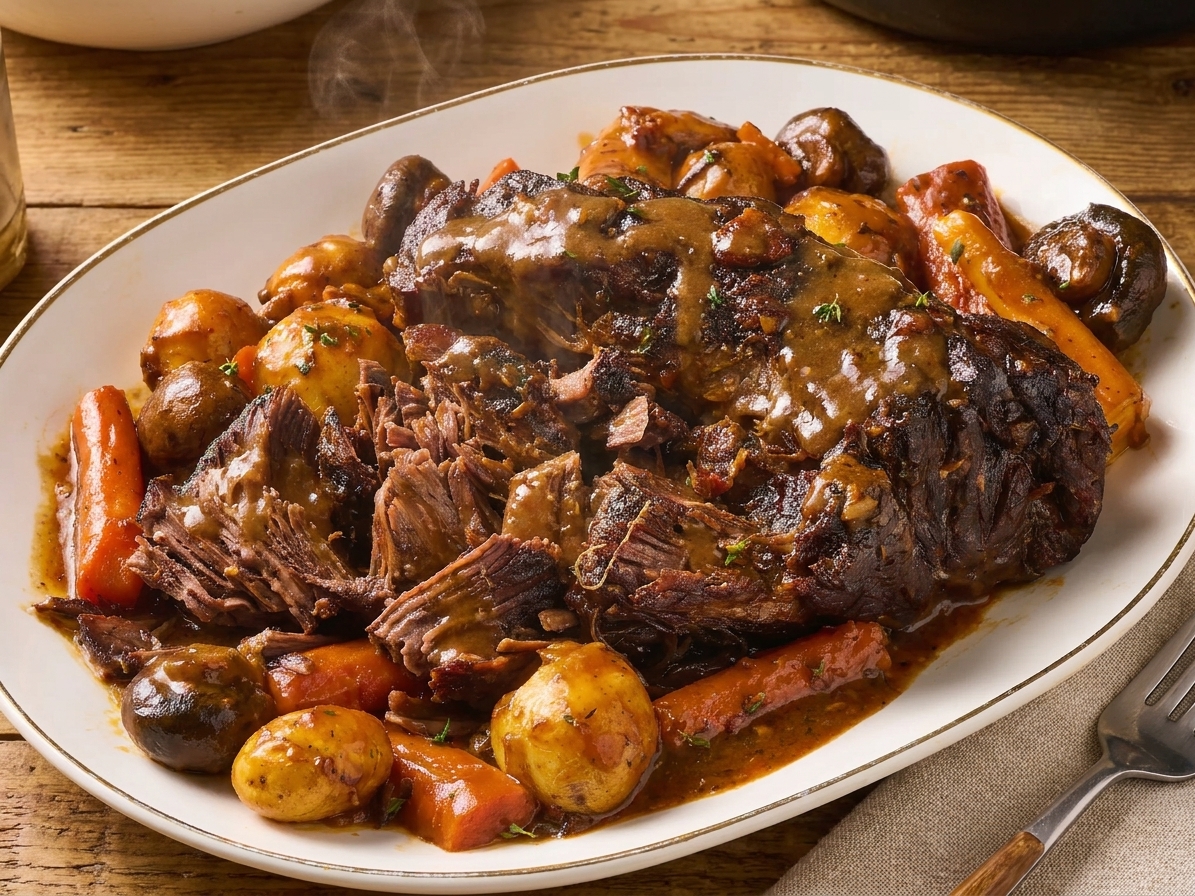
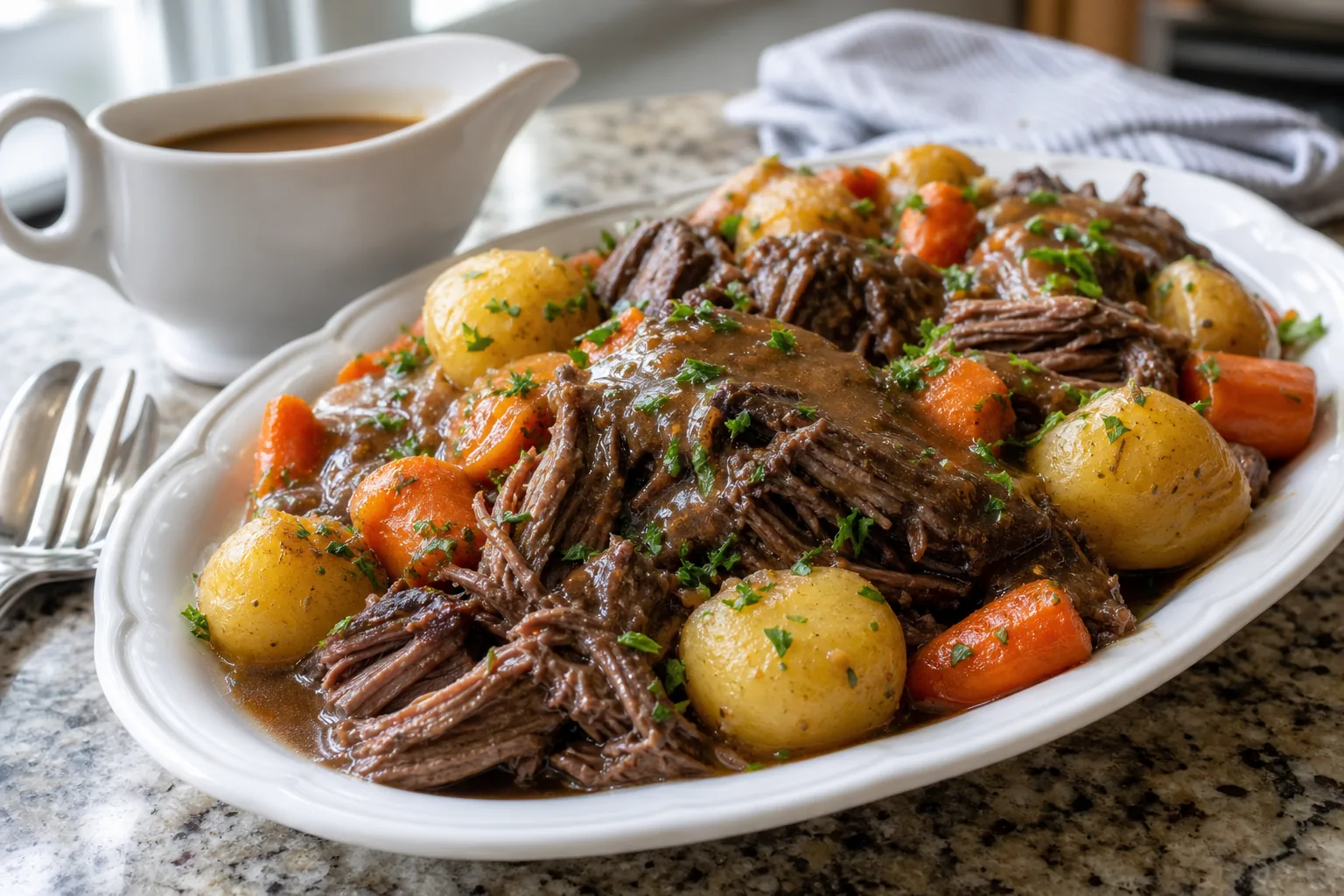
Pot roast is one of those meals that makes a house feel lived in. You walk in the door and the air smells like onions, beefy gravy, and the kind of comfort that does not require a culinary degree. This crock pot version is the one I lean on when I want Sunday dinner vibes on a Tuesday.
The goal here is simple: deeply tender beef, vegetables that hold their shape (not baby food), and a gravy that tastes like it came from a Dutch oven. The not-so-secret trick is building flavor before anything goes into the slow cooker, then letting time do the heavy lifting.

One quick reassurance if pot roast has burned you before: you are not alone. Slow cooker disappointments often come down to a few usual suspects: not enough seasoning, not enough time for the connective tissue to fully relax, or a cut that is too lean to get truly luscious. This recipe is written to dodge those pitfalls, with flexible timing so you can make it work for real life.
As a general guide, plan on a good chunk of the day on LOW for a typical 3 to 4 pound roast. You can cook on HIGH when you need to, but LOW is the path to that fall-apart texture.
What to expect
- Texture: Beef that shreds with a fork, not rubbery slices.
- Flavor: Savory and beef-forward with a gentle sweetness from carrots and onions.
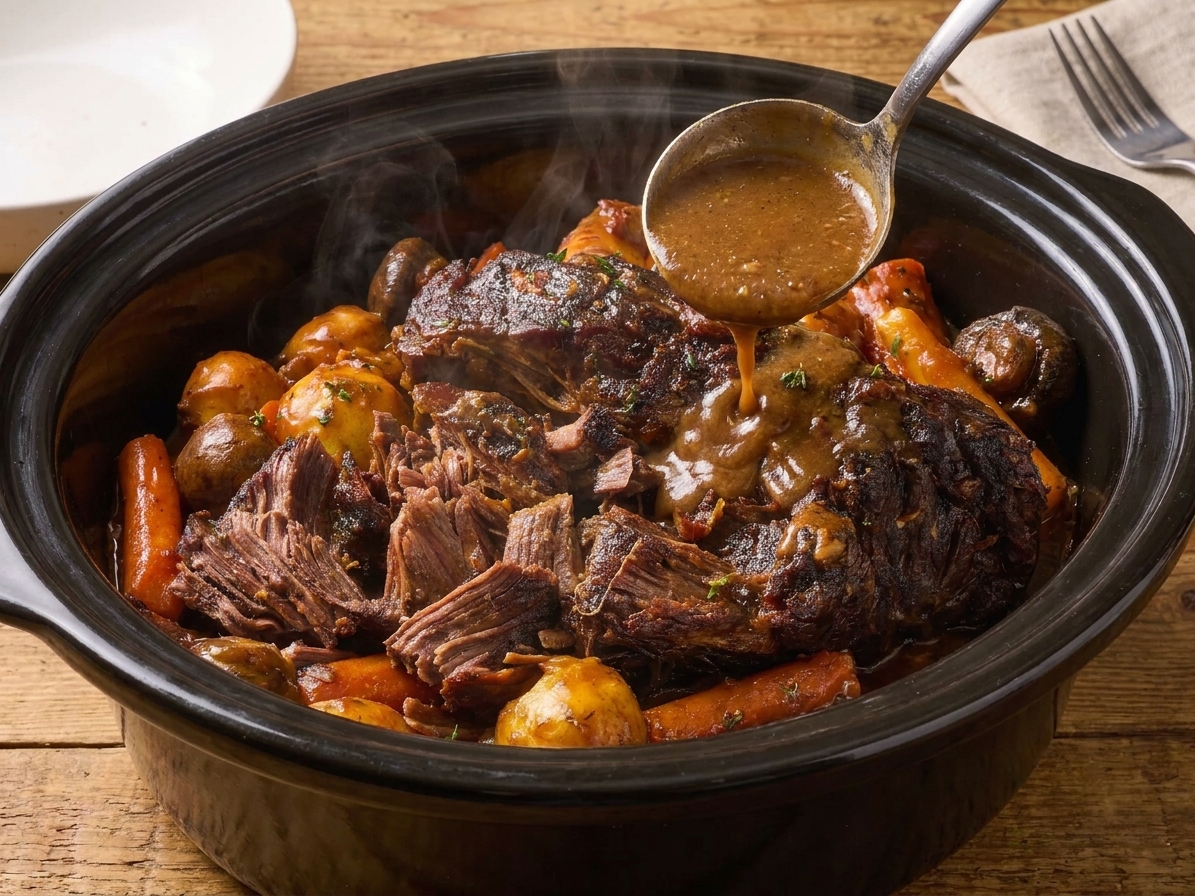
- Gravy: Rich, glossy, and spoonable, perfect for mashed potatoes or bread.
- Effort level: A small burst of prep, then hands-off cooking.
One thing to know going in: slow cookers do not reduce liquid the way a pot on the stove does, so the gravy gets finished at the end. It is a quick step, and it is what makes the whole thing taste like you fussed.
Choosing your cut
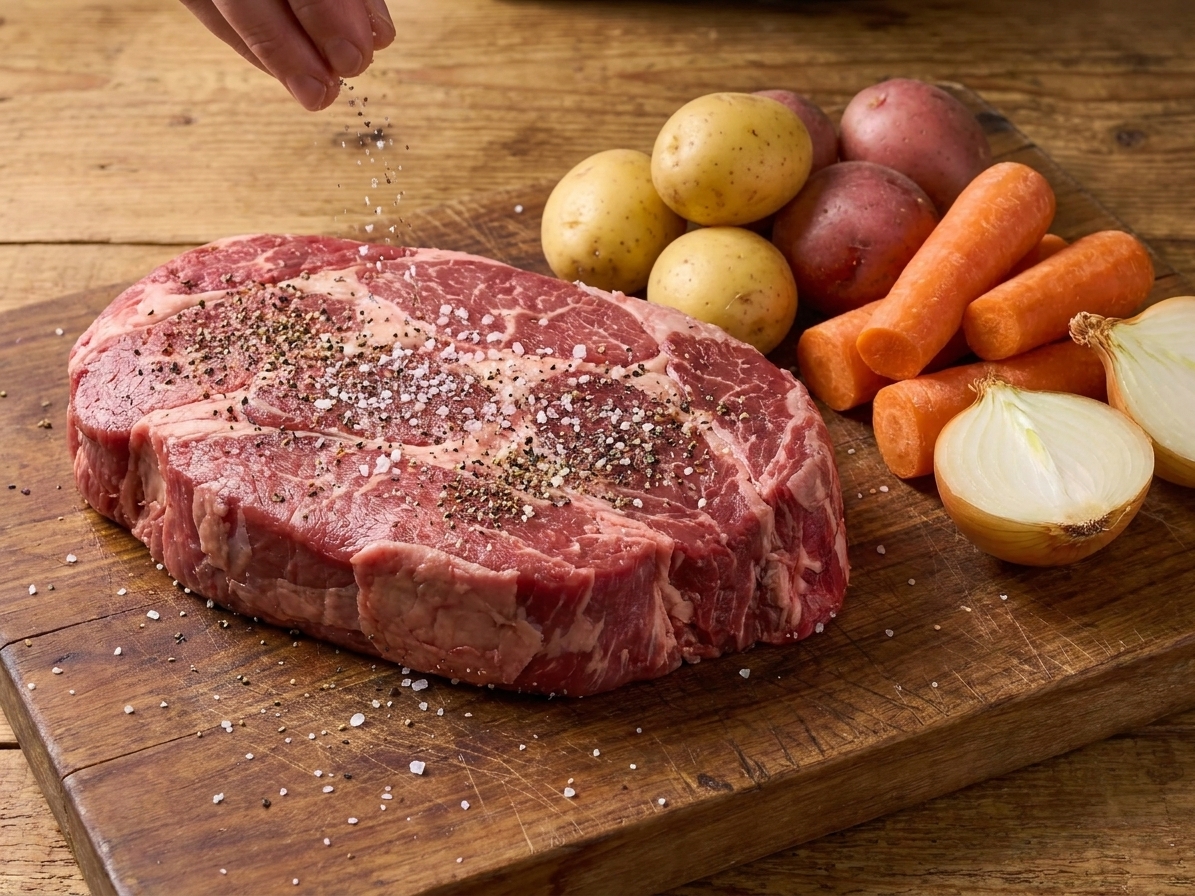
For classic crock pot pot roast, chuck roast is your best friend. It has the marbling and collagen that turn silky and tender after hours of low heat. Leaner cuts can work, but they will not give you the same fall-apart payoff.
If your roast is tied with butcher’s twine, you can keep it on during cooking for neater slices, then remove it at the end. If it is secured with elastic or anything that does not look like plain cotton kitchen twine, snip it off before cooking and discard it.
Why this recipe works
- We sear first for real flavor. Browning the roast creates deep, roasted notes that a slow cooker cannot produce on its own.
- A balanced braising liquid. Beef broth plus aromatics gives you a savory base that tastes full, not watery.
- Vegetable timing and placement. Potatoes and carrots go underneath so they cook in the hottest zone and soak up flavor without falling apart.
- Collagen-friendly cook. Low, steady heat over several hours melts connective tissue so the beef becomes truly fork-tender.
- Easy gravy option. A quick slurry at the end turns the cooking juices into a proper gravy without separate pans.
Ingredient notes
Chuck roast: Look for good marbling. A 3 to 4 pound roast fits most 6-quart slow cookers nicely.
Kosher salt and black pepper: Season more generously than you think. Big pieces of meat need assertive seasoning to taste seasoned after a long braise.
Onion and garlic: These form the backbone of the gravy. Yellow onion is classic, but sweet onion is lovely too.
Tomato paste: A small amount adds depth and helps the gravy taste more “slow-braised,” not just brothy.
Worcestershire sauce: Adds savory complexity. If you do not keep it around, soy sauce can stand in.
Carrots: Use whole carrots cut into big chunks. Baby carrots can taste a little one-note after long cooking.
Yukon Gold potatoes: Creamy and sturdy. Red potatoes also hold up well.
Cornstarch: For thickening at the end. Flour works too, but cornstarch gives a glossy gravy with minimal effort.
Equipment you will need
- 6-quart (or larger) slow cooker
- Large skillet or sauté pan for searing
- Tongs for turning the roast
- Cutting board and chef’s knife
- Measuring spoons and measuring cup
- Small bowl and whisk or fork (for slurry)
- Optional: fat separator for the cooking liquid
Pro tips
- Do not skip the sear. Even 3 to 4 minutes per side makes a noticeable difference in flavor.
- Layer vegetables first. They act like a rack, keeping the roast slightly elevated and helping everything cook evenly.
- Keep the lid on. Every peek releases heat and adds time. Treat the slow cooker like a tiny oven.
- Know when it is done. Pot roast is ready when a fork slides in with almost no resistance. If it feels tight, it needs more time.
- For clean slices, rest. Let the roast rest 10 to 15 minutes before slicing. For shredding, rest is still helpful but less critical.
- Deglaze the sear pan. A splash of broth or water to scrape up browned bits takes 30 seconds and makes your gravy taste expensive.
Substitutes that work
- Chuck roast: Brisket (flat or point) works well. Bottom round can work in a pinch, but expect a less juicy result and cook on low until genuinely tender.
- Beef broth: Chicken broth works, but add an extra splash of Worcestershire or soy sauce to boost beefy depth.
- Worcestershire sauce: Use soy sauce or tamari. Start with a smaller amount, then adjust at the end.
- Tomato paste: Swap with ketchup, or omit if needed. The roast will still be good, just a little less complex.
- Cornstarch: Use flour. Mix 2 tablespoons flour with 2 tablespoons softened butter into a paste, then whisk into hot cooking liquid until thickened.
- Potatoes: Sweet potatoes are delicious, but they cook softer. Cut them larger and check earlier.
Variations
- Mississippi-style: Add pepperoncini and a splash of brine for a tangy twist, plus a little extra butter for richness.
- Red wine gravy: Replace 1 cup of broth with dry red wine. This adds depth and a more “special occasion” flavor.
- Mushroom pot roast: Add 8 ounces sliced cremini mushrooms in the last 2 hours so they stay meaty.
- Herb-forward: Add fresh rosemary and thyme. Remove stems before serving.
- Spicy comfort: Add smoked paprika and a pinch of cayenne for warmth.
Serving ideas
- Serve in bowls with extra gravy and crusty bread for dunking.
- Shred leftovers for sandwiches with provolone and a swipe of horseradish mayo.
- Turn it into a next-day hash with diced potatoes and a fried egg.
- Serve over buttery egg noodles for maximum cozy.
- Add a simple green salad with a sharp vinaigrette to balance the richness.
Storage and reheating
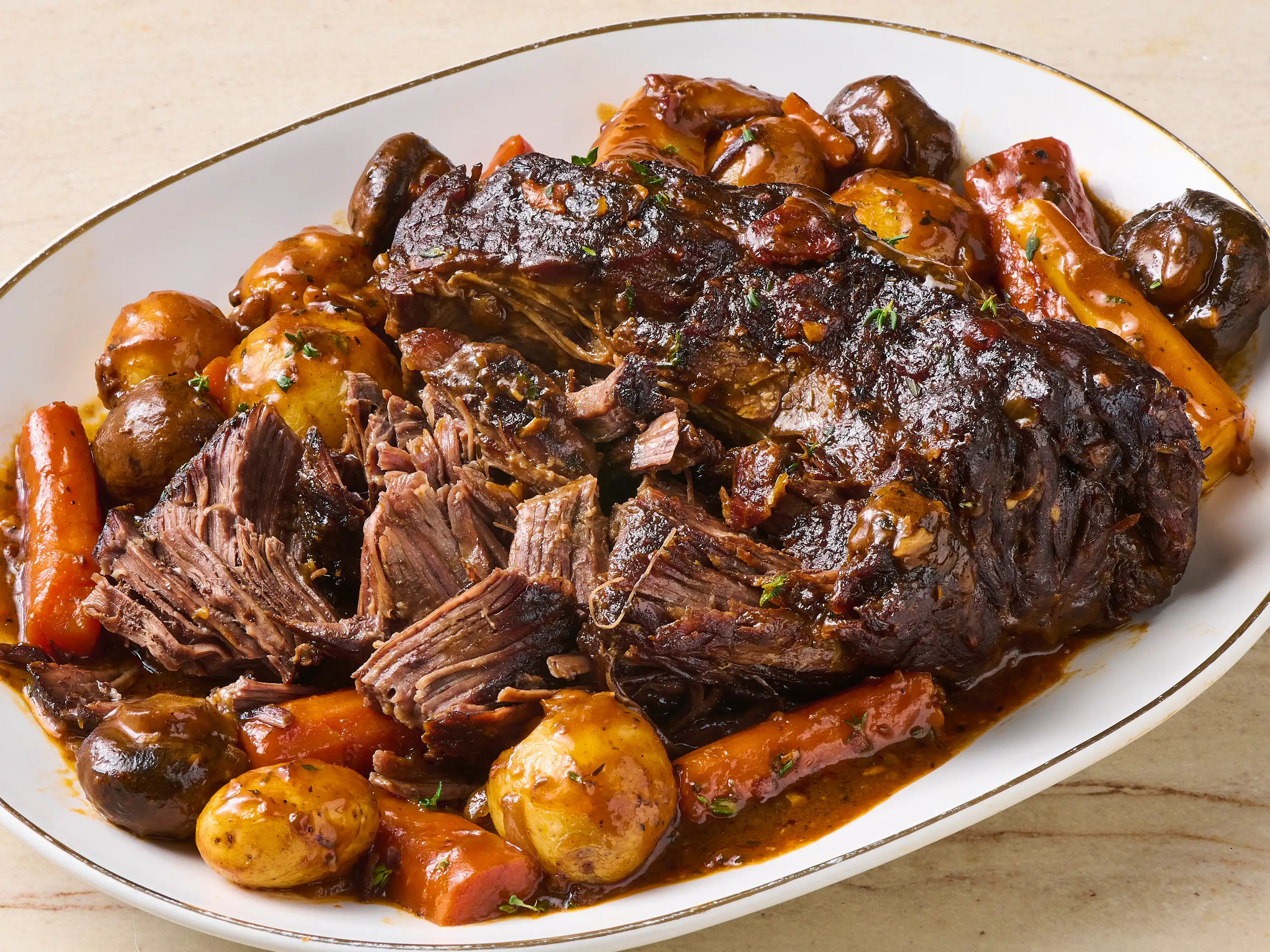
Refrigerate: Store beef and vegetables in an airtight container with some gravy to keep everything moist. Refrigerate up to 4 days.
Freeze: Freeze in portioned containers with gravy for up to 3 months. Thaw overnight in the fridge for best texture.
Reheat: Warm gently on the stovetop over medium-low, adding a splash of broth or water if the gravy tightens up. The microwave works too. Cover and heat in intervals so the beef stays tender.
Best leftover move: Slice or shred the beef while cold, then reheat in gravy. Cold beef is easier to portion neatly.
Common mistakes
- Cooking on high and expecting the same tenderness. High can work, but low is more forgiving and often yields a better texture.
- Not enough time. If the roast is tough, it is usually undercooked for this style of braise, not overcooked. Keep going.
- Using a very lean roast. Lean cuts dry out and will not shred luxuriously.
- Overcrowding small vegetables. Cut carrots and potatoes into larger pieces so they can handle the long cook.
- Underseasoning the liquid. The gravy is part of the seasoning. Taste at the end and adjust with salt and pepper.
- Skipping the deglaze. Those browned bits are concentrated flavor. Bring them with you into the slow cooker.
FAQ
Do I have to add potatoes and carrots?
No. You can cook the roast alone and serve it with mashed potatoes, rice, or roasted vegetables. If you skip the vegetables, reduce the liquid slightly so the gravy does not end up thin.
Why is my pot roast still tough after hours?
Tough usually means the collagen has not finished breaking down yet. Keep cooking on low and check again in 30 to 60 minutes. Once it turns the corner, it will go from tight to tender quickly.
Can I put a frozen roast in the crock pot?
I do not recommend it. For food safety and for better texture, thaw the roast fully in the refrigerator first, then sear and cook.
Should the roast be covered in liquid?
No. A pot roast is a braise, not a boil. You want liquid partway up the sides so the meat steams and braises while staying flavorful.
How do I make the gravy less greasy?
Skim the fat from the top, or pour the cooking liquid into a separator. You can also refrigerate the liquid briefly so the fat rises and solidifies, then lift it off.
When should I add peas or green beans?
Add quick-cooking vegetables in the last 20 to 30 minutes so they stay bright and crisp-tender.
The recipe
Crock Pot Pot Roast
A classic, deeply cozy crock pot pot roast with tender chuck roast, hearty carrots and potatoes, and an easy savory gravy made from the cooking juices.
- Prep
- 20 minutes
- Cook
- 8 hours
- Total
- 8 hours 20 minutes
- Yield
- 6 to 8
Ingredients
- 3 to 4 lb chuck roast
- 2 tsp kosher salt, plus more to taste
- 1 tsp freshly ground black pepper, plus more to taste
- 2 tbsp neutral oil (avocado, canola, or vegetable)
- 1 large yellow onion, sliced
- 4 cloves garlic, minced
- 2 tbsp tomato paste
- 2 cups beef broth
- 2 tbsp Worcestershire sauce
- 1 tbsp Dijon mustard
- 1 tsp dried thyme (or 1 tbsp fresh thyme leaves)
- 1 tsp dried rosemary (or 1 tbsp chopped fresh rosemary)
- 1 1/2 lb Yukon Gold potatoes, cut into 1 1/2-inch chunks
- 4 large carrots, peeled and cut into 2-inch chunks
- 2 tbsp cornstarch
- 2 tbsp cold water
- Optional: 1 tbsp chopped fresh parsley, for serving
Instructions
- Season the roast. Pat the chuck roast dry, then season all over with the salt and pepper.
- Sear. Heat the oil in a large skillet over medium-high heat. Sear the roast until browned on both sides, 3 to 5 minutes per side. Transfer to a plate.
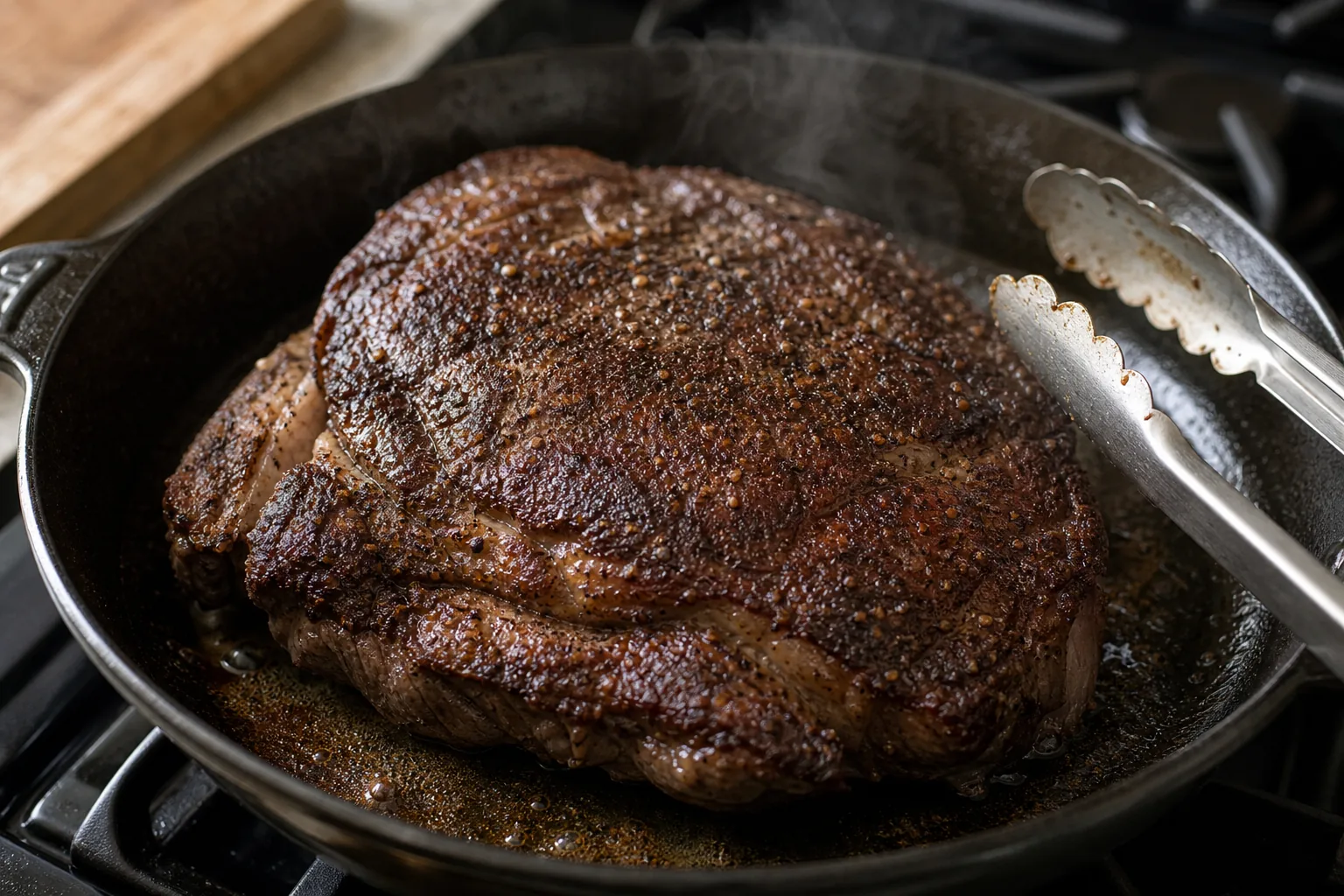
Sear the roast until browned on both sides. - Build the base. In the same skillet, add the onion and cook for 2 to 3 minutes, scraping up browned bits. Stir in the garlic and tomato paste and cook for 30 seconds. Add the broth, Worcestershire, Dijon, thyme, and rosemary, then bring to a simmer. Turn off heat.
- Layer the slow cooker. Add potatoes and carrots to the bottom of the slow cooker. Set the roast on top. Pour the hot broth mixture over everything.
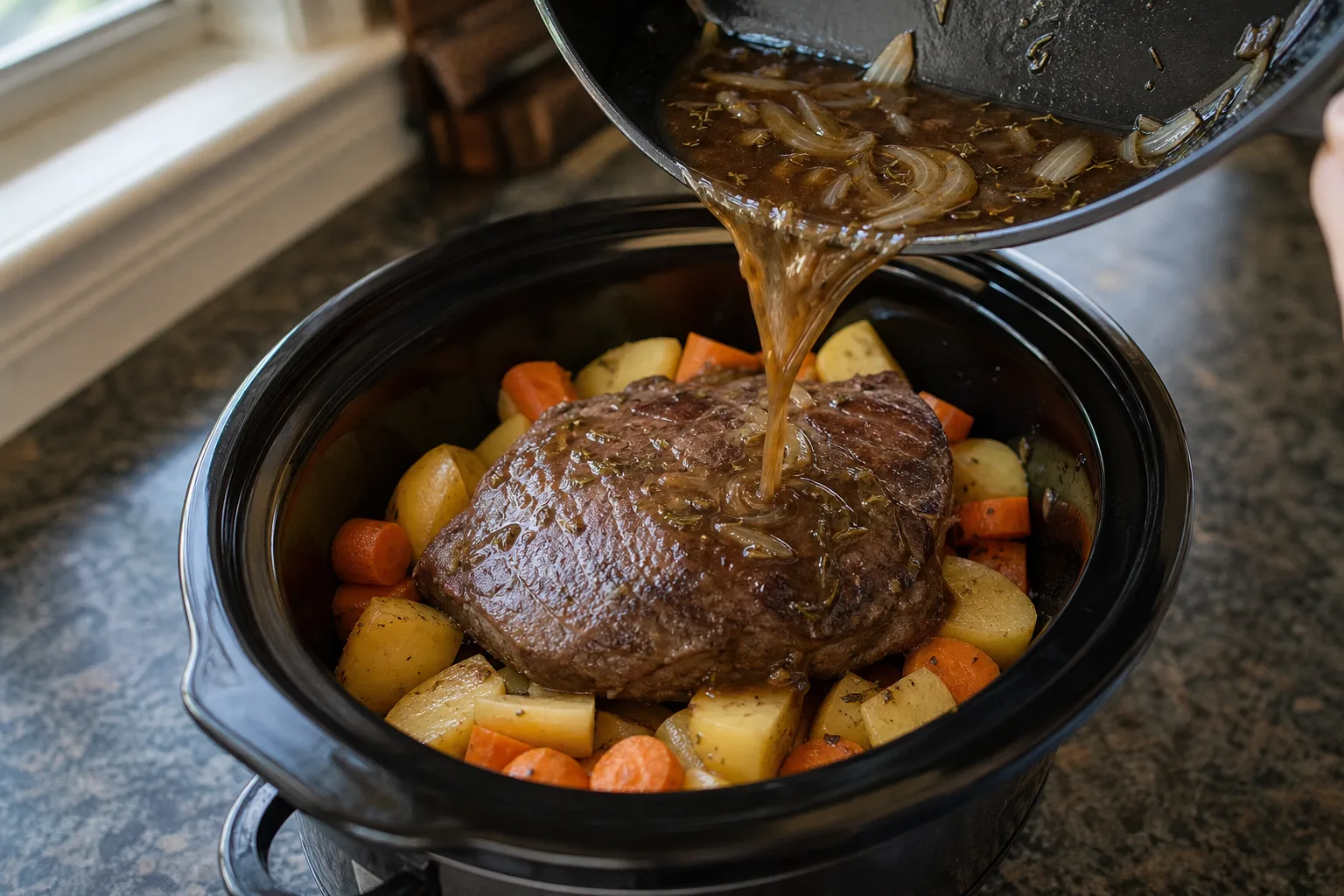
Set the roast on the potatoes and carrots and pour the broth mixture over. - Cook. Cover and cook on LOW for 8 to 9 hours (or HIGH for 4 to 5 hours), until the roast is fork-tender.
- Rest and portion. Transfer the roast to a cutting board and rest 10 to 15 minutes. Slice or shred. Transfer vegetables to a serving platter.
- Thicken the gravy. Skim excess fat from the cooking liquid if desired. Whisk cornstarch with cold water to make a slurry. Whisk the slurry into the hot cooking liquid, cover, and cook on HIGH for 10 to 15 minutes, until thickened. Taste and season with additional salt and pepper as needed.
- Serve. Spoon gravy over the beef and vegetables. Finish with parsley if using.
Notes
Timing note: Slow cookers vary. If your roast is not tender at 8 hours on low, keep cooking and check every 30 minutes. Pot roast gets tender when the collagen fully breaks down.
Make-ahead: Pot roast is even better the next day. Cool, refrigerate overnight, then reheat gently in the gravy.
Gravy thickness: For a thicker gravy, increase cornstarch to 3 tablespoons and water to 3 tablespoons. For a thinner gravy, use 1 tablespoon cornstarch.
Vegetable size matters: Cut potatoes and carrots in big chunks so they hold their shape through the long cook.
Nutrition
Estimated per serving (based on 8 servings): 520 calories; 42 g protein; 26 g fat; 30 g carbohydrates; 4 g fiber; 780 mg sodium. Values vary by roast size, fat content, and gravy amount consumed.