
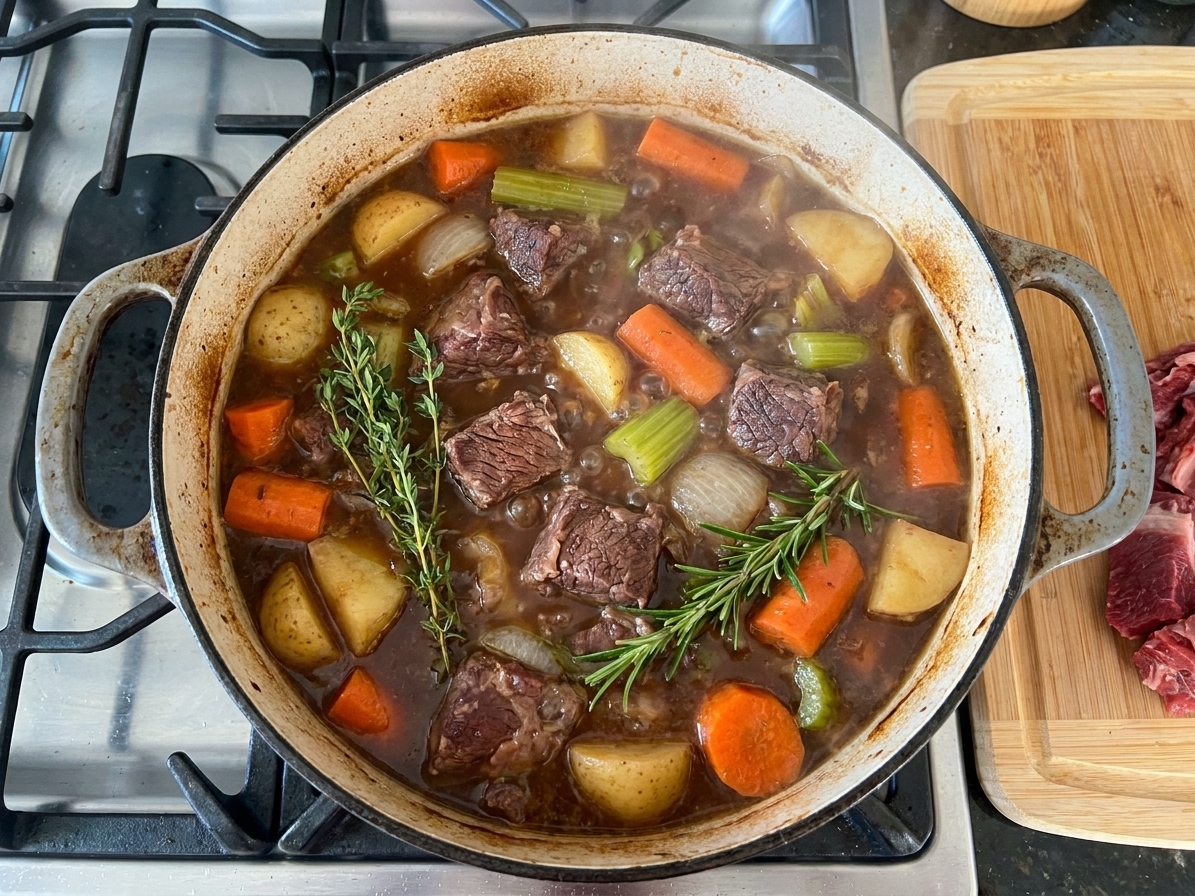
Beef stew is one of those meals that makes a kitchen feel like home. The pot simmers, the windows fog up a little, and suddenly dinner feels less like a task and more like a plan. This is the version I make when I want maximum comfort with minimum fuss: a rich, glossy broth, fork-tender beef, and vegetables that stay hearty instead of dissolving into mush.
There are a thousand ways to make stew, but the “ultimate easy” approach comes down to a few small choices that do the heavy lifting. I brown the beef properly for deep flavor, use tomato paste and a splash of acidity to wake everything up, and let a light flour coating plus a gentle simmer do the thickening so the broth looks and tastes natural, not gloopy. If you have ever ended up with tough meat or watery broth, you are in the right place.
Plan on about 2 1/2 hours start to finish, with most of that being hands-off simmering. I typically use chuck roast and make it in a Dutch oven on the stove, but the spirit here is flexible and forgiving.

This stew is flexible, too. You can keep it pantry-friendly and use frozen peas at the end, swap in parsnips if your carrots are sad, or stretch leftovers into the best next-day meal. My favorite part is that it is even better after it rests, which makes it ideal for a make-ahead dinner, even if you are cooking on a Tuesday.
What to expect
- Flavor: Deeply beefy, savory, and lightly herby with a subtle sweetness from carrots and onions.
- Texture: Thick, spoon-coating broth with tender beef and vegetables that hold their shape.
- Difficulty: Straightforward, with a few key moments where patience pays off.
Why this recipe works
- Proper browning builds the base. Taking the time to brown the beef creates fond on the pot, which dissolves into the stew and makes it taste slow-cooked and restaurant-level.
- Tomato paste and a touch of acid add depth. Tomato paste brings umami and color; a small splash of vinegar or wine brightens the broth so it tastes rich, not flat.
- Flour does double duty. A light coating on the beef helps it brown and gently thickens the stew as it simmers, so you get a naturally glossy broth.
- Low and steady heat makes tender meat. Stew beef needs time at a gentle simmer to break down connective tissue into silky, tender bites.
- Staged vegetables keep the texture right. Adding potatoes and carrots at the right moment helps them stay hearty instead of turning grainy or mushy.
Ingredient notes
Beef
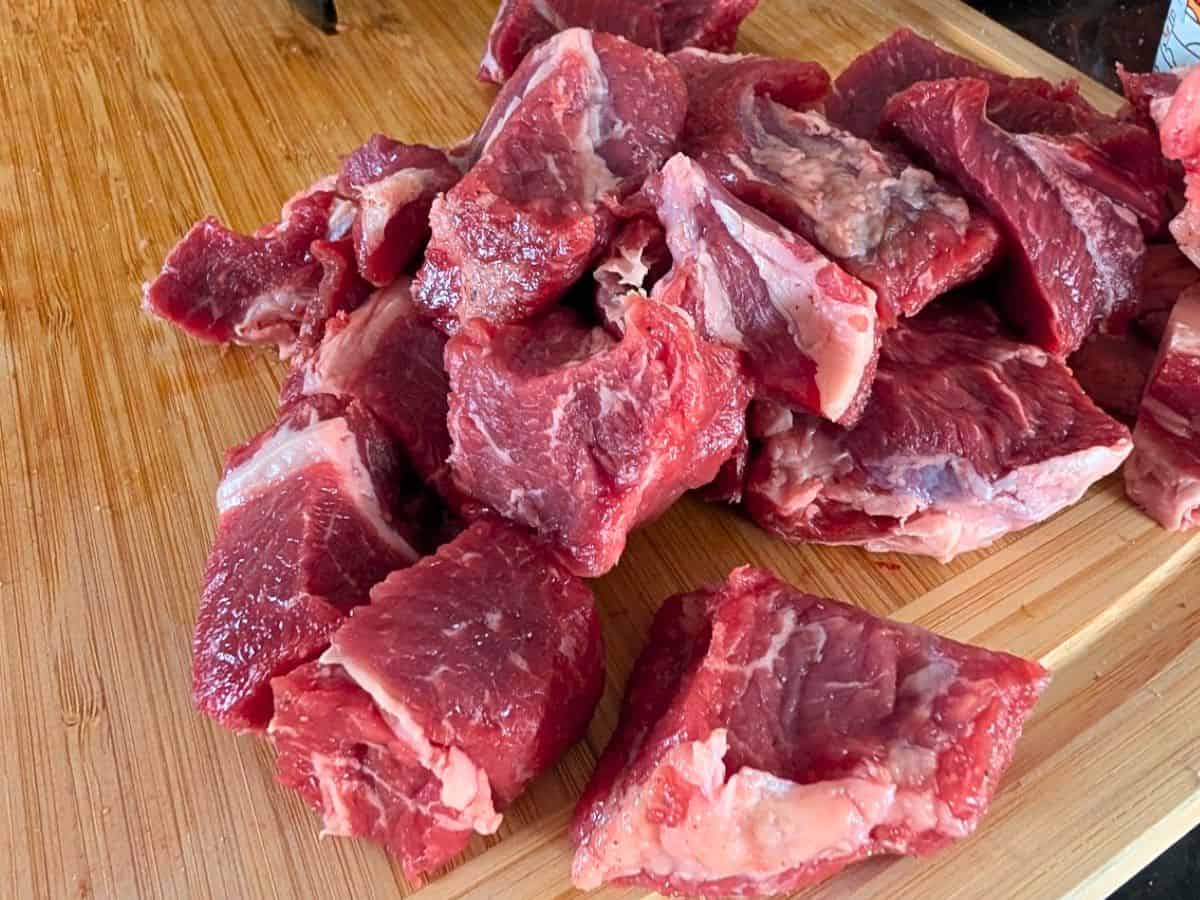
Chuck roast is the gold standard here. It has enough fat and collagen to turn meltingly tender. Look for good marbling and cut it into even pieces so everything finishes at the same time.
Aromatics
Onion, garlic, and celery form the backbone. If you are short on celery, you can still make a great stew without it, but the savory sweetness it adds is real.
Tomato paste
Two tablespoons is usually the sweet spot. Cook it briefly in the pot until it darkens a shade, which takes away any raw, tinny edge and makes the stew taste rounder.
Broth
Beef broth gives the most classic flavor. If you only have chicken broth, use it and add an extra pinch of salt plus a splash of Worcestershire.
Potatoes and carrots
Yukon Gold potatoes get creamy but hold together. Russets break down more and can make the stew thicker, but they are more likely to crumble. Carrots should be cut into larger chunks so they stay sweet and intact.
Herbs
Bay leaf plus thyme is my go-to. Dried thyme works beautifully. If you have fresh rosemary, add a small sprig and remove it at the end so it does not take over.
Equipment you will need
- Large Dutch oven or heavy pot with a lid for even heat and steady simmering
- Tongs for turning beef without tearing it
- Wooden spoon for scraping up browned bits
- Chef’s knife and cutting board
- Measuring spoons
Nice but not required: a fat separator (helpful if your stew is extra rich), and a ladle for serving.
Pro tips
- Brown in batches. If the pot is crowded, the beef steams instead of searing. Give it space, and do not rush the color.
- Salt early, adjust late. Season the beef before browning, then do a final taste once the stew has reduced and the potatoes are tender.
- Keep the simmer gentle. You want occasional bubbles, not a rolling boil, which can make meat tough and vegetables break apart.
- Let it rest. Even 15 minutes off the heat helps the broth thicken slightly and the flavors settle. The next day is even better.
- Skim if needed. If you see excess fat collecting on top, skim a little with a spoon. Do not remove all of it, since some fat equals flavor.
Substitutes that work
- No wine? Use an equal amount of beef broth plus 1 to 2 teaspoons apple cider vinegar or red wine vinegar for brightness.
- No beef broth? Chicken broth works. Add 1 to 2 teaspoons Worcestershire sauce or soy sauce for extra savory depth.
- Gluten-free: Skip flour and thicken at the end with a cornstarch slurry (1 tablespoon cornstarch mixed with 1 tablespoon cold water, stirred in and simmered until glossy).
- Potatoes: Swap Yukon Gold for red potatoes. They hold their shape very well.
- Vegetables: Parsnips, turnips, or rutabaga can replace some of the carrots or potatoes for a slightly sweeter, earthier stew.
Variations
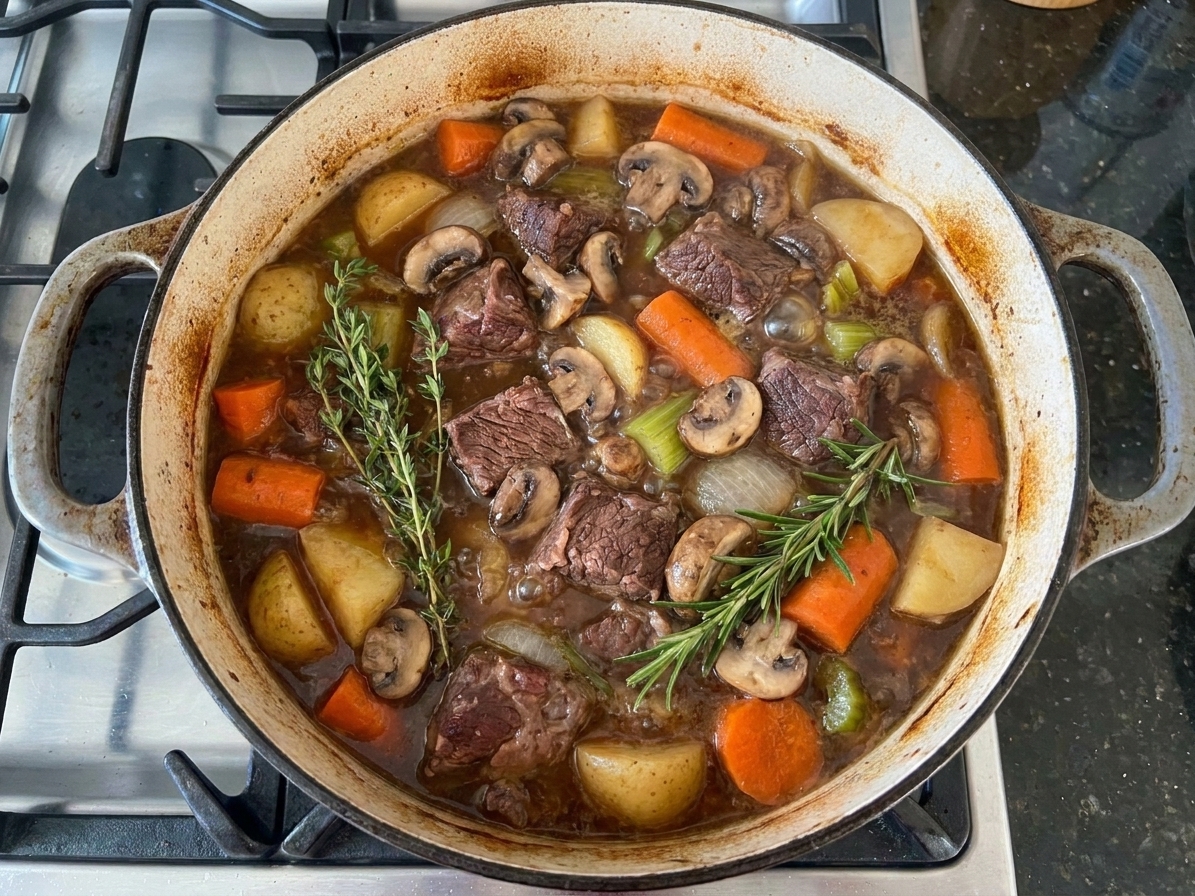
- Mushroom beef stew: Add 8 to 12 ounces sliced cremini mushrooms when you sauté the onions. Let them brown for better flavor.
- Smoky stew: Add 1 to 2 teaspoons smoked paprika with the tomato paste.
- Stout stew: Replace the wine with a dark beer (stout or porter). The stew will be a little sweeter and extra deep.
- Spicy warming stew: Add a pinch of red pepper flakes and a small diced chipotle in adobo for gentle heat.
- Extra-vegetable stew: Stir in frozen peas or chopped green beans during the last few minutes so they stay bright.
Serving ideas
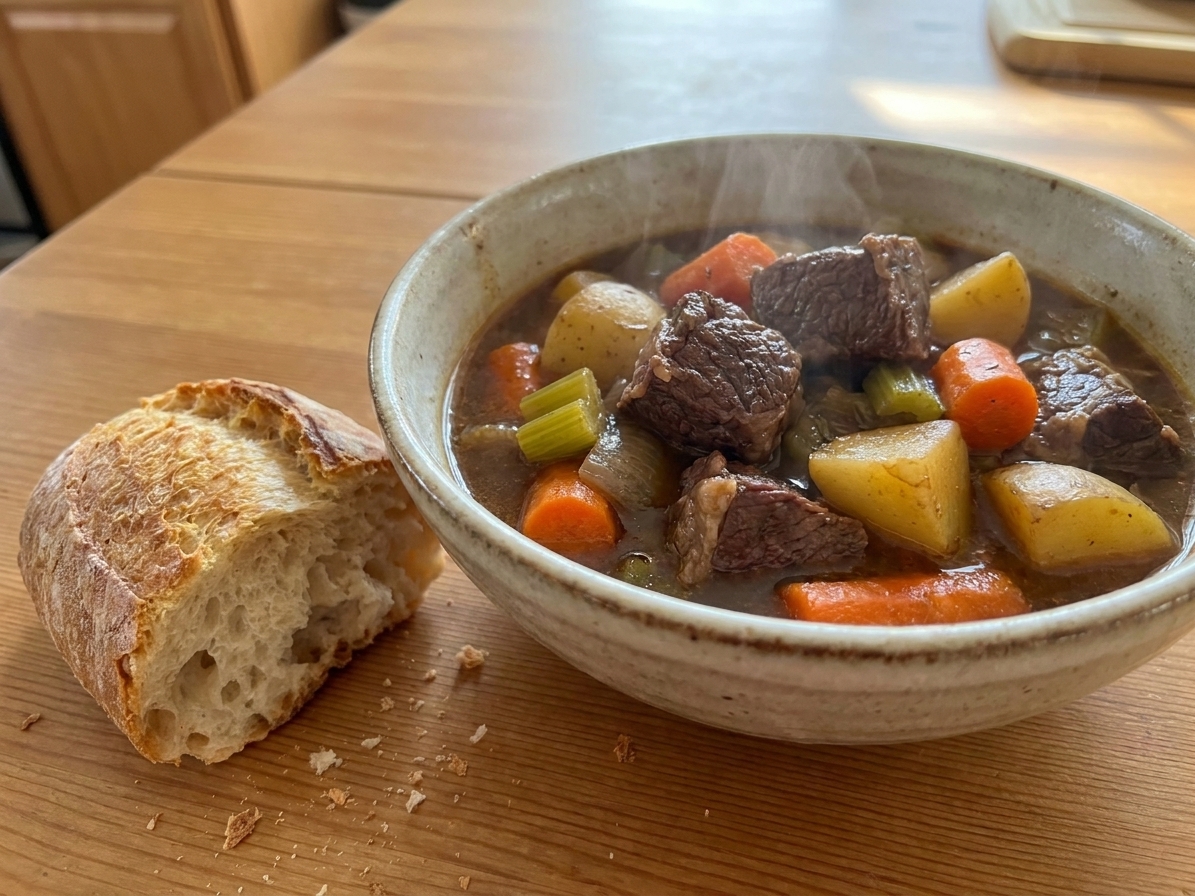
- Classic: Ladle into bowls with crusty bread for dunking.
- Cozy supper: Serve over mashed potatoes, polenta, or buttered egg noodles.
- Fresh contrast: Pair with a crisp green salad dressed with lemon and olive oil.
- Bakery-manager move: Warm leftover stew and top each bowl with a small biscuit or a piece of toasted sourdough.
Storage and reheating
Refrigerator
Store cooled stew in an airtight container for up to 4 days. The broth thickens as it sits, which is completely normal.
Freezer
Freeze for up to 3 months. Potatoes can turn slightly grainy after freezing. It is still tasty, just a bit softer. If you are making this specifically to freeze, consider using waxier potatoes (like red potatoes) and keeping the pieces on the larger side.
Reheating
Reheat gently on the stove over medium-low, stirring occasionally. Add a splash of broth or water if it is thicker than you want. Microwave reheating works too, but use a lower power setting and stir halfway through for even heat.
Common mistakes
- Skipping the sear. You can technically simmer beef until tender, but you will miss the deep roasted flavor that makes stew taste special.
- Boiling instead of simmering. A hard boil can make beef chewy and break your vegetables apart. Keep it calm and steady.
- Cutting pieces unevenly. If some beef chunks are tiny and others are huge, the small ones overcook while the big ones stay tough.
- Under-seasoning. Stew needs enough salt to taste “beefy.” Taste near the end and adjust gradually.
- Adding delicate vegetables too early. Peas and green beans should go in at the end so they stay bright and sweet.
FAQ
What is the best cut of beef for stew?
Chuck roast is my top pick because it becomes tender and flavorful after a long simmer. Stew meat sold pre-cubed is often chuck, but it can be mixed cuts. If you want the most consistent results, buy chuck and cube it yourself.
Why is my beef stew meat tough?
Tough stew meat usually means it needs more time, not less. Collagen needs a long, gentle simmer to break down. Keep cooking at a low simmer and check again in 15 to 20 minutes.
How do I thicken beef stew?
This recipe thickens naturally from a light flour coating and reduction. If you want it thicker at the end, mash a few potato chunks against the side of the pot, or stir in a small cornstarch slurry and simmer until glossy.
Can I make this in a slow cooker?
Yes. Brown the beef and sauté the aromatics first, then transfer to a slow cooker with the broth and seasonings. Cook on low 8 to 9 hours or high 4 to 5 hours. Add potatoes and carrots for the last 3 to 4 hours on low (or last 2 to 3 hours on high) so they do not overcook.
Can I make beef stew ahead?
Absolutely. Make it 1 day ahead, cool, and refrigerate. Reheat gently and loosen with broth as needed. The flavor gets deeper overnight.
The recipe
Ultimate Easy Beef Stew
A cozy, foolproof beef stew with tender chuck roast, hearty vegetables, and a rich, thick broth built from simple pantry staples and a few smart techniques.
- Prep
- 20 minutes
- Cook
- 2 hours 10 minutes
- Total
- 2 hours 30 minutes
- Yield
- 6
Ingredients
- 2 1/2 lb beef chuck roast, cut into 1 1/2-inch chunks
- 1 1/2 tsp kosher salt, plus more to taste
- 1/2 tsp black pepper
- 3 tbsp all-purpose flour
- 2 to 3 tbsp olive oil
- 1 large yellow onion, diced
- 2 celery ribs, diced
- 4 medium carrots, cut into 1-inch chunks
- 4 garlic cloves, minced
- 2 tbsp tomato paste
- 1/2 cup dry red wine (optional)
- 4 cups beef broth
- 1 tbsp Worcestershire sauce
- 1 tsp dried thyme (or 1 tbsp fresh thyme leaves)
- 2 bay leaves
- 1 1/2 lb Yukon Gold potatoes, cut into 1 1/2-inch chunks
- 1 tbsp red wine vinegar or apple cider vinegar
- 2 tbsp chopped fresh parsley (optional, for serving)
Instructions
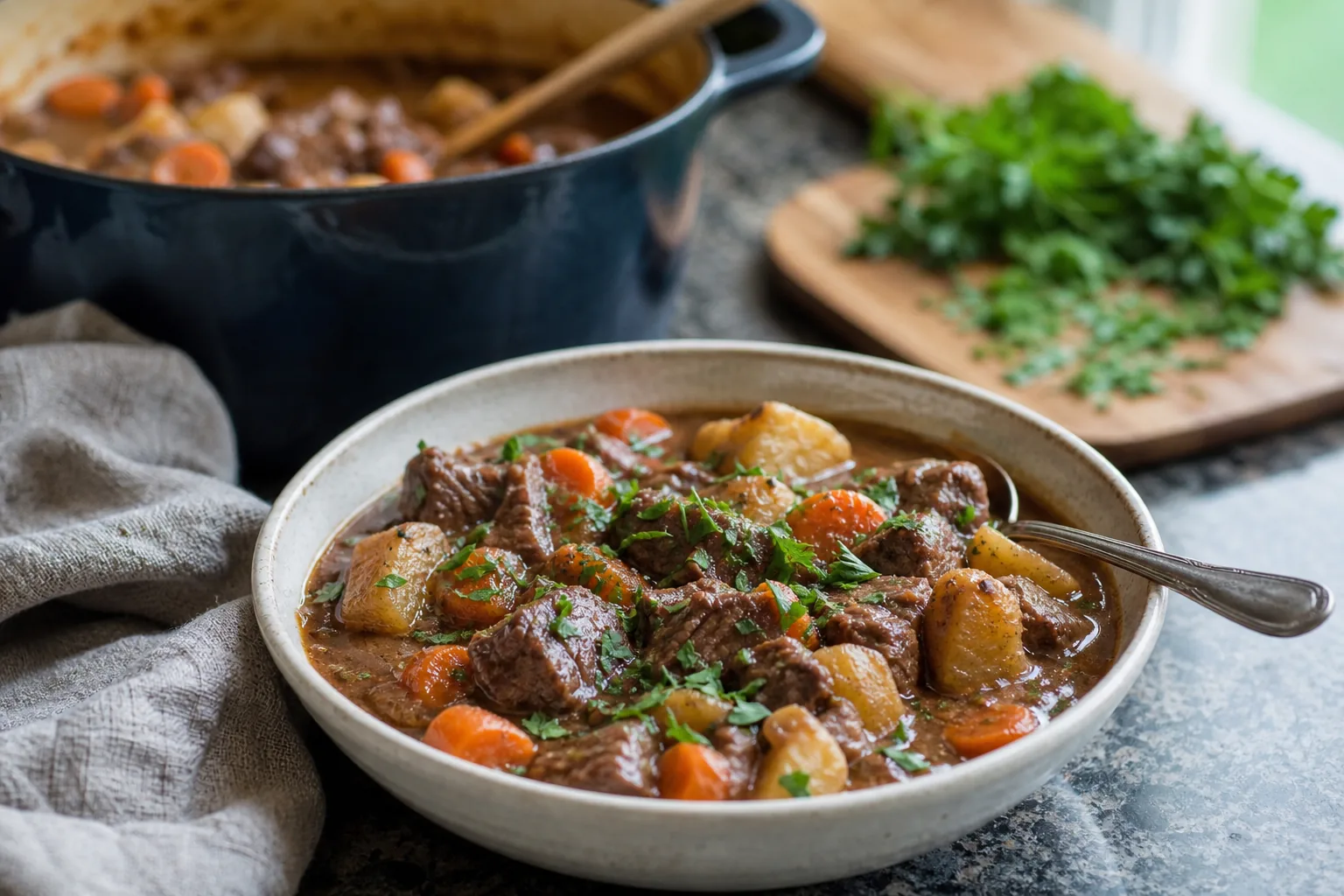
- Season and flour the beef. Pat the beef dry. In a bowl, toss with salt, pepper, and flour until lightly coated.
- Brown the beef in batches. Heat 2 tablespoons oil in a large Dutch oven over medium-high heat. Add beef in a single layer and sear 3 to 4 minutes per side until deeply browned. Transfer to a plate. Repeat with remaining beef, adding a little more oil if the pot looks dry.
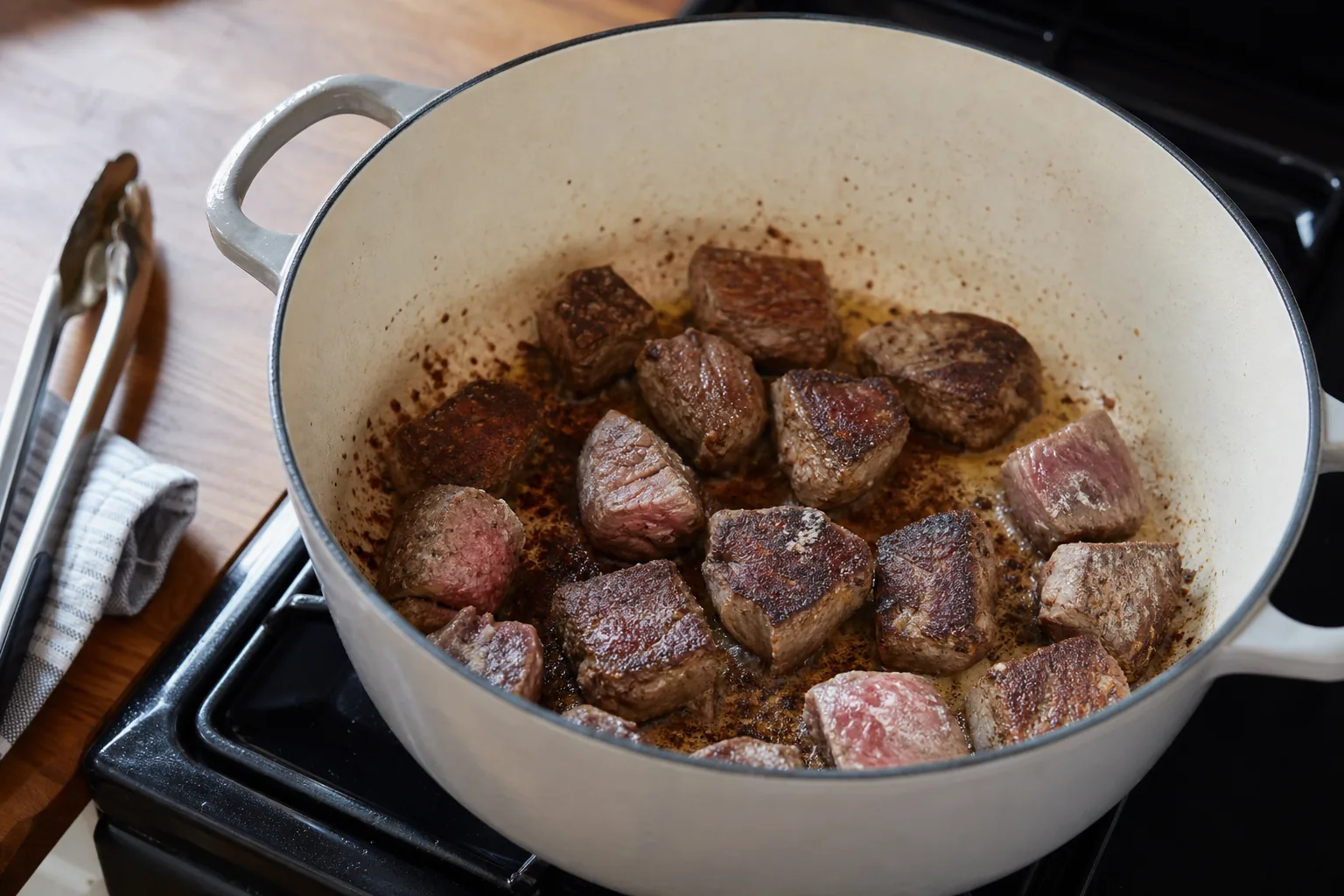
Brown the beef in batches until deeply browned. - Sauté the aromatics. Reduce heat to medium. Add onion and celery with a pinch of salt. Cook 5 to 7 minutes, scraping up browned bits, until softened. Stir in carrots and cook 2 minutes. Add garlic and cook 30 seconds.
- Cook the tomato paste. Stir in tomato paste and cook 1 minute, stirring, until it darkens slightly.
- Deglaze. Pour in the wine (if using) and simmer 1 to 2 minutes, scraping the bottom of the pot until the liquid looks less sharp and the fond is dissolved.
- Simmer the stew. Return beef and any juices to the pot. Add broth, Worcestershire, thyme, and bay leaves. Bring to a gentle simmer, then cover and reduce heat to low. Simmer 60 minutes, stirring occasionally.
- Add potatoes and continue cooking. Stir in potatoes. Cover and simmer 45 to 60 minutes more, until the beef is fork-tender and potatoes are tender but not falling apart.
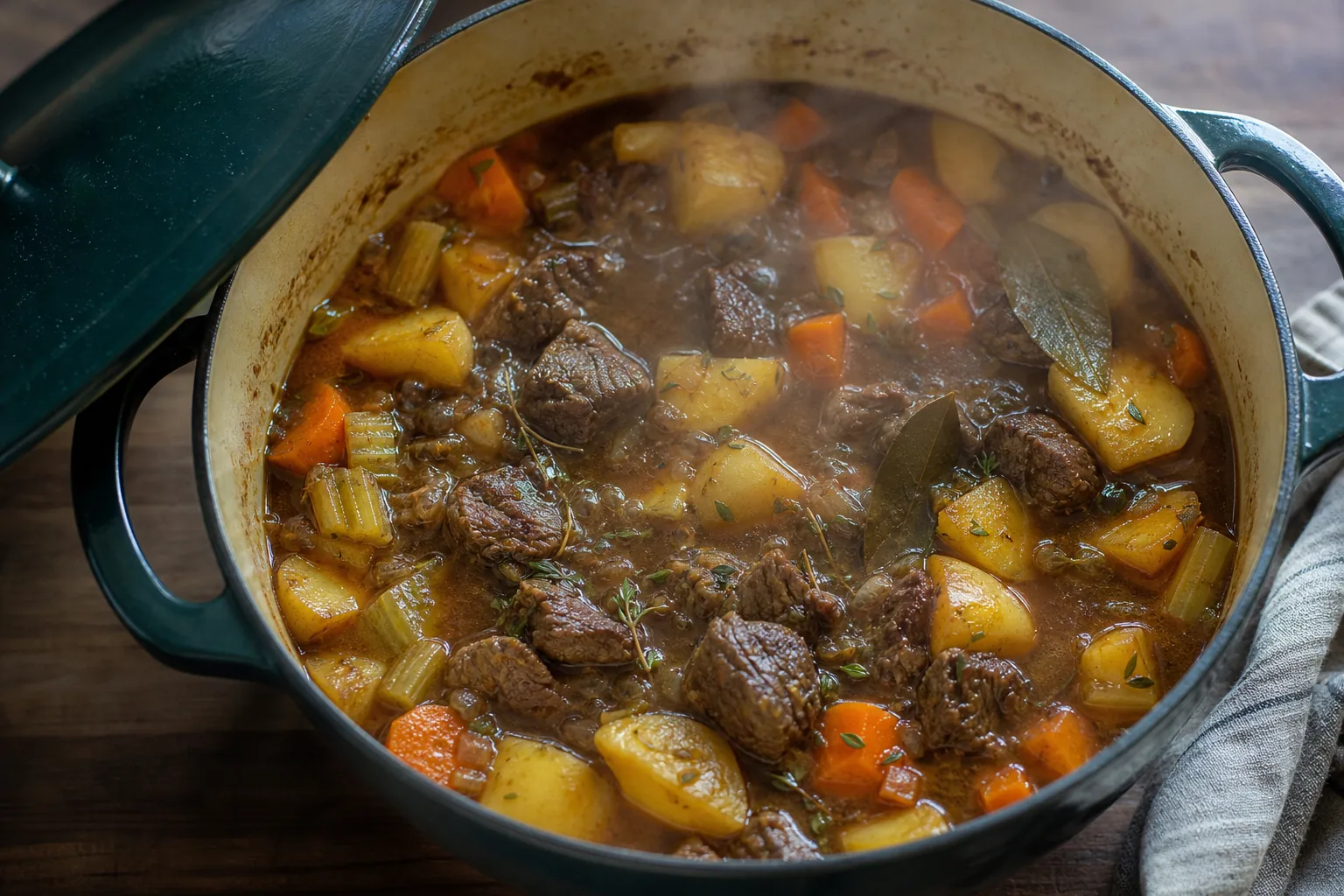
Stir in the potatoes and simmer until the beef is fork-tender. - Finish and adjust. Remove bay leaves. Stir in vinegar. Taste and adjust salt and pepper. If you want a thicker stew, simmer uncovered 10 minutes.
- Serve. Ladle into bowls and top with parsley if you like.
Notes
- Make it thicker: Simmer uncovered at the end, or mash a few potato pieces into the broth for a natural thickener.
- Make it lighter: Chill overnight and lift off the solidified fat before reheating.
- Vegetable timing: If you prefer firmer carrots, add them with the potatoes instead of earlier.
- Salt tip: Different broths vary wildly in salt. Start with the listed amount, then adjust at the end once the stew has reduced.
Nutrition
Estimated per serving: 520 calories, 40 g protein, 28 g fat, 28 g carbohydrates, 4 g fiber, 980 mg sodium. (Nutrition will vary by specific ingredients and portion size.)