A practical, cook-from-real-life comparison of speed, cleanup, and versatility plus the meals each appliance wins at on busy nights.
recipes
Slow Cooker vs. Instant Pot Pot Roast

Elena Martinez
Elena Martinez is a former bakery manager turned full-time food writer and recipe developer. With over a decade of experience translating professional culinary techniques into approachable home cooking, she believes that a great meal doesn't require a culinary degree or expensive ingredients.
Created September 21, 2026
Last updated September 21, 2026
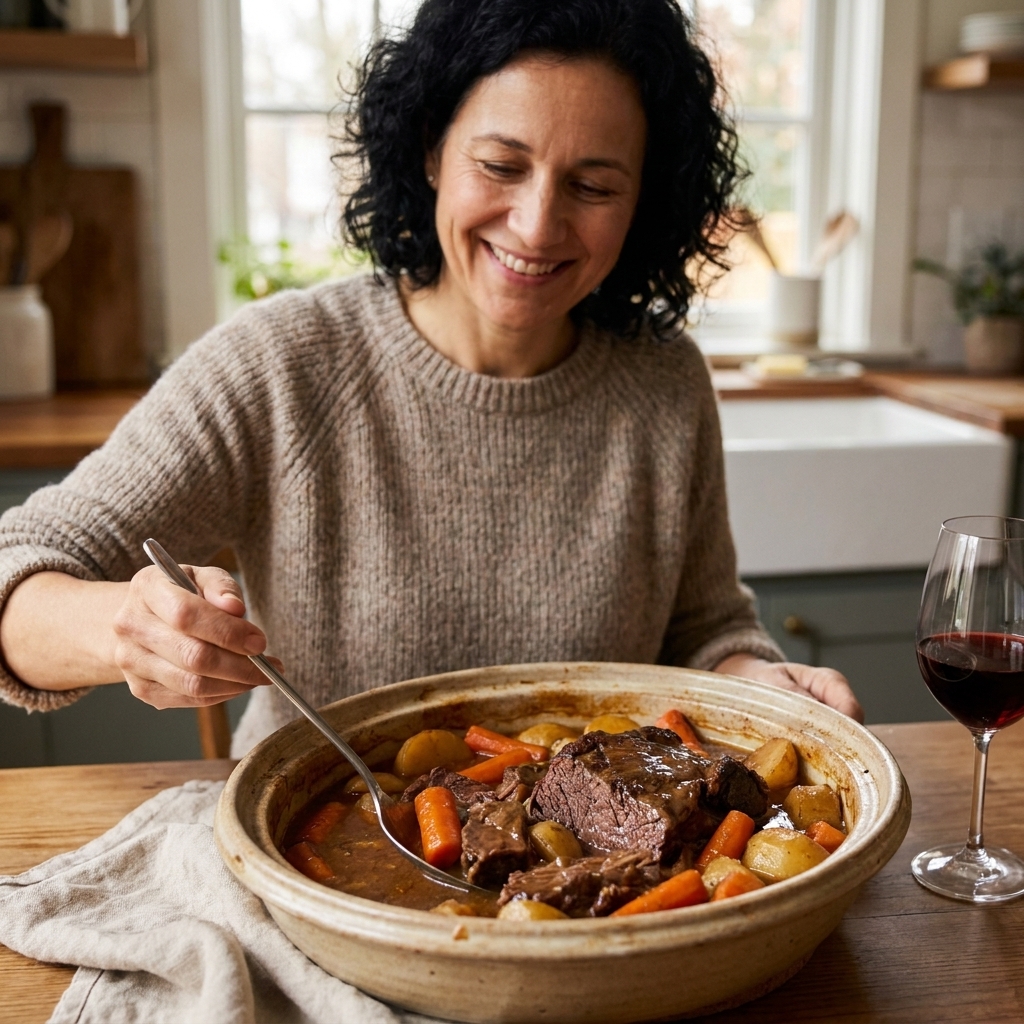
Pot roast is one of those meals that makes the house feel taken care of. It is cozy, generous, and forgiving. But the appliance question is real: do you want the all-day slow simmer that fills the kitchen with “Sunday dinner” energy, or do you want the pressure cooker magic that gets you to tender beef on a Tuesday?
Below, I will walk you through what each appliance does best, what to expect from the texture and gravy, and I am giving you two tested recipes: one for the slow cooker and one for the Instant Pot. Both are classic, both are flavorful, and both are built for real life.
Quick verdict
- Choose the slow cooker if you want deeper all-day aroma, a softer “braised” texture, and maximum hands-off cooking while you are out.
- Choose the Instant Pot if you want pot roast fast, with sliceable-yet-tender beef and a flavorful cooking liquid that can become gravy in minutes.
- If you care most about gravy: Instant Pot gives you a more concentrated base quickly. Slow cooker gravy benefits from a quick stovetop reduction.
What changes with each method?
Texture
Slow cooker: The roast tends to turn more shreddable and soft throughout, especially around the edges. Vegetables can get very tender, sometimes “stew-soft” if cooked the full time.
Instant Pot: You can get fork-tender results in roughly 90 to 110 minutes total for many models (including come-to-pressure time), but the meat often holds its shape a bit more. Carrots stay pleasantly tender, and potatoes can be dialed in by size and placement.
Flavor
Slow cooker: The long, gentle heat coaxes a mellow, rounded flavor. The tradeoff is that liquid does not reduce much, so the cooking liquid can taste a little lighter unless you boost it with umami helpers.
Instant Pot: Pressure cooking traps aromatics and pushes flavor into the meat quickly. You also tend to use less liquid than a slow cooker, so the cooking liquid starts off more concentrated.
Convenience
Slow cooker: Set it and forget it is real. You can start it in the morning and dinner is waiting.
Instant Pot: Faster, but more “active” up front. You brown, sauté, pressure cook, then you usually thicken gravy in the same pot.
Best cuts for both
My go-to is boneless chuck roast (3 to 4 pounds). It has enough fat and connective tissue to become tender without drying out. Brisket and bottom round can work, but chuck is the most forgiving for home kitchens.
Flavor basics that always work
These are the little levers I pull whether I am using the slow cooker or the Instant Pot:
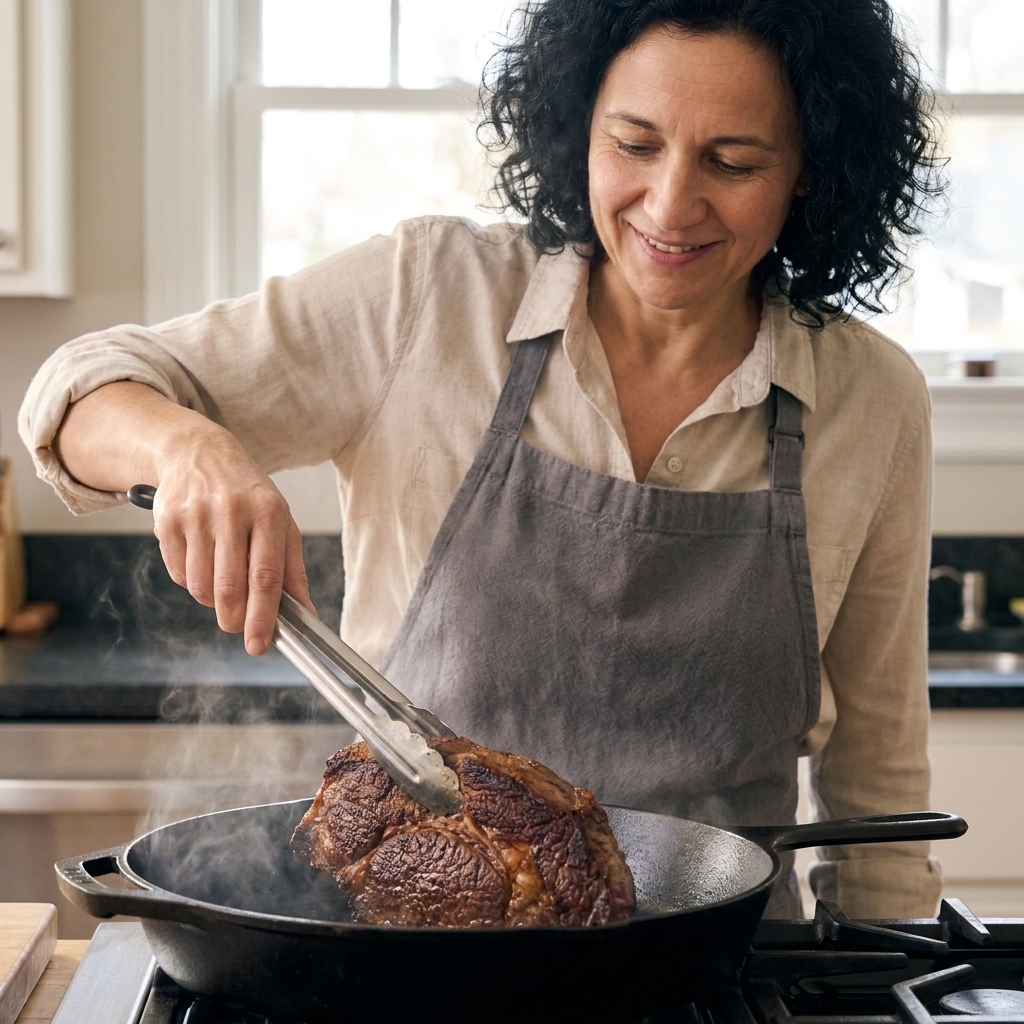
- Brown the roast. It is optional for slow cooker, but it is worth it. You are looking for a dark mahogany crust, not black.
- Use tomato paste. Just 1 tablespoon, browned briefly, adds deep savory notes without tasting “tomatoey.” Stir it constantly for 30 to 60 seconds so it toasts, not burns.
- Add umami. Worcestershire, soy sauce, or a splash of balsamic. Pick one, not all three.
- Herbs that behave. Dried thyme and bay leaf hold up. Fresh herbs are lovely at the end.
- Salt in layers. Season the meat first. Then taste the broth before serving. Final salt depends a lot on how salty your broth is.
Recipe 1: Slow Cooker Pot Roast
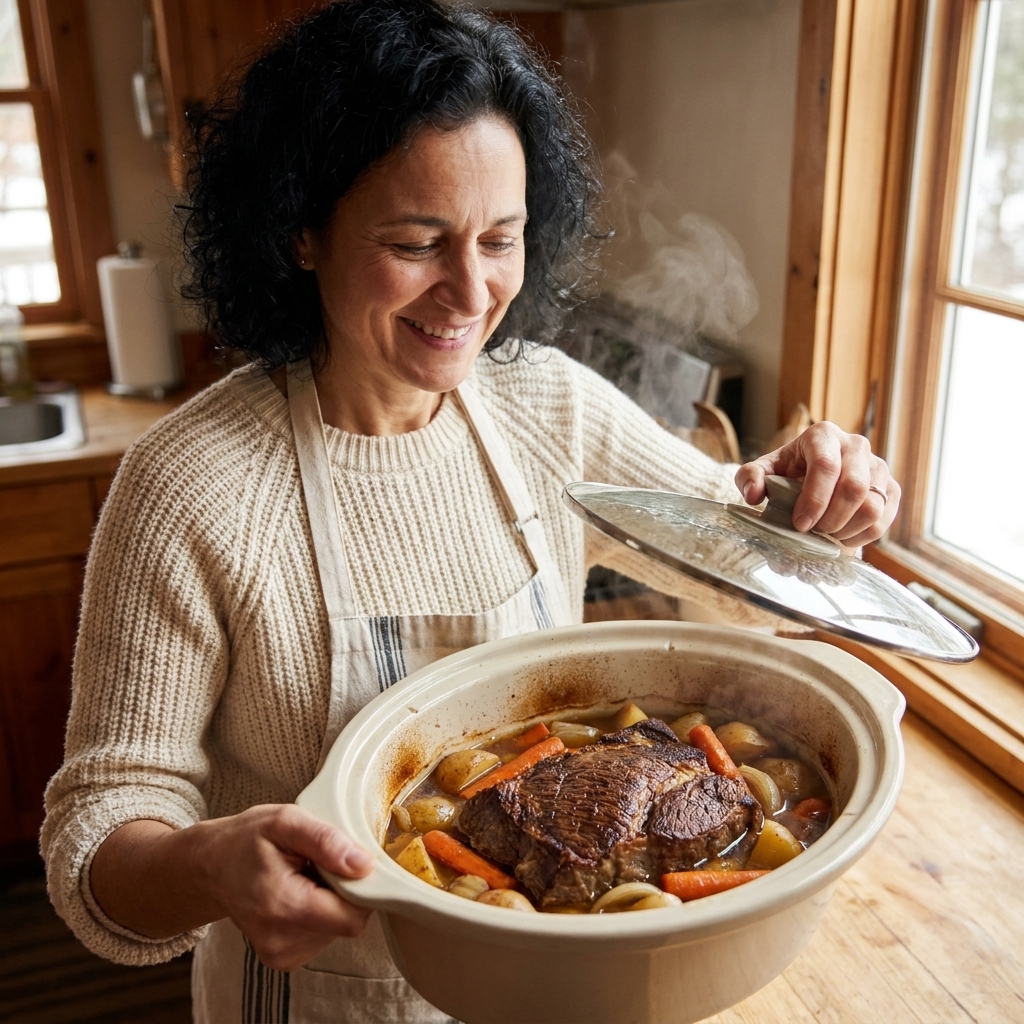
This one is for days when you want dinner to solve itself. The gravy is finished quickly on the stove, which keeps it rich and glossy instead of watery.
Ingredients (serves 6 to 8)
- 3 to 4 lb boneless chuck roast
- 2 1/2 tsp kosher salt, divided, plus more to taste
- 1 tsp black pepper
- 2 tbsp all-purpose flour (optional, helps browning)
- 2 tbsp neutral oil (canola, avocado)
- 1 large yellow onion, sliced
- 4 cloves garlic, smashed
- 2 tbsp tomato paste
- 1 cup beef broth
- 1/2 cup dry red wine (or more broth)
- 1 tbsp Worcestershire sauce
- 1 tsp dried thyme
- 2 bay leaves
- 4 medium carrots, cut into 2-inch pieces
- 1 1/2 lb baby potatoes (or Yukon Golds cut into chunks)
- 2 tbsp cornstarch + 2 tbsp cold water (for gravy), or 3 tbsp flour + 3 tbsp butter (for roux)
How to make it
- Season and (optionally) flour the roast. Pat dry. Season with 2 tsp salt and pepper. If using flour, dust lightly.
- Brown the roast. Heat oil in a large skillet over medium-high. Sear 4 to 5 minutes per side until deeply browned. Transfer to slow cooker.
- Build flavor in the same skillet. Add onion and cook 3 minutes, scraping up browned bits. Add garlic and tomato paste, cook 1 minute, stirring so the paste does not scorch.
- Deglaze. Pour in broth and wine, whisking to dissolve the fond. Stir in Worcestershire and thyme.
- Slow cook. Pour mixture over roast. Tuck in bay leaves. Add carrots and potatoes around the roast. Cook 8 to 9 hours on LOW (or 4 to 5 hours on HIGH) until fork-tender.
- Rest the meat. Transfer roast to a platter and tent with foil 10 to 15 minutes. This makes slicing or pulling easier.
- Make gravy. Strain cooking liquid into a saucepan (or skim fat and use it as-is). Simmer 5 to 10 minutes to concentrate. Whisk cornstarch slurry into bubbling liquid and cook 1 to 2 minutes until glossy. Taste and adjust salt.
- Serve. Slice or shred the roast, spoon gravy over, and serve with the vegetables.
Slow cooker tips
- Keep potatoes bigger than you think. Small pieces can turn mushy after 8 hours.
- Do not drown it. You usually only need enough liquid to come up about 1/3 of the roast. Slow cookers trap moisture. That said, follow your manufacturer minimums and add a splash more broth if your cooker tends to run hot or dry around the edges.
- Want thicker gravy without a saucepan? Remove meat and veggies, turn slow cooker to HIGH, whisk in cornstarch slurry, and cook 10 to 15 minutes with the lid slightly ajar.
Recipe 2: Instant Pot Pot Roast
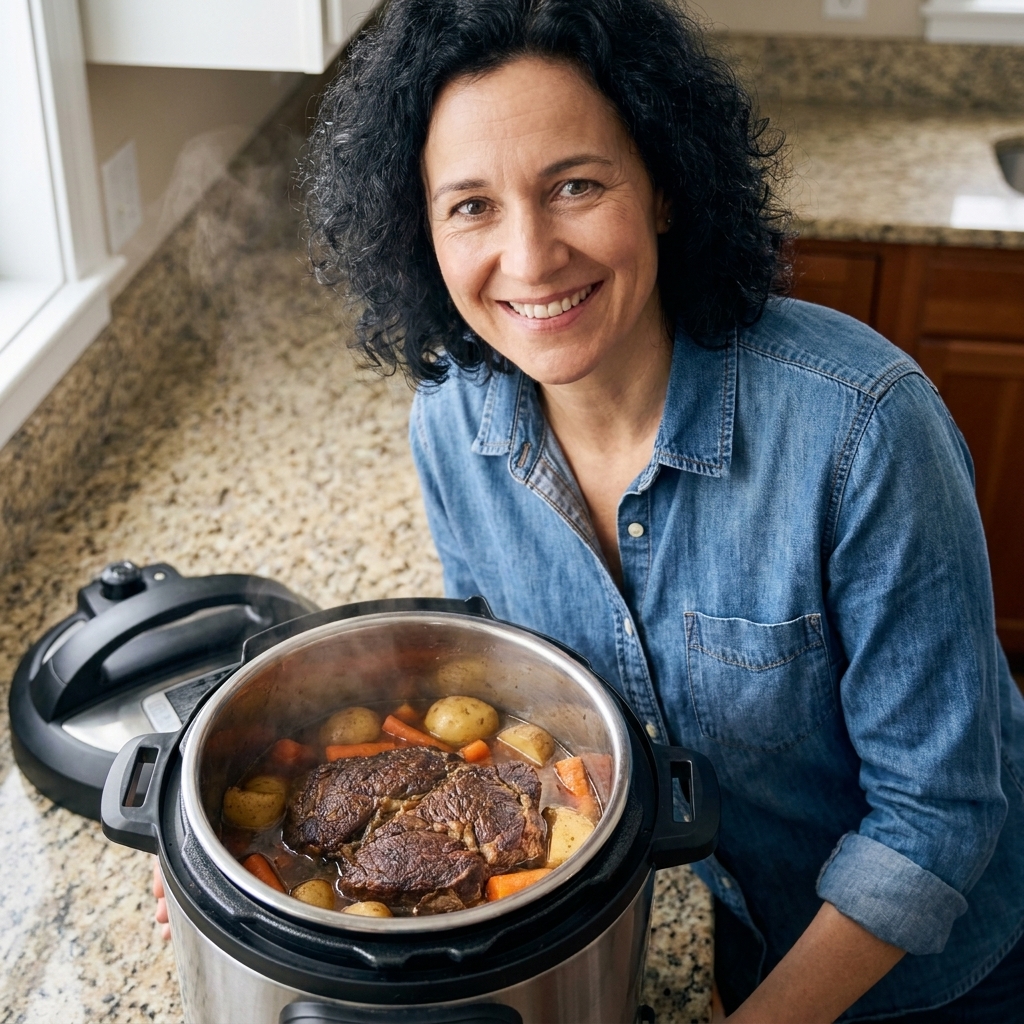
This recipe is built for speed without losing that pot roast soul. The secret is not rushing the sear and letting the pressure release naturally so the beef stays tender.
Ingredients (serves 6)
- 3 lb boneless chuck roast
- 2 1/4 tsp kosher salt, divided, plus more to taste
- 1 tsp black pepper
- 1 tbsp neutral oil
- 1 large onion, sliced
- 4 cloves garlic, smashed
- 1 tbsp tomato paste
- 1 1/4 cups beef broth
- 1 tbsp Worcestershire sauce
- 1 tsp dried thyme
- 2 bay leaves
- 1 lb baby potatoes (or Yukon Golds cut into large chunks)
- 4 medium carrots, cut into thick pieces
- 2 tbsp cornstarch + 2 tbsp cold water (for gravy)
How to make it
- Season the roast. Pat dry. Season with 2 tsp salt and pepper.
- Sear on Sauté. Set Instant Pot to Sauté (high). Add oil. Brown the roast 4 to 5 minutes per side until you get a dark mahogany crust. Transfer to a plate.
- Sauté aromatics. Add onion and cook 2 to 3 minutes. Add garlic and tomato paste, cook 1 minute, stirring so the paste toasts instead of burning.
- Deglaze thoroughly. Pour in broth and whisk, scraping every browned bit from the bottom. This prevents the burn warning and boosts flavor. Stir in Worcestershire, thyme, and bay leaves.
- Pressure cook. Return roast to the pot. Add potatoes and carrots around the meat. Seal. Cook on High Pressure for 60 minutes (for a 3 lb roast), then Natural Release for 15 minutes, followed by Quick Release. Note: total time will also include come-to-pressure time, often 10 to 20 minutes.
- Check tenderness. The roast should shred easily with a fork. If it still feels tight, pressure cook 8 to 10 minutes more with another 10 minute natural release. Thickness matters here. A thicker roast often needs longer than a flatter one, even at the same weight.
- Make gravy in the pot. Transfer meat and vegetables to a platter. Set pot to Sauté. Whisk in cornstarch slurry and simmer 1 to 2 minutes until thickened. Taste and adjust salt.
- Serve. Slice or shred, then ladle over that gravy.
Instant Pot tips
- Minimum liquid matters. Most pressure cookers need at least about 1 cup of thin liquid to come to pressure and avoid scorching. Broth works best, and deglazing well is your insurance policy.
- Natural release helps. A rushed quick release can tighten the meat and make it feel drier, especially with large roasts.
- Want firmer vegetables? Cook the beef by itself first (60 minutes, then 15 minute natural release). Transfer beef to a platter, add potatoes and carrots to the liquid, then pressure cook 4 to 6 minutes with a quick release. This is a great option if you like carrots with a little bite.
- Need a darker, richer gravy? Add 1 teaspoon soy sauce or 1 teaspoon balsamic vinegar after pressure cooking, then thicken.
Which one is best?
For fall-apart texture
Slow cooker wins. That long, low heat gives you the most shreddable roast with minimal babysitting.
For a fast payoff
Instant Pot wins. You get a deeply satisfying pot roast in a fraction of the time, and the gravy comes together fast.
For the best sauce
Tie, with one note. Instant Pot starts more concentrated. Slow cooker catches up quickly if you reduce the liquid for 5 to 10 minutes before thickening.
Common problems and fixes
My pot roast is tough
It almost always needs more time, not less. Tough collagen has not fully converted to gelatin yet. In the Instant Pot, add 8 to 10 minutes. In the slow cooker, keep going another 45 to 90 minutes on LOW.
If you like a number, pot roast that shreds easily often lands around 195 to 205°F internally, but tenderness is the real test.
My gravy is thin
Reduce first if you can, then thicken. Cornstarch gives a glossy gravy fast. Flour and butter roux gives a more traditional, velvety gravy.
My vegetables are mushy
In a slow cooker, keep veggies in larger chunks and consider adding them halfway through if your model runs hot. In the Instant Pot, do not cut potatoes small, and avoid stacking them directly under the roast where they can overcook. If you want reliably firmer veggies, use the two-stage Instant Pot method in the tips above.
It tastes bland
Add salt, then add brightness. A tiny splash of vinegar, a squeeze of lemon, or a spoonful of pickled pepper brine right at the end can wake up the whole pot. Also, do not skip browning if you have 10 extra minutes.
Make-ahead and leftovers
- Make ahead: Pot roast is even better the next day. Cool, refrigerate overnight, then rewarm gently with some gravy.
- Freezing: Freeze sliced or shredded beef with some gravy (this protects it from drying out). Freeze vegetables separately if you can, since potatoes can get grainy after thawing.
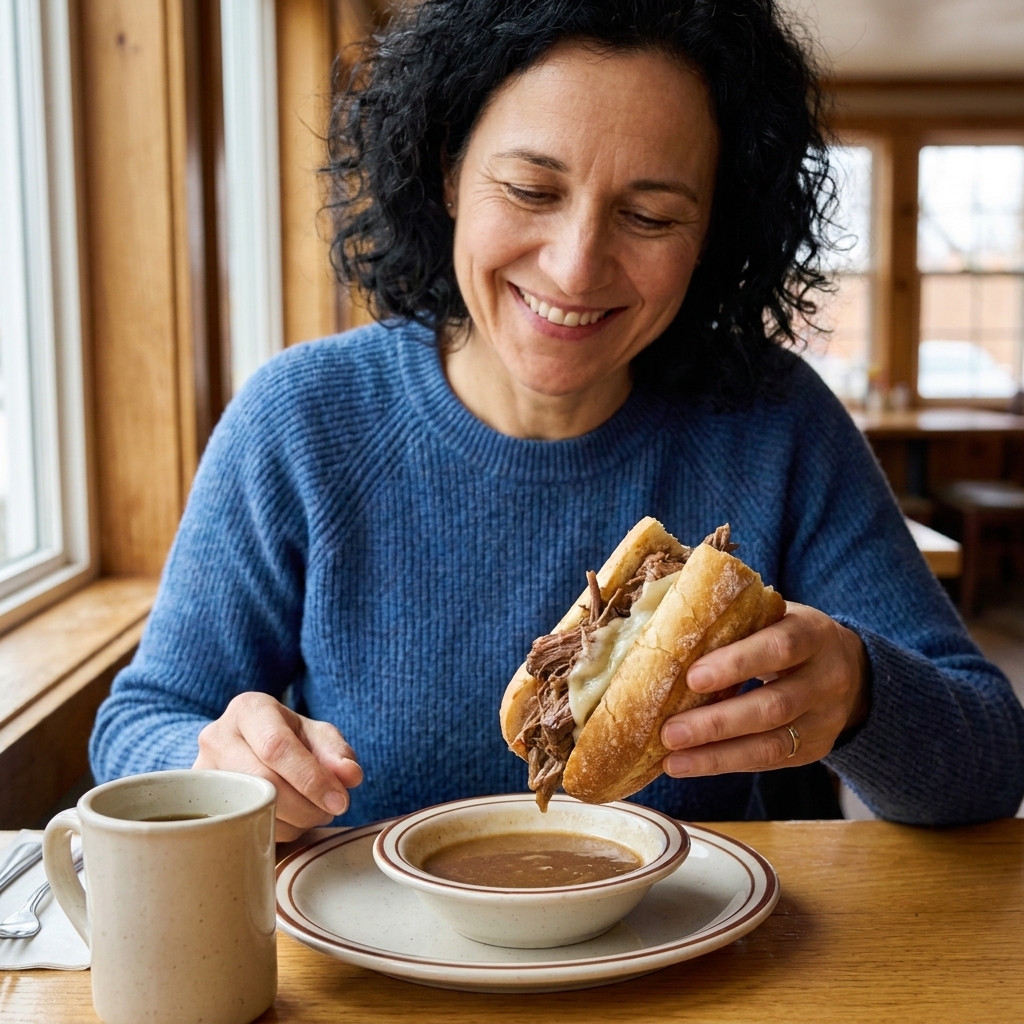
- Leftover magic: Shred beef into tacos, stir into egg noodles, or pile onto toasted rolls with provolone for an easy French dip vibe.
FAQ
Do I need to add water to the slow cooker?
Not usually. Meat and vegetables release a lot of liquid. Start with about 1 to 1 1/2 cups total liquid unless your slow cooker manual suggests otherwise.
Can I cook pot roast from frozen in the Instant Pot?
You can, but you lose the sear and some flavor. Consider this a starting point: try 90 to 110 minutes High Pressure for a 3 lb roast, plus a 15 minute natural release, then check tenderness and add 10 minute increments as needed. Frozen roasts vary a lot by shape and thickness.
Should the roast be covered in liquid?
No. Pot roast is a braise, not a boil. Aim for liquid coming up about one-third to halfway up the roast. The lid and trapped steam do the rest.
What if I do not want potatoes in the pot?
Skip them and serve the roast over mashed potatoes, rice, or buttered noodles. You can add extra carrots or mushrooms to keep the pot feeling hearty.