
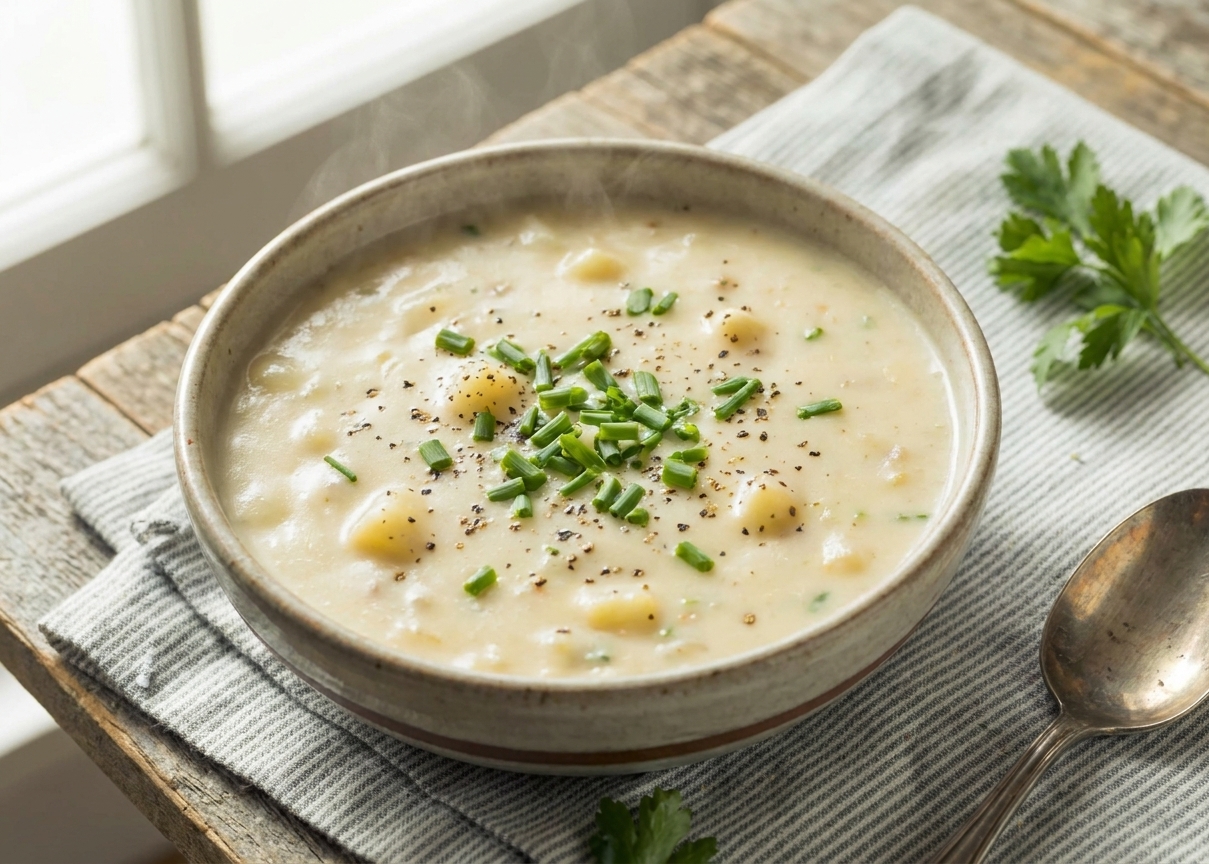
Creamy potato soup is one of those meals that makes the whole kitchen feel a little softer. It smells like onions turning sweet in butter and garlic warming up. The best part: it is not complicated. You do not need fancy potatoes or an expensive blender. You just need time for the potatoes to get tender and one smart trick for that silky texture: blend only part of the pot, either with an immersion blender or carefully in batches in a countertop blender.

In this PlateDo version, I wanted it to hit that ideal middle ground: creamy and rich, but still light enough to want a second bowl. You get a soup that is thickened mostly by the potatoes themselves, with a little dairy at the end for a smooth, spoon-coating finish. If you like a perfectly smooth soup, you can blend more. If you like it rustic, you can blend less. No stress.
What to expect
This soup starts with a simple base of sautéed onion and celery. Potatoes simmer in broth until they are very tender, then you partially blend the pot so you get both creaminess and texture. A splash of cream and a little tangy sour cream round everything out. It is the kind of dinner that pairs beautifully with anything you can dunk, and it makes excellent leftovers.
- Texture: creamy with tender potato pieces
- Flavor: savory, gently garlicky, buttery, not heavy
- Skill level: beginner-friendly
- Time: about 45 to 60 minutes start to finish
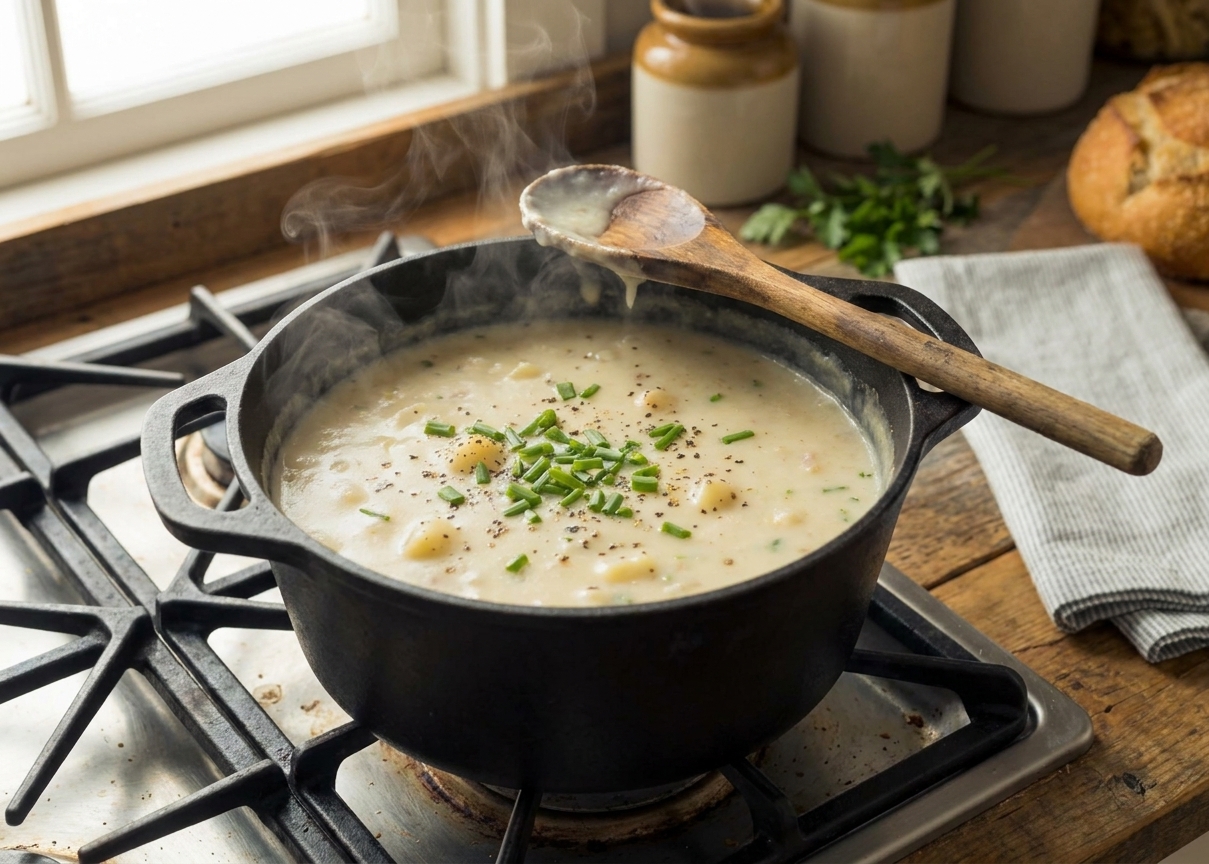
Make it your own
This is a soup that loves a little improvisation. Add leftover ham, fold in sautéed mushrooms, or toss in a handful of corn. If your fridge is looking sparse, you can still make a delicious pot with just potatoes, broth, and onion. The keys are salting in layers and blending a portion of the soup to create natural thickness.
If you are wondering which potatoes to grab, Yukon Gold potatoes give you a naturally creamy texture and a buttery flavor. Russets work too and make a thicker soup, just avoid blending the whole pot so it stays silky instead of turning gluey.
Think of creamy potato soup as a technique, not a strict rule. Build flavor first, then let the potatoes do the thickening.
One practical note for leftovers: potato soup thickens as it chills. When you reheat, just loosen it with a splash of broth or milk and warm it gently.
Why this recipe works
- Potatoes thicken the soup naturally. When you simmer potatoes until they are very tender, their starches release into the broth. Blending just part of the pot turns that starch into a velvety body without needing flour or heavy roux.
- Sautéed aromatics create a deeper base. Cooking onion and celery in butter before adding liquid builds sweetness and savoriness that makes the soup taste like it simmered all day.
- Dairy goes in at the end. Adding cream and sour cream after the potatoes are cooked keeps the texture smooth and helps prevent curdling.
- Partial blending keeps it interesting. You get both creamy soup and satisfying bites of potato, which is the sweet spot for most people at the table.
Ingredient notes
These notes are here to help you shop and swap confidently. Use what you have, just keep the roles of each ingredient in mind.
Potatoes
Yukon Gold potatoes are my favorite here because they blend into a naturally creamy texture and still hold their shape in chunks. Russets make a slightly fluffier, thicker soup because they are starchier. Either works.
Broth
Chicken broth adds a little extra richness, but vegetable broth is great too. If your broth is very salty, go lighter on added salt until the end.
Cream and sour cream
Heavy cream makes the most luxurious finish, but half-and-half also works. Sour cream adds gentle tang and rounds out the potato flavor. If you are sensitive to tang, start with a smaller amount and add to taste.
Garlic
Fresh garlic gives the best flavor. If you only have garlic powder, you can use it, just add it with the broth so it blooms.
Optional toppings
Chives, scallions, shredded cheddar, crispy bacon, and extra sour cream all work beautifully. A little black pepper on top makes the whole bowl taste more alive.
Equipment you will need
- Large pot or Dutch oven: 5 to 7 quart is ideal for comfortable stirring.
- Knife and cutting board: for prepping potatoes and aromatics.
- Measuring cups and spoons: helpful for consistent results.
- Immersion blender: the easiest way to partially blend right in the pot.
- Alternative to immersion blender: a countertop blender works too, just blend in batches and be careful with hot liquid.
- Ladle: for serving and for transferring soup if using a blender.
Pro tips
- Cut potatoes evenly. Similar sized chunks cook at the same pace, so you do not end up with some falling apart while others stay firm.
- Do not rush the simmer. You want potatoes very tender before blending. If they are even a little firm, the soup can taste grainy instead of silky.
- Blend less than you think, then adjust. You can always blend a bit more, but you cannot un-blend. I like blending about one third to one half of the pot.
- Add dairy off the heat. Turn the heat to low or off before stirring in sour cream and cream for the smoothest texture.
- Taste at the end for salt. Potatoes soak up seasoning. A final pinch of salt can make the flavors snap into focus.
- Brighten if needed. If the soup tastes flat, add a tiny squeeze of lemon or a splash of vinegar. Not enough to taste sour, just enough to lift.
Substitutes that work
- No cream: use half-and-half, whole milk, or evaporated milk. If using milk, keep the heat gentle to avoid scorching.
- No sour cream: use plain Greek yogurt (stir in off the heat), crème fraîche, or softened cream cheese whisked in until smooth.
- Dairy-free: finish with unsweetened oat milk or canned coconut milk (the kind labeled full-fat). For tang, add a small squeeze of lemon.
- No celery: use a small diced carrot, a little fennel, or skip it and add extra onion.
- Broth options: chicken, vegetable, or even water plus an extra pinch of salt and a little more butter.
- Butter substitute: olive oil works well and still tastes cozy.
Variations
Loaded baked potato vibes
Top bowls with cheddar, bacon, scallions, and an extra dollop of sour cream. If you want the soup itself to taste cheesier, stir in shredded cheddar off the heat so it melts smoothly.
Leek and potato
Swap the onion for 2 cleaned, sliced leeks. Leeks turn sweet and soft and make the soup taste a little more delicate.
Ham and potato
Add diced cooked ham near the end, just long enough to warm through. This is perfect after a holiday dinner when you have leftovers.
Roasted garlic potato soup
Stir in roasted garlic paste instead of raw garlic for a mellow, caramelized flavor.
Vegetable boost
Add cauliflower florets (they blend beautifully) or stir in baby spinach at the end until just wilted.
Serving ideas
This soup is happiest with something to dip and something crisp to contrast the creaminess.
- Crusty bread: sourdough, baguette, or toasted sandwich bread rubbed with garlic.
- Simple salad: arugula with lemon and olive oil, or a classic Caesar.
- Roasted vegetables: broccoli or Brussels sprouts add a great bitter edge.
- Sandwich pairing: grilled cheese, turkey melt, or a simple ham sandwich.
- Extra toppings bar: set out chives, cheese, pepper, and crumbled bacon so everyone can build their own bowl.

Storage and reheating
Refrigerator
Cool the soup, then store in an airtight container for up to 4 days.
Reheating
Reheat gently on the stovetop over medium-low, stirring often. If it thickens in the fridge, loosen with a splash of broth or milk.
Freezing
Potato soup can be frozen, but the texture can turn a little grainy because potatoes and dairy do not always love the freezer. If you plan to freeze, freeze the soup before adding the cream and sour cream. Thaw, reheat, then finish with dairy right before serving. Freeze up to 3 months.
Common mistakes
- Boiling too hard. A hard boil can break potatoes into uneven mush while the liquid reduces too quickly. Keep it at a gentle simmer.
- Adding dairy too early. Cream and sour cream can split if they simmer aggressively for too long. Stir them in at the end.
- Under-seasoning. Potatoes need more salt than you think. Season in layers, then adjust right before serving.
- Over-blending. Blending all the potatoes can make the soup gluey. Partial blending gives the best texture.
- Not cooking the potatoes long enough. If they are not fully tender, the blended portion will not get silky.
FAQ
How do I make potato soup thicker?
Blend a bit more of the soup, or simmer uncovered for a few minutes to reduce. You can also mash some potatoes against the side of the pot with a spoon for a no-blender option.
How do I make it thinner?
Stir in a splash of broth, milk, or water until it is your ideal consistency, then taste and adjust salt.
Can I make this without a blender?
Yes. Use a potato masher to mash some of the potatoes directly in the pot. It will be a little more rustic, but still creamy.
What are the best potatoes for creamy potato soup?
Yukon Gold are my top choice for creaminess and flavor. Russets make a thicker soup, but they can break down more. Either is delicious.
Why did my potato soup turn gluey?
This can happen when potatoes are over-blended. Next time, blend only part of the soup and stop as soon as it looks creamy.
Can I make it ahead for guests?
Absolutely. Make it up to 2 days ahead and reheat gently. Add a splash of broth when reheating if it thickens, and save toppings for right before serving.
The recipe
Creamy Potato Soup
A cozy, velvety potato soup with tender chunks, sautéed aromatics, and a creamy finish. Blend as much or as little as you like to get your perfect texture.
- Prep
- 15 minutes
- Cook
- 30 minutes
- Total
- 45 minutes
- Yield
- 6 servings
Ingredients
- 3 tbsp unsalted butter
- 1 medium yellow onion, diced
- 2 celery stalks, diced
- 3 cloves garlic, minced
- 2 1/2 lb Yukon Gold potatoes, peeled or unpeeled, cut into 3/4-inch chunks
- 4 cups low-sodium chicken broth or vegetable broth
- 1 tsp kosher salt, plus more to taste
- 1/2 tsp freshly ground black pepper, plus more to taste
- 1 tsp dried thyme (or 1 tbsp fresh thyme leaves)
- 1/2 cup heavy cream (or half-and-half)
- 1/3 cup sour cream
- 2 tbsp chopped chives or sliced scallions, for serving (optional)
- Shredded cheddar and cooked crumbled bacon, for serving (optional)
Instructions

- Sauté the aromatics: In a large pot or Dutch oven over medium heat, melt the butter. Add the onion and celery and cook, stirring occasionally, until softened and lightly golden, about 6 to 8 minutes. Add the garlic and cook 30 seconds, just until fragrant.
- Simmer the potatoes: Add the potatoes, broth, salt, pepper, and thyme. Bring to a gentle boil, then reduce to a steady simmer. Cook until the potatoes are very tender and easily pierced with a fork, 15 to 20 minutes.
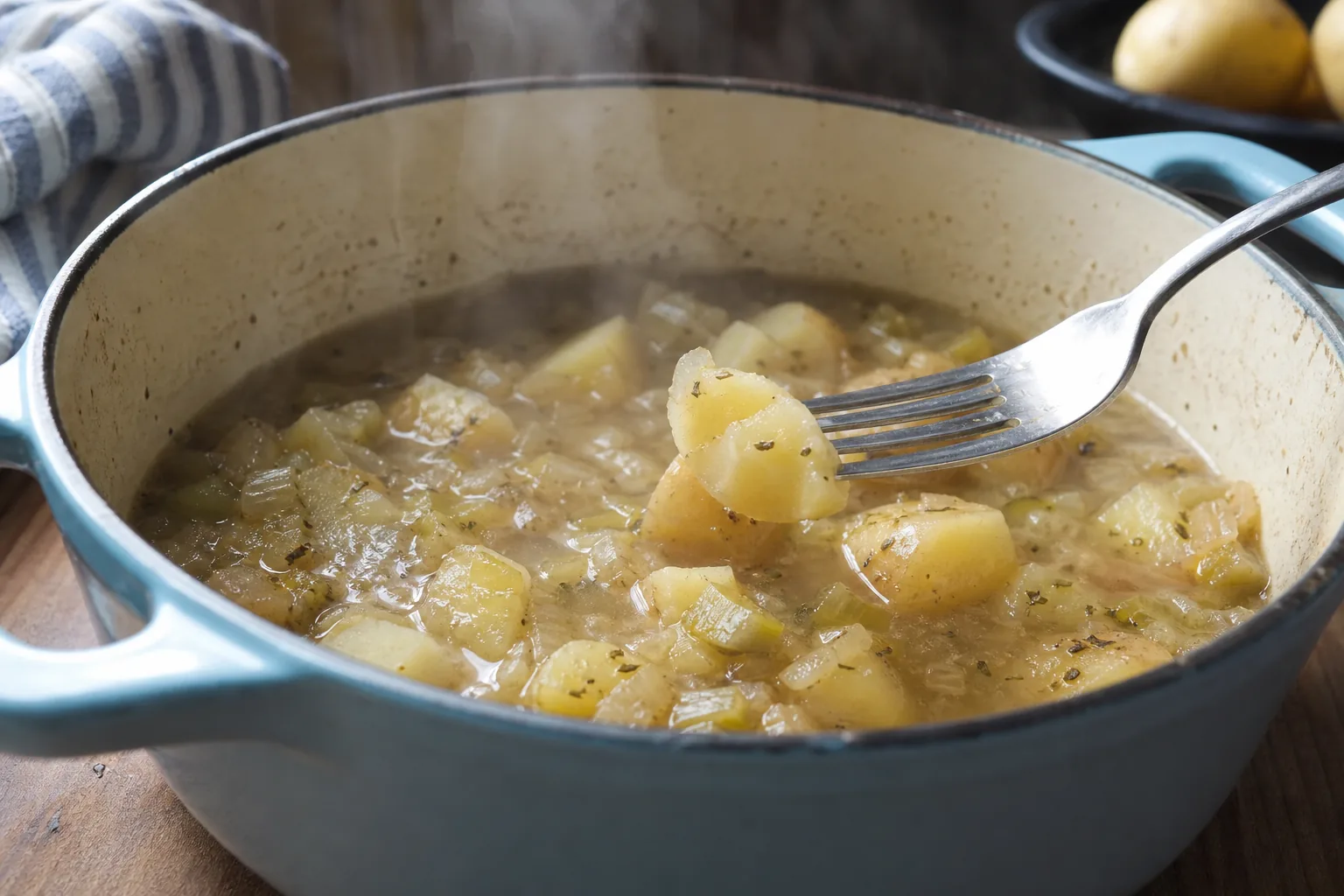
Simmer the potatoes until very tender. - Blend for creaminess: Remove the pot from the heat. Use an immersion blender to blend about one third to one half of the soup, leaving some potato pieces for texture. If using a countertop blender, blend in batches and return to the pot.
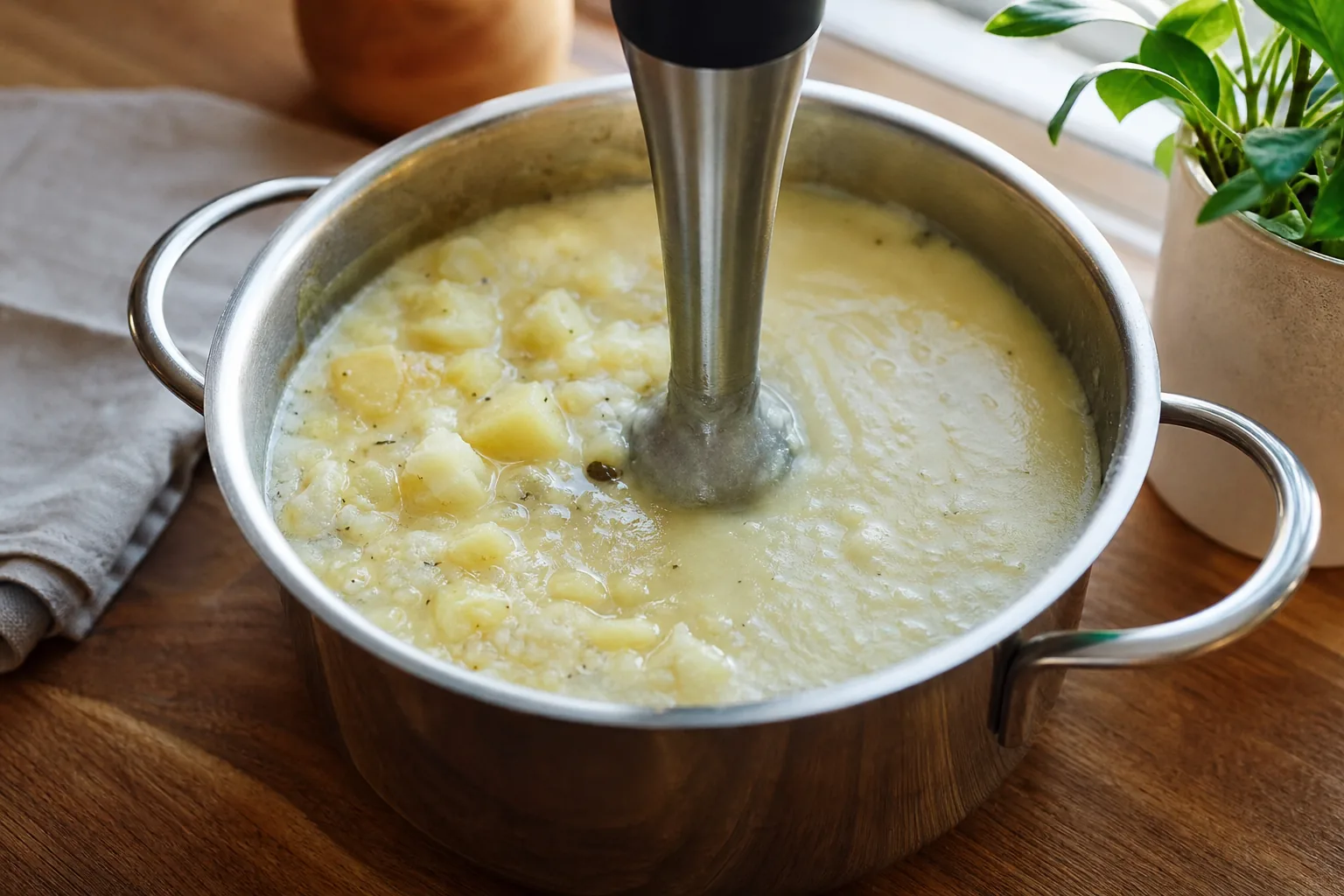
Blend about a third to half of the soup, leaving some potato pieces. - Finish with dairy: Set the pot over low heat. Stir in the cream and sour cream until smooth. Taste and add more salt and pepper as needed. Warm gently for 2 to 3 minutes, stirring often. Do not let it boil hard.
- Serve: Ladle into bowls and top with chives, cheddar, and bacon if you like. Add extra black pepper on top and serve hot.
Notes
- Potato choice: Yukon Gold gives a naturally creamy texture. Russets make a thicker soup, but blend less to avoid gumminess.
- Texture control: For a smoother soup, blend more. For rustic texture, blend less and mash a few potatoes with a spoon.
- Make-ahead tip: The soup thickens as it sits. Reheat gently with a splash of broth or milk to loosen.
- Freezer tip: If freezing, freeze before adding cream and sour cream. Add dairy after thawing and reheating for best texture.
Nutrition
Estimated per serving: 320 calories, 16 g fat, 38 g carbs, 7 g protein, 4 g fiber, 720 mg sodium. (Nutrition will vary by broth, dairy, and toppings.)