
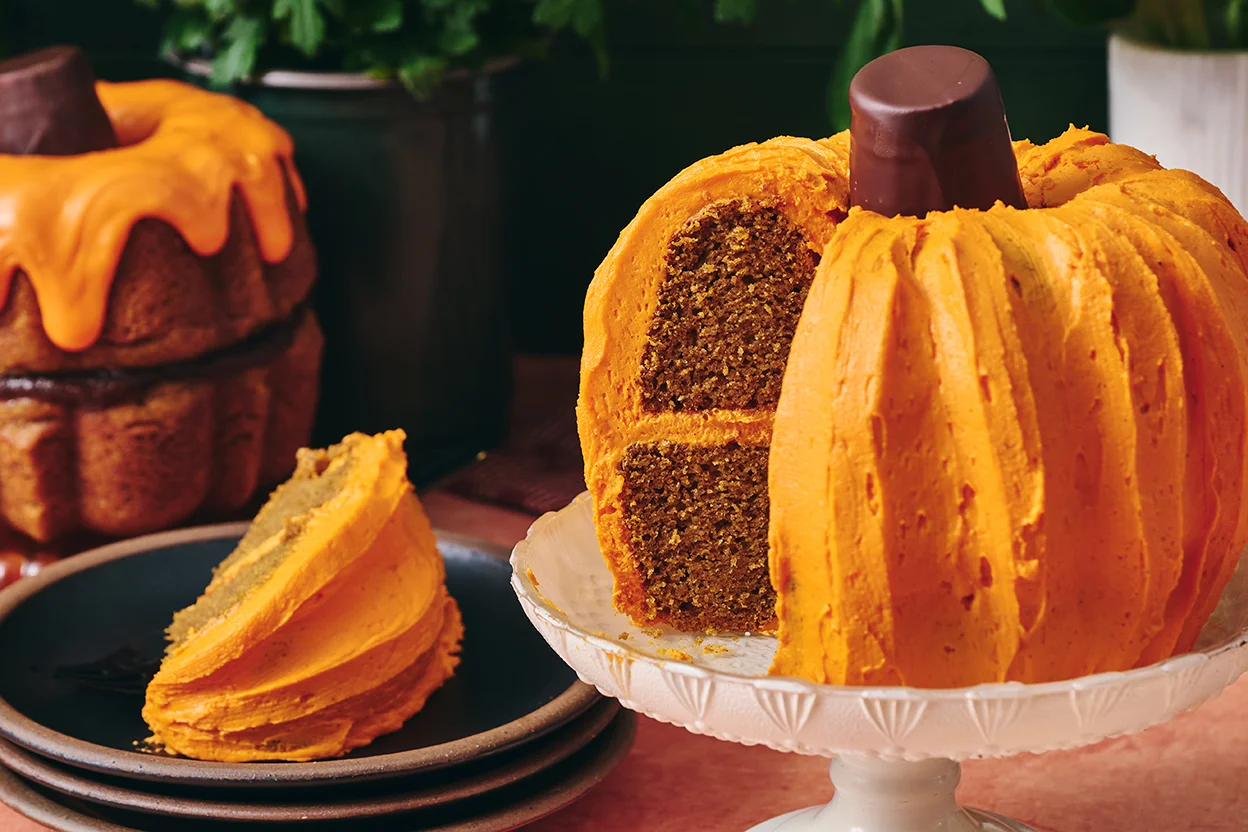
I have a soft spot for Bundt cakes because they feel fancy without asking you to stack layers or fuss with frosting. This pumpkin version is my favorite kind of “company dessert” because it is quietly dependable: butter-style, warmly spiced, and sturdy enough to slice cleanly, yet plush in the center.
The big promise here is texture and a clean release. Pumpkin can make cakes heavy or a little gummy if the batter gets overmixed, if the puree is especially wet, or if the center is underbaked. Bundt pans, meanwhile, have all those tiny grooves that love to grab onto cake if you miss a spot while greasing. So we are going to lean into a mixing approach that keeps the crumb fine and even, with a gentle, low-speed finish once the flour goes in, plus a pan-prep routine that actually reaches every ridge so you get a one-piece release.

And because Bundts can be tricky to judge, I will walk you through the doneness cues that actually matter, what an underbaked center really looks like, and how to avoid the classic heartbreak of a cake that sticks in the pan.
What to expect
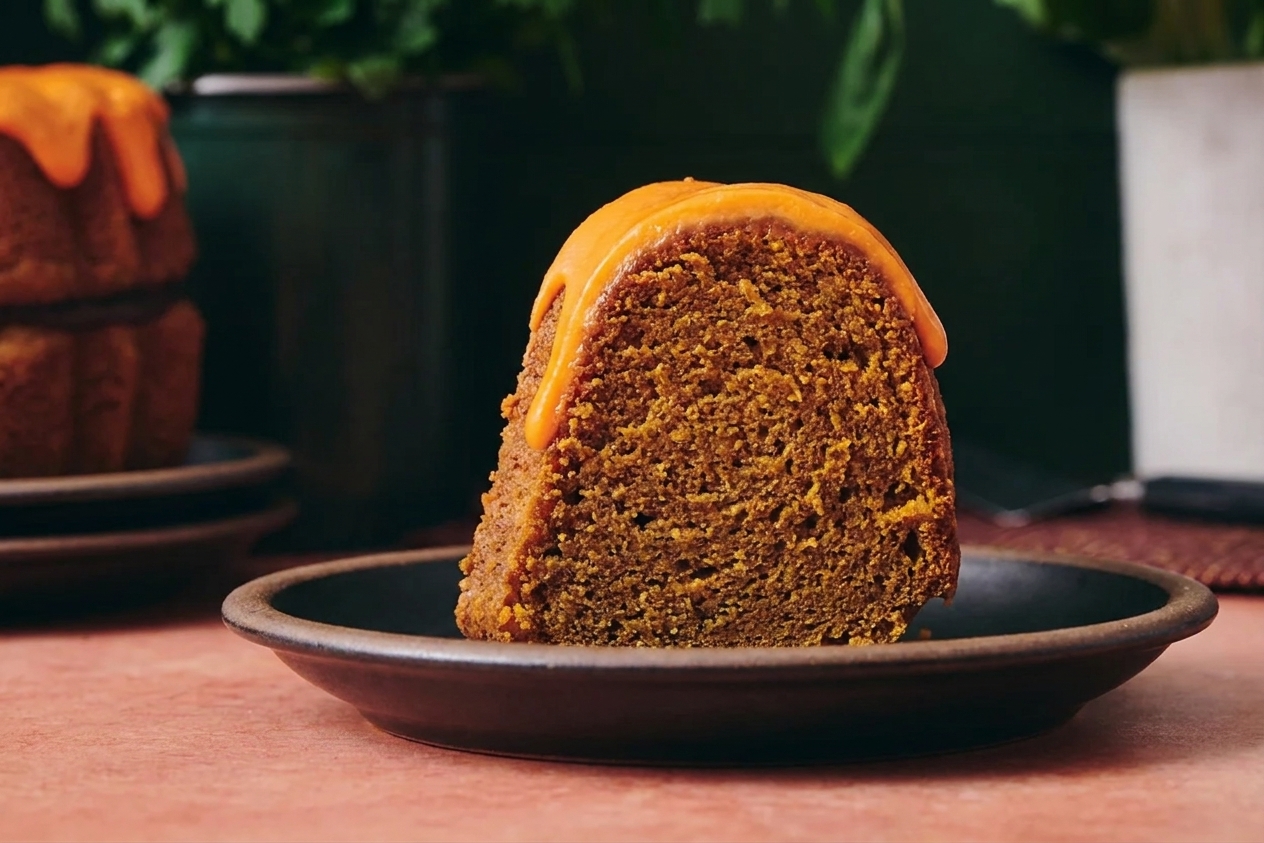
- Crumb: Fine and tight like a classic butter cake, not airy like chiffon and not coarse like some quick breads.
- Batter thickness: Spoonable and thick. It should ribbon off a spatula and settle slowly in the pan.
- Bake: A longer bake than a loaf, with more emphasis on center doneness than surface color.
- Finish: A simple glaze that sets, so it stays put on the ridges and gives you that picture-perfect Bundt look.
Why this recipe works
- Butter-style mixing builds a fine crumb. Creaming butter and sugar creates tiny air pockets that bake up into an even, tender texture. Pumpkin is heavy, so starting with that structure matters.
- Pumpkin plus sour cream balances moisture. Pumpkin brings water and fiber. Sour cream adds fat and acidity, keeping the cake moist while helping it bake up soft instead of gummy.
- Warm spices disperse evenly. Whisking spices into the dry ingredients helps prevent spice pockets and keeps the flavor consistent from edge to center.
- Glaze ratio is designed to set. A thicker glaze with enough powdered sugar to crust lightly will cling to Bundt ridges instead of sliding into the center hole.
- Pan prep is a system, not a prayer. Brushing every groove with butter then dusting with flour gives you a physical barrier that holds during baking and releases cleanly after cooling.
Ingredient notes
Pumpkin puree
Use plain pumpkin puree, not pumpkin pie filling. Different brands vary in water content. If your puree looks very loose or watery, blot it briefly on paper towels to avoid a dense, damp crumb.
Butter
Room temperature butter is non-negotiable for creaming. It should give slightly when pressed, but not look oily or shiny.
Eggs
Bring eggs to room temperature so the batter emulsifies smoothly. Cold eggs can make the batter look slightly curdled, which can lead to a tighter, drier edge after baking.
Sour cream
This is my favorite for richness and a tender crumb. Full-fat Greek yogurt works similarly if that is what you have.
Spices
Cinnamon is the backbone. Ginger adds warmth, nutmeg adds depth, and cloves are powerful, so keep them measured. If you only have pumpkin pie spice, you can use it, see the substitutes section.
Flour
All-purpose flour is ideal. Cake flour can make it extra tender, but in a Bundt it can also make the cake more fragile, which increases the risk of breaking during release.
Equipment you will need
- 10 to 12 cup Bundt pan (classic fluted works beautifully)
- Pastry brush for buttering every ridge
- Stand mixer or hand mixer for proper creaming
- Rubber spatula for scraping the bowl and folding the final flour
- Wire rack for controlled cooling and clean release
- Wooden skewer or thin paring knife for checking the center
Pro tips
Pan prep for clean release
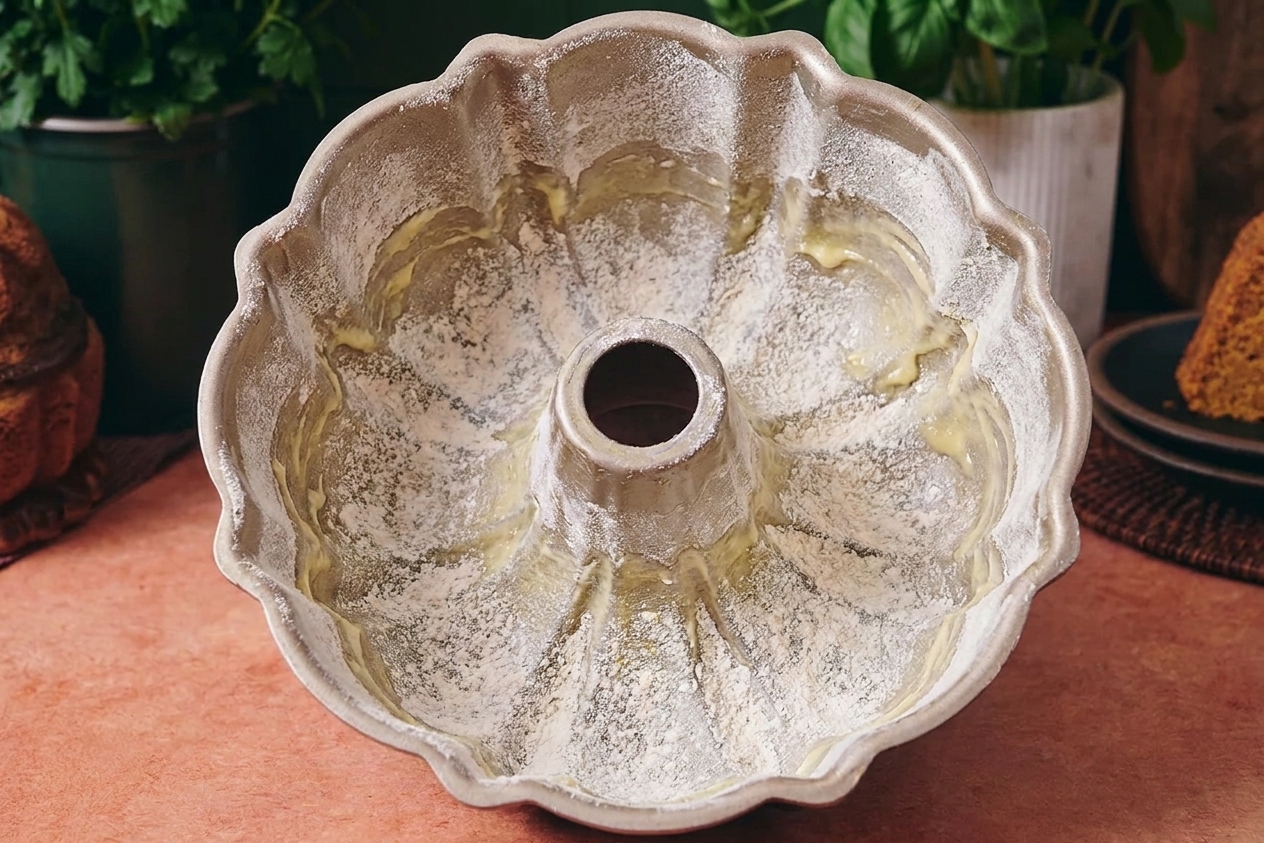
My bakery manager rule was always the same: if you can see a dry spot, it will stick there.
- Brush softened butter into every groove. Use a pastry brush and take your time, especially around the center tube and sharp ridges.
- Flour thoroughly, then tap out excess. Rotate the pan and tap firmly. You want a thin, even coat, not clumps.
- Chill the prepared pan for 10 minutes. This firms the butter layer so it does not slide down the sides once the batter goes in.
Get the batter thickness right
The batter should be thick enough to mound slightly when you spoon it into the pan, then slowly relax. If it pours like pancake batter, something is off, usually too much pumpkin liquid or under-creamed butter. If it is so stiff it will not settle at all, you likely added too much flour.
Fill level matters
For most Bundt pans, fill to about two-thirds to three-quarters full. Overfilling can cause a mushroom top that bakes up dry at the edges before the center is done.
Dry edges vs underbaked center
- Dry edge signs: The outer ring looks darker and feels firm, and the cake may begin pulling away from the pan in spots.
- Underbaked center signs: A skewer inserted near the center tube comes out with wet batter (not just moist crumbs). The top can look set but still feel soft when you gently press it.
- The sweet spot: A skewer comes out with a few moist crumbs, and the top springs back slowly when pressed.
Timing the flip
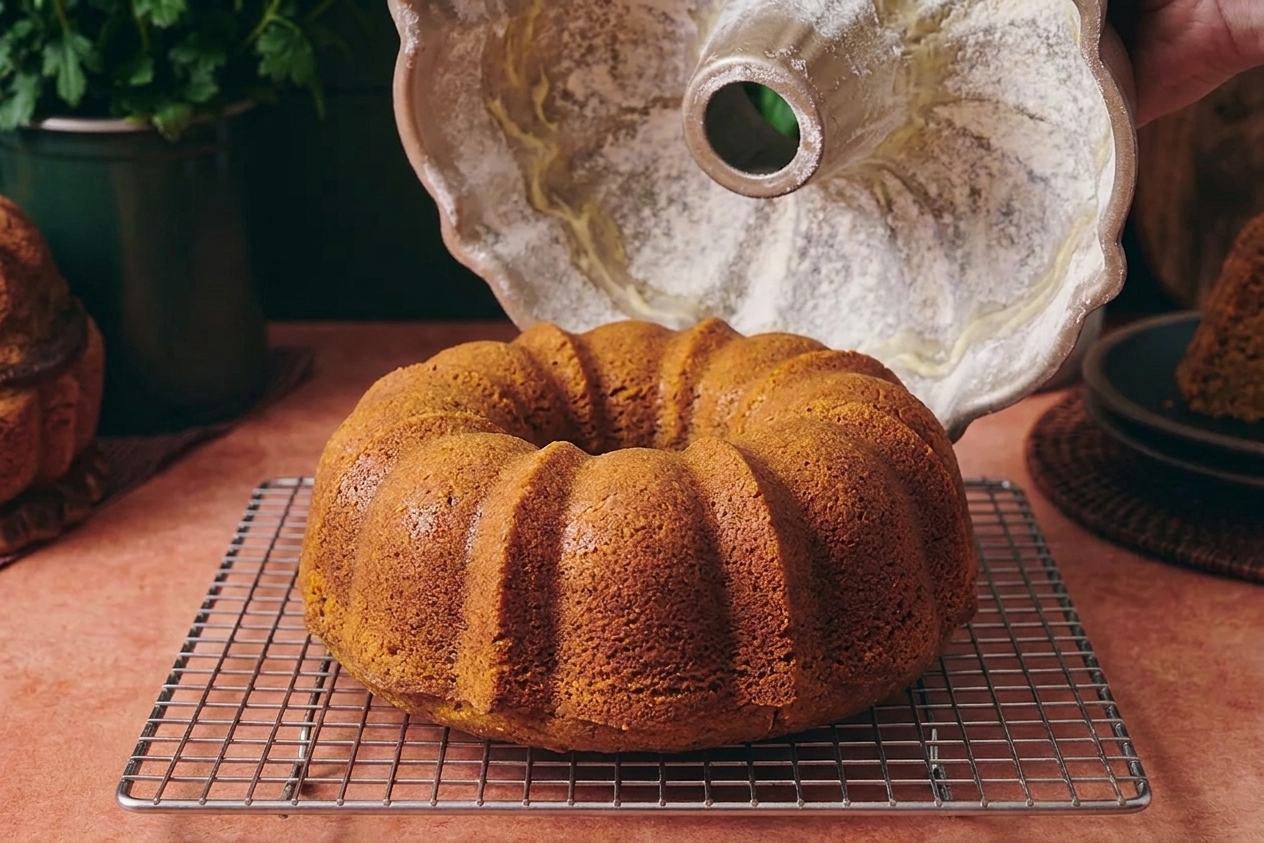
Let the cake cool in the pan for 10 to 15 minutes, then invert. Too soon and it can tear. Too long and sticking risk goes up as the cake cools and settles.
Substitutes that work
- Sour cream: Full-fat Greek yogurt, same amount.
- Pumpkin pie spice: Use 2 to 2 1/2 teaspoons pumpkin pie spice in place of the individual spices listed.
- Brown sugar: If you only have granulated sugar, use all granulated. The flavor will be a little lighter.
- Glaze flavor: Vanilla extract can replace maple. If you want citrus, add orange zest and use orange juice as part of the liquid.
- Dairy-free: Plant-based butter sticks work better than tub spreads for creaming. Use a thick, unsweetened dairy-free yogurt for the sour cream.
Variations
Pecan crunch
Sprinkle 1/2 cup finely chopped pecans into the bottom of the prepared pan before adding batter for a subtle crunch on top after flipping.
Chocolate chip pumpkin Bundt
Fold in 3/4 cup mini chocolate chips tossed with 1 teaspoon flour so they do not sink.
Cream cheese glaze
Swap the simple glaze for a cream cheese version: beat softened cream cheese with powdered sugar, then thin with milk to a thick drizzle that still sets.
Serving ideas
- Serve thick slices with coffee or black tea for an afternoon snack.
- Dress it up with a scoop of vanilla ice cream and a drizzle of warm salted caramel.
- For brunch, pair with fresh fruit and a dollop of lightly sweetened whipped cream.
Storage and reheating
Room temperature
Keep the cake covered at room temperature for up to 3 days. A cake dome or a large inverted bowl works well.
Refrigerator
If your kitchen runs warm or you used a cream cheese glaze, refrigerate it. Bring slices to room temperature before serving for the best texture.
Freezer
Freeze unglazed cake for up to 2 months. Wrap tightly in plastic wrap, then foil. Thaw overnight at room temperature, then glaze.
Common mistakes
- Greasing the pan with cooking spray only: Many sprays contain lecithin and can leave a sticky film that clings to intricate Bundt ridges over time. Butter and flour is more reliable for clean release.
- Overmixing after adding flour: This develops gluten and can make the cake tough, especially around the outer edge where heat hits first.
- Overbaking to “be safe”: Bundts can look done because the surface sets early. Trust the skewer test near the center tube.
- Letting it cool too long in the pan: Past about 20 to 25 minutes, sticking risk increases as the cake cools and contracts.
- Glazing a warm cake: The glaze will slide off the ridges and pool at the bottom. Cool fully for that neat, set finish.
FAQ
Why did my Bundt cake stick even though I greased it?
Bundt pans have lots of sharp edges and tiny valleys. Grease alone can miss dry spots. Butter every groove with a brush, then flour, and tap out the excess. Also check your pan: older pans with worn nonstick coating tend to grab more.
My cake looks done on the outside but the center is underbaked. What happened?
That is classic Bundt physics: the outside ring bakes faster. It usually means the oven ran hot, the pan was dark and conducted heat quickly, or the cake needed more time. Next time, check doneness with a skewer near the center tube, not just at the outer edge.
What is the best way to get a clean release?
Cool 10 to 15 minutes, then invert onto a rack and lift the pan straight up. If it resists, tap the pan gently all around and let it sit inverted for 1 minute. Gravity often does the last bit of work.
Can I glaze the cake the next day?
Yes. In fact, glazing the next day can be even cleaner because the surface is fully set. Keep the cake covered so it does not dry out.
The recipe
Pumpkin Bundt Cake
A butter-style pumpkin Bundt cake with a fine, tender crumb and warm spices, finished with a thick glaze that sets neatly on the ridges for a clean, bakery-style look.
- Prep
- 25 minutes
- Cook
- 50 to 60 minutes
- Total
- 1 hour 30 minutes
- Yield
- 12 slices
Ingredients
- 3 cups (360 g) all-purpose flour
- 2 teaspoons baking powder
- 1/2 teaspoon baking soda
- 1 1/2 teaspoons fine salt
- 2 1/2 teaspoons ground cinnamon
- 1 teaspoon ground ginger
- 1/2 teaspoon ground nutmeg
- 1/4 teaspoon ground cloves
- 1 cup (226 g) unsalted butter, room temperature, plus more for the pan
- 1 1/2 cups (300 g) granulated sugar
- 1/2 cup (110 g) packed light brown sugar
- 4 large eggs, room temperature
- 1 can (15 oz, about 425 g) pumpkin puree
- 1 cup (240 g) sour cream, room temperature
- 2 teaspoons vanilla extract
- 2 tablespoons milk, as needed for thinning
- 2 cups (240 g) powdered sugar
- 1/2 teaspoon vanilla extract or maple extract (for glaze)
- Pinch of salt (for glaze)
Instructions
- Prep the pan and oven. Heat oven to 350°F (175°C). Thoroughly butter a 10 to 12 cup Bundt pan, brushing butter into every ridge. Dust with flour and tap out excess. Chill the prepared pan for 10 minutes while you mix the batter.
- Whisk dry ingredients. In a medium bowl, whisk flour, baking powder, baking soda, salt, cinnamon, ginger, nutmeg, and cloves until evenly combined.
- Cream butter and sugars. In a stand mixer fitted with the paddle (or in a large bowl with a hand mixer), beat butter, granulated sugar, and brown sugar on medium-high speed until light and fluffy, 3 to 4 minutes. Scrape the bowl well.
- Add eggs. Beat in eggs one at a time, mixing until each is fully incorporated before adding the next. Scrape the bowl again.
- Add pumpkin, sour cream, and vanilla. Mix in pumpkin puree, sour cream, and vanilla extract on medium speed until smooth. The batter should look cohesive and creamy.
- Add dry ingredients gently. Add the dry ingredients in two additions, mixing on low speed just until the flour disappears. Finish by folding a few times with a spatula, scraping the bottom and sides. The batter will be thick and spoonable.
- Fill the pan. Spoon batter into the prepared pan, smoothing the top. Tap the pan firmly on the counter 2 to 3 times to help the thick batter settle into the ridges.
- Bake. Bake 50 to 60 minutes, tenting loosely with foil near the end if the top is browning quickly. The cake is done when a skewer inserted near the center tube comes out with a few moist crumbs, not wet batter, and the top springs back when gently pressed.
- Cool, then release. Cool the cake in the pan on a rack for 10 to 15 minutes. Invert onto the rack, lift the pan straight up, and let the cake cool completely before glazing.
- Make the glaze. In a bowl, whisk powdered sugar, vanilla or maple extract, pinch of salt, and 1 tablespoon milk until smooth. Add more milk 1 teaspoon at a time until you have a thick glaze that ribbons off the whisk and holds its shape for a second before sinking in.
- Glaze and set. Drizzle glaze over the fully cooled cake, letting it fall naturally over the ridges. Let stand 15 to 20 minutes until the glaze sets before slicing.
Notes
Pumpkin moisture varies: If your pumpkin puree seems very watery, blot it briefly with paper towels so the cake bakes up fluffy instead of heavy.
Doneness check location: For Bundt cakes, test near the center tube, not just the outer edge.
Release backup: If the cake resists when inverted, tap the pan gently all around and let it sit inverted for 1 minute before lifting again.