
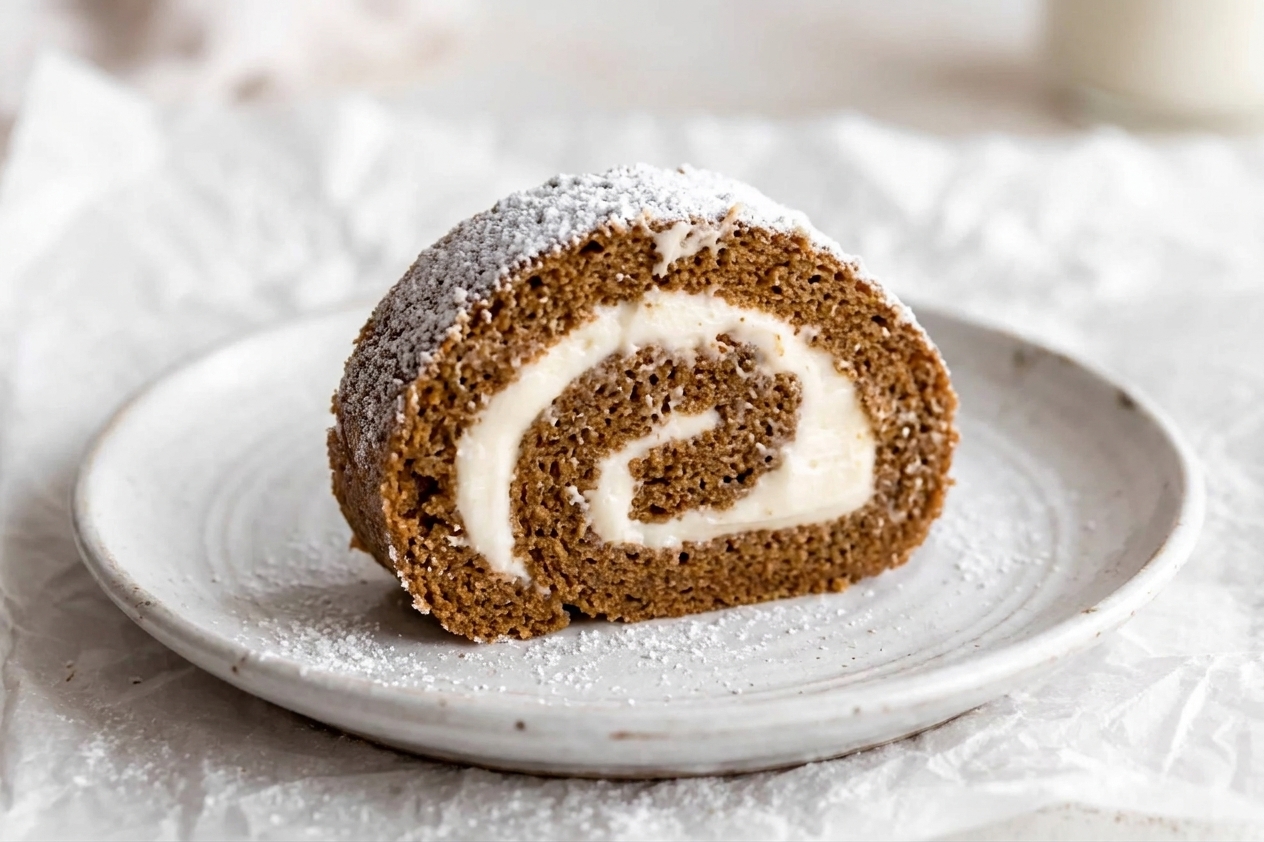
The first time I made a pumpkin roll at home, I treated it like pumpkin bread. I was sure it was supposed to be thick and sturdy, so I mixed it like a loaf, baked it until it felt “set,” and then wondered why it cracked like dry earth the second I tried to roll it. The fix was not extra frosting or a prayer. The fix was understanding what a pumpkin roll really is: a thin sponge cake that has to bend without breaking.
A great pumpkin roll has a very specific personality. The cake layer is feather-light but not fragile, with enough structure to hold a spiral. The filling is creamy and tangy, thick enough to stay put, but not so overstuffed that it squishes out the ends. And the whole thing needs a proper chill so each slice looks like a tidy pinwheel instead of a soft smear.

If you have ever been nervous about rolling a cake, you are in the right place. I will show you what to look for at each stage, how to roll while the sponge is warm so it learns the shape, and what to do if you get a crack anyway. Spoiler: most cracks are cosmetic, and cream cheese filling is very forgiving.
What makes a pumpkin roll different from pumpkin bread
Pumpkin bread is a quick bread. It is meant to be dense, moist, and sliceable right out of the pan. A pumpkin roll is a sponge cake. That means we rely on whipped eggs for lift and flexibility, and we bake it as a thin sheet so it stays bendy.
The goal is springy and flexible, not heavy. If you have ever had a roll that tasted gummy or thick, it was usually mixed too aggressively after adding flour, baked too long, or both.
The two-roll method (and why it works)
The most reliable technique is rolling the cake twice.
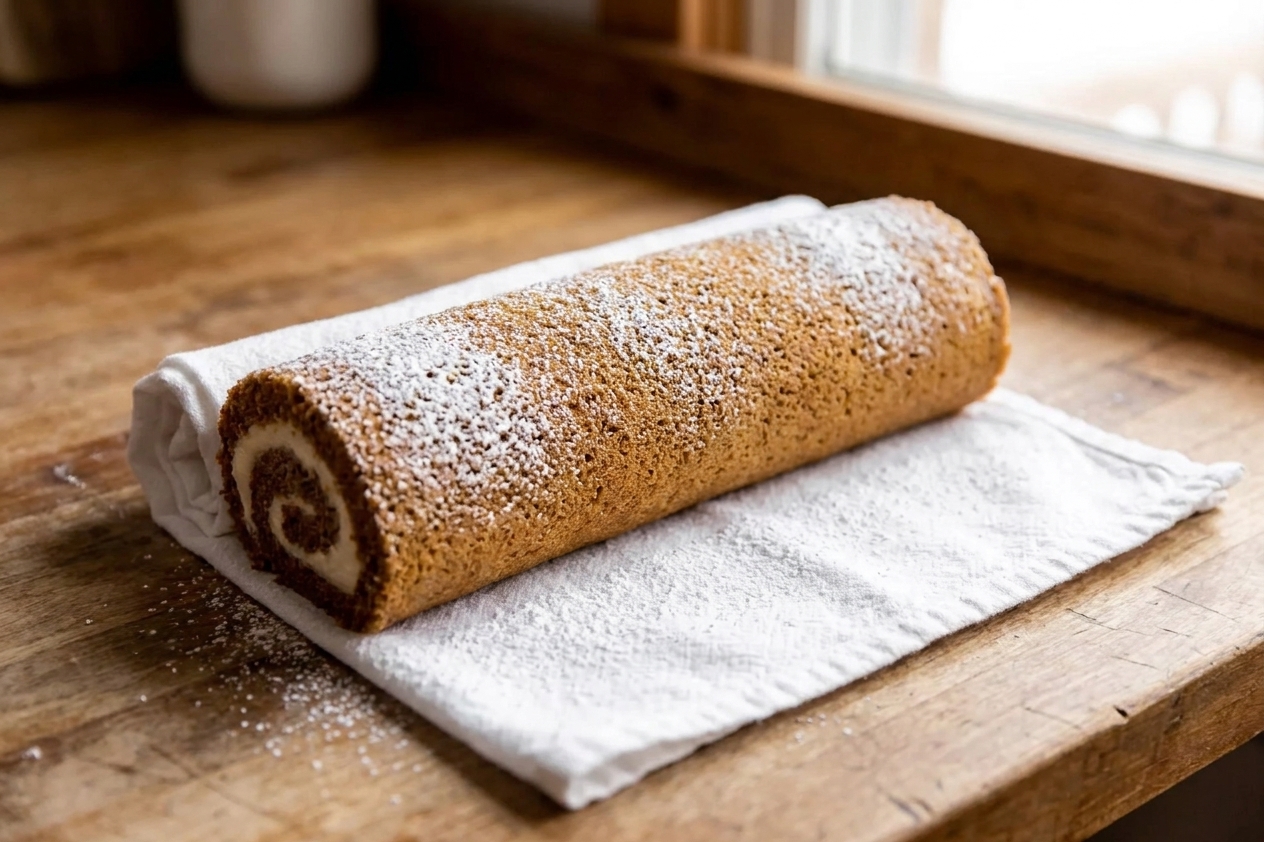
- First roll, warm: Right after baking, you invert the warm cake onto a powdered sugar dusted towel and roll it up. This trains the sponge into a spiral shape while it is still flexible.
- Second roll, filled: After it cools completely, you unroll, spread the cream cheese filling, and roll it back up. Now it holds the swirl without cracking under pressure.
Think of the first roll as setting a memory into the cake. Warm sponge is cooperative. Cold sponge is stubborn.
About cracking (and how to fix it)
Even experienced bakers get cracks sometimes. The good news is that cracks are usually caused by timing and moisture, not your worthiness as a baker.
How to prevent cracks
- Roll while warm: Wait too long and the sponge cools and stiffens.
- Do not overbake: A few extra minutes can dry a thin cake fast. The surface should spring back when lightly touched.
- Use powdered sugar on the towel: This prevents sticking, which can tear the surface and start cracks.
- Keep it thin and even: Spread batter to the corners and level it so one side does not bake faster than the other.
If it cracks anyway
- Small surface cracks: Keep going. Once chilled, dust with powdered sugar and no one will care.
- A bigger split on the first roll: Roll it up anyway. The spiral still sets, and the filling later acts like delicious spackle.
- A tear when you fill: Patch it with a little extra filling, then chill seam-side down so it “glues” itself together.
Why this recipe works
- Whipped eggs create lift: A sponge gets its structure from air trapped in beaten eggs and sugar, which keeps the cake light and rollable.
- Thin sheet pan bake: Baking the batter as a thin layer sets the cake quickly without drying it out, so it stays flexible.
- Rolling while warm sets the shape: The warm sponge is pliable, and cooling in a spiral prevents the classic snap-and-crack problem.
- Balanced cream cheese filling: A thicker, tangy filling spreads cleanly, holds the swirl, and does not weep into the cake.
- Chilling before slicing: Cold filling firms up, giving you sharp, bakery-style slices instead of smudged spirals.
Ingredient notes
Pumpkin puree
Use canned pumpkin puree, not pumpkin pie filling. Pie filling is sweetened and spiced, and it will throw off both texture and flavor. Blotting is usually not needed, but if your puree looks watery, you can pat it lightly with paper towels.
Eggs
Room temperature eggs whip to better volume. If yours are cold, set them in a bowl of warm water for 5 to 10 minutes.
Flour
All-purpose flour works well. Measure by spooning into the cup and leveling, or use a scale if you have one. Too much flour makes the sponge stiff and more prone to cracking.
Spices
Cinnamon plus pumpkin pie spice gives that classic holiday aroma. If you only have cinnamon, you can still make a great roll.
Cream cheese
Use full-fat, block-style cream cheese for the filling. Spreadable tub cream cheese is softer and can lead to a runny spiral.
Powdered sugar
You will use it two ways: dusting the towel to prevent sticking, and sweetening the filling. Sift if yours is lumpy for the smoothest texture.
Equipment you will need
- Jelly roll pan: 10 x 15 inch rimmed baking sheet is the standard size for a classic pumpkin roll.
- Parchment paper: Helps the cake release cleanly.
- Clean kitchen towel: Smooth, lint-free. This is your rolling tool.
- Fine mesh sieve: For dusting powdered sugar evenly.
- Electric mixer: Stand or hand mixer for whipping eggs and sugar, and beating the filling smooth.
- Offset spatula: Makes spreading batter and filling much easier, but a regular spatula works too.
Pro tips
- Line the pan and grease lightly: A little oil or butter under the parchment keeps it flat and helps release.
- Spread batter into the corners: Thin spots bake faster and can get dry and crack-prone.
- Roll from the short side: You get a tighter spiral and more slices with a pretty swirl.
- Cool completely before filling: If the cake is even slightly warm, the filling will melt and slide.
- Leave a border for the filling: Keep about 1/2 inch around the edges bare so it does not squeeze out.
- Chill before slicing: Minimum 1 hour, but 2 hours is even better for clean cuts.
- For neat slices: Use a sharp serrated knife and wipe it clean between cuts.
Substitutes that work
- DIY pumpkin pie spice: Use a mix of cinnamon, ginger, nutmeg, and cloves if you have them. If not, cinnamon alone is fine.
- Filling sweetness: Adjust powdered sugar to taste. Less sugar makes it tangier and softer. More sugar makes it stiffer and sweeter.
- Butter in filling: Optional, but it helps the filling set up firmer and slice cleaner.
- Gluten-free: A 1-to-1 gluten-free flour blend can work, but the sponge may be a bit more delicate. Roll extra gently and do not overbake.
- Lower fat cream cheese: It works in a pinch, but the filling will be looser and less rich.
Variations
- Maple cream cheese filling: Add maple syrup and reduce powdered sugar slightly to keep texture spreadable.
- Orange zest twist: Add finely grated orange zest to the filling for a bright contrast with pumpkin spice.
- Nutty finish: Press chopped toasted pecans or walnuts onto the outside after chilling.
- Extra spice: Add a pinch of black pepper or extra ginger to make the pumpkin flavor pop.
Serving ideas
- Serve chilled with coffee or strong black tea.
- Add a dollop of lightly sweetened whipped cream on the side for extra softness.
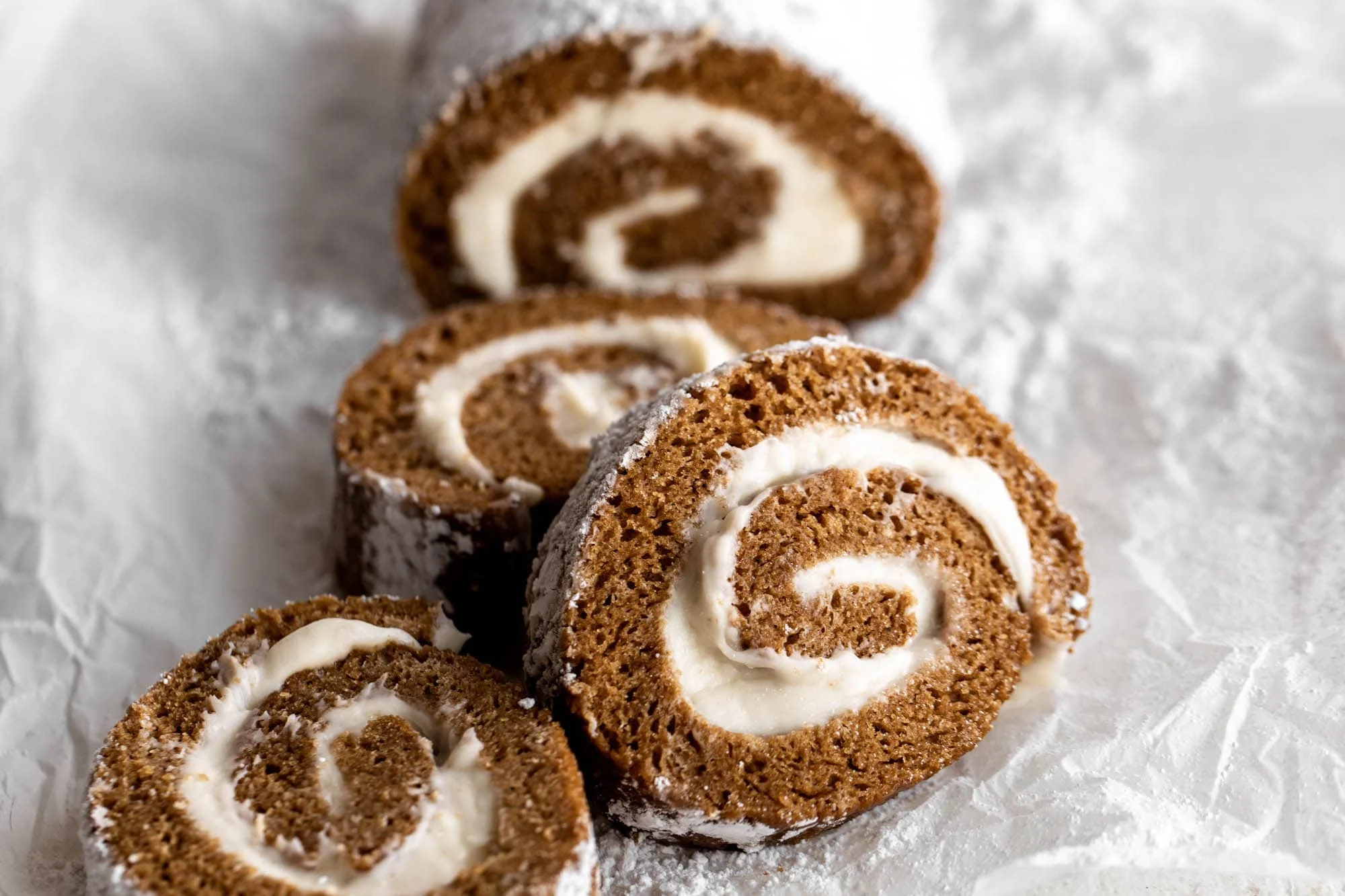
- For a holiday platter, slice and arrange in a spiral line, then dust with more powdered sugar right before serving.
- Pair with fresh fruit like pears or apples for a bright, crisp contrast.
Storage and reheating
Refrigerator
Store the pumpkin roll wrapped tightly in plastic wrap, then in an airtight container. It keeps well in the refrigerator for up to 3 days. The swirl actually slices nicer on day 2 after it has had time to firm up.
Freezer
You can freeze a pumpkin roll. Wrap it tightly in plastic wrap, then a layer of foil. Freeze for up to 2 months. Thaw overnight in the refrigerator before slicing.
Serving from cold
I like serving it chilled for the cleanest spiral. If you prefer a softer bite, let slices sit at room temperature for 10 to 15 minutes.
Common mistakes
- Mixing like quick bread: Overmixing after adding flour develops gluten and makes the cake tough and crack-prone.
- Overbaking: A thin sponge dries out quickly. Pull it when it springs back lightly and looks set.
- Skipping the towel roll: Trying to roll only after cooling is the fastest path to cracks.
- Filling a warm cake: Warmth melts the filling, causing a slippery spiral and messy slices.
- Overfilling: Too much filling squeezes out the ends and can make the roll slide.
- Slicing too soon: Without chilling, the filling smears and the spiral loses definition.
FAQ
Why did my pumpkin roll turn out dense?
Most often it is from under-whipping the eggs and sugar, or overmixing once the flour goes in. A sponge needs trapped air for lift, and it needs gentle folding and mixing at the end.
Do I have to roll it in a towel?
Yes, for best results. The towel gives you structure and gentle pressure. Parchment alone tends to trap steam and can make the surface tacky.
How much filling should I use?
Enough to cover the cake in an even layer without looking thick and puffy. Spread it thinly and leave a small border. The roll will tighten as you re-roll.
My cake stuck to the towel. What happened?
Usually not enough powdered sugar on the towel, or the cake cooled too long before flipping and rolling. Dust generously and work while the cake is warm.
Can I make pumpkin roll ahead?
Yes. It is a great make-ahead dessert because chilling improves the slice. Make it the day before, keep it wrapped in the fridge, and dust with fresh powdered sugar right before serving.
The recipe
Pumpkin Roll
A light, flexible pumpkin sponge cake rolled around a tangy cream cheese filling, chilled until sliceable and finished with powdered sugar.
- Prep
25 minutes
- Cook
13 minutes
- Total
2 hours 10 minutes
- Yield
10 slices
Ingredients
- 3/4 cup all-purpose flour
- 1 teaspoon baking powder
- 1/2 teaspoon baking soda
- 1/2 teaspoon fine salt
- 1 teaspoon ground cinnamon
- 1 teaspoon pumpkin pie spice
- 3 large eggs, room temperature
- 1 cup granulated sugar
- 2/3 cup pumpkin puree (not pumpkin pie filling)
- 1 teaspoon vanilla extract
- Powdered sugar, for dusting towel and finishing
- 8 ounces block-style cream cheese, softened
- 4 tablespoons unsalted butter, softened
- 1 cup powdered sugar, plus more to taste
- 1/2 teaspoon vanilla extract
- Pinch of fine salt
Instructions
- Prep the pan and oven: Heat oven to 375°F. Line a 10 x 15 inch jelly roll pan with parchment paper, letting the parchment extend slightly over the short ends for easy lifting. Lightly grease the parchment.
- Prep the towel: Lay a clean, smooth kitchen towel on the counter. Dust generously with powdered sugar using a fine mesh sieve. Set aside.
- Mix dry ingredients: In a medium bowl, whisk together flour, baking powder, baking soda, salt, cinnamon, and pumpkin pie spice.
- Whip eggs and sugar: In a large bowl (or stand mixer bowl), beat eggs and granulated sugar on high speed until pale, thick, and glossy, about 3 to 5 minutes. The mixture should fall in ribbons when you lift the beaters.
- Add pumpkin and vanilla: Beat in pumpkin puree and vanilla extract just until combined.
- Fold in dry ingredients: Add the dry ingredients and mix on low just until no flour streaks remain. Stop as soon as it comes together to keep the sponge tender.
- Bake: Spread batter evenly into the prepared pan, smoothing to the corners. Bake until the cake looks set and springs back lightly when touched, about 12 to 15 minutes.
- Roll while warm: Immediately run a thin knife along the edges if needed. Invert the warm cake onto the powdered sugar towel and peel off the parchment. Starting from a short side, roll the cake up in the towel into a snug spiral. Place seam-side down and let cool completely, about 45 to 60 minutes.
- Make the filling: Beat softened cream cheese and butter until smooth and creamy. Add powdered sugar, vanilla, and a pinch of salt, then beat until fluffy and spreadable. If it feels too soft, chill for 10 minutes.
- Fill and re-roll: Gently unroll the cooled cake. Spread filling evenly over the surface, leaving about a 1/2 inch border on all sides. Re-roll the cake (without the towel) into a tight spiral. Place seam-side down.
- Chill: Wrap tightly in plastic wrap and refrigerate at least 1 hour, or up to overnight, so the filling firms up and the spiral sets.
- Slice and serve: Unwrap, dust with powdered sugar, then slice with a sharp serrated knife. Wipe the knife between cuts for the cleanest swirl.
Notes
- Cracks: If the cake cracks when you unroll it, keep going. Spread the filling and re-roll. Chilling seam-side down helps everything set neatly.
- Doneness cue: A pumpkin roll bakes fast. Pull it when it springs back lightly and the top looks set. Overbaking is the main cause of cracking.
- Clean slices: Chill well, use a serrated knife, and wipe between cuts.