
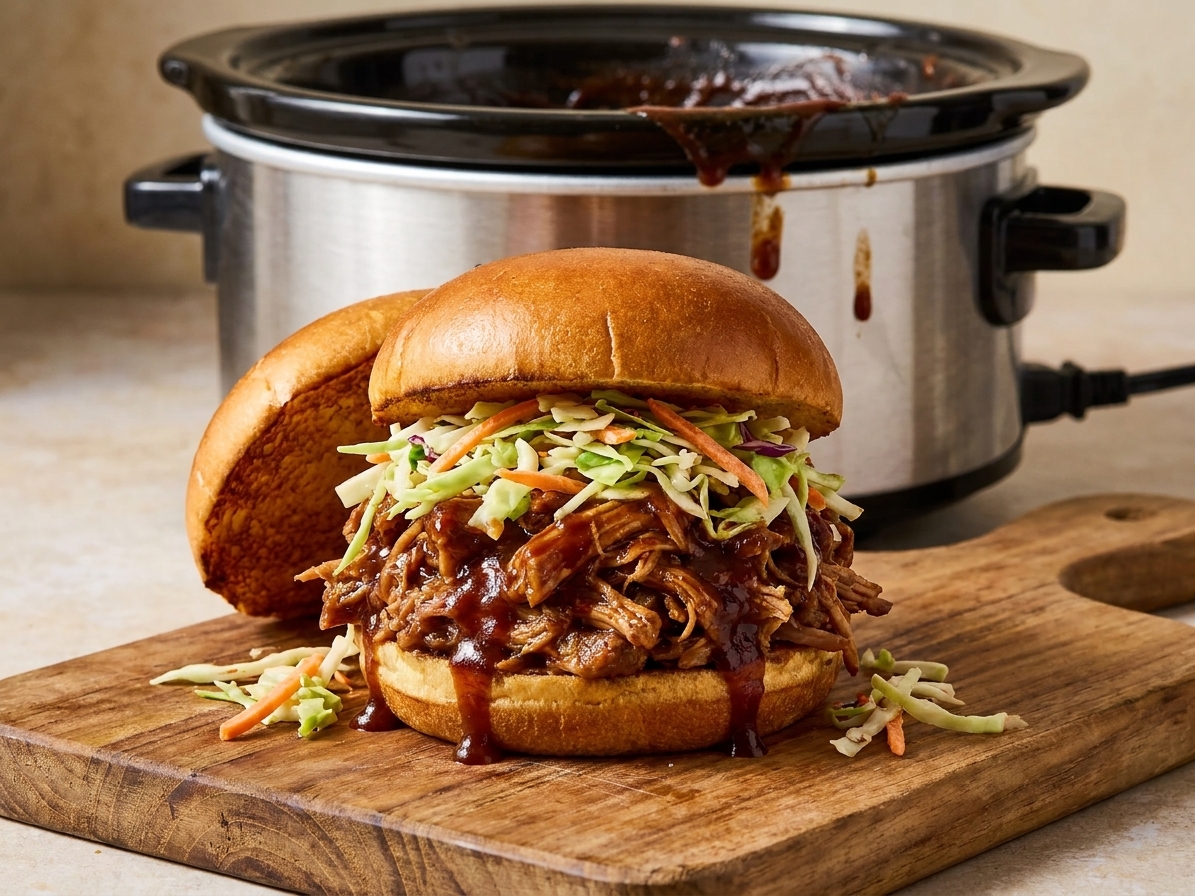
There is a very specific magic to pulled pork in the slow cooker: you do a little seasoning, you walk away, and hours later your kitchen smells like you have been working all day. This is the version I make when I want juicy, shreddable pork that tastes bold even if you serve it with nothing more than a bun and whatever is in the crisper drawer.

My biggest goal with slow cooker pulled pork is to avoid two common outcomes: meat that is tender but bland, or meat that is flavorful but oddly watery. The fix is simple. We build flavor in layers with a spice rub, cook with just enough liquid to keep things moist, then finish with a bright, vinegar-forward splash of apple cider vinegar (or your vinegar of choice) that wakes everything up right before serving.
You can keep it classic with barbecue sauce, or you can leave it lightly sauced so it is flexible for tacos, rice bowls, and freezer meal prep. Either way, you are getting the kind of pulled pork that strands beautifully, stays moist on day two, and makes you look extremely put-together for minimal effort.
If you want pulled pork that tastes like more than “slow cooked,” do not skip the quick vinegar finish. That little hit of acid balances the richness, cuts through sweetness, and keeps every bite tasting lively.
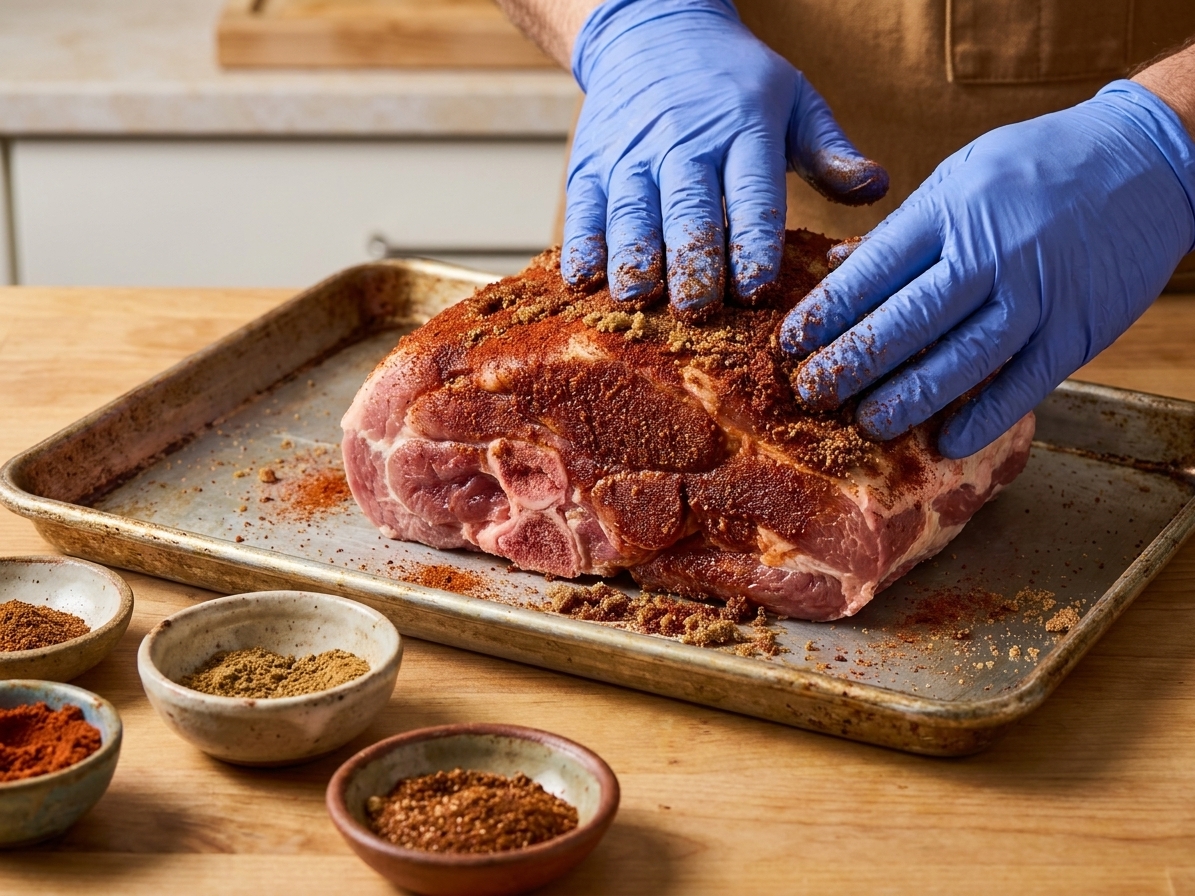
One more reassurance before you start: slow cooker pulled pork is forgiving. The timing can flex (think an hour or two either way), and you do not need any special tools beyond a fork and a slow cooker.
Which cut to buy
Reach for pork shoulder, labeled Boston butt or pork butt. You want marbling and connective tissue, because that is what turns into silky, pull-apart strands after a long cook. Pork loin is lean and can taste like you tried to turn a pork chop into barbecue. It is not your fault. It is the cut.
How much liquid is enough
In a slow cooker, meat does not need much help to stay moist. Pork shoulder gives off plenty of its own juices as it cooks, so the added liquid is there for insurance and flavor, not for submerging the roast. If the pork is sitting in a deep bath, it can taste more steamed or boiled than braised. Stick to a modest amount, then use the defatted juices at the end to get the texture exactly where you want it. I like to stir them in a few tablespoons at a time until the pork is moist and glossy, not soupy.
How to keep it from turning greasy
The difference between “rich” and “greasy” is usually one simple step: defat the cooking liquid before you stir it back in. Lift the pork out, then skim the fat, use a fat separator, or chill the juices briefly so the fat firms up and is easy to remove. After that, add the juices back a little at a time. You are aiming for glossy and moist, not swimming.
Two small moves that make a big difference
- Cut the roast into big chunks. It is more surface area for the rub, and it cooks more evenly.
- Shred, then season. The rub gets you most of the way there, but once the pork is shredded, every strand is fair game for a final taste adjustment. That is where the last splash of vinegar, a pinch of salt, or a spoonful of sauce turns “good” into “where did you buy this?”
When it is done
Ignore the clock and follow the texture. It is ready when it shreds easily with a fork. If it is still tight or chewy, put the lid back on and keep cooking. Pork shoulder needs time for the connective tissue to fully relax.
Why this recipe works
- Pork shoulder stays juicy. The marbling and connective tissue break down slowly, giving you tender shreds instead of dry chunks.
- A bold dry rub does the heavy lifting. Salt, sugar, paprika, and spices season the meat all the way through as it cooks.
- Just enough cooking liquid. The pork releases a lot of its own juices. Using a modest amount of added liquid prevents “boiled pork” flavor.
- Defatting the juices boosts flavor. Skimming fat or using a fat separator keeps the finished pork rich but not heavy.
- Vinegar at the end brightens everything. A small splash balances sweetness and cuts through richness, especially if you add barbecue sauce.
Ingredient notes
Pork: boneless pork shoulder (Boston butt)
Look for a 4 to 5 pound boneless pork shoulder with good marbling. Pork shoulder is sometimes labeled Boston butt (even though it is from the shoulder). Avoid pork loin here. Loin is lean and tends to shred dry.
Rub: brown sugar, paprika, and friends
Brown sugar helps browning and adds a gentle sweetness. Smoked paprika adds barbecue character even if you are not smoking anything. If you only have sweet paprika, use it and add a tiny pinch of chipotle powder if you like a little heat.
Liquid: broth plus a little acid
You need some liquid to get things going, but not much. I like chicken broth because it is neutral and savory. Apple cider vinegar shows up twice: a little in the cooking liquid, then more at the end for that tangy, pulled-pork-shop vibe.
Worcestershire and tomato paste
Worcestershire adds savory depth. Tomato paste adds body and helps the juices taste like a sauce instead of plain drippings.
Barbecue sauce (optional)
Add it if you want classic saucy pulled pork. If you are meal prepping, I recommend serving sauce on the side so the leftovers can go in different directions.
Equipment you will need
- Slow cooker (6-quart is ideal for a 4 to 5 pound roast)
- Measuring spoons
- Tongs (for lifting the hot pork out cleanly)
- Two forks or meat claws (forks work great)
- Fat separator (optional but very handy) or a spoon for skimming fat
- Instant-read thermometer (optional, for extra confidence)
Pro tips
- Cut the roast into 2 to 3 big chunks. This increases surface area for seasoning and helps it cook more evenly.
- Salt matters. Do not reduce the salt in the rub unless you are using a very salty bottled sauce later. Proper seasoning is what keeps slow cooker pork from tasting flat.
- Know when it is done. You are not chasing a specific time so much as a texture. The pork should shred easily with a fork. If it fights you, keep cooking.
- Defat before you sauce. Pull out the pork, then skim the cooking liquid. Add back just enough of the defatted juices to keep everything moist.
- Finish with vinegar, then adjust. Add the vinegar first, taste, then decide if it needs more salt, sweetness (sauce), or heat.
- For a little bark-like flavor, broil. Spread shredded pork on a sheet pan, drizzle with a little defatted juice, and broil 3 to 6 minutes until the tips crisp.
Substitutes that work
- No smoked paprika: Use sweet paprika, plus 1/4 teaspoon chipotle powder or a few dashes of liquid smoke if you like.
- No apple cider vinegar: Use white vinegar (sharper) or rice vinegar (milder). Start with a little less, then taste.
- No chicken broth: Water works, or use low-sodium beef broth for a deeper flavor.
- No Worcestershire: Use soy sauce (start with half the amount) plus a tiny squeeze of lemon or a splash of vinegar.
- Low sugar: Swap brown sugar for coconut sugar, or reduce it by half and rely on sauce at the end if desired.
Variations
Carolina-inspired
Skip barbecue sauce. Add an extra splash of apple cider vinegar at the end and a pinch of red pepper flakes. Serve with slaw.
Sweet and smoky
Use smoked paprika, add 1 tablespoon molasses to the cooking liquid, and finish with your favorite smoky barbecue sauce.
Spicy
Add 1 to 2 teaspoons chipotle powder to the rub, or stir in minced canned chipotles in adobo at the end.
Citrus and cumin
Swap paprika for ground cumin, add orange juice instead of broth, and finish with lime juice and chopped cilantro.
Serving ideas

- Sandwiches: Pile onto toasted buns with coleslaw and pickles.
- Tacos: Warm tortillas, add pulled pork, top with onions, cilantro, and a squeeze of lime.
- Rice bowls: Serve over rice with black beans, roasted corn, and avocado.
- Loaded baked potatoes: Add pulled pork, scallions, and a little cheese or sour cream.
- Nachos: Scatter over chips with cheese, bake, and finish with jalapeños and salsa.
- Sunday dinner plate: Pair with mac and cheese, greens, or a crisp cabbage salad.
Storage and reheating
Refrigerate
Store pulled pork in an airtight container for up to 4 days. Keep a little of the defatted cooking liquid with it to prevent drying out.
Freeze
Freeze in portions for up to 3 months. I like freezing it with a few tablespoons of juices in each bag or container, then laying bags flat so they thaw quickly.
Reheat
- Stovetop: Add pork to a skillet with a splash of water or juices, cover, and warm gently.
- Microwave: Cover and heat in short bursts, stirring in between. Add a spoonful of juices if it looks dry.
- Oven: Warm covered at 300°F until hot, adding a little liquid as needed.
Common mistakes
- Using pork loin. It is too lean for shredding. Choose pork shoulder for consistent tenderness.
- Adding too much liquid. The meat makes its own juices. Too much added liquid can mute flavor and make the pork taste boiled.
- Not cooking long enough. “Cooked” is not the same as “pullable.” If it will not shred easily, it needs more time.
- Skipping the defat step. The juices are flavorful, but the fat can make the finished pork feel greasy and heavy.
- Drowning it in sauce immediately. Start with some juices, then add sauce gradually so the pork stays meaty, not syrupy.
- Over-shredding. Pull it into strands, not mush. A little texture is what makes it satisfying.
FAQ
Should I sear the pork first?
You can, and it adds a nice roasted note. But for true slow cooker simplicity, this recipe is designed to be excellent without searing. If you do sear, brown the chunks in a hot skillet with a little oil, then proceed as written.
Low or high in the slow cooker?
Low gives you the most consistent, tender shredding. High works in a pinch, but it is easier to overshoot into dry edges. If you are home, low is the move.
How do I know when it is done?
The best test is texture: it should shred easily with a fork. If you want a number, pork shoulder often shreds nicely once it is in the 195°F to 205°F range, but time and tenderness are the real guides.
Can I cook it overnight?
I do not recommend unattended overnight cooking for food safety and texture. If you need a head start, cook it the day before, shred, store with juices, and reheat gently.
Why is my pulled pork watery?
Pork releases a lot of moisture as it cooks. Use a modest amount of added liquid, then reduce the defatted juices on the stove for 5 to 10 minutes if you want a thicker, more intense sauce.
Can I make this without barbecue sauce?
Absolutely. The pork is seasoned to stand on its own. Finish with vinegar, add some defatted juices, and serve with sauce at the table if you want options.
The recipe
Best Slow Cooker Pulled Pork
Tender, juicy pulled pork made easy in the slow cooker with a big-flavor dry rub and a tangy vinegar finish. Perfect for sandwiches, tacos, and meal prep.
- Prep
- 15 minutes
- Cook
- 8 to 10 hours on Low
- Total
- 8 hours 15 minutes
- Yield
- 8 to 10
Ingredients
- 4 to 5 lb boneless pork shoulder (Boston butt), cut into 2 to 3 large chunks
- 2 tsp kosher salt
- 2 tbsp packed light brown sugar
- 2 tsp smoked paprika
- 2 tsp chili powder
- 1 tsp garlic powder
- 1 tsp onion powder
- 1 tsp ground cumin
- 1/2 tsp freshly ground black pepper
- 1/4 to 1/2 tsp cayenne pepper (optional)
- 1 cup low-sodium chicken broth
- 2 tbsp apple cider vinegar, divided (1 tbsp for cooking, 1 tbsp to finish, plus more to taste)
- 1 tbsp Worcestershire sauce
- 2 tbsp tomato paste
- 1 to 1 1/2 cups barbecue sauce (optional, to taste)
Instructions
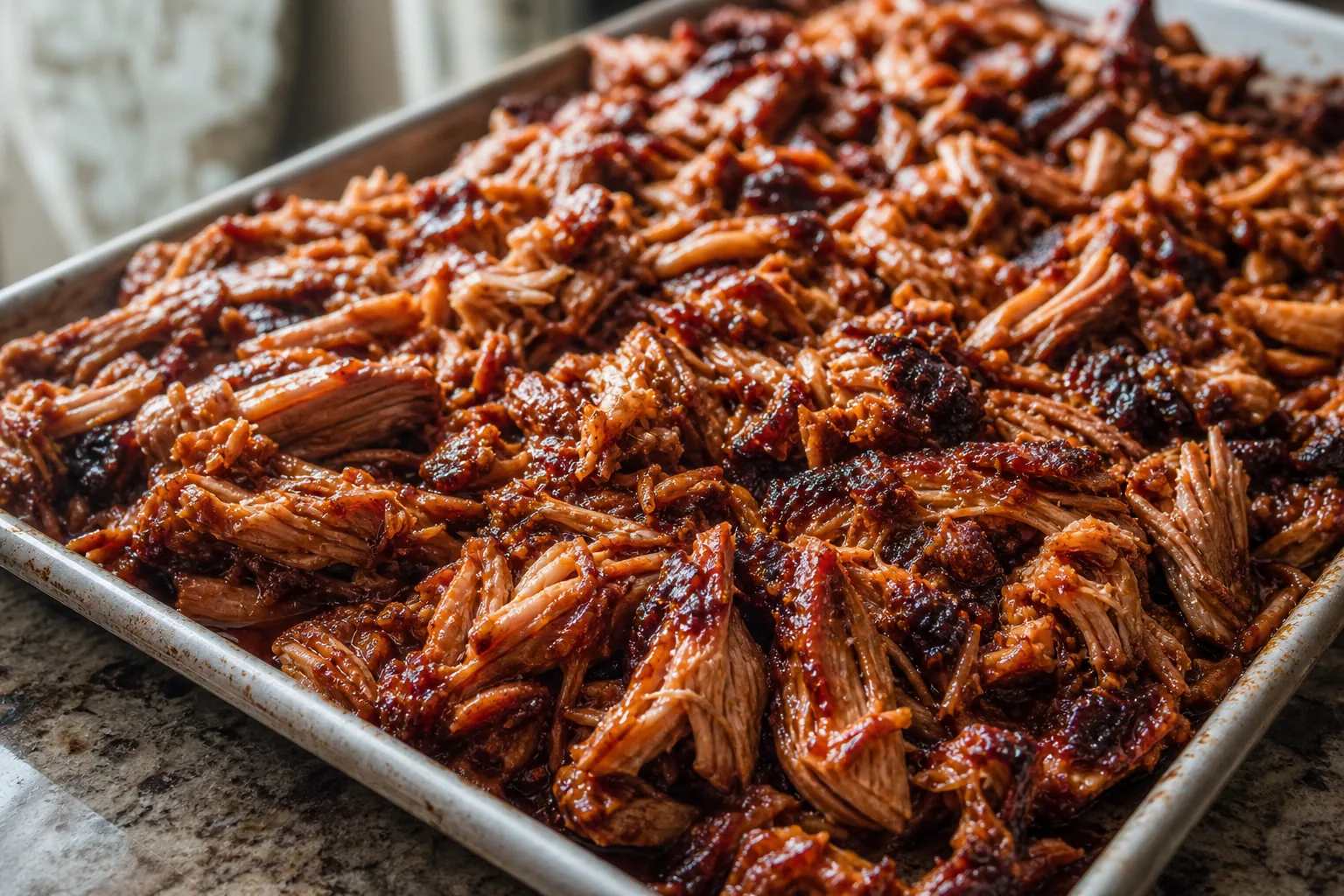
- Season the pork: Pat the pork dry. In a small bowl, mix salt, brown sugar, smoked paprika, chili powder, garlic powder, onion powder, cumin, black pepper, and cayenne (if using). Rub the mixture all over the pork chunks.
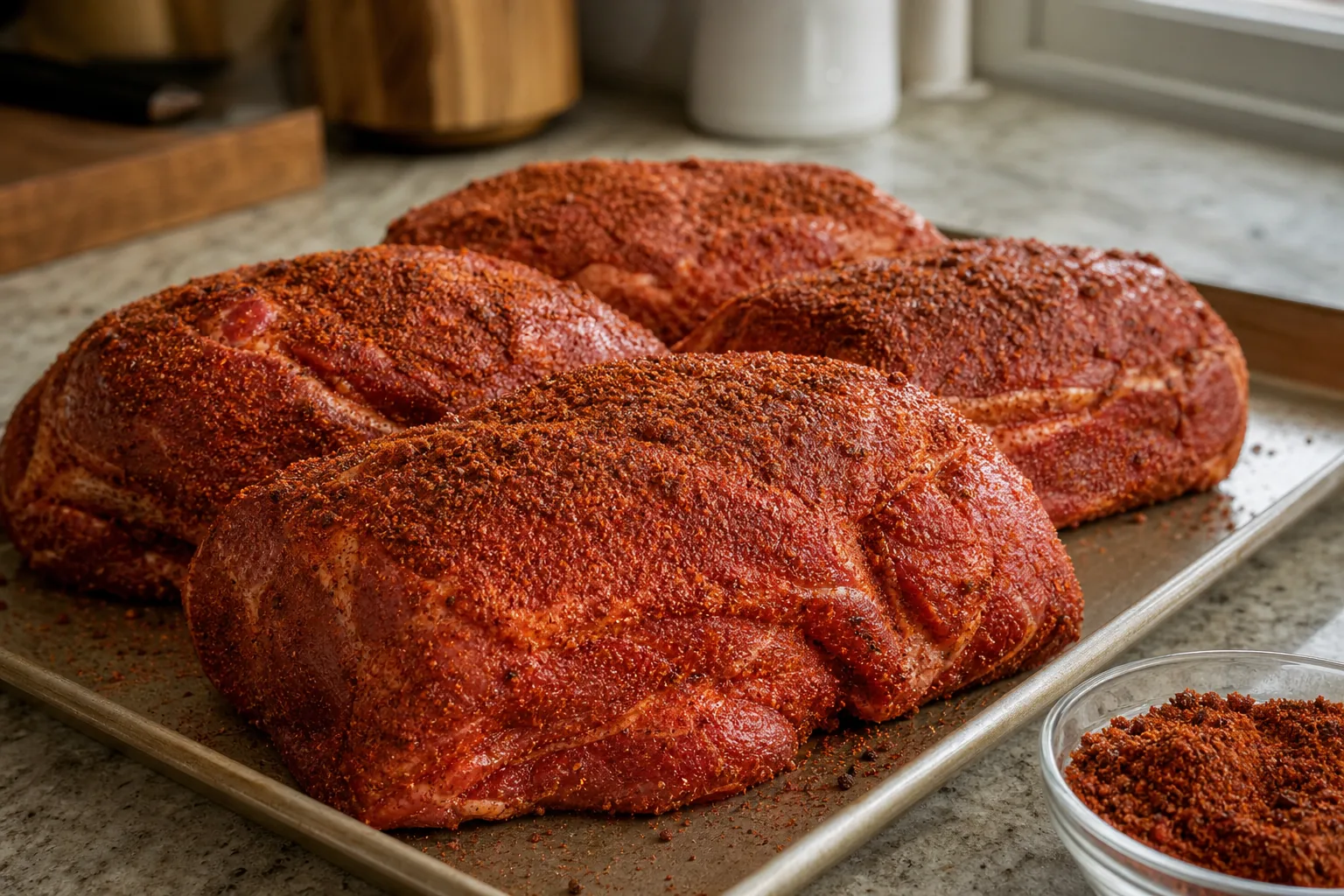
Rub the spice mixture all over the pork chunks. - Build the cooking liquid: In the slow cooker, whisk together broth, 1 tablespoon apple cider vinegar, Worcestershire, and tomato paste.
- Cook: Add the pork to the slow cooker, turning to coat in the liquid. Cover and cook on Low for 8 to 10 hours, until the pork shreds easily with a fork.
- Defat the juices: Transfer pork to a large bowl or rimmed baking sheet. Pour the cooking liquid into a fat separator or skim off the fat with a spoon. Reserve the defatted juices.
- Shred: Shred the pork with two forks, discarding any large pieces of fat.
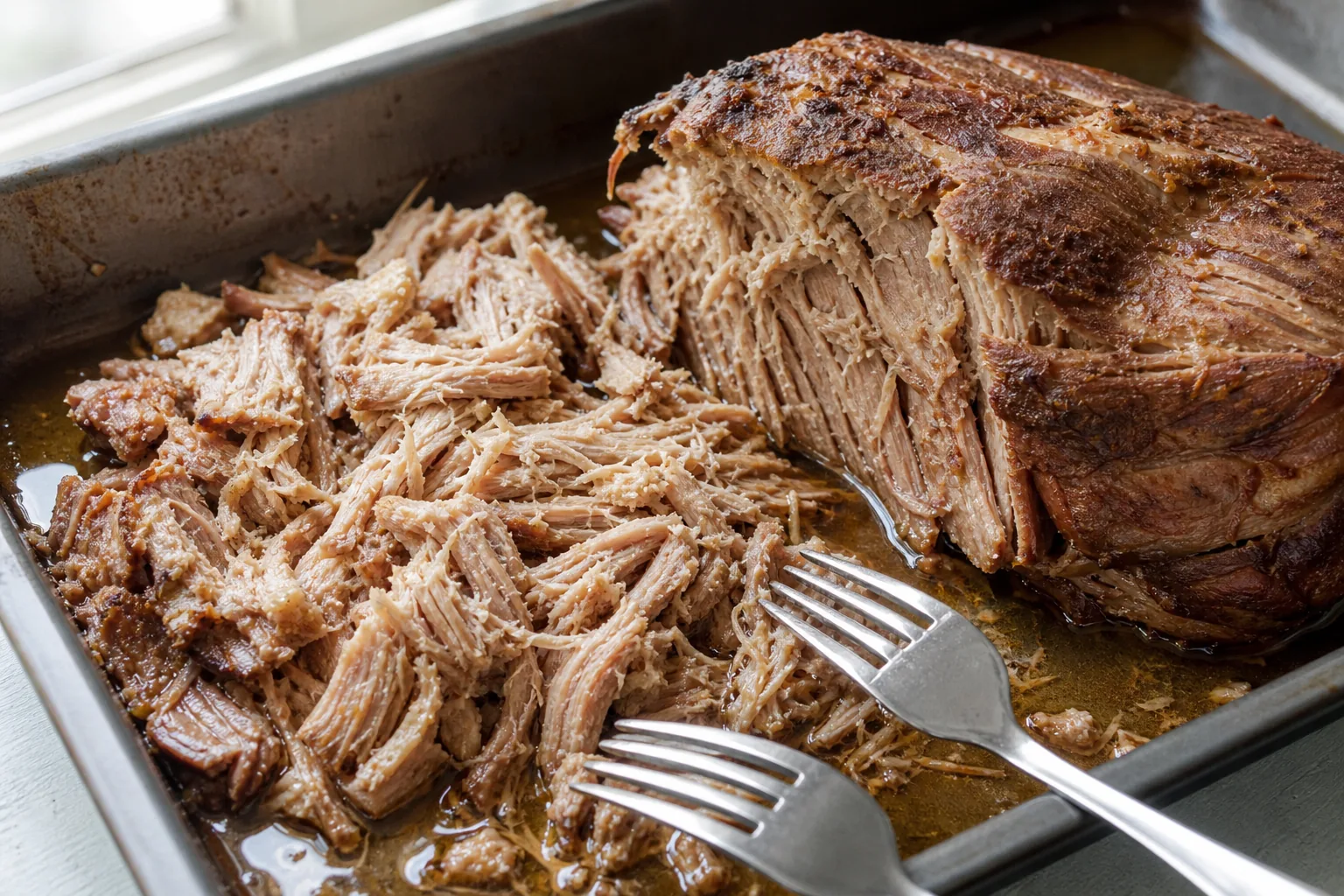
Shred the pork with two forks. - Season and sauce: Return shredded pork to the slow cooker (or a bowl). Stir in 1/2 cup of defatted juices to start. Add the remaining 1 tablespoon vinegar. If using barbecue sauce, stir in gradually until it tastes right to you. Add more defatted juices as needed for moisture. Taste and adjust with salt, vinegar, or sauce.
- Optional crisping step: For crispy edges, spread pork on a sheet pan, drizzle with a little defatted juice, and broil 3 to 6 minutes, watching closely. Toss and serve.
Notes
Make-ahead: This is even better the next day. Store the shredded pork with some defatted juices, then reheat gently and add sauce right before serving.
If it will not shred: Put the lid back on and keep cooking. Pork shoulder becomes pull-apart tender when the connective tissue fully breaks down.
Too thin? Simmer the defatted juices in a small saucepan for 5 to 10 minutes to concentrate them, then stir back into the pork.
Food safety tip: Refrigerate leftovers within 2 hours. Reheat until steaming hot.
Nutrition
Approximate per serving (1/10 of recipe, without barbecue sauce): 370 calories, 26g protein, 28g fat, 5g carbohydrates, 4g sugar, 620mg sodium. Values vary by cut of pork and sauce choice.