
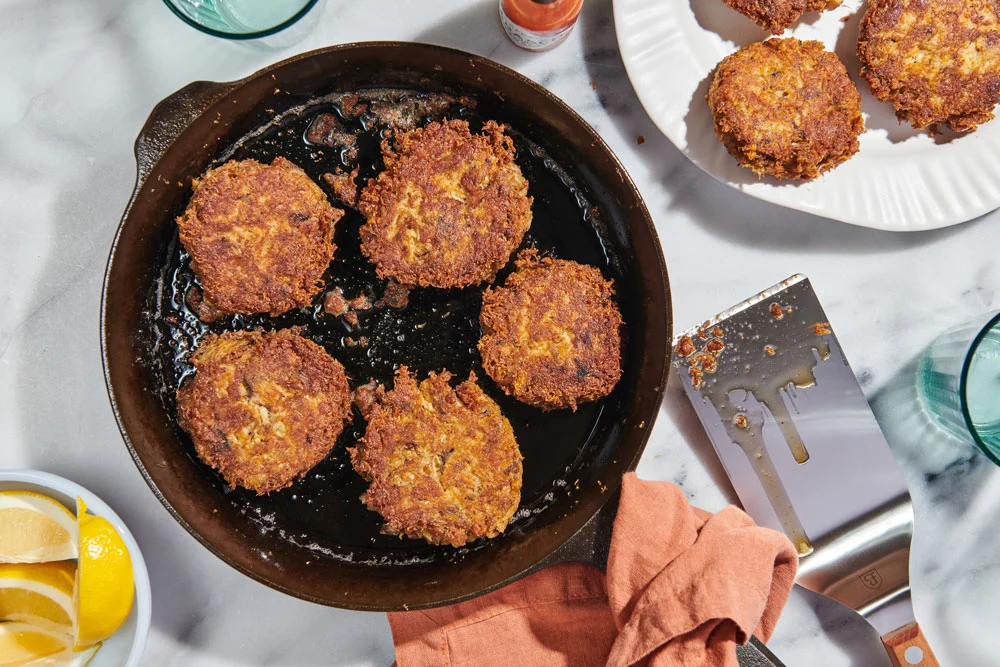
Crab cakes sound simple until you try to make the good kind: big pieces of crab, barely any filler, and a delicate interior that tastes like clean, briny crab rather than breading. That low-filler style is exactly what makes them so special, and it is also exactly why they tend to fall apart the second they hit the pan.
I learned this the hard way back when I managed a bakery and would “helpfully” volunteer to bring appetizers to staff get-togethers. The first time I made lump crab cakes, I treated them like sturdier salmon patties. I mixed too aggressively, shaped too tightly, and flipped too soon. The result was delicious crab scattered across the skillet.
This version is my calm, weeknight-proof answer. The binder is intentionally light and breadcrumb-based, the mixing is gentle, and the chilling step is non-negotiable. That short rest gives the crumbs time to absorb moisture and helps the patties firm up, so you can get a confident sear and flip without resorting to a mountain of filler.

Expect a crisp, browned crust, a tender center with visible crab chunks, and a clean crab flavor that can stand up to a squeeze of lemon or a swipe of remoulade. I cook these in a skillet for the best crust, and the cues below are the difference between neat patties and crab confetti.
Why they fall apart
Crab cakes break for a few predictable reasons, and once you know them, the fix is usually straightforward.
- Not enough chilling time: The crumbs need time to absorb moisture, and cold cakes are simply easier to handle. Plan on at least 30 minutes, and up to an hour if you can. A properly chilled cake should feel firm on the outside, and you should be able to lift it with a thin, flexible fish spatula without it slumping.
- Too much moisture: Excess liquid from crab, mayo, or add-ins can create steam and prevent good browning, which also weakens the structure. If your crab looks glossy-wet in the bowl, drain it well and gently blot it with paper towels before you start mixing.
- Overmixing: Lump crab can break into shreds, which releases more moisture and turns the mixture pasty instead of chunky. Fold just until the crumbs and binder disappear into the crab.
- Flipping too early: If the crust has not formed yet, the cake tends to stick and tear when you try to turn it. The cue I use is simple: the cake should release easily when you slide a thin spatula underneath, and the underside should be deeply golden before you attempt the flip. If it drags or feels glued down, give it another 30 to 60 seconds and try again.
My goal here is to keep the “crab to binder” ratio high without asking you to perform culinary gymnastics. A gentle mix, a firm chill, and a hot pan do the heavy lifting.
Why this recipe works
- Minimal filler, maximum crab: A small amount of panko adds structure without turning the cakes bready.
- Light binder, not a paste: Mayo and egg help hold the mixture together while keeping the interior tender.
- Chilling locks in shape: Cold, rested cakes are sturdier, easier to flip, and less likely to shed crab into the pan.
- Gentle mixing protects the lumps: Keeping big pieces intact gives you that classic restaurant texture.
- Hot pan, patient flip: A properly preheated skillet forms a crust that usually releases cleanly when it is time to turn.
Ingredient notes
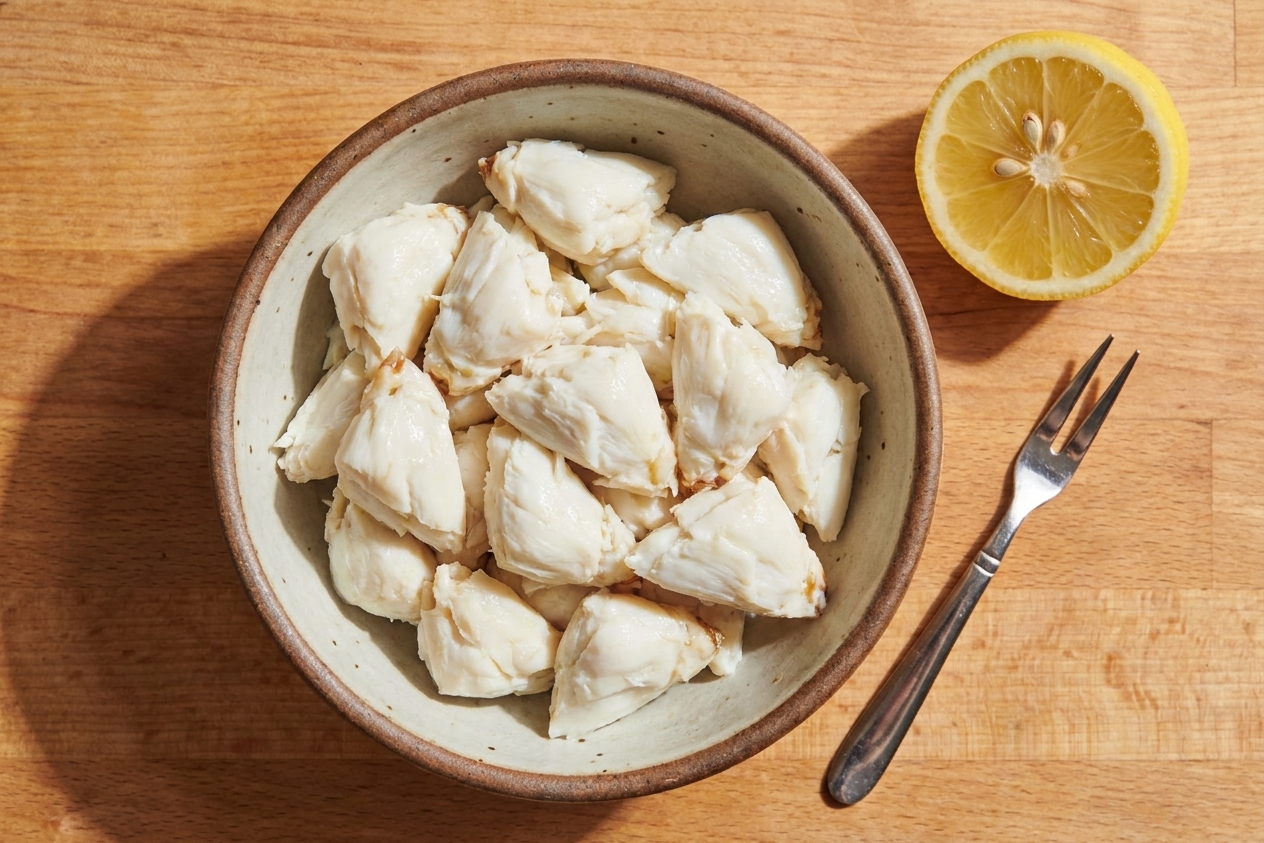
Lump crab meat: Lump gives you those gorgeous chunks. Jumbo lump is even more dramatic, but it is pricier. If you use backfin or a mix, be extra gentle since it breaks up faster. Always pick through for shell bits, even if the container says “picked.”
Panko: Panko stays lighter than fine breadcrumbs. We are using it as structural support, not as the main ingredient.
Mayonnaise: Adds richness and helps the cakes stay moist. You can use a good store brand. This is not the moment for fat-free mayo.
Egg: One egg is usually enough for about 1 pound of crab. Too much egg makes the texture springy.
Dijon mustard: Not mandatory, but it adds a gentle tang that wakes up the crab.
Old Bay (or similar seafood seasoning): Classic flavor. If your seasoning is salty, go lighter on extra salt until you taste the mixture.
Fresh parsley: Adds a clean, green note. If you hate parsley, use chives or a little minced celery leaf.
Lemon: Serve at the table. The acid makes the crab taste sweeter.
Equipment you will need
- Large mixing bowl
- Small bowl for whisking the binder
- Rubber spatula
- Measuring cups and spoons
- Sheet pan or large plate (for chilling)
- Parchment paper (helps prevent sticking while chilling)
- Large skillet (cast iron or stainless steel is ideal)
- Thin fish spatula or wide, flexible turner
Pro tips
- Drain the crab if needed: If it looks wet, spread it on paper towels for a few minutes. Drier crab equals sturdier cakes.
- Mix the binder separately: Whisk mayo, egg, mustard, seasoning, and lemon first, then fold into crab. This helps prevent overmixing.
- Use a light hand: Fold, do not stir. Think: keep the crab in pieces big enough to brag about.
- Chill until firm: Refrigerate at least 30 minutes. If you have time, an hour is even better.
- Do a test cake: If you are nervous, pan-fry one small cake first. If it feels fragile, chill longer or add 1 to 2 tablespoons more panko.
- Flip once: Let the first side get deeply golden so it holds together when you turn it.
- Keep them warm in the oven: If you are making batches, hold cooked cakes on a rack in a low oven so they stay crisp.
Substitutes that work
- No panko: Use fine dry breadcrumbs, crushed saltines, or crushed buttery crackers. Start with a smaller amount since some options absorb more.
- No Old Bay: Use a mix of paprika, celery salt, a pinch of cayenne, and black pepper. Or use your favorite seafood seasoning.
- No parsley: Chives or finely sliced scallion greens are great here.
- No Dijon: A small spoonful of prepared horseradish, or just skip it.
- No mayo: Plain Greek yogurt can work in a pinch, but the cakes will be a little less rich and slightly tangier.
Variations
- Maryland-style: Keep add-ins minimal and let Old Bay lead. Serve with lemon and a simple tartar sauce.
- Herby lemon: Add extra lemon zest and a mix of parsley and chives for a brighter profile.
- Spicy: Add a pinch of cayenne or a few dashes of hot sauce to the binder.
- Baked crab cakes: Chill well, then bake on a greased sheet pan until browned. Broil briefly at the end for color. Baking is gentler, but you lose a bit of that pan-seared crust.
- Air fryer: Spray both sides lightly with oil and air fry until crisp, flipping carefully halfway through.
Serving ideas
These are happiest with something bright and something crisp.
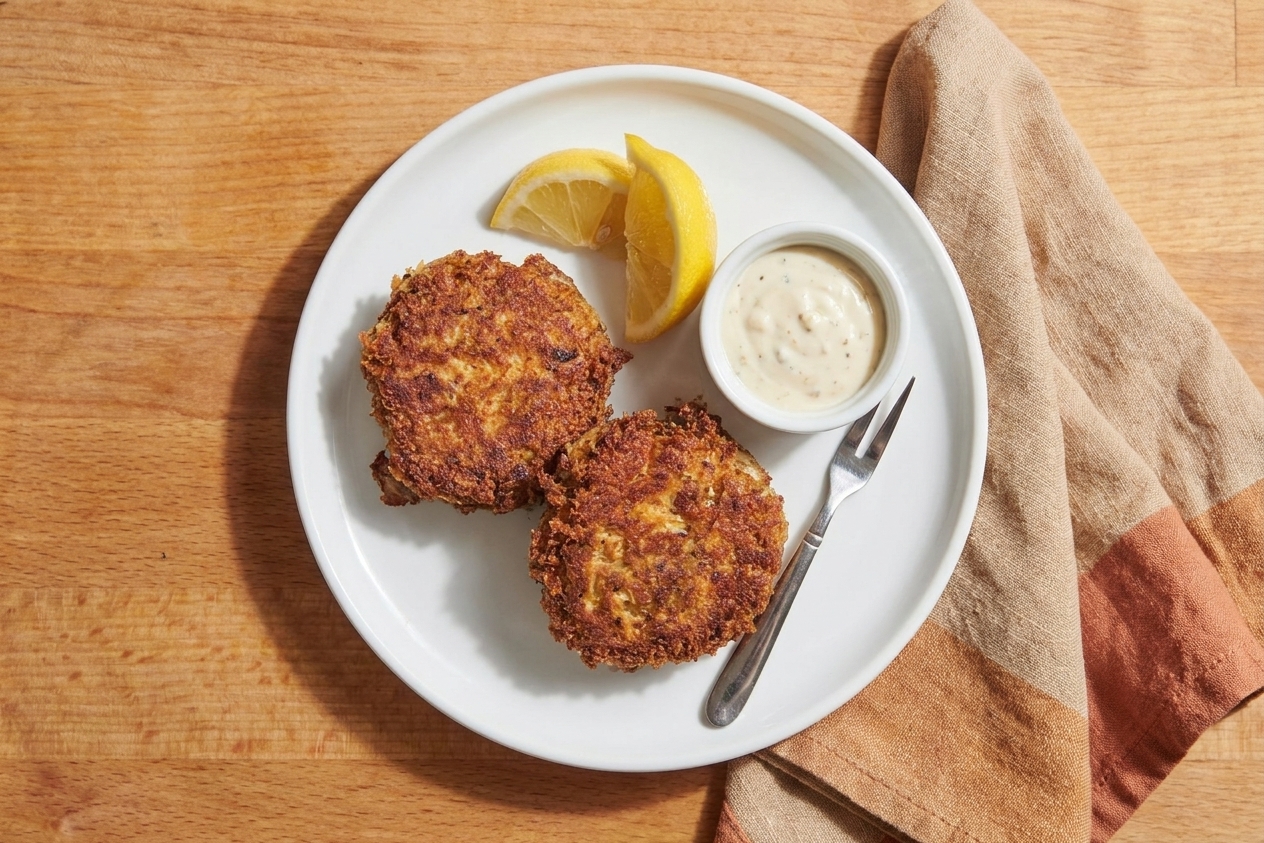
- Classic: Lemon wedges, tartar sauce or remoulade, and a simple green salad.
- Summer dinner: Corn on the cob, sliced tomatoes, and cucumbers tossed with vinegar.
- Sandwich: Brioche bun, lettuce, tomato, and a swipe of mayo mixed with a little mustard and lemon.
- Brunch-y: Crab cakes topped with a poached egg and a quick lemony yogurt sauce.
Storage and reheating
To store
Cool cooked crab cakes, then refrigerate in an airtight container for up to 2 days. Place parchment between layers to help protect the crust.
To reheat
Reheat in a skillet over medium heat with a small amount of oil, or in the oven until warmed through. Microwaving works, but it softens the crust.
To freeze
You can freeze the shaped, uncooked cakes after chilling. Freeze on a parchment-lined sheet pan until firm, then transfer to a freezer bag. Cook from frozen gently, adding time as needed, or thaw overnight in the refrigerator first for the most even cooking.
Common mistakes
- Skipping the chill: This is the number one reason low-filler crab cakes break.
- Adding too many mix-ins: Onions, peppers, and lots of herbs can release water and weaken structure. Keep add-ins finely minced and modest.
- Using too much binder: Extra egg or too many crumbs can make the texture bready or rubbery.
- Overhandling while shaping: Pressing too firmly compacts the mixture and breaks the lumps.
- Pan not hot enough: A lukewarm pan can lead to sticking and tearing. Preheat properly, then add oil.
- Flipping repeatedly: One good flip is safer than anxious nudging.
FAQ
How do I keep crab cakes from falling apart?
Use a light binder, fold gently, and chill the shaped cakes until firm. Then sear in a hot pan and flip only after the cakes release easily and the first side is deeply golden.
Should I use lump or jumbo lump crab?
Lump is the sweet spot for most home cooks. Jumbo lump is gorgeous, but more delicate and more expensive. Either works if you mix gently.
Can I make crab cakes ahead of time?
Yes. Shape and refrigerate them, covered, for several hours before cooking. This actually improves how well they hold together.
Why are my crab cakes mushy?
Usually it is excess moisture or too low a cooking heat. Drain the crab if it seems wet, chill longer, and make sure the skillet is properly preheated.
Can I bake instead of pan-fry?
Yes, especially if you want less hands-on cooking. You will get a slightly different crust, but chilling first still matters.
The recipe
Classic Crab Cakes
Sweet lump crab cakes with minimal filler, a light binder, and a crisp pan-seared crust. Chill the cakes first so they hold together without turning bready.
- Prep
- 20 minutes
- Cook
- 10 minutes
- Total
- 1 hour
- Yield
- Makes 6 crab cakes
Ingredients
- 1 lb lump crab meat, picked over for shells
- 1/3 cup panko breadcrumbs, plus 1 to 2 tbsp more if needed
- 1/4 cup mayonnaise
- 1 large egg
- 1 1/2 tsp Dijon mustard
- 1 1/2 tsp Old Bay seasoning (or similar seafood seasoning)
- 1 tbsp fresh lemon juice, plus lemon wedges for serving
- 1 tbsp chopped fresh parsley
- 1/4 tsp kosher salt (optional, to taste)
- 1/4 tsp black pepper
- 2 to 3 tbsp neutral oil (such as canola or avocado), for pan-frying
- 2 tbsp unsalted butter (optional but recommended), for extra browning
Instructions
- Dry and pick the crab: Spread the crab meat on a plate lined with paper towels for a few minutes if it seems wet. Pick through carefully for any shell pieces, then transfer to a large bowl.
- Make the binder: In a small bowl, whisk together the mayonnaise, egg, Dijon mustard, Old Bay, lemon juice, parsley, black pepper, and optional salt.
- Fold gently: Sprinkle 1/3 cup panko over the crab. Pour the binder over top. Using a rubber spatula, fold gently just until combined, keeping the crab in large pieces. If the mixture seems very loose and cannot hold a mound, fold in 1 to 2 tablespoons more panko.
- Shape: Line a sheet pan or large plate with parchment. Divide the mixture into 6 portions and gently form into thick patties, about 3/4 to 1 inch thick. Do not pack them hard.
- Chill: Refrigerate the crab cakes, uncovered, for at least 30 minutes, or until firm to the touch. They should feel set and hold their shape when nudged.
- Preheat the pan: Heat a large skillet over medium to medium-high heat. Add 2 tablespoons oil. If using butter, add it once the oil is hot and let it foam.
- Sear the first side: Carefully place the chilled crab cakes in the skillet, leaving space between them. Cook 3 to 4 minutes, until the underside is deeply golden and the cakes release easily when you slide a thin spatula underneath.
- Flip once: Flip carefully and cook 3 to 4 minutes more, until golden on the second side and warmed through. Add a splash more oil if the pan looks dry.
- Serve: Transfer to a paper towel lined plate briefly if desired, then serve hot with lemon wedges and your favorite sauce.
Notes
Chilling is part of the recipe: If your crab cakes are low-filler (as these are), the fridge time is what helps keep them from breaking in the pan.
Moisture check: If your crab looks wet or your add-ins are juicy, drain and pat dry first. Too much moisture makes crab cakes fragile.
Cooking in batches: Do not crowd the skillet. If you need to cook in batches, keep finished cakes warm on a rack in a low oven so the crust stays crisp.