
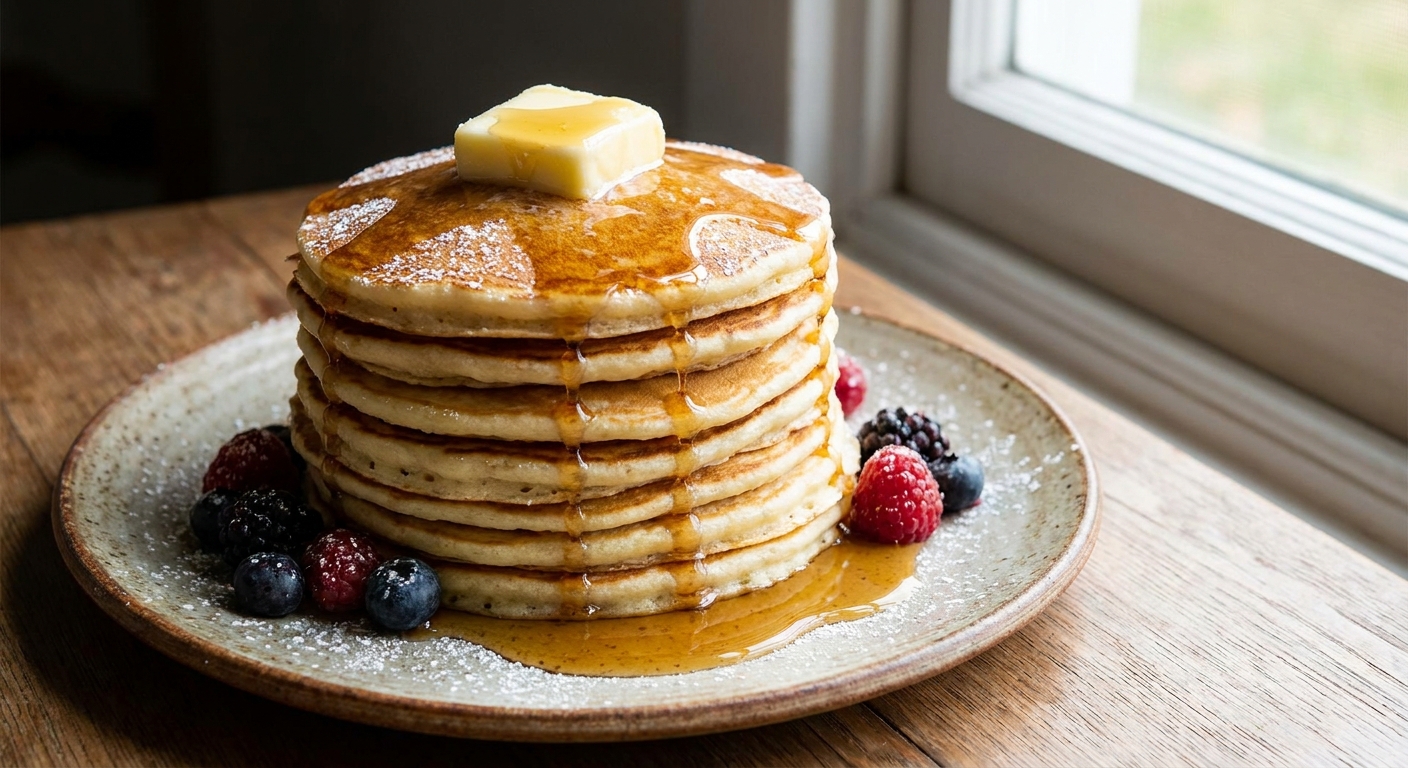
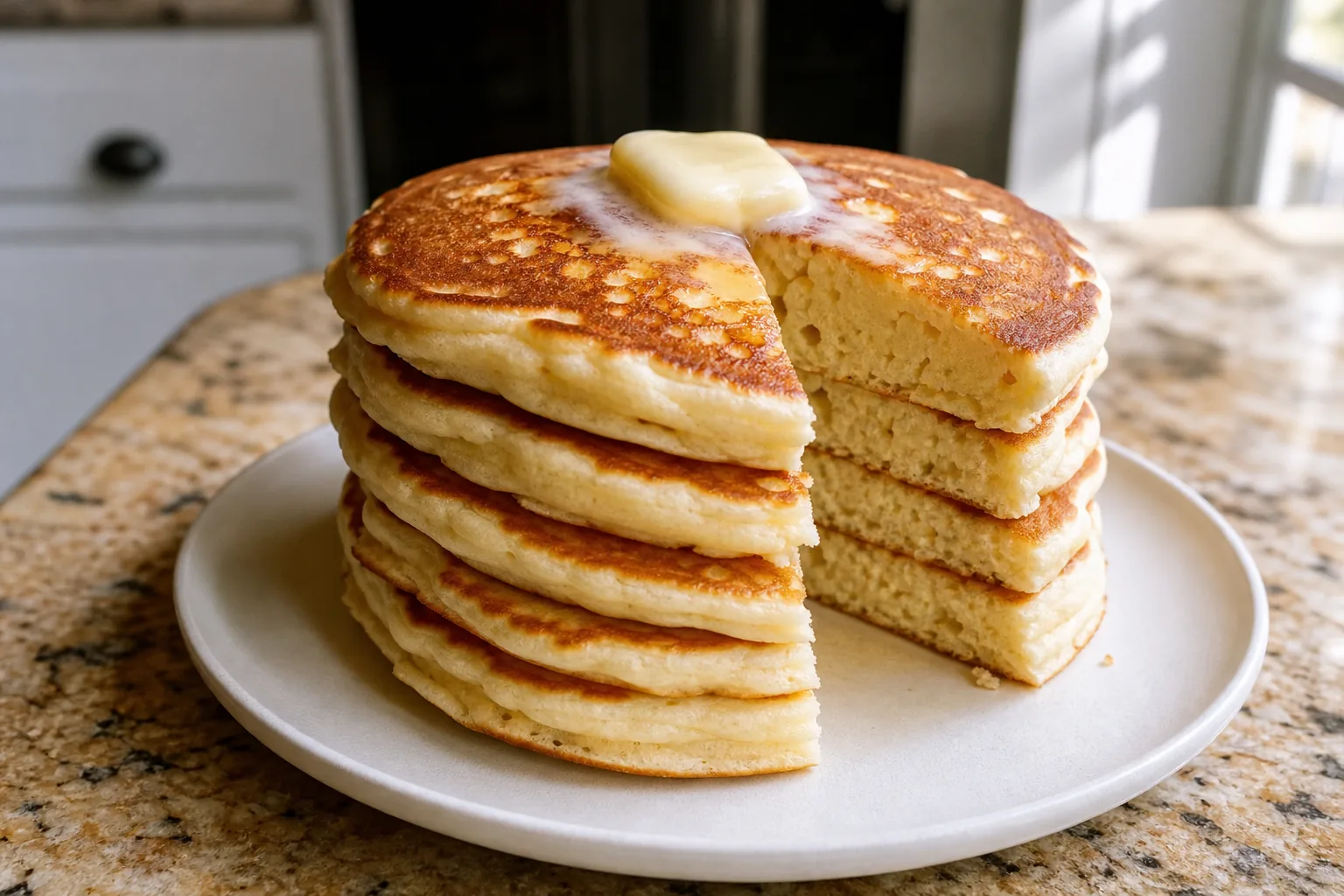
If you have ever chased that perfect pancake texture, the one that is golden at the edges, plush in the middle, and somehow both light and satisfying, this is the buttermilk pancake recipe I want you to keep close. It is not fussy and it does not require a stand mixer or a special pan. It relies on a few small choices that make a big difference.
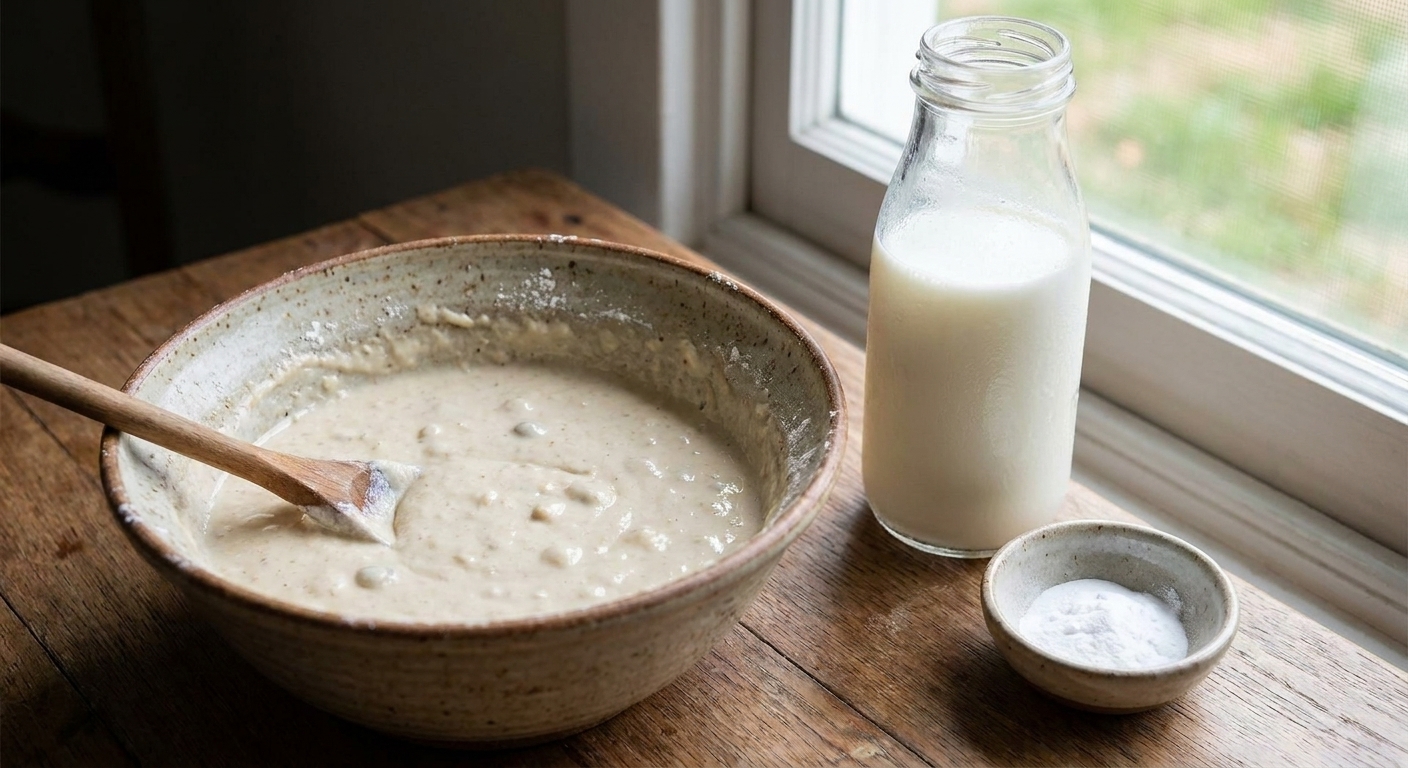
Buttermilk brings a gentle tang and helps keep the crumb tender. A short rest, about 5 to 15 minutes, gives the flour time to hydrate so the batter thickens into that scoopable, cloud-like consistency. The goal is not a perfectly smooth batter. A few small lumps are a good sign, because they mean you have not overmixed and developed too much gluten, which is what turns pancakes tough and less lofty.

I wrote this with real mornings in mind. You can make the batter in one bowl, cook in batches over steady medium heat, and keep the first pancakes warm while you finish. There are also easy swaps if you are out of buttermilk, plus simple add-ins for blueberry, chocolate chip, or lemon poppyseed cravings.
Think of pancake batter like a soft pillow. Stir it too much and it turns dense. Treat it gently and it stays airy.
Why this recipe works
- Buttermilk plus baking soda equals lift. The acidity in buttermilk reacts with baking soda to create carbon dioxide bubbles, which helps pancakes rise fast on the griddle.
- A short rest thickens the batter naturally. Letting the batter sit gives flour time to absorb liquid, leading to a thicker batter that cooks up taller with less spread.
- Minimal mixing protects fluffiness. Overmixing develops gluten and can deflate some bubbles, which is the quickest path to chewy, flat pancakes.
- Moderate heat cooks through without drying. A steady medium to medium-low temperature sets the outside golden while the center finishes gently.
Ingredient notes
These pancakes use everyday ingredients, but a few details matter.
- All-purpose flour: Scoop and level if you do not use a scale. Too much flour makes a stiff, bready pancake.
- Buttermilk: Real cultured buttermilk gives the best flavor and tenderness. If yours is very thick, that is fine. It makes a hearty batter and extra-tall pancakes.
- Baking powder and baking soda: Using both gives reliable lift. Baking powder provides ongoing rise, while baking soda reacts immediately with the buttermilk for extra fluff and browning.
- Eggs: Bring to room temperature if you can, but do not stress. Cold eggs still work.
- Melted butter: Adds flavor and helps crisp the edges. Let it cool slightly so it does not scramble the eggs.
- Sugar: Just enough for subtle sweetness and better browning. You can reduce it a bit if you prefer.
- Salt and vanilla: Salt keeps the flavor from tasting flat; vanilla is optional but cozy.
Equipment you will need
- Large mixing bowl and whisk
- Rubber spatula for folding and scraping
- Measuring cups and spoons or a kitchen scale
- 12-inch nonstick skillet, cast iron skillet, or griddle
- Thin spatula for flipping
- Sheet pan and oven (optional) to keep batches warm at 200°F
Pro tips
Get the heat right
Preheat your pan for a few minutes. You want a steady medium heat. If the first pancake browns too fast before bubbles form, lower the heat and give the pan a minute to stabilize.
Mix in stages
Whisk dry ingredients together first, whisk wet ingredients together second, then combine. This keeps you from overworking the batter while chasing out lumps.
Rest the batter
Ten minutes is enough to see a difference. The batter will look thicker and a little puffier.
Portion consistently
A 1/3 cup scoop makes evenly sized pancakes that cook at the same pace.
Flip once, gently
Wait for bubbles across the surface and edges that look set. Flip, then let the second side finish without pressing down.
Substitutes that work
- No buttermilk: For each 1 cup of milk, stir in 1 tablespoon lemon juice or white vinegar and let sit 5 minutes. This is a good emergency option. The flavor will be a bit less rich than cultured buttermilk, but the pancakes will still be tender.
- Dairy-free: Use an unsweetened plant milk plus lemon juice (same ratio as above) and swap melted butter for neutral oil or melted plant butter.
- Butter substitute: Neutral oil works in the batter. For cooking, use butter for flavor or a high-heat oil for easier batch cooking.
- Sugar substitute: Use honey or maple syrup in the batter, but reduce the buttermilk slightly so the batter stays thick.
- Whole wheat option: Replace up to 50% of the flour with whole wheat flour for a heartier pancake. Add a splash more buttermilk if the batter feels too thick.
Variations
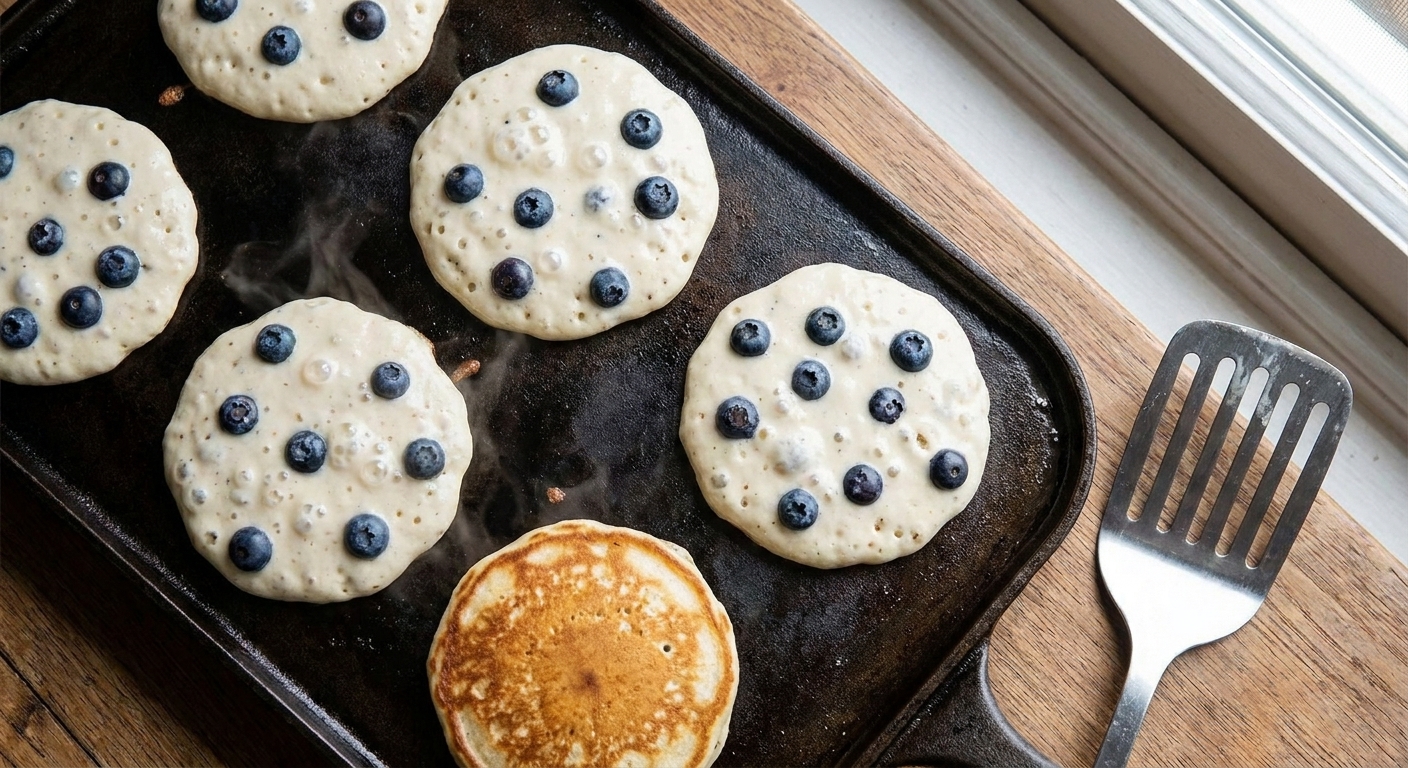
- Blueberry: Sprinkle blueberries onto the first side right after you pour the batter. This keeps the batter from turning purple and helps berries stay suspended.
- Chocolate chip: Add a small handful per pancake on the griddle rather than stirring into the whole bowl, so chips do not sink and scorch.
- Lemon poppyseed: Add lemon zest and 1 to 2 teaspoons poppyseeds to the batter. Serve with berry jam or a spoonful of yogurt.
- Cinnamon brown sugar: Add cinnamon to the dry mix and a spoonful of brown sugar for a warmer, caramel note.
- Extra fluffy (separate eggs): Separate eggs, whisk yolks into the wet ingredients, whip whites to soft peaks, and fold them in at the end. This adds loft, especially for special breakfasts.
Serving ideas
- Classic: Salted butter and warm maple syrup.
- Bright: Fresh berries and a squeeze of lemon, plus a dusting of powdered sugar.
- Cozy: Peanut butter or almond butter with sliced bananas.
- Brunchy: Crispy bacon or breakfast sausage on the side, plus scrambled eggs.
- Dessert-style: Whipped cream and macerated strawberries.
If you are feeding a crowd, keep pancakes warm on a sheet pan in a 200°F oven. Stack them loosely or lay them in a single layer so they do not steam themselves soggy.
Storage and reheating
Refrigerate
Cool pancakes completely, then store in an airtight container in the refrigerator for up to 3 days.
Freeze
Freeze pancakes in a single layer on a sheet pan until firm, then transfer to a freezer bag with parchment between layers. Freeze up to 2 months.
Reheat
- Toaster: Best for crisp edges. Toast from frozen on a medium setting.
- Oven: Warm on a sheet pan at 325°F for 8 to 12 minutes.
- Microwave: Fast but softer. Cover lightly and heat in short bursts.
Common mistakes
- Overmixing the batter: This makes pancakes tough and flat. Stop stirring when the flour disappears, even if you see small lumps.
- Cooking on heat that is too high: The outside burns before the center cooks. Medium to medium-low wins the race.
- Flipping too early: Wait for lots of bubbles and set edges. If you flip before structure forms, pancakes tear and cook unevenly.
- Pressing the pancakes: It feels satisfying but squeezes out the air you worked for. Let them rise.
- Old leaveners: Baking powder and baking soda lose strength over time. If you cannot remember when you opened them, consider replacing for best lift.
FAQ
Why are my pancakes not fluffy?
The most common reasons are overmixing, batter that is too thin, or a pan that is too hot. Mix gently to avoid developing too much gluten, let the batter rest so it thickens, and cook over medium heat.
Can I make the batter ahead of time?
You can mix the dry ingredients and wet ingredients separately the night before, then combine in the morning. Fully mixed batter loses some lift as it sits because the reaction starts right away.
Is buttermilk really necessary?
It makes a noticeable difference in tenderness and flavor, but you can mimic the acidity by adding lemon juice or vinegar to milk. If you do this often, keeping powdered buttermilk in the pantry is a handy option.
How do I know when to flip?
Look for bubbles that pop and stay open, with edges that look set and slightly dry. The first side usually takes longer than the second.
What is the best pan for pancakes?
A griddle is the easiest for batches, but a cast iron skillet gives gorgeous browning. Nonstick is the most forgiving if you are just getting comfortable.
The recipe
Fluffy Buttermilk Pancakes
Tall, tender buttermilk pancakes with crisp edges and a lightly tangy, buttery crumb. A reliable one-bowl style batter, ready for syrup, berries, or chocolate chips.
- Prep
- 10 minutes
- Cook
- 20 minutes
- Total
- 30 minutes
- Yield
- 10 to 12 pancakes (serves 4)
Ingredients
- 2 cups (260 g) all-purpose flour
- 2 tablespoons (25 g) granulated sugar
- 2 teaspoons baking powder
- 1 teaspoon baking soda
- 1 teaspoon kosher salt (or 1/2 teaspoon fine salt)
- 2 cups (480 ml) buttermilk
- 2 large eggs
- 4 tablespoons (57 g) unsalted butter, melted and slightly cooled
- 1 teaspoon vanilla extract (optional)
- Butter or neutral oil, for greasing the pan
Instructions
- In a large bowl, whisk together the flour, sugar, baking powder, baking soda, and salt.
- In a medium bowl or large measuring cup, whisk together the buttermilk, eggs, melted butter, and vanilla (if using).
- Pour the wet ingredients into the dry ingredients. Using a rubber spatula, fold just until no dry streaks remain. The batter should look thick and lumpy.
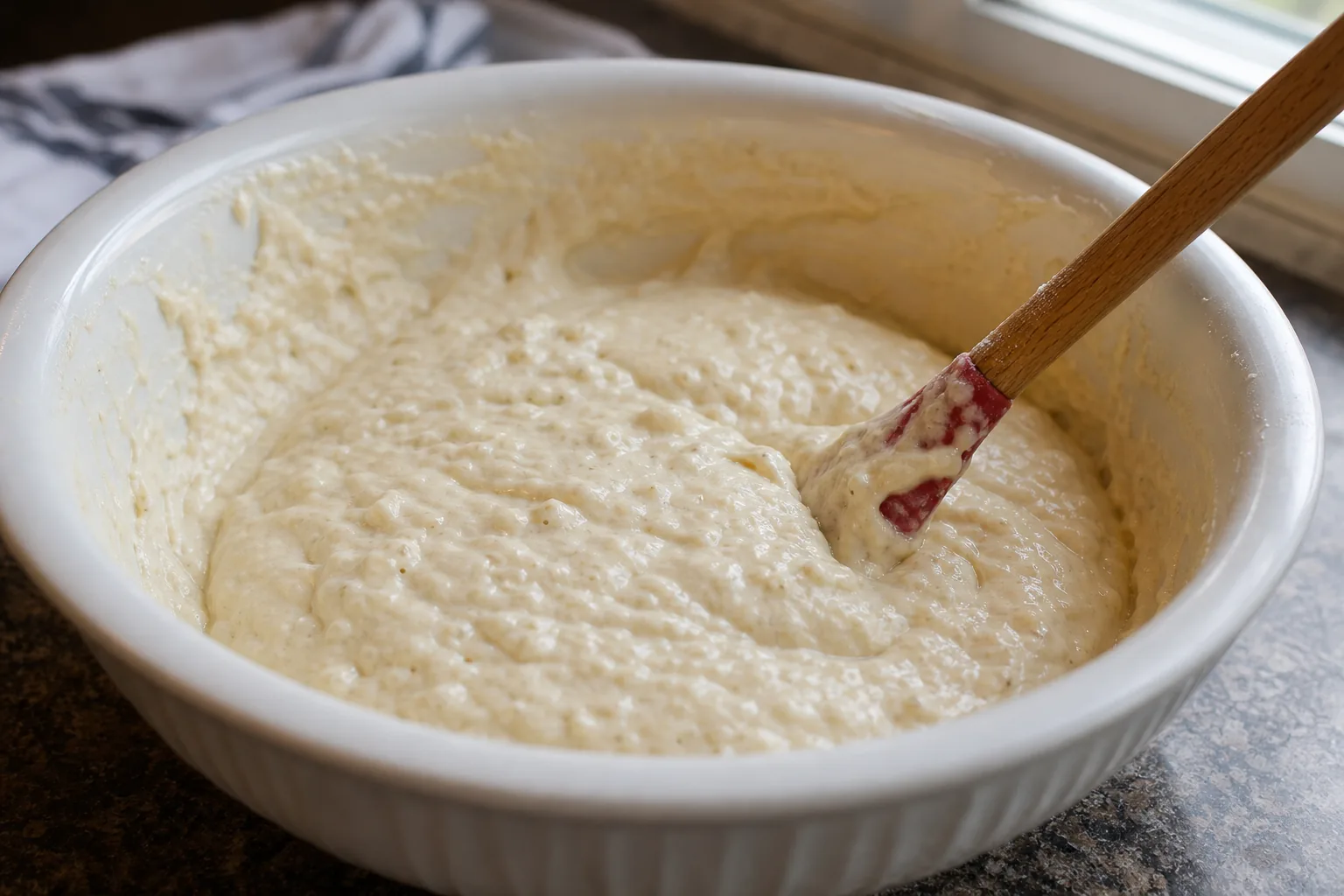
Fold just until no dry streaks remain; the batter should be thick and lumpy. - Let the batter rest for 10 minutes while you preheat a skillet or griddle over medium heat.
- Lightly grease the hot pan with butter or oil. Scoop about 1/3 cup batter per pancake onto the pan, leaving space between pancakes.
- Cook until bubbles form across the surface and the edges look set, 2 to 3 minutes. Flip and cook until the second side is golden and the center springs back lightly, 1 to 2 minutes more.
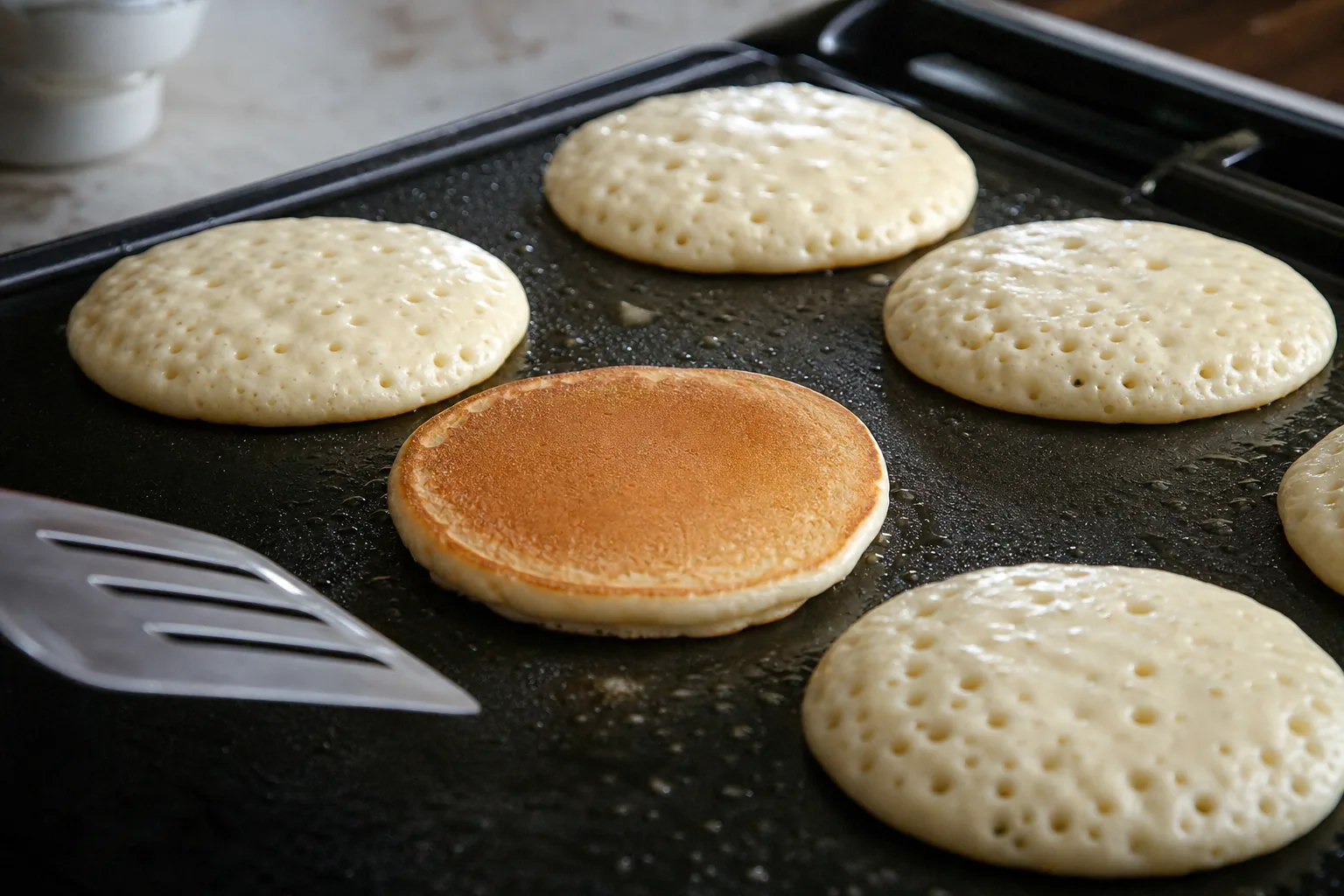
Flip when bubbles form across the surface and the edges look set. - Repeat with the remaining batter, greasing the pan as needed. If pancakes brown too quickly, lower the heat slightly.
Notes
Buttermilk substitute: For 2 cups buttermilk, mix 2 cups milk with 2 tablespoons lemon juice or white vinegar. Let sit 5 minutes, then use.
Keeping pancakes warm: Hold cooked pancakes on a sheet pan in a 200°F oven while you finish the batch.
Add-ins: For berries or chips, sprinkle them onto the pancake after pouring the batter onto the griddle. This prevents streaky batter and scorching chips.
Measuring flour: If you do not have a scale, spoon flour into the measuring cup and level it off. Scooping directly from the bag can pack in extra flour.
Nutrition
Approximate per serving (2 to 3 pancakes, 1/4 of recipe): 430 calories, 14 g protein, 55 g carbohydrates, 17 g fat, 5 g saturated fat, 120 mg cholesterol, 820 mg sodium, 10 g sugar, 2 g fiber.