
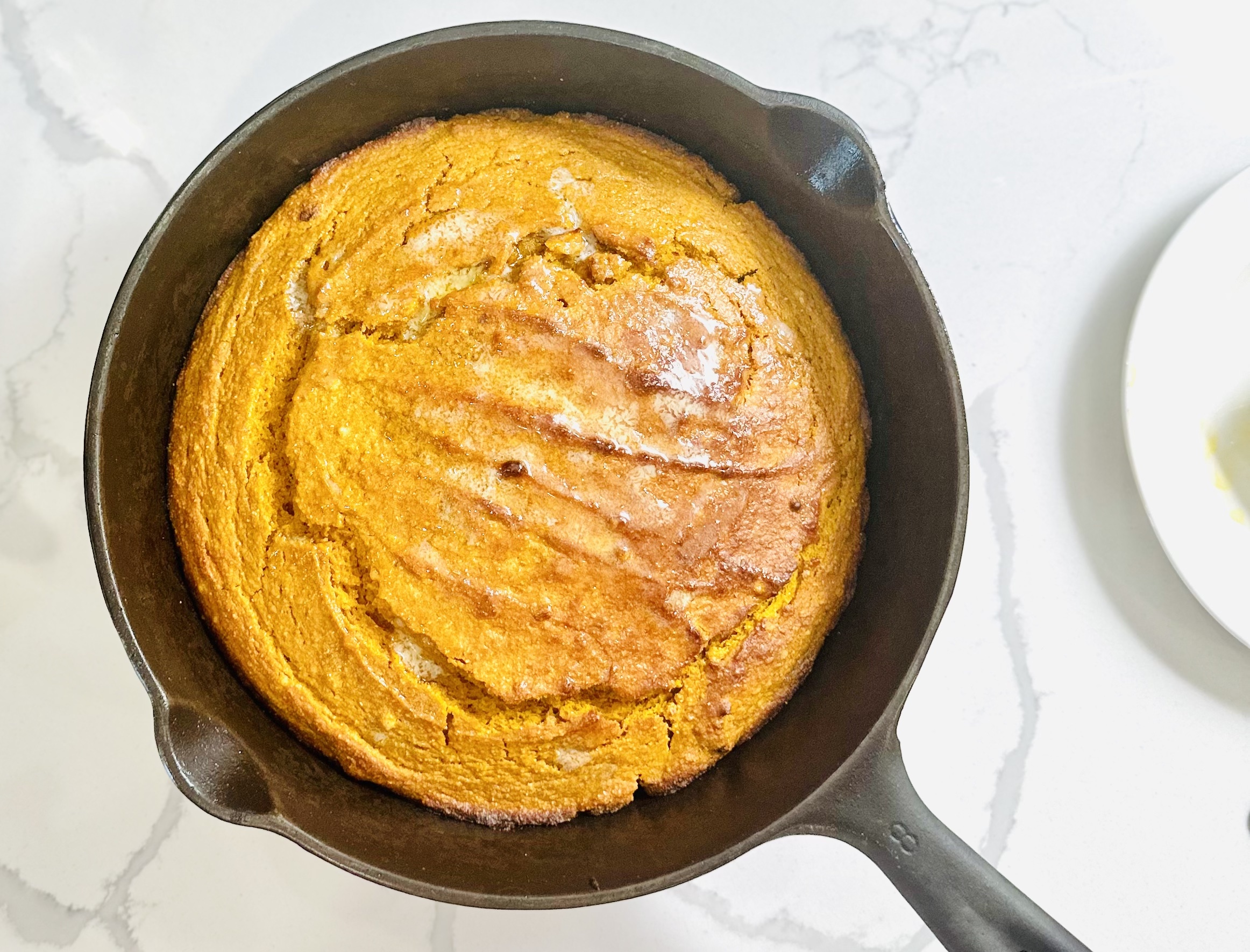
Whenever pumpkin season rolls around, my kitchen shifts into a little rotation of dependable favorites. This skillet pumpkin cornbread is the one I make when I want something fast, warm, and generous. It hits that perfect middle ground: not dessert-sweet, not plain, and definitely not dry. You get a golden, crisp edge from the hot pan and a soft center that slices clean but still feels tender.

A quick note on what you should expect when you mix the batter: pumpkin puree thickens things, and cornmeal behaves differently than flour. The batter should be thick like spoonable muffin batter, not pourable pancake batter. If you scoop it with a spatula, it should fall off in a slow, heavy ribbon.
The other little secret is the hot skillet. Preheating the pan helps jumpstart browning on the bottom and sides, which is where skillet cornbread really earns its keep. One small caution: if your skillet is ripping hot, butter can brown fast, so I like to add the butter or oil right before the batter goes in.
And because I can never leave well enough alone, I included a savory herb option right alongside the sweet version. It is the same base, just a different direction: think rosemary, thyme, black pepper, and a little extra salt, which makes it incredible with soups and chili.
Why this recipe works
- Pumpkin keeps it moist without extra fuss. Pumpkin puree adds moisture and tenderness, which is especially helpful in cornbread where cornmeal can easily bake up crumbly.
- A hot skillet builds the crust. Preheating the pan (with fat in it) gives you that crisp, browned edge that makes skillet cornbread feel special even on a random Tuesday.
- The cornmeal to flour balance prevents heaviness. Too much cornmeal can feel gritty and dry, while too much flour turns it into pumpkin bread. This ratio keeps it cornbread with a gentle, cohesive crumb.
- A clear doneness test keeps the center from being gummy. Pumpkin batters can look set on top while the middle is still underbaked. A center toothpick test plus a light press tells you the truth.
Ingredient notes
Cornmeal
Medium-grind yellow cornmeal is my everyday pick for texture and color. Fine cornmeal will bake a little more cake-like. Stone-ground can be delicious but sometimes needs a bit more moisture and can brown faster around the edges.
Pumpkin puree
Use plain pumpkin puree, not pumpkin pie filling. If your puree seems watery (some brands vary), blot it quickly with paper towels or expect to add an extra tablespoon or two of cornmeal to keep the batter thick and spoonable.
Sweetener
For a lightly sweet crumb, a modest amount of brown sugar (or maple syrup) is enough. You should still be able to serve this with savory food without it tasting like dessert.
Fat
Butter adds flavor and helps browning. Neutral oil works too and can make the crumb feel a touch softer. If you are using butter in the batter, I still recommend a little butter or oil in the skillet for the crust.
Spices
Cinnamon is classic. A pinch of nutmeg or ginger is nice but optional. If you want to keep it more “cornbread-first,” use just a small amount of warm spice.
Leavening
Baking powder gives lift. If your recipe includes baking soda, it is usually there to react with acidic ingredients like buttermilk. Either can work, but do not swap blindly without adjusting.
Equipment you will need
- 10-inch cast-iron skillet for classic thickness and crisp edges. A 9-inch works for a slightly thicker cornbread. A 12-inch makes it thinner and bakes faster.
- Mixing bowl and whisk to keep it quick bread simple.
- Rubber spatula for folding the batter without overmixing.
- Measuring cups and spoons
- Toothpick or thin skewer for the center doneness test.
- Instant-read thermometer (optional) if you like extra certainty.
Pro tips
- Dial in batter thickness before you bake. You are aiming for thick and spoonable. If it seems runny, whisk in 1 to 2 tablespoons cornmeal. If it feels stiff or dry, add a splash of milk (1 tablespoon at a time).
- Preheat the skillet. Put the skillet in the oven while it preheats. When you add butter or oil, it should sizzle. That sound is your crust insurance.
- Do not overmix. Stir just until you stop seeing dry streaks. Overmixing makes the crumb tougher and can mute the lift.
- Use a two-part center test. (1) Insert a toothpick in the center: a few moist crumbs are fine, wet batter is not. (2) Gently press the center with a fingertip: it should spring back, not sink or feel loose.
- Let it cool for 10 minutes. Fresh cornbread is fragile. A short rest helps it slice cleanly and keeps the steam from turning the bottom crust soft.
Substitutes that work
- Buttermilk: Use regular milk, or make a quick substitute by stirring 1 tablespoon lemon juice or vinegar into 1 cup milk and letting it sit 5 minutes.
- Brown sugar: Swap with granulated sugar, honey, or maple syrup. If using liquid sweetener, you may need an extra tablespoon of cornmeal to keep the batter thick.
- Butter: Neutral oil works 1:1. Melted coconut oil also works, but it adds flavor.
- Eggs: If you need egg-free, a flax egg can work in cornbread, but the texture will be a bit more tender and slightly more fragile. Expect a softer slice.
- Gluten-free: Use a 1:1 gluten-free all-purpose blend in place of the flour. Keep the cornmeal as-is. Start checking a few minutes early since some blends brown faster.
Variations
Sweet pumpkin cornbread (classic)
Keep the base as written, then add one of these if you want a little bakery-style personality without turning it into cake.
- Chocolate chip: Fold in a handful of chocolate chips.
- Pepita crunch: Sprinkle pumpkin seeds on top before baking.
- Spiced: Add extra cinnamon and a pinch of nutmeg and ginger.
Savory herb option
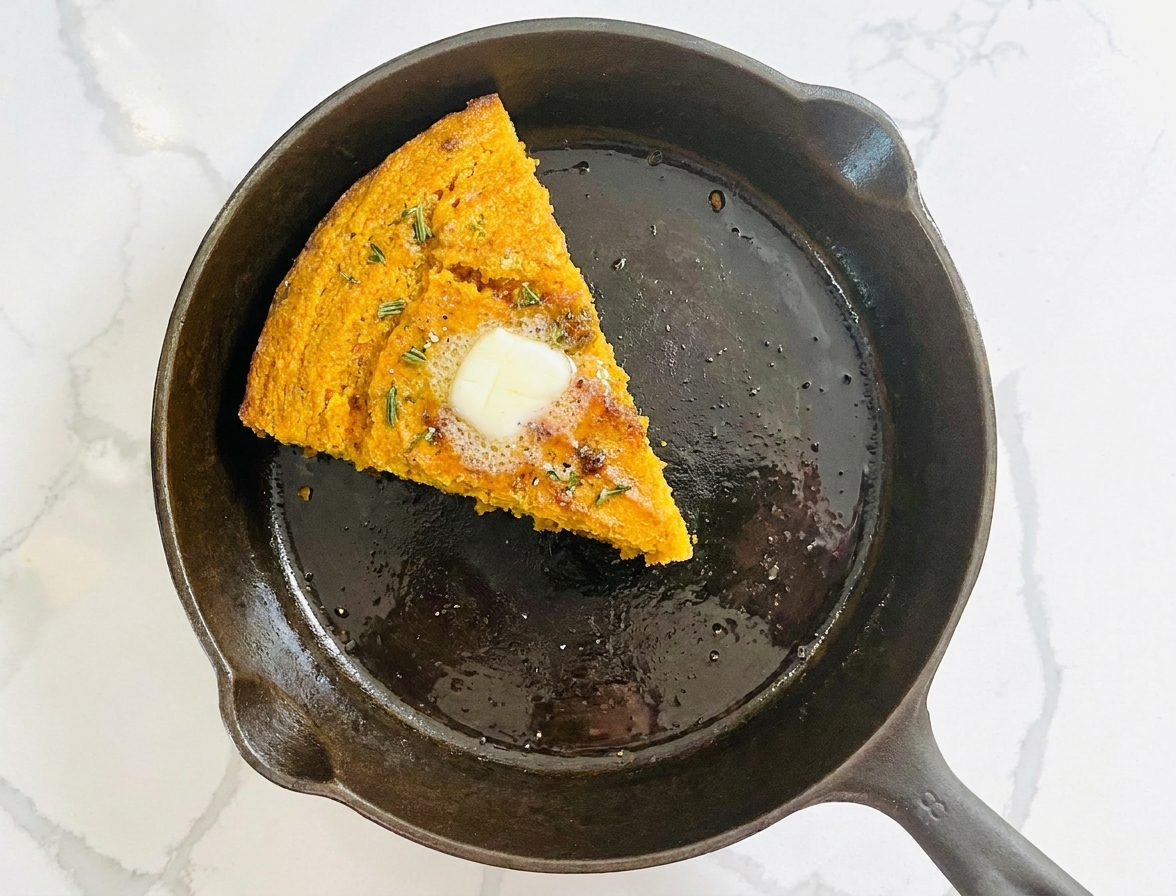
For a savory version, reduce the sugar and bump the salt a touch. Add chopped fresh rosemary or thyme (or both), plus black pepper. If you like it extra savory, fold in grated sharp cheddar.
Serving ideas
- With chili or soup: This is the obvious pairing, and it is perfect. The sweet version is great with smoky chili. The savory herb version is especially good with creamy soups.
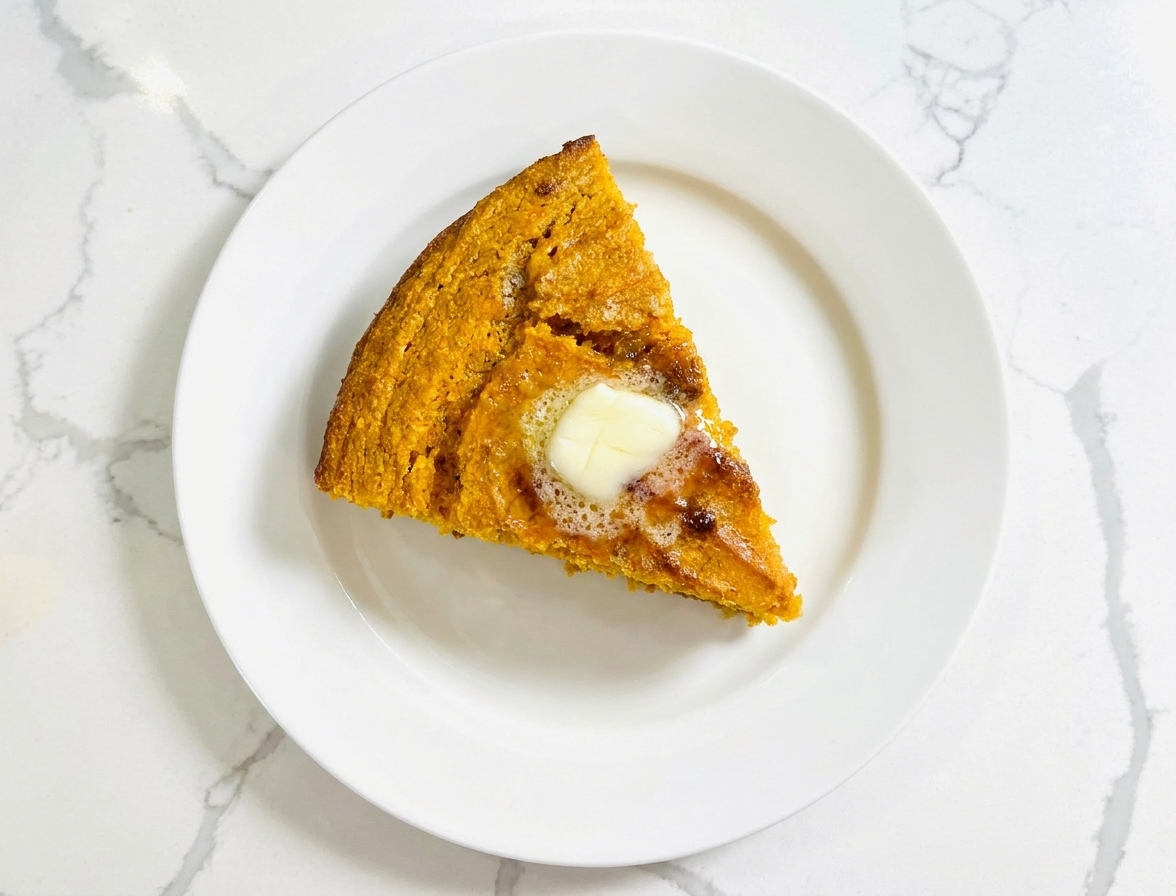
- With butter and flaky salt: My simplest favorite. Warm slice, butter, tiny pinch of salt. Done.
- With honey butter: Mash softened butter with honey and a pinch of cinnamon.
- For brunch: Serve alongside scrambled eggs and sautéed greens. The savory version shines here.
- Turn leftovers into breakfast: Toast slices in a skillet with a little butter until the edges crisp, then top with a fried egg.
Storage and reheating
- Room temperature: Store tightly wrapped for up to 2 days. I like foil for keeping the crust from getting too soft.
- Refrigerator: Up to 5 days, wrapped well. Rewarm to bring back tenderness.
- Freezer: Slice, wrap individual pieces, and freeze up to 2 months. Thaw at room temperature or reheat straight from frozen.
- Reheating: Warm slices in a 300°F oven until heated through, or toast in a skillet with a little butter for the best texture.
Common mistakes
- Using pumpkin pie filling. It is already sweetened and spiced, and it throws off both flavor and texture.
- Skipping the hot pan. You will still get cornbread, but you will miss the crisp edge that makes skillet cornbread feel like skillet cornbread.
- Making the batter too thin. Thin batter bakes up denser and can feel gummy in the center. Fix it with a spoonful or two of cornmeal before it goes in the oven.
- Overbaking to chase a dry toothpick. Pumpkin batters often leave a few moist crumbs. If you bake until the toothpick is bone-dry, you can end up with dry edges.
- Cutting too soon. Give it at least 10 minutes so it can set and slice cleanly.
FAQ
What should pumpkin cornbread batter look like?
Thick and spoonable. Think muffin batter: it should mound slightly when you drop it in the skillet and then slowly settle. If it pours like pancake batter, it is too thin.
How do I know the center is done?
Use a toothpick or thin skewer in the very center. You want moist crumbs, not wet batter. I also like the fingertip test: the center should spring back when gently pressed. If you have an instant-read thermometer, a center temperature around 200°F is a helpful target for quick breads.
Do I have to use a cast-iron skillet?
No, but it helps with browning and heat retention. A metal cake pan works too. If you skip cast iron, you can still preheat the pan (if it is oven-safe) to mimic the crust effect.
Can I make it less sweet?
Yes. Reduce the sugar and consider the savory herb option. Pumpkin itself reads slightly sweet, so even a small amount of added sugar will still taste balanced.
Why is my cornbread gummy in the middle?
Usually it is underbaked or the batter was too wet. Pumpkin puree varies in moisture. Next time, aim for a thicker batter and use the center doneness tests before pulling it from the oven.
The recipe
Skillet Pumpkin Cornbread
A tender, lightly sweet pumpkin cornbread baked in a hot skillet for crisp edges and a moist center. Includes an easy savory herb option.
- Prep
- 10 minutes
- Cook
- 18 to 22 minutes
- Total
- 30 minutes
- Yield
- 8 slices
Ingredients
- 1 cup yellow cornmeal (medium grind)
- 1 cup all-purpose flour
- 1 tablespoon baking powder
- 1 teaspoon fine salt (use 1 1/4 teaspoons for savory herb option)
- 1 teaspoon ground cinnamon (optional but lovely)
- 1/4 teaspoon ground nutmeg (optional)
- 2 large eggs
- 1 cup pumpkin puree (plain, not pie filling)
- 3/4 cup milk or buttermilk
- 1/3 cup packed brown sugar (reduce to 1 to 2 tablespoons for savory herb option)
- 1/3 cup melted unsalted butter (or neutral oil)
- 1 teaspoon vanilla extract (optional, omit for savory herb option)
- 1 tablespoon butter or neutral oil, for the skillet
- Savory herb option add-ins: 1 tablespoon chopped fresh rosemary or thyme (or a mix), 1/2 teaspoon black pepper
Instructions
- Heat the oven and skillet. Place a 10-inch cast-iron skillet in the oven and preheat to 425°F. Let the skillet heat for at least 10 minutes once the oven is hot.
- Mix the dry ingredients. In a large bowl, whisk together the cornmeal, flour, baking powder, salt, and (if using) cinnamon and nutmeg.
- Mix the wet ingredients. In a medium bowl, whisk the eggs until well blended. Whisk in the pumpkin puree, milk or buttermilk, brown sugar, melted butter, and vanilla (if using).
- Combine gently. Pour the wet mixture into the dry mixture. Fold with a spatula just until no dry streaks remain. The batter should be thick and spoonable, like muffin batter. If it looks pourable, fold in 1 to 2 tablespoons more cornmeal. If it looks stiff and dry, add milk 1 tablespoon at a time.
- Add savory herbs if making the savory version. Fold in the chopped herbs and black pepper. (Also be sure you reduced the sugar and increased the salt as listed in the ingredients.)
- Grease the hot skillet. Carefully remove the hot skillet from the oven. Add 1 tablespoon butter or oil and swirl to coat the bottom and sides. It should sizzle.
- Bake. Scrape the batter into the skillet and smooth the top. Bake for 18 to 22 minutes, until the top looks set and lightly golden.
- Test the center for doneness. Insert a toothpick or thin skewer into the center. You want moist crumbs, not wet batter. Also gently press the center: it should spring back. If needed, bake 2 to 4 minutes longer.
- Cool briefly, then slice. Cool in the skillet for 10 minutes. Slice into wedges and serve warm.
Notes
- Pan size note: A 9-inch skillet will bake thicker and may need a few extra minutes. A 12-inch skillet bakes thinner and may finish a few minutes sooner.
- Sweetness level: This is intentionally lightly sweet. If you like cornbread more dessert-like, increase the brown sugar to 1/2 cup.
- Make-ahead: The cornbread is best warm, but leftover slices toast beautifully in a skillet with a little butter.