Two dialed-in chocolate chip cookie recipes plus the technique tweaks that control spread, chew, and crunch. Bake your ideal cookie every time.
recipes
Baking with Gluten-Free Flours

Elena Martinez
Elena Martinez is a former bakery manager turned full-time food writer and recipe developer. With over a decade of experience translating professional culinary techniques into approachable home cooking, she believes that a great meal doesn't require a culinary degree or expensive ingredients.
Created September 21, 2026
Last updated September 21, 2026
Gluten-free baking can feel like trying to rebuild a bridge without the beams. Wheat flour brings gluten, and gluten is the quiet workhorse that traps air, gives structure, and keeps your muffins from crumbling into sad little pebbles. The good news is you can absolutely get tender cakes, chewy cookies, and bouncy pancakes with gluten-free flours. You just need to know what each flour wants, then support it with the right moisture, fat, and binders.
This guide focuses on the big three many home bakers start with: almond flour, coconut flour, and oat flour. They’re widely available, genuinely delicious, and each one has a personality that shows up the moment it hits the bowl.

Before you swap
In wheat baking, gluten forms when flour meets liquid and gets mixed. That stretchy network:
- Holds gas from baking powder, baking soda, or yeast so your bake rises instead of spreading.
- Provides structure so slices stay intact and crumbs look, well, crumb-like.
- Manages moisture by absorbing water in a predictable way.
Gluten-free flours can’t replicate that on their own, so we lean on a few tools: eggs, starches, binders (like psyllium or xanthan), plus smarter mixing and resting.
The three flours
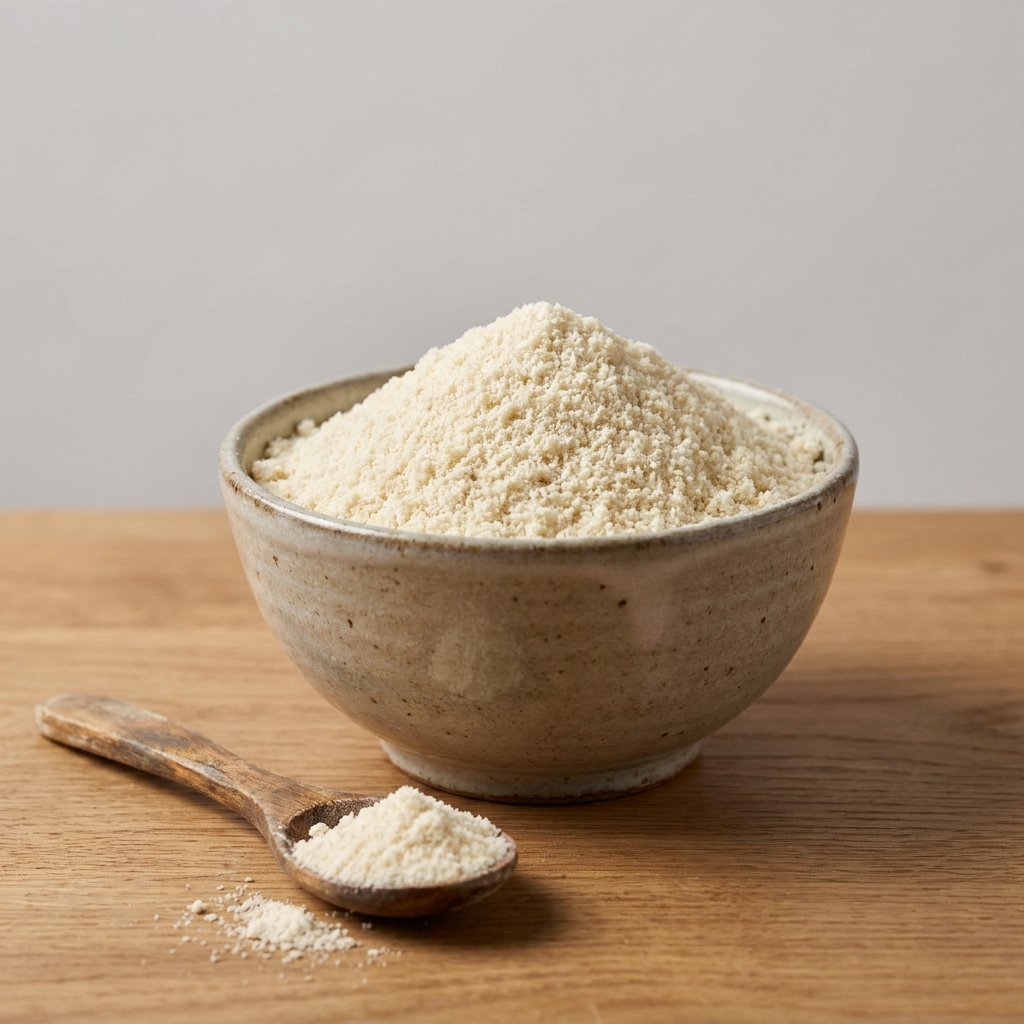
Almond flour
What it is: Finely ground blanched almonds (usually). It’s high in fat and naturally moist.
Almond flour vs. almond meal: Almond flour is typically finer and made from blanched almonds, which gives you a lighter, more cake-friendly crumb. Almond meal is coarser and often includes skins, which can read more rustic and a bit denser. Both are tasty, but they are not always interchangeable if you are chasing a specific texture.
- Best for: Cookies , bars, quick breads, cake layers (especially snacking cakes), and tender muffins.
- Texture tendency: Moist and plush, but can be fragile or a bit dense if used alone.
- Flavor: Gently nutty, slightly sweet.
Elena tip: Almond flour browns quickly thanks to its fats and the way its proteins and natural sugars react in the oven. If the top is getting too dark before the center is set, tent loosely with foil for the last third of baking.
Coconut flour
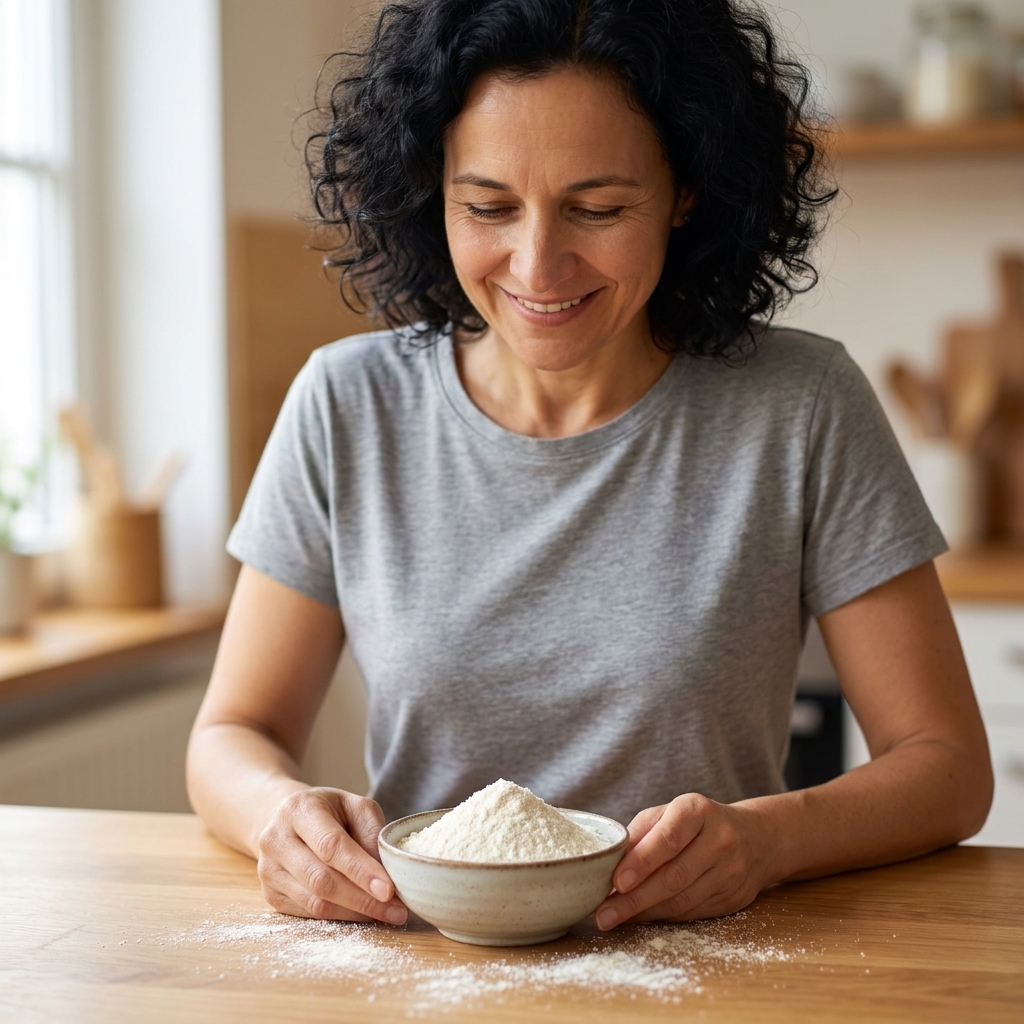
What it is: Dried coconut meat ground into a fine powder. It is extremely absorbent.
- Best for: Pancakes, muffins, quick breads, and recipes designed specifically for coconut flour.
- Texture tendency: Can go dry and crumbly fast if the recipe is not built for it.
- Flavor: Mild coconut, sometimes more noticeable in lightly flavored bakes.
Elena tip: Coconut flour is not a 1:1 swap. It behaves like a sponge. You typically use tablespoons, not cups, plus more eggs, more liquid, and often a little extra fat. Let it sit for a few minutes and watch it thicken before you decide what it needs.
Oat flour
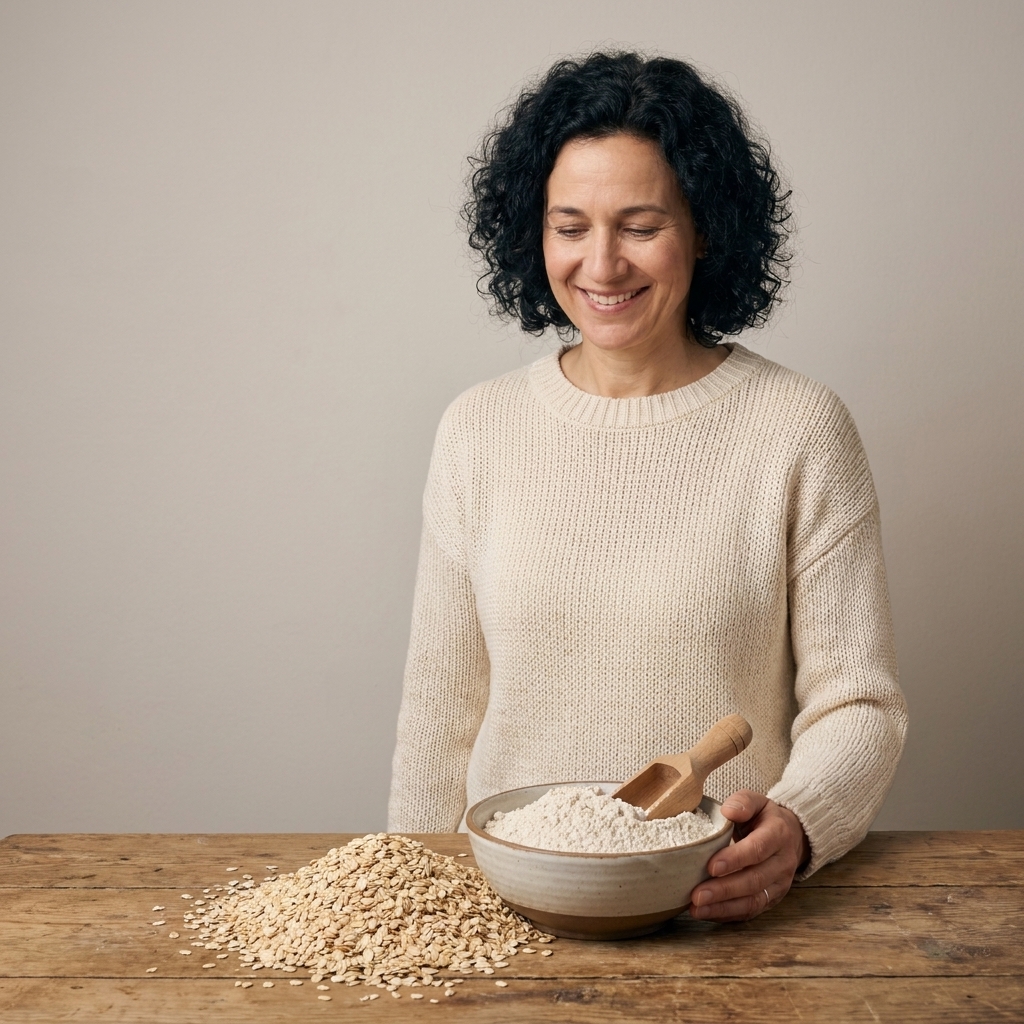
What it is: Ground oats. You can buy it or blitz rolled oats in a blender until fine.
- Best for: Muffins, pancakes, snack cakes, and cookies when you want a cozy, wheat-adjacent vibe.
- Texture tendency: Soft and tender, sometimes slightly gummy if underbaked or if there’s too much liquid.
- Flavor: Warm, lightly sweet, and wholesome.
Important note: If you need truly gluten-free baking, look for certified gluten-free oats. Regular oats are often cross-contaminated during processing. Also, a small number of people still react to oats even when certified, so follow your body and your doctor’s guidance if oats have been an issue.
Swap rules
Rule 1: Use a scale
Gluten-free flours vary wildly in density. A cup of coconut flour is a totally different world than a cup of almond flour. If you have a kitchen scale, this is where it earns its counter space.
Approximate reference weights (brands vary):
- Almond flour: about 100 g per cup
- Oat flour: about 95 g per cup
- Coconut flour: about 120 g per cup (but you rarely use a full cup)
If your recipe is in cups only, spoon the flour into the cup and level it off. Do not pack it down.
Rule 2: Add structure
When wheat flour leaves the party, you need a plan for structure. Pick one or two:
- Eggs: The easiest binder for cakes, muffins, and pancakes.
- Xanthan gum: Great for chew and hold in cookies and quick breads. A little goes a long way.
- Psyllium husk powder: Especially helpful for bread-like texture and sliceability.
- Ground flax or chia: Adds binding and moisture retention, best in rustic bakes.
Quick guide: For most muffins and quick breads, start with 1/4 to 1/2 teaspoon xanthan gum per cup of gluten-free flour. Treat that as a starting point. If your flour blend already includes gums, you may not need any. If you are using psyllium husk powder, start low and follow a tested recipe when possible.
Rule 3: Rest the batter
Oat flour and coconut flour benefit from a short rest so they can fully hydrate. Ten minutes on the counter can be the difference between “why is this gritty?” and “wow, that’s tender.”
Rule 4: Watch doneness
Almond flour browns fast. Oat flour can look done before the center sets. Coconut flour can go from perfect to dry if you overshoot.
Use visual cues and, for cakes, a thermometer if you have one. For many butter or oil-based cakes, an internal temp around 200 to 205°F in the center is a helpful ballpark. Pair that with common sense signs: the top springs back lightly, edges pull just a bit from the pan, and a toothpick comes out with moist crumbs (not wet batter).
How to swap
Almond flour swaps
Best approach: Replace part of the wheat flour, not all of it, unless you are using a recipe written for almond flour.
- In cookies and bars: Start by swapping 25% of the all-purpose flour with almond flour by weight. Almond flour adds tenderness and a slightly chewy, rich bite.
- In cakes and muffins: Swap 20 to 30% and add an extra egg yolk if the batter seems thin or you want more richness.
What to watch: Almond flour does not absorb water like wheat. If you swap too much, the bake can feel oily or fragile. Balance it with a small amount of starch (like tapioca or cornstarch) or a binder if you are going fully gluten-free.
Coconut flour swaps
Best approach: Use coconut flour only in recipes designed for it, or swap very cautiously.
- Rule of thumb: Coconut flour is several times more absorbent than wheat flour, so small amounts make a big impact.
- Conservative swap: Replace up to 10 to 15% of wheat flour with coconut flour by weight, then increase liquid slightly and consider adding one extra egg. You may also need a touch more fat (oil, butter, or yogurt) to keep the crumb tender.
What to watch: If your batter thickens dramatically after sitting, that is coconut flour doing its thing. Let it rest, then assess. If it becomes scoopable like cookie dough when it should be pourable, add liquid one tablespoon at a time.
Oat flour swaps
Best approach: Oat flour can often replace a portion of wheat flour smoothly, especially in muffins, pancakes, and softer cookies.
- In muffins and quick breads: Swap 25 to 50% of the wheat flour for oat flour by weight.
- In pancakes and waffles: You can often go higher, especially with eggs in the mix. A short rest helps.
What to watch: Oat flour can read a little gummy when underbaked. Give it an extra few minutes and let the bake cool before slicing.
Support team
If you are trying to bake fully gluten-free with these flours, here are the add-ins that make everything feel more predictable:
- Tapioca starch: Adds stretch and chew, great for cookies and soft cakes.
- Arrowroot or cornstarch: Lightens the crumb and helps crisp edges.
- Greek yogurt or sour cream: Adds moisture and tenderness, especially with oat flour.
- Brown sugar or honey: Helps retain moisture and improves chew.
- Extra yolk: My bakery-manager secret for richness and structure in delicate cakes.
Elena tip: If you want the “like a bakery” vibe, blends tend to behave better than a single flour. These flours are wonderful, but they do not behave like a commercial 1:1 gluten-free baking mix (which is usually built on starches plus binders). Use 1:1 blends when you want easy swaps. Use almond, oat, and coconut flour when you want their specific flavors and textures.
Troubleshooting
Dry, crumbly muffins
- Likely culprit: too much coconut flour, not enough fat, or overbaking.
- Fix: reduce coconut flour next time, add 1 to 2 tablespoons oil or melted butter, and bake just until set.
Gummy center
- Likely culprit: oat flour underbaked, or batter too wet.
- Fix: bake longer, cool fully before slicing, and consider reducing liquid by a few tablespoons.
Cookies that spread into puddles
- Likely culprit: too much almond flour, warm dough, or not enough binder.
- Fix: chill dough 30 to 60 minutes, add 1 to 2 tablespoons starch per batch (tapioca, cornstarch, or arrowroot), or add a small pinch of xanthan gum.
Gritty texture
- Likely culprit: flour not hydrated (common with oat and coconut).
- Fix: rest batter 10 minutes before baking.
Simple blends
If you want a more wheat-like result, blends tend to behave better than a single flour. Here are three simple mixes (measure by weight if possible):
Soft bake blend
- 60% oat flour
- 30% almond flour
- 10% tapioca starch
This blend bakes up tender and forgiving. It is my pick for banana bread and blueberry muffins.
Chewy cookie blend
- 50% almond flour
- 30% oat flour
- 20% tapioca starch
Chill the dough and do not skip the salt. Gluten-free dough needs that flavor boost.
Coconut helper
- Add coconut flour as 5 to 10% of your total flour blend
Think of coconut flour as a moisture manager. A little can improve thickness and structure. Too much dries everything out, so increase in small steps.
Starter recipes
If you are new to gluten-free baking, pick recipes that are naturally suited to these flours. You will learn faster and waste fewer ingredients.
Almond Flour Cookies
Why it works: Almond flour loves buttery, simple doughs. No gluten required.
Yields: about 16 small cookies
- 2 cups almond flour
- 1/4 cup sugar
- 1/4 teaspoon fine salt
- 6 tablespoons butter, melted and cooled slightly
- 1 teaspoon vanilla
Mix until a soft dough forms. Rest 10 minutes. Scoop into small mounds and lightly flatten. Bake at 325°F for 10 to 14 minutes, until lightly golden on the edges. Cool fully for the best crisp-tender bite.
Oat Flour Banana Muffins
Why it works: Oat flour pairs beautifully with bananas and stays tender.
Yields: 12 muffins
- 2 ripe bananas, mashed
- 2 eggs
- 1/3 cup oil or melted butter
- 1/2 cup brown sugar
- 1 1/2 cups oat flour
- 1 1/2 teaspoons baking powder
- 1/2 teaspoon baking soda
- 1/2 teaspoon salt
Heat oven to 350°F. Line a 12-cup muffin pan or grease it well. Mix wet ingredients, then stir in dry ingredients just until combined. Rest batter 10 minutes, then scoop into the pan. Bake 16 to 20 minutes, until the tops spring back and a toothpick comes out with moist crumbs.
Coconut Flour Pancakes
Why it works: Pancakes are the perfect place for coconut flour because the eggs and liquid do the heavy lifting.
Yields: about 6 to 8 small pancakes
- 3 tablespoons coconut flour
- 3 eggs
- 1/3 cup milk of choice
- 1 tablespoon melted butter or oil
- 1/2 teaspoon baking powder
- Pinch of salt
Whisk until smooth. Rest 5 minutes so the batter thickens to a pourable, creamy consistency. Cook low and slow on a lightly greased skillet, about 2 to 3 minutes per side. Coconut flour pancakes brown quickly, so keep the heat gentler than you think you need.
FAQ
Can I swap almond flour 1:1 for all-purpose flour?
Not reliably. Almond flour lacks gluten and absorbs moisture differently. For best results, swap it in partially (about 20 to 30% in cakes, 25% in cookies) or use a recipe written for almond flour.
Why does coconut flour need so many eggs?
Because coconut flour is extremely absorbent and also needs binders for structure. Eggs add liquid, protein, and emulsification, which helps coconut flour bake up tender instead of sandy.
Is oat flour actually gluten-free?
Oats are naturally gluten-free, but cross-contact is common. If you are baking for celiac disease or serious sensitivity, buy certified gluten-free oat flour or certified oats to grind yourself. And if oats have ever bothered you, even certified may not be the right choice.
Do I need xanthan gum?
Not always. Cookies and bars with almond flour can succeed without it, especially if they contain eggs. But a small amount can noticeably improve hold and chew in many gluten-free batters. If your flour blend already contains a gum, skip adding more until you see how it behaves.
Parting pep talk
If your first batch is not perfect, you did not fail. Gluten-free baking is a little more like tuning a guitar than following GPS. Make one change at a time, take notes, and trust that you are learning the language of new ingredients. And if all else fails, warm it up and add a scoop of ice cream. I have never seen that solution disappoint.