
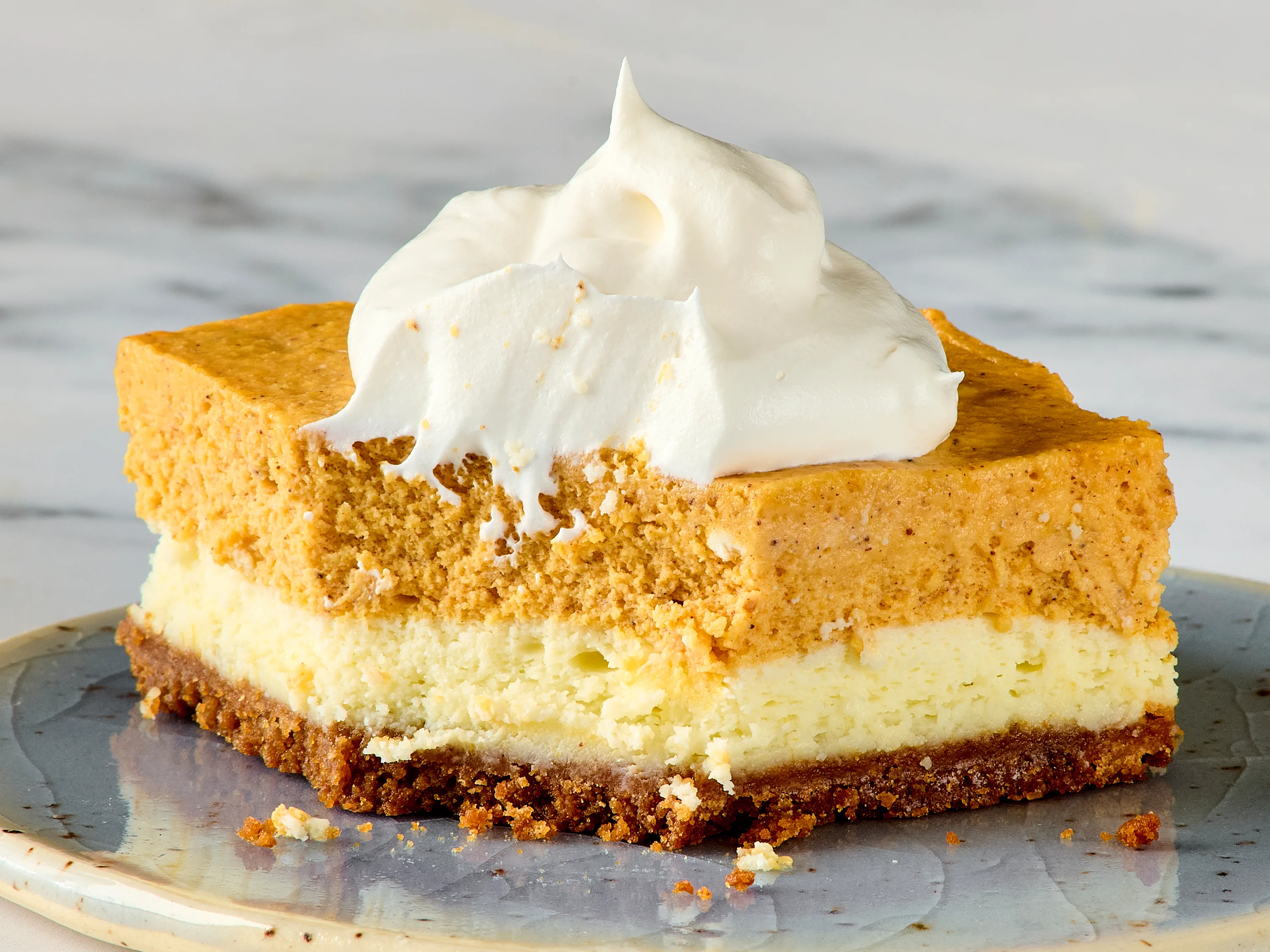
The first time I made pumpkin cheesecake for a Sunday dinner, I treated it like a regular cheesecake and just stirred in pumpkin puree like it was no big deal. It tasted great, but the texture was softer than I wanted and the top had that slightly damp, custardy wobble that screams “I cut it too soon.” Pumpkin is wonderful, but pumpkin puree can add enough extra moisture to soften the set, especially if your can (or homemade batch) is on the watery side.
So this version is built around control. We tighten up the puree if it needs it (I do a quick drain in a strainer lined with paper towels), we mix the batter in a way that stays silky instead of airy, and we bake with steady, gentle heat so the center sets like a dream.

If you’ve been nervous to bake cheesecake, I promise this is the kind you can do on a normal weeknight schedule. The actual work is straightforward. The patience part is the chilling. Give it the full chill time, and you’ll get neat slices that look bakery-level, even if your kitchen is full of little hands asking when dessert is ready.
One more note before you start: pumpkin cheesecake is not pumpkin pie. The goal is a smooth, rich custard set by eggs and cream cheese. Anything that adds extra water or extra air pushes you away from that velvety texture. That is why you will see me be a little fussy about checking the puree, scraping the bowl, and mixing on low.
Why this recipe works
- Moisture control keeps the filling creamy, not wet. Pumpkin puree varies a lot. Draining it briefly (or blotting) removes excess water so the cheesecake sets cleanly.
- Low and slow mixing prevents bubbles. Overmixing whips in air that expands in the oven and collapses as it cools, which can cause cracks and a slightly spongy texture.
- Gentle baking reduces curdling. Cheesecake is a custard. Moderate heat and an optional water bath help the eggs set without tightening too fast.
- Chilling finishes the set. Even when the cheesecake looks done, it needs time in the fridge to fully firm up and slice neatly.
Ingredient notes
Pumpkin puree
Use plain pumpkin puree, not pumpkin pie filling. Pumpkin puree varies a lot by brand and batch. If it looks loose or watery when you open the can, drain it: spoon it into a fine mesh strainer lined with paper towels or cheesecloth and let it sit 20 to 30 minutes. You are not trying to dry it out completely, just remove the extra liquid that would otherwise weep into the custard.
Cream cheese
Full-fat block cream cheese gives the best texture. Let it come to room temperature so it blends smoothly with no little lumps. Cold cream cheese is the number one cause of a bumpy batter.
Sour cream
Sour cream adds tang and keeps the texture plush. Room temperature helps it incorporate quickly so you do not need to overmix.
Eggs
Eggs set the cheesecake. Add them last and mix on low just until each one disappears. Too much mixing here is where a lot of air gets trapped.
Spices and vanilla
Cinnamon, ginger, nutmeg, and a small pinch of cloves make it taste like fall without turning it into potpourri. Vanilla rounds everything out.
Graham cracker crust
Prebaking the crust helps it stay crisp under the creamy filling. If you like a slightly thicker crust, press a little extra up the sides of the pan.
Equipment you will need
- 9-inch springform pan
- Roasting pan (if using a water bath)
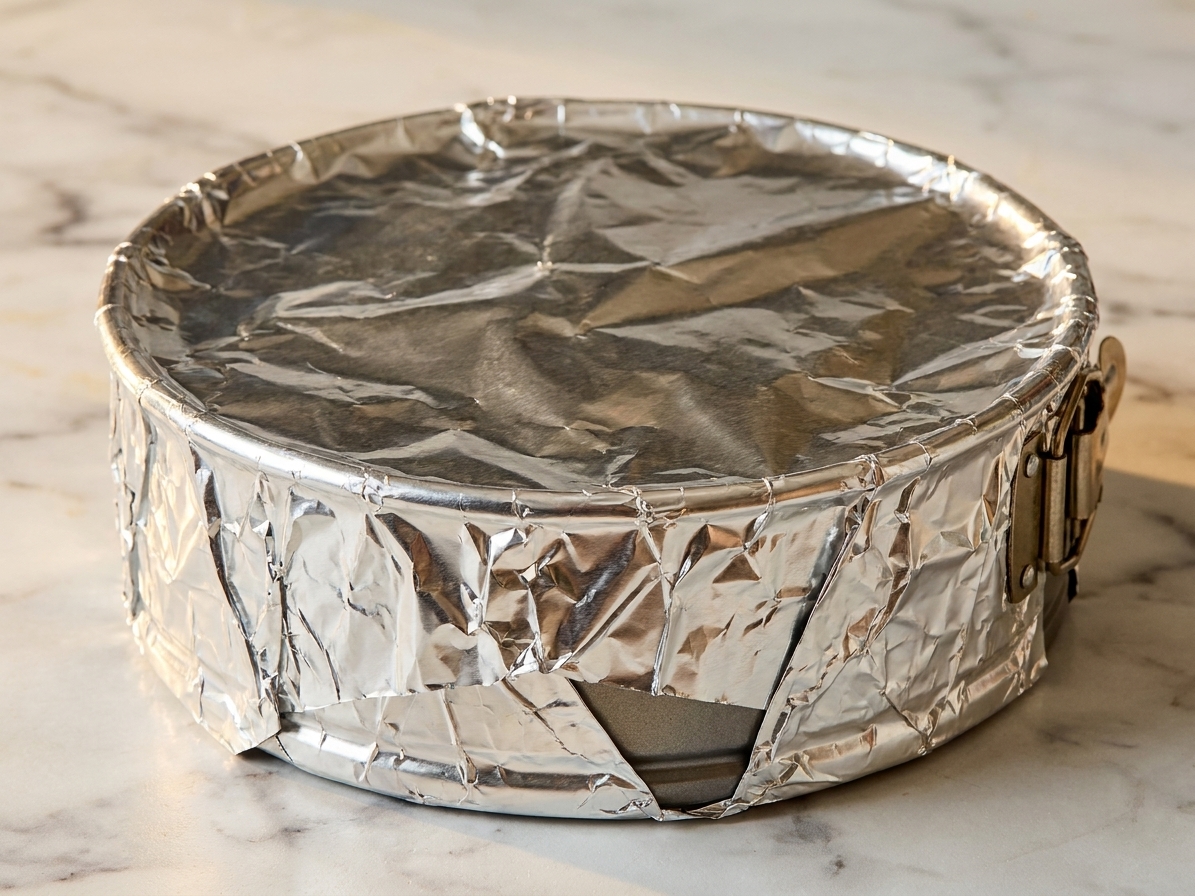
- Heavy-duty aluminum foil (for water bath protection)
- Stand mixer or hand mixer
- Rubber spatula (for scraping, very important here)
- Fine mesh strainer and paper towels or cheesecloth (for draining puree if needed)
- Instant-read thermometer (optional but very helpful)
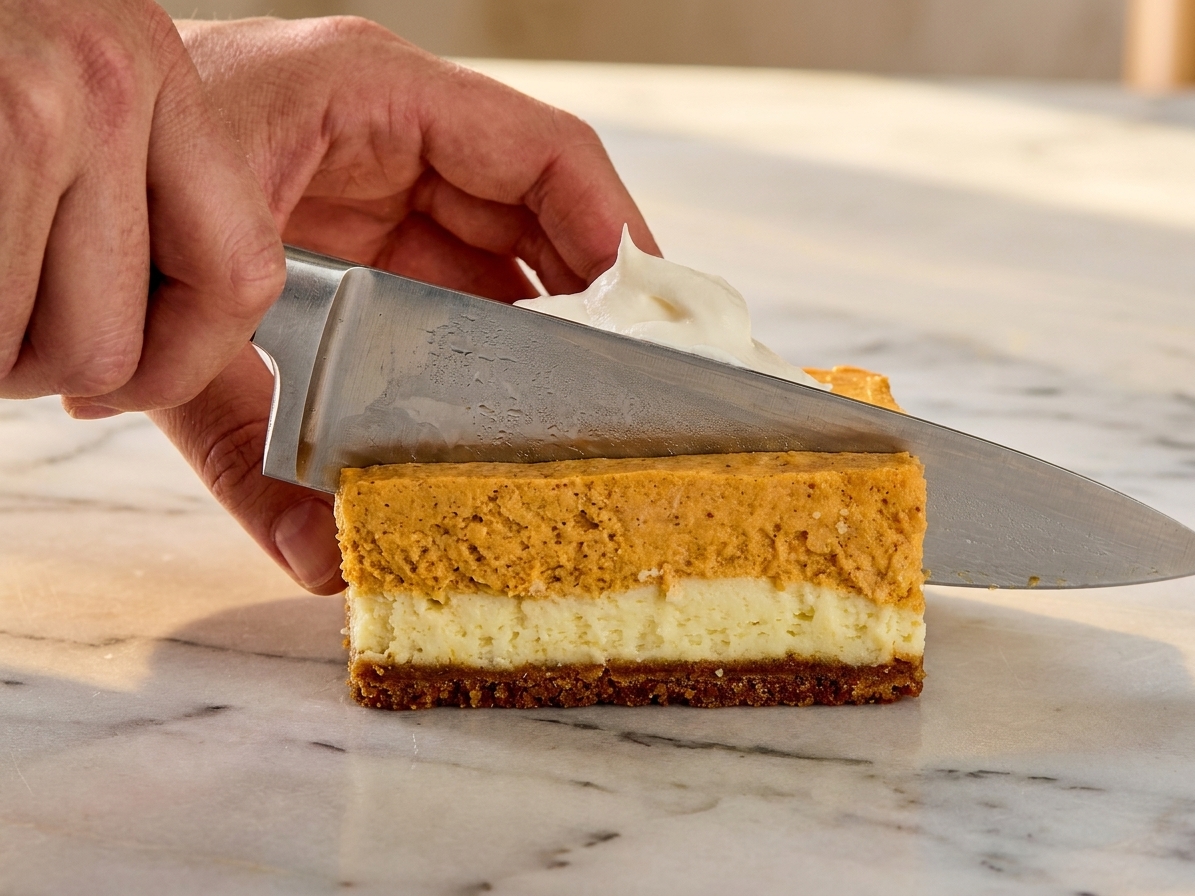
- Long, thin knife for clean slicing
Pro tips
- Do a quick “puree check” before you mix. If pumpkin puree looks glossy and loose, drain it. If it sits in a mound on a spoon, you are fine.
- Mix on low and scrape often. I scrape the bowl and beater after the cream cheese and sugar, again after pumpkin and sour cream, and again before eggs. This is how you avoid lumps without overbeating.
- Watch the wobble, not the clock. The edges should look set and slightly puffed, while the center should jiggle like gelatin, not slosh like liquid.
- Cool gradually. A sudden temperature drop can encourage cracks. Let it cool in the turned-off oven with the door cracked, then cool fully at room temperature before refrigerating.
- For clean slices: use a hot, dry knife. Dip the knife in hot water, wipe it dry, slice, then repeat for each cut.
Substitutes that work
- Graham crackers: Swap in gingersnaps or speculoos cookies for a spicier crust. Use the same crumb-to-butter ratio.
- Sour cream: Full-fat Greek yogurt works well and keeps the tangy balance.
- Spices: Pumpkin pie spice can replace the individual spices. Use it to taste, but do not overdo it.
- Butter: If you only have salted butter, reduce the added salt in the crust.
Variations
- Pecan topping: Sprinkle toasted chopped pecans over the chilled cheesecake right before serving for crunch.
- Maple pumpkin cheesecake: Replace some of the sugar with maple syrup, but note it adds liquid. If you do this, draining the puree becomes even more important.
- Extra tang: Add a little lemon zest to the batter for a subtle brightness that keeps the pumpkin from tasting flat.
Serving ideas
- Serve with lightly sweetened whipped cream and a pinch of cinnamon.
- Offer a warm caramel sauce on the side for people who want it sweeter.
- Pair with strong coffee or chai.
- For a holiday table, garnish each slice with a small dollop of whipped cream and a few crushed gingersnap crumbs.
Storage and reheating
- Refrigerator: Cover and refrigerate for up to 5 days. Cheesecake dries out when exposed to fridge air, so wrap well.
- Freezer: Freeze chilled cheesecake slices on a sheet pan until firm, then wrap tightly and store up to 2 months. Thaw overnight in the fridge.
- Serving from cold: For the cleanest slices, cut straight from the fridge. For the creamiest bite, let slices sit at room temperature 10 to 15 minutes before eating.
Common mistakes
- Skipping the puree drain when needed: If your puree is watery, the cheesecake can bake up softer and may weep at the cut edge.
- Overmixing after adding eggs: This whips in air, which can lead to a puffed top, cracks, and a less silky texture.
- Baking too hot: High heat tightens the eggs quickly, which can cause a grainy texture or big cracks.
- Cutting too soon: Warm cheesecake is not fully set. Chill it long enough to get those clean, confident slices.
- Water bath leaks: If using a water bath, wrap the springform pan thoroughly in heavy-duty foil so water does not sneak into the crust.
FAQ
Do I have to use a water bath?
No. A water bath is insurance, not a requirement. It helps the cheesecake bake evenly and reduces the chance of cracks. If you skip it, keep the oven temperature moderate and avoid overbaking.
How do I know when pumpkin cheesecake is done?
The edges should be set and the center should still jiggle slightly when you gently nudge the pan. If you use a thermometer, aim for about 150 to 155 F in the center.
Why did my cheesecake crack?
Cracks usually come from too much air in the batter, baking too hot, or cooling too fast. The good news is whipped cream covers everything, and the flavor will still be wonderful.
Can I make it ahead?
Yes, and I recommend it. Cheesecake slices best after a long chill. Make it the day before serving if you can.
Can I use homemade pumpkin puree?
You can, but homemade puree is often wetter than canned. Drain it well and consider blotting it until it is thick, otherwise the texture can turn soft.
The recipe
Pumpkin Cheesecake
A creamy baked pumpkin cheesecake with warm spices in a crisp graham cracker crust. Includes options for draining pumpkin puree, using a water bath, and the chill time you need for clean slices.
- Prep
- 30 minutes
- Cook
- 1 hour 10 minutes
- Total
- 8 hours 10 minutes
- Yield
- 12 slices
Ingredients
- 1 1/2 cups graham cracker crumbs (about 10 to 12 full sheets)
- 3 tbsp granulated sugar
- 1/2 tsp fine salt
- 6 tbsp unsalted butter, melted
- 24 oz full-fat cream cheese (3 blocks), room temperature
- 1 cup granulated sugar
- 1 tbsp cornstarch
- 1/4 tsp fine salt
- 1 cup pumpkin puree (not pumpkin pie filling)
- 3/4 cup sour cream, room temperature
- 2 tsp vanilla extract
- 1 1/2 tsp ground cinnamon
- 1 tsp ground ginger
- 1/4 tsp ground nutmeg
- Pinch of ground cloves
- 3 large eggs, room temperature
- Boiling water, for an optional water bath
Instructions
- Prep the pan and oven. Heat the oven to 350 F. Lightly grease a 9-inch springform pan. For extra insurance against leaks, place a parchment round on the bottom (optional).
- Control pumpkin moisture if needed. If your pumpkin puree looks loose, glossy, or watery, spoon it into a fine mesh strainer lined with paper towels or cheesecloth. Let it drain 20 to 30 minutes while you make the crust. Measure 1 cup after draining.
- Make the graham crust. In a bowl, mix graham crumbs, sugar, salt, and melted butter until the crumbs look evenly moistened like wet sand. Press firmly into the bottom of the pan and about 1 inch up the sides. Use a flat-bottomed measuring cup to pack it tight.
- Prebake the crust. Bake for 10 minutes. Set on a rack to cool while you make the filling. Reduce oven temperature to 325 F.
- Optional: set up a water bath. If using a water bath, wrap the outside of the springform pan in 2 to 3 layers of heavy-duty foil, covering the bottom and sides completely.
- Mix the base on low. In a stand mixer fitted with the paddle (or a large bowl with a hand mixer), beat the cream cheese on low until smooth, about 1 to 2 minutes. Add sugar, cornstarch, and salt, then mix on low until fully blended. Scrape the bowl and paddle well.
- Add pumpkin, sour cream, and flavorings. Add pumpkin puree, sour cream, vanilla, cinnamon, ginger, nutmeg, and cloves. Mix on low just until smooth. Scrape the bowl again, especially the bottom.
- Add the eggs gently. Add eggs one at a time, mixing on low only until each egg disappears into the batter. Do not overmix.
- Fill the crust. Pour the batter into the cooled crust and smooth the top.
- Bake. Place the springform pan on a rimmed baking sheet. If using a water bath, set the wrapped springform pan in a roasting pan and carefully add boiling water to come about halfway up the sides of the springform pan. Bake at 325 F for 60 to 75 minutes, until the edges are set and the center still has a gentle jiggle.
- Cool slowly. Turn off the oven, crack the oven door open, and let the cheesecake sit in the oven for 45 to 60 minutes. Remove (and carefully remove from the water bath if using), then cool completely at room temperature.
- Chill thoroughly. Cover and refrigerate at least 6 hours, ideally overnight.
- Slice cleanly. Run a thin knife around the edge to loosen. Release the springform ring. For sharp slices, dip a long knife in hot water, wipe dry, then slice. Repeat between cuts.
Notes
Pumpkin puree consistency varies. If your puree is thick and holds its shape, you can skip draining. If it is loose or watery, drain it briefly to avoid a soft set.
Water bath optional. It helps prevent cracks and promotes even baking, but you can still get a beautiful cheesecake without it by baking at 325 F and avoiding overbaking.
Doneness cue. The center should jiggle like gelatin, not ripple like liquid. If you use a thermometer, the center around 150 to 155 F is a good target.