
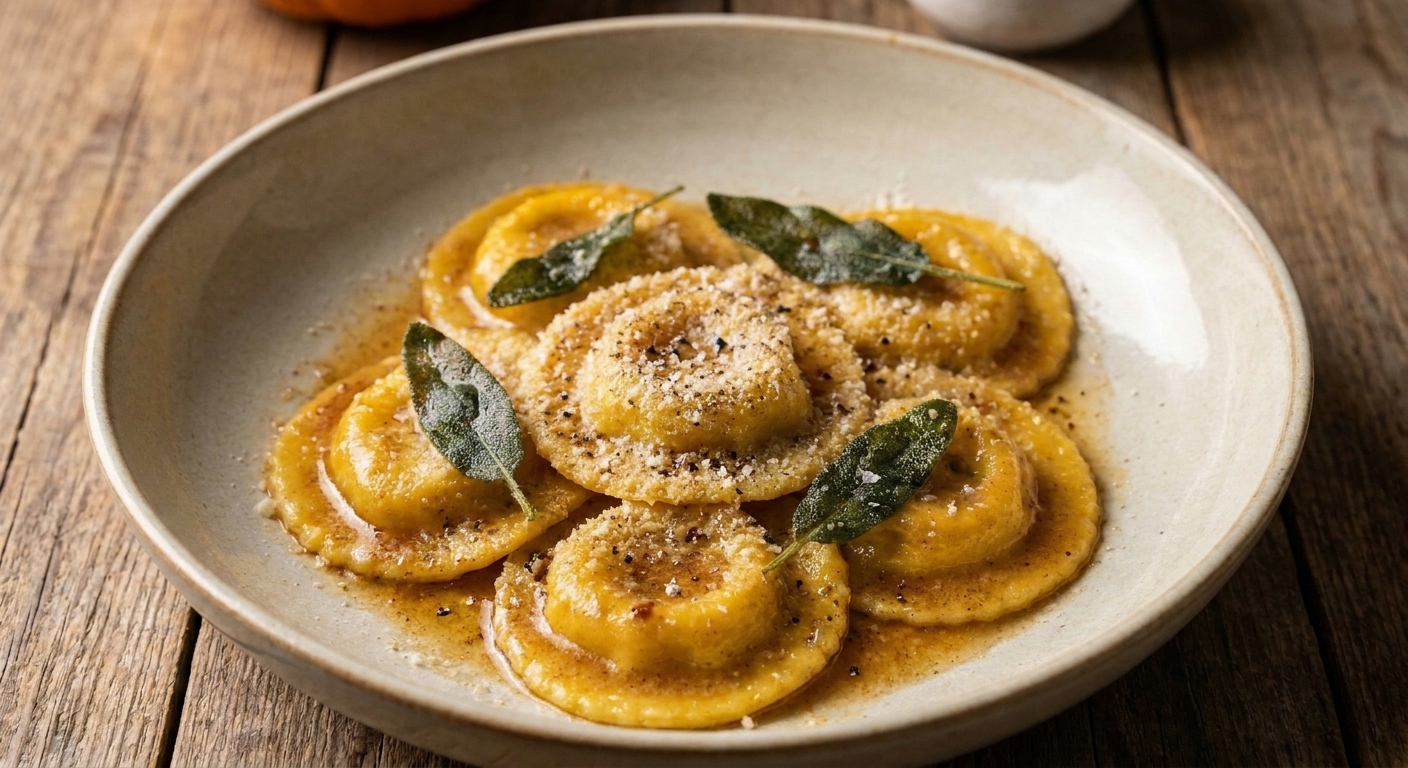
The first time I made pumpkin ravioli at home, I did what I think most of us do when we are trying to be “extra” on a Tuesday: I winged it. I stirred pumpkin puree into ricotta, tasted it, loved it, and then watched half my ravioli split open in the pot like little life rafts.
Here is what I learned the hard way and what I want you to know before you even dust the counter with flour: pumpkin ravioli often succeeds or fails based on moisture control. Pumpkin puree is delicious, but it brings a lot of water to the party. A wet filling can push at the pasta seams as it heats, and any trapped air will expand too. If we keep the filling thick and dry, sealing gets easier and cooking is much more stress-free.

What to expect
This recipe walks you through a simple egg pasta dough, a pumpkin ricotta filling that is intentionally thick, and a browned butter sage finish that clings to the ravioli instead of puddling on the plate.
You do not need fancy tools to make this work, but a few small choices make a big difference, like draining the ricotta and giving the filling time to firm up.
- Flavor: gently sweet pumpkin, savory Parmesan, a whisper of nutmeg, and nutty butter.
- Texture: tender pasta with a creamy center that is not runny.
- Difficulty: weekend cozy, but totally doable if you take it one step at a time.
My no-burst game plan
If you only take three things from this page, make it these:
- Dry the dairy: drain ricotta so your filling is thick before it ever touches pasta.
- Thicken the pumpkin: blot canned pumpkin, or cook it briefly to evaporate extra water.
- Protect the seams: press out air pockets, seal firmly, roll the dough thin enough to cook quickly, and cook at a gentle, steady simmer instead of a hard boil.
How to serve it
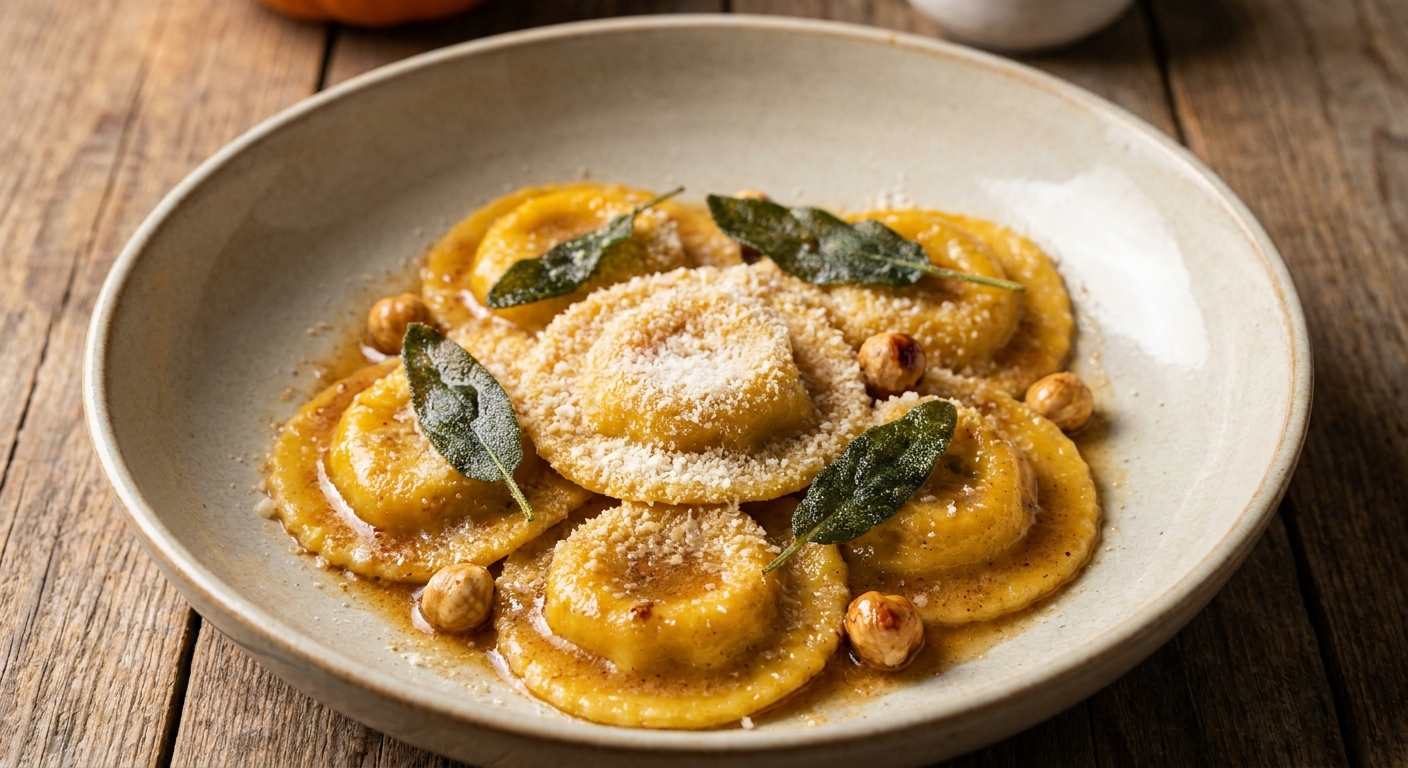
Pumpkin ravioli is naturally a little sweet, so I like to lean into contrast: browned butter, sage, black pepper, and a salty shower of Parmesan. If you want to add crunch, toasted walnuts are perfect. If you want brightness, a tiny squeeze of lemon at the end wakes everything up without turning the sauce watery.
Make the filling first, then the dough. Giving the filling even 20 minutes to firm up makes shaping faster and cleaner.
Why this recipe works
- Dry filling helps strong seals. Draining ricotta and reducing pumpkin moisture lowers the chances that heat and expansion will find a weak spot and pop the ravioli open.
- Thin, rested dough cooks tender. Resting relaxes gluten so you can roll the pasta thin without springing back, which helps ravioli cook quickly and evenly.
- Browned butter is a low-water sauce. Butter and sage create flavor and gloss without diluting the plate. A small splash of starchy pasta water helps it cling.
- Gentle simmer protects the seams. A lively boil can batter ravioli against the pot and weaken edges. A controlled simmer is calmer and safer.
Ingredient notes
Pumpkin puree
Use plain canned pumpkin, not pumpkin pie filling. If your puree looks loose or weepy, blot it with paper towels or cook it in a skillet for a few minutes to evaporate excess water, then cool fully before mixing the filling.
Ricotta
Whole-milk ricotta gives the best texture. No matter what you buy, drain it in a fine-mesh strainer or cheesecloth. Even 30 minutes helps, but an hour is better.
Parmesan
Finely grated Parmesan seasons the filling and also tightens it. Pre-grated can work, but freshly grated melts more smoothly and tastes cleaner.
Nutmeg and black pepper
Nutmeg is classic with squash fillings. Keep it subtle. Black pepper in the sauce balances the sweetness.
Butter and sage
Use real butter. For sage, look for fresh leaves that feel velvety and smell strongly herbal. They crisp beautifully in butter.
Equipment you will need
- Large mixing bowl
- Bench scraper (helpful, not required)
- Rolling pin or pasta roller
- Fine-mesh strainer and cheesecloth or paper towels (for draining ricotta)
- Small cookie scoop or spoon (for portioning filling)
- Pastry brush or clean fingertip (for water wash)
- Ravioli cutter, knife, or fluted wheel
- Large pot for boiling
- Wide skillet for browned butter sauce
- Slotted spoon
Pro tips
- Chill the filling. After mixing, refrigerate at least 20 minutes so it firms up and is easier to portion cleanly.
- Use small mounds. Overfilling is the fastest way to burst ravioli. Leave enough border to seal generously.
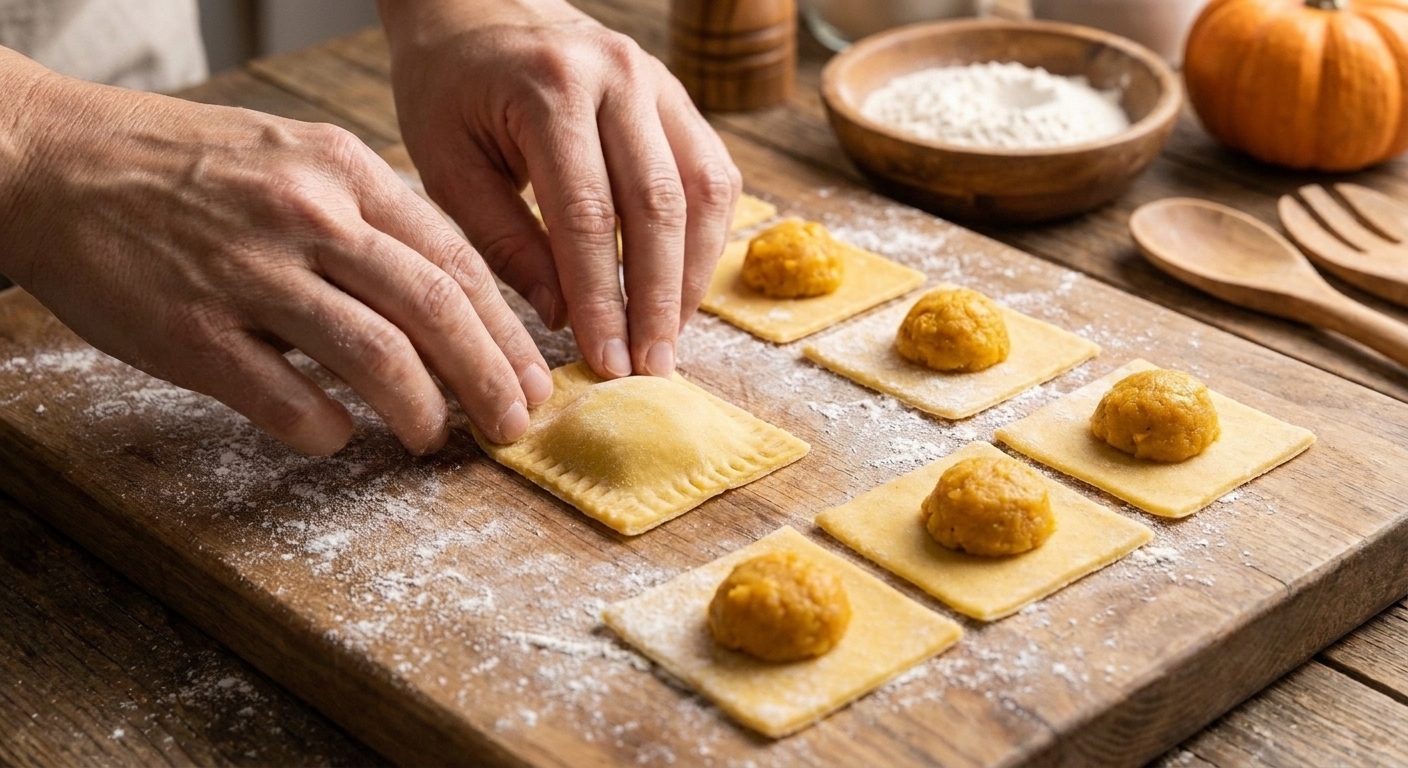
- Press out air pockets. Air expands in hot water and can pop seams. Seal from around the filling outward.
- Seal like you mean it. Use a light water wash, then press firmly. If your dough feels dusty, mist it lightly, then seal.
- Simmer, do not rage-boil. Gentle movement keeps ravioli intact.
- Sauce last, fast. Brown the butter while the ravioli boils, then toss immediately with a splash of pasta water so the sauce turns glossy.
Substitutes that work
- No ricotta? Use drained cottage cheese that has been blended smooth, or use mascarpone for a richer filling. Both should be thick, not runny.
- No sage? Thyme is lovely. Rosemary is strong, so use a smaller amount.
- Gluten-free? Gluten-free filled pasta is tricky because it cracks and dries quickly. If you are experienced with a specific gluten-free pasta dough, keep the filling extra thick and work in small batches.
- No Parmesan? Pecorino Romano works, but is saltier. Add a little less, taste, then adjust.
Variations
- Add a salty bite: fold in finely chopped prosciutto or crisp pancetta to the filling, or sprinkle on top at serving.
- Make it spicy: add a pinch of crushed red pepper to the browned butter.
- Go nutty: finish with toasted walnuts or hazelnuts for crunch.
- Creamy finish (still not watery): whisk 2 to 4 tablespoons of heavy cream into the browned butter off heat. Keep it minimal so it stays glossy.
- Lemon pop: add a small squeeze of lemon at the end and toss quickly.
Serving ideas
- Serve with a simple arugula salad dressed with lemon and olive oil.
- Add roasted Brussels sprouts or broccolini on the side for a bitter-green balance.
- For a dinner-party plate, finish with extra Parmesan, black pepper, and a few crisped sage leaves on top.
- If you want protein, roast chicken thighs or seared pork tenderloin pairs beautifully with the sweet-savory filling.
Storage and reheating
Refrigerating
Cooked ravioli keeps in an airtight container for up to 3 days. Store the sauce separately if you can so the pasta does not get greasy and heavy.
Freezing (best option)
Freeze ravioli uncooked. Arrange in a single layer on a floured baking sheet until solid, then transfer to a freezer bag. Cook from frozen at a gentle simmer. They will take a little longer and will float when done.
Reheating
Warm leftover ravioli in a skillet with a small knob of butter and a splash of water. Cover briefly to steam through, then uncover and gently toss. Avoid microwaving if possible since it can make the pasta tough and the filling unevenly hot.
Common mistakes
- Filling too wet. If the filling looks like it can slump or spread, it is too loose. Drain ricotta longer, blot or cook down pumpkin, and add Parmesan to tighten.
- Rolling dough too thick. Thick dough can feel gummy and may pop open because it needs longer to cook. Aim for thin enough to see a shadow of your fingers through it.
- Overfilling. Leave room for a wide seal, and press out air pockets.
- Not sealing edges well. Flour on the dough can prevent sealing. Brush off excess flour before using a light water wash.
- Boiling too aggressively. A hard boil can bang ravioli around and weaken seams. Keep it at a steady simmer.
- Sauce made too early. Brown butter can go from nutty to burnt quickly if it sits over heat. Time it so you finish sauce as ravioli cooks.
FAQ
How do I keep pumpkin ravioli from bursting?
It is usually a mix of moisture control and technique. Keep the filling thick (drain ricotta, blot or cook down pumpkin, and chill it), press out air as you seal, roll the dough thin enough to cook quickly, and cook at a gentle simmer so the ravioli are not getting knocked around.
Can I use fresh pumpkin instead of canned?
Yes, but you must remove moisture. Roast pumpkin or squash until very tender, then mash and let it drain in a strainer. If it still looks wet, cook it briefly in a skillet to evaporate excess water, then cool before mixing.
Do I need a pasta machine?
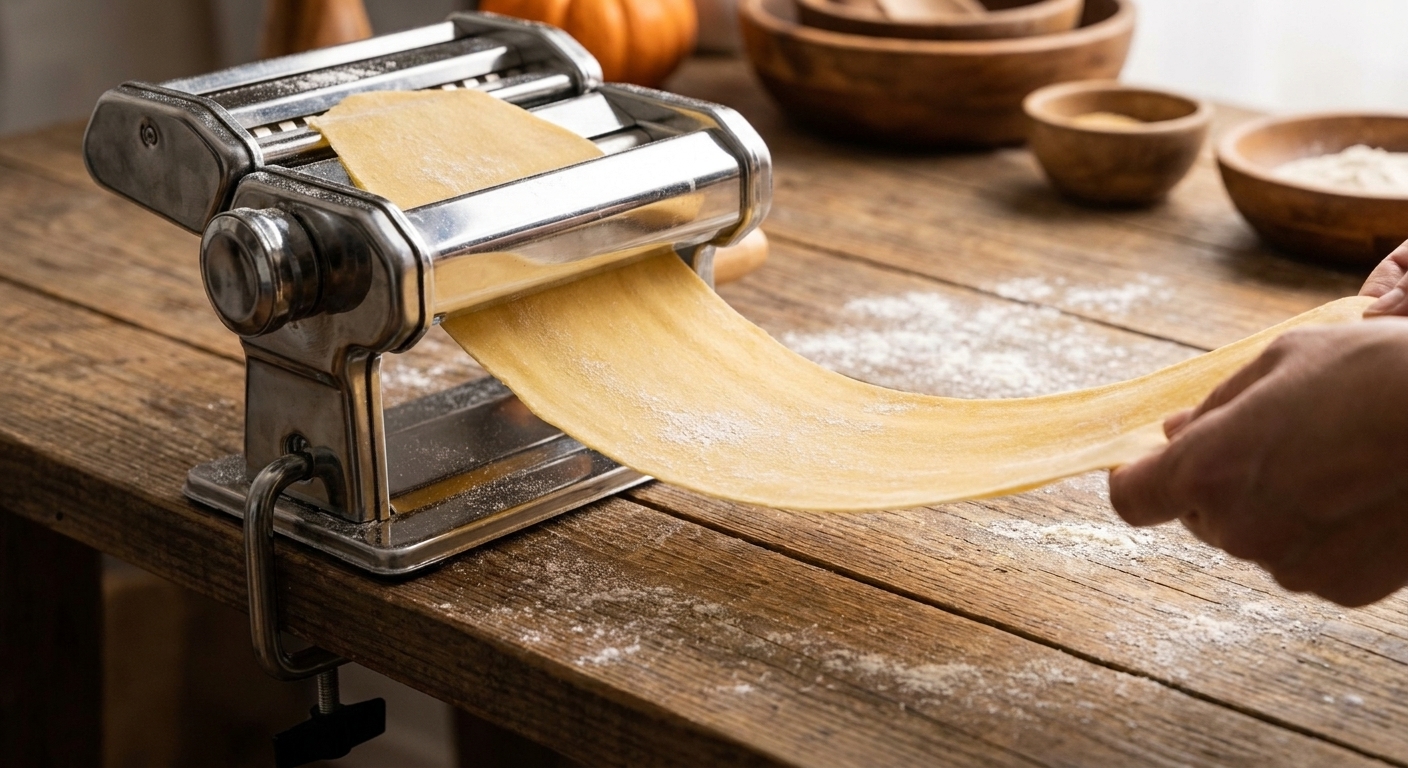
No. A rolling pin works. It just takes a little more time and patience. Roll evenly and keep the dough lightly floured so it does not stick.
Why is my browned butter sauce watery?
Browned butter itself is not watery. The usual culprit is adding too much pasta water or tossing ravioli that is still dripping wet. Transfer ravioli with a slotted spoon, let excess water drain, then add pasta water a tablespoon at a time until glossy.
How do I know when ravioli is cooked?
They usually float when the pasta is cooked, but I also like to taste one. The pasta should be tender with no raw flour taste, and the filling should be hot all the way through.
The recipe
Pumpkin Ravioli
Homemade pumpkin ravioli stuffed with a thick pumpkin ricotta filling, simmered until tender, and finished with nutty browned butter and crisp sage.
- Prep
- 1 hr 30 mins
- Cook
- 15 mins
- Total
- 1 hr 45 mins
- Yield
- 4 servings (about 30 to 36 ravioli)
Ingredients
- For the pasta dough
- 2 cups (260 g) all-purpose flour, plus more for dusting
- 3 large eggs
- 1/2 tsp fine salt
- 1 tsp olive oil (optional)
- For the pumpkin ricotta filling
- 1 cup (245 g) pumpkin puree (plain canned pumpkin)
- 1 cup (225 g) whole-milk ricotta, drained 30 to 60 minutes
- 3/4 cup (75 g) finely grated Parmesan, plus more for serving
- 1 large egg yolk
- 1/2 tsp kosher salt, plus more for pasta water
- 1/4 tsp ground nutmeg
- 1/4 tsp freshly ground black pepper
- For the browned butter sage sauce
- 6 tbsp (85 g) unsalted butter
- 10 to 14 fresh sage leaves
- 1/4 tsp kosher salt, to taste
- Freshly ground black pepper, to taste
- 2 to 6 tbsp reserved starchy pasta water
Instructions
- Drain the ricotta. Set the ricotta in a fine-mesh strainer lined with cheesecloth or a couple layers of paper towels over a bowl. Let drain 30 to 60 minutes, then discard the liquid.
- Make the filling (keep it thick). In a bowl, mix pumpkin puree, drained ricotta, Parmesan, egg yolk, kosher salt, nutmeg, and black pepper until very thick and cohesive. The filling should hold a firm mound on a spoon. If it looks loose, blot the pumpkin puree with paper towels first, or tighten by stirring in 2 to 3 more tablespoons Parmesan. Refrigerate at least 20 minutes while you make the dough.
- Make the pasta dough. Mound the flour on a clean counter or in a large bowl. Make a well in the center and add the eggs and fine salt (and olive oil if using). Whisk the eggs with a fork, gradually pulling in flour. Knead 8 to 10 minutes until smooth and elastic. If sticky, dust with a little flour. If dry and cracking, wet your hands and keep kneading until the dough comes together.
- Rest the dough. Wrap tightly and rest at room temperature for 30 minutes.
- Roll the pasta. Divide the dough into 4 pieces. Keep unused pieces wrapped. Roll one piece into a thin sheet using a pasta roller or rolling pin, dusting lightly with flour as needed. Aim for very thin dough, about setting 6 on a typical pasta machine, or thin enough to see a shadow of your fingers through it.
- Fill and seal. Lay one pasta sheet on a lightly floured surface. Place small mounds of filling, about 1 to 1 1/2 teaspoons each, with about 1 1/2 inches between. Lightly brush water around each mound. Lay a second sheet on top. Press around each mound to remove air, then press firmly to seal. Cut into individual ravioli with a cutter, knife, or fluted wheel. Transfer to a floured baking sheet in a single layer. Repeat with remaining dough and filling.
- Boil gently. Bring a large pot of water to a gentle simmer and salt it generously. Add ravioli in batches, stirring very gently at first so they do not stick. Simmer until ravioli float and the pasta is tender, 3 to 5 minutes (longer if the dough is thicker or if cooking from frozen). Use a slotted spoon to transfer ravioli to a tray or directly into the sauce. Reserve at least 1 cup pasta water.
- Brown the butter and crisp the sage. While the ravioli cook, melt the butter in a wide skillet over medium heat. Add the sage leaves. Cook, swirling often, until the butter turns golden brown and smells nutty and the sage is crisp, 2 to 4 minutes. Immediately reduce heat to low so the butter does not burn.
- Toss and serve. Add cooked ravioli to the skillet. Add 2 tablespoons reserved pasta water and gently toss until the sauce turns glossy and coats the pasta, adding more pasta water 1 tablespoon at a time if needed. Season with kosher salt and black pepper to taste. Serve right away with extra Parmesan and a few crispy sage leaves.
Notes
Moisture check: The filling should hold a firm mound on a spoon. If it slowly spreads, it is too wet. Drain ricotta longer and tighten with extra Parmesan.
Make-ahead: Freeze uncooked ravioli on a tray, then bag. Cook from frozen at a gentle simmer.
Sauce control: Add pasta water slowly. You want a glossy coating, not a pool at the bottom of the plate.