
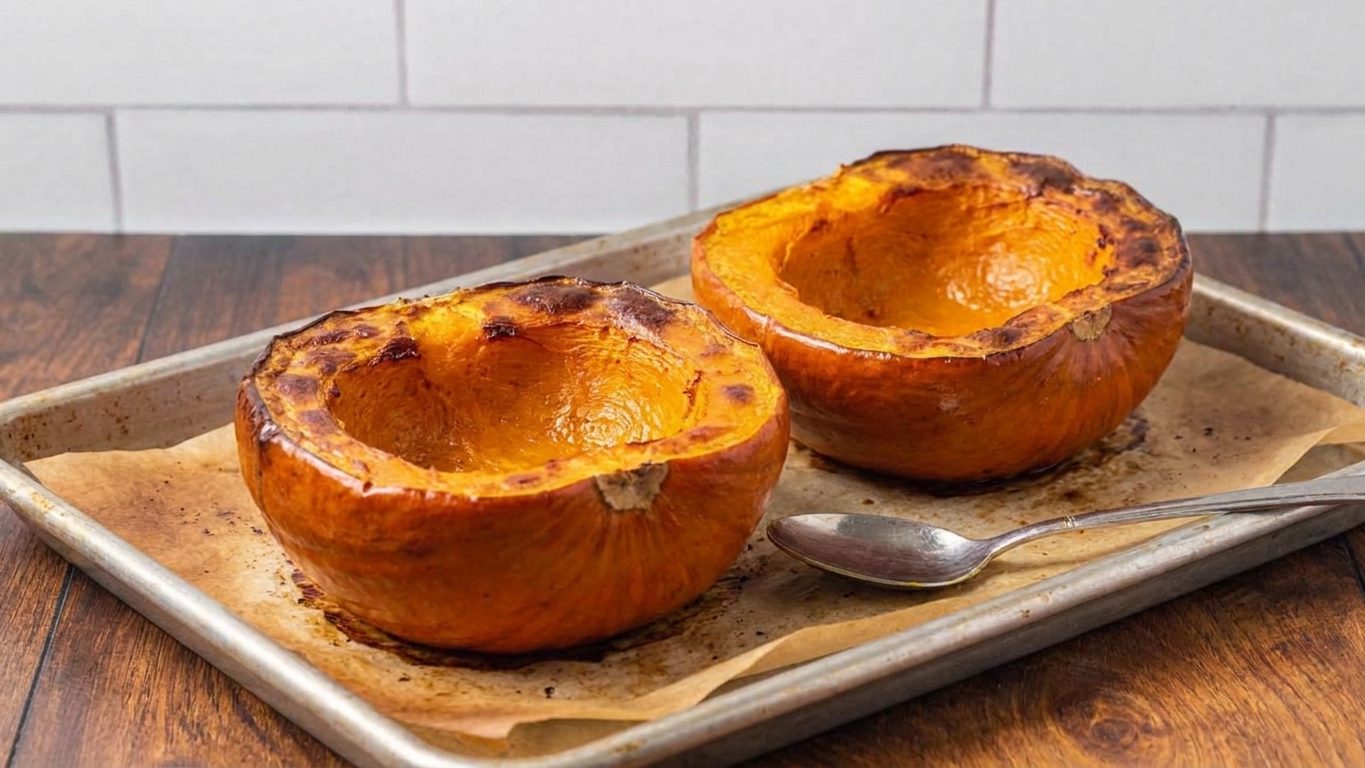
When I managed a bakery, pumpkin season meant one thing: the back prep table would quietly turn into a pumpkin factory. Not because we were being fancy, but because the best pumpkin flavor is clean and earthy, not watery or spiced or pre-sweetened. At home, I make fresh pumpkin puree the same way, just scaled down and built for a normal kitchen.
This is a prep method, not a “pumpkin bake.” The goal is a thick, unsweetened puree that behaves like the canned stuff in your recipes, especially quick breads and pies. The biggest difference is that fresh puree can carry more water, so the final step is the one that matters most: cooking it down until it is spoonable and dense.

Below, I walk you through two reliable paths: roasting (deeper flavor, hands-off) and steaming (faster, slightly cleaner flavor). Either way, you will scoop, blend, and then thicken the puree until it is ready for baking.
What kind of pumpkin to use
Skip the big jack-o-lantern pumpkins. They look festive, but the flesh is usually stringy and bland. Look for a small “pie pumpkin” or “sugar pumpkin,” typically 2 to 4 pounds. They have sweeter, smoother flesh and far less fiber.
If your store labels them as “pie pumpkins,” you are in the right place. If you see kabocha or other winter squash, those can be great too, but this method is written for the classic small pie pumpkin.
How homemade puree differs from canned
Canned pumpkin puree is cooked, pureed, and standardized for thickness. It is very consistent from can to can, which is why bakers love it.
Fresh pumpkin puree usually tastes a little brighter and more pumpkin-forward, but it can vary in water content depending on the pumpkin and cooking method. That is why we cook it down after blending.
Pumpkin pie filling is not the same thing. It is sweetened and already spiced. Fresh puree is unsweetened and unseasoned, so you can use it in sweet or savory recipes.
How much puree you will get
From a typical 3 pound pie pumpkin, expect about 2 to 3 cups of thick puree after blending and cooking it down. If your pumpkin is especially watery, you may land closer to 2 cups. If it is dense and dry, you may get closer to 3 cups.
For baking, a helpful conversion is: 1 (15-ounce) can pumpkin puree = about 1 3/4 cups.
When to choose roasting vs steaming
- Roasting: richer flavor, less watery flesh, easiest to do in big batches.
- Steaming: faster, keeps the puree a bit lighter in color and flavor, useful when you do not want the oven on.
Why this recipe works
- Cooking first makes blending easy. Roasting or steaming softens the flesh so it turns silky with minimal effort.
- Blending gives a consistent texture. A blender or food processor breaks down the natural fibers that can make fresh puree stringy.
- Simmering removes excess water. Fresh puree is often looser than canned, so a quick cook-down gets you to a thick, spoonable consistency that bakes predictably.
- Keeping it unsweetened makes it flexible. You can use it in pumpkin bread, pie, pancakes, soups, or sauces without being locked into one flavor profile.
Ingredient notes
Pie pumpkin (sugar pumpkin)
Pick one that feels heavy for its size with firm skin and no soft spots. A 2 to 4 pound pumpkin is the sweet spot for most home ovens and blenders.
Water (for steaming only)
You only need enough to create steam in the pot, not submerge the pumpkin. Steaming cooks quickly, but it can create wetter flesh, so expect to spend a few more minutes thickening the puree.
Salt, sugar, spices
Not needed here. The puree should stay plain and unsweetened. Season it in the recipe you are using it for.
Equipment you will need
- Chef’s knife and sturdy cutting board
- Spoon for scooping seeds
- Rimmed baking sheet and parchment (for roasting)
- Large pot with steamer basket and lid (for steaming)
- Blender or food processor
- Fine-mesh strainer (optional, for extra-thick puree)
- Saucepan (for simmering the puree to thicken)
Pro tips
- Cut safely. Pumpkins are hard. If your knife feels stuck, back it out and reposition. A damp towel under your cutting board helps prevent slipping.
- Roast cut-side down for tenderness. For roasting, placing the pumpkin cut-side down traps steam and softens the flesh evenly.
- Blend while the pumpkin is not scorching hot. Warm is fine, but very hot puree can build pressure in a blender. Let the pumpkin cool 10 to 15 minutes first.
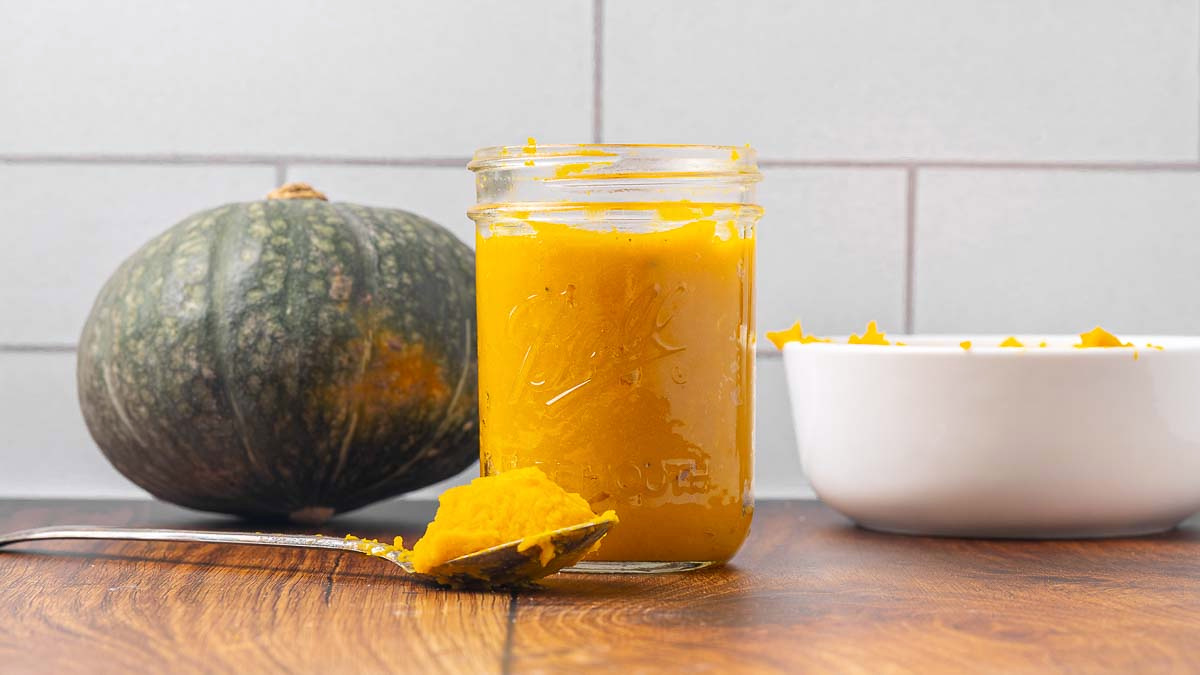
- Thicken until it holds a soft mound. When you drag a spoon through the puree, it should leave a trail that slowly fills in, not immediately flood back.
- Measure after thickening. If you measure before simmering, you can end up short once water evaporates.
Substitutes that work
- Butternut squash: A great substitute with a naturally smooth texture. Use the same method and thicken as needed.
- Kabocha squash: Sweeter and drier, often needs less simmering. Skin can be tough, so roasting is usually easiest.
- Canned pumpkin puree: If you are short on time, canned is absolutely fine and very consistent. Use it 1:1 by volume in most baking recipes.
Variations
Extra-thick puree for baking
After simmering, let the puree sit in a fine-mesh strainer for 10 to 20 minutes to drain a little more liquid. This is helpful if your pumpkin was very watery or if you want a super concentrated puree for breads and muffins.
Rustic mashed pumpkin
If you do not mind a slightly coarser texture for soups or savory dishes, you can mash the cooked flesh with a potato masher instead of blending. For pie and quick breads, I strongly prefer blending for a smoother crumb.
Serving ideas
- Stir into oatmeal with maple syrup and cinnamon
- Fold into pancake or waffle batter for a cozy weekend breakfast
- Blend into smoothies with banana and yogurt
- Use as the pumpkin base for pumpkin bread, muffins, or pumpkin pie
- Add to soups for body and natural sweetness
Storage and reheating
Refrigerator
Store fresh pumpkin puree in an airtight container for 5 to 7 days. It can separate a bit, which is normal. Stir before using.
Freezer
Freeze for up to 3 months for best flavor. Portion it in 1 cup or 2 cup amounts, or freeze in measured scoops on a parchment-lined tray and then transfer to a freezer bag once solid.
Thawing tip: Thaw overnight in the fridge. If it looks watery after thawing, simmer it for a few minutes to tighten it back up, or let it drain in a fine-mesh strainer.
Common mistakes
- Using a carving pumpkin. The texture is often stringy and watery, and the flavor can be flat. Choose a pie pumpkin.
- Skipping the cook-down. The puree may look fine, but extra water can make pumpkin bread gummy or pie filling weepy.
- Overfilling the blender. Puree expands and needs space to move. Blend in batches if needed.
- Seasoning the puree too early. Keep it plain. Sweeten and spice in the recipe so you can use the puree for anything.
- Not cooling before blending. Very hot pumpkin can create steam pressure in a blender. Let it cool briefly and vent the lid.
FAQ
Do I have to peel the pumpkin?
No. For roasting, you roast it with the skin on and scoop out the flesh. For steaming, it is easiest to peel first because the skin does not always soften enough to blend smoothly. If you steam with the skin on, be sure to remove it before blending.
How do I know when the pumpkin is cooked?
A fork should slide into the thickest part with almost no resistance. The flesh should look softened and slightly glossy.
Why is my puree watery?
Some pumpkins simply carry more moisture, and steaming adds more water than roasting. Simmer the puree, stirring often, until thick. If it is still loose, drain it briefly in a fine-mesh strainer.
Can I use fresh puree 1:1 in recipes that call for canned pumpkin?
Yes, as long as you have cooked it down to a similar thickness. If your fresh puree is looser than canned, your baked goods can turn out heavy or underbaked in the center.
Is canned pumpkin really pumpkin?
Yes. In the U.S., canned “pumpkin” is a type of winter squash in the same family as pumpkin. It is cooked and pureed until very smooth and consistent.
The recipe
Fresh Pumpkin Puree
A simple method for turning a pie pumpkin into thick, unsweetened pumpkin puree by roasting or steaming, blending until smooth, then simmering to remove excess water.
- Prep
- 20 minutes
- Cook
- 45 minutes
- Total
- 1 hour 5 minutes
- Yield
- About 2 to 3 cups puree
Ingredients
- 1 pie pumpkin (sugar pumpkin), about 2 to 4 lb
- Water (only if steaming, enough to create steam in the pot)
Instructions
- Prep the pumpkin. Wash and dry the pumpkin. On a sturdy cutting board, cut it in half through the stem end. Scoop out the seeds and stringy bits with a spoon.
- Choose your cooking method.
- Roast (best flavor): Heat oven to 400°F. Line a rimmed baking sheet with parchment. Place pumpkin halves cut-side down on the sheet. Roast until the flesh is completely tender when pierced with a fork, 35 to 55 minutes depending on size.
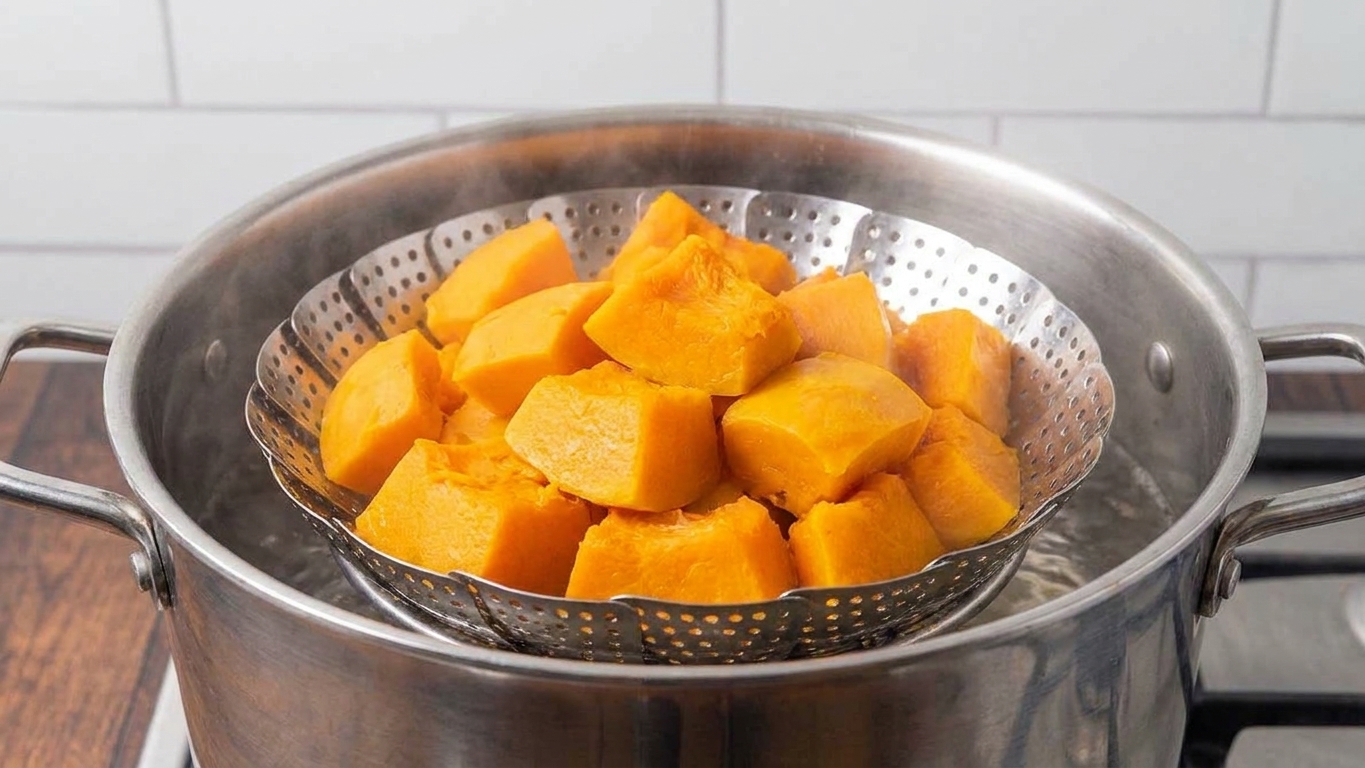
- Steam (faster): Peel the pumpkin with a sturdy vegetable peeler, then cut into 2-inch chunks. Add a few inches of water to a large pot and bring to a simmer. Add a steamer basket, place pumpkin inside, cover, and steam until very tender, 15 to 25 minutes.
- Cool slightly, then scoop. For roasted pumpkin, flip the halves over and let cool 10 to 15 minutes. Scoop the flesh away from the skin into a bowl. For steamed pumpkin, transfer the chunks to a bowl and let cool briefly.
- Blend until smooth. Puree the cooked pumpkin in a blender or food processor until smooth, scraping down as needed. If your blender struggles, add 1 to 2 tablespoons water at a time, only if necessary, to get it moving.
- Cook down to thicken. Transfer the puree to a saucepan and set over medium to medium-low heat. Cook, stirring frequently and scraping the bottom, until the puree looks noticeably thicker and holds a soft mound on a spoon, 5 to 15 minutes. If it sputters, lower the heat.
- Cool and store. Let cool completely, then transfer to an airtight container. Refrigerate 5 to 7 days or freeze up to 3 months.
Notes
Yield: A 3 lb pie pumpkin typically gives 2 to 3 cups thick puree. Measure after simmering so you know what you truly have.
Thickness check: Homemade puree should be spoonable and dense, not pourable. If it is loose after thawing, simmer for a few minutes to tighten it back up.
Keep it plain: This puree is intentionally unsweetened and unspiced so you can use it in any recipe.