
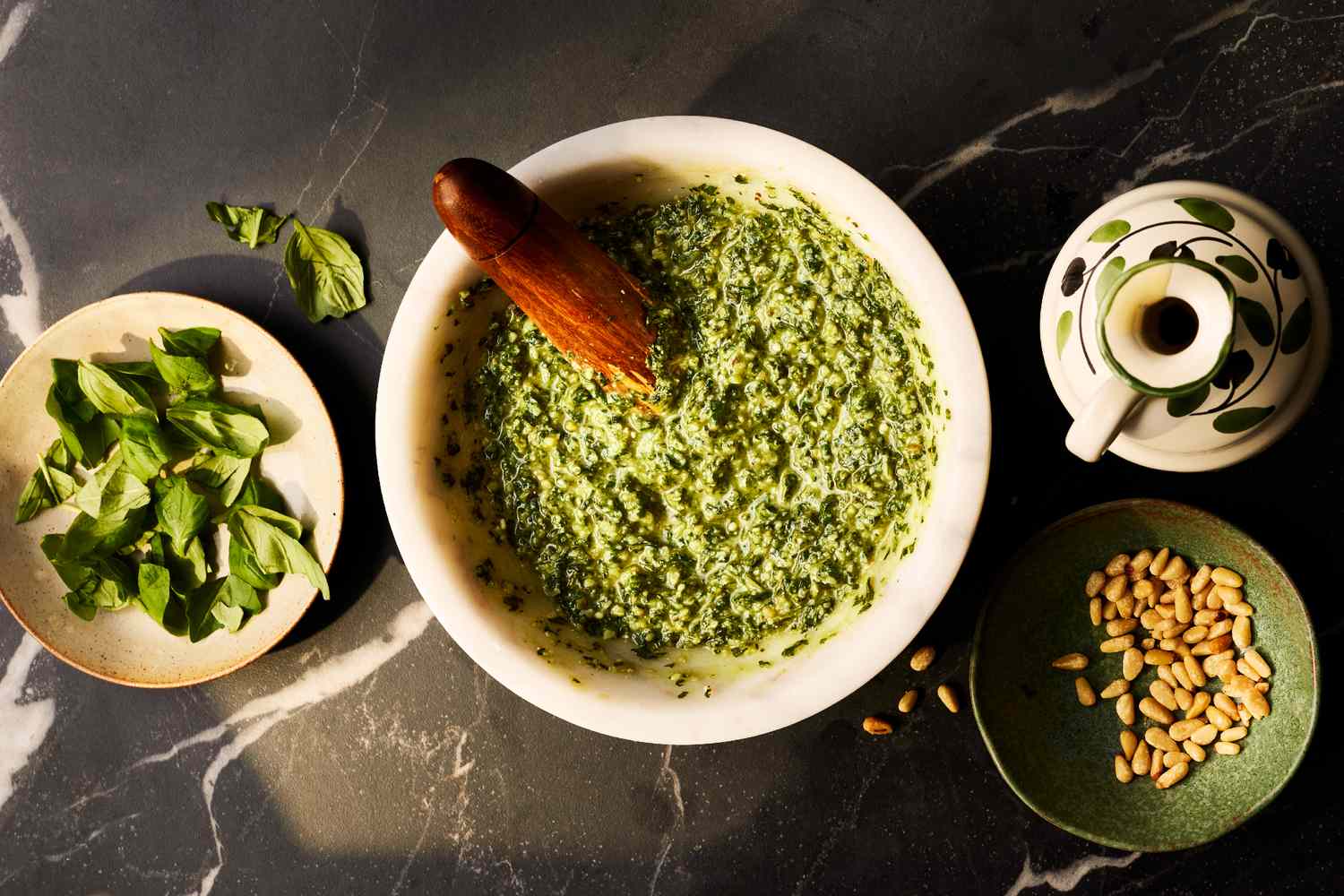
There are recipes that feel like a project, and then there are recipes that feel like a gift you give your future self. Basil pesto is the second kind. Ten minutes of whirring and scraping, and suddenly Tuesday dinner has a plan for pasta, sandwiches, eggs, or whatever is in the fridge.
Classic pesto is simple for a reason: basil, garlic, pine nuts, Parmesan, olive oil, and salt. The trick is not fancy equipment or chef-y hands. It is a few small choices that keep the flavor bright, the texture creamy, and the garlic and basil from turning harsh.

What makes pesto taste like pesto
Pesto is all about balance. Each ingredient has a job, and when one is out of whack the whole sauce can feel flat, bitter, or oily.
- Basil: the perfume and the color. Younger, smaller leaves tend to be sweeter and less bitter. Use mostly leaves; tender tips are fine, but skip thick stems.
- Garlic: the bite. One clove can be plenty in a small batch.
- Pine nuts: richness and body. Toasting is optional, but a quick toast adds warmth.
- Parmesan, ideally Parmigiano-Reggiano: salty, nutty depth that makes pesto taste finished.
- Olive oil: helps bind everything into a silky sauce. Use a fruity extra-virgin you actually like.
- Salt: the volume knob. Add it in small pinches and taste as you go.
Weeknight Basil Pesto Recipe
Classic Basil Pesto
Makes: about 3/4 cup (enough for about 10 to 12 ounces pasta, depending on how saucy you like it)
Time: 10 minutes
Ingredients
- 2 packed cups fresh basil leaves (about 2 to 3 ounces), mostly leaves with tender tips
- 1 small garlic clove, peeled
- 1/4 cup pine nuts
- 1/2 cup finely grated Parmesan cheese, plus more to serve
- 1/3 to 1/2 cup extra-virgin olive oil
- 1/4 teaspoon kosher salt, plus more to taste
- 1 to 2 teaspoons fresh lemon juice (optional, but helpful)
- Freshly ground black pepper, to taste
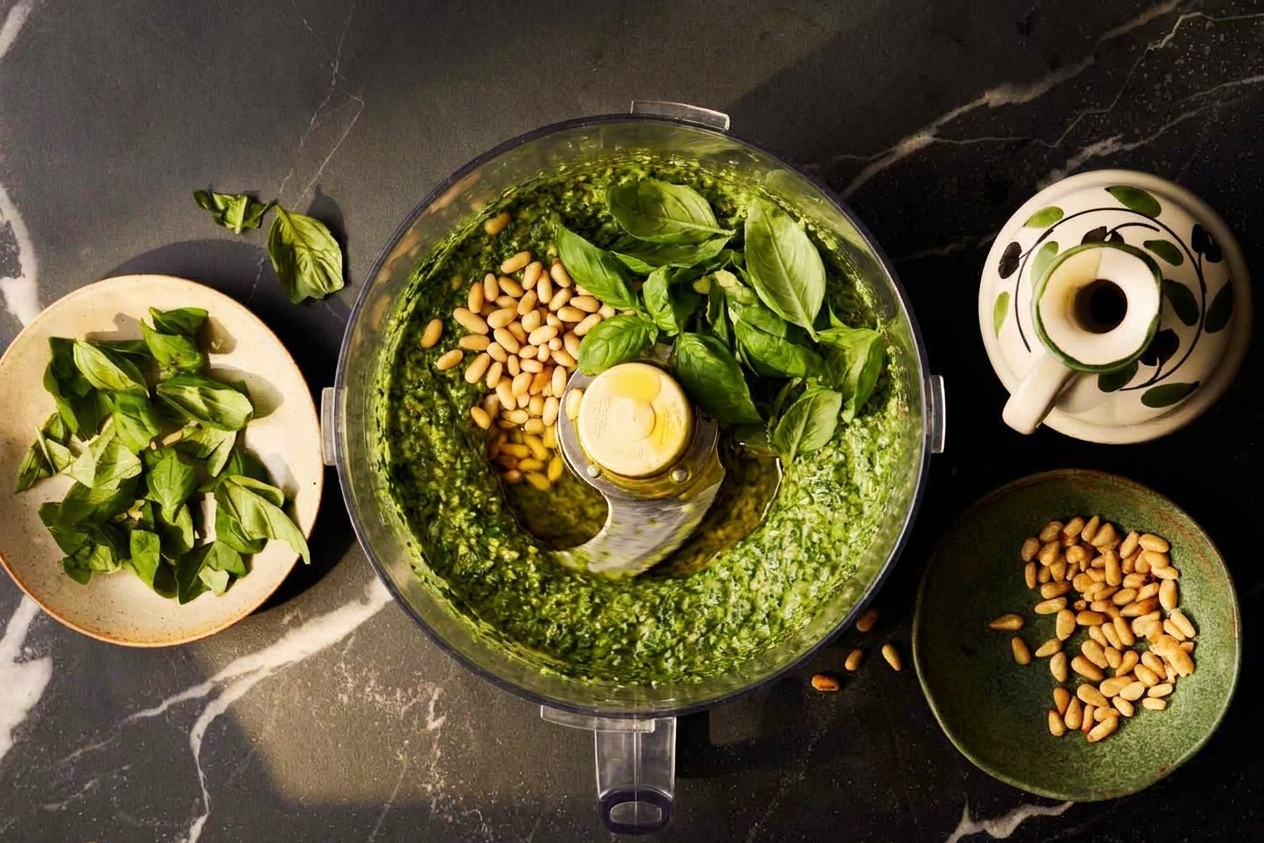
Method (food processor)
- Optional toast: If you have 2 extra minutes, toast the pine nuts in a dry skillet over medium heat, shaking often, until pale golden and fragrant. Let cool.
- Start with the sturdy stuff: In a food processor, pulse the garlic and pine nuts until finely chopped.
- Add basil and salt: Add basil and the 1/4 teaspoon salt. Pulse until the leaves are broken down. Scrape the bowl as needed.
- Stream in oil: With the machine running, drizzle in 1/3 cup olive oil until the pesto looks creamy and spoonable. Add more oil if you want it looser.
- Finish with cheese: Transfer to a bowl and stir in Parmesan by hand. This keeps it from heating up and turning pasty.
- Taste and adjust: Add lemon juice if you want extra brightness, then pepper and more salt if needed.
Method (mortar and pestle)
- Pound garlic with a pinch of salt into a paste.
- Add pine nuts and pound until creamy.
- Add basil a handful at a time, pounding and grinding until broken down.
- Stir in Parmesan, then drizzle in olive oil until it becomes a thick, glossy sauce.
Allergens note: This recipe contains tree nuts (pine nuts) and dairy (Parmesan). See substitutions below if you need options.
Best pesto tips
1) Keep the basil dry
Water on the leaves can make pesto separate and dilute flavor. If you rinse basil, spin it well or pat dry with a towel.
2) Do not overblend
Long blending warms the sauce, and warm basil can go dull in flavor. Use quick pulses and stop once it is cohesive.
3) Add the cheese after blending
Parmesan can clump and turn the pesto heavy if it gets too worked in the processor. Stirring it in at the end keeps the texture creamy.
4) Lemon is optional, but it helps
Classic Genovese pesto does not require lemon, but on a weeknight I like a teaspoon or two. It boosts freshness and can soften any bitterness from mature basil.
Easy substitutions
Sometimes pine nuts cost a small fortune or your basil is a little sparse. Pesto is forgiving if you keep the overall balance: herbs, nuts, cheese, oil, salt.
- No pine nuts: swap in walnuts, almonds, pistachios, or cashews. Cashews make the creamiest texture.
- No Parmesan: Pecorino Romano is sharper and saltier, so start with a little less. Grana Padano is a mild, budget-friendly option.
- Need it dairy-free: skip the cheese and add 1 to 2 tablespoons nutritional yeast plus extra salt to taste. A spoonful of cashew butter can add body.
- Only have baby spinach: replace up to 1/2 cup of the basil with spinach for a milder, greener pesto that stretches your herbs.
- Garlic too strong: use half a clove, or briefly blanch the clove in boiling water for 30 seconds, then cool.
How to use pesto all week
Think of pesto as a sauce and a seasoning. A spoonful can rescue plain ingredients fast.
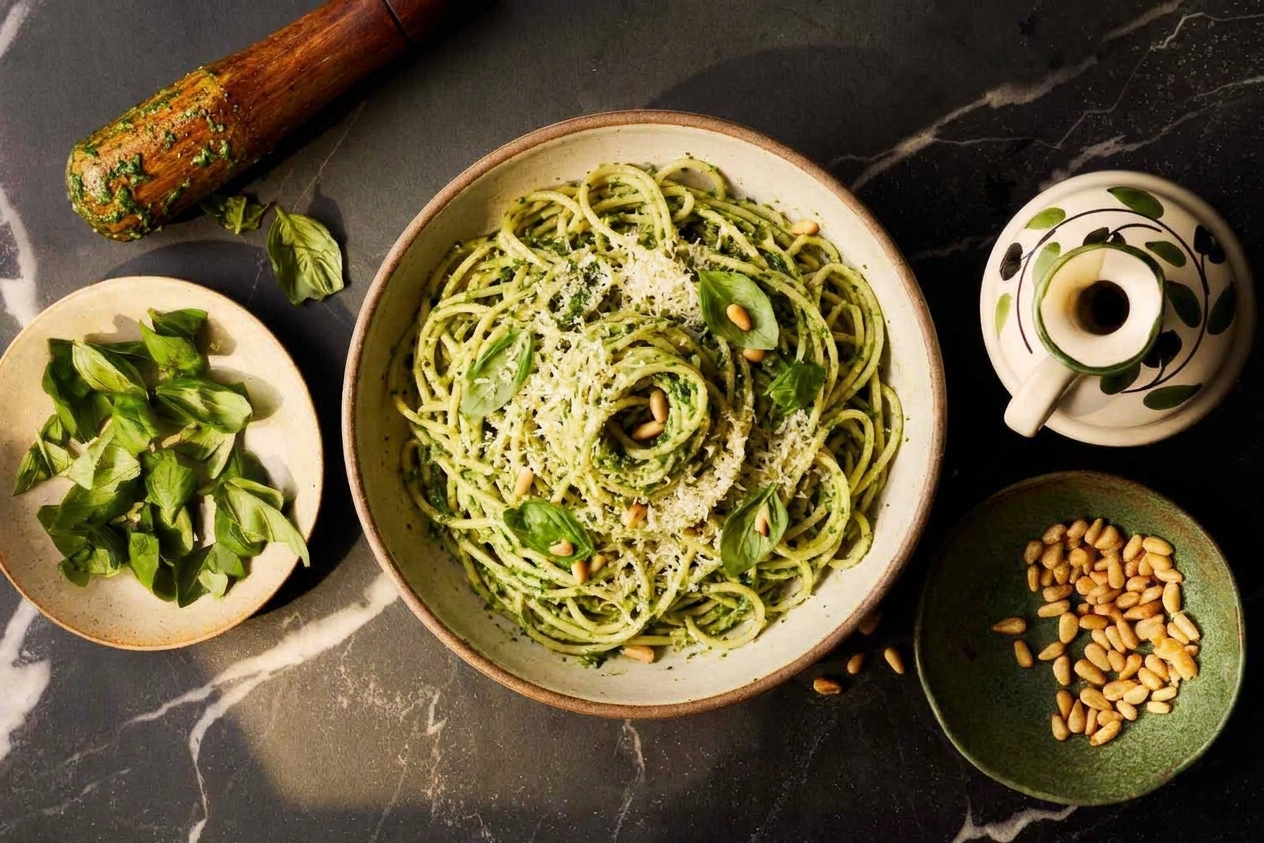
- Pasta night: Toss hot pasta with a splash of starchy pasta water, then add pesto off heat so the basil stays bright. Finish with Parmesan.
- Sheet pan dinner: Roast chicken thighs or salmon and spoon pesto on top right before serving.
- Sandwich upgrade: Use pesto instead of mayo on grilled cheese, turkey sandwiches, or veggie wraps.
- Potatoes and eggs: Stir into warm roasted potatoes or dollop onto scrambled eggs.
- Soup finisher: A teaspoon on minestrone or tomato soup tastes like you cooked all day.
Storage and freezing
Refrigerator
Store pesto in a jar or airtight container for up to 5 days. Smooth the top, then pour a thin layer of olive oil over it to slow browning. Stir before using.
Freezer
Pesto freezes beautifully. Spoon it into an ice cube tray, freeze until solid, then transfer cubes to a freezer bag. Use within 3 months for best flavor. If you plan to freeze, you can leave out the cheese and stir it in after thawing for the freshest taste and texture.
If it turns darker
A little oxidation is normal and still tastes good. Stir it up, add a squeeze of lemon, and use it in cooked dishes where color matters less.
Troubleshooting
Why is my pesto bitter?
Common culprits are older basil (especially large leaves or thicker stems), overblending (heat), or very peppery olive oil. Fix it by adding a little more cheese, a squeeze of lemon, or a small pinch of sugar. If it is aggressively bitter, fold in a handful of baby spinach and a bit more oil to mellow it out.
Why is it too thick?
Add more olive oil, or thin with a tablespoon or two of warm water. If you are tossing with pasta, use pasta water for the smoothest finish.
Why is it oily or separated?
Sometimes oil just pools on top. Stir vigorously to bring it back together, then taste. If it still feels greasy, add a tablespoon or two of grated Parmesan or a small handful of nuts, and pulse or stir again to thicken and rebalance.
Can I make pesto without a food processor?
Yes. A mortar and pestle gives a gorgeous, rustic texture. A sharp knife works too. Chop garlic and nuts very finely, then mince basil and mash everything together with cheese and oil.
If your weeknight brain is tired, pesto is the answer. It is five ingredients, one bowl of green magic, and suddenly dinner feels like you meant to do that.