
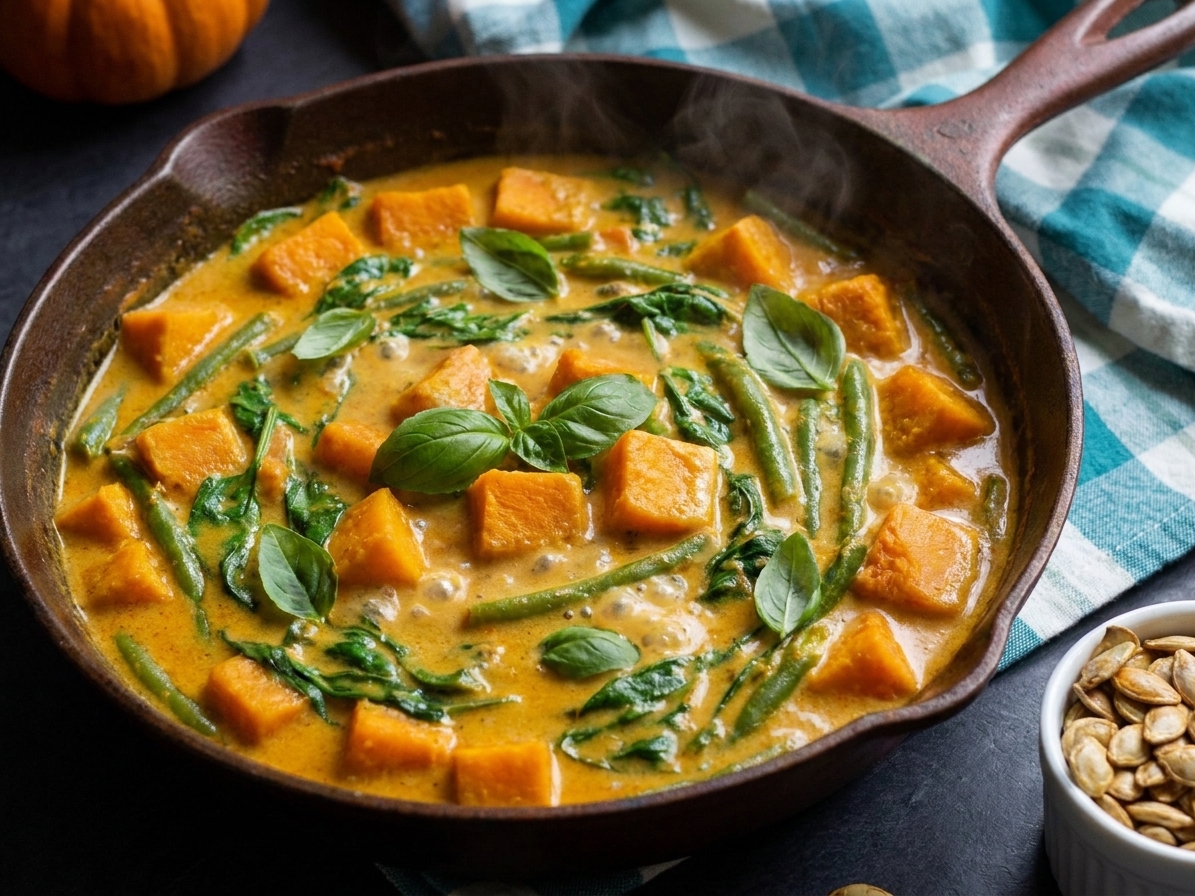
When I managed a bakery, pumpkin was everywhere, and I learned quickly that it holds a lot of water. Great in bread, but in savory cooking it can quietly loosen your sauce if you treat it like just another vegetable. This coconut pumpkin curry is my weeknight answer: warm, fragrant, and creamy, but still a true one-skillet curry, no separate pot and no long simmer, just one pan with tender cubes of pumpkin you can scoop up over rice.

A quick note on the pumpkin: I reach for sugar pumpkin (the small pie pumpkins), but this works just as well with kabocha or butternut squash if that is what you have. Sugar pumpkin can run a bit softer and more watery than kabocha, so I keep the cubes on the larger side and watch the timing.
Here is the trick that keeps the sauce from turning thin: we sear the pumpkin in oil until it gets a little color, then add just a couple tablespoons of water and cover the pan to steam until just tender. The sear helps firm the outside and starts building flavor, and the short covered steam finishes the centers fast so the cubes keep their shape. You want the pumpkin done when a knife slides in with slight resistance, not so soft it slumps. Keep the water modest, and let any extra cook off before the coconut milk goes in, so the sauce stays lush.
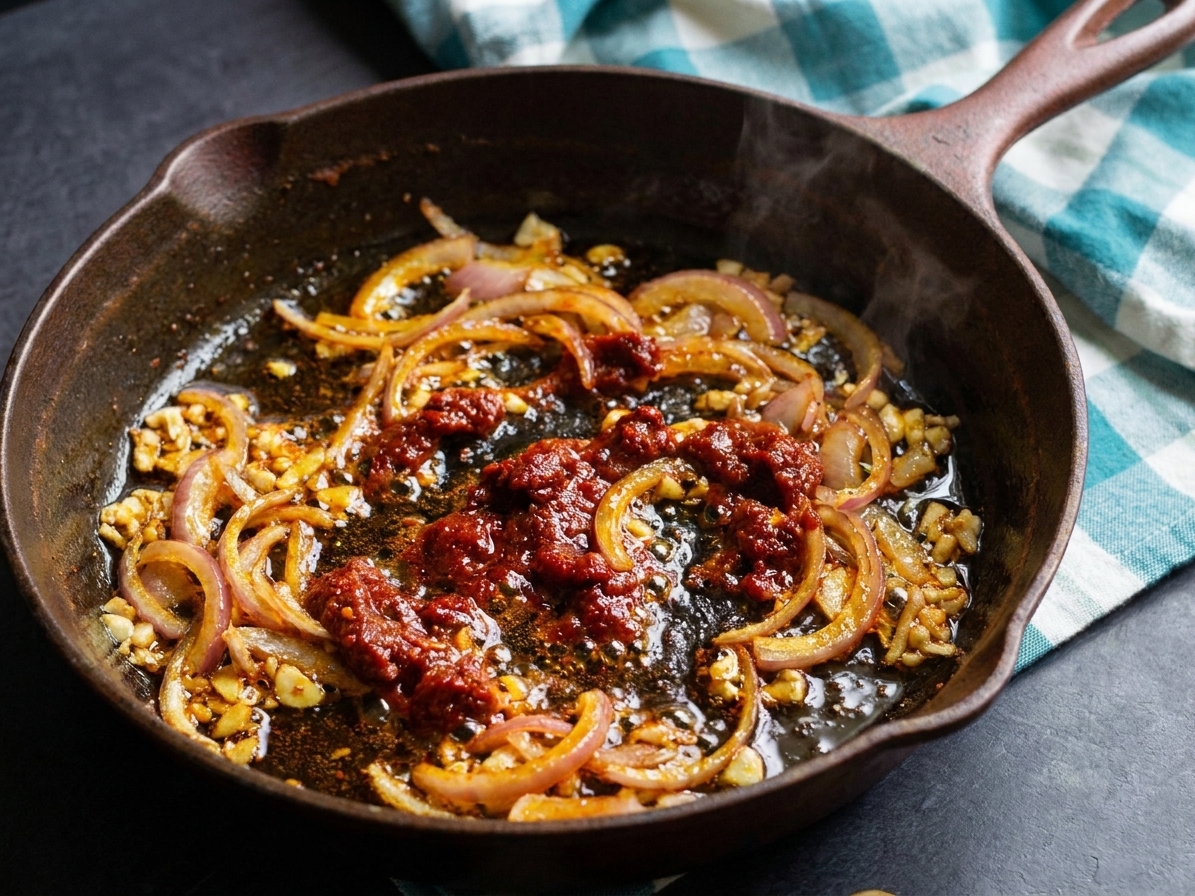
Once the aromatics and curry paste hit the pan, the whole kitchen smells like you meant to do this on purpose. I like red curry paste here, and I finish with lime juice right at the end because coconut and pumpkin love a little acidity. It wakes everything up, especially if you are using a store-bought curry paste.
If you are cooking for a mix of spice tolerances, keep the heat moderate in the base and let individuals add chili crisp or sliced fresh chilies at the table. And if you have leftover rice, this curry is the kind of meal that turns tomorrow’s lunch into something you actually look forward to.
Why this recipe works
- Sear, then steam the pumpkin. Browning builds flavor and helps the cubes hold their edges. A short covered steam finishes cooking quickly without flooding the pan.
- Fry the curry paste in oil. Curry paste tastes flatter if it only simmers. Giving it 60 to 90 seconds in oil blooms the spices and deepens the flavor.
- Coconut milk goes in after the pumpkin is mostly tender. This prevents long, aggressive boiling that can split coconut milk and keeps the sauce creamy.
- Acid at the end. Lime juice or rice vinegar added off heat keeps the curry bright and balanced.
- It stays chunky. Pumpkin cubes and vegetables are cooked gently so the final dish eats like a curry over rice, not a pureed soup.
Ingredient notes
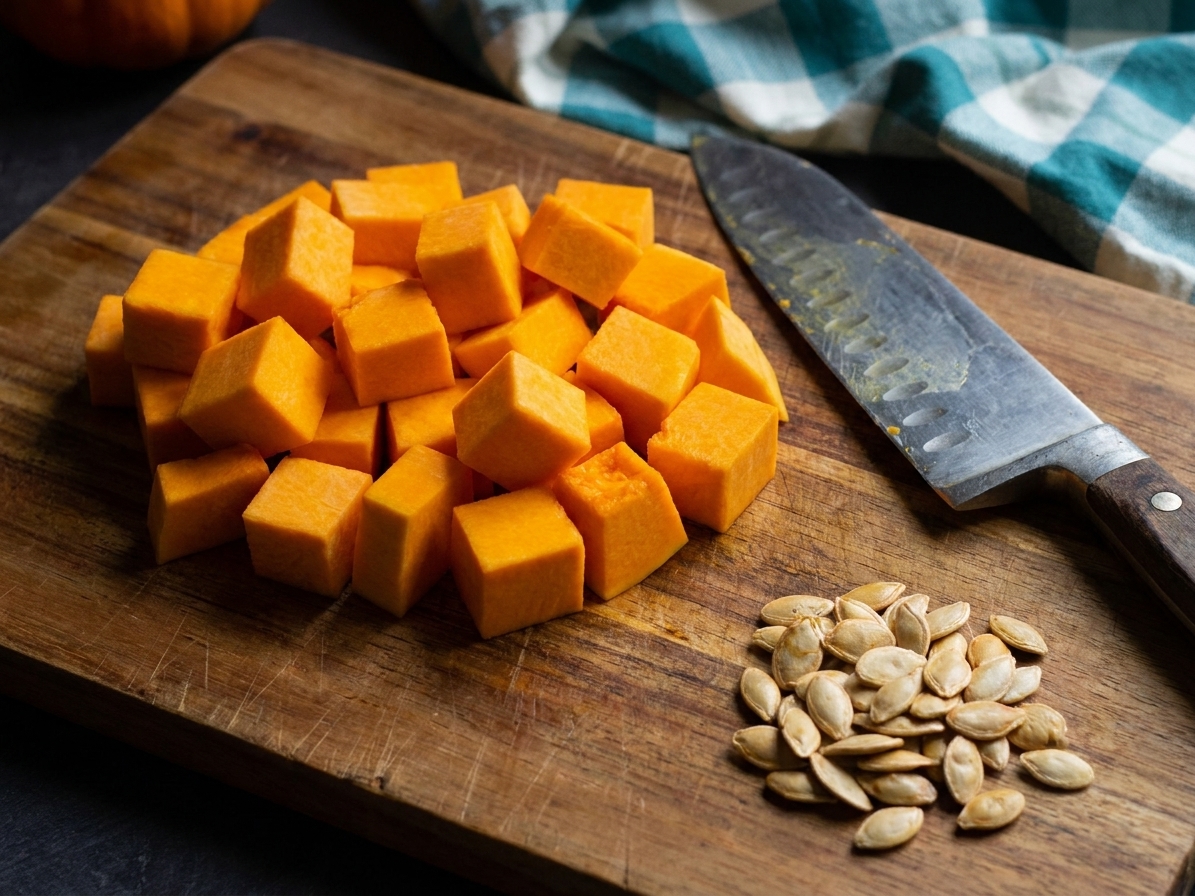
Pumpkin: Sugar pumpkin (pie pumpkin) works beautifully. Peel, seed, and cut into 3/4-inch cubes so it cooks through without disintegrating. If you want the easiest option, use peeled, cubed kabocha or butternut squash from the produce section.
Curry paste: Red curry paste is my go-to here because it plays nicely with pumpkin’s sweetness. Brands vary a lot in salt and heat, so start with a smaller amount and add more after the coconut milk is in.
Coconut milk: Full-fat canned coconut milk gives the best texture. Light coconut milk will work, but the sauce will be thinner and less velvety.
Aromatics: Onion plus garlic and ginger is a solid base. If you keep lemongrass paste or a little jar of minced galangal, this is a great place to use it, but it is optional.
Vegetables: I like a mix of something sturdy (green beans, bell pepper, carrots) and something quick (spinach, baby kale). Add quick-cooking greens at the end so they stay vibrant.
Finishers: Lime juice is my favorite. Rice vinegar works in a pinch. A small spoonful of brown sugar or maple syrup is optional if your curry paste is very spicy or salty.
Equipment you will need
- 12-inch skillet with a lid (or a wide sauté pan). Wider is better for searing the pumpkin without steaming it too early.
- Sharp chef’s knife for peeling and cubing pumpkin.
- Cutting board
- Wooden spoon or silicone spatula for scraping up the curry paste and browned bits.
- Microplane or fine grater for ginger (optional but handy).
Pro tips
- Dry the pumpkin cubes. After cutting, pat them with a towel. Less surface moisture equals better browning and a less watery curry.
- Do not crowd the pan during the sear. If your pumpkin is steaming, it is releasing water. Give it space, or sear in two batches.
- Keep the simmer gentle once coconut milk is added. A hard boil can make coconut milk look grainy and can break down the pumpkin too much.
- Taste for balance, not just salt. If it tastes flat, add lime. If it tastes sharp, add a pinch of sugar. If it tastes heavy, add lime and a splash of water or broth.
- Want it thicker? Simmer uncovered for a few minutes at the end, stirring occasionally. Pumpkin will naturally thicken the sauce as a few cubes soften and coat the liquid.
Substitutes that work
- No fresh pumpkin: Swap in butternut squash or kabocha. Avoid canned pumpkin puree for this recipe if you want a chunky curry, since it pushes the dish toward soup.
- No ginger: Use an extra clove of garlic, or a small pinch of ground ginger.
- No fish sauce: Use soy sauce or tamari. Add it gradually since curry paste is already salty.
- No lime: Use rice vinegar, or a squeeze of lemon in a pinch.
- Gluten-free: This is naturally gluten-free if you use gluten-free soy sauce or tamari and a curry paste without gluten-containing additives.
Variations
- Protein add-in: Brown 1 pound of ground chicken, turkey, or crumbled firm tofu first, then remove and add back after the coconut milk.
- Chickpea pumpkin curry: Stir in 1 (15-ounce) can chickpeas, drained and rinsed, when you add the coconut milk.
- Thai basil finish: Add a handful of Thai basil leaves off heat for a very fresh, aromatic finish.
- Peanut-lime: Stir in 1 to 2 tablespoons peanut butter with the coconut milk, then finish with extra lime.
- Extra-vegetable: Add mushrooms with the onion, or add thin-sliced zucchini in the last 5 minutes so it stays slightly firm.
Serving ideas
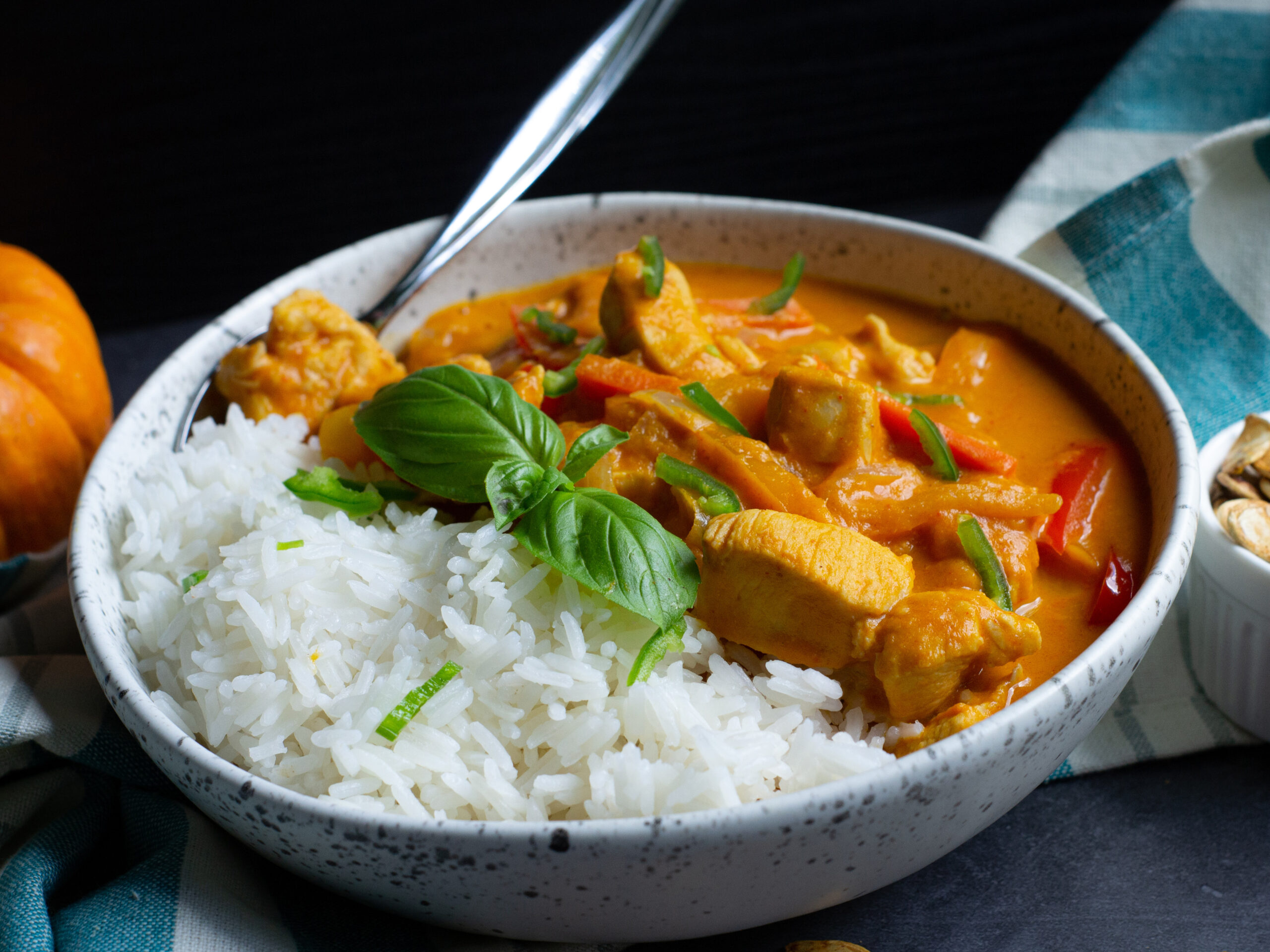
- Over rice: Jasmine rice is classic, but basmati works too. Brown rice is great if you have it already cooked.
- With noodles: Serve over rice noodles or thin wheat noodles for a cozy curry bowl.
- Toppings bar: Chopped cilantro, sliced scallions, toasted peanuts or cashews, and lime wedges.
- Something crisp on the side: Cucumber salad with a splash of rice vinegar and a pinch of salt, or quick-pickled onions.
Storage and reheating
- Refrigerate: Store in an airtight container for up to 4 days.
- Reheat: Warm gently in a saucepan or skillet over medium-low heat, stirring often. Add a splash of water or broth to loosen as needed.
- Freeze: You can freeze it for up to 2 months, but the pumpkin will soften more after thawing. Still delicious, just less chunky. Thaw overnight in the fridge before reheating.
- Rice storage: Store rice separately so it does not absorb the sauce. Reheat rice with a tablespoon of water, covered, in the microwave.
Common mistakes
- Cutting pumpkin too small: Tiny cubes break down fast and can make the curry feel mushy. Aim for about 3/4-inch cubes.
- Skipping the sear: If you go straight to simmering, the pumpkin releases water early and the sauce can turn thin.
- Boiling hard after adding coconut milk: Keep it to a gentle simmer to maintain a creamy texture.
- Adding lime too early: Acid can dull the curry’s aroma if it cooks too long. Add it at the end for brightness.
- Under-seasoning: Pumpkin and coconut are naturally sweet and mellow. Salt, fish sauce or soy sauce, and lime are what make the flavor pop.
FAQ
Can I use canned pumpkin?
For this specific recipe, I do not recommend it if you want a skillet curry with chunks. Canned pumpkin is already pureed, so it will thicken the sauce and push the dish toward a creamy soup texture. Use fresh pumpkin, kabocha, or butternut for the best chunky result.
Why did my curry turn watery?
Usually it is one of three things: the pumpkin was crowded and steamed instead of seared, the vegetables released a lot of water, or the curry was not simmered uncovered long enough at the end. Next time, sear the pumpkin in a single layer, and add quick-watery vegetables (like zucchini) later. If it is already thin, simmer uncovered for a few minutes to reduce.
How spicy is it?
It depends almost entirely on your curry paste. Start with 2 tablespoons, simmer, then add more to taste. You can always increase heat at the table with chili oil or sliced chilies.
Can I make it ahead?
Yes. It reheats well, and the flavors deepen overnight. Just reheat gently and refresh with a squeeze of lime before serving.
What is the best rice for curry?
Jasmine rice is my favorite with coconut curry because it is fragrant and tender. Basmati is a close second and a little fluffier.
The recipe
Coconut Pumpkin Curry
A cozy, one-skillet coconut pumpkin curry with red curry paste, vegetables, and coconut milk, finished with lime and served over rice. Searing the pumpkin first helps keep the sauce creamy, not watery.
- Prep
- 20 minutes
- Cook
- 25 minutes
- Total
- 45 minutes
- Yield
- 4 servings
Ingredients
- 1 small sugar pumpkin (about 2 1/2 to 3 pounds), peeled, seeded, and cut into 3/4-inch cubes (about 5 to 6 cups)
- 2 tbsp neutral oil (avocado, canola, or grapeseed), plus more as needed
- 1 medium yellow onion, thinly sliced
- 3 garlic cloves, minced
- 1 tbsp fresh ginger, grated or finely minced
- 2 to 4 tbsp red curry paste (start with 2 tbsp and add to taste)
- 1/2 cup water, divided
- 1 (13.5 oz) can full-fat coconut milk
- 1 tbsp soy sauce or tamari, plus more to taste
- 1 tsp fish sauce (optional, for depth)
- 1 tbsp brown sugar or maple syrup (optional, to balance heat)
- 2 cups green beans, trimmed and cut into 2-inch pieces
- 1 red bell pepper, thinly sliced
- 3 packed cups baby spinach or chopped baby kale
- 1 lime, zested (optional) and juiced
- Salt, to taste
- Cooked jasmine rice, for serving
- Chopped cilantro, toasted peanuts or cashews, and extra lime wedges (optional, for serving)
Instructions
- Sear the pumpkin. Pat the pumpkin cubes dry. Heat 2 tablespoons oil in a large skillet over medium-high heat. Add pumpkin in an even layer (work in batches if needed). Cook 6 to 8 minutes, stirring only occasionally, until some sides are browned.
- Steam until just tender. Add 1/4 cup water to the skillet and immediately cover. Reduce heat to medium. Steam 4 to 6 minutes, until the pumpkin is just fork-tender but still holds its shape. Transfer pumpkin to a plate.
- Build the base. Add a little more oil if the pan looks dry. Add onion and cook 3 to 4 minutes over medium heat, stirring, until softened. Add garlic and ginger and cook 30 seconds, just until fragrant.
- Bloom the curry paste. Add the curry paste and cook 60 to 90 seconds, stirring constantly, until it darkens slightly and smells toasted. If it starts sticking, splash in a tablespoon or two of water to keep it moving.
- Simmer the sauce. Pour in coconut milk and the remaining 1/4 cup water. Stir well, scraping up any browned bits. Add soy sauce, fish sauce (if using), and brown sugar (if using). Bring to a gentle simmer.
- Cook the vegetables. Add green beans and bell pepper. Simmer 4 to 6 minutes, stirring occasionally, until crisp-tender.
- Finish the curry. Return pumpkin (and any juices on the plate) to the skillet and simmer 2 to 3 minutes to warm through. Stir in spinach until just wilted, about 30 seconds to 1 minute.
- Add acid and adjust. Turn off heat. Stir in lime juice (and zest if using). Taste and adjust with more soy sauce, curry paste, salt, or a splash of water to loosen.
- Serve. Spoon over warm rice and top with cilantro, nuts, and extra lime wedges if you like.
Notes
Pumpkin watery? The biggest fix is giving the pumpkin space to brown. If your skillet is crowded, sear in two batches.
Curry paste heat varies: Start with 2 tablespoons and add more after the coconut milk goes in.
Keep it a curry, not soup: Avoid canned pumpkin puree. This recipe is designed for cubes that stay intact.