
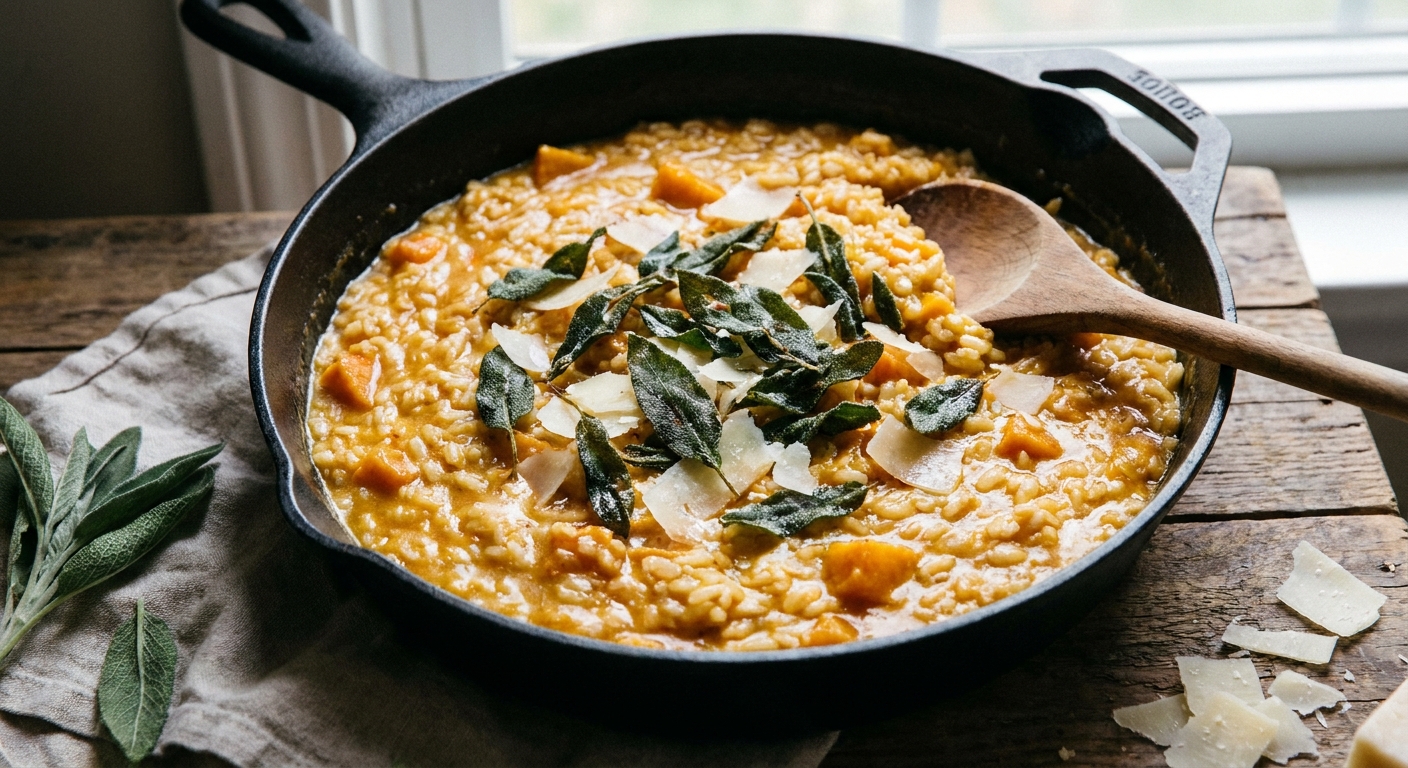
Risotto used to intimidate me in the exact same way laminated pastry did when I managed a bakery: it felt like there was a secret handshake everyone else knew. Then I worked a few bistro shifts where risotto was always on the menu, and I realized the “secret” is mostly just attention. Not perfection. Attention.
This pumpkin risotto is the one I make when I want dinner to feel special but I still need it to be realistic. Wine is optional here. You can skip it and still get deep, savory flavor. What helps most is warm broth, a wide pan (or any pan with enough surface area to keep things gently simmering), and a steady rhythm that becomes almost meditative: ladle, stir, let it simmer, repeat.

Two things can surprise you the first time you make pumpkin risotto. First, pumpkin puree can make the pot look looser, especially if the puree is on the watery side or you add it before the rice has had a chance to release enough starch. Second, doneness is about texture cues more than the clock. Timers vary. Your spoon and your taste buds tell the truth.
What you are aiming for is that sweet-savory pumpkin warmth backed by plenty of Parmesan, plus an herby, almost piney edge if you finish with sage. Creamy, spoonable, and cozy without being heavy.
In this recipe, we stir the rice until it thickens on its own, then fold the pumpkin in near the end and finish with Parmesan and a little butter for that silky, spoon-coating texture.
If you have never made risotto before, I want you to know this: you’re allowed to adjust. If it looks too tight, add a splash more broth. If it feels loose, simmer a minute longer while stirring. The goal is creamy rice with a gentle bite, not a pot of stress.
Why this recipe works
- Warm broth keeps the starch working for you. Adding cold liquid drops the temperature, slows cooking, and can make the texture uneven. Warm broth helps the rice release starch steadily, which is where risotto’s creaminess comes from.
- The ladle rhythm builds a creamy sauce without cream. Adding broth in smaller increments and stirring encourages the grains to rub gently, releasing starch that emulsifies with butter and cheese.
- Pumpkin goes in late to help you control texture. If you add pumpkin puree at the beginning, it can make the mixture seem looser and can blur your thickness cues. Folding it in after the rice is nearly tender keeps the final texture plush.
- A final rest matters. One minute off the heat lets the starches relax and the cheese melt smoothly, so the risotto turns glossy instead of stringy.
Ingredient notes
- Arborio rice: Classic risotto rice with plenty of starch. Carnaroli also works and stays a touch firmer. Do not rinse the rice.
- Broth: Chicken broth gives a deeper savory base, vegetable broth keeps it vegetarian. Use low sodium if possible since Parmesan adds salt.
- Pumpkin puree: Canned pumpkin is consistent and easy. If yours seems loose, spoon it into a fine mesh strainer for 5 to 10 minutes while you prep the onion to drain a little excess water.
- Onion: Yellow onion is my go-to. Shallots are great if you want a sweeter, softer onion flavor.
- Parmesan: Freshly grated melts best and tastes cleaner. Pre-grated can clump and can make the risotto slightly grainy.
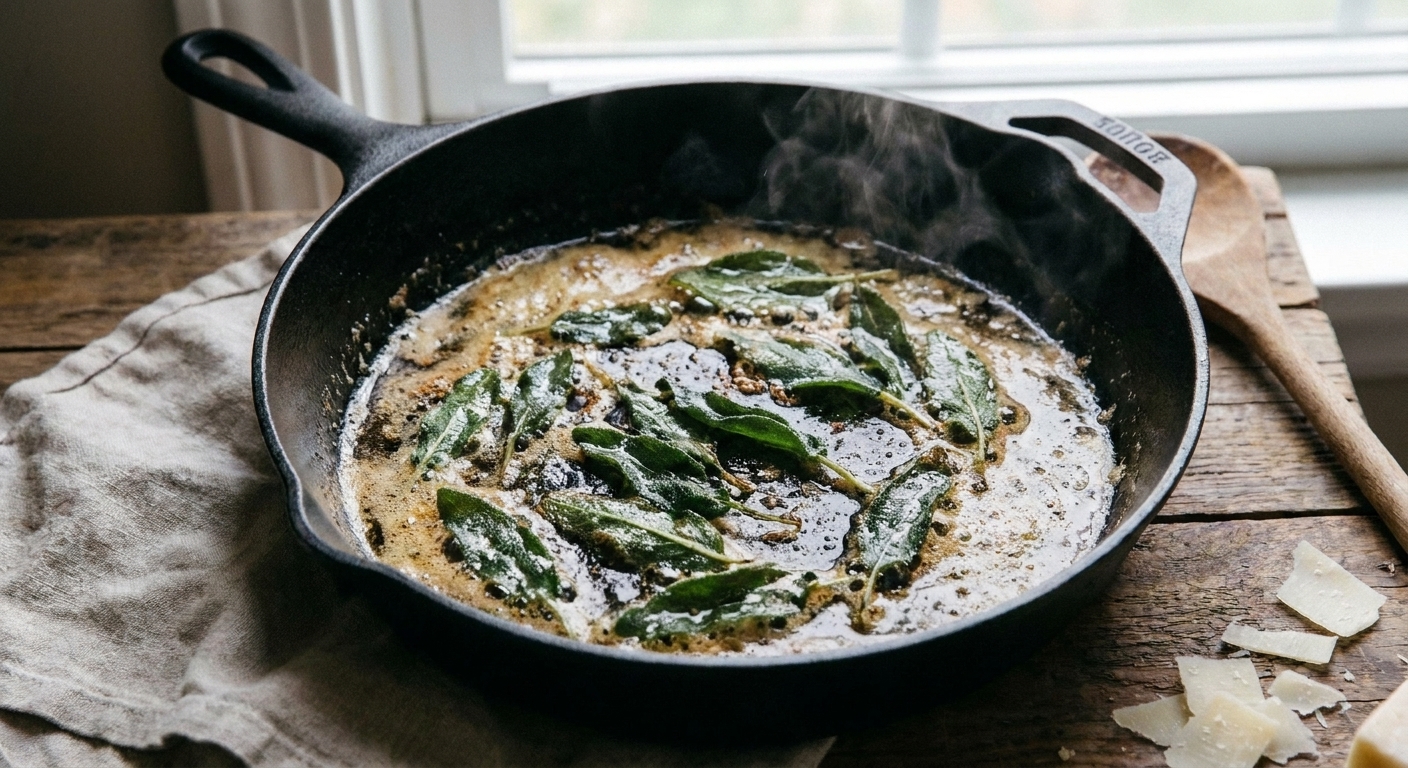
- Sage or browned butter: Sage brings that classic fall aroma. Browned butter adds nutty depth even if you skip herbs.
Equipment you will need
- Wide, heavy pan (Dutch oven or deep skillet): A wider surface helps even simmering and makes stirring easier.
- Saucepan for keeping broth warm
- Ladle for adding broth gradually
- Wooden spoon or silicone spatula for steady stirring and scraping the bottom
- Microplane or fine grater for Parmesan
Pro tips
- Keep the broth steaming, not boiling. You want it hot enough to maintain a gentle simmer in the risotto pan when it hits the rice.
- Stir with intention, not panic. Stir often, especially after adding broth, but you do not need to whip it nonstop for 25 minutes. Think: stir, let it simmer, stir again.
- Watch the edges. When the liquid is mostly absorbed, you will see little “craters” where the spoon passes and the risotto slowly flows back in. That is your cue to add the next ladle.
- Doneness cue for the rice: Taste a grain. You want it tender with a small, pleasant bite at the center, like al dente pasta. If the center tastes chalky, it needs more broth and a few more minutes.
- Finish off the heat. When the rice is nearly there, take the pan off the heat and stir in pumpkin, cheese, and butter. This helps the fat emulsify into a glossy sauce instead of separating.
Substitutes that work
- No wine: Skip it. Add a squeeze of lemon at the very end to brighten, or use a tablespoon of white wine vinegar diluted in a few tablespoons of broth.
- No sage: Try thyme, rosemary (use less), or a pinch of nutmeg plus black pepper.
- Dairy-free: Use olive oil instead of butter and a dairy-free Parmesan style product. The texture will be slightly less silky but still creamy from the rice starch.
- Broth options: Vegetable broth, chicken broth, or even water with a bouillon paste. Just taste for salt before adding extra.
Variations
- Browned butter pumpkin risotto: Brown the butter first, then use part of it to cook the onion and save a tablespoon to drizzle on top.
- Sausage and pumpkin: Brown Italian sausage, remove it, then cook the onion in the drippings plus a little butter. Stir sausage back in at the end.
- Greens welcome: Fold in baby spinach or chopped kale in the last 2 minutes so it wilts into the risotto.
- Roasted pumpkin flavor boost: Stir in a spoonful of roasted squash or pumpkin puree if you have it. It is usually thicker and more concentrated than canned.
Serving ideas
- Make it a full meal: Serve with a big, crisp salad with a sharp vinaigrette to cut the richness.
- Protein pairings: Roast chicken thighs, seared pork chops, or garlicky shrimp are all great next to the sweet-savory pumpkin.
- Finish like a pro: Extra Parmesan, cracked black pepper, and either crisp sage leaves or a drizzle of browned butter right at the table.
Storage and reheating
Leftovers note: Risotto thickens as it cools because the starch continues to set. That is normal and honestly a little magical.
- Refrigerate: Store in an airtight container for up to 3 days.
- Reheat on the stove: Add a splash of broth or water and warm over medium-low, stirring often until creamy again. Finish with a small knob of butter or a spoon of Parmesan if it tastes flat.
- Microwave: Add a splash of liquid, cover loosely, and heat in short bursts, stirring between rounds.
- Bonus leftover move: Chill until firm, roll into small balls, coat in breadcrumbs, and pan-fry for quick arancini-style bites.
Common mistakes
- Using cold broth: This is the fastest way to stall cooking and get uneven texture. Keep it hot.
- Adding all the broth at once: You will end up with rice that cooks but does not turn creamy. The gradual additions matter.
- Overcooking the rice: If the grains burst and the risotto turns gluey, it has gone too far. Start tasting earlier than you think.
- Adding pumpkin too early: Pumpkin can loosen the mixture and make it harder to judge thickness. Fold it in when the rice is almost done.
- Oversalting early: Parmesan is salty. Hold back until the end and adjust once the cheese is in.
FAQ
Do I have to stir risotto the whole time?
No. Stir frequently, especially after each broth addition, and scrape the bottom so nothing sticks. But you can let it simmer for short stretches while you stay nearby.
How do I know when to add the next ladle of broth?
When the pan looks mostly dry and your spoon leaves a path that slowly fills back in, it is time. If it is still soupy, wait another minute.
Why did my pumpkin risotto look watery?
Most often it is pumpkin added too early, broth added too quickly, or the risotto simply needs another minute or two of simmering and stirring to tighten. Also check your pumpkin puree. Some brands are looser than others.
Can I use long-grain rice?
I would not for this. Long-grain rice does not release enough starch to make true risotto texture. If you want a pumpkin rice dish with long-grain rice, it is better treated like a pilaf.
Can I make risotto ahead?
You can, but it is best fresh. For a partial make-ahead, cook it until the rice is just underdone, spread on a tray to cool, then finish with hot broth, pumpkin, and cheese right before serving.
The recipe
Pumpkin Risotto
Savory pumpkin risotto with onion, warm broth, and Parmesan, finished with crisp sage or nutty browned butter. Creamy, cozy, and completely doable on a weeknight.
- Prep
- 10 minutes
- Cook
- 30 minutes
- Total
- 40 minutes
- Yield
- 4 servings
Ingredients
- 5 to 6 cups low-sodium chicken or vegetable broth, kept warm
- 4 tbsp unsalted butter, divided (or use 2 tbsp butter plus 2 tbsp olive oil)
- 1 small yellow onion, finely chopped
- 2 cloves garlic, minced
- 1 1/2 cups arborio rice
- 1/2 cup dry white wine (optional)
- 1 cup pumpkin puree (canned pumpkin)
- 1/2 to 3/4 cup finely grated Parmesan, plus more for serving
- 1/2 tsp kosher salt, plus more to taste
- 1/4 tsp black pepper, plus more to taste
- Pinch of nutmeg (optional)
- 8 to 12 fresh sage leaves (optional), for finishing
Instructions
- Warm the broth. Pour the broth into a saucepan and keep it steaming over low heat. Do not let it aggressively boil.
- If using sage, crisp it first. In a wide, heavy pan over medium heat, melt 2 tablespoons of the butter. Add sage leaves and fry 30 to 60 seconds, turning once, until crisp. Transfer to a paper towel. Keep the sage butter in the pan.
- Soften the onion. Add the remaining 2 tablespoons butter to the same pan (add a splash of olive oil if the pan looks dry). Add onion and a pinch of salt. Cook 4 to 6 minutes, stirring, until soft and translucent, not browned. Add garlic and cook 30 seconds more.
- Toast the rice. Add arborio rice and stir constantly for 1 to 2 minutes, until the edges of the grains look slightly translucent and the rice smells nutty.
- Deglaze (optional). If using wine, pour it in and stir until mostly absorbed.
- Start the ladle rhythm. Add 1 ladle (about 1/2 cup) warm broth. Stir and keep the risotto at a gentle simmer. When the liquid is mostly absorbed and your spoon leaves a trail that slowly fills in, add another ladle. Repeat, stirring frequently and scraping the bottom, until the rice is nearly tender, 18 to 25 minutes total.
- Check doneness. Taste a few grains. You want the rice tender with a small bite at the center. If it tastes chalky, add more broth and keep going a few minutes.
- Fold in pumpkin near the end. When the rice is almost done, stir in pumpkin puree and a pinch of nutmeg (if using). Add another splash of broth if needed to keep it loose and creamy. Simmer 1 to 2 minutes, stirring, until the pumpkin is fully warmed through.
- Finish with Parmesan and rest. Take the pan off the heat. Stir in Parmesan, black pepper, and a final splash of broth if it looks tight. Taste and adjust salt. Let the risotto rest 1 minute, then stir once more to make it glossy.
- Serve. Spoon into bowls and top with crisp sage leaves (if using). For extra richness, drizzle with browned butter (see Notes) or add more Parmesan and black pepper.
Notes
- To prevent watery pumpkin risotto: Stir pumpkin in near the end, after the rice has already thickened the base. If your pumpkin puree seems loose, drain it briefly in a fine mesh strainer while you prep.
- Browned butter finish: If you prefer browned butter to sage, melt 2 to 3 tablespoons butter in a small pan over medium heat until it foams, smells nutty, and the milk solids turn golden. Drizzle over each bowl right before serving.
- Texture target: Risotto should be creamy and spoonable, not stiff. If it tightens before serving, stir in a splash of hot broth to loosen it.