
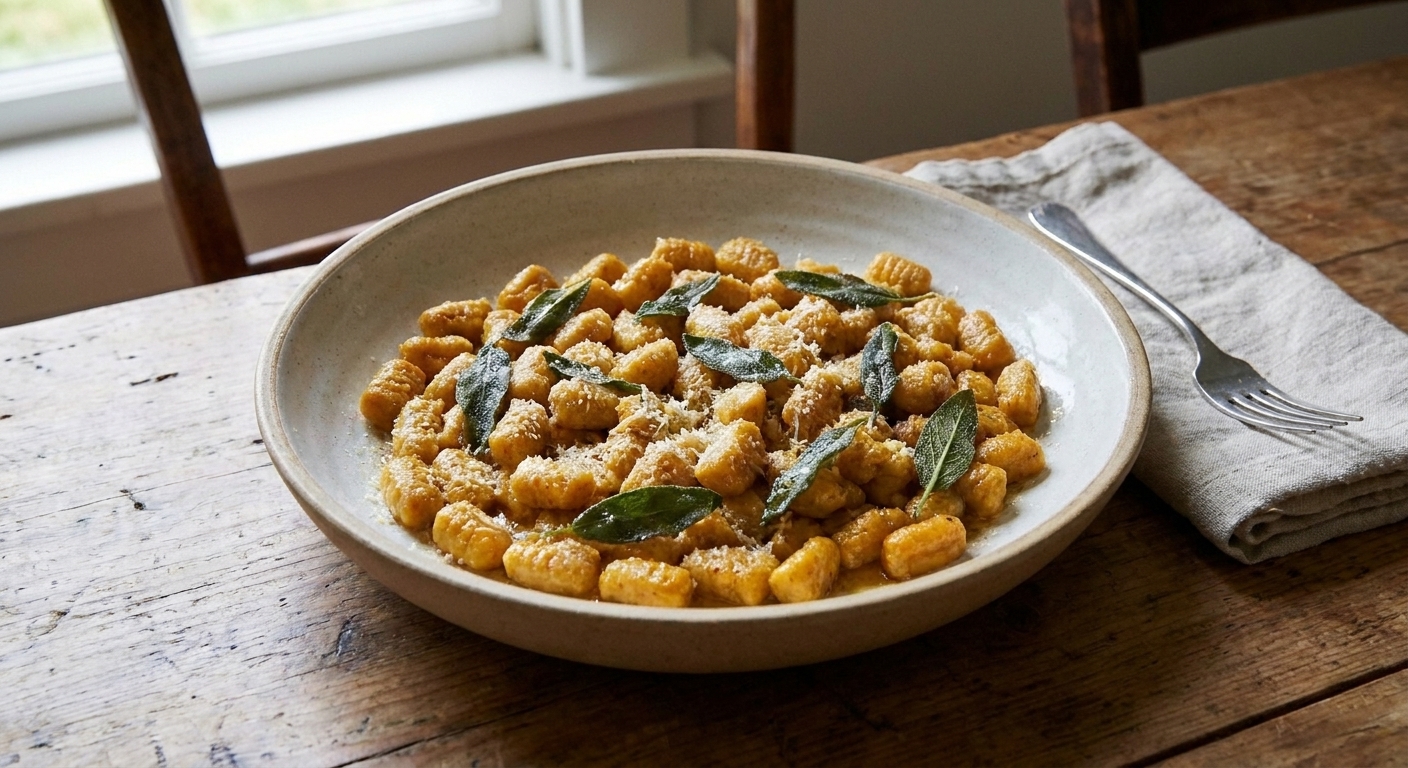
The first time I tested pumpkin gnocchi at home, I did what I tell everyone not to do. I trusted my measuring cup more than my eyes. Pumpkin puree can be thick like mashed potatoes or loose like applesauce depending on the brand, how it was cooked, and how much water it is holding. My dough looked perfect in the bowl and then quietly melted apart in the water like it had somewhere else to be.
So here is the good news. Pumpkin gnocchi can be wonderfully tender without being fragile, but it is a moisture game. You want a dough that is just dry enough to hold together, but not so floury that you get dense little sinkers. In this recipe, the binder, potato or ricotta, does the heavy lifting. Both work, and I will tell you exactly what to look for so you can adjust with confidence, whether that means draining the puree, adding flour a spoonful at a time, or doing a quick test dumpling before you shape the whole batch.

We will also talk about the float test, plus one of the biggest mistakes people make with pumpkin gnocchi: letting them sit too long in hot water while the sauce is still being made. Timing matters here. You want your browned butter and sage ready to go so you can move the gnocchi gently from pot to pan and coat them right away, while they are intact and still a little buoyant. And while floating is a great cue that they are close, I like to give them a short extra simmer after they rise so the center sets before they hit the skillet.
Why this recipe works
- Moisture is controlled up front. Pumpkin puree varies widely. Draining excess moisture and adding flour gradually gives you a dough that holds together without turning tough.
- A binder provides structure. Potato adds classic gnocchi body, while ricotta adds tenderness and protein support. Either way, the dough is less likely to dissolve.
- Gentle handling keeps them light. Minimal mixing and a soft touch prevent gluten development, which is what makes gnocchi chewy.
- The float test helps prevent overcooking. When gnocchi float, they are close to set. A short extra simmer helps ensure the center is cooked without waterlogging them.
- Sauce timing protects the dumplings. Browned butter and sage are made while the water heats, so the gnocchi go straight from pot to pan instead of waiting and breaking down.
Ingredient notes
Pumpkin puree
Use plain pumpkin puree, not pumpkin pie filling. If your puree looks watery or weepy, drain it in a fine-mesh sieve or cheesecloth for 10 to 20 minutes. Drier puree means less flour, and less flour means more tender gnocchi.
Binder: potato or ricotta
Potato: Use a starchy potato like russet for the driest mash. Bake or microwave until tender, then scoop and mash while hot so steam can escape. Cool before mixing so the dough does not turn gummy.
Ricotta: Whole milk ricotta gives the best texture. If it is very wet, drain it too. Ricotta gnocchi are a little more delicate, so keep the simmer gentle.
Flour
All-purpose flour is perfect. The exact amount can change based on moisture. Add it gradually until the dough is soft but not sticky. If you can lift a piece without it stretching like batter, you are in the right zone.
Egg (optional but helpful)
A small amount of egg can add insurance, especially if you are using ricotta. If your dough feels fragile, egg helps it set faster in the water.
Butter and sage
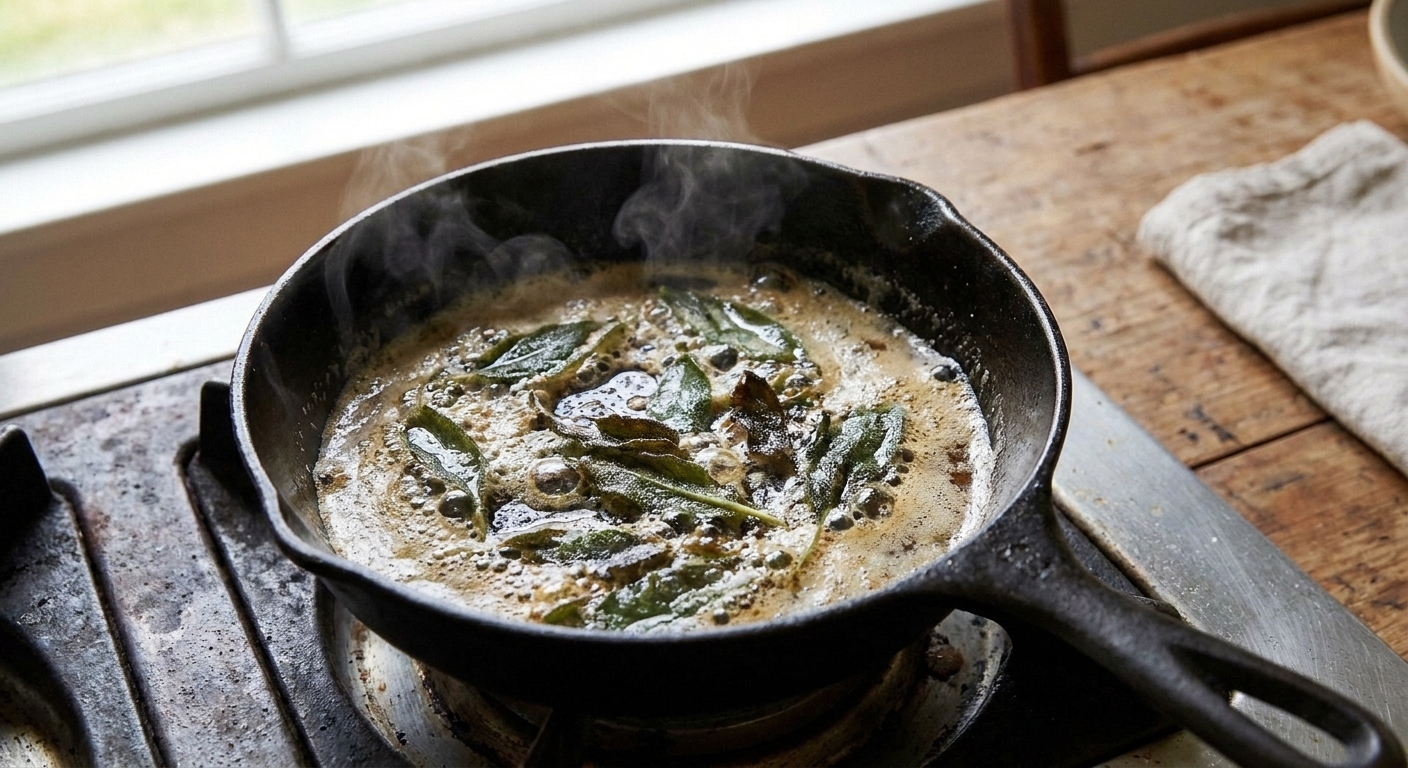
Use unsalted butter so you can control seasoning. Fresh sage is the classic partner to pumpkin. Let the butter brown, then add sage so it turns crisp and fragrant without burning.
Equipment you will need
- Large pot for boiling
- Fine-mesh sieve (for draining pumpkin and or ricotta, if needed)
- Mixing bowl
- Fork or potato ricer or masher (if using potato binder)
- Bench scraper or knife for cutting gnocchi
- Large skillet for browned butter sauce
- Slotted spoon or spider strainer
- Sheet pan lined with parchment (for holding shaped gnocchi)
Pro tips
- Drain first, then mix. If you suspect watery puree, drain it before you start. Trying to fix a wet dough later usually means adding too much flour.
- Mix with a light hand. Stir just until the dough comes together. Overmixing develops gluten and makes gnocchi bouncy instead of pillowy.
- Test one dumpling before shaping the whole batch. Poach a single small piece. If it holds together and floats, you are golden. If it starts to fray or dissolve, work in a little more flour, 1 tablespoon at a time.
- Keep the water at a gentle simmer. A hard boil can knock soft pumpkin gnocchi around and encourage breakage.
- Salt the water well. Gnocchi dough is mild. Seasoning the water is how you build flavor from the inside out.
- Sauce timing note: Start browning the butter while the water heats and keep it warm on the lowest heat. The moment the gnocchi float and set, move them directly into the skillet so they do not sit and soften in the pot.
Substitutes that work
- Butternut squash puree: Swap 1:1 for pumpkin. Drain if loose.
- Sweet potato: You can mash roasted sweet potato as the binder instead of russet, but the dough will be sweeter and often moister, so expect a touch more flour.
- Gluten-free flour blend: A cup-for-cup blend can work, but the dough can be more fragile. Do the one-dumpling test and keep the simmer very gentle.
- Herbs: If you do not have sage, try thyme or rosemary, but use a lighter hand because they can overpower the pumpkin.
- Cheese: Parmesan is classic at serving, but pecorino also works if you like a sharper finish.
Variations
- Browned butter, sage, and walnuts: Toast chopped walnuts in the browned butter before adding sage, then toss gnocchi in the pan.
- Lemon browned butter: Add a squeeze of lemon at the end to brighten the richness.
- Garlicky sage butter: Add a smashed garlic clove to the butter as it browns, then remove it before tossing.
- Crisped gnocchi finish: After boiling, let the gnocchi sit in the skillet undisturbed for 1 to 2 minutes to develop light browning, then gently toss. This is best with the potato binder for sturdiness.
Serving ideas
- Serve with a shower of Parmesan and cracked black pepper.
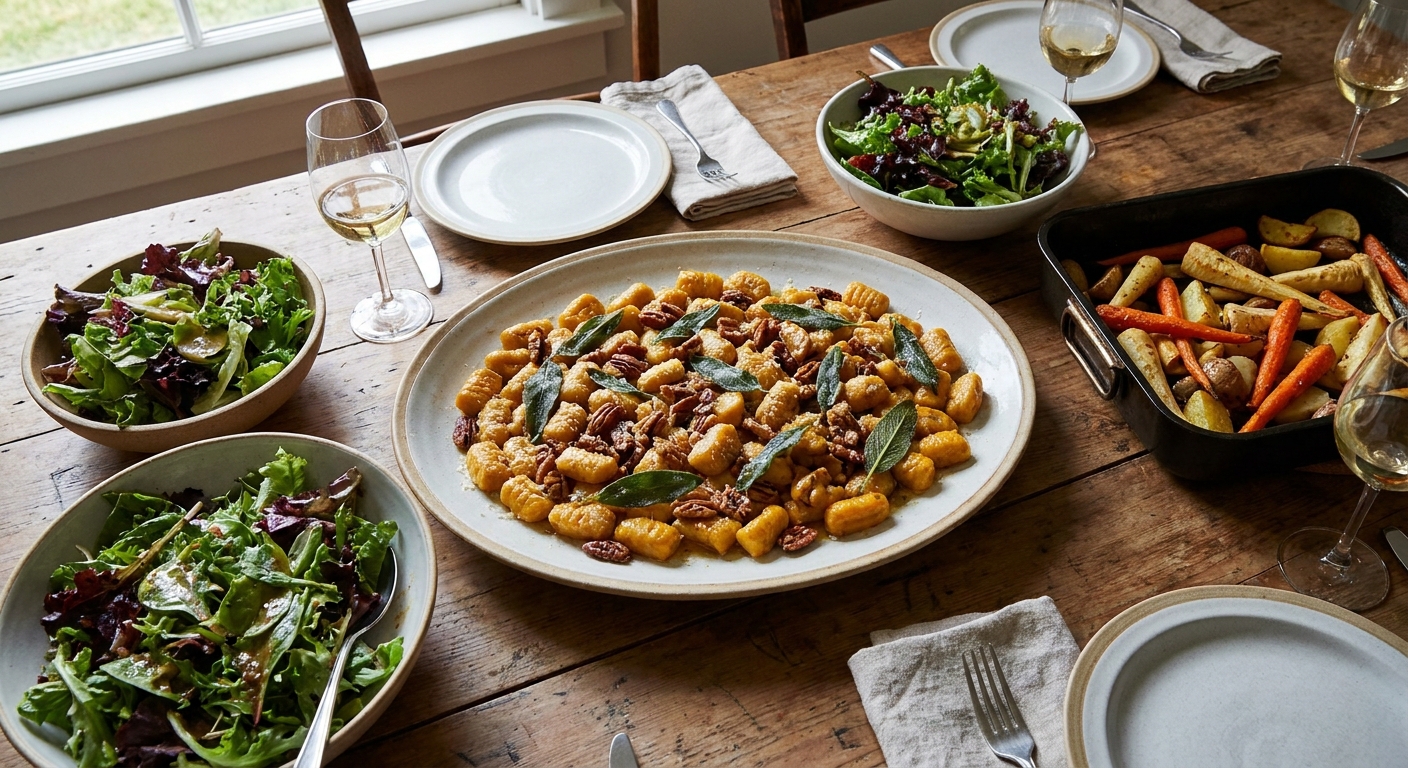
- Add a simple green salad with a tart vinaigrette to balance the butter sauce.
- Pair with roasted Brussels sprouts, broccolini, or sautéed greens.
- For a heartier plate, add crispy pancetta or crumbled sausage to the browned butter pan before tossing in the gnocchi.
Storage and reheating
To store
Cooked gnocchi are best right away, but leftovers can be refrigerated in an airtight container for up to 3 days. Store sauce separately if you can.
To reheat
Reheat gently in a skillet with a small knob of butter and a splash of water. Avoid microwaving for too long, which can make them gummy.
To freeze (best option)
Freeze shaped, uncooked gnocchi on a parchment-lined sheet pan until firm, then transfer to a freezer bag. Cook from frozen in gently simmering water. They will take a minute or two longer to float.
Common mistakes
- Using watery puree without draining. This is the fastest path to a dough that needs too much flour or dissolves in the pot.
- Adding too much flour early. Dense gnocchi usually come from chasing a perfectly non-sticky dough. A little tackiness is normal. Flour your hands and the surface instead of loading the dough.
- Boiling too aggressively. Keep it to a gentle simmer so the dumplings do not bang around and break.
- Skipping the single-gnocchi test. One test dumpling can save the whole batch. It tells you if the dough needs more flour or a touch more binder.
- Letting gnocchi linger in the pot. Once they float and set, move them out. Waiting while you brown butter is how they get waterlogged and fragile.
FAQ
Why did my pumpkin gnocchi fall apart?
The dough was likely too wet or the water was boiling too hard. Drain the puree, add flour gradually, and do a test dumpling before shaping the rest. Then simmer, do not boil aggressively.
How do I know when gnocchi are cooked?
Use the float test as your main cue. When they rise to the surface, let them simmer about 30 to 60 seconds more so the center sets, then transfer with a slotted spoon.
Should I use potato or ricotta?
Potato is sturdier and a bit more traditional in feel. Ricotta makes a lighter, softer dumpling. If you are nervous about dissolving, potato is slightly more forgiving.
Can I make the dough ahead of time?
I do not love holding the raw dough for long because it continues to hydrate and can become sticky. If you need to prep ahead, shape the gnocchi and freeze them on a sheet pan instead.
Do I need to add egg?
Not always, but it is helpful insurance, especially with ricotta or very moist pumpkin. If your test dumpling looks fragile, adding a little beaten egg can improve structure.
The recipe
Pumpkin Gnocchi
Tender pumpkin gnocchi made with pumpkin puree and a potato or ricotta binder, boiled until they float, then tossed in browned butter and sage.
- Prep
- 35 minutes
- Cook
- 15 minutes
- Total
- 50 minutes
- Yield
- 4 servings
Ingredients
- 1 cup (245 g) pumpkin puree (plain), drained if watery
- 1 cup (225 g) mashed russet potato, cooled or 1 cup (225 g) whole milk ricotta, drained if wet
- 1/2 cup (60 g) grated Parmesan, plus more for serving
- 1 teaspoon kosher salt, plus more for the boiling water
- 1/4 teaspoon freshly ground black pepper
- 1/8 teaspoon ground nutmeg (optional)
- 1 large egg yolk (optional but helpful for structure)
- 1 1/4 to 2 cups (155 to 250 g) all-purpose flour, plus more for the work surface
- 6 tablespoons (85 g) unsalted butter
- 10 to 14 fresh sage leaves
Instructions
- Drain and prep. If the pumpkin puree looks loose, spoon it into a fine-mesh sieve and drain for 10 to 20 minutes. If using ricotta and it seems wet, drain it the same way. Line a sheet pan with parchment and dust lightly with flour.
- Make the dough. In a large bowl, mix pumpkin puree with your binder (mashed potato or ricotta), Parmesan, 1 teaspoon salt, pepper, and nutmeg (if using). Stir in the egg yolk (if using). Add 1 1/4 cups flour and fold gently until a soft dough forms. If it is very sticky and loose, add more flour 1 to 2 tablespoons at a time just until it can be handled. The dough should feel soft, slightly tacky, and hold its shape.
- Test one gnocchi. Bring a large pot of water to a gentle simmer and salt it generously. Pinch off a teaspoon-sized piece of dough and drop it in. If it holds together, floats, and looks set after 30 to 60 seconds at the surface, the dough is ready. If it frays or dissolves, fold in a little more flour (or an extra spoonful of binder if you have it) and test again.
- Shape. On a floured surface, divide dough into 4 pieces. Roll each into a rope about 3/4 inch thick, dusting lightly with flour as needed. Cut into 3/4-inch pieces. Transfer to the prepared sheet pan. If you want ridges, roll each piece gently down the tines of a fork, but keep the pressure light.
- Start the sauce while the water is heating. In a large skillet over medium heat, melt the butter. Continue cooking, swirling often, until the milk solids turn golden brown and smell nutty, 3 to 5 minutes. Reduce heat to low and add sage leaves. Cook 30 to 60 seconds until crisp. Keep the sauce warm on very low heat.
- Boil the gnocchi gently. Keep the water at a gentle simmer. Cook gnocchi in batches so the pot is not crowded. Once they float, let them simmer 30 to 60 seconds more, then lift them out with a slotted spoon or spider and transfer directly into the warm browned butter skillet.
- Toss and serve. Gently toss gnocchi in the sauce over low heat, adding a small splash of hot pasta water if needed to help the butter coat. Serve right away with extra Parmesan and black pepper.
Notes
Moisture matters: Different pumpkin purees can require different flour amounts. Start with less flour and add gradually.
Keep them intact: Gentle simmer, not a rolling boil. Transfer gnocchi straight from the pot to the skillet so they do not sit in hot water and soften.
Freezer friendly: Freeze shaped, uncooked gnocchi on a sheet pan, then bag them. Boil from frozen at a gentle simmer.