
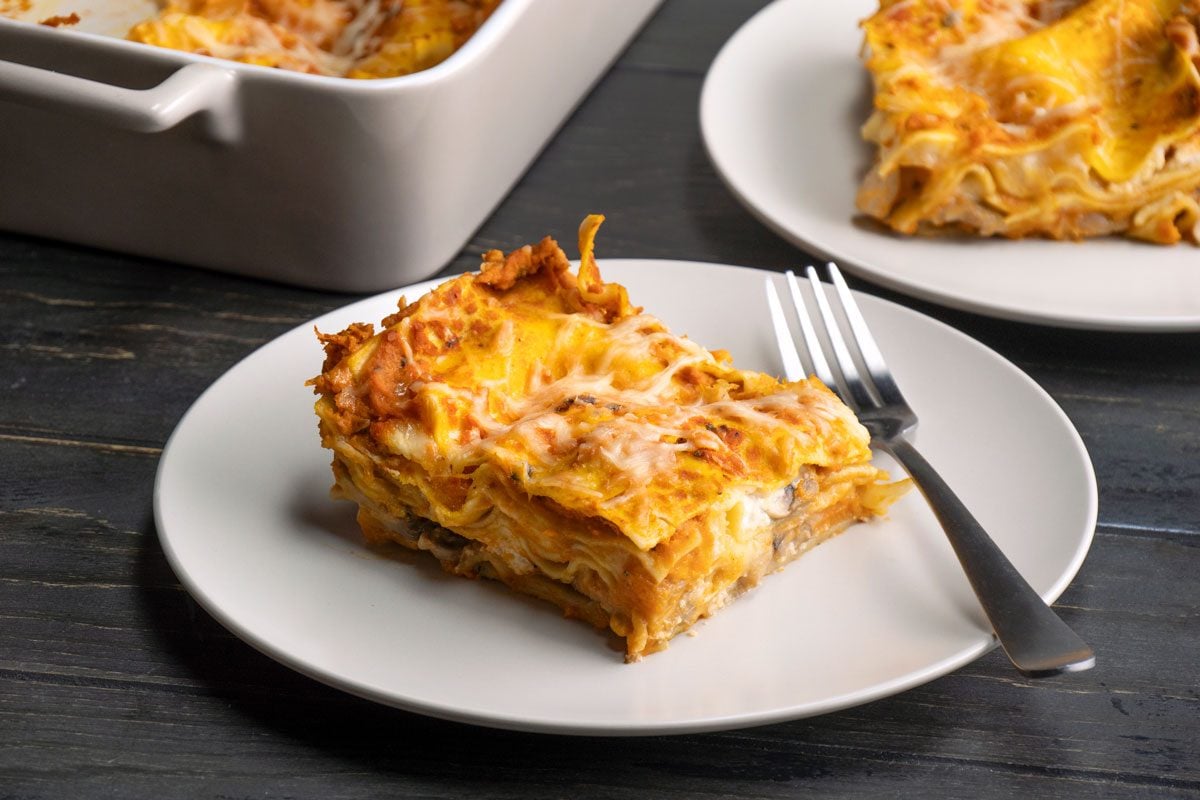
I love pumpkin in desserts, but the older I get, the more I reach for it as a weeknight secret weapon. Pumpkin puree can add instant body and silkiness, which is exactly what you want in a lasagna that feels cozy and rich without turning into a sweet “pumpkin bread batter” situation. The only caveat is that pumpkin varies. Some canned brands are thicker, homemade can run looser, and either way you can steer the texture where you want it.
This version leans firmly savory: garlic, parmesan, black pepper, and a small pinch of nutmeg to make the pumpkin taste round and warm, not sugary. Instead of a tomato sauce, we build a pumpkin béchamel that is thick enough to cling to a spoon and sturdy enough to set as it cools. Pair that with ricotta for plush layers and mozzarella for the pull, and you have a pan that tastes like fall but eats like classic comfort.

If you have ever made a beautiful lasagna and then watched it slump into a puddle on the plate, you are not alone. For this one, two things matter most: keep the béchamel on the thicker side, and let the lasagna rest long enough to firm up before slicing. Resting is not just about steam escaping. It is the cooling and setting that happens as the sauce thickens and the cheeses firm up into clean, sliceable layers.
One more little insurance policy if your pumpkin seems thin: you can cook the puree down briefly before it goes into the sauce, or simply simmer the finished béchamel a bit longer. Either way, the goal is the same. Concentrate the pumpkin and keep the final sauce spoon-coating thick.
What it tastes like
Think creamy and cheesy like a white lasagna, with a gentle pumpkin flavor that reads more like roasted squash than pie. It is garlicky, peppery, and deeply comforting, with little pops of salty parmesan in every bite.
Choosing noodles
You can make this with no-boil noodles or traditional lasagna noodles. I reach for no-boil when I want speed, but traditional noodles work beautifully too.
- No-boil noodles: Great for structure when they are fully covered, but they are sensitive to moisture. Exposed edges can dry or curl, and uneven hydration can leave you with spots that are too firm or a little gummy. The fix is simple: keep your sauce spoonable, not watery, and make sure every noodle is fully coated, especially the corners.
- Boiled noodles: More forgiving if you are nervous about dryness. Just cook to very al dente and drain well so your lasagna does not turn watery.
Pumpkin béchamel
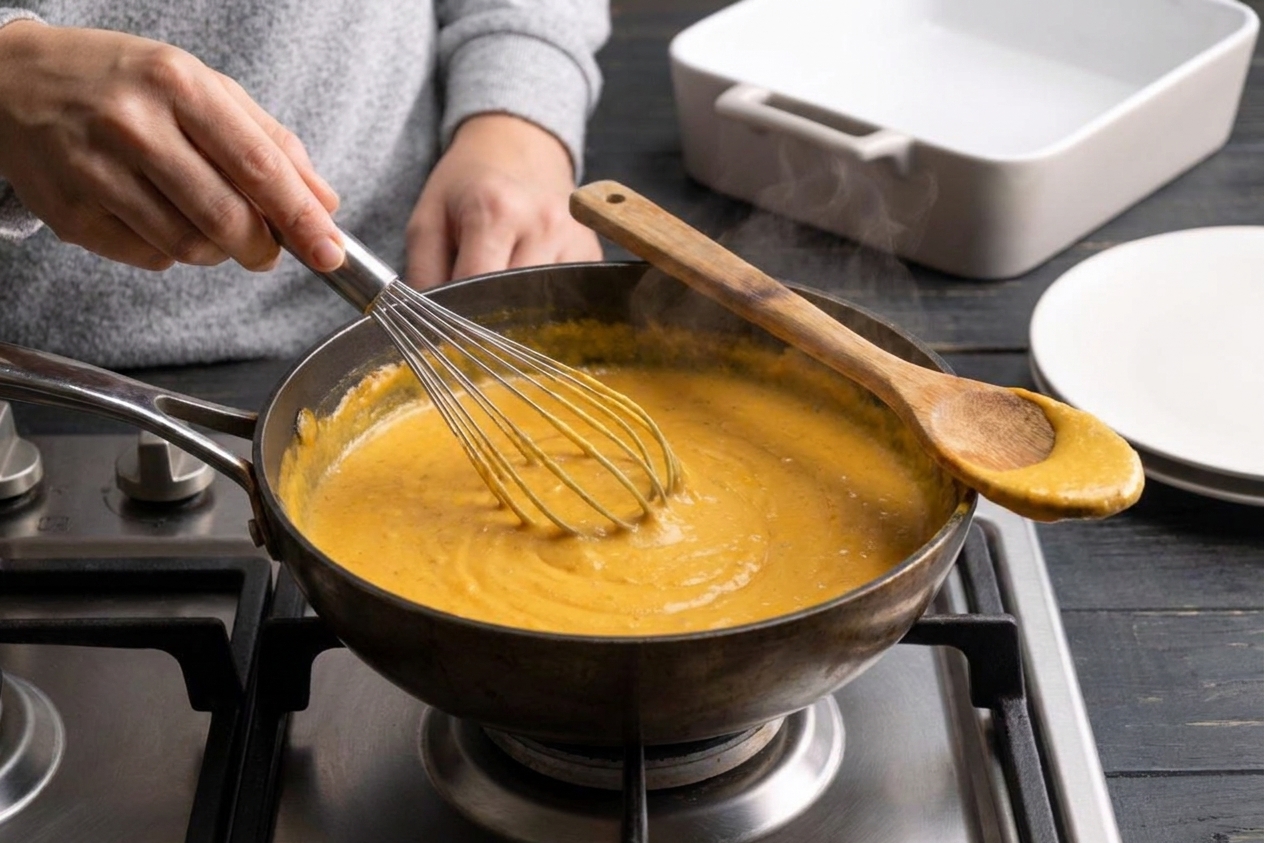
The goal texture is thick soup, not a pourable milk sauce. When you drag a spoon through it, the line should hold for a moment before slowly filling in. That thickness helps the lasagna set up and keeps the pumpkin flavor concentrated.
Your best built-in guardrail is the béchamel itself. Start by building a smooth roux, then whisk in milk gradually until it thickens into a classic, spoon-coating white sauce. From there, whisk in pumpkin puree for body and flavor. If your pumpkin is on the watery side, let the finished sauce simmer gently until it looks silky and cohesive and feels thick enough to cling to a spoon. If it goes a little too far and turns pasty, loosen it with a small splash of milk until it is back to that thick, spoonable zone.
Resting
Lasagna is a casserole that pretends it is a sliceable pasta cake. It needs time to settle. Let it rest so the layers can cool and set, and you will get cleaner slices and better texture. You also will not burn your mouth trying to eat it straight out of the oven.
Why this recipe works
- Thick pumpkin béchamel equals sliceable layers. Pumpkin puree adds body, but the béchamel base gives you structure and savory depth.
- Ricotta keeps the middle plush. It lightens the richness of the béchamel while adding a classic lasagna feel.
- Two-cheese strategy for flavor and pull. Parmesan seasons the whole pan, while mozzarella gives you that melty top and satisfying stretch.
- A real rest sets the pan. Cooling time lets the sauce and cheese firm up so you can cut neat portions.
Ingredient notes
- Pumpkin puree: Use plain canned pumpkin, not pumpkin pie filling. Pumpkin varies by brand and batch. If your puree looks watery, simmer the finished sauce a little longer or cook the puree down briefly before adding it.
- Milk for béchamel: Whole milk makes the richest sauce, but 2 percent works. Avoid sweetened plant milks. Unsweetened oat milk can work in a pinch, but the flavor will shift slightly.
- Garlic and onion: These are your savory anchors. Pumpkin is mild, so you want aromatics to keep the filling dinner-like, not dessert-like.
- Nutmeg: Optional, but a small pinch makes the béchamel taste more complete. Keep it subtle.
- Ricotta: Whole-milk ricotta gives the best texture. If it is very wet, spoon it into a strainer for 10 to 15 minutes while you prep.
- Mozzarella: Low-moisture mozzarella melts cleanly and helps prevent a watery top.
- Parmesan: Adds salt and depth. Taste the béchamel before assembling so you do not under-season the whole pan.
- Spinach (optional): A handful of sautéed, well-squeezed spinach adds color and balance without hijacking the pumpkin.
Equipment you will need
- 9x13-inch baking dish
- Medium to large saucepan
- Whisk
- Rubber spatula
- Foil
- Box grater (if shredding cheese)
- Sharp knife and a thin spatula for serving
Pro tips
- Season the sauce like it is the main character. In this lasagna, the béchamel replaces tomato sauce, so it needs enough salt, pepper, and parmesan to taste bold on its own.
- Aim for spoonable thick. If you can pour it like heavy cream, it is too thin. If it sits in a stiff mound, it is too thick. You want it to fall off a spoon slowly.
- Cover every noodle edge. Especially with no-boil noodles, exposed corners dry out. Take an extra minute to tuck and smooth sauce to the edges.
- Foil first, then uncover. Covered baking heats the center gently and prevents the cheese from over-browning before the noodles soften.
- Rest before slicing. Give it time. Even 20 minutes helps, but longer is better for picture-perfect squares.
Substitutes that work
- Butternut squash puree for pumpkin: Swap 1:1. The flavor is slightly sweeter, so lean a touch heavier on garlic, pepper, and parmesan.
- Cottage cheese for ricotta: Use small-curd cottage cheese. For a smoother layer, pulse briefly in a blender or food processor.
- Fontina or provolone for mozzarella: Both melt well and play nicely with pumpkin.
- Gluten-free noodles: Use your favorite brand, but keep an eye on doneness. Some soften faster and can get fragile if overbaked.
Variations
- Sausage and pumpkin: Brown Italian sausage and add a thin layer between noodles and sauce. It turns the lasagna into a heartier, more traditional-feeling bake.
- Mushroom pumpkin lasagna: Sauté mushrooms until deeply browned and layer them in for a meaty bite without meat.
- Herby pumpkin lasagna: Add chopped sage or rosemary to the béchamel. Keep it restrained so the herbs do not dominate.
- Extra greens: Fold cooked, well-drained spinach into the ricotta mixture for a greener slice.
Serving ideas
- Arugula salad with lemon vinaigrette for contrast
- Garlicky green beans or roasted broccoli
- Simple sautéed kale with chili flakes
- Crusty bread for scooping the saucy corners
Storage and reheating
- Refrigerate: Cover and refrigerate for up to 4 days. The slices actually get neater on day two.
- Freeze: Freeze tightly wrapped portions for up to 2 months. Thaw overnight in the fridge for best texture.
- Reheat: Warm covered in a 350°F oven until hot in the center. For a single slice, the microwave works, but cover it so it stays moist.
Common mistakes
- Using pumpkin pie filling: It is sweetened and spiced for dessert and will taste wrong here.
- Leaving the béchamel too thin: Thin sauce can turn your lasagna into a slump. Simmer longer and keep whisking until it turns silky and cohesive.
- Skipping seasoning checks: Pumpkin is mild. Taste the sauce before assembly and adjust salt and pepper.
- Overcooking boiled noodles: If you boil noodles, keep them very al dente. They finish cooking in the oven.
- Slicing too soon: The rest is not optional if you want clean layers.
FAQ
Will this taste sweet?
No, not if you use plain pumpkin puree and keep the seasoning savory. The garlic, parmesan, and black pepper push it firmly into dinner territory.
Can I make it ahead?
Yes. Assemble, cover, and refrigerate for up to 24 hours before baking. Add a little extra bake time since it is going in cold.
No-boil noodles always dry out for me. What am I doing wrong?
Usually it is exposed noodle edges or uneven moisture. Make sure every noodle is fully covered with sauce, especially the corners, and keep the béchamel spoonable rather than stiff.
How do I know it is done baking?
You want bubbling around the edges and in the center, and the noodles should be tender when you slide in a knife. If the top is browning too fast, cover again with foil.
Can I add meat?
Absolutely. Browned Italian sausage is the easiest fit. Keep it well-drained so you do not thin the sauce.
The recipe
Pumpkin Lasagna
Savory pumpkin lasagna with a thick pumpkin béchamel, a garlicky ricotta layer, and plenty of mozzarella and parmesan. Bake until bubbly, then rest so the slices hold together.
- Prep
- 30 minutes
- Cook
- 55 minutes
- Total
- 1 hour 45 minutes
- Yield
- 10 servings
Ingredients
- 12 lasagna noodles (no-boil or traditional)
- 1 tbsp olive oil
- 1 small yellow onion, finely diced
- 4 cloves garlic, minced
- 4 tbsp unsalted butter
- 1/4 cup all-purpose flour
- 3 1/2 cups whole milk (or 2%)
- 1 (15 oz) can plain pumpkin puree
- 1 1/2 tsp kosher salt, plus more to taste
- 1/2 tsp freshly ground black pepper, plus more to taste
- Pinch of ground nutmeg (optional)
- 1 1/2 cups grated Parmesan cheese, divided
- 15 oz whole-milk ricotta cheese
- 1 large egg
- 2 tbsp chopped fresh parsley (or 1 tbsp chopped sage)
- 4 cups shredded low-moisture mozzarella, divided
- 2 packed cups baby spinach, sautéed and squeezed dry (optional)
Instructions
- Heat the oven. Arrange a rack in the middle of the oven and preheat to 375°F. Lightly grease a 9x13-inch baking dish.
- If using traditional noodles, boil them. Bring a large pot of salted water to a boil. Cook lasagna noodles until very al dente, about 2 minutes less than package directions. Drain and lay flat on a sheet pan or lightly oiled surface so they do not stick. Skip this step if using no-boil noodles.
- Sauté aromatics. In a saucepan over medium heat, warm the olive oil. Add the onion and cook until soft, 5 to 7 minutes. Stir in the garlic and cook 30 seconds, just until fragrant.
- Make a roux. Add the butter and melt. Sprinkle in the flour and whisk constantly for 1 to 2 minutes until the mixture smells lightly nutty and looks like a smooth paste.
- Build the béchamel. Slowly whisk in the milk, a splash at a time at first, until smooth. Bring to a gentle simmer, whisking often, and cook 4 to 6 minutes until thickened. The sauce should be spoonable and coat the back of a spoon.
- Turn it into pumpkin béchamel. Whisk in the pumpkin puree, 1 teaspoon of the salt, the pepper, nutmeg (if using), and 1 cup of the Parmesan. Simmer gently 2 to 5 minutes, whisking, until thick, silky, and cohesive. Taste and adjust salt and pepper. Remove from heat.
- Mix the ricotta layer. In a bowl, stir together the ricotta, egg, remaining 1/2 teaspoon salt, parsley (or sage), and 1 cup of the mozzarella. If using spinach, stir it in here or layer it separately.
- Assemble. Spread about 1 cup pumpkin béchamel in the bottom of the baking dish. Add a layer of noodles. Spread 1/3 of the ricotta mixture over the noodles. Spoon about 1 1/2 cups pumpkin béchamel over the ricotta and spread to the edges. Sprinkle with about 1 cup mozzarella. Repeat for 2 more layers. Finish with a final layer of noodles, the remaining béchamel, remaining mozzarella, and the remaining 1/2 cup Parmesan. Make sure noodles are fully covered at the edges, especially if using no-boil noodles.
- Bake covered. Cover tightly with foil (tent slightly so it does not stick to cheese). Bake 30 minutes.
- Uncover and brown. Remove foil and bake 15 to 20 minutes more, until bubbling at the edges and the top is lightly browned. If you used no-boil noodles, check that a knife slides in easily through the center. If needed, bake 5 more minutes.
- Rest before slicing. Let the lasagna rest 25 to 35 minutes before cutting. This cooling time sets the layers so slices hold together.
- Serve. Slice and serve warm. Add extra black pepper or a little grated Parmesan at the table if you like.
Notes
Sauce thickness cue: Pumpkin puree can vary. After you whisk in pumpkin, simmer gently 2 to 5 minutes until the sauce looks silky and cohesive and falls from a spoon slowly. A thicker sauce makes a cleaner slice.
No-boil noodle insurance: Make sure all noodle edges are covered with sauce, especially corners, to prevent dry spots.
Make ahead: Assemble, cover, and refrigerate up to 24 hours. Bake covered for 35 minutes, then uncover and continue 20 to 25 minutes, then rest as directed.